-
-
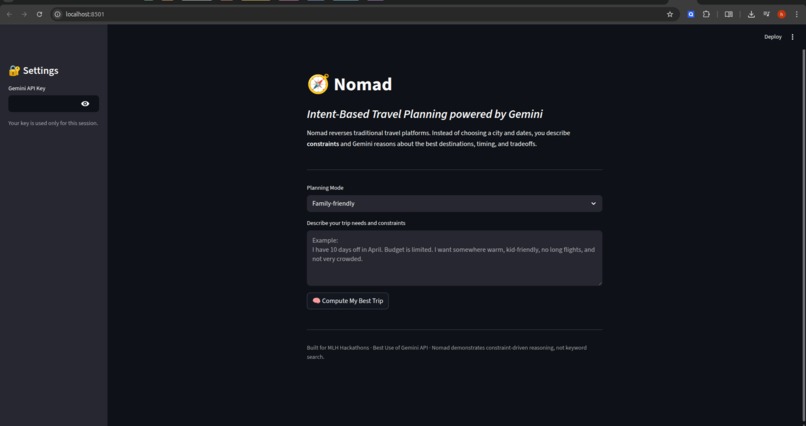
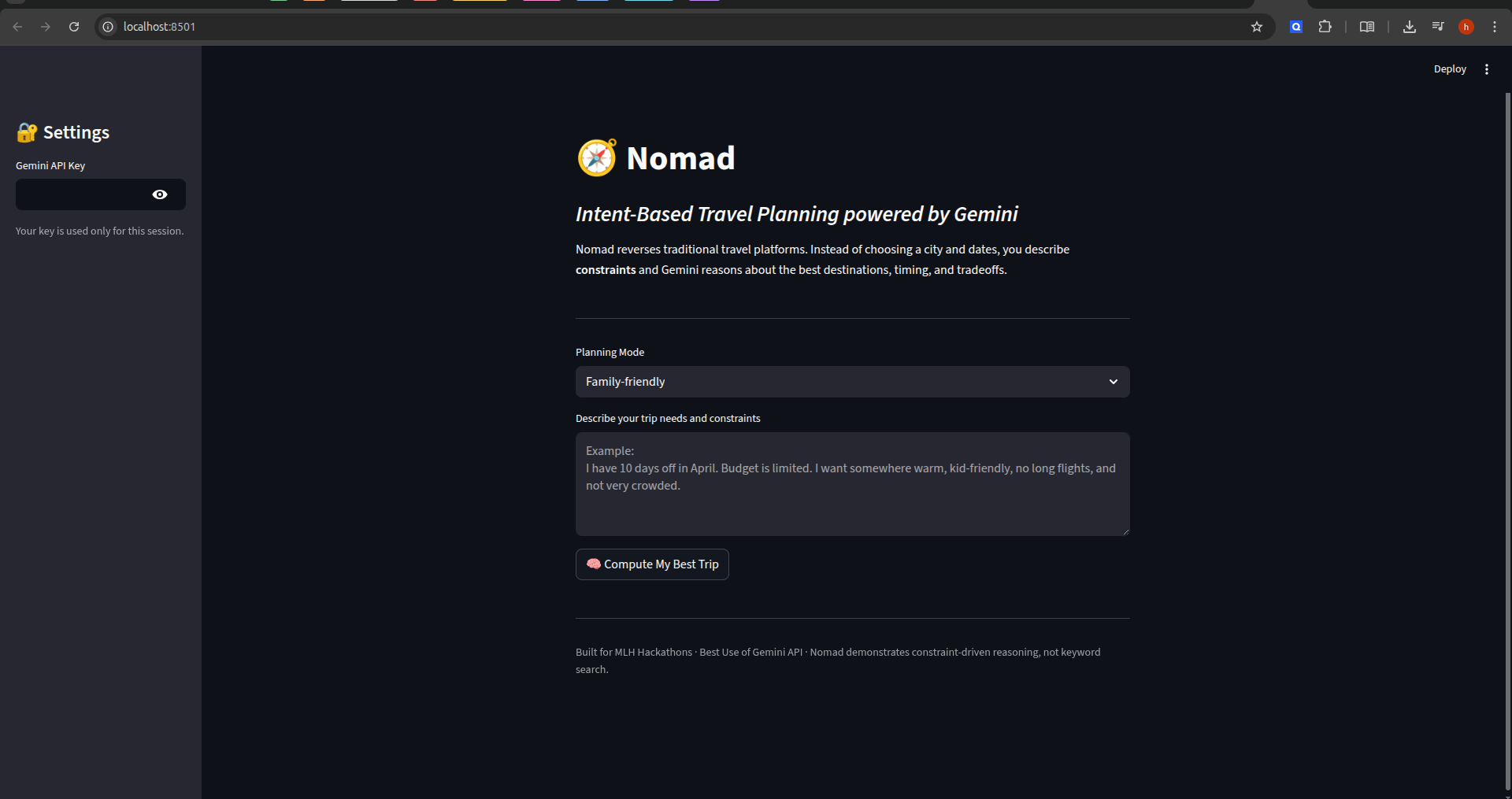
plain page with no data yet
-
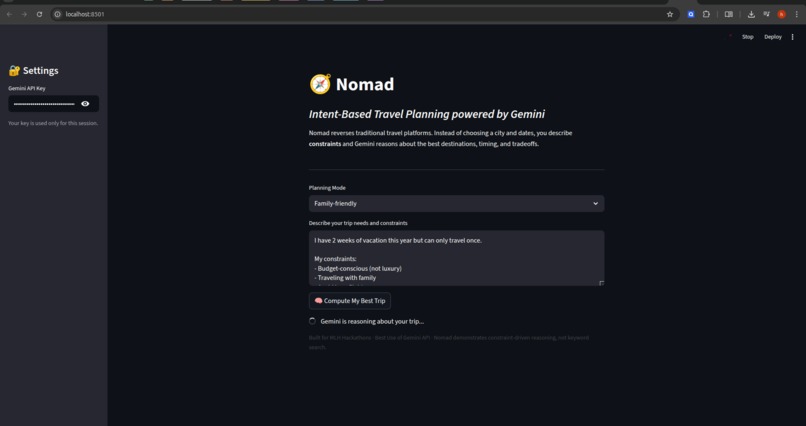
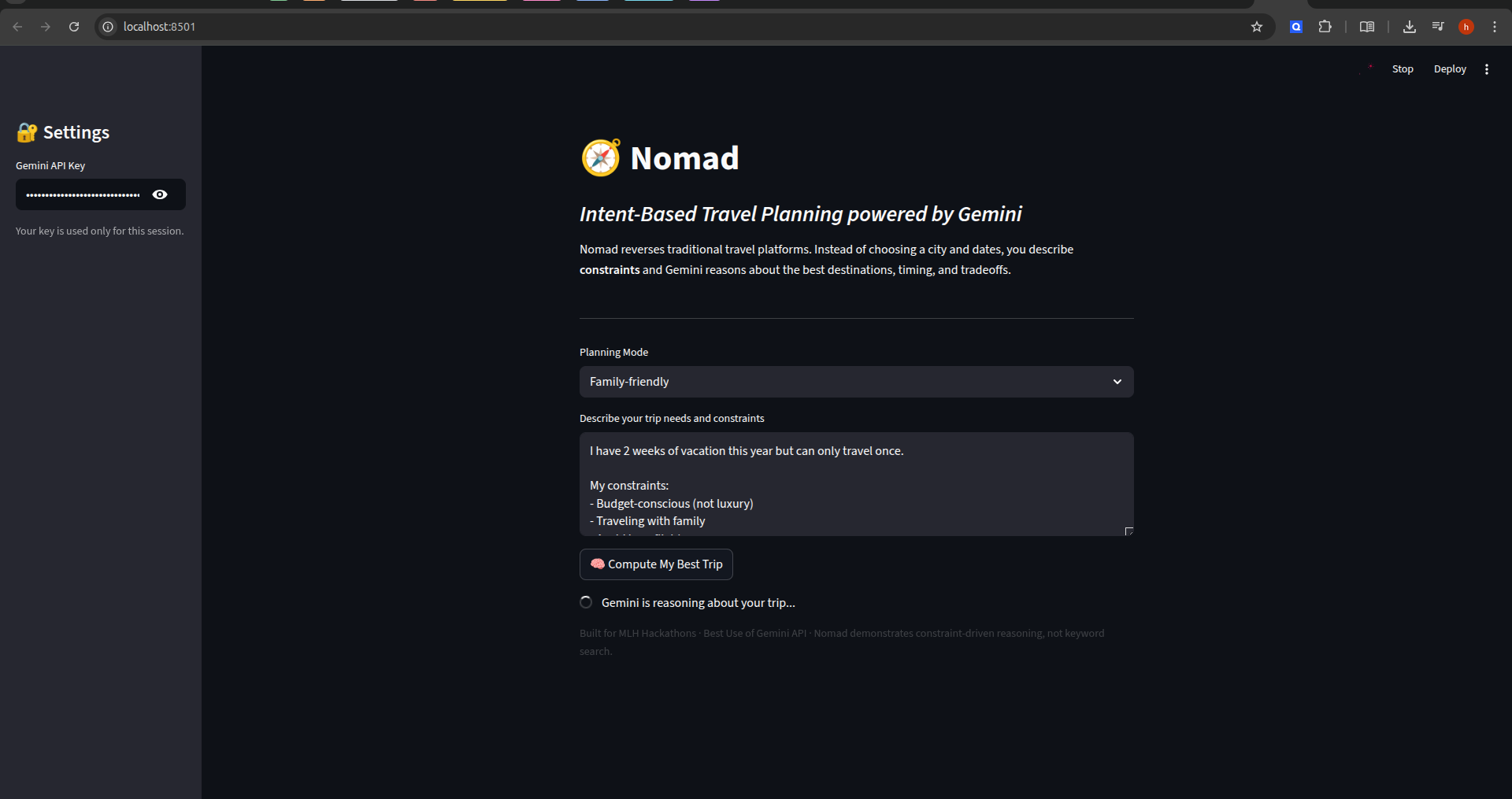
adding api , prompt
-
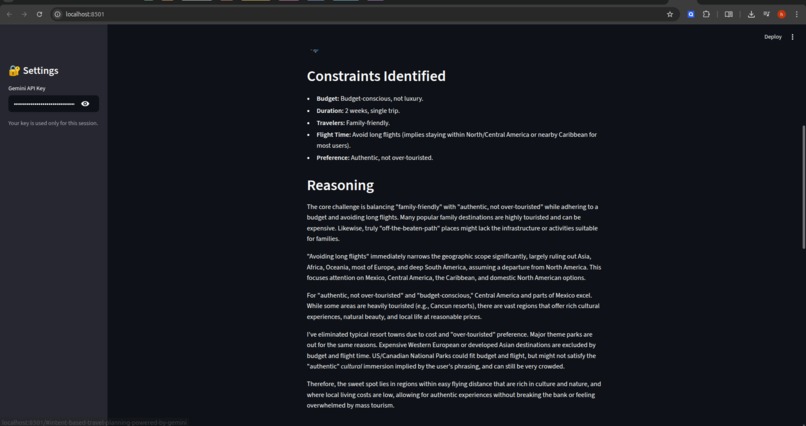
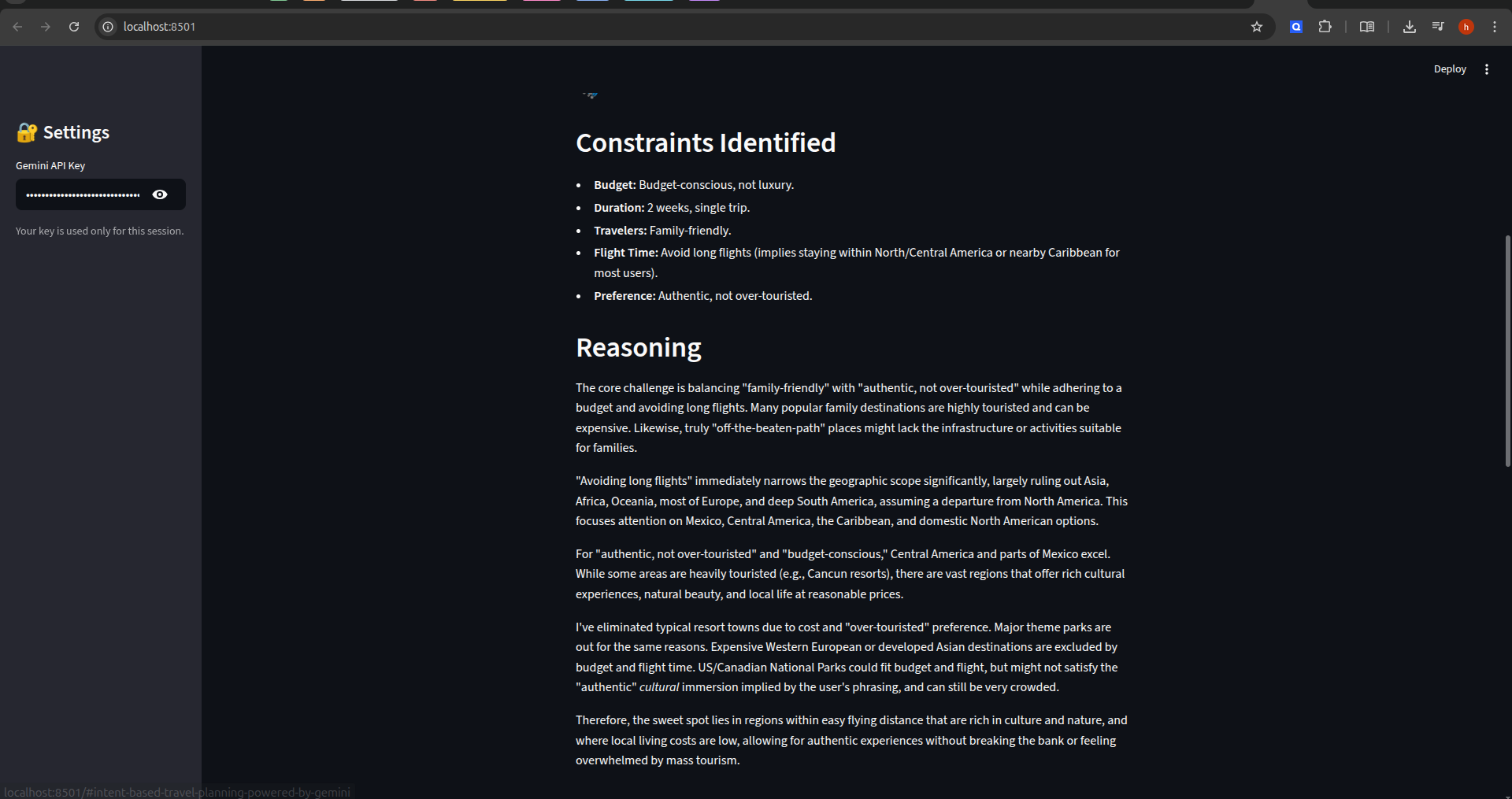
reasoning step from json response
-
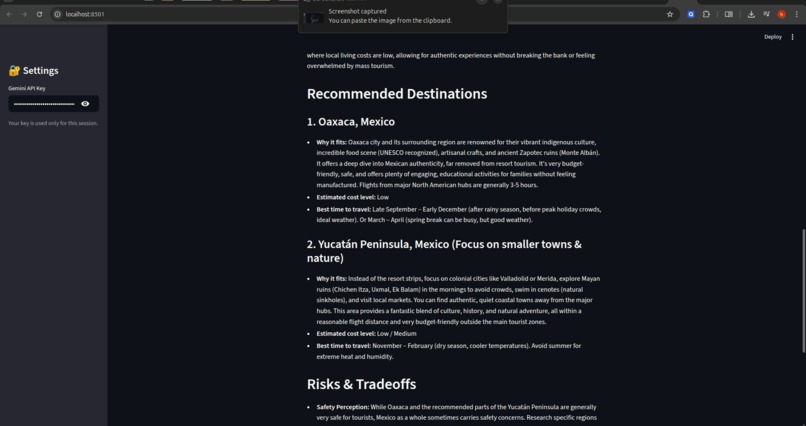
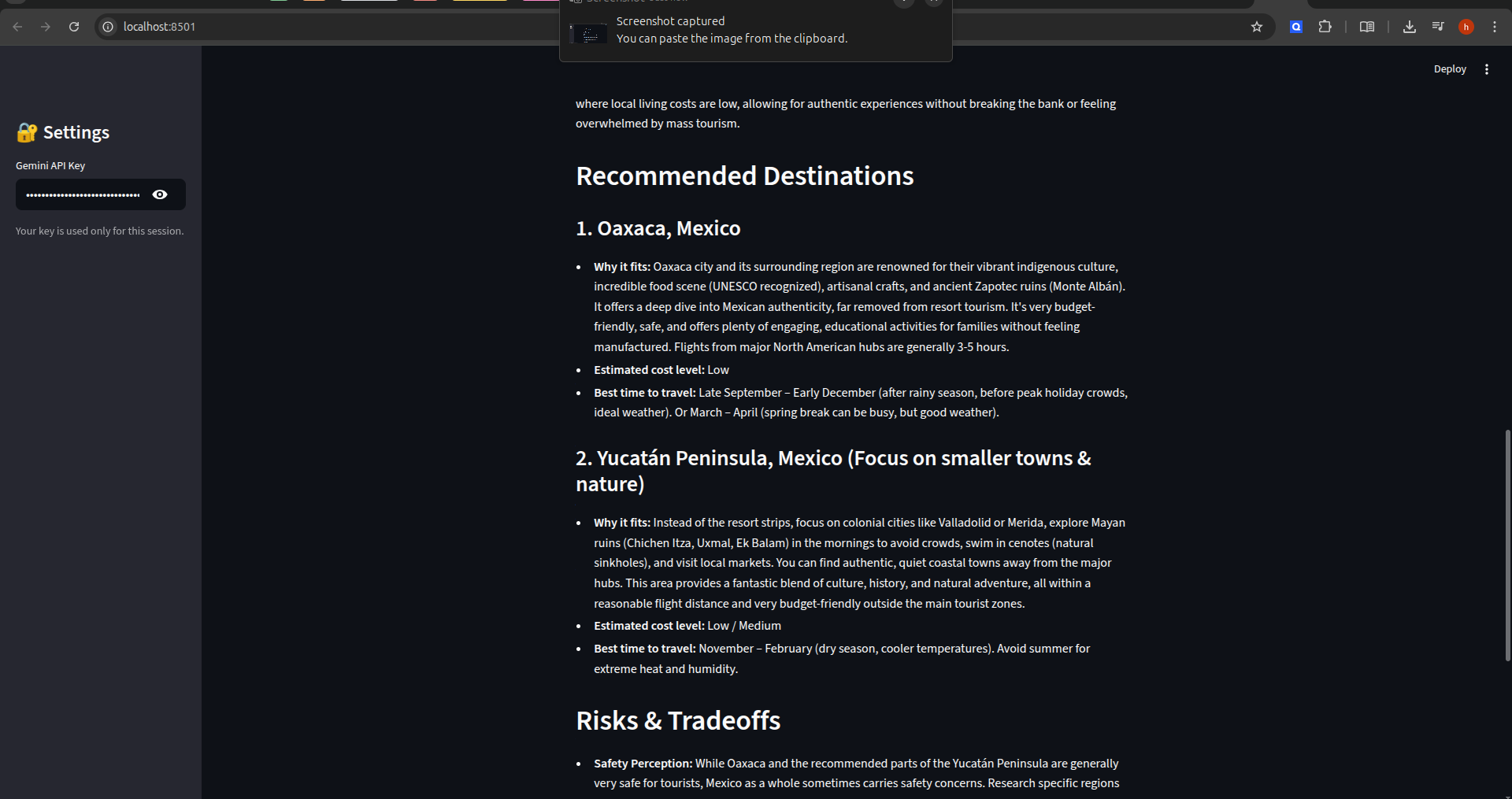
the recommendation
Inspiration
Most travel platforms force users to start with destinations and dates. In reality, people usually start with constraints: limited time, budget, family needs, mobility, and uncertainty about where to go.
Nomad was inspired by this mismatch. I wanted to flip the model and ask:
What if an AI could reason from intent instead of filtering destinations?
What Nomad Does
Nomad is an intent-based travel decision engine powered by the Gemini API.
Instead of choosing a city and dates, users describe:
- Time availability
- Budget limits
- Who they’re traveling with
- Preferences and constraints
Gemini then reasons about:
- Where to go
- When to travel
- Why certain options fit better
- What tradeoffs the user is making
How I Built It
Nomad is built as a lightweight web app using:
- Streamlit for the UI
- Google Gemini API for reasoning and content generation
The user provides a natural language description of their travel intent. This input is sent directly to Gemini with a carefully designed instruction that emphasizes constraint-driven reasoning over keyword matching.
Gemini returns:
- Identified constraints
- A reasoning section
- Ranked destination recommendations
- Risks and tradeoffs
Challenges
- Designing prompts that encourage reasoning, not just listing destinations
- Preventing generic travel advice
- Structuring Gemini output so it feels like a decision engine, not a chatbot
What I Learned
- Gemini excels at multi-constraint reasoning when the prompt is framed correctly
- Clear intent modeling is more powerful than traditional search filters
- AI products feel stronger when they decide with the user, not just suggest options
What’s Next
Future versions of Nomad could:
- Support visa constraints
- Optimize for carbon footprint
- Compare tradeoffs visually
- Personalize recommendations over time
Nomad demonstrates how Gemini can power decision-making, not just answers.

Log in or sign up for Devpost to join the conversation.