-
-
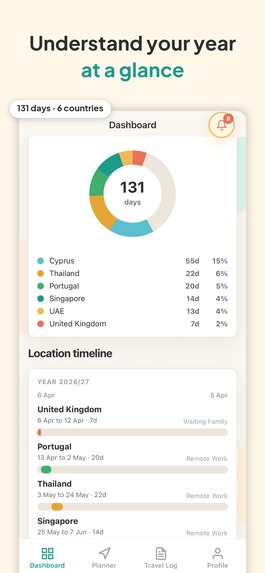
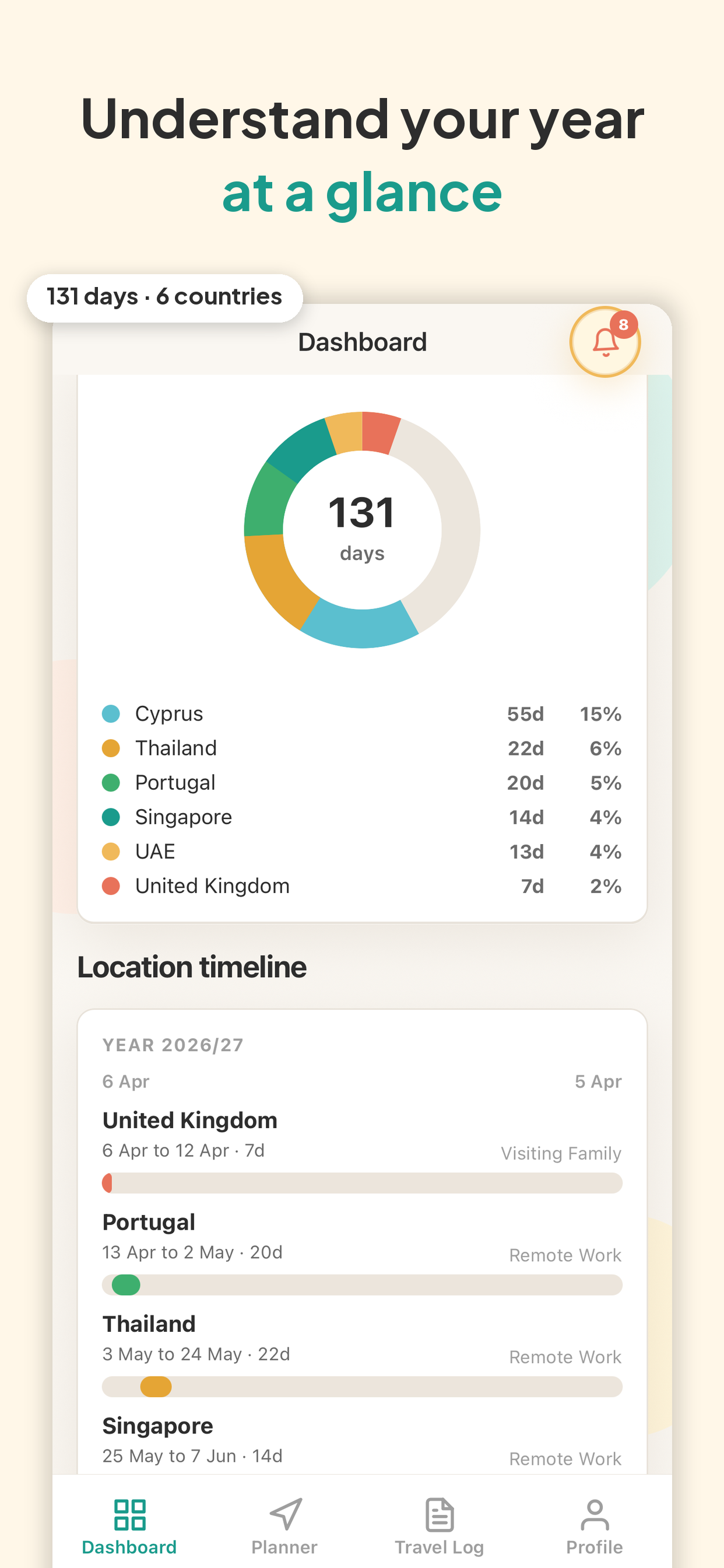
Understand your year at a glance
-
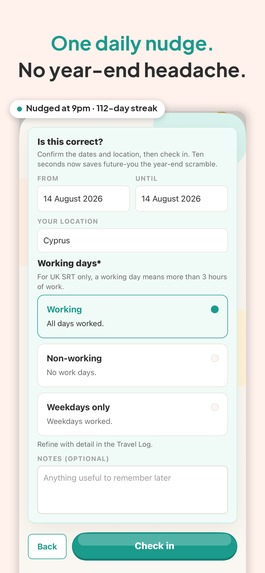
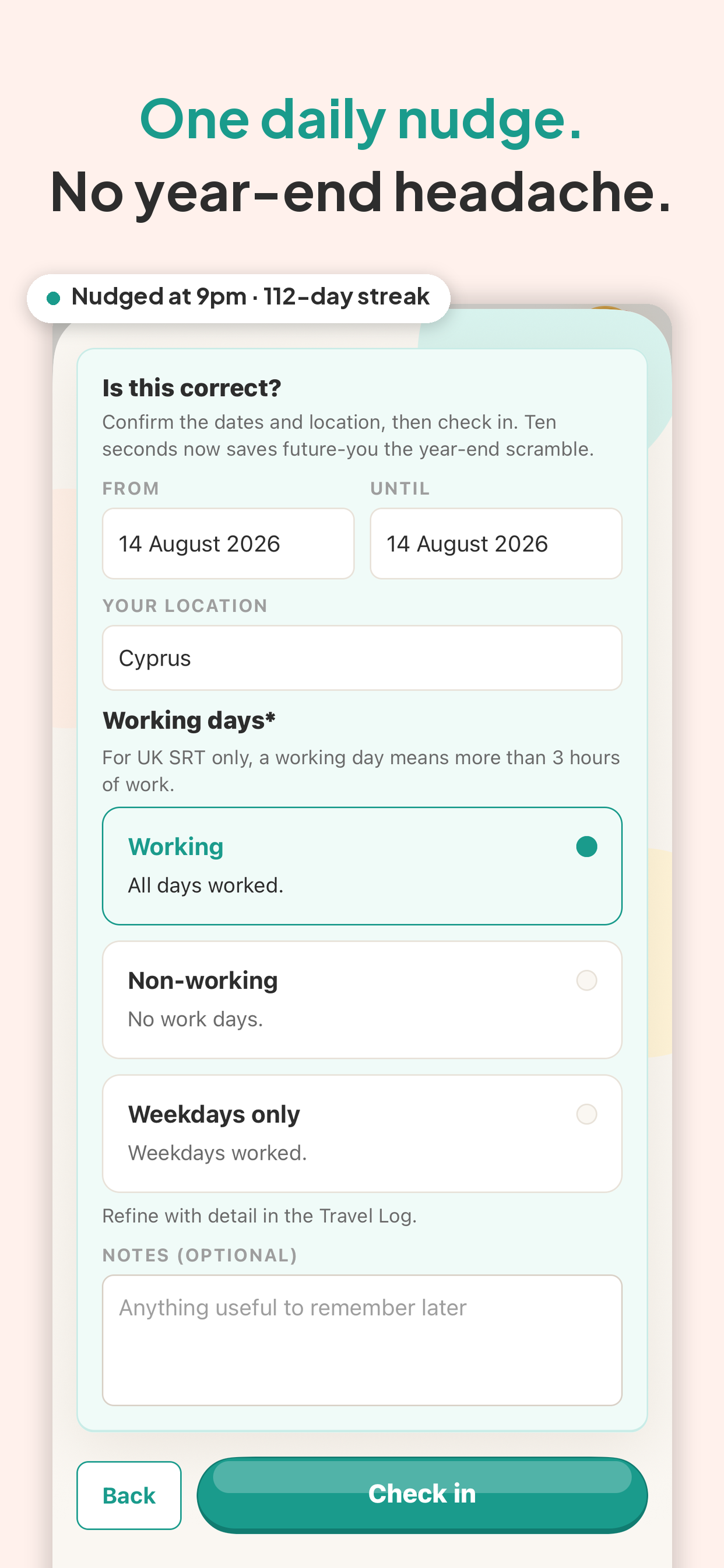
Daily check-ins to avoid year-end admin nightmare
-
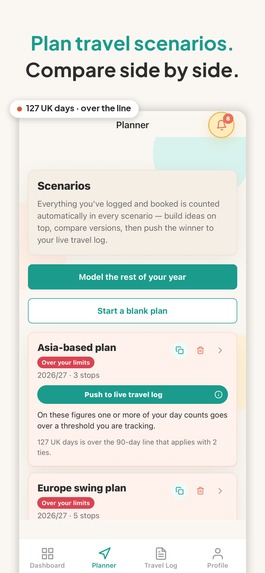
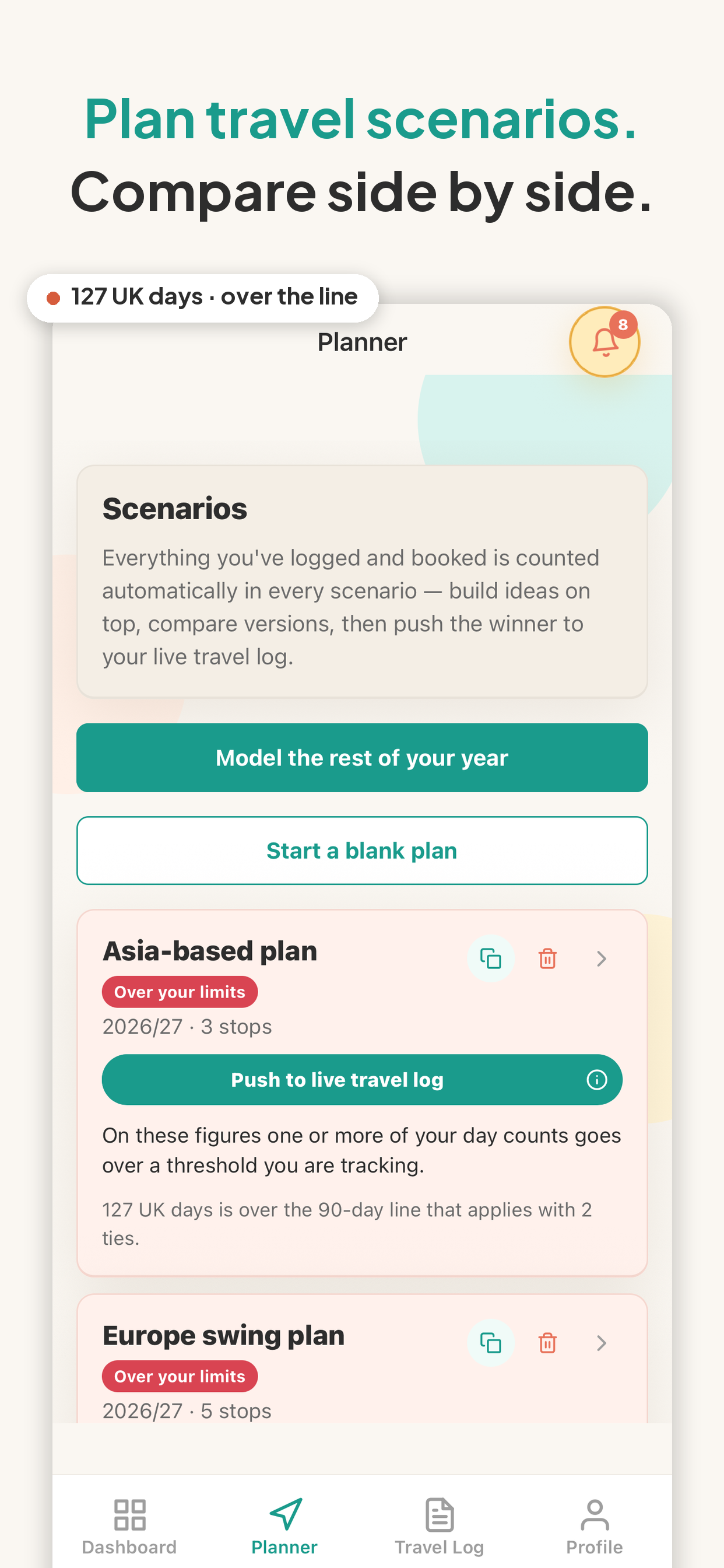
Compare different travel plans
-
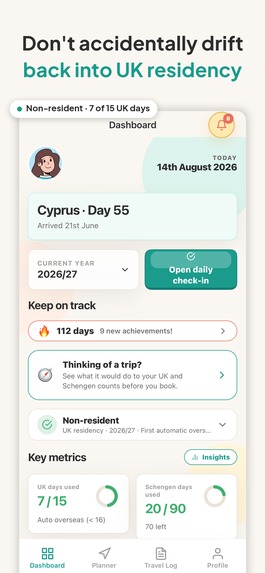
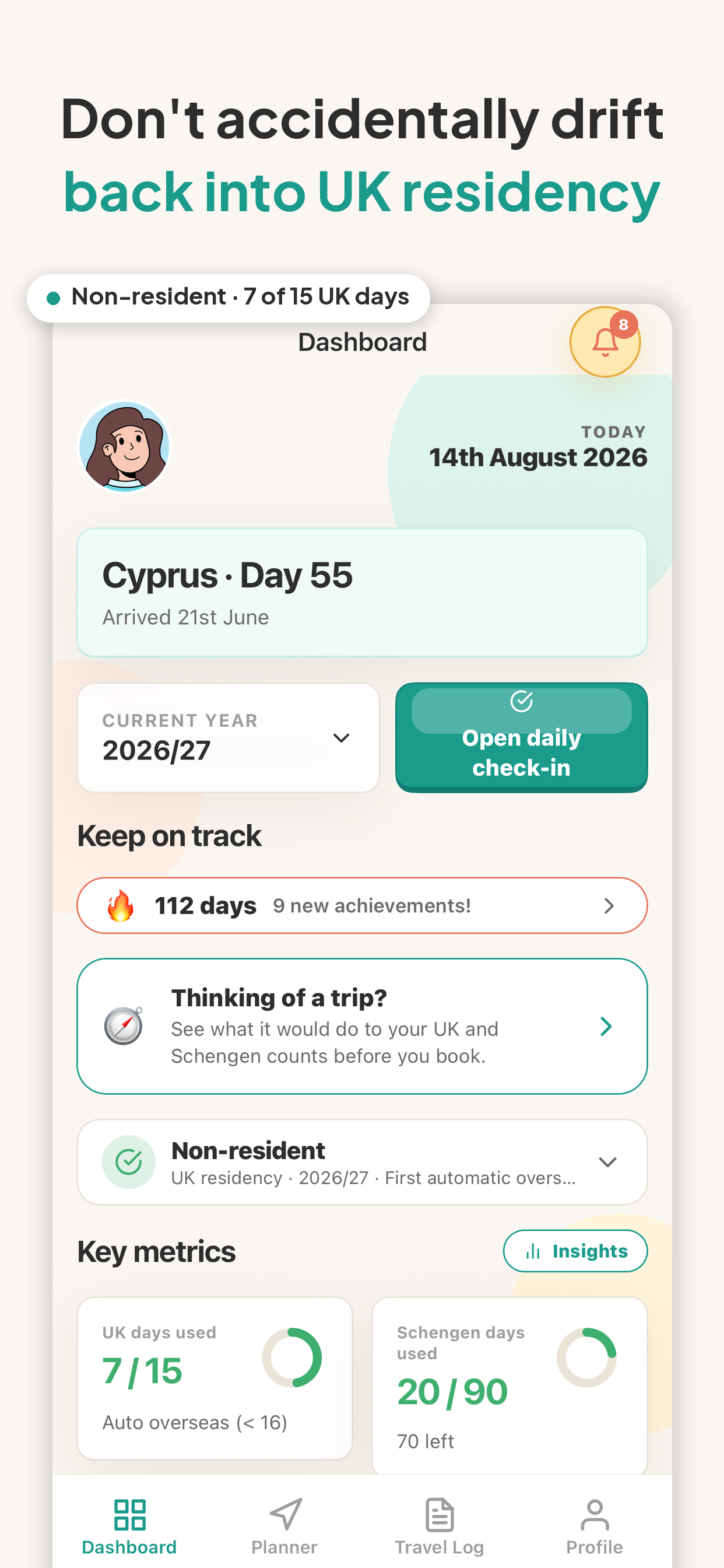
Don't accidentally drift into UK residency
-

Nomad Pro: Tax Day Counter
-
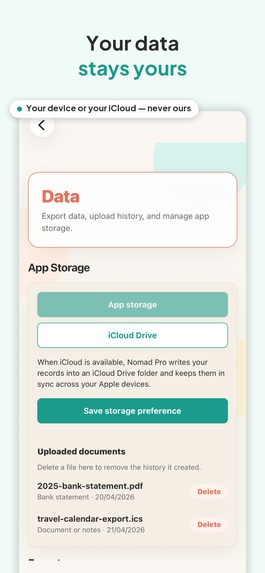
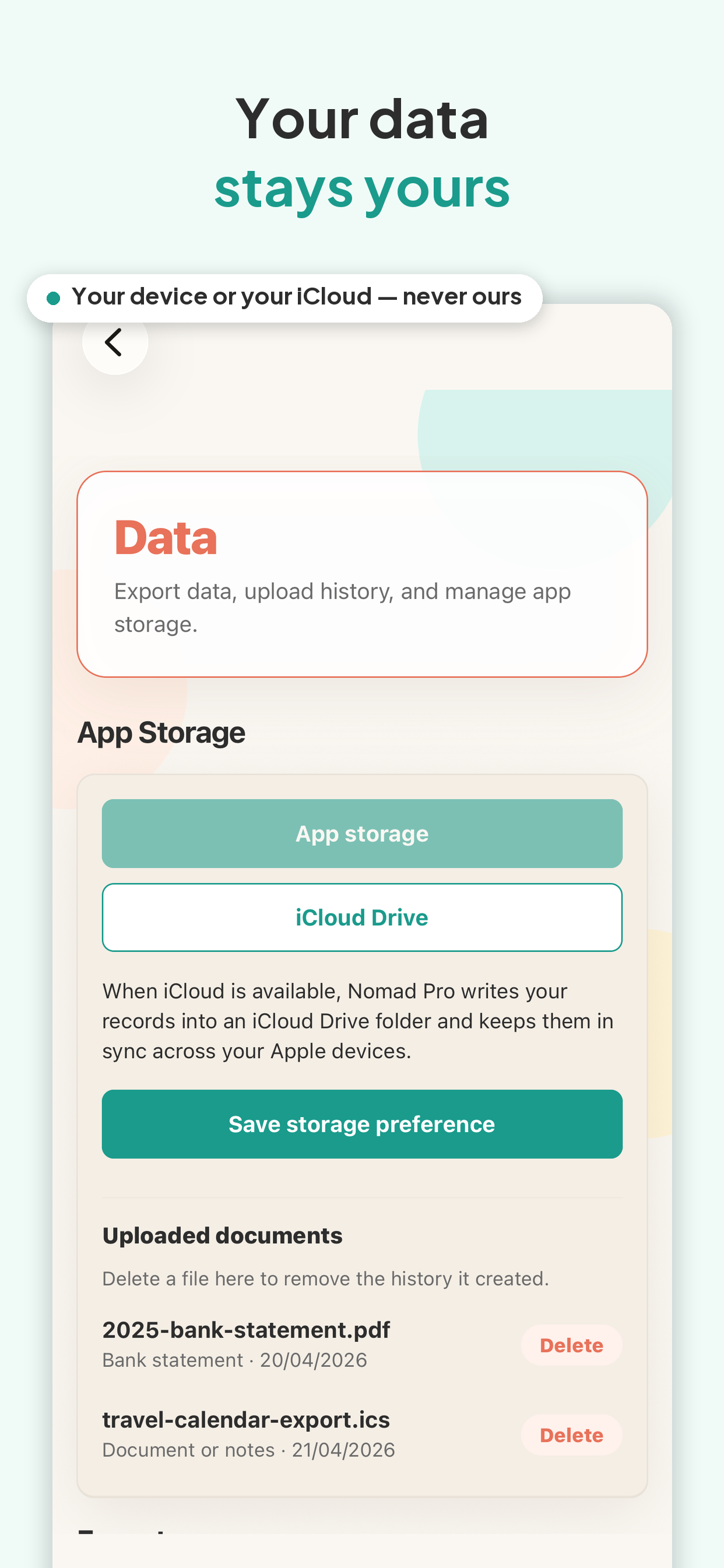
Privacy: your data stays with you
-
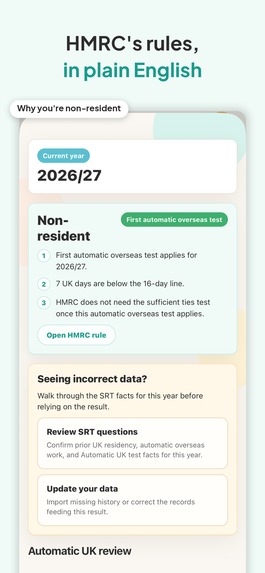
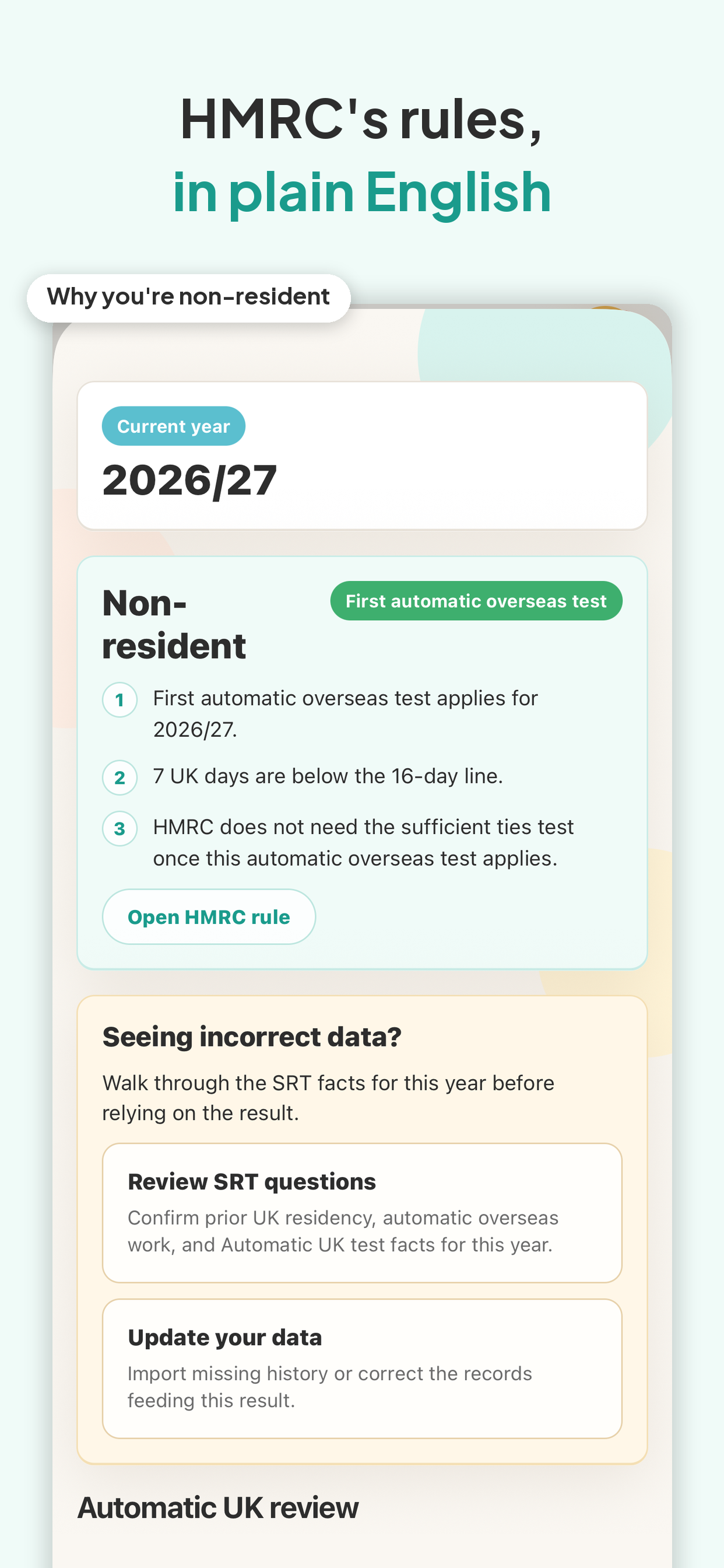
HMRC Tax rules in plain English
-
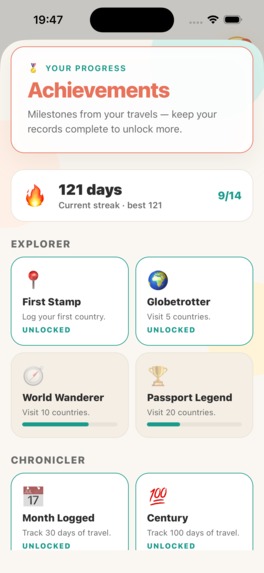
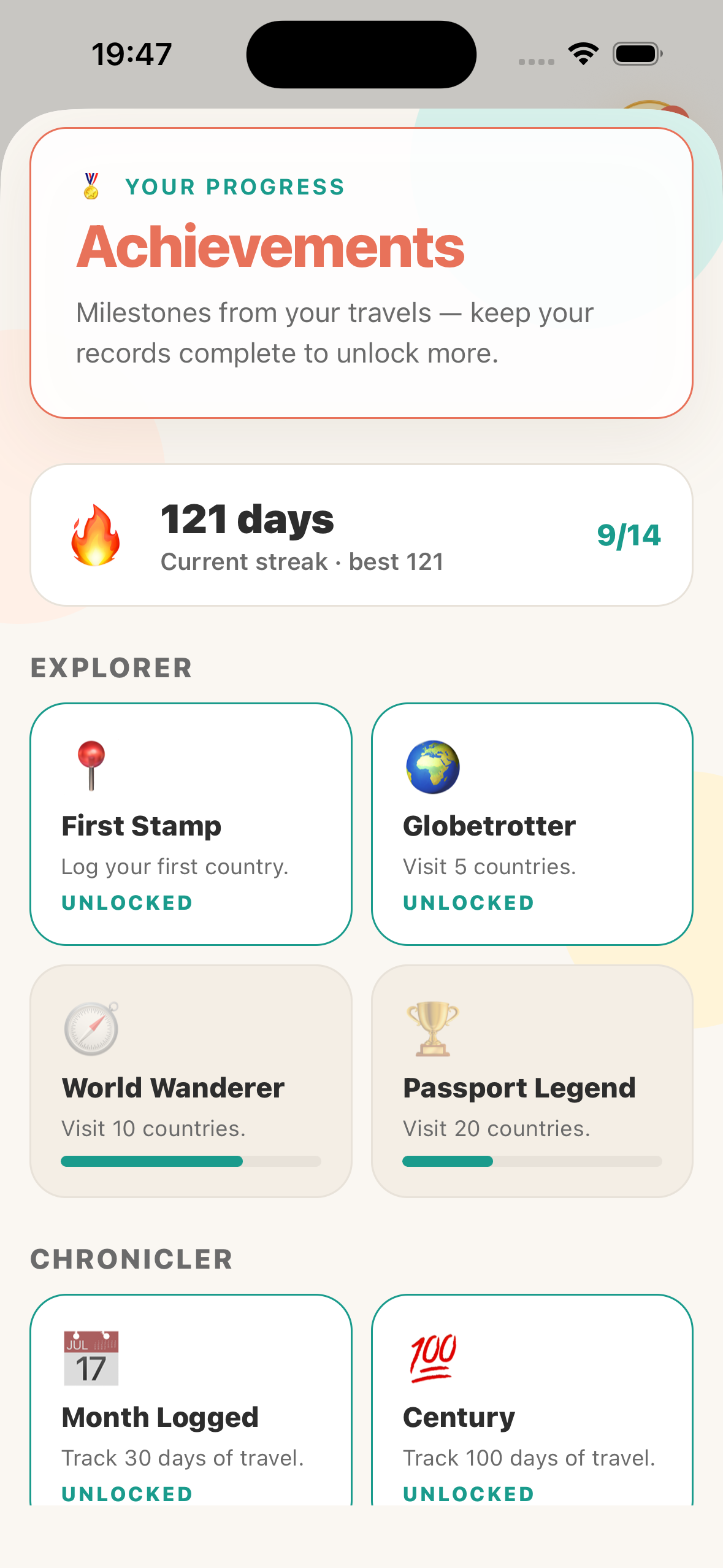
Make admin fun for once
-
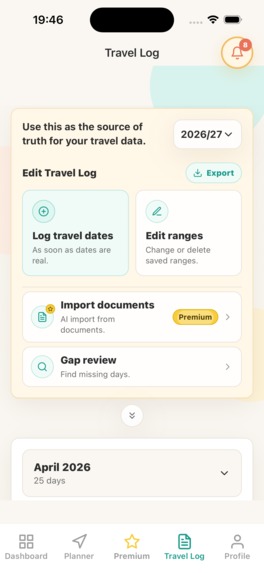
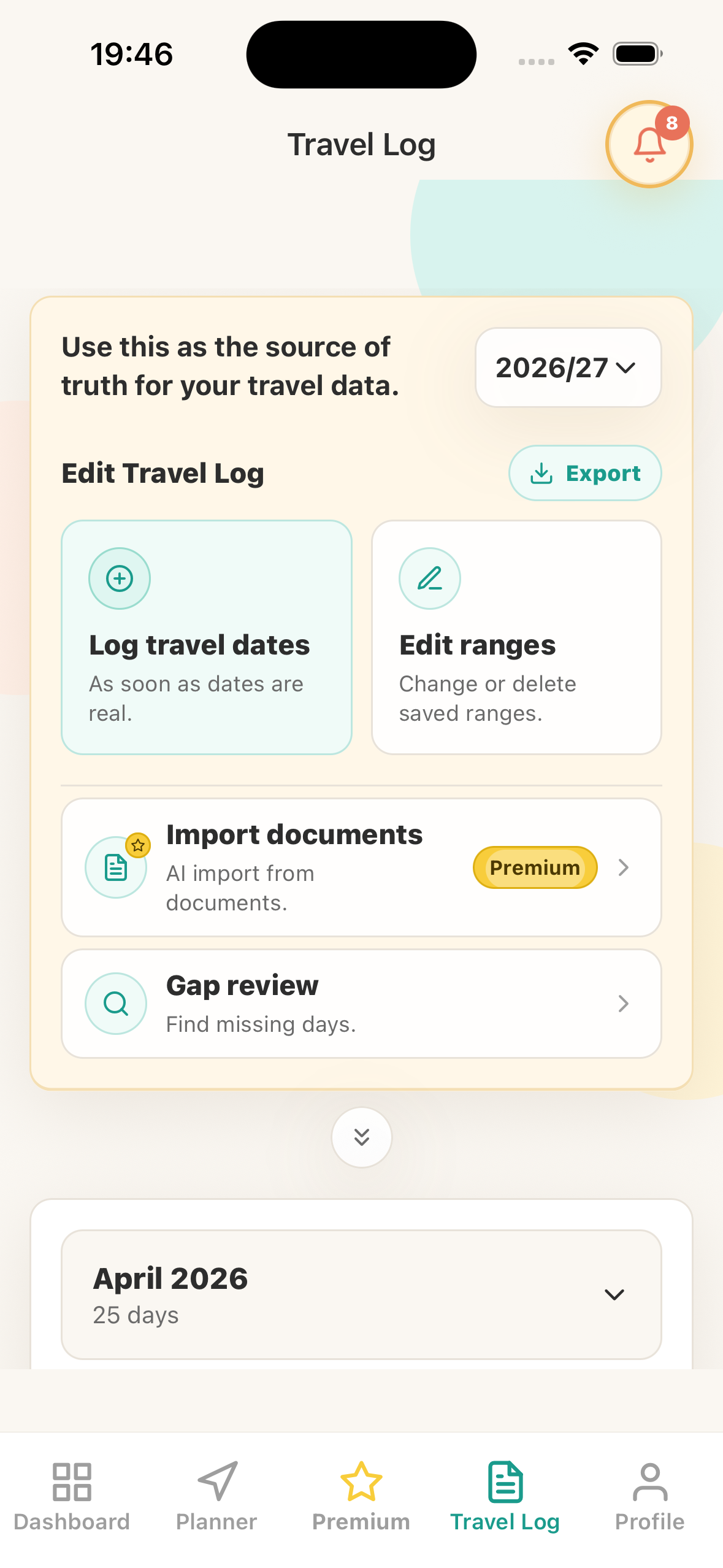
Manual travel logs for maximum control and visibility

Inspiration
As a British nomad, navigating tax guidance, staying on top of admin, and planning travel is a never-ending cycle. I built this app as a labour of love for myself wishing there was an app that would know my circumstances and remind me everyday to do a 5 second task that if I don't do, ends up as a year-end admin headache (and a very long, boring, and hated task).
What it does
The app aims to make admin fun for once. It gamifies a necessary habit of logging location as well as associated proofs. A daily push notification unlocks this.
On top of that it supports peace of mind: the app offers data analytics dashboard, tracks and warns about day limits across different jurisdictions, allows the user to forward plan with different scenarios and crucially, generate tidy documents with clean accountant ready / tax audit ready layout. Because I can't find the draft anymore
How we built it
I'm a non-technical solo founder who shipped this with two AI agents: Claude owned the code, tests, and release engineering; Hermes owned narrative and coordination; I owned every decision that touches a human. Under the hood: Expo + React Native, a pure TypeScript SRT engine with 500+ tests, RevenueCat for subscriptions, and Claude behind a privacy proxy for the AI imports. User records stay on the device — no accounts, no tracking of the record itself.
Challenges I ran into
The hardest part was turning a mess into something calm. UK residency is legal, jargon-heavy, hundreds of pages long, changes constantly, and the stakes are your money and your peace of mind. My job was to take all of that and hand someone 2 questions a day: Where are you? Did you work? And from there would develop all the artefacts that users need but don't have time or knowledge to create: analytics, warnings, trackers, documentation, proofs.
Building the onboarding, dashboard and data flows
Anyone can put numbers on a screen. Getting someone to glance at a screen and instantly know "I'm fine" or "I need to be careful this month" is much harder. I rebuilt the insights and analytics more times than I want to admit. The early AI-generated designs were not good — it took round after round of me pushing back and getting specific about what a person should feel in two seconds before it got there. That iteration was the work.
Not overwhelming people in the first sixty seconds. This is a high-anxiety subject. If someone opens the app and gets hit with residency ties, day thresholds and rule names, they close it and never come back. So the onboarding and the user journey became their own build: what to show first, what to hold back, how to prove the value before asking for anything — and how it still feels like a five-second habit on day 200, not just day one.
I had never solo shipped an app.
Apple Developer account, certificates, provisioning, App Store Connect, TestFlight, review guidelines, screenshot specs. Every one of those was a first. There was a wall at every step.
Getting the AI reliable enough to ship. The AI features only earn their place if they're right. Feeding it somebody's messy handwritten notes, or a bank statement, or whatever document they happen to have, and getting structured, honest trips back took serious work on the prompts and on the filters around them — what we accept, what we flag, what we refuse to guess at. Loose extraction is worse than none here: a wrong date in your record is worse than a blank one.
The feature I deleted two days before submitting. Calendar import should have been the easy win: read the calendar, get the trips. But a real calendar is noise. The AI kept turning meeting titles into locations ("West India Quay" is in London, not India) and logging them as travel. I couldn't ship something that invents your history, so I cut it. It's a V2 problem and it needs solving properly or not at all. Shipping honest beat shipping big.
Making sure the app never oversells itself. This is someone's tax record, not a game of confidence. A test now sweeps every paywall sentence against a banned-phrase list, so the app can never promise a tax outcome it isn't able to stand behind.
Accomplishments that I'm proud of
I built something I actually love and use every day. That sounds like a small thing to be proud of. But it is genuinely hard to build with AI and end up with something that doesn't feel low-effort, generic and boring (especially as an admin app). Getting to an app I'm personally passionate about, that I open because I want to rather than because I have to, is the thing I'm proudest of.
The planner push — the part I haven't seen anywhere else. You can model a version of your year, push it into your live record, and see it land on the dashboard as real analytics: what it does to your day counts, your limits, your position. Then withdraw it and push a different idea instead. Tentative trips stay tentative, so a maybe never sits in your record looking booked. Withdrawing gives back exactly what the push created, and it tells you first if you've edited any of it by hand since. That is built for people who honestly don't know where they'll be in six months.
No account, no sign-up, and no copy of your record anywhere but your phone. Your travel log, your notes, your proofs — they live in local files on your device. There's nothing to sign up for, and I hold no copy and no way to read them remotely. I built it this way to reflect my personal attitude to building apps and would delight me if I saw in another app: more respectful of user data.
What I learned
How to build an app, end to end. I come from growth and marketing. I had never played engineer, never done anything technical like this in my life. This was my first. Over the course of it I set up an Apple Developer account, submitted, got rejected more than once and came back from it, learned how code repositories and version control actually work, made decisions about security, and worked out what I could and couldn't legally say. Every one of those was a blocker at the time, and every one of them is now something I know.
That AI hands you slop by default, and refusing it is the job. The first version of nearly every screen came back generic — technically fine, visually forgettable. What I learned was how to review it properly: how to say precisely why something was wrong instead of just "make it better", and how to keep pushing through round after round until it was mine. Taste turns out to be the part you can't delegate.
That being the only person means everything is yours to think about. Nobody else was going to worry about the onboarding, the paywall wording, the privacy policy, the App Store screenshots, or the tests. There's no routing around any of it. It's been the most challenging thing I've done, and by a distance the most rewarding.
What's next for Nomad Pro
I really love this idea that admin can be gamified. It is one of the hardest elements to habitualise, I certainly find every excuse to avoid the pain of it. So the roadmap is focused on doubling down on gamification elements, regular dopamine hits, progress, challenges, milestones etc. V1 has an initial taste (to be improved!) of it with the spotify-inspired "Your travel, wrapped" which showcases the user's year in a series of stats displayed on shiny cards. This as well as giving users customisable avatars, unlock achievements, collect location stamps etc. It's currently the messient and under-developed side of the app, but I'm excited to sharpen and build on it.
Built With
- claude
- expo-notification
- expo-router
- expo.io
- ios
- jest
- react-native
- revenuecat
- typescript
- vercel
- zustand

Log in or sign up for Devpost to join the conversation.