-
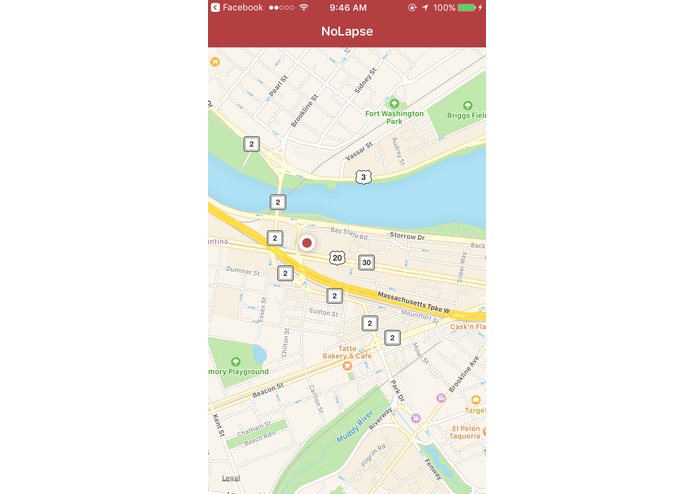
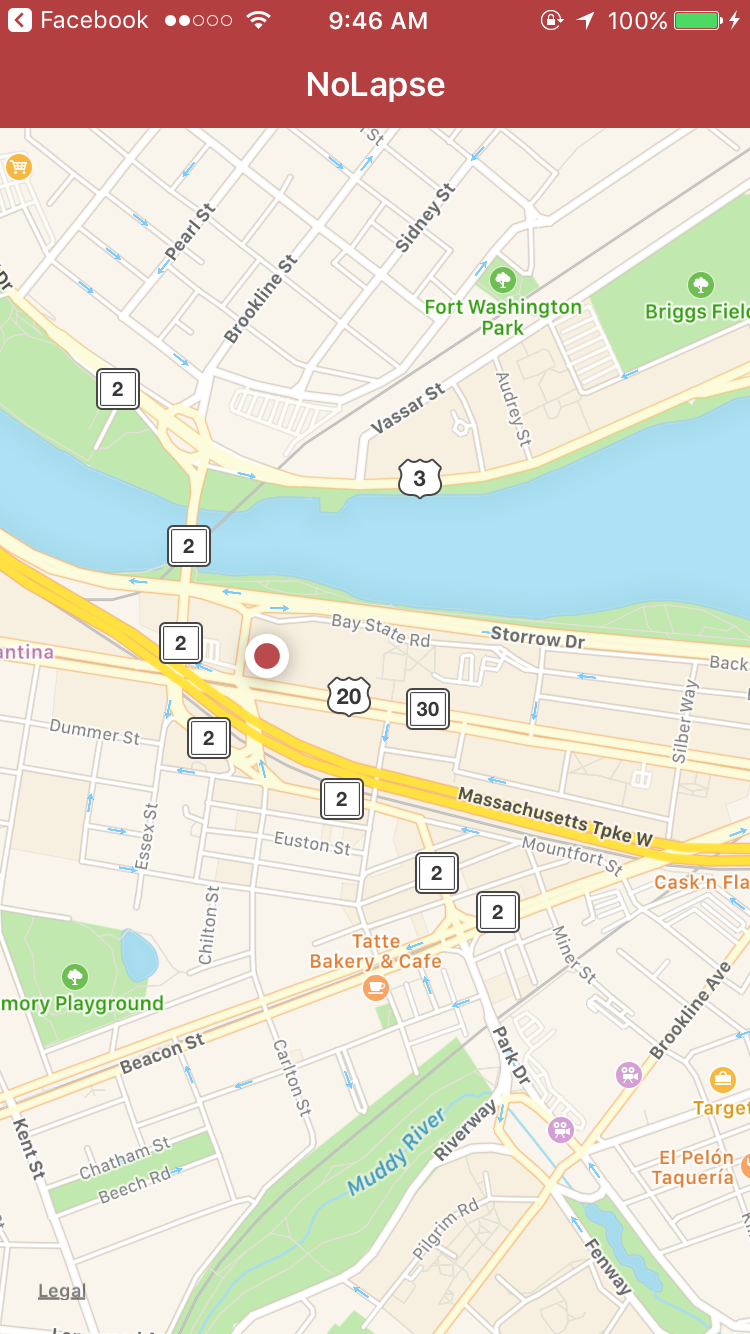
Location Tracking
-
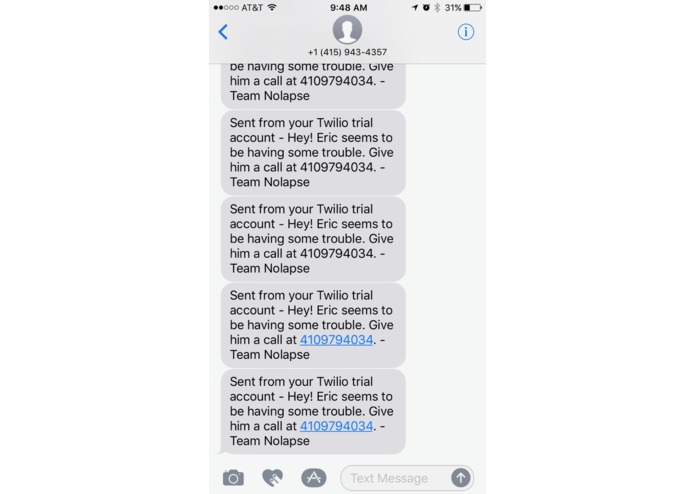
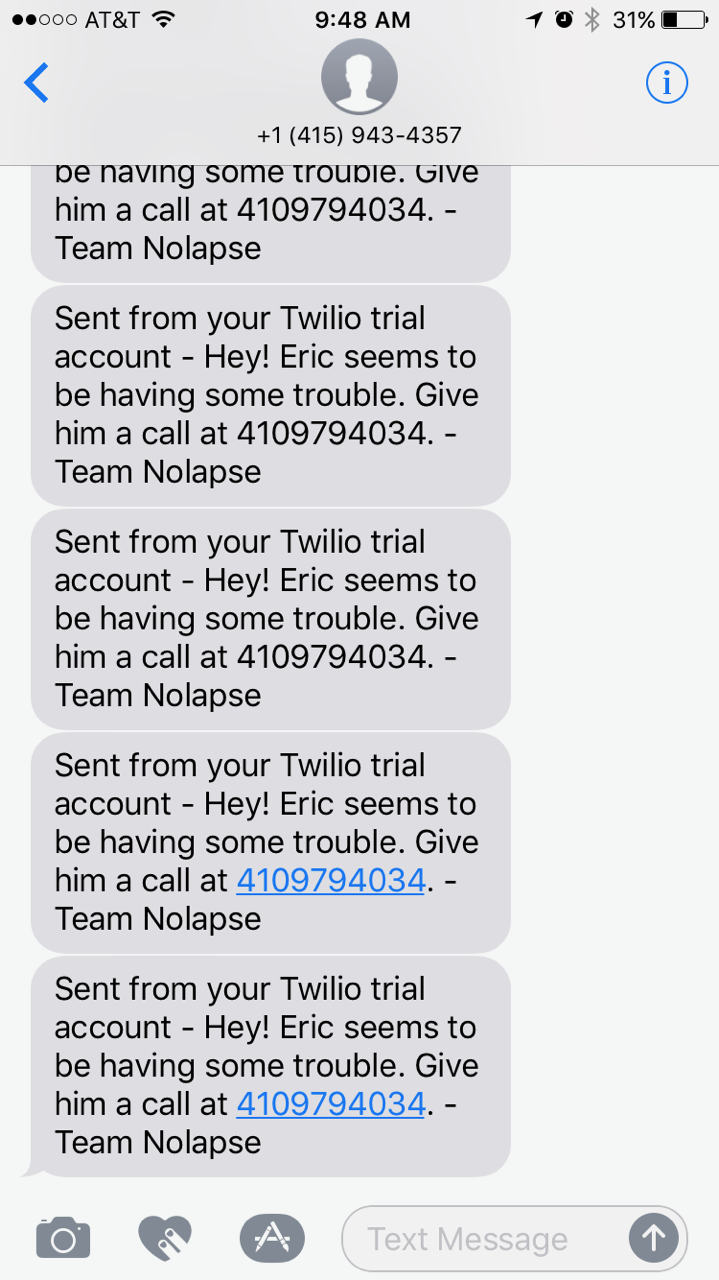
Sample Messages sent to the trusted party
Inspiration
*Heroin deaths surpassed gun homicides for the first time. * Rehabilitation can be difficult with help but impossible alone.
What it does
We want to help. Nolapse looks for warning signs that may lead to relapse. This could involve visiting a location where the addiction happened frequently or a place where the substances were bought. Nolapse uses geofencing to identify problem locations and send help using Twilio when you need it the most.
How We built it
We built a main iOS app for the user. This helps keep track of where the user is and the problem spots to avoid. It also keeps track of their progress and encourages them to move forward.
Challenges I ran into
Our main challenge was centered around the user. How could we interact and intervene in the most effective way?
Accomplishments that I'm proud of
We are proud that the geofencing works! When a user is nearby an area that could lead to relapse, a case manager or family member can be notified right away. We hope that this will lead to fewer relapses over time.
What I learned
People can overcome their addictions, but not easily. People need a network of caring people to help them. There are many reasons why a person might relapse but many times it boils down to a lack of connection. We can't expect everyone to be connected at all times but Nolapse can help when you need it the most.
What's next for Nolapse
We hope that by tracking meetings, we can encourage people to continue forward. By tracking patterns over time, Nolapse may one day be able to schedule more meetings and interactions around traditionally hard times of the year, such as Christmas. We want to look for all the warning signs possible so that we can get you the help when you need it the most.
Nolapse also hopes to aggregate data from EHRs and social media to monitor for warning signs.

Log in or sign up for Devpost to join the conversation.