Inspiration
Creating high-quality audio for videos is still time-consuming, expensive, and heavily dependent on human expertise. We were inspired by the pain points of creators — from YouTubers to educators — who often lack the tools, time, or skills to produce immersive sound. We envisioned an agent that could understand video context and automatically generate voice-over, sound effects, and music, making content creation faster, smarter, and more accessible.
What it does
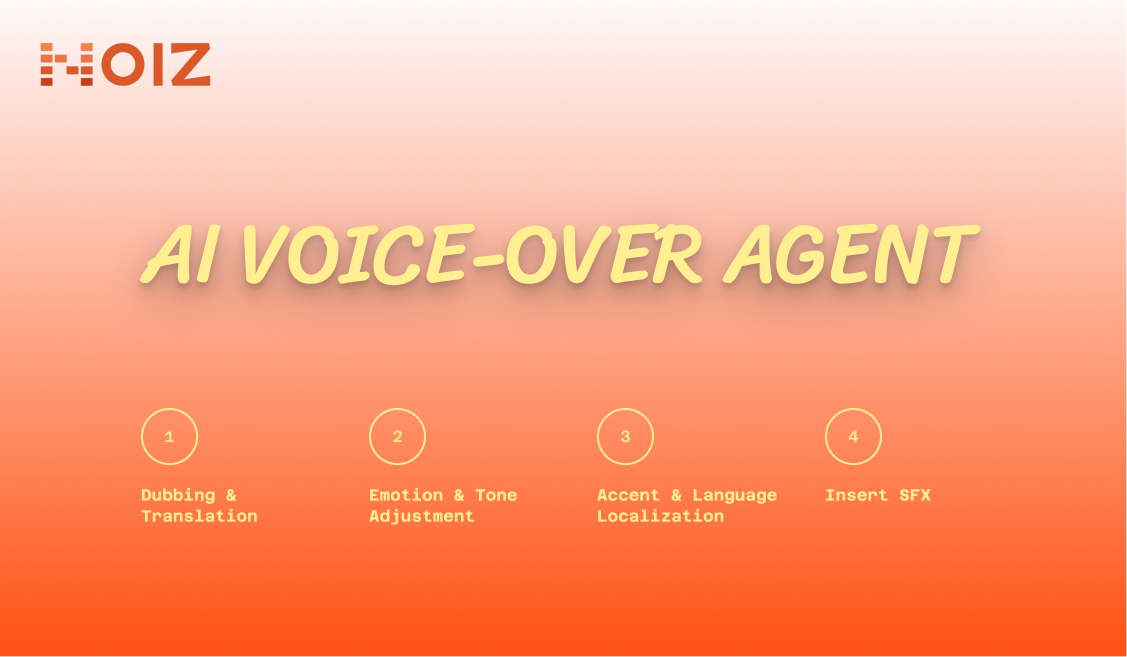
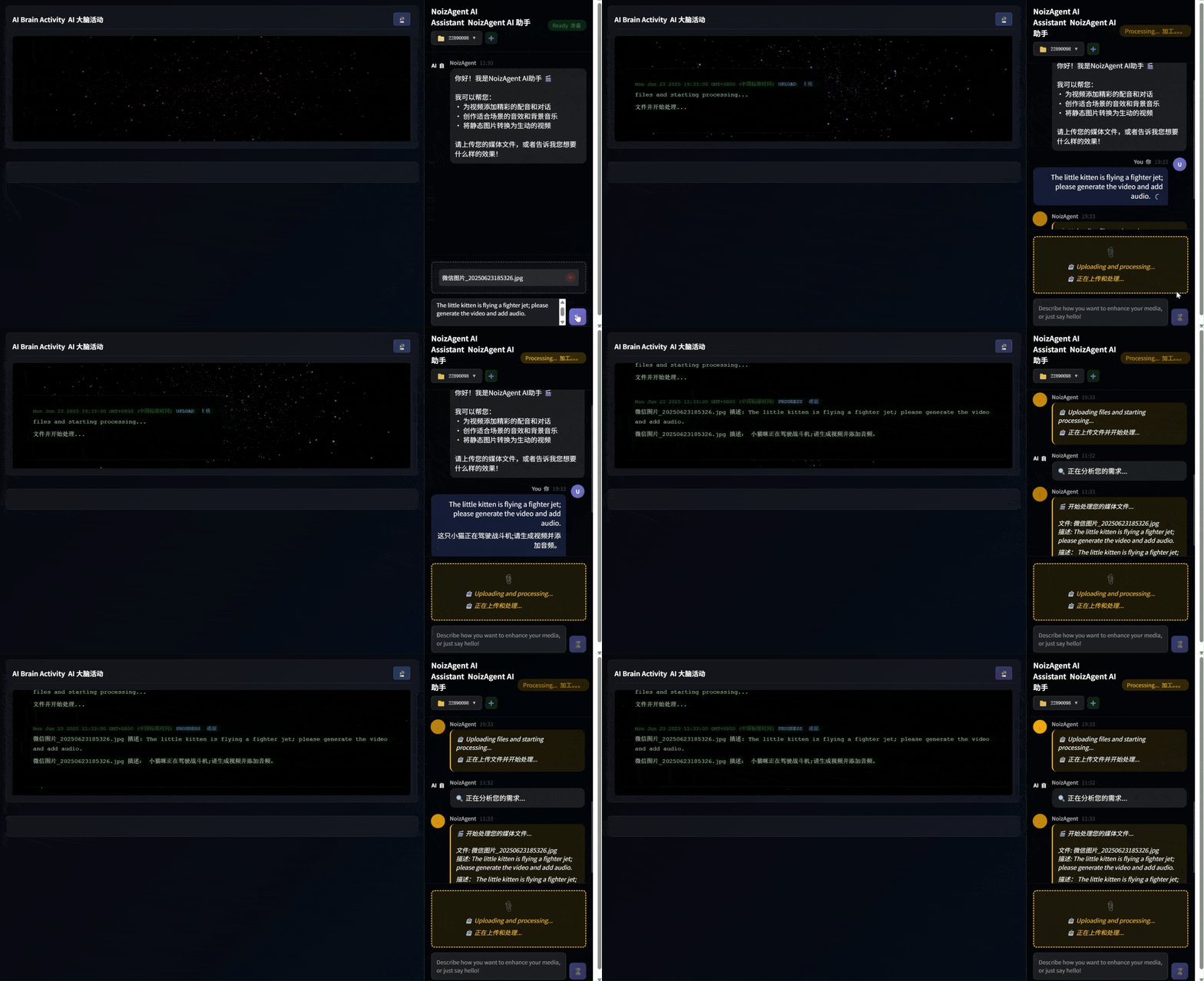
Noiz-AI is a one-stop AI voice-over agent that transforms silent videos or text scripts into rich, professionally-sounding audiovisual experiences — in just one click.
It can: Analyze scenes, actions, and emotions from video input. Understand script tone and pacing. Automatically generate and sync: Voice-over (with emotion and style control), Sound effects (scene and action-aware), Background music (mood-aligned and dynamic). Offer customization with multilingual and character voice styles.
How we built it
We combined multiple AI technologies into a modular Agent system:
Computer Vision (CV): Detects scenes (e.g. forest, city), actions (e.g. walking, closing door), and tempo from video frames. -Natural Language Processing (NLP): Understands script semantics, tone, and emotional cues.- TTS Engine (multi-style): Produces expressive voice-over in real-time, with options for gender, age, language, and style. Sound & Music Generator: Dynamically matches or creates fitting effects and background music from a curated dataset and generative models. -Agent Orchestrator: Makes real-time decisions to synchronize all audio layers with visual and narrative flow.
🛠 Built with: Python, HuggingFace Transformers, PyTorch, ffmpeg, and AWS services (S3, Lambda, Transcribe, Polly).
Challenges we ran into
Precise timing & sync: Ensuring sound effects and music transitions align perfectly with scene cuts and visual cues was technically challenging. Multi-modal context fusion: Balancing information from vision + text to make coherent sound decisions required iterative tuning. Latency vs quality: Struggled to optimize between fast generation and high fidelity, especially for longer-form videos. Voice diversity: Crafting expressive and customizable voices with limited training data was harder than expected.
Accomplishments that we're proud of
Reduced audio post-production time from hours to under 1 minute for short-form content. Enabled non-experts to create emotionally-rich, cinematic-quality audio without any editing. Built an intelligent audio pipeline that can generate scene-aware and emotionally tuned voice + sound + music, fully automated. Created our first demo with zero manual sound design — all output generated via agent.
What we learned
Multi-modal understanding (video + text) unlocks a new level of creative automation. Small changes in voice tone, effect timing, or music intensity dramatically affect emotional impact — audio really is half the story. There's no one-size-fits-all for audio — personalization and adaptability are key to making agents useful in real-world creative workflows. Building usable creative tools with AI requires not just technical accuracy, but artistic sensitivity.
What's next for Noiz-AI One-stop AI Voice-over Agent
Add real-time voice cloning & emotion control for custom voice branding. Build a prompt-to-audio agent: input a creative brief or scene idea and generate the whole soundtrack. Train a larger multi-modal foundation model for improved semantic reasoning. Launch a web-based editing interface for users to preview, adjust, and mix audio layers. Integrate with platforms like CapCut, Descript, and Adobe Premiere for seamless creator workflows. Open API for third-party use in games, education, and advertising.
Built With
- cudnn?google-cloud(redis
- postgresql)?whisper
- python\typescript?pytorch?cuda-12?


Log in or sign up for Devpost to join the conversation.