Inspiration
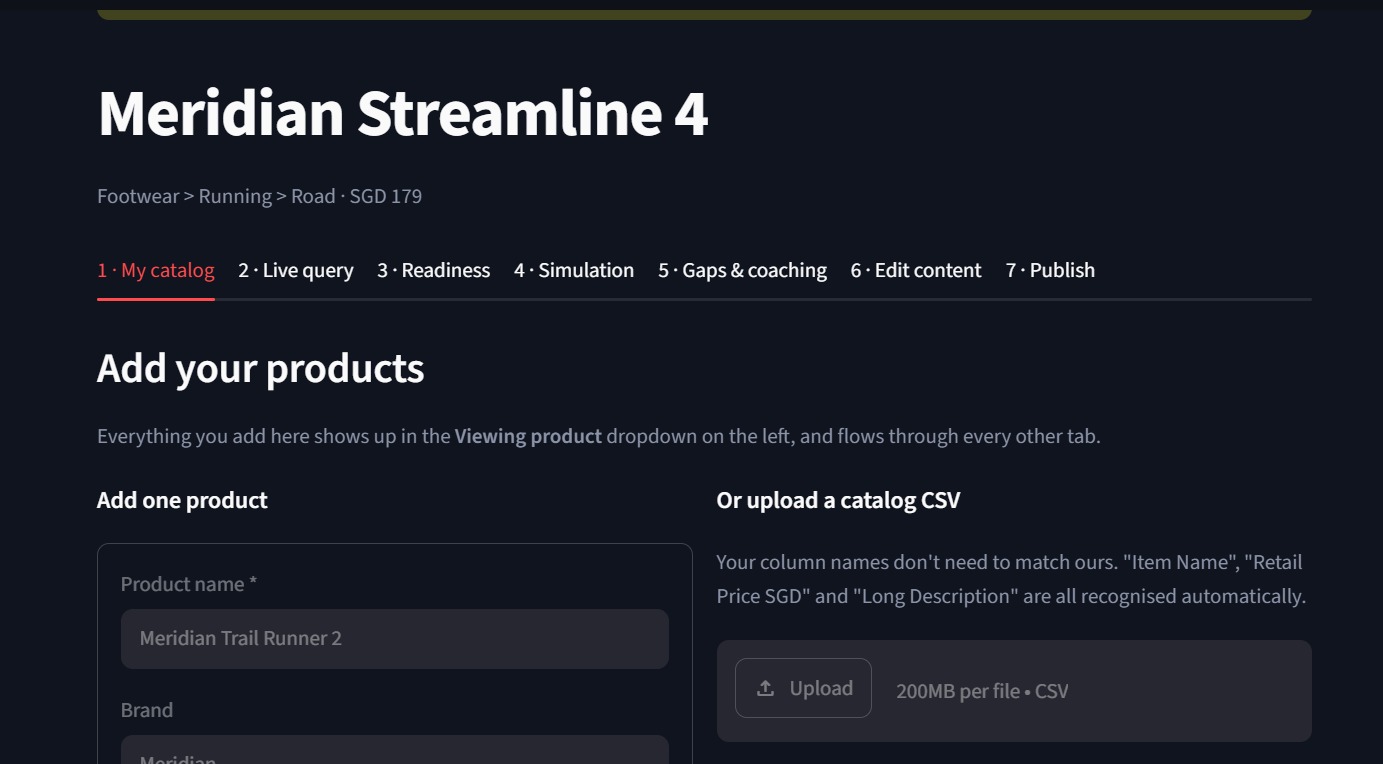
We saw the product catalogue on decathlon and decided, we want to work on making the products better to read for AI agents, such that it chooses more tailored options for the consumers. This led us to make a tool which takes in product descriptions from the merchant catalogue and gives it a score, as well as the improvements on what could be done to increase the sales.
What it does
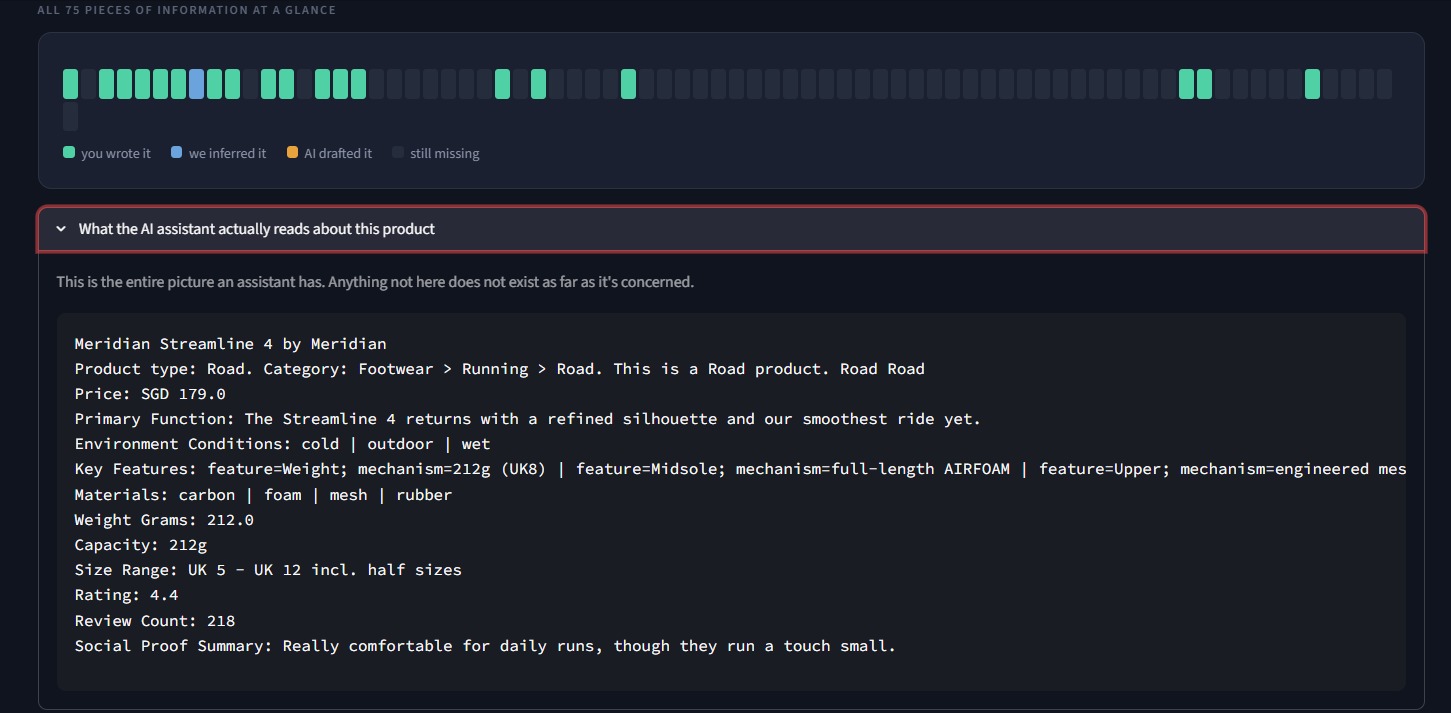
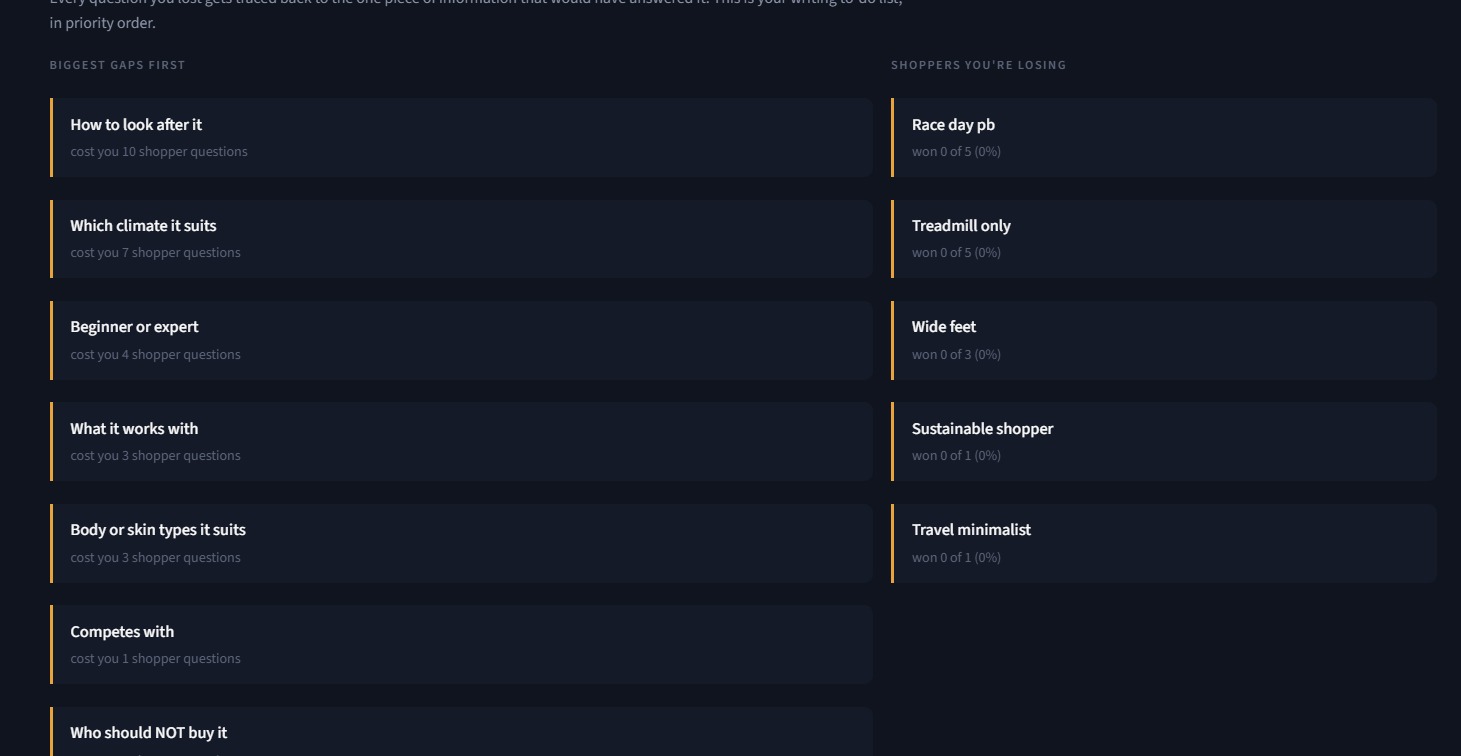
- Takes in product catalogue, segregates it into 75 categories the AI assistant uses to score the product description, gives it a score and recommendations on what to change
- Has one-click buttons to add in suggested measures for product description
- Way to edit the description fields easily on the spot to rectify current product catalogue based on the recommendations from the LLM
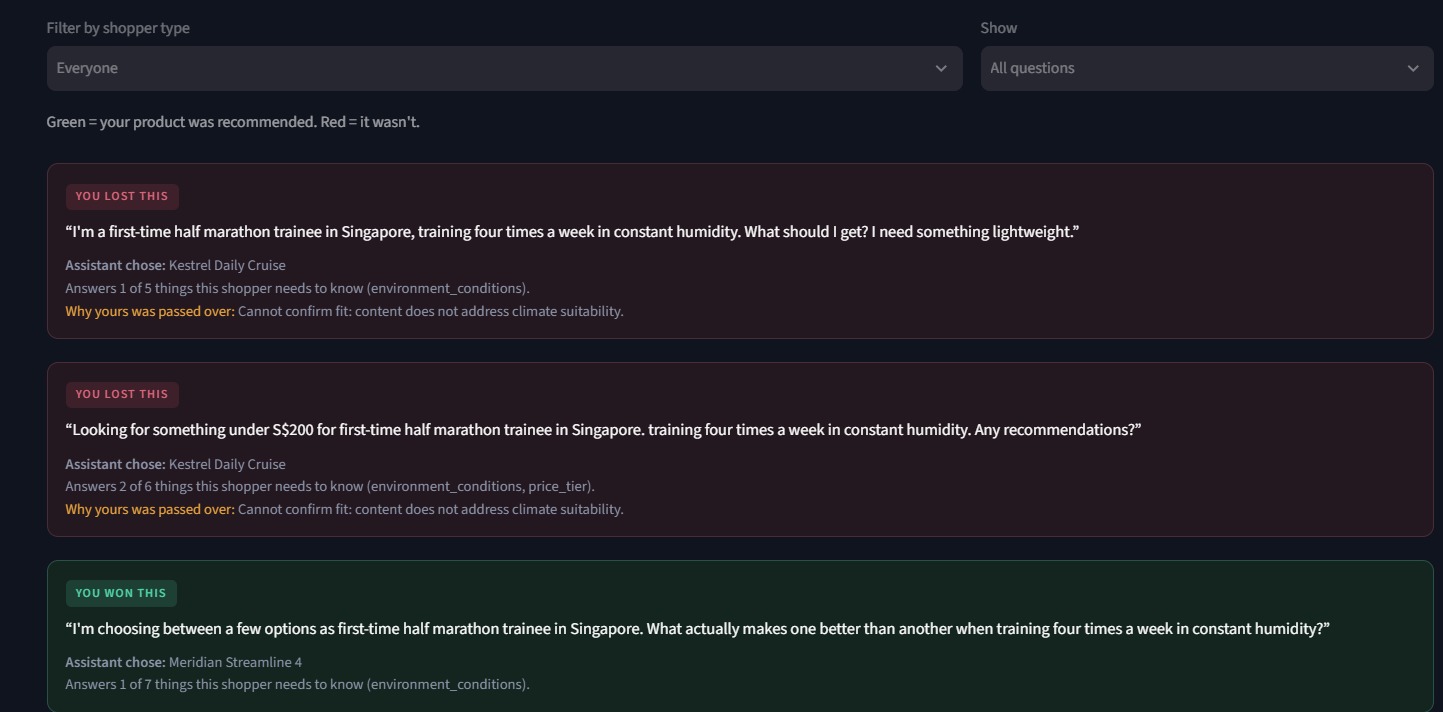
- Has a simulation to gauge how the product fares against others under a particular audience (e.g. Who is it for and who is it NOT for)
- Export csv file from changes made
How we built it
- We decided to make use of python's streamlit to locally host the web application
- We generated queries using json format and collated them into json files. These are made to place the product you enter to the web app against other products the customers liked, to have a baseline to compare to.
- We searched for 10 different products and organised them into a json file.
- Thanks to the openai's api, we ran a llm to breakdown the product description into 75 different schemas, allowing dynamic tagging and scoring the product into different tiers which will influence the confidence in the algorithm to pick that product for the customer
Challenges we ran into
- The problem statement was slightly hard to breakdown, but we came to an understanding that we were just going to work on the deliverables by the company.
- The scope of this project felt massive at first but with the help of research on the company Resolve AI we got some understanding on what we could work on
Accomplishments that we're proud of
We managed to deliver a working product in the span on 24 hours with the resources we were given.
What we learned
- Prompt engineering skills were handy in the making of our solution.
- Devops skills
- Learnt reverse engineering to backtrack and engineering on the new problem
What's next for NoHavity
With our working prototype we plan to help implement this solution into resolve AI.

Log in or sign up for Devpost to join the conversation.