-
-

Loading...
-
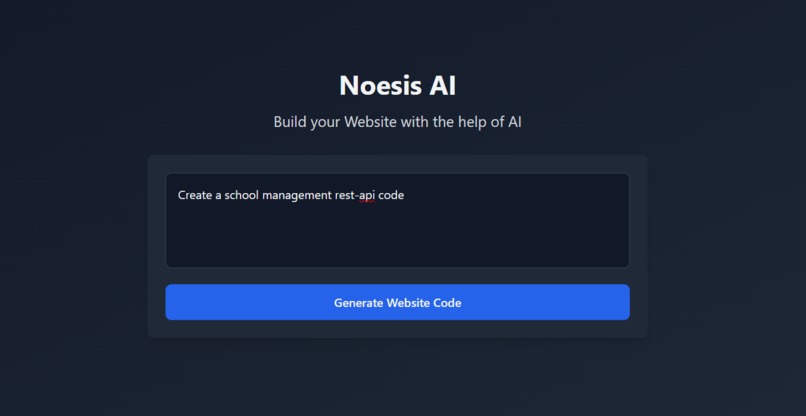
Home page
-
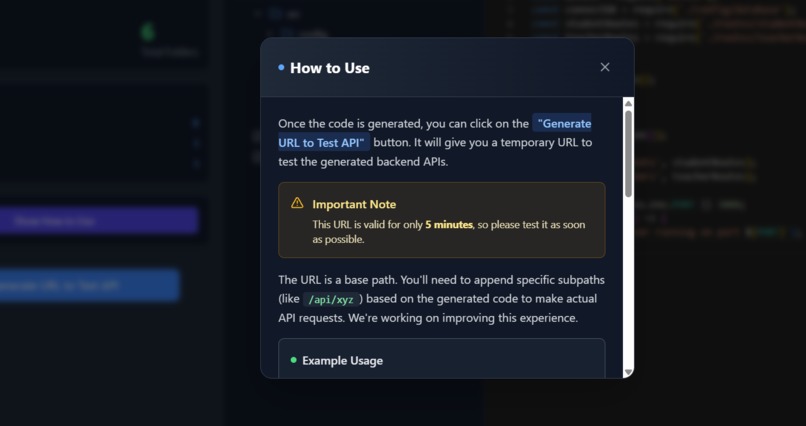
How to use
-
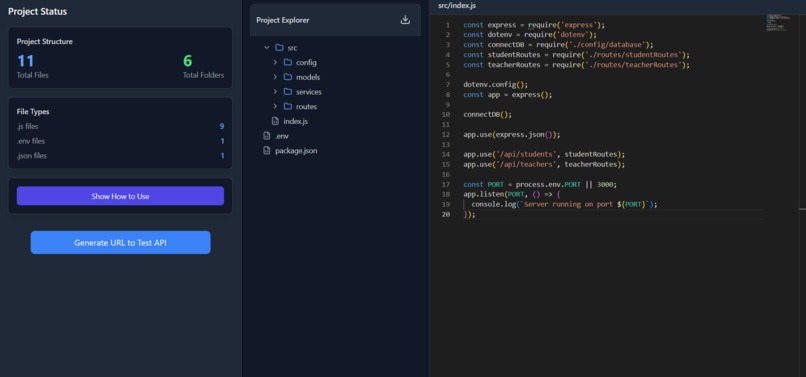
Output

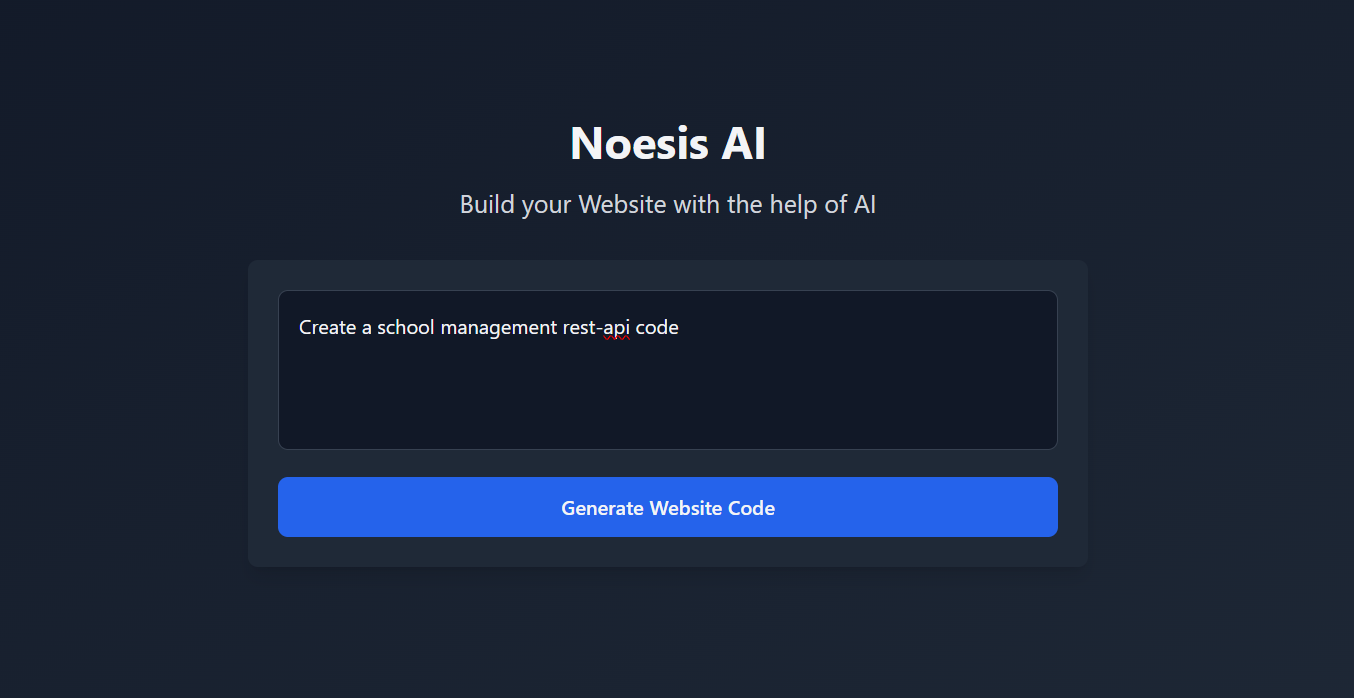
Inspiration
We noticed that many developers and coders spend a lot of time writing REST API code from scratch, which often slows down the development process. To solve this pain point, we decided to create a tool that can generate APIs automatically. Our inspiration came from platforms like Bolt.new, which simplify frontend template generation. That gave us the idea to do something similar but focused on backend APIs.
What it does
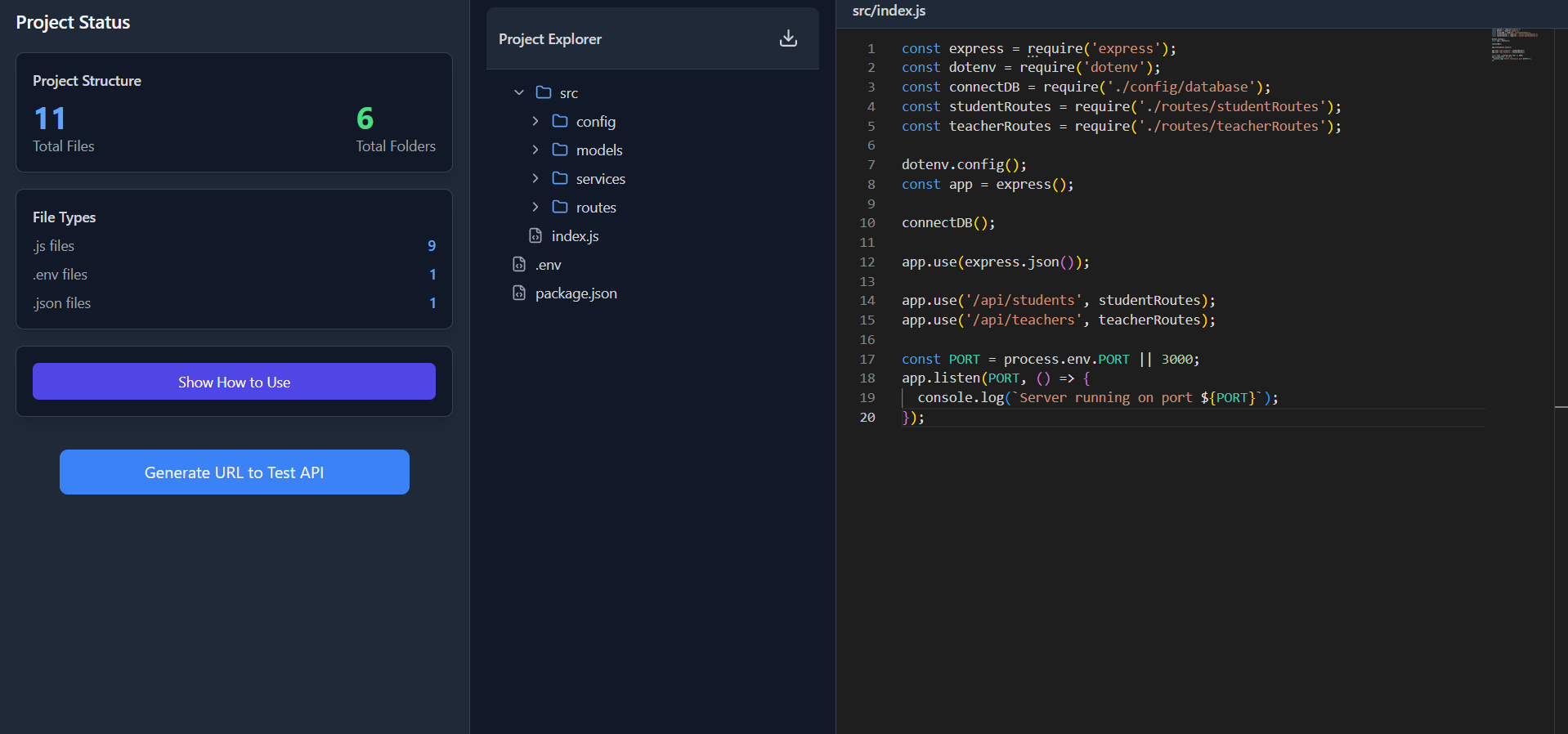
Our project helps developers generate complete REST API code from scratch with the help of AI. Instead of spending hours writing boilerplate code, developers can instantly get a working API that they can customize further as needed.
How we built it
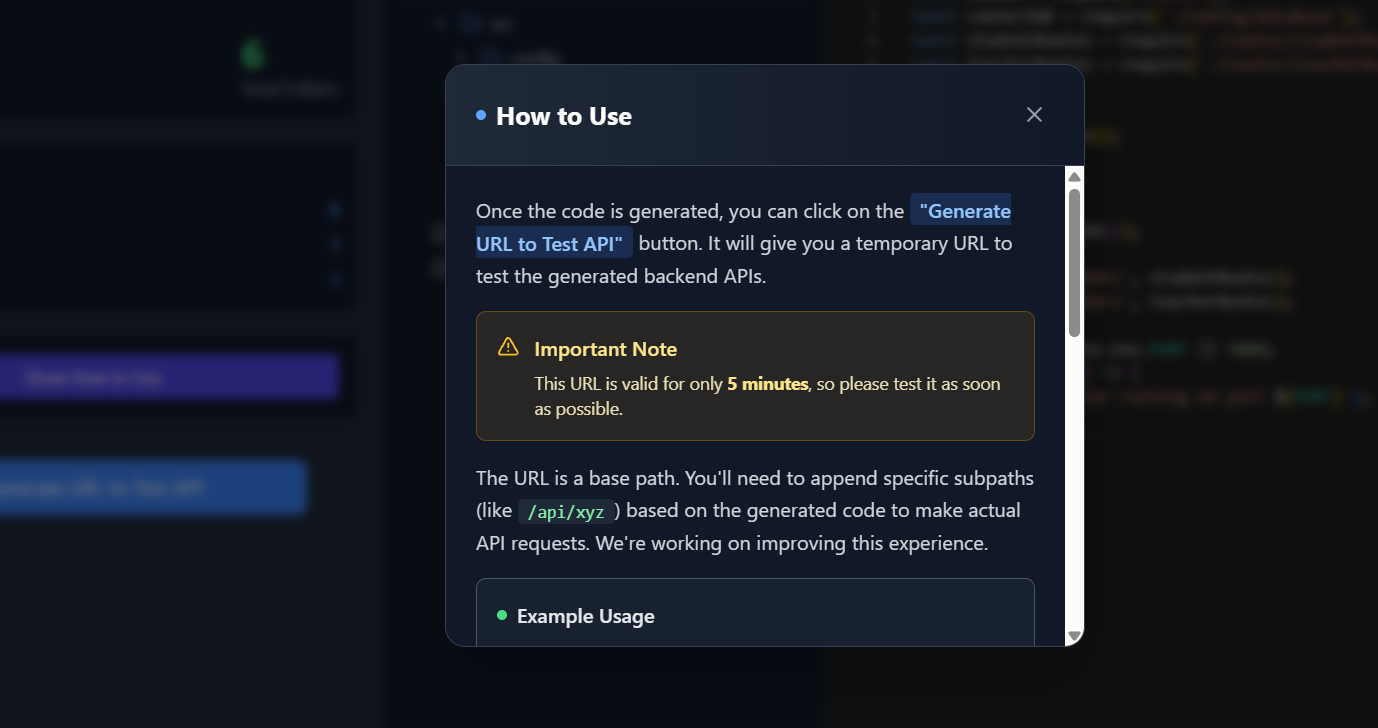
We built this project using a combination of AI-powered code generation and backend orchestration. The backend communicates with an LLM to generate the required API code and handles the responses asynchronously to ensure smooth user experience. We also integrated a lightweight hosting mechanism to allow developers to test their generated APIs quickly.
Challenges we ran into
In the beginning, we faced challenges like:
- Getting consistent and accurate responses from the LLM.
- Ensuring proper asynchronous communication between the backend and the AI model.
- Managing temporary hosting URLs for testing purposes, especially when multiple instances needed to run inside Docker or cloud environments.
Accomplishments that we're proud of
We are proud that we:
- Successfully created a system that reduces hours of coding into minutes.
- Enabled quick API testing by providing 5-minute temporary hosting links.
- Overcame the challenge of managing multiple hosting environments in parallel.
What we learned
Through this project, we learned:
- How to effectively manage LLM responses for code generation.
- The importance of asynchronous communication in real-time AI applications.
- Best practices for handling containerized environments when scaling hosting solutions.
What's next for NoesisAI
Moving forward, we plan to:
- Support more frameworks beyond REST, such as GraphQL or gRPC.
- Add customization options so developers can specify database types, authentication, and deployment preferences.
- Improve scalability and make the hosting feature more robust.
- Eventually turn NoesisAI into a developer-first platform that reduces boilerplate work across both backend and frontend development.

Log in or sign up for Devpost to join the conversation.