-
-
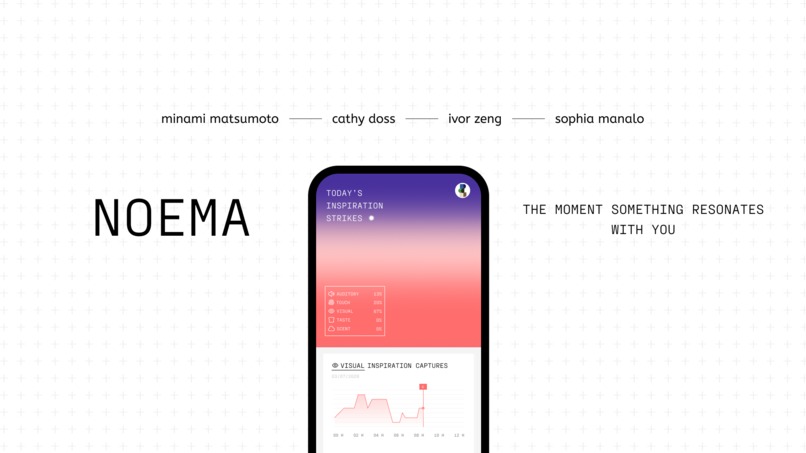
NOEMA
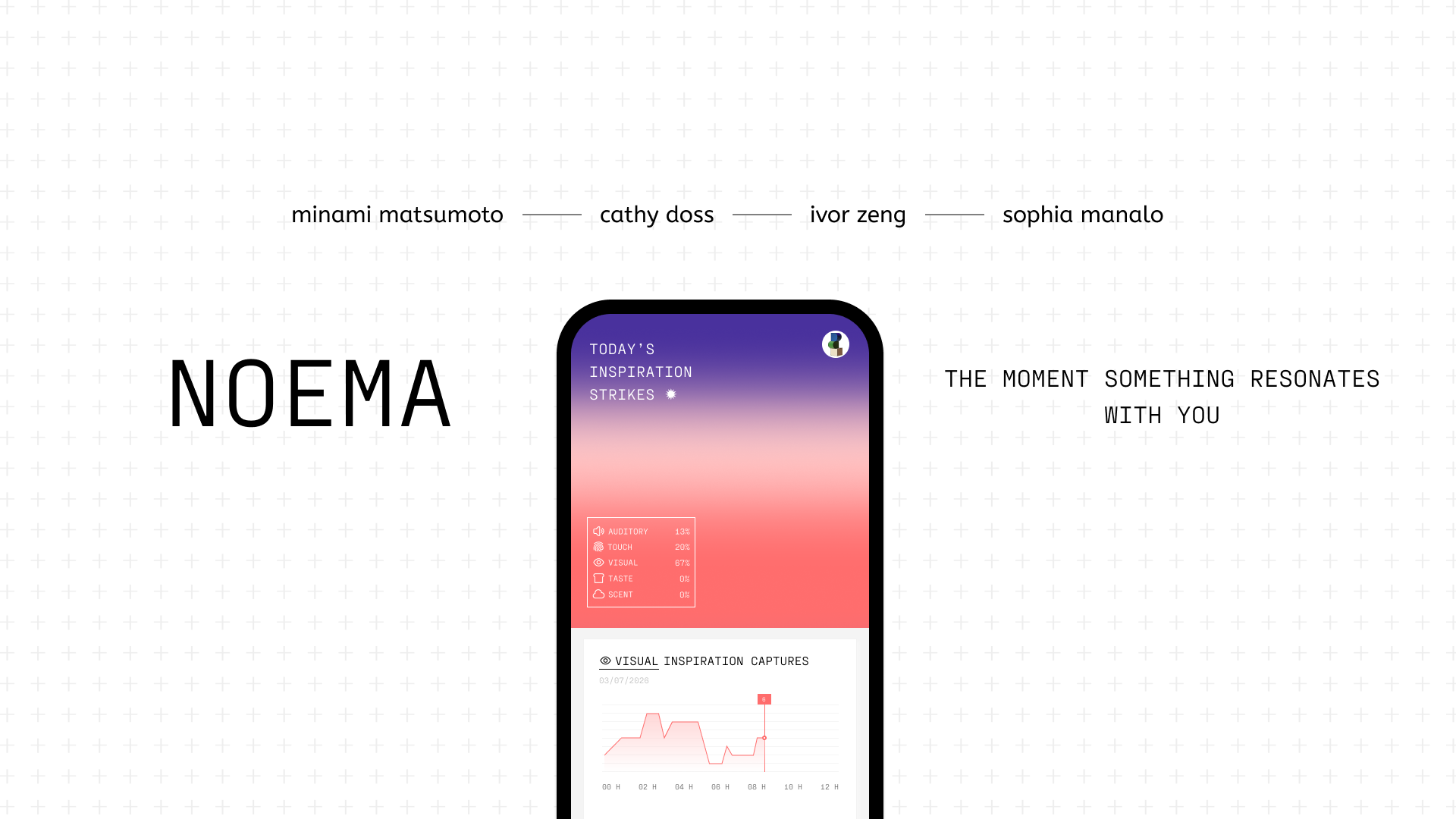
Inspiration
Noema is a speculative VR glasses tool that tracks inspiration spikes across all your senses in real time, turning fleeting creative moments into a searchable archive and a personal portrait of your own taste.
Built around interoception — the internal sense of being moved by something — Taste asks: what if you could actually measure your creative instincts through real lived experience, rather than curated suggestions or algorithms?
What it does
Taste captures moments of inspiration the instant they happen.
When a user encounters something that resonates with them — a color palette, a soundscape, the texture of a material, or the atmosphere of a space — the system automatically logs that moment across multiple sensory channels.
Each captured moment is saved with contextual information such as time, location, and sensory trigger.
An AI layer then organizes the archive by subject, mood, and sensory category, allowing users to search, filter, and curate these moments into moodboards or idea collections.
Over time, Taste transforms these captures into a living reflection of the user’s creative instincts, revealing patterns in when, where, and how inspiration occurs.
How we built it
We approached Taste as a speculative design project exploring how emerging sensing technologies could augment creative perception.
The concept combines several potential signals that could indicate inspiration spikes, including eye movement, pupil dilation, and EEG-based brain activity. These signals act as proxies for moments when attention and emotional response intensify.
The system is built around three core functions:
Capture
Automatically logging inspiration moments across sensory channels.
Organise
Using AI to tag and structure each moment by mood, subject, and sensory input.
Reflect
Visualizing patterns over time to help users understand how their taste evolves.
The interface is designed to remain lightweight so that capturing inspiration never interrupts the experience itself.
Challenges we ran into
One of the biggest challenges was translating a deeply subjective experience — inspiration — into something measurable.
Inspiration is often subtle and personal, making it difficult to determine what signals could reliably indicate that a meaningful moment has occurred. We explored different biological and behavioral signals that might act as proxies, recognizing that no single signal can fully represent creative intuition.
Another challenge was avoiding information overload. Continuous sensory capture could easily overwhelm users, so we had to carefully consider how to surface meaningful insights without distracting people from the environments that inspire them.
Accomplishments that we're proud of
One accomplishment we are particularly proud of is reframing taste as a measurable sensory pattern rather than an abstract idea.
By connecting inspiration to interoception and sensory signals, we created a new way to think about how creativity develops over time.
We are also proud of the clarity of the system structure — Capture → Organise → Reflect — which allows the concept to feel both speculative and believable as a future creative tool.
Finally, the project successfully bridges technology and personal introspection, encouraging creatives to better understand their instincts rather than relying solely on external inspiration sources.
What we learned
Through this project, we learned how deeply creativity is connected to sensory awareness and lived experience.
Many creative tools focus on collecting references or browsing inspiration online, but the most meaningful moments of inspiration often happen outside digital platforms, within everyday environments.
We also learned that speculative design can reveal new relationships between technology and human perception, especially when it challenges assumptions about how creativity works.
What's next for Noema
The next step for Noema is exploring how inspiration signals could realistically be detected through wearable technologies.
Future iterations could integrate biometric sensing, environmental data, and contextual information to better understand the conditions that trigger inspiration.
We are also interested in exploring how the system could support creative communities, allowing users to compare inspiration patterns, collaborate on moodboards, and discover shared sensory influences.
Ultimately, Noema aims to help people understand their own creative intuition — turning inspiration from something fleeting into something that can be reflected on, learned from, and intentionally cultivated.
Built With
- after-effects
- claude
- figma
- figma-make
- flora-ai
- gifty
- jitter


Log in or sign up for Devpost to join the conversation.