-
-
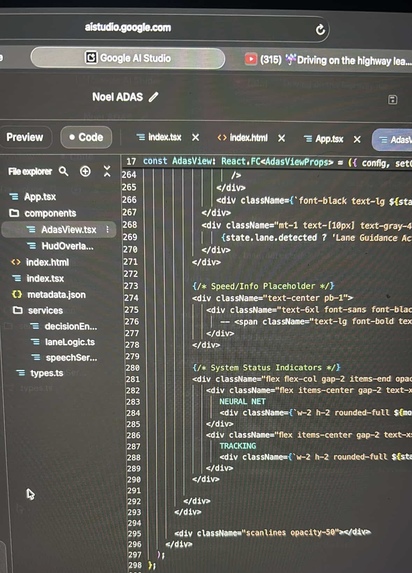
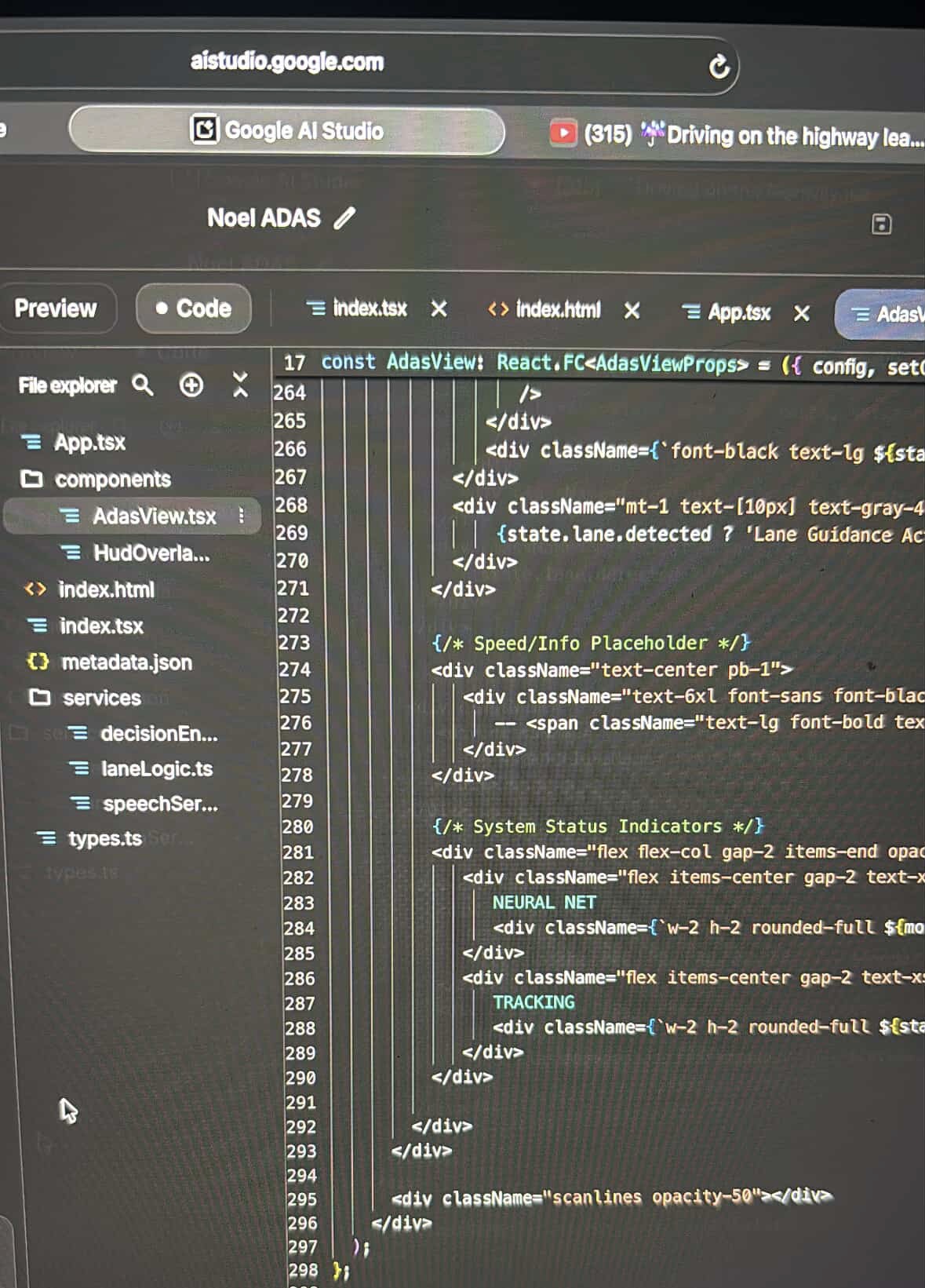
Me working on the app at almost 3AM
Inspiration
The inspiration for Noel Driver Assistant came from a very personal and practical problem.
I drive a 2005 Toyota, which does not include any modern driver-assistance features. At the same time, I have always been fascinated by self-driving technology and road safety, especially companies like Waymo and their robotaxi program. Seeing how advanced driver-assistance systems are already saving lives made me realize how big the gap is between new cars and older vehicles.
I got my driver’s license a few months ago, and early on I noticed that I often relied on friends to sit next to me and help with navigation and spotting potential hazards. In one real situation at a roundabout, I almost missed a cyclist crossing. My friend warned me just in time, and I braked immediately. That moment made me realize that human attention is limited, but software is not.
I wanted to build something that acts like a second set of eyes: always alert, never tired, and always focused on safety. Since every driver already has a smartphone with a camera, I decided to turn that into a practical, accessible driver assistant.
What it does
Noel Driver Assistant is a web-based AI driving companion that uses a phone’s camera to monitor the road in real time and assist the driver.
Its main features include:
- Lane detection and lane-keeping assistance to help the driver stay centered
- Pedestrian and cyclist detection
- Distance monitoring from other vehicles with safety warnings
- Real-time audio feedback when the driver drifts out of lane or approaches hazards
In daily use, I mainly rely on the lane-keeping system, which warns me if I steer too far left or right. The assistant acts like a calm co-pilot that improves awareness without distracting the driver.
How we built it
The project was built entirely by me using Google AI Studio.
I designed the system through structured prompting and iterative testing, defining how the model should:
- Interpret camera input
- Detect lanes, vehicles, cyclists, and pedestrians
- Estimate relative distance
- Generate real-time warnings for the driver
The application runs on the web, meaning it does not require installation or storage on the device. It only uses the phone’s camera and mobile data, making it lightweight and accessible even on older devices.
Challenges we ran into
One of the main technical challenges was inconsistent lane detection, especially on roads with poor markings or worn paint.
To solve this, I updated the logic so the system:
- Attempts to estimate and visualize the lane position when markings are unclear
- Notifies the user when lanes cannot be reliably detected and advises extra caution
Another challenge was balancing sensitivity. Too many alerts become distracting, while too few reduce safety. This required careful tuning of detection thresholds and warning timing.
Accomplishments that we're proud of
- Building a fully functional driver-assistance system as a solo developer
- Making it work on everyday hardware using only a smartphone
- Successfully using it in real driving situations
- Creating a system that increases both safety and driver confidence
- Designing a solution that is affordable, lightweight, and accessible
Even though it is not a full self-driving system, the fact that it works reliably in real conditions and was built from scratch through AI tooling is something I am extremely proud of.
What we learned
This project showed me how powerful and practical AI can be when applied to real-world problems.
I learned:
- How to design reliable AI behavior through structured prompting
- How computer vision can significantly improve road safety
- How small assistive systems can have a meaningful impact on user confidence and decision-making
- How to turn an abstract idea into a working product
Most importantly, I learned that AI does not need to replace drivers to save lives — assisting them is already enough to make a difference.
What's next for Noel Driver Assistant
Next steps include:
- Improving detection accuracy in complex environments
- Adding more safety features based on feedback from other students and drivers
- Expanding hazard recognition scenarios
- Optimizing performance and data usage
- Refining the user interface for clarity and minimal distraction
The long-term goal is to turn Noel Driver Assistant into a low-cost, scalable safety layer for older cars — bringing modern driver-assistance capabilities to people who cannot afford new vehicles.
It is designed to be cheap to maintain, easy to deploy, and practical for everyday use.


Log in or sign up for Devpost to join the conversation.