Inspiration
AI coding assistants suggest a fix and stop there. Nobody checks whether the fix really works, or whether it quietly breaks something else. We wanted an agent that does the whole job — and only keeps what it can prove.
What it does
You give Nodus-GPU Engine a project with failing tests. It:
- Runs the tests, spread across several machines.
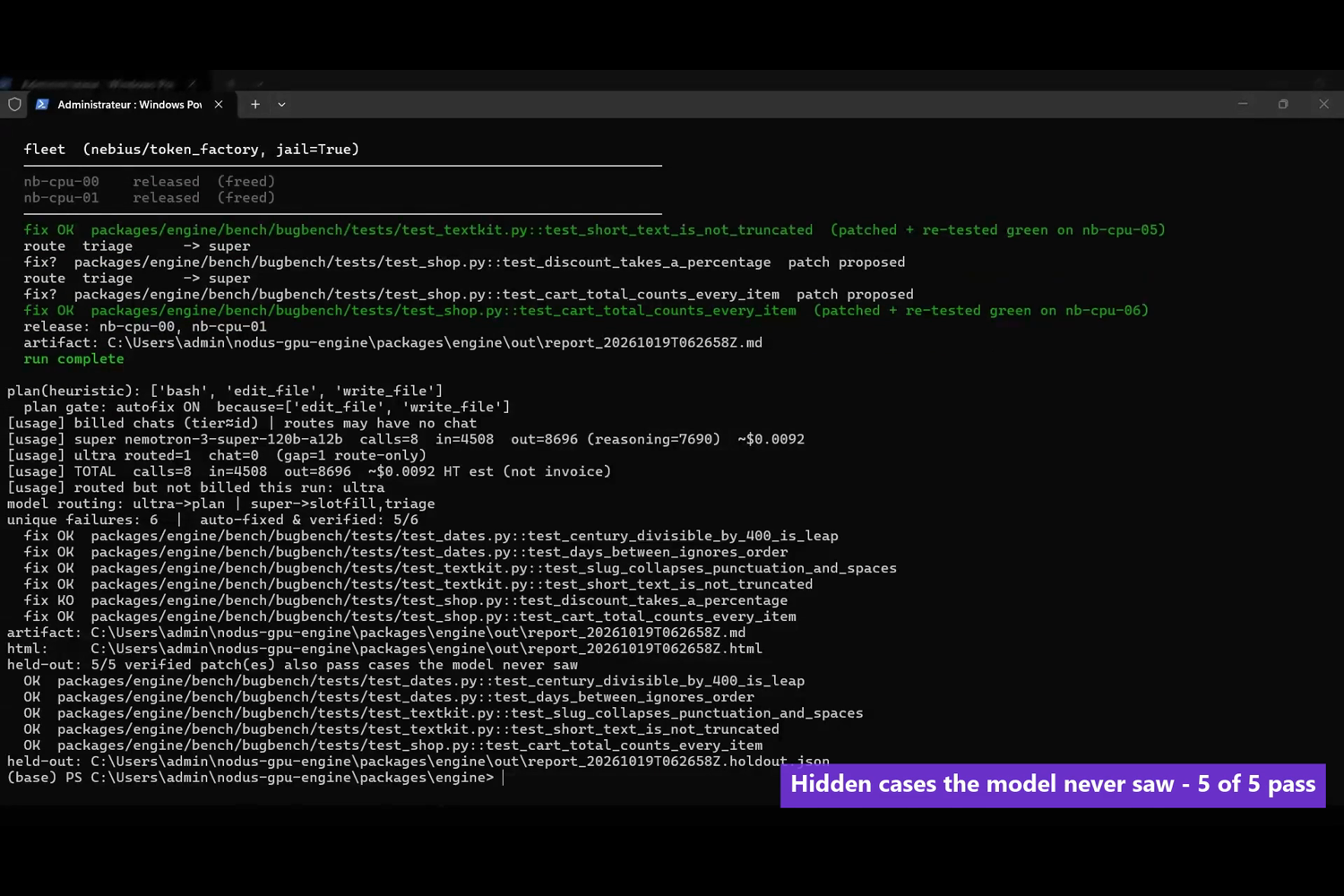
- Sends each failure to NVIDIA Nemotron, on Nebius Token Factory, which writes a fix.
- Tries each fix in a fresh, isolated sandbox and runs all the tests again.
- Keeps the fix only if that test now passes and nothing else broke.
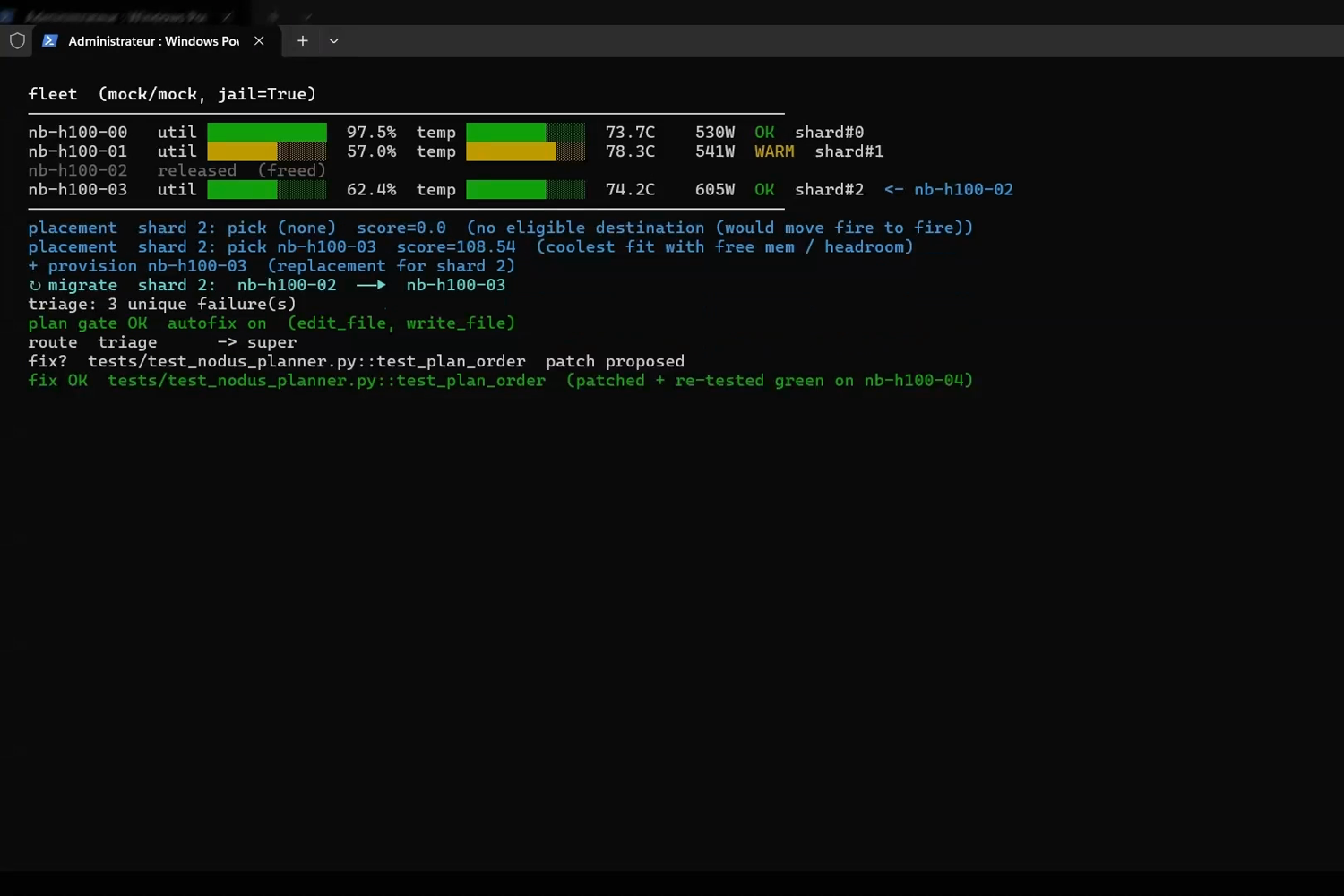
- Watches the machines too: if one is overloaded, it moves the work to another.
At the end you get one report: what failed, what was fixed, what was refused and why.
How we built it
- Nebius Token Factory runs the AI (NVIDIA Nemotron 3 Super writes the fixes) and the sandboxes where every fix is tested.
- Nebius AI Cloud gives real NVIDIA L40S GPUs: the engine creates them, reads their real temperature and load, and deletes them when it is done.
- A small planning model runs locally, so the big cloud models are used only where they matter.
- Every result we quote comes from a real run kept in the repository, and is checked by an automatic test (about 600 tests).
Challenges we ran into
- The AI spent its whole budget thinking and sent back empty answers. We measured it, and turned the thinking off where it did not help.
- "It passed" was not always true. A cut-off log, or a check that silently ran nothing, can look like success. We found one such case in our own pipeline by reading the record of every attempt — and fixed it.
- Real GPUs behave differently from simulated ones. An idle GPU looks "inefficient"; we had to teach the engine not to move work away from healthy machines.
Accomplishments that we're proud of
- On six bugs we planted, every fix the engine kept was a real fix — confirmed on hidden tests the AI never saw and on the full test suite: 46 out of 46, across nine live runs.
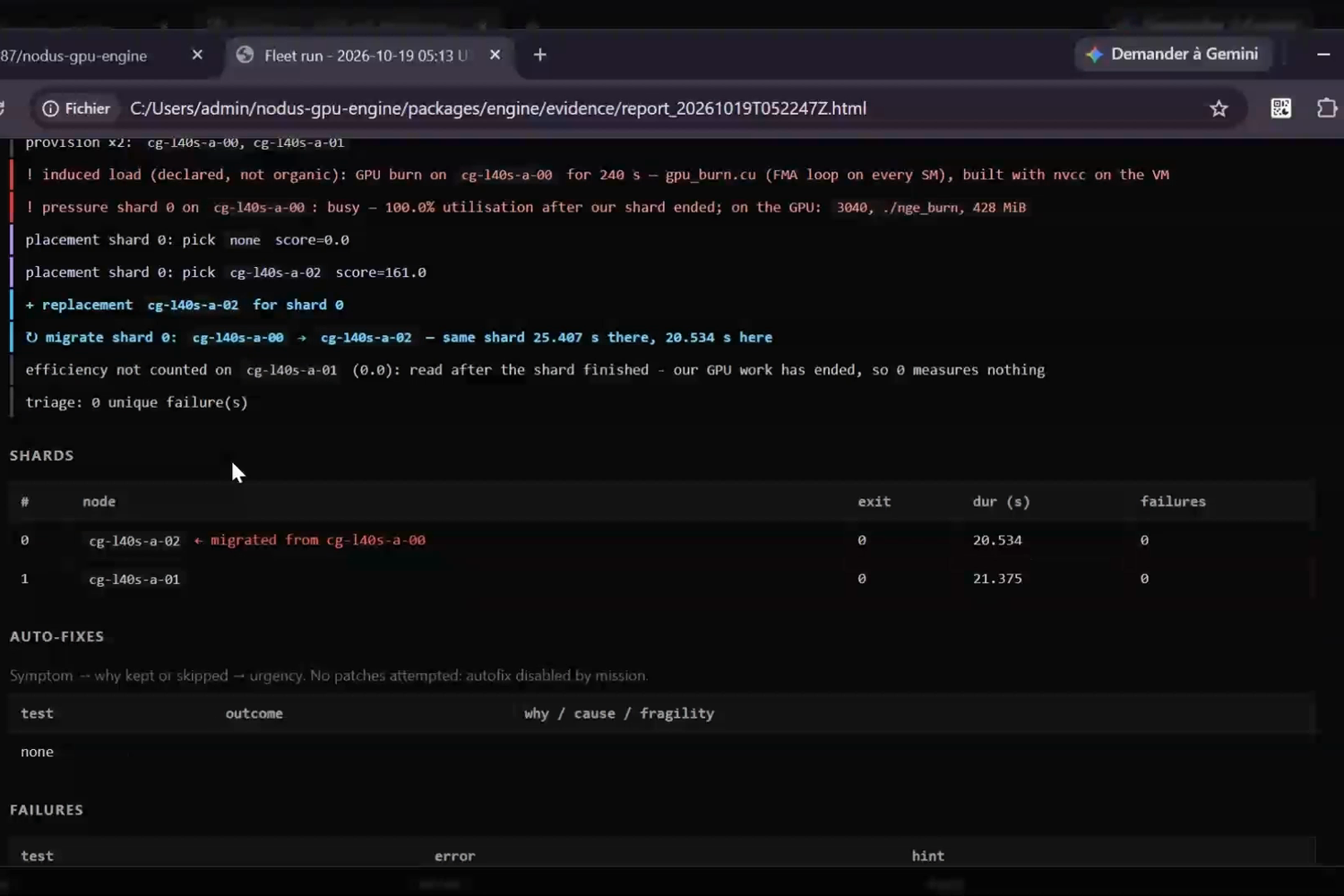
- On real Nebius L40S GPUs, we kept one GPU busy with a job of our own (on purpose, and the report says so). The engine noticed, moved the work to a fresh machine, and measured the difference: 25.4 s on the busy GPU, 20.5 s on the new one.
- Every number on this page is backed by a test in the repository.
What we learned
- Don't trust "green": check that the tests really ran.
- Keep a record of every attempt, even the ones that worked. That is how we caught our own bug.
- Measure before changing anything, and write down what did not work.
What's next for Nodus-GPU Engine
We tried it on real bugs from well-known open-source projects (SWE-bench Verified): it fixed 3 out of 21. The AI was shown the failing tests, so this is not an official SWE-bench score. The main limit is clear — the AI often did not see the right piece of code — so better code search comes next.

Log in or sign up for Devpost to join the conversation.