-
-
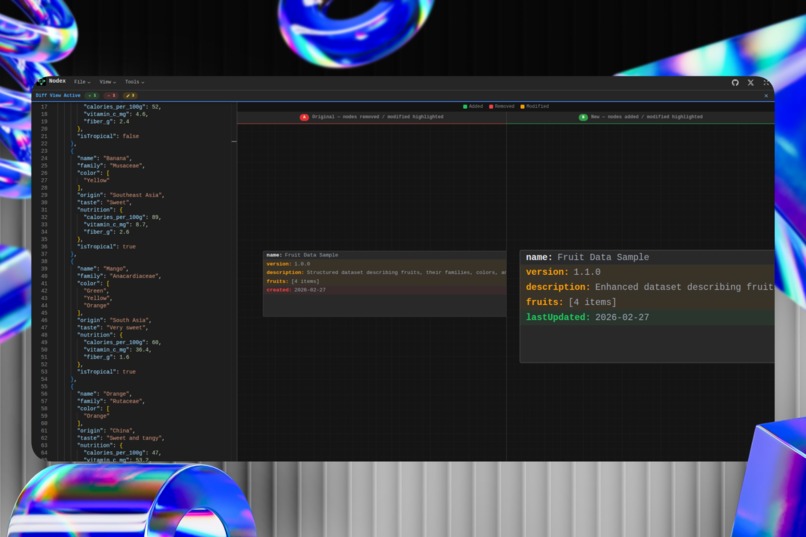
Json Diff Graph View
-
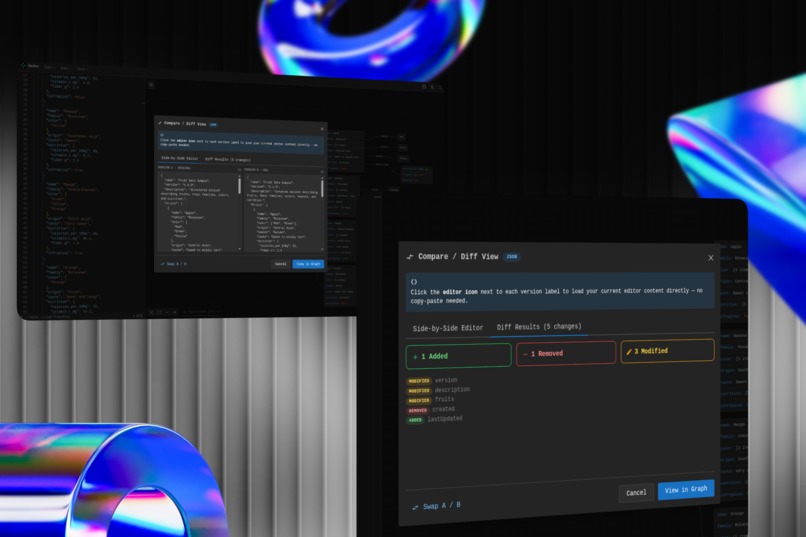
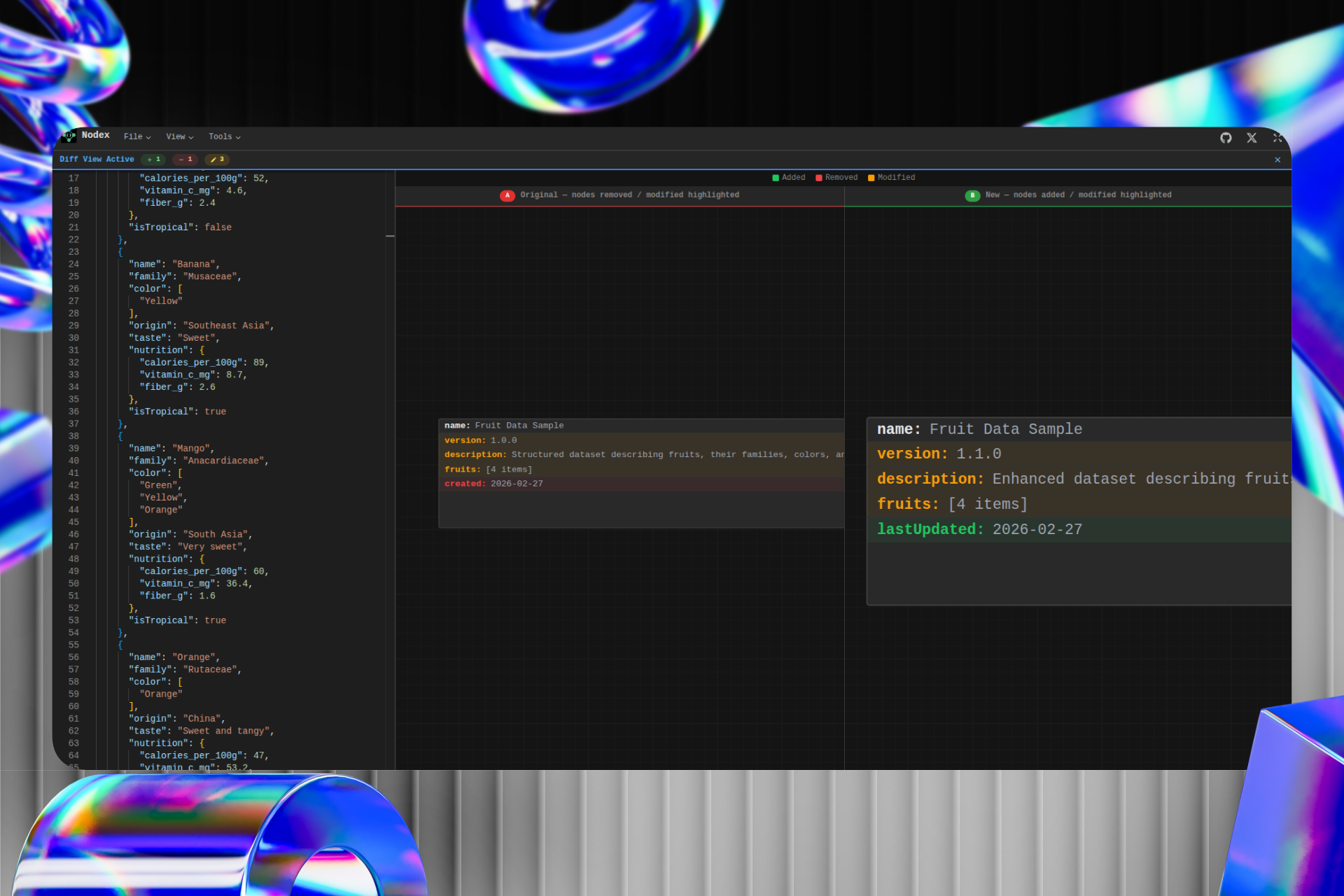
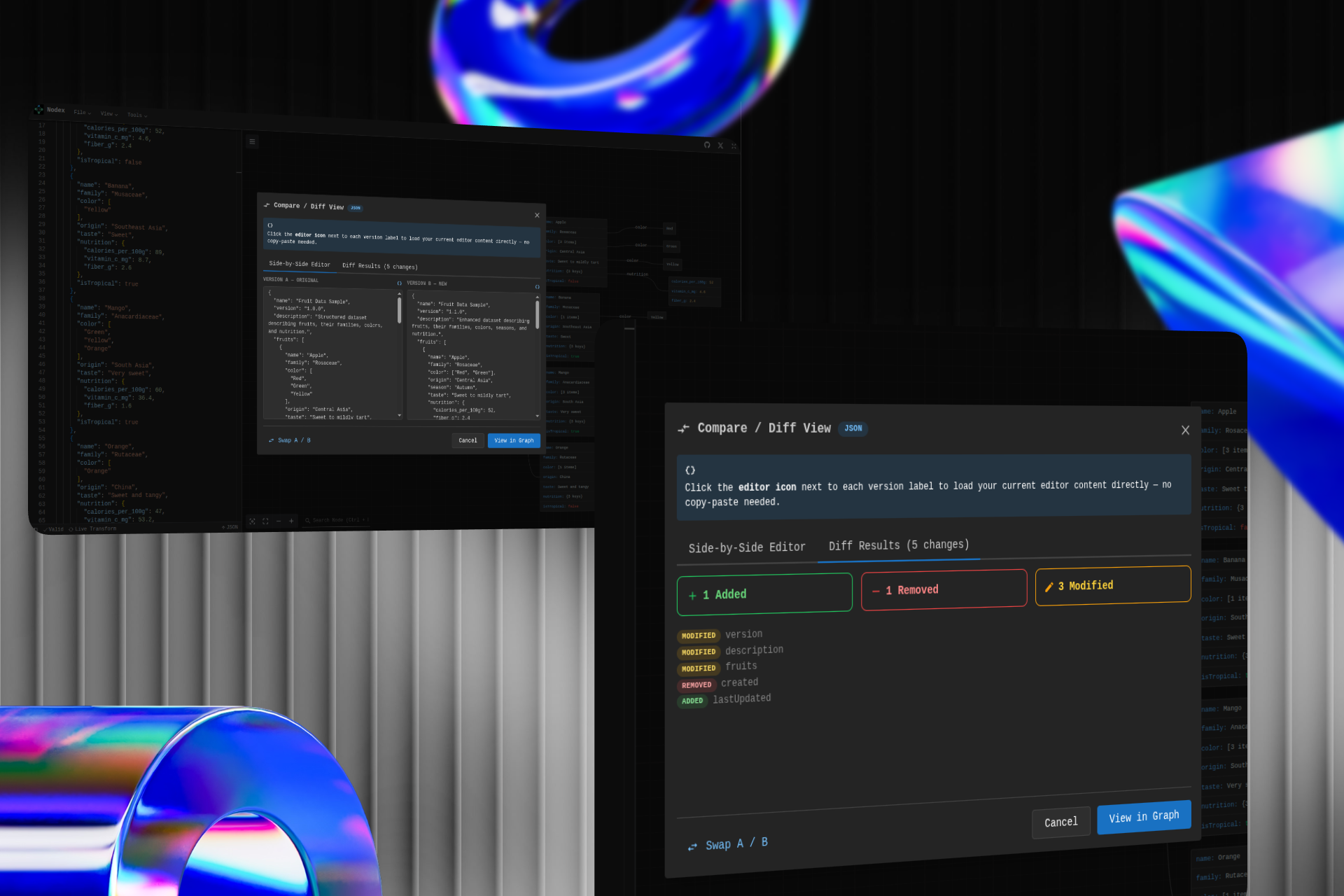
Json Diff
-
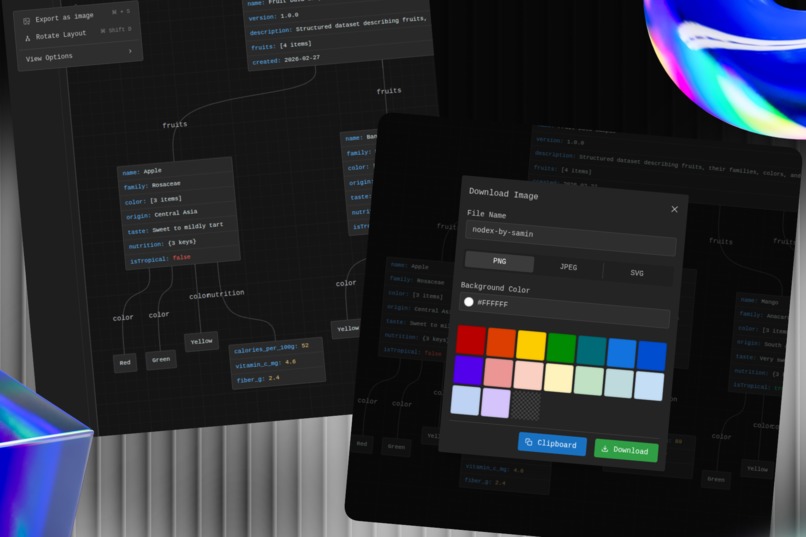
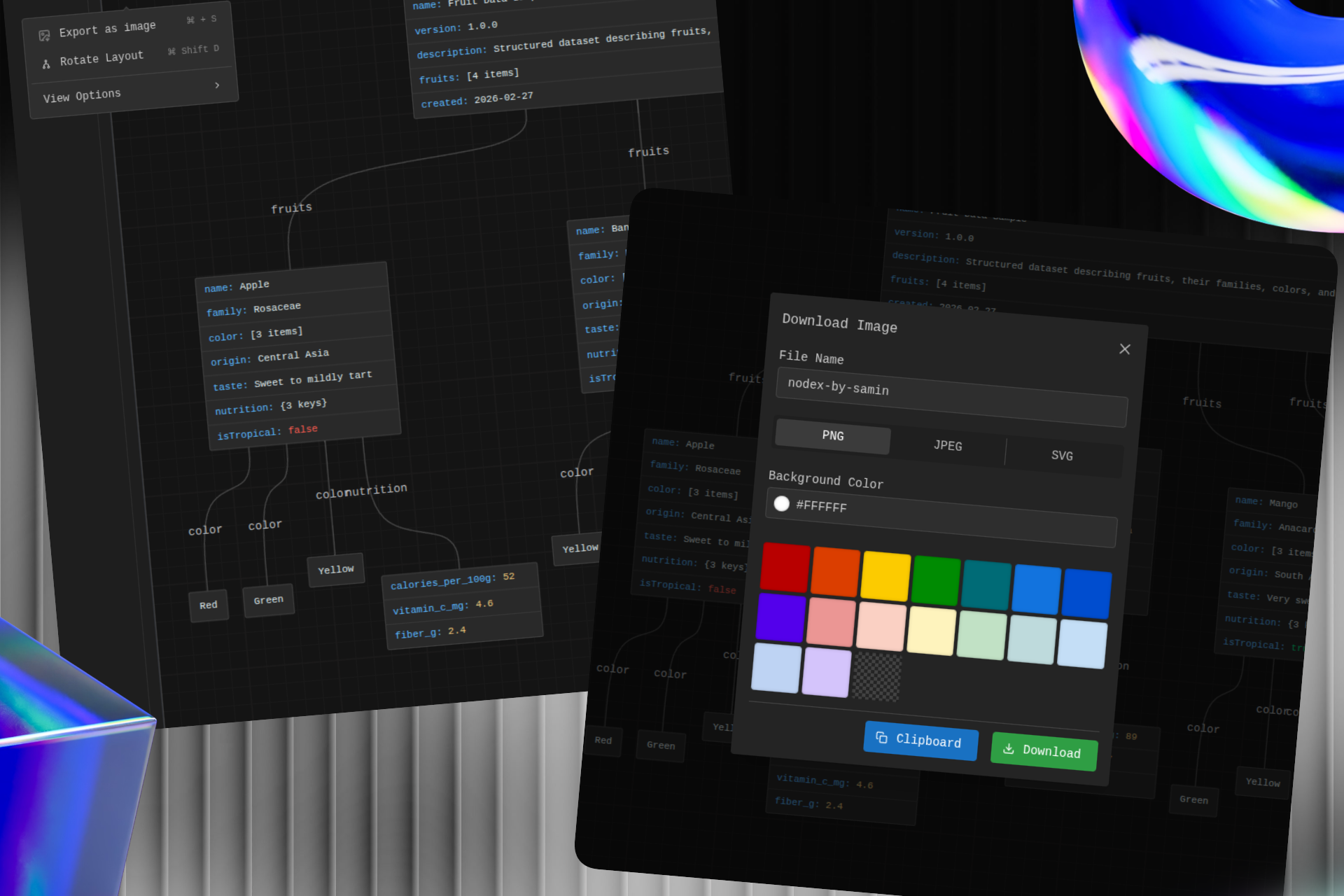
Layouts & Export UI
-
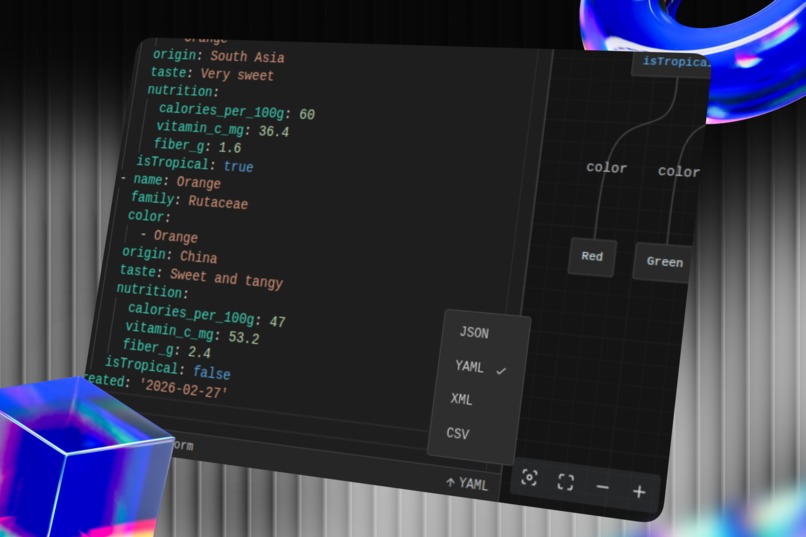
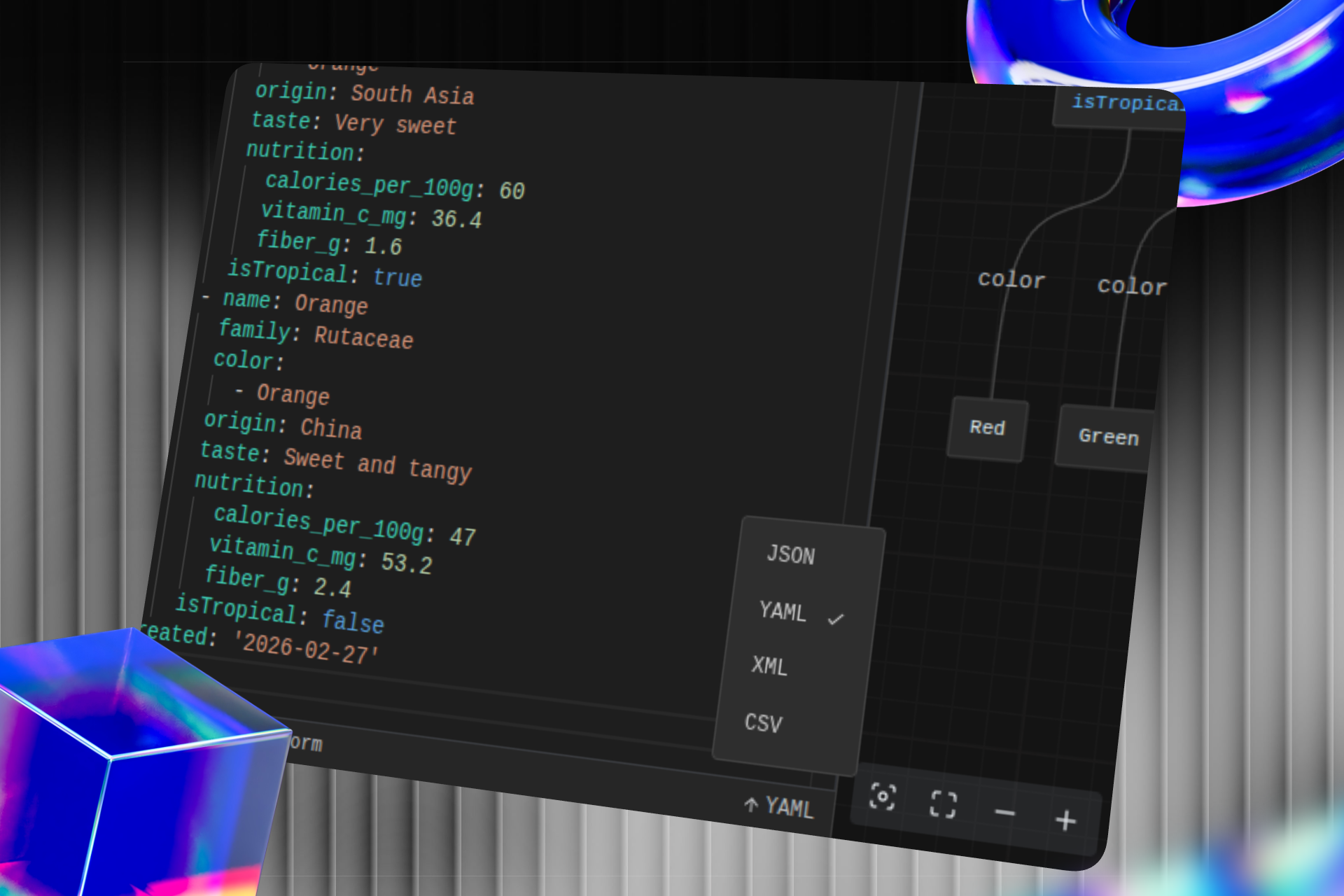
Built in Converter
-
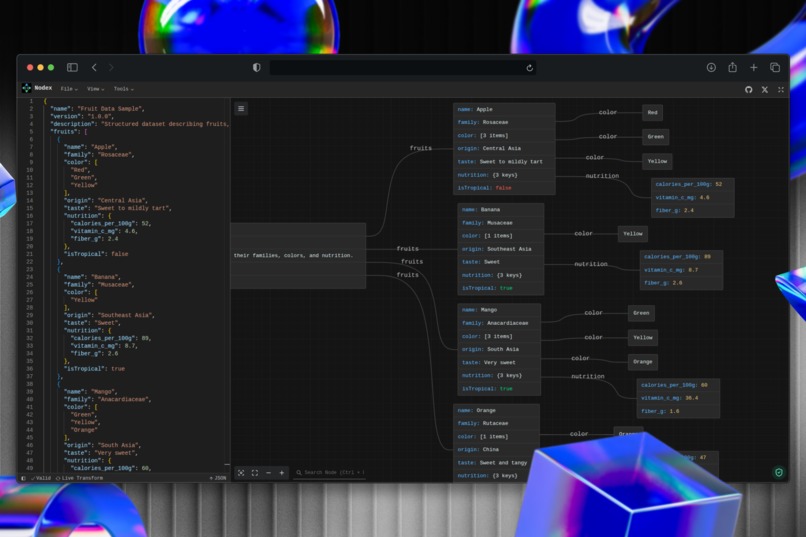
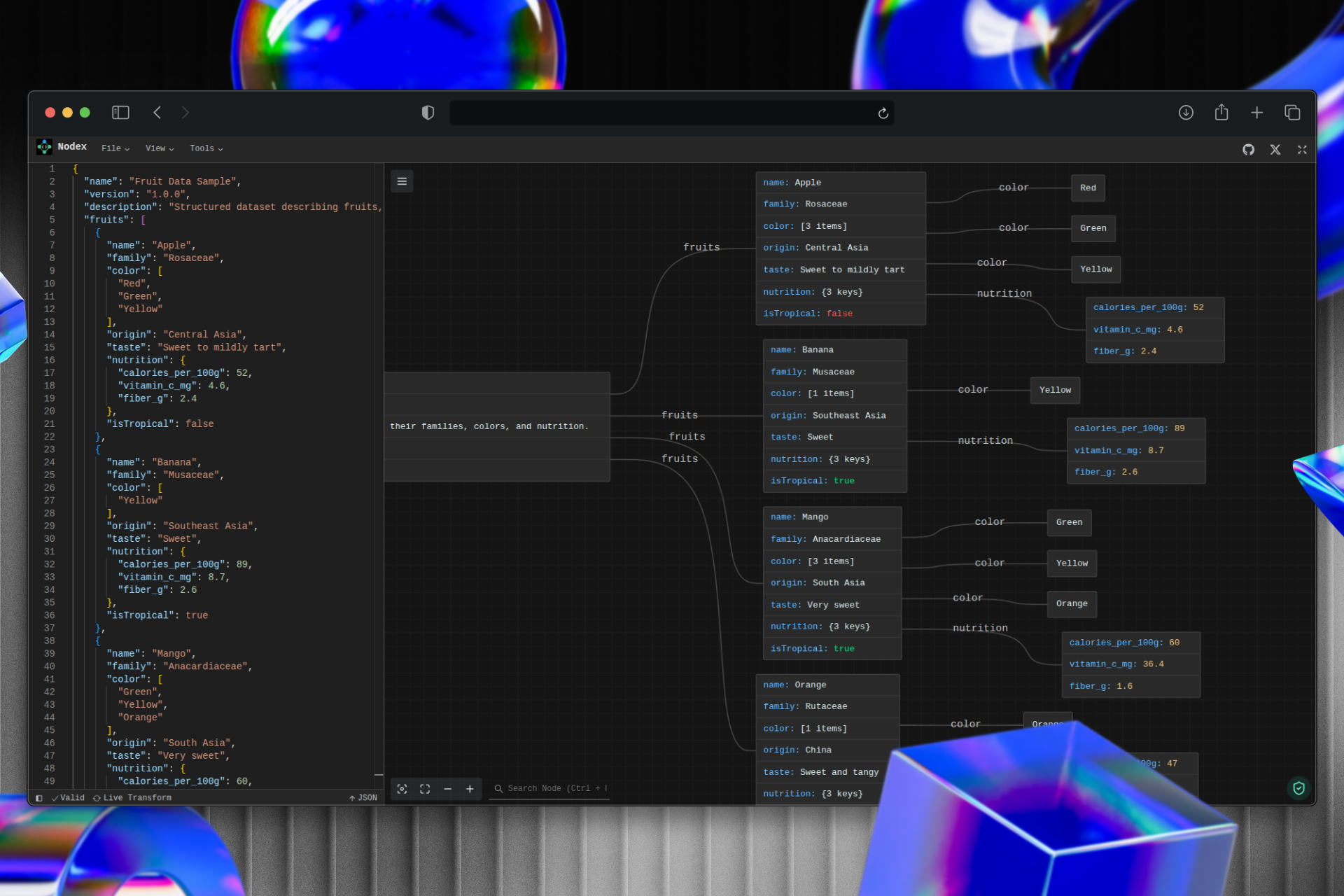
Home Screen
-
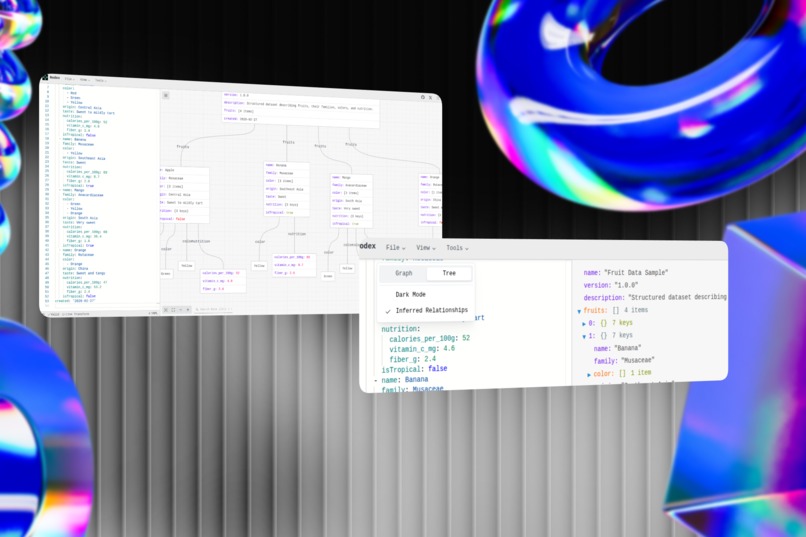
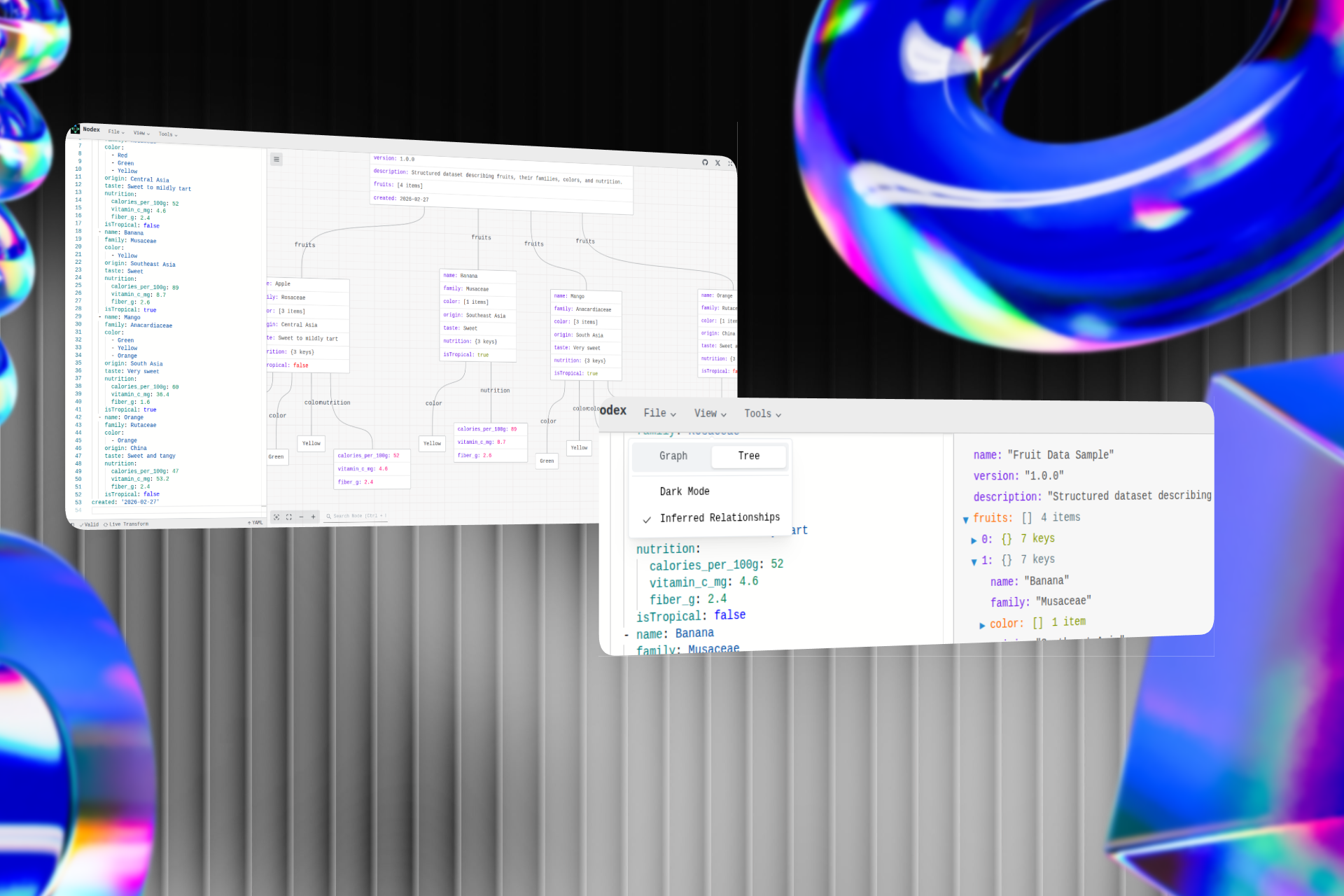
Light Mode & Tree Mode
About Nodex
Inspiration
Modern developers and data analysts constantly work with structured data, but most tools still force them to read it as raw text. While building and debugging APIs and datasets, I kept running into the same friction: understanding complex nested data or multi-table relationships was slow, error-prone, and mentally exhausting. Existing viewers could visualize structure, but they rarely helped you actually understand the data.
I built Nodex to close that gap. The goal was simple but ambitious: create a fast, browser-native platform that doesn’t just render data — it interprets it, surfaces relationships automatically, and explains what matters using AI, all while keeping user data private.
What it does
Nodex is an advanced intelligence platform for structured data. Users can paste or upload JSON, YAML, CSV, XML, or TOML and instantly explore the dataset through interactive graph and tree visualizations.
Beyond visualization, Nodex adds an intelligence layer:
AI-powered natural language summaries and anomaly detection
Automatic foreign-key and relationship inference
Deep structural diff for time-travel comparisons
Fully client-side processing with zero data leaving the browser
The result is a tool that transforms raw structured data into something immediately understandable and explorable.
How I built it
Nodex is built as a high-performance web application using Next.js 14 and React 18. The visualization layer is powered by reaflow with the ELK layout engine to generate clean, directed graph layouts. Monaco Editor provides a professional editing experience with syntax highlighting across all supported formats.
State management is handled with Zustand (with persistence), while Mantine and styled-components power the UI system and theming.
One of the core architectural decisions was to keep all heavy computation client-side. Parsers for JSON, YAML, XML, CSV, and TOML run directly in the browser. The AI Data Explainer integrates with Google Gemini via a secure client-side call where the user provides their own API key, which is stored only in localStorage and never touches any Nodex infrastructure.
For the intelligence features:
Relationship detection uses heuristic analysis (uniqueness ratios, name patterns, and value overlap)
The diff engine performs deterministic, path-indexed deep comparison of JSON structures
The AI pipeline sends schema summaries for large datasets to reduce token usage and improve performance
Performance and responsiveness were major priorities throughout development.
Challenges I ran into
One of the biggest challenges was balancing performance vs. interactivity. Large structured datasets can easily overwhelm graph layouts and the browser’s rendering pipeline. I had to carefully debounce live transforms, optimize node sizing, and tune the ELK layout to keep the canvas smooth and responsive.
Another difficult problem was reliable relationship inference. Real-world datasets are messy and inconsistent, so simple name matching wasn’t enough. I implemented multi-signal heuristics (uniqueness thresholds, overlap scoring, and naming patterns) to produce useful confidence-based relationships without too many false positives.
The diff engine was also tricky to get right. Ensuring deterministic results across deeply nested JSON structures required a path-indexed comparison strategy rather than naive deep equality checks.
On the AI side, controlling token usage and handling failure cases (invalid keys, rate limits, large inputs) required careful prompt design and robust error handling.
What I learned
Building Nodex pushed me deeper into:
Graph layout performance and large-scale canvas rendering
Heuristic data analysis in the browser
Designing AI features that are actually useful in developer workflows
Client-side architecture for privacy-first applications
Balancing UX polish with heavy computation
Perhaps the biggest lesson was that visualization alone isn’t enough — the real value comes from helping users interpret what they’re seeing.
What’s next for Nodex
Future plans include real-time streaming data support, collaborative sharing links, more advanced schema inference, and expanded diff support beyond JSON. The long-term vision is to evolve Nodex from a powerful visualizer into a full browser-native data intelligence workspace.
Built With
- css
- gemini-api
- javascript
- monaco
- nextjs
- react
- reactflow
- tailwind
- typescript
- zustland


Log in or sign up for Devpost to join the conversation.