Inspiration
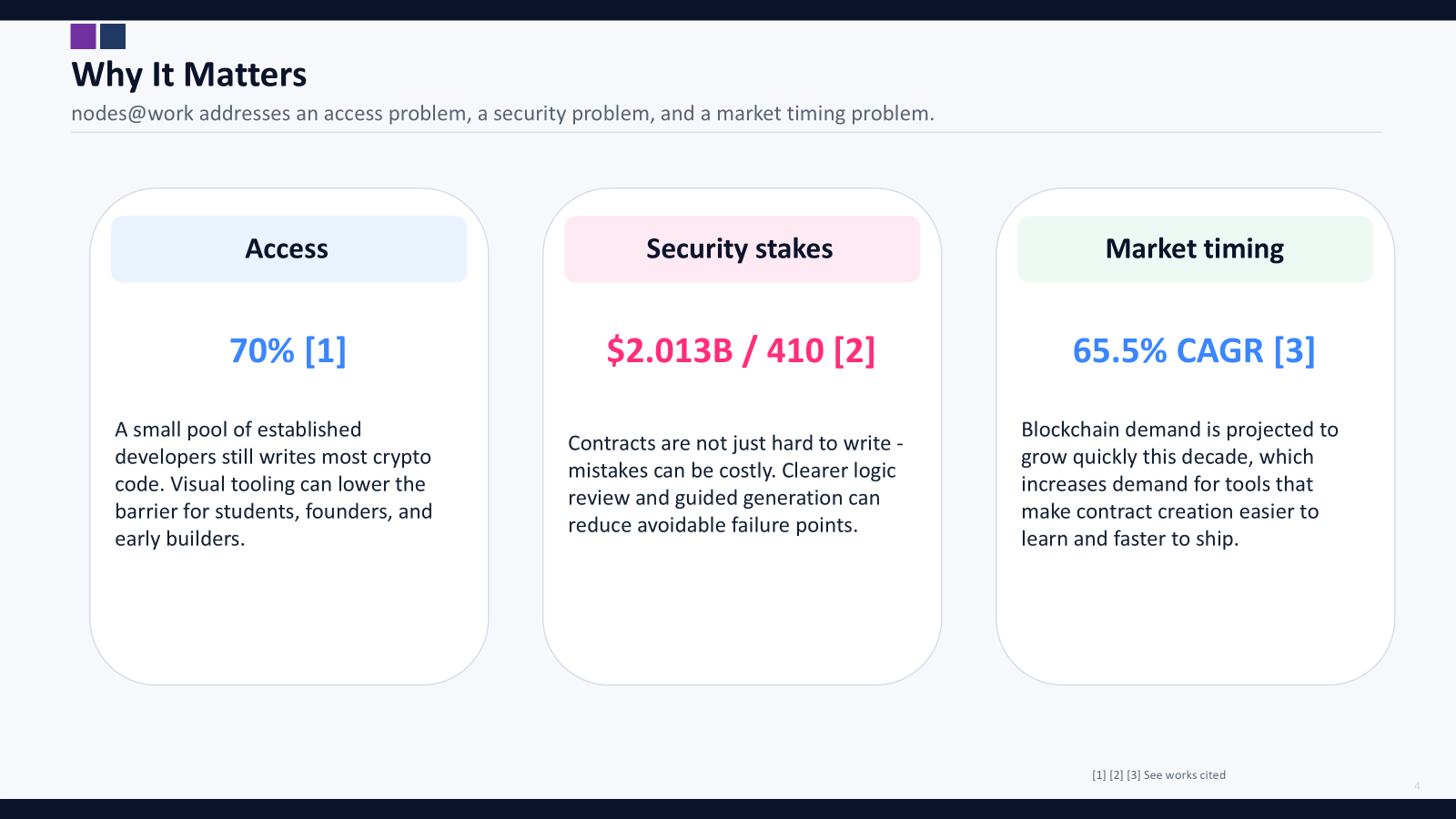
Smart contracts are powerful, but they are still too hard for most beginners to understand. New users usually have to learn Solidity, wallets, deployment tools, RPCs, and testnets all at once, which makes blockchain feel way more intimidating than it should. We built nodes@work to make smart contracts easier to understand by turning them into something visual. Instead of starting with code, users can build logic with blocks and nodes, follow the transaction flow, and then watch that logic turn into real deployable smart contracts.
What it does
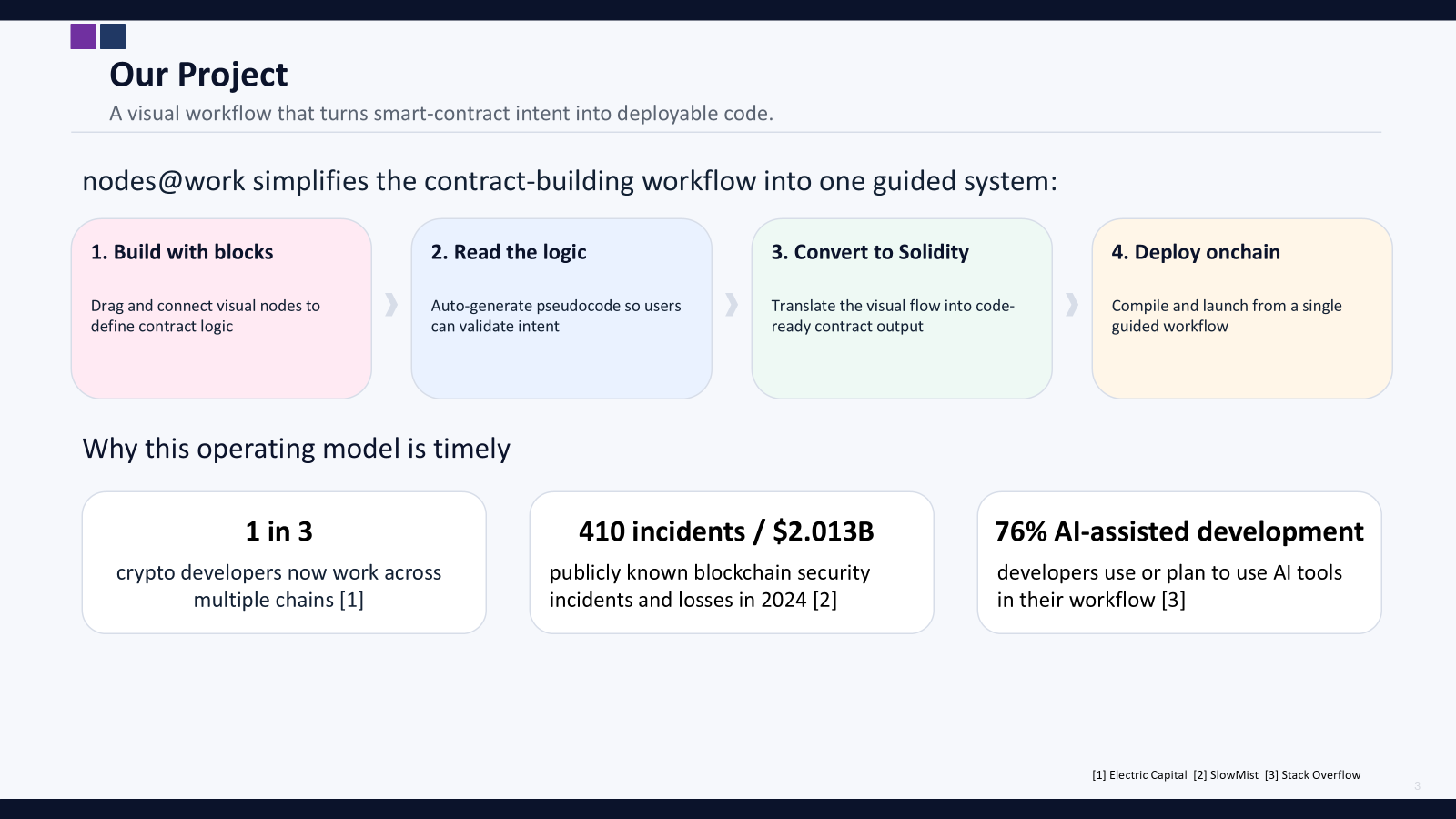
nodes@work is a visual smart contract builder that helps users learn how blockchain contracts work while also letting them create one themselves. Users connect blocks and nodes to define contract logic. They can click on blocks to visualize the transaction flow and better understand what the contract is doing. The app then converts that structure into pseudocode, translates it into Solidity, compiles it, and deploys it.
We also built:
- an AI reviewer that reads the Solidity and gives feedback
- an AI agent that reads the Solidity and generates a usable UI for interacting with the contract
So the full flow is: Blocks -> Pseudocode -> Solidity -> Compile -> Deploy -> UI
How we built it
We built nodes@work with a visual frontend, backend logic pipeline, AI-assisted code generation, and deployment tooling. The frontend lets users create smart contract flows through connected nodes and blocks. On the backend, we parse that structure into pseudocode and send it through Google Gemini to generate Solidity. After that, our compiler pipeline compiles the contract and sends it through RPC for deployment. To make this easier for beginners, we also use a pre-funded testnet wallet in the background, so users do not need to worry about setting up wallets or funding gas just to test a contract.
Challenges we ran into
Our biggest challenge was deployment. We had to find an RPC and chain setup that would work reliably with our workflow, and after a lot of trial and error, we found a chain on Polkadot that worked for us. Another challenge was making the block-based system actually reflect real smart contract logic in a way that users could understand. It was not just about making something visual, but making it educational and functional at the same time.
Accomplishments that we're proud of
We are proud that nodes@work helps people understand how smart contracts are built and deployed, which is usually one of the hardest parts of getting into blockchain. Instead of making users deal with code, wallets, and deployment pipelines all at once, we created a system that teaches the logic visually, generates Solidity, compiles it, deploys it, and even creates a UI to interact with it.
What we learned
We learned a lot about smart contract architecture, AI-assisted code generation, deployment workflows, and how hard it is to turn visual logic into real blockchain infrastructure. We also learned that the best way to teach something technical is not always through documentation. Sometimes it is by redesigning the interface so users can understand it naturally.
What's next for nodes@work
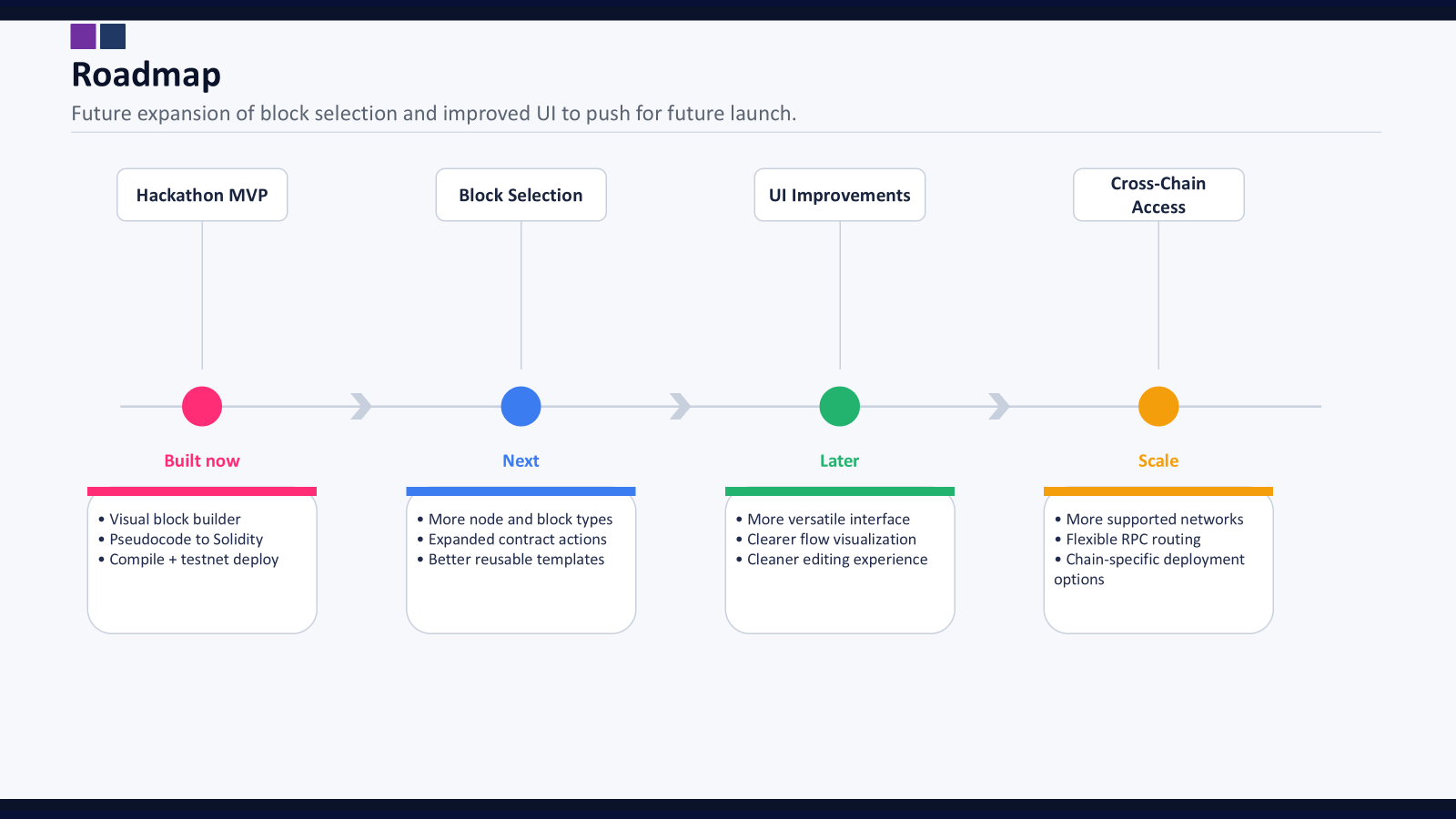
Next, we want to expand the block selection so users can build more advanced smart contracts with more flexibility. We also want to improve the UI and make the platform feel more polished and versatile. Long term, we want nodes@work to become a real onramp for new blockchain builders.

Log in or sign up for Devpost to join the conversation.