Generated with HackPilot - AI-powered hackathon project manager
Inspiration
Building hardware is an intimidating wall for many creators. You need to master mechanical CAD, electrical engineering principles, PCB layout software, and firmware just to get a basic prototype off the ground. I first experienced this last summer, where in order to qualify for a hardware hackathon, I had to make a piece of hardware. I often found myself spending a lot of time on early prototypes just to not be satisfied. It was then when I realized that hardware hadn't gotten the rapid prototype boom software had.
What it does
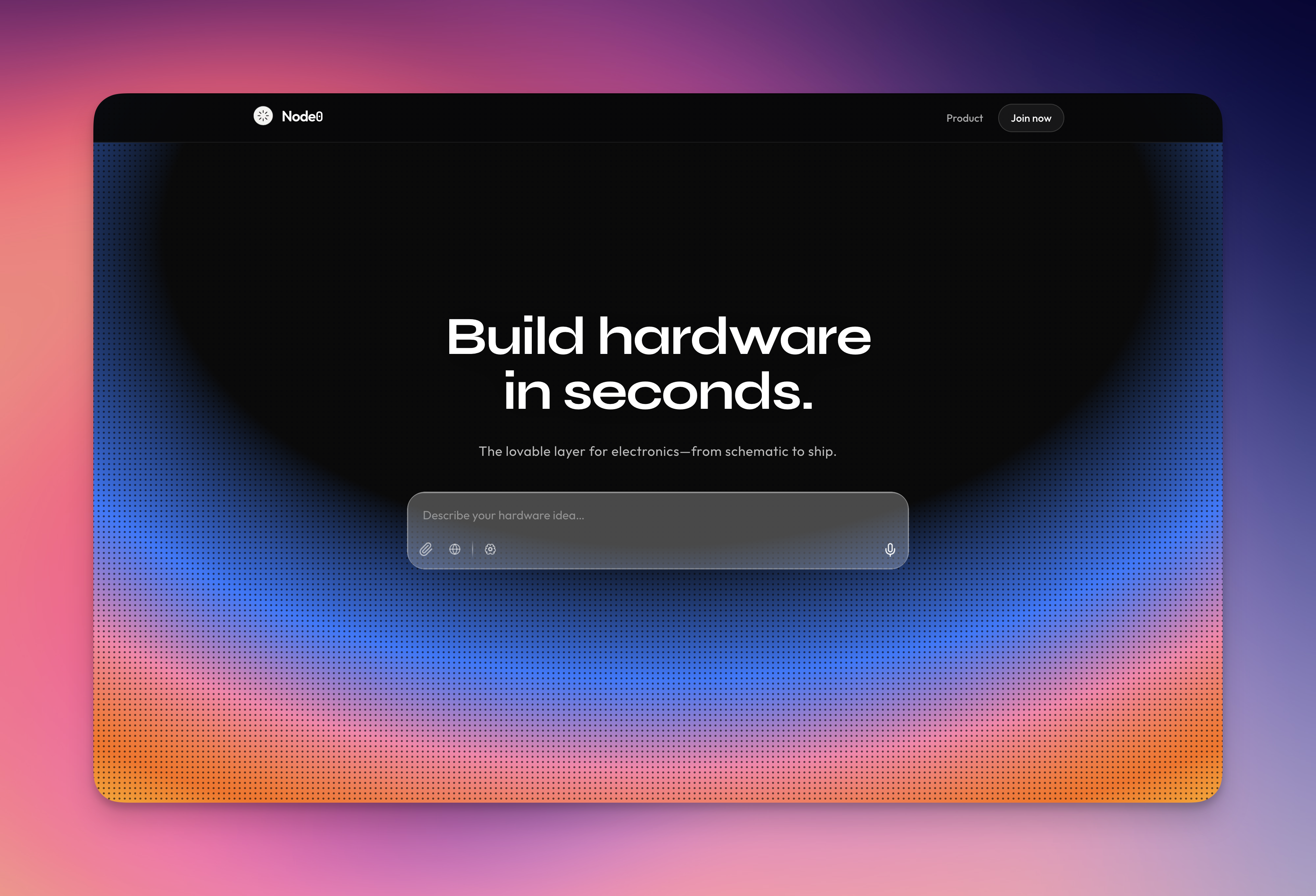
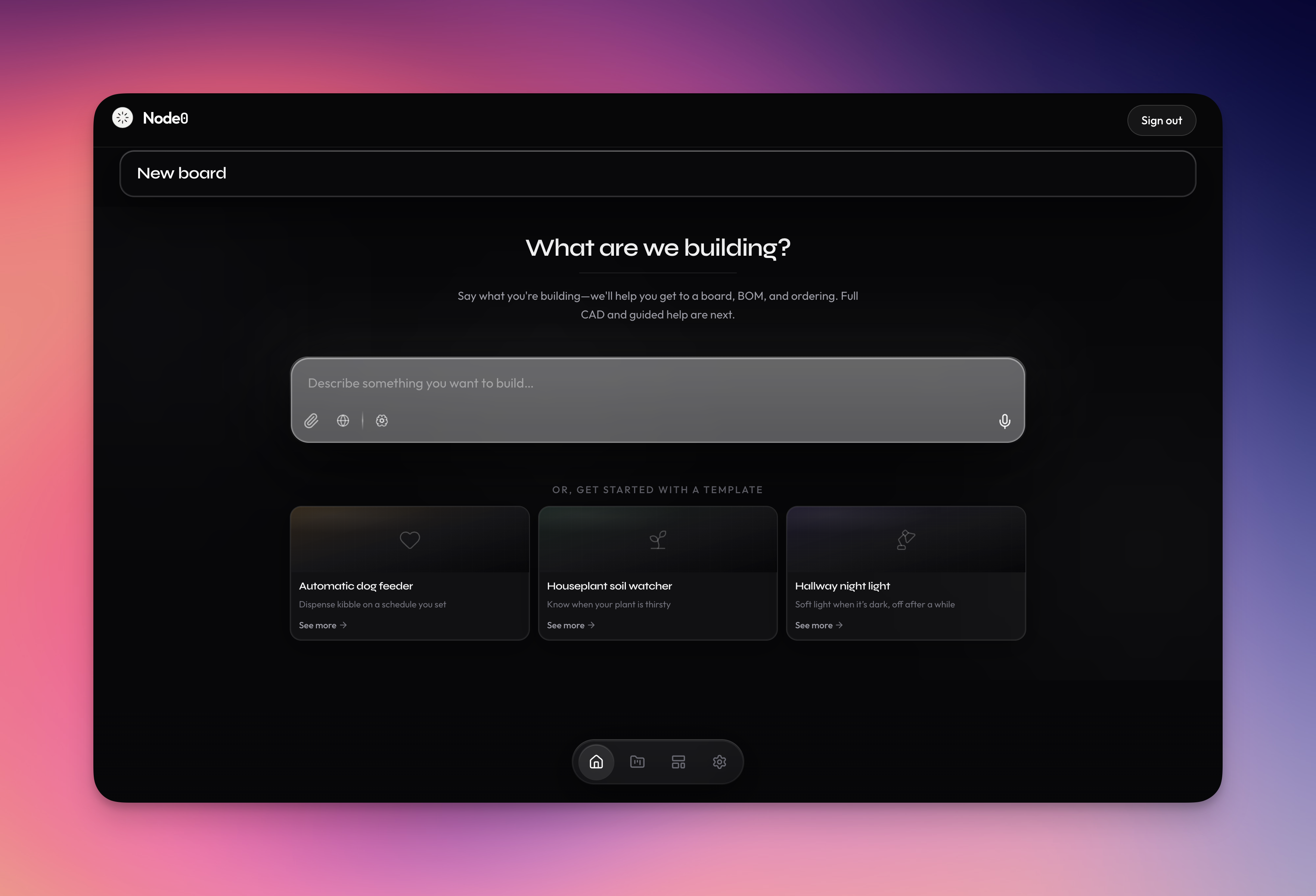
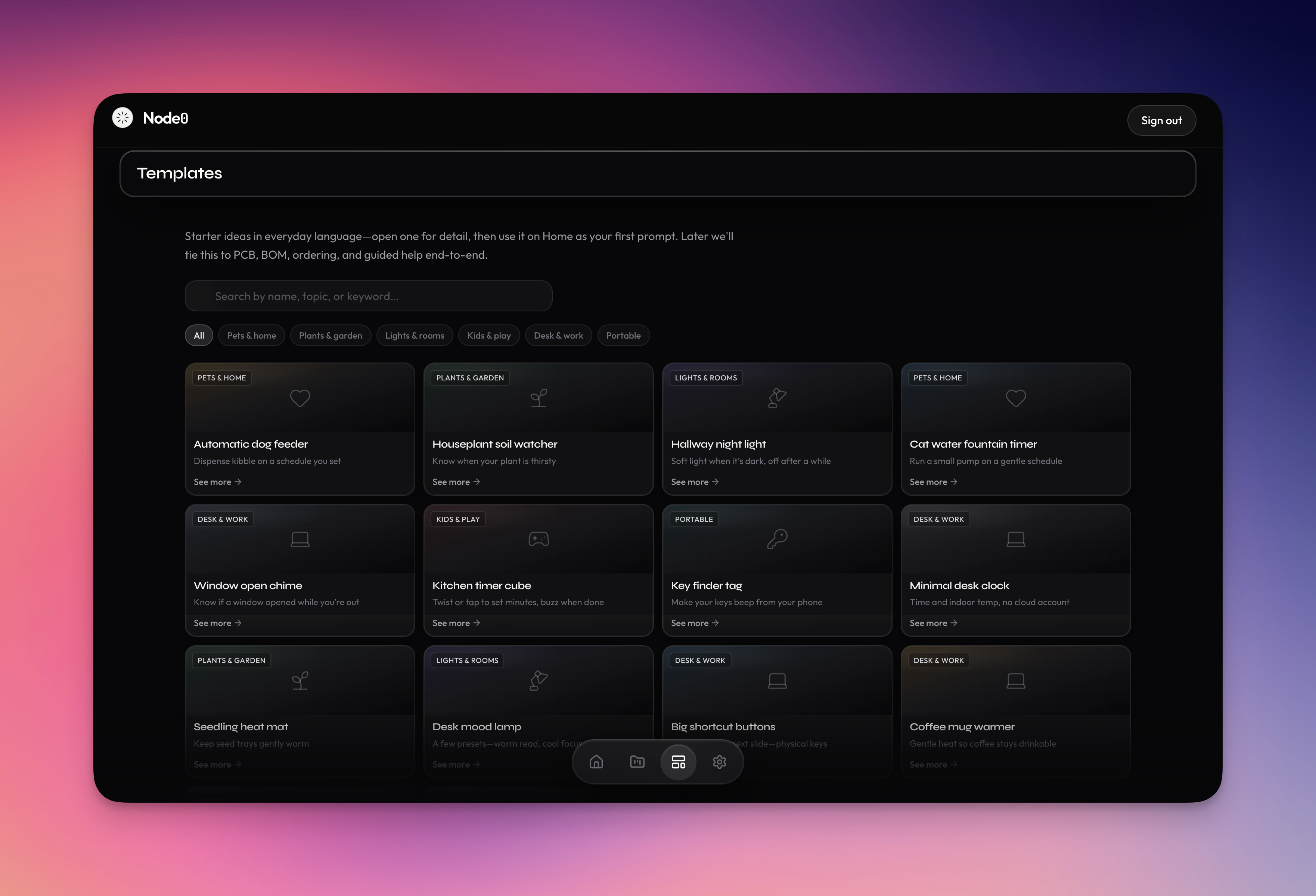
Node0 is an agentic hardware prototyper that handles the end-to-end flow of physical product prototyping. Users describe their project in natural language, and the Node0 agent orchestrates:
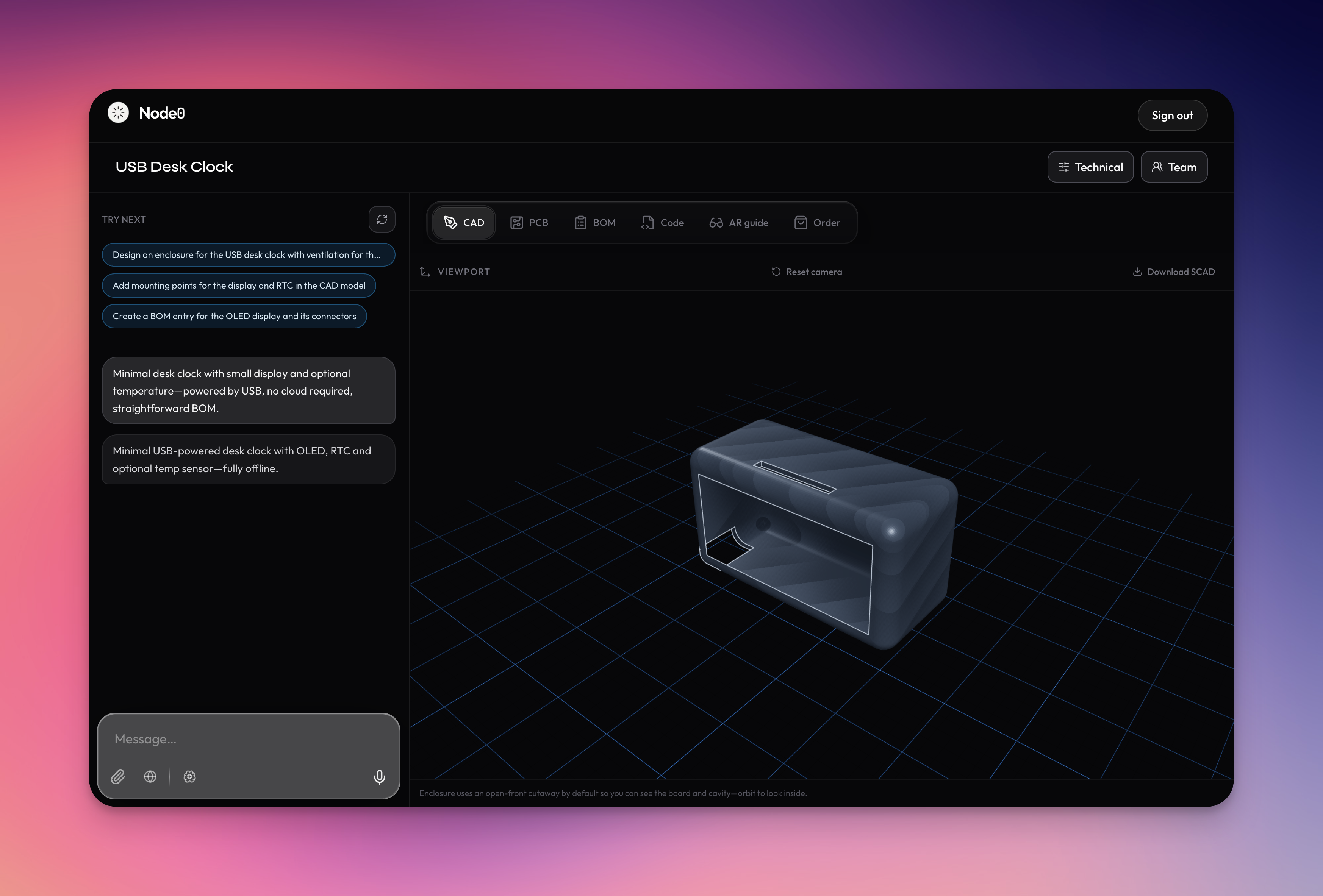
- Mechanical CAD: Generates 3D-printable enclosures using parameterized OpenSCAD models.
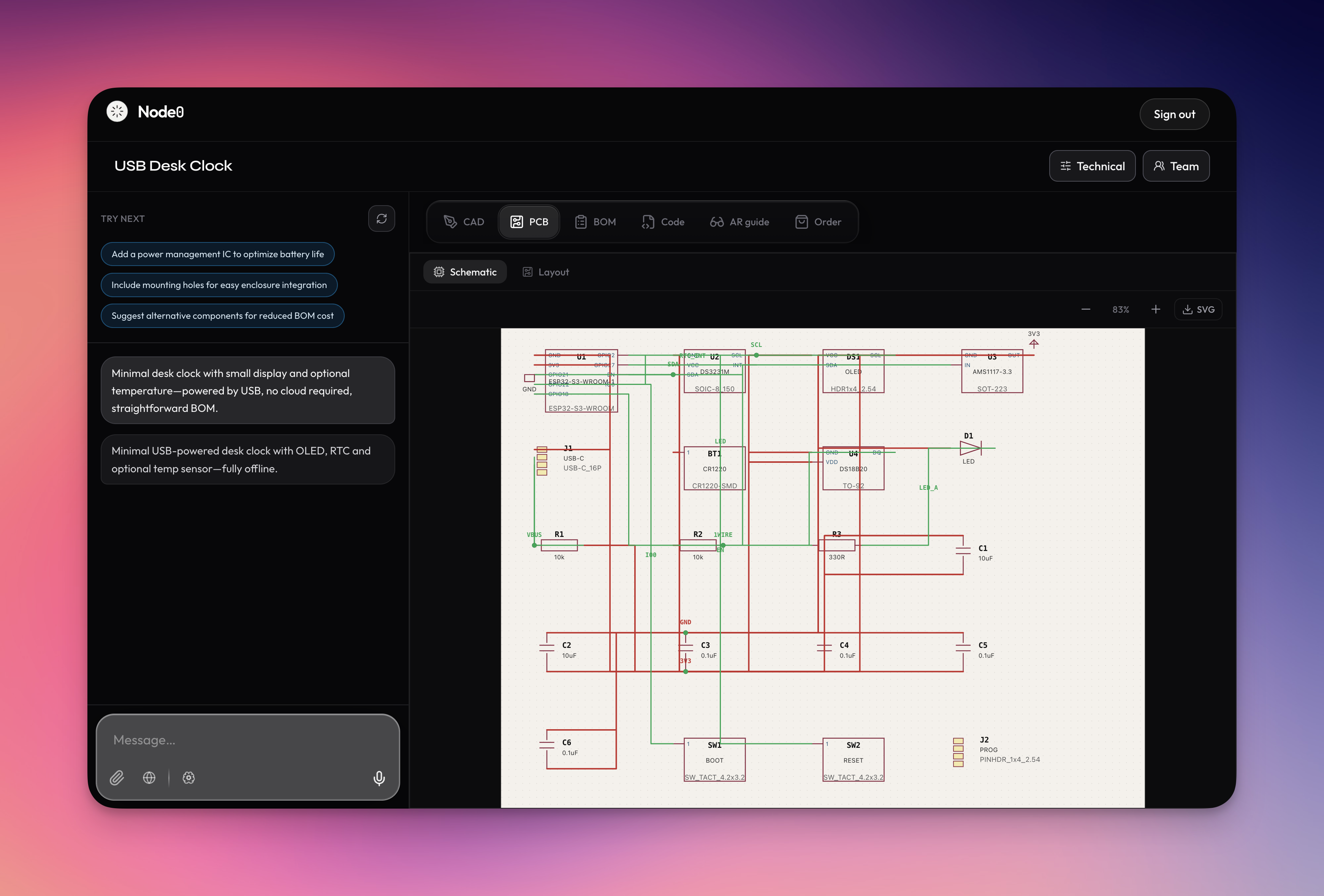
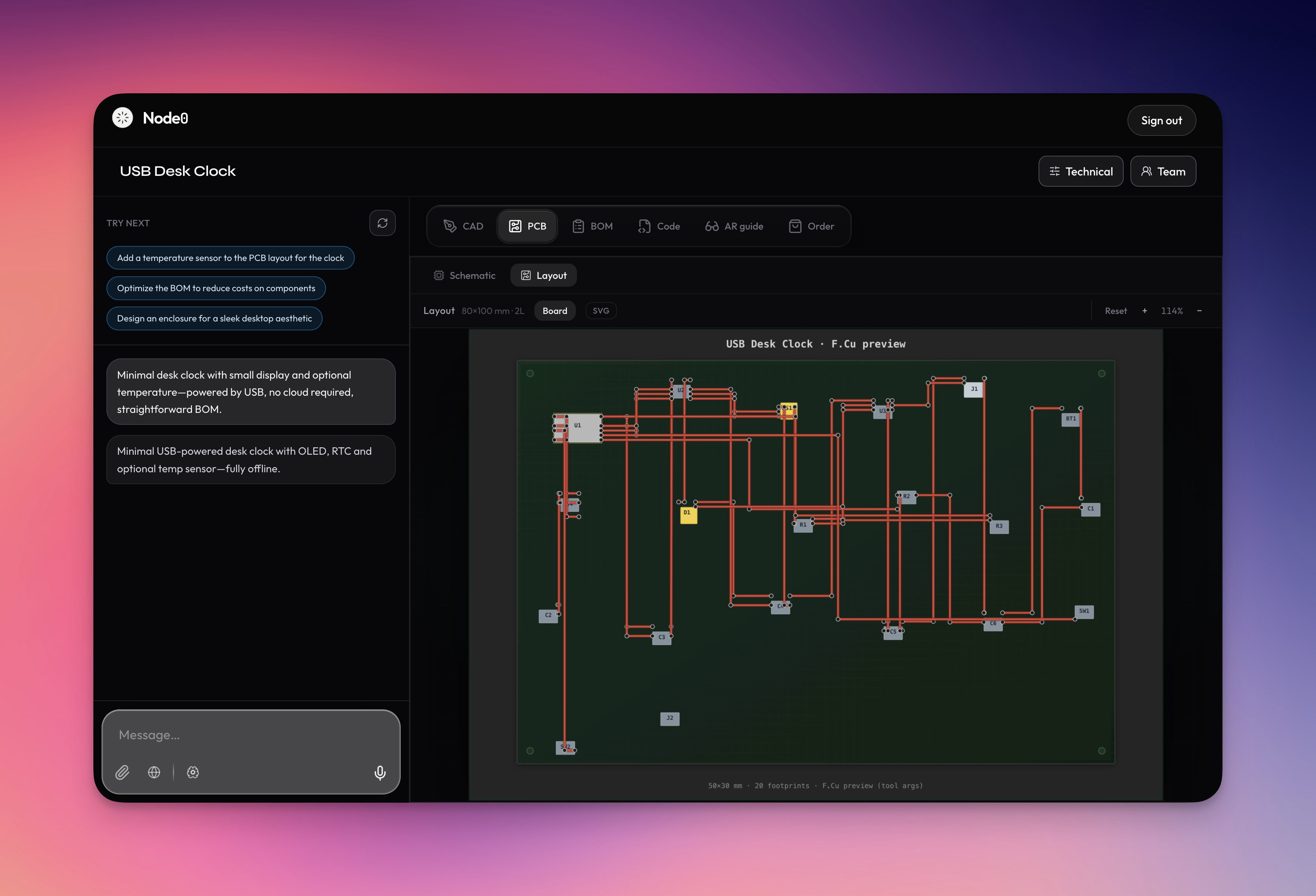
- PCB Design: Produces electrical schematics and board layouts via an optimized pipeline.
- Electrical Validation: Automatically runs Electrical Rules Checks (ERC) and feeds errors back to the AI to fix technical issues with the circuit.
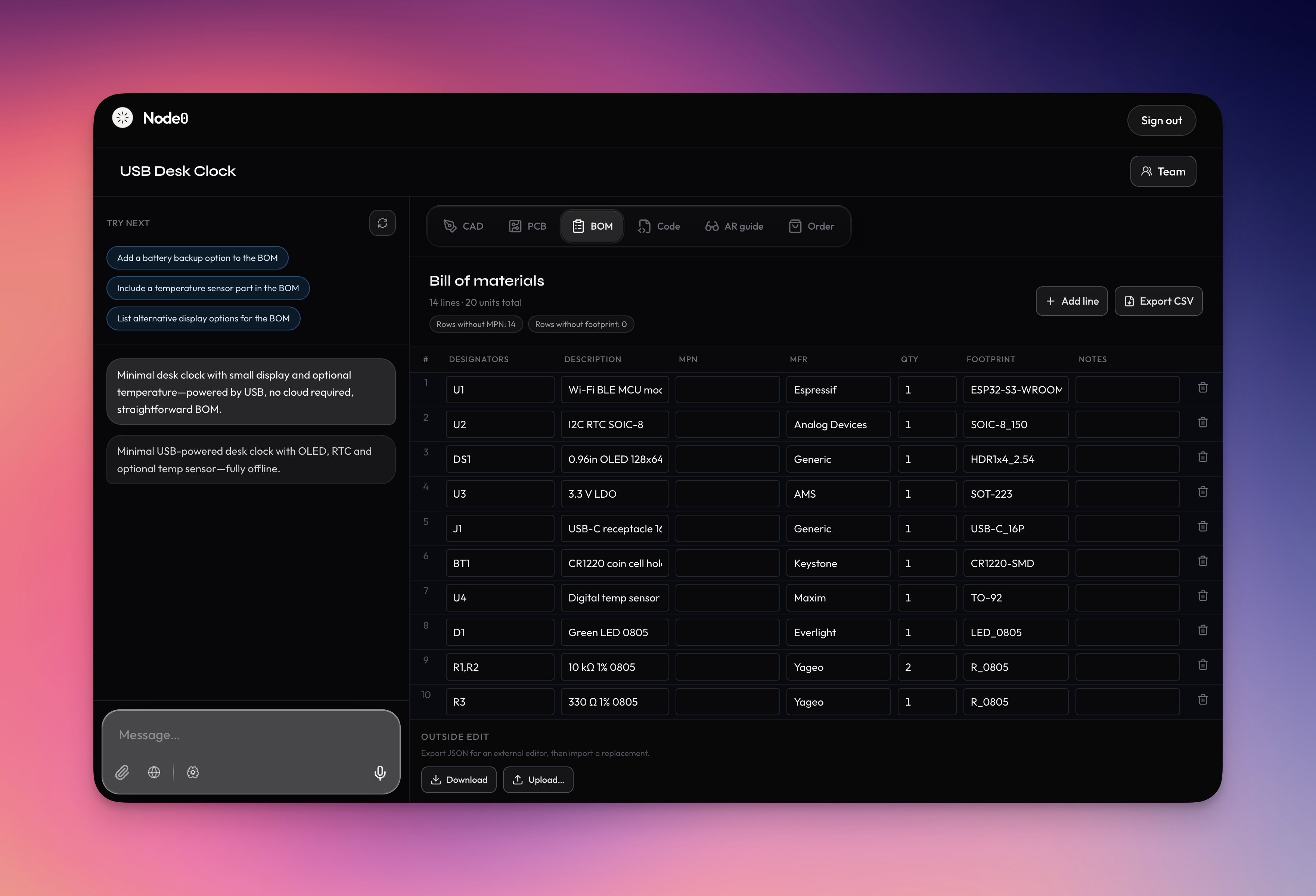
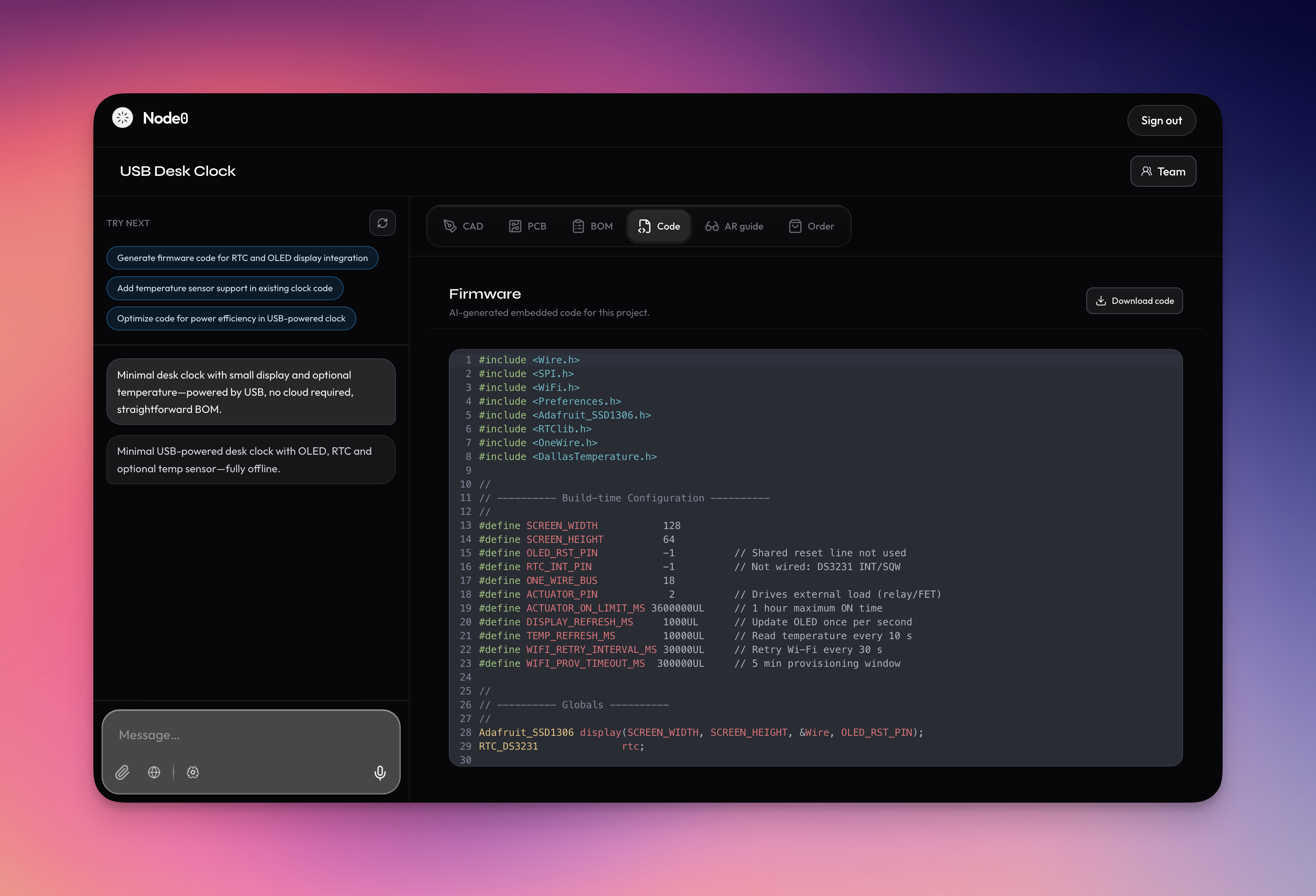
- BOM & Firmware: Generates a synchronized Bill of Materials and boilerplate firmware for the target microcontrollers, prioritizing longevity, and efficiency, which is often help negligible by new builders.
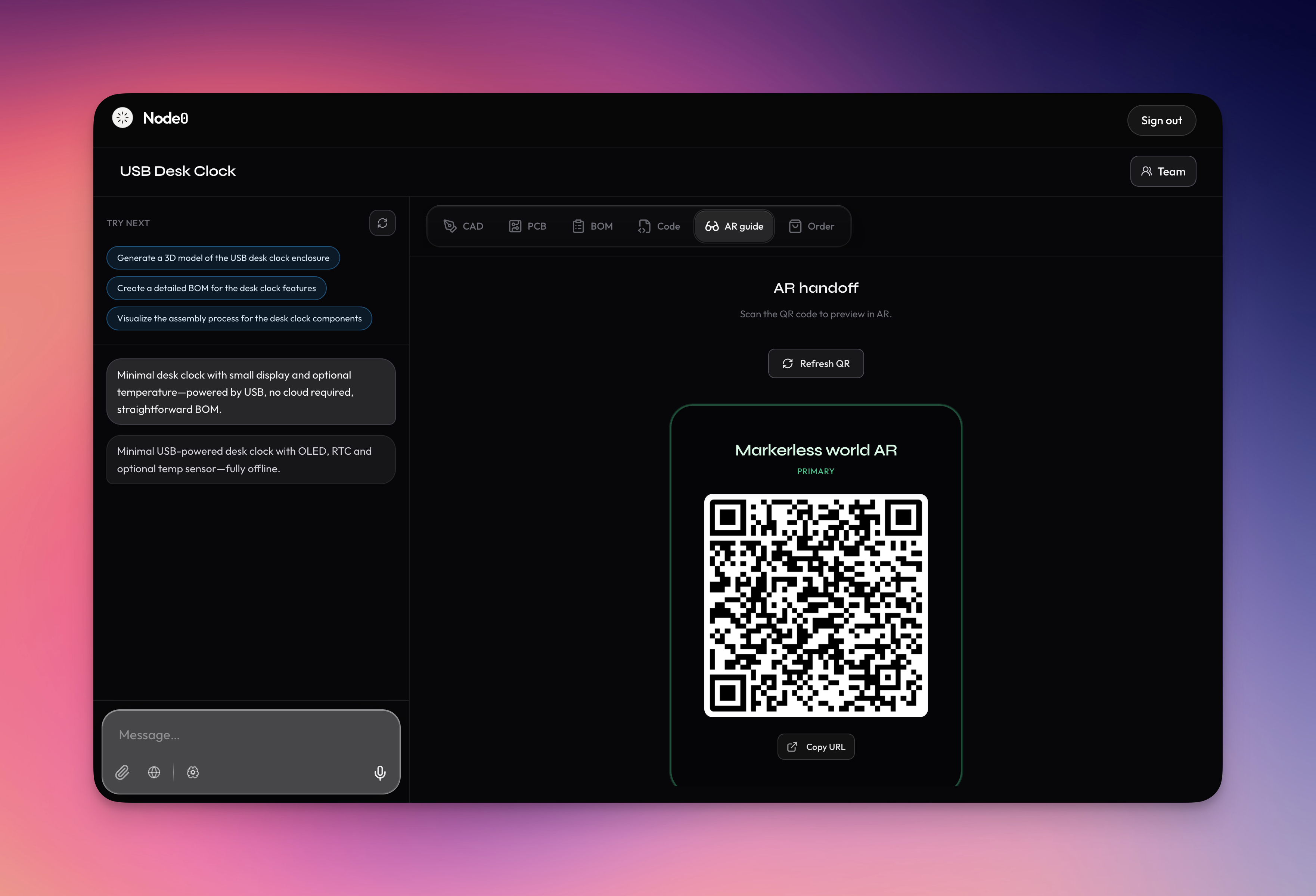
- AR Assembly Guide: A "Progressive Assembly" mode that uses AR models to show you generally how to assemble your product and give general sizing inspirations.
How we built it
I built Node0 with a customized stack:
- Frontend: Next.js with a custom "Retrowave" glassmorphism UI, powered by Framer Motion for smooth state transitions and Three.js for 3D CAD/PCB previews.
- AI Agent: A custom-built streaming agent loop using OpenAI's latest models, capable of calling specialized hardware "tools" to iterate on designs.
- Hardware Engines: A Python-based backend utilizing PCBFlow for rapid board generation and SKiDL/Circuitron for formal netlist validation and ERC integration.
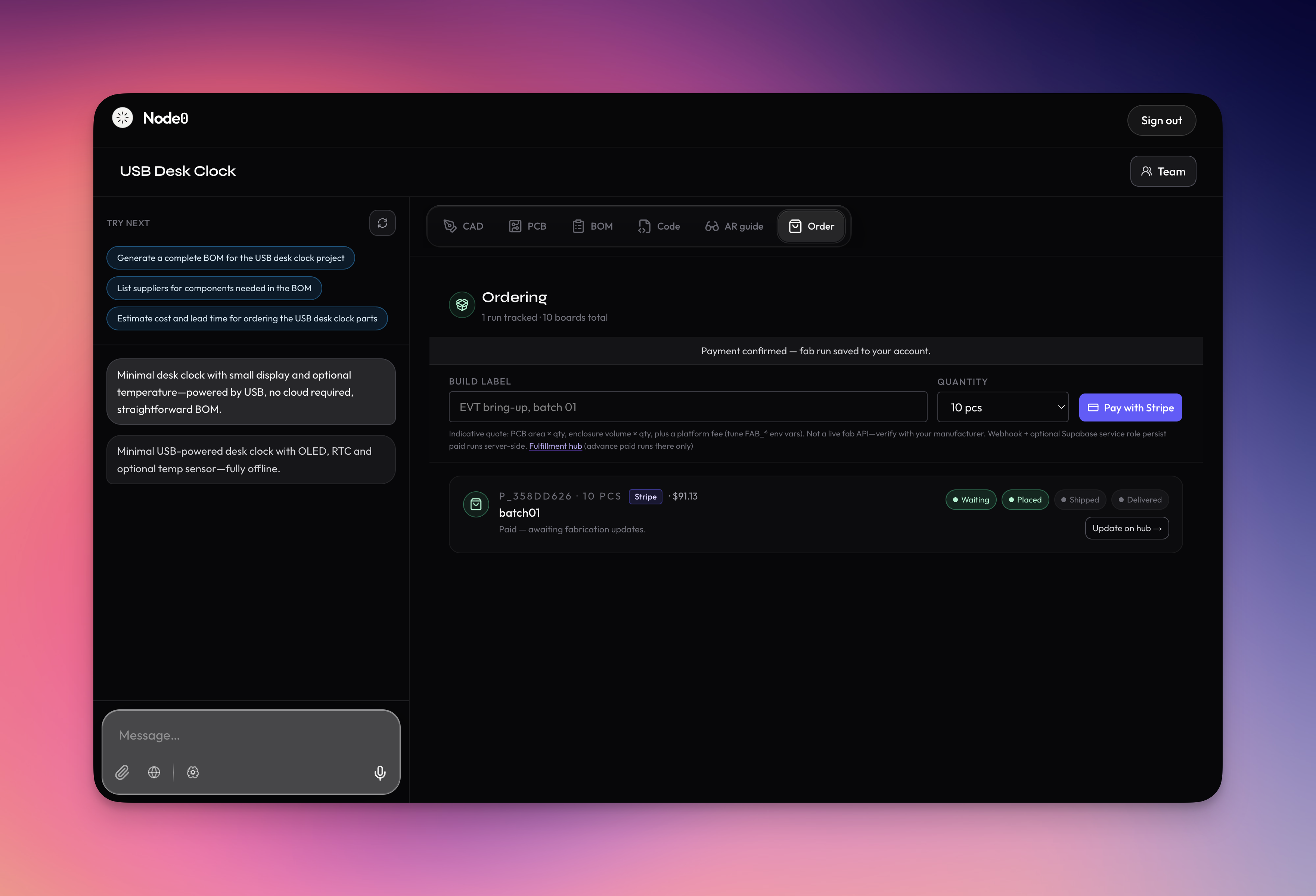
- Backend & Sync: Supabase for real-time project synchronization and authentication, with Stripe integration ready for fabrication ordering.
Challenges we ran into
Building this was about more than just UI; it was about orchestrating a multiple moving parts. My biggest hurdles were around AR management and keeping the complex PCB and Circuit creation synced with the AI agent. This finally resulted in a high quality solution.
Accomplishments that we're proud of
I managed to build a fully working SaaS solution from the ground up that is actually robust. It's not a demo, it's a integrated platform that handles CAD, PCB, and firmware in one cohesive flow. Making all these complex systems talk to each other reliably is something that was tedious and impactful.
What we learned
This project pushed me into the deep end of hardware automation. I had to learn how to build using complicated and largely undocumented methods, especially when it came to the engines powering the PCB and CAD generation.
What's next for Node0
Next, we’re scaling this into a full-fledged application with way more customization options for users. A major part of the roadmap is integrating directly with manufacturing APIs like PCBWay and professional 3D printing services. We're planning to open up direct communication channels with these fabs to make "one-click manufacturing" simpler.


Log in or sign up for Devpost to join the conversation.