Inspiration
A 3D scene can look finished while one missing license prevents delivery. Shared materials and sounds make the problem harder: one asset can block several objects, and replacing objects one by one costs more than repairing a shared dependency.
What it does
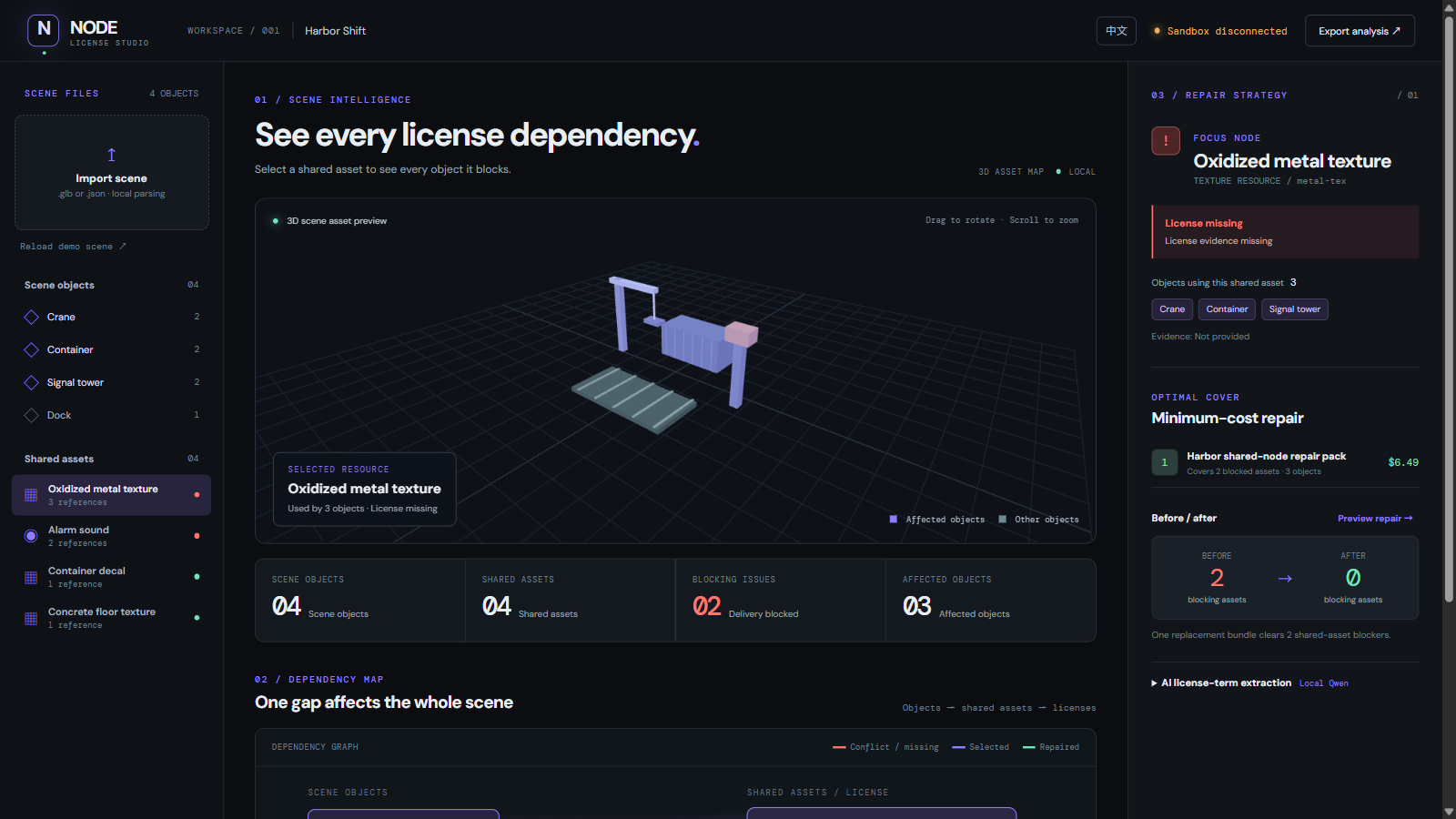
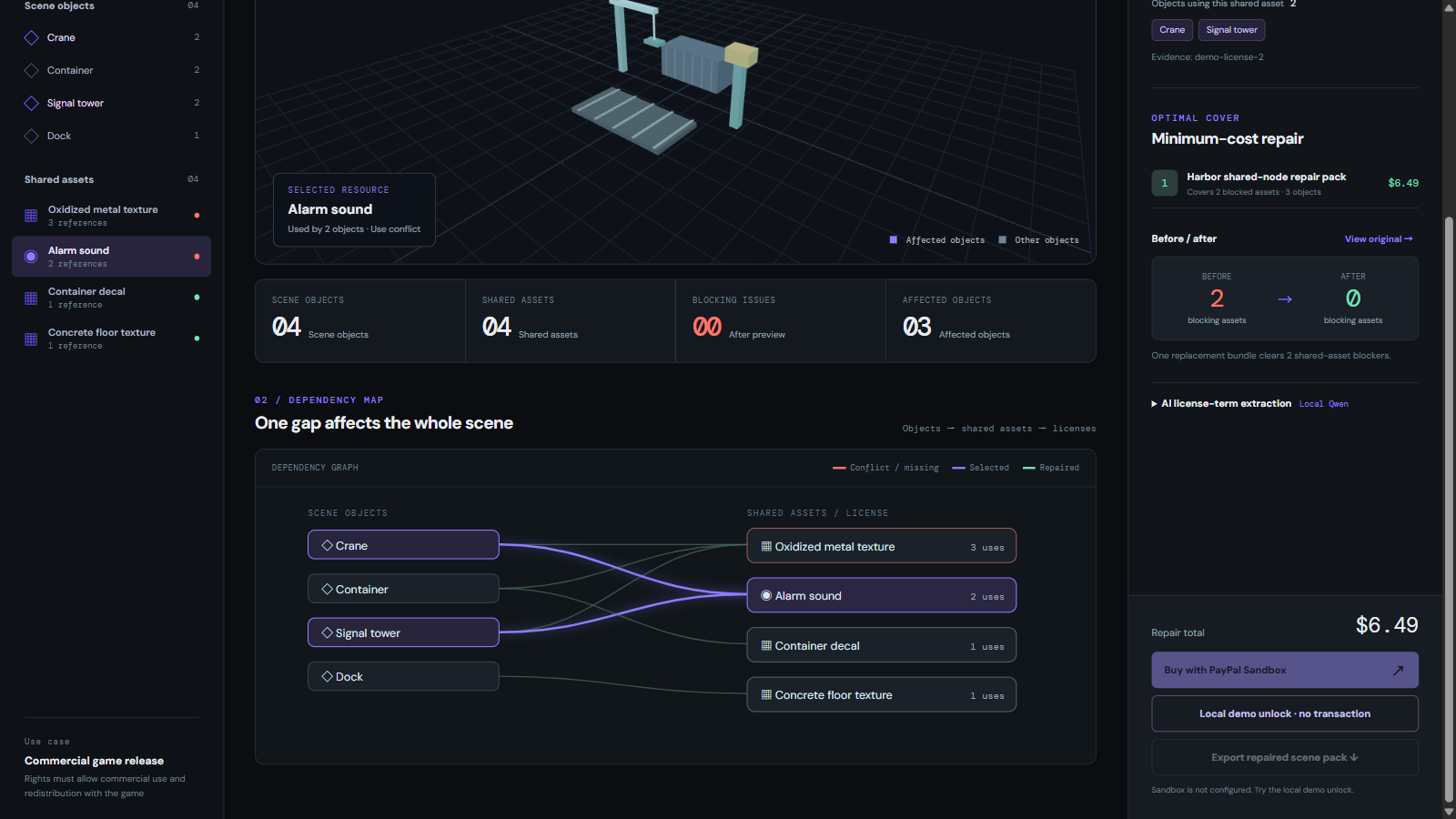
NODE visualizes objects, shared assets, and license evidence as a dependency graph. Select an asset to see every affected object. Conservative, deterministic rules identify blockers and an exact minimum-cost optimizer finds the replacement bundle for the built-in scene. A before/after view shows the repair. Export produces a ZIP with the repaired GLB, generated texture and sound, replacement manifest, and asset license.
You can import a GLB or JSON scene manifest. Missing license evidence stays unverified. Optional local Qwen extraction proposes rights and exact supporting excerpts from pasted license text; a human must confirm them before the graph changes.
How we built it
The browser UI uses Three.js, Vite, and JavaScript. A deterministic dependency engine computes impact and solves the minimum-cost cover problem. A local Node.js server connects to Ollama for structured AI extraction and implements PayPal Sandbox Orders v2 for the first-party replacement bundle. Checkout binds each order to a quote and validates the completed capture, amount, and currency before granting an entitlement. The full Sandbox flow was verified with a test buyer, from order creation and approval through capture, return, and unlock. No real funds were used.
Challenges
The biggest design challenge was separating AI interpretation from license authorization. The model can identify relevant terms, but it cannot silently grant rights. Imported or edited content stays outside the fixed-price checkout so a purchase cannot imply rights to third-party assets.
Accomplishments and learning
One shared repair can clear multiple blockers at once. The graph, exact optimizer, and export make the effect inspectable. We learned to make uncertainty visible and bind payment state to a specific deliverable. A clearly marked local demo unlock allows inspection without claiming a transaction occurred.
What's next
Add project accounts and persistent storage, then expand evidence review, webhook validation, and payment recovery for a hosted multi-user version.
Source, setup, and MIT license: https://github.com/FOWEPJF255/node-license-graph-studio
Live demo
Open the no-payment browser demo. It supports the dependency graph, repair preview, and local ZIP export. PayPal Sandbox checkout and Ollama extraction run in the local server build; setup is in the repository README.
Screenshots
Built With
- javascript
- node.js
- ollama
- paypal
- qwen
- three.js
- vite

Log in or sign up for Devpost to join the conversation.