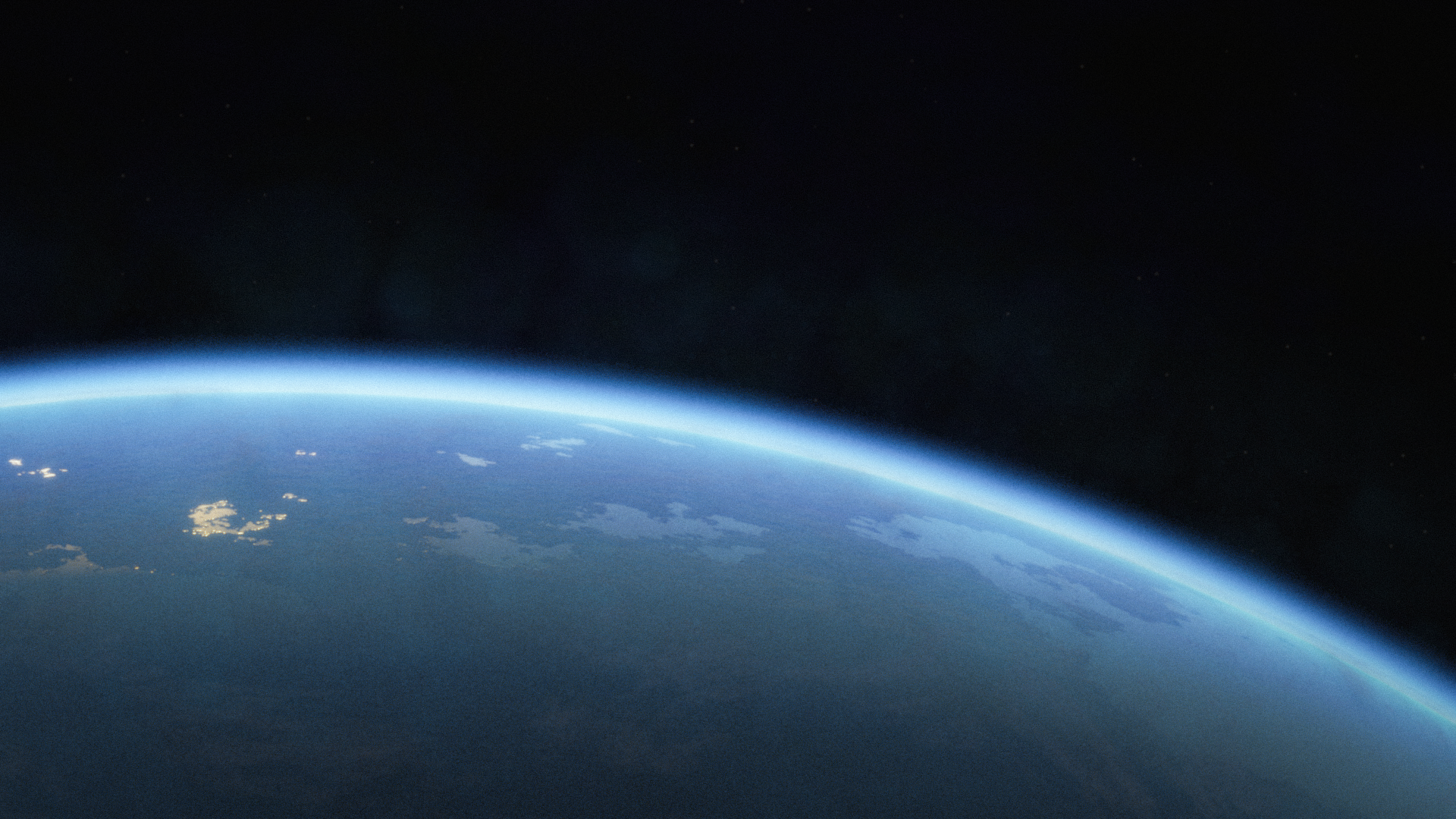
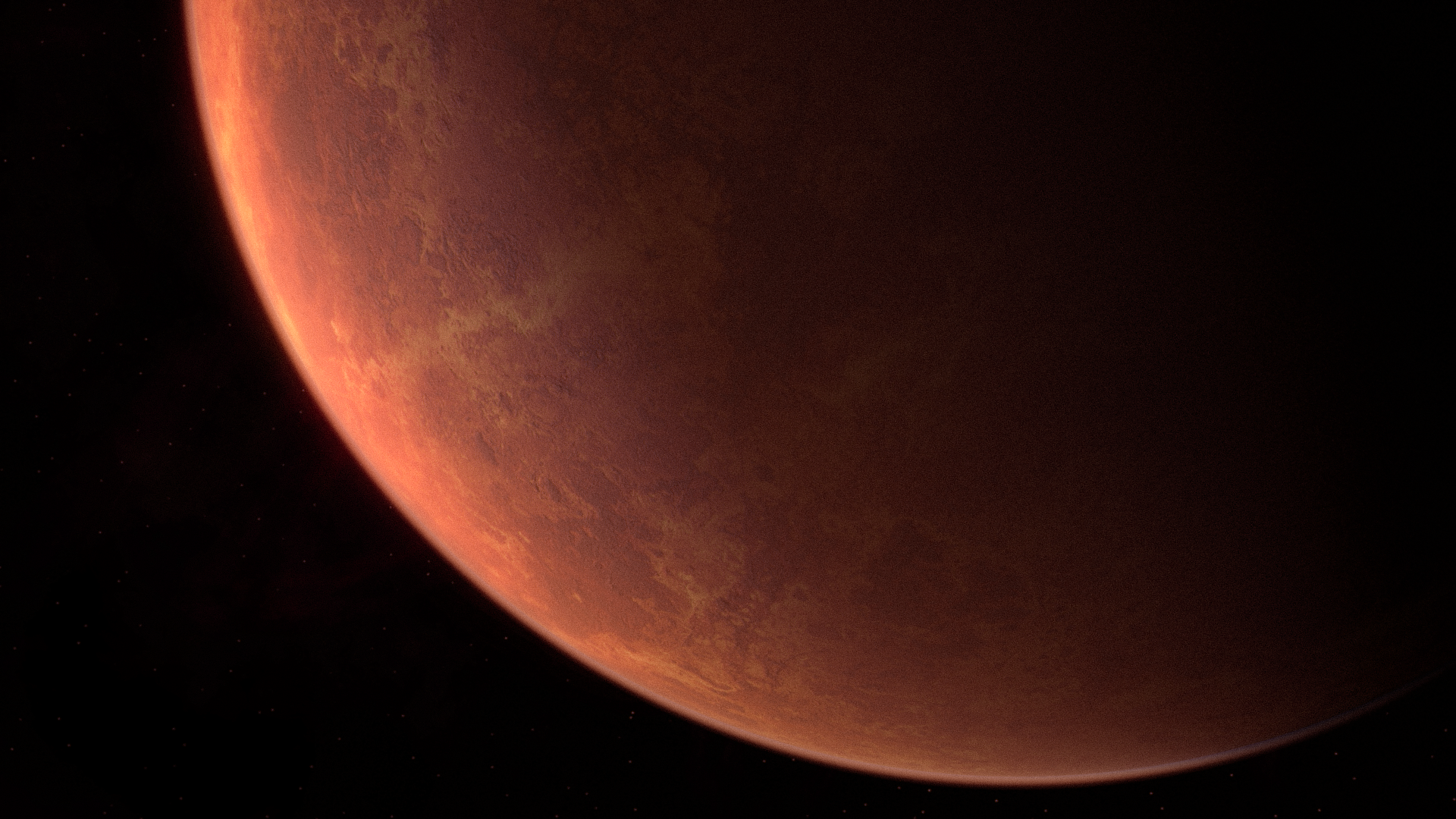
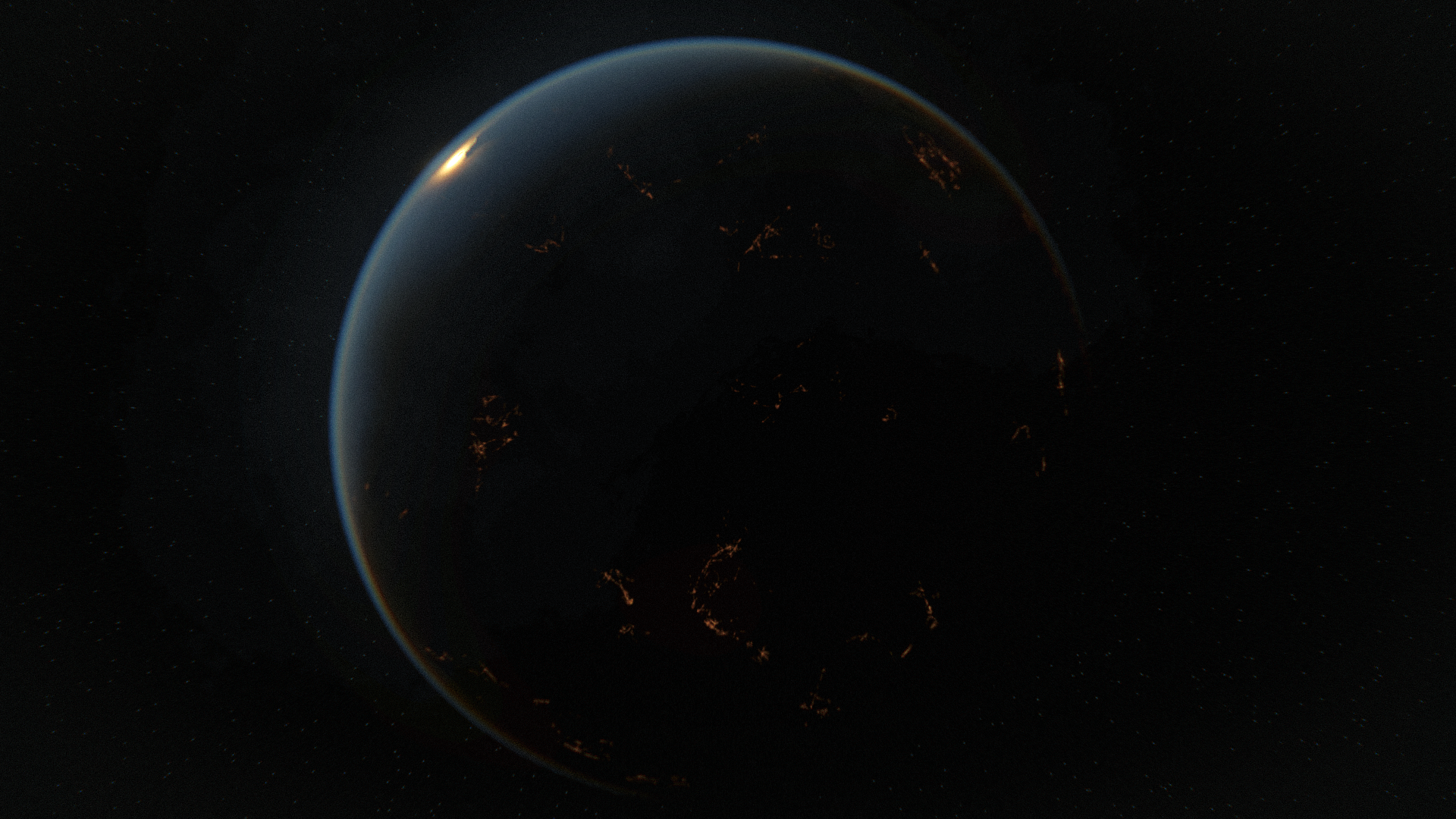
Node-Based Planet Generator
Inspiration
Over some time I found myself making planets in Blender over and over because I loved celestial bodies and every time I made one, I noted different things about the look of planets, how the atmosphere works, how I can combine procedural noises to make interesting surface textures, and I realized that it might be easy for me to make a procedural system for generating planets, clouds, and atmosphere rather than making a similar nodegroup every time, and so I did.
What it does
This planet generator comes in 3 parts, the main one being a node that gives controls for a ton of small details for what should be on a planet, including water level, rivers, continent detail, islands, and even the scale/intensity of the city glow on the dark side of the planet.
How I built it
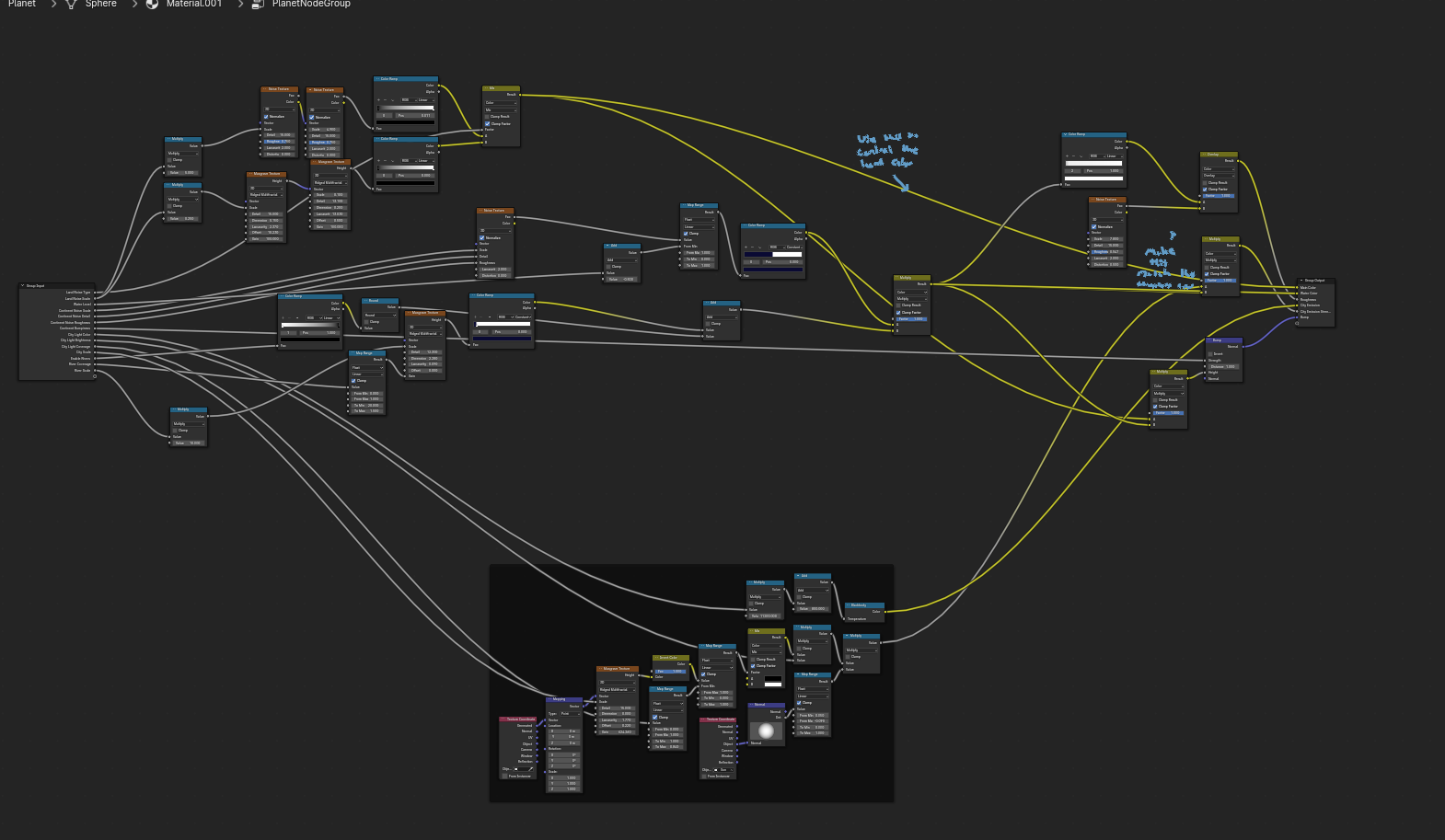
By utilizing Blender's shader nodes, I used a lot of different noise textures to create the looks I wanted. For surface details, I used a combination of basic noise and musgrave textures, and for things that needed more of a stringy, branching feel like the cities and rivers I used ridged fractal noises. After everything was set up the way I wanted it, I used Blender's nodegroup feature to abstract all the settings down to understandable values for the controller. I then made similar nodegroups for the atmosphere object and the cloud object
Challenges we ran into
Some of the settings in the main nodetree did not translate well into 0-1 value controllers, so I had to add a ton of math nodes just to make them work. The river in particular kept making everything dark when it was turned up so I had to mess with that a lot to fix it.
Built With
- blender
- shader-nodes

Log in or sign up for Devpost to join the conversation.