-
-
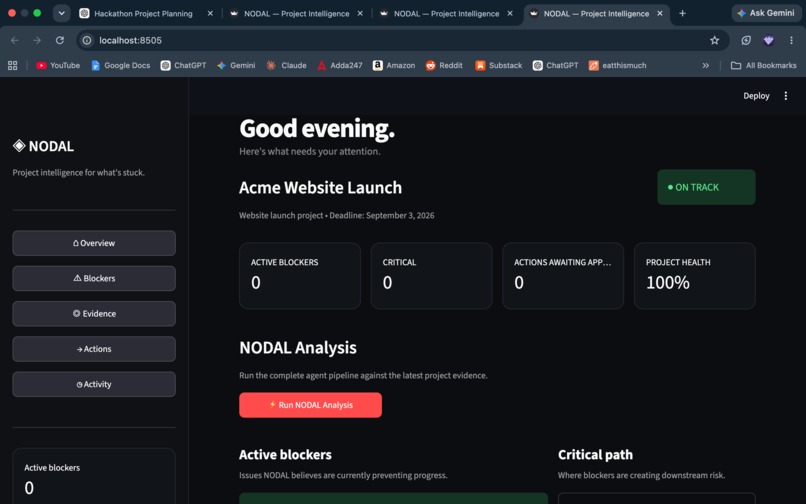
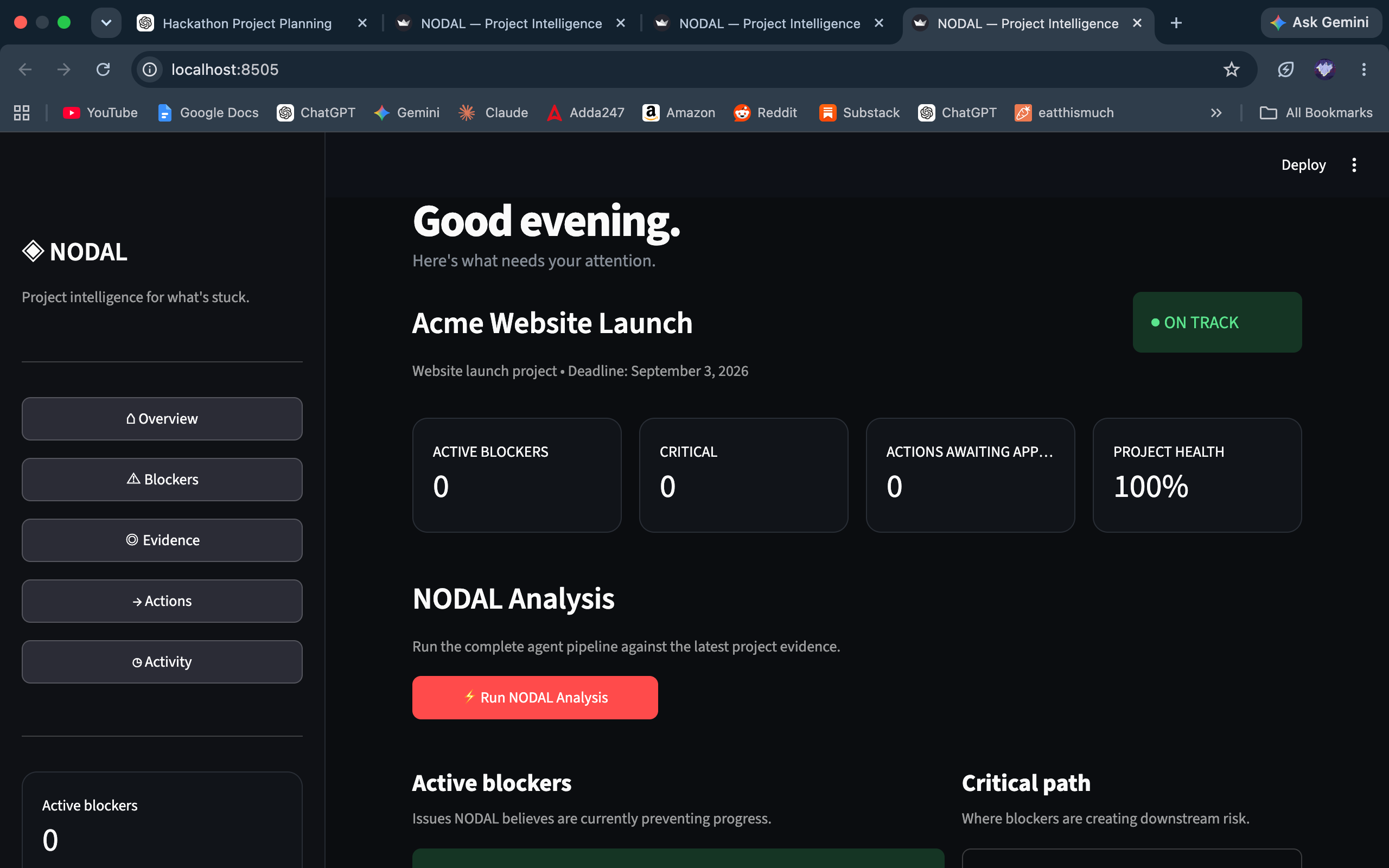
NODAL Dashboard
-
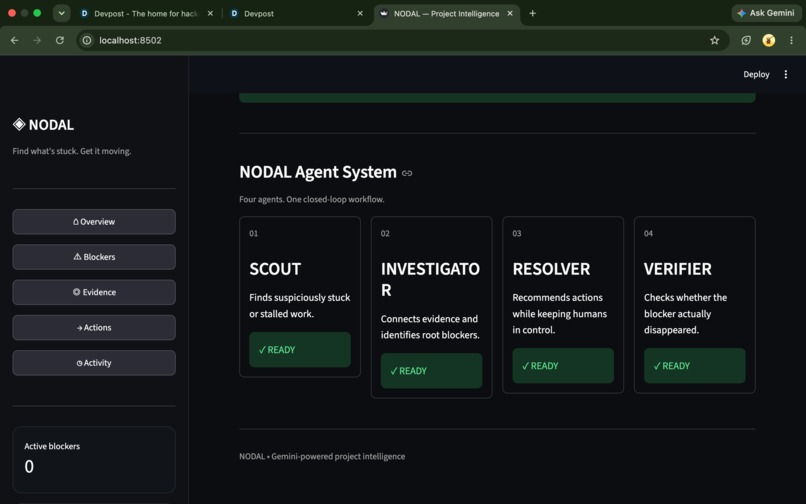
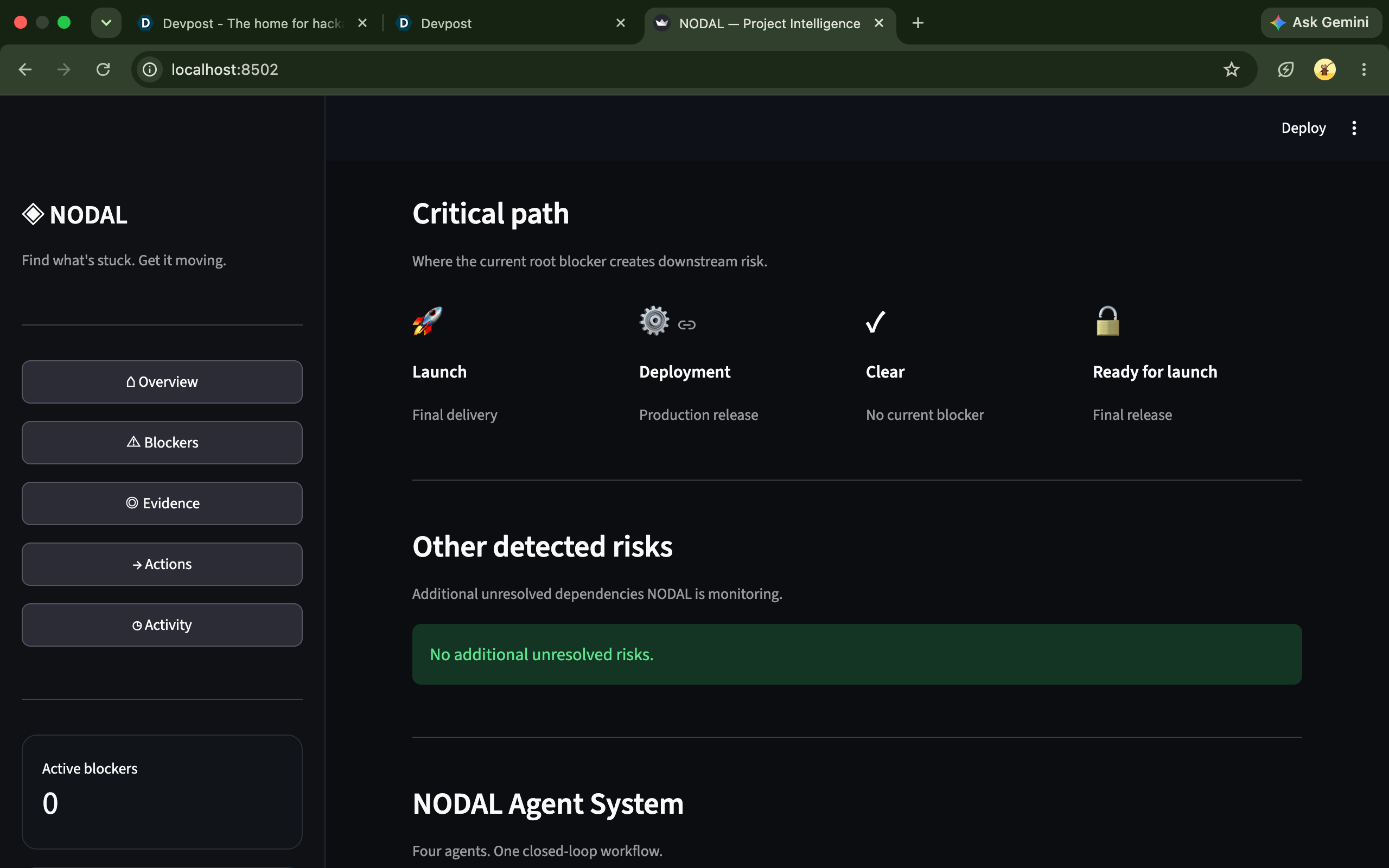
NODAL Dashboard
-
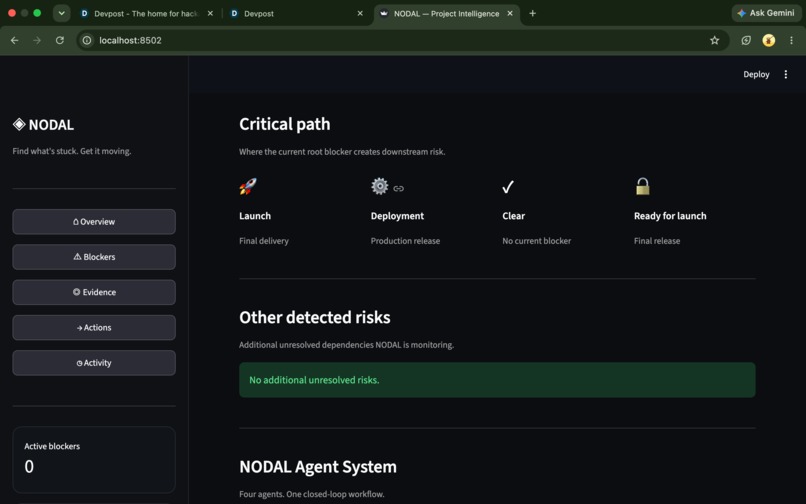
NODAL Dashboard
-
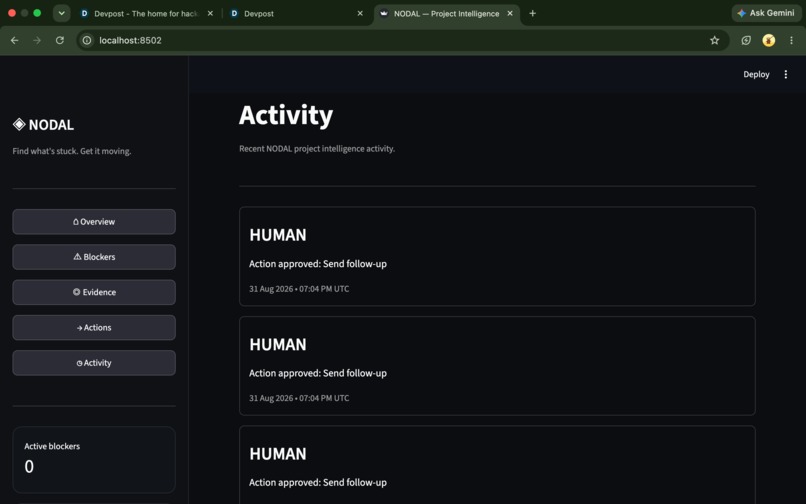
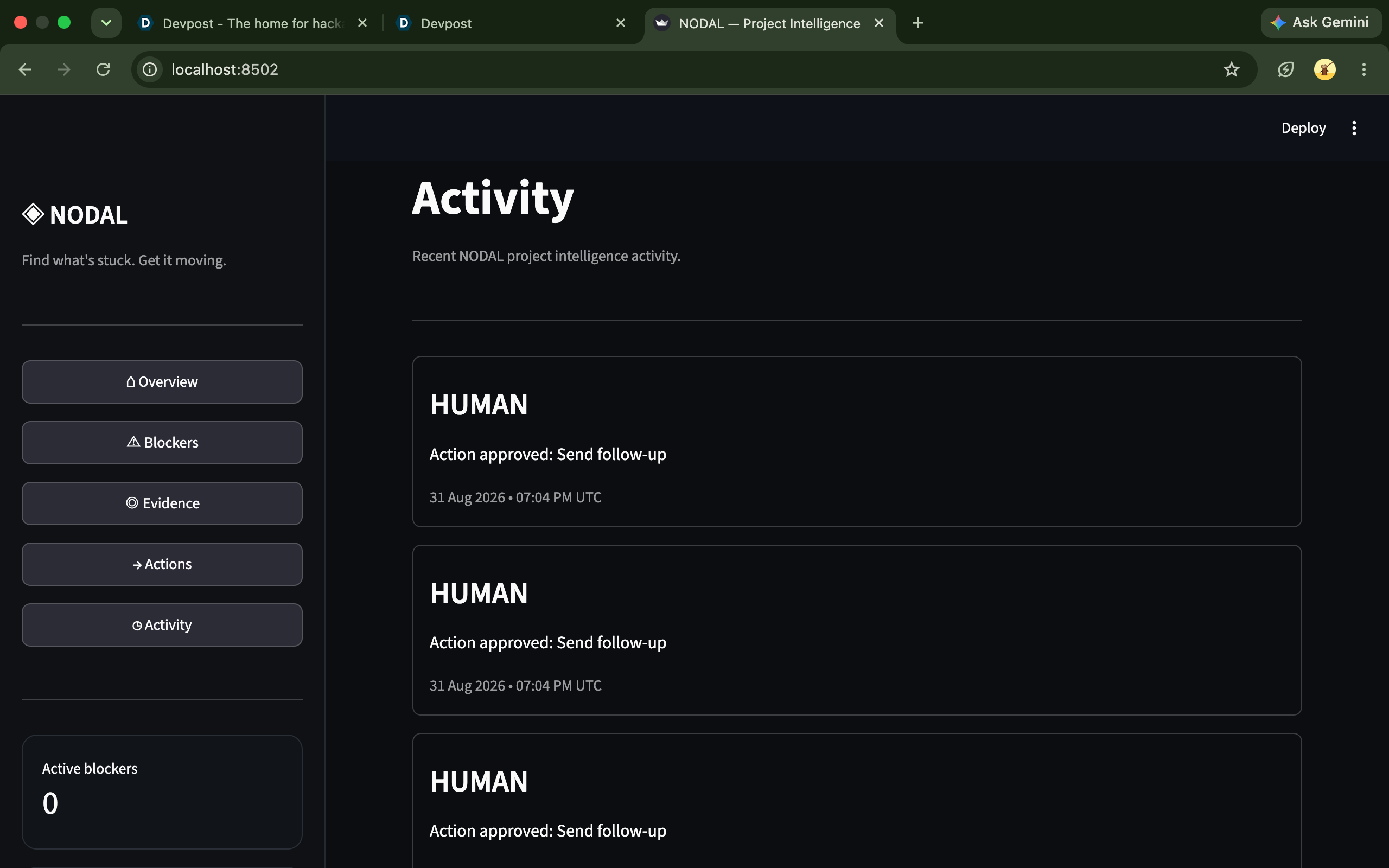
NODAL Activity page
Inspiration
Most project-management tools tell you what needs to be done. But they don't always tell you why work is actually stuck.
That inspired me to build NODAL — an AI-powered project intelligence system designed to uncover hidden blockers buried across tasks, conversations, approvals, and project evidence.
What it does
How we built it
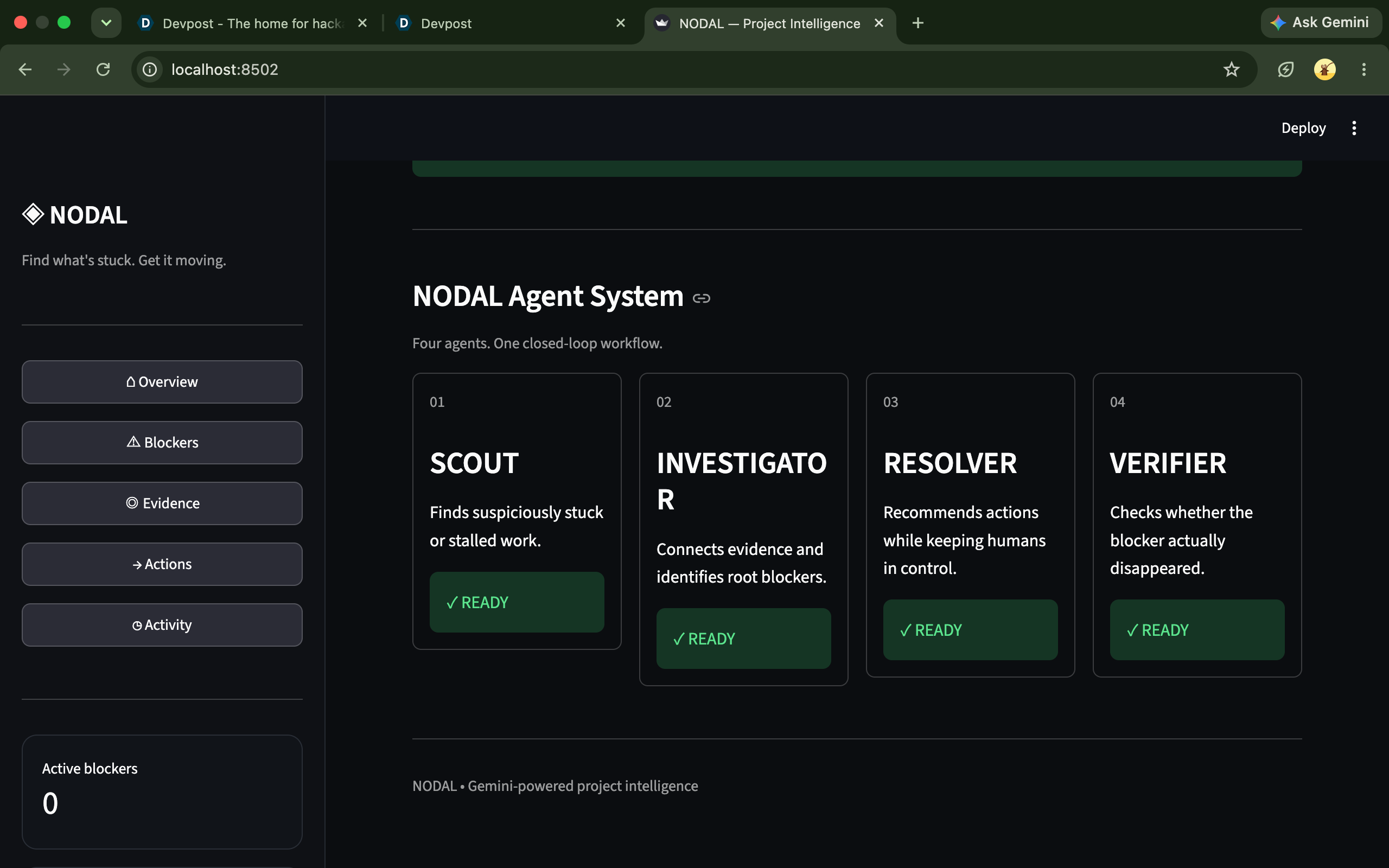
NODAL uses a four-agent closed-loop architecture:
SCOUT → INVESTIGATOR → RESOLVER → VERIFIER
Scout identifies suspiciously stalled work. Investigator analyzes project evidence and finds the root blocker. Resolver recommends an appropriate action and prepares the communication. Verifier checks the evidence again to determine whether the blocker was actually resolved.
Firestore stores blockers, actions, and verification records, while Gemini provides the reasoning layer. The Streamlit dashboard presents the intelligence in a simple, human-readable interface.
The core loop is:
Evidence→Blocker→Action→Approval→Verification
Challenges we ran into
The biggest challenge was making the agents behave reliably with changing project evidence. A blocker that existed yesterday should not automatically remain active today.
I had to carefully handle chronology, evidence IDs, blocker status, human approval, and verification while also making sure the application remained stable across the different components.
Accomplishments that we're proud of
I'm proud of building NODAL as a working four-agent system, rather than just a chatbot demo. I connected Gemini with Google Cloud, Firestore, and Streamlit to create a complete loop: find → investigate → recommend → verify. Most importantly, I implemented human approval and an evidence-based verification layer.
What we learned
Building NODAL taught me that an effective AI agent is more than a chatbot. It needs to:
Understand evidence and chronology Distinguish unfinished work from genuine blockers Identify root causes, not just symptoms Recommend actions while keeping humans in control Verify whether an action actually resolved the problem
I also learned a lot about connecting Gemini, Google Cloud, Firestore, and a Streamlit interface into one agentic workflow.
What's next for NODAL
I want to take NODAL beyond a demo by connecting it to real workplace tools such as project boards, email, and team communication platforms. The goal is to enable continuous monitoring, smarter prioritization, richer evidence trails, and eventually predict blockers before they stop progress.
Built With
- agenticai
- aiautomation
- cloudrun
- firebase
- gemini
- generativeai
- google-cloud
- googleai
- python
- streamlit
- vertex

Log in or sign up for Devpost to join the conversation.