-
-
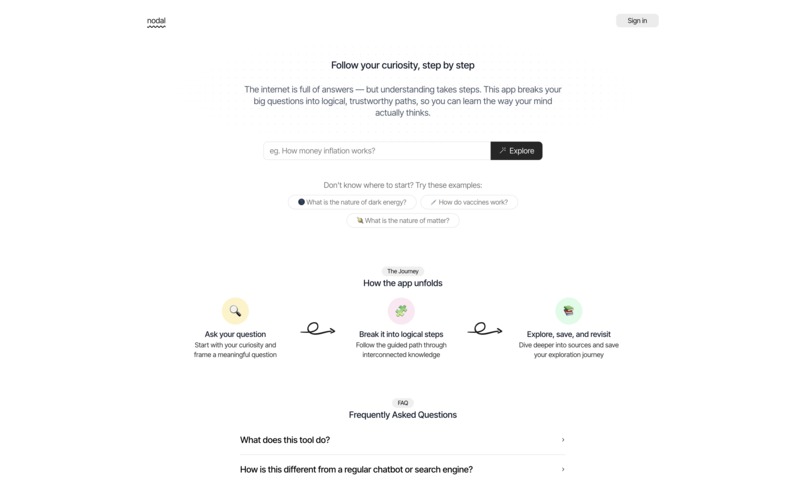
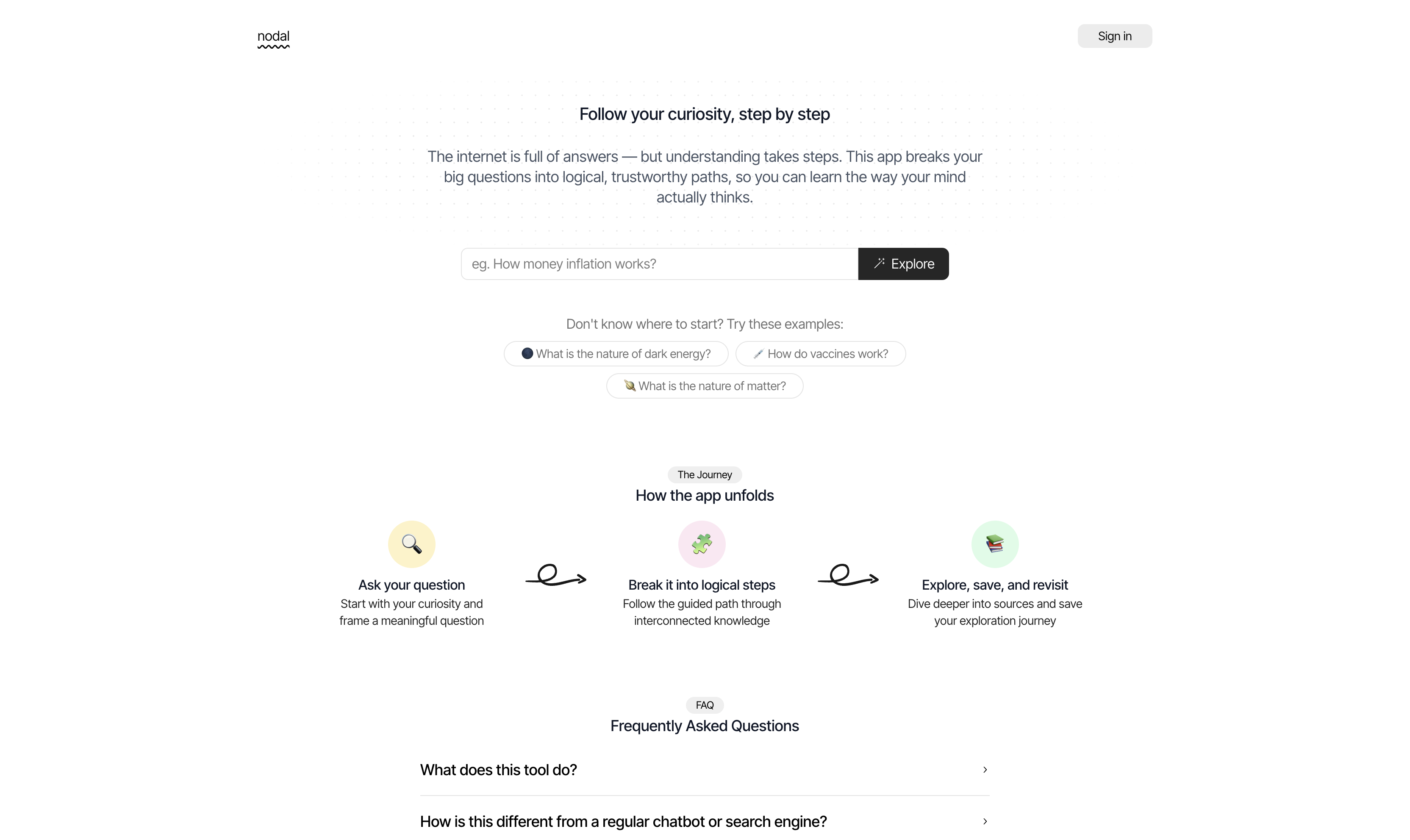
Home page
-
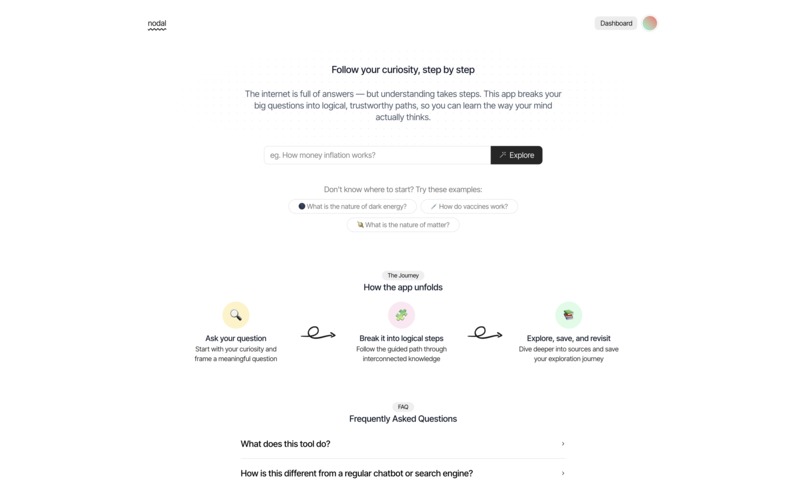
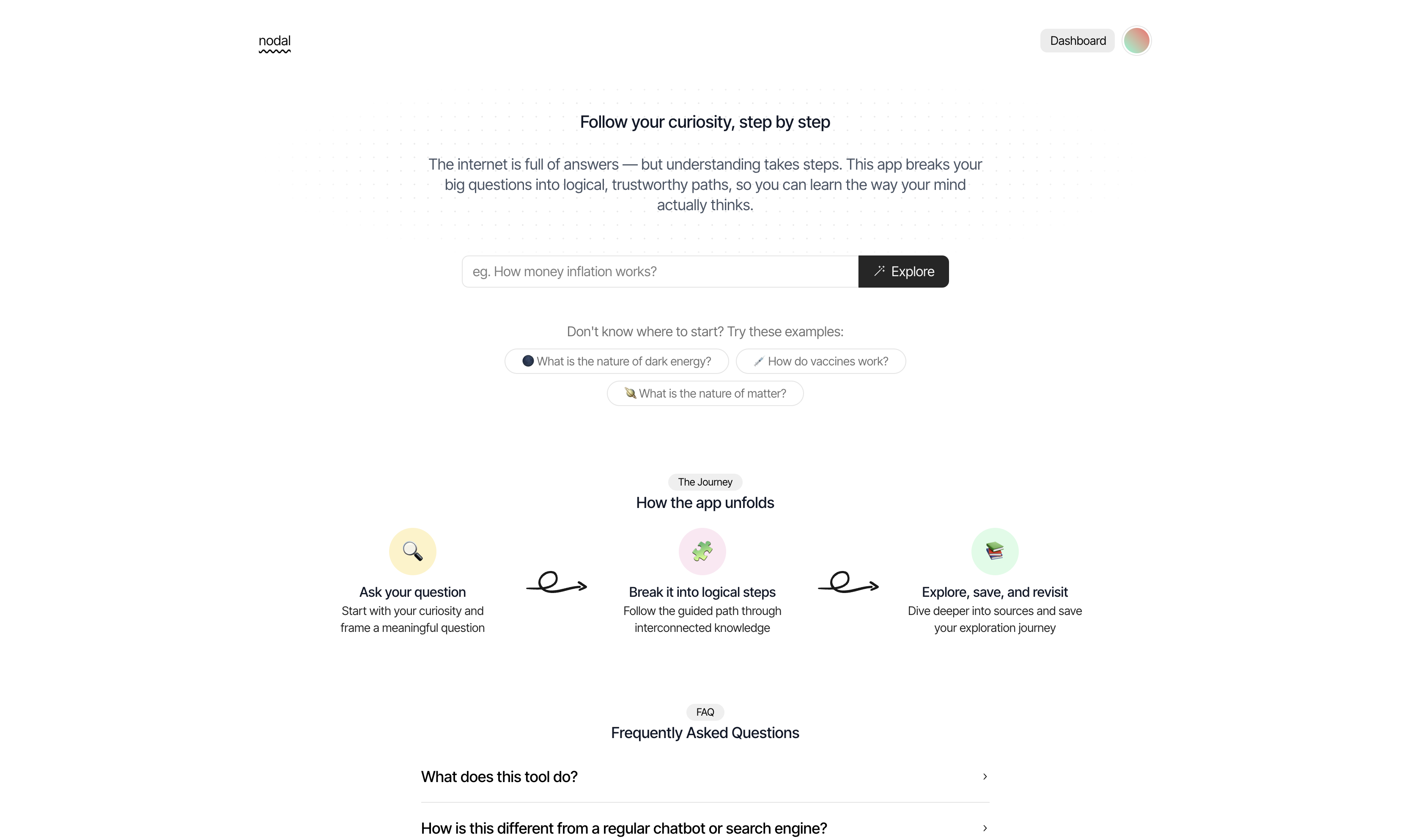
Home page | Signed in
-

Generating graph
-
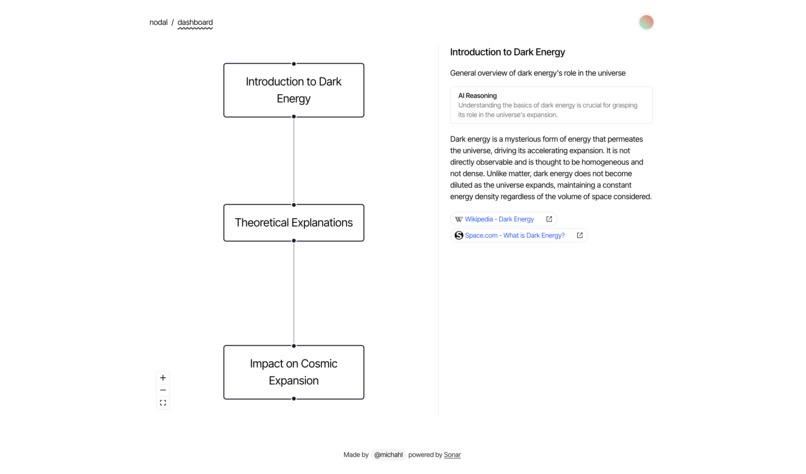
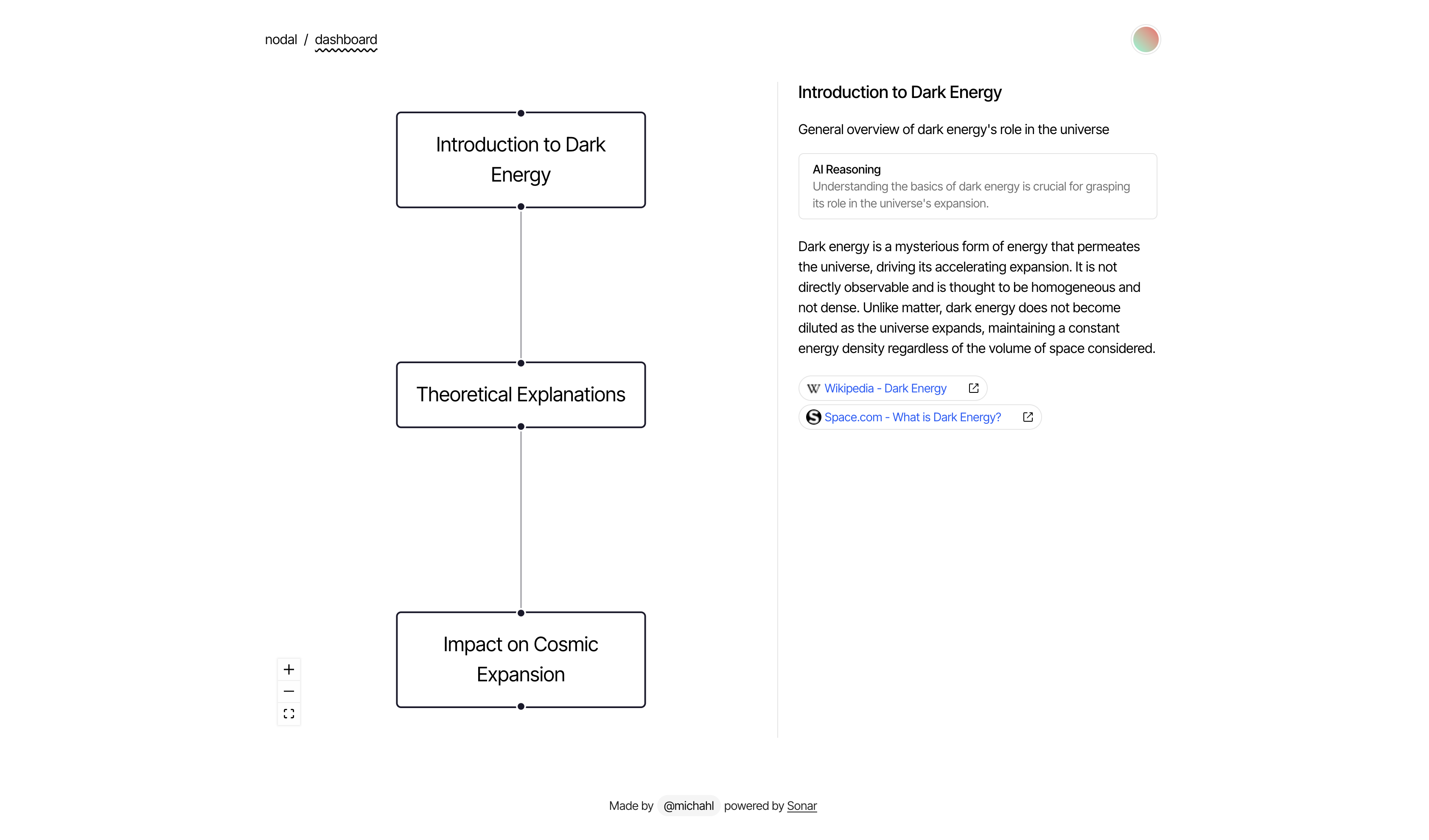
First node in graph
-
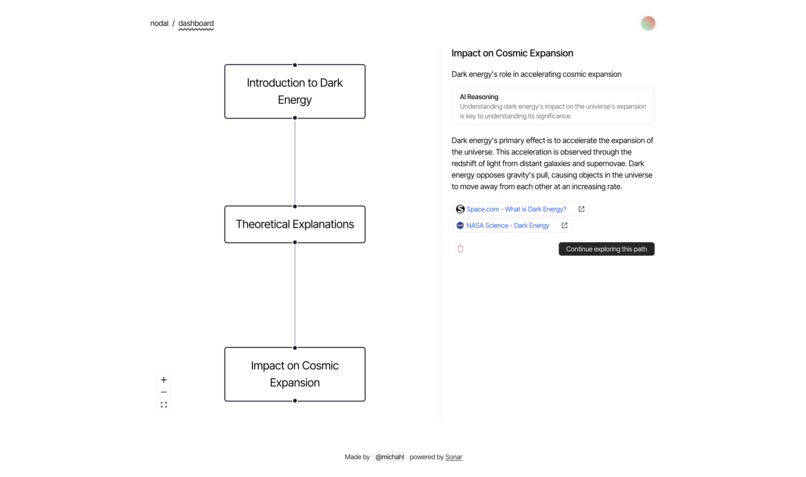
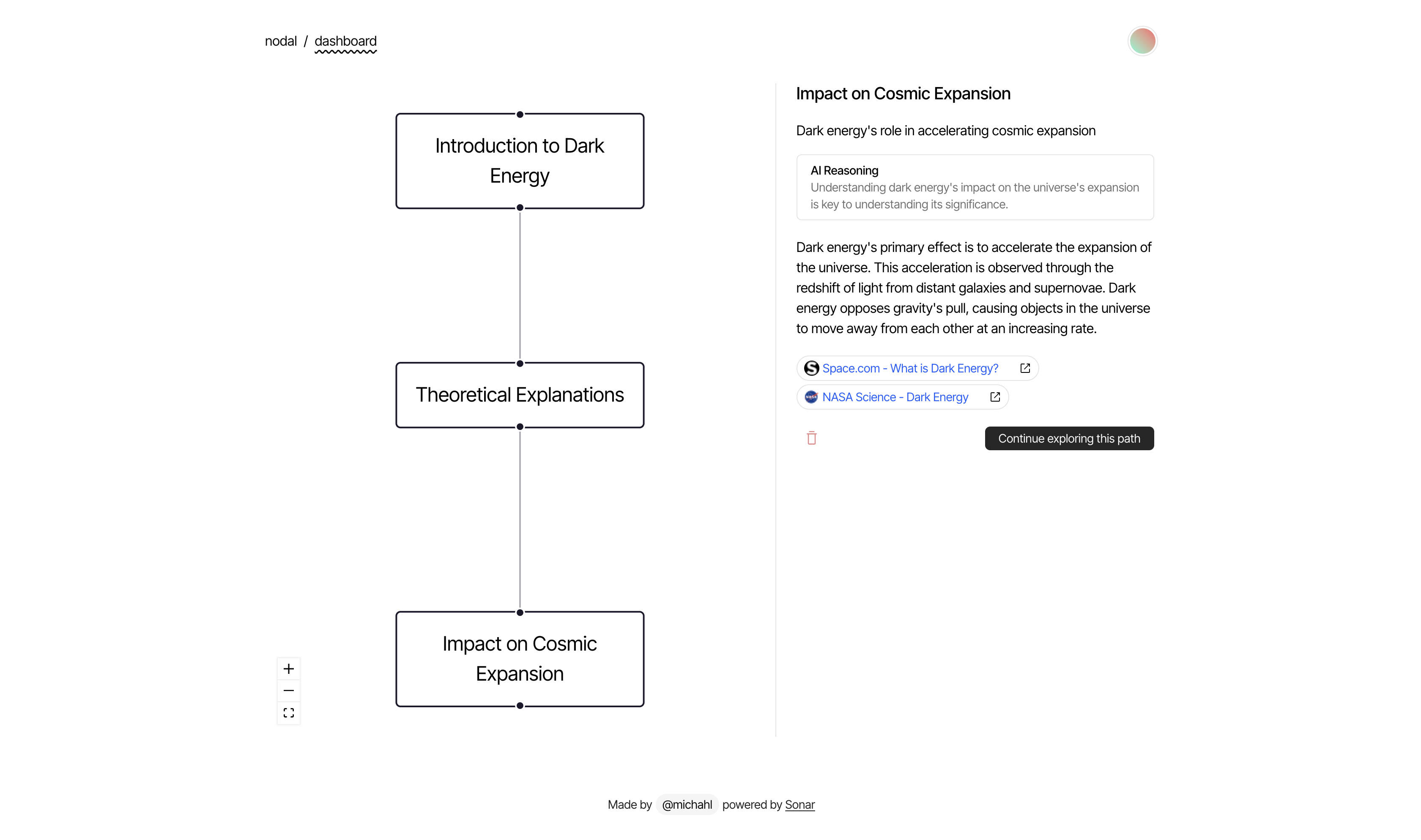
Node in graph

Inspiration
Research is messy. Reading one article leads to another question, then another — and suddenly you're lost in 10 tabs. We wanted a way to visualize questions like a map: start with one, and expand it like branches on a tree. That's how the idea of interactive knowledge graphs powered by Perplexity came about.
What it does
The app lets users ask a question and generates a knowledge graph in response. Each node contains:
- A detailed explanation
- A brief summary
- Reasoning for its relevance -Credible sources
Users can then expand any node to go deeper into subtopics — building a graph that grows organically based on curiosity.
How we built it
- Next.js for frontend/backend logic
- React Flow to render and manage the interactive graph
- Supabase for auth and database (PostgreSQL)
- Perplexity Sonar API to generate structured responses
I used structured prompt engineering to make sure each node consistently returns labeled, accurate, and source-backed content.
Challenges we ran into
Formatting structured API responses: Making sure Sonar returned consistent JSON that matched my node schema. React Flow quirks: Handling edge rendering and position logic while keeping the graph interactive. API limits: We had to limit graph depth and user storage to balance Sonar usage and speed. Graph expansion logic: Designing intuitive UX for expanding and connecting nodes dynamically.
Accomplishments that we're proud of
Built a fully working product in a short time — complete with auth, storage, and AI integration. Made knowledge graphs actually usable — not just pretty, but interactive and informative. Carefully engineered prompts to produce high-quality, structured AI outputs that feel natural to explore.
What's next for nodal
- Graph sharing: Let users publish or share their graphs with others.
- Better layouts: Smarter automatic node positioning for complex trees.
- Question suggestions: Use AI to suggest follow-ups or unexplored angles.
Built With
- nextjs
- sonar
- supabase
- typescript

Log in or sign up for Devpost to join the conversation.