-
-
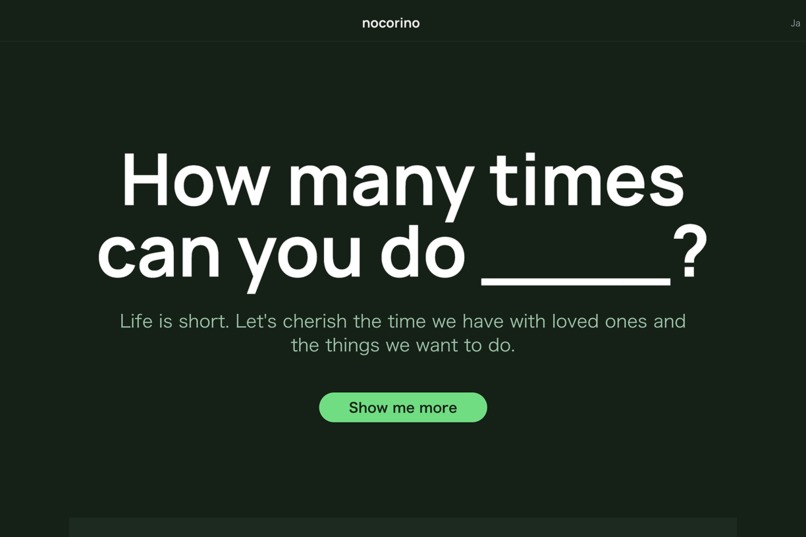
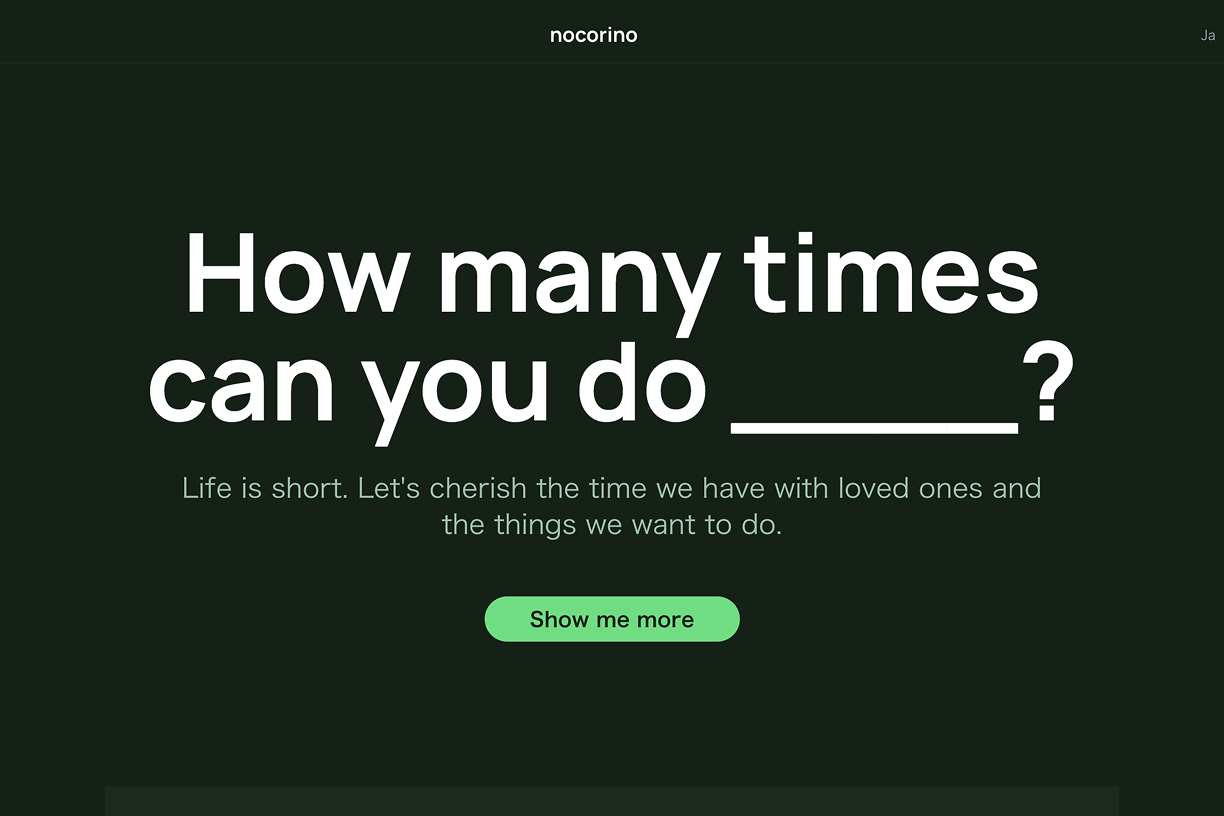
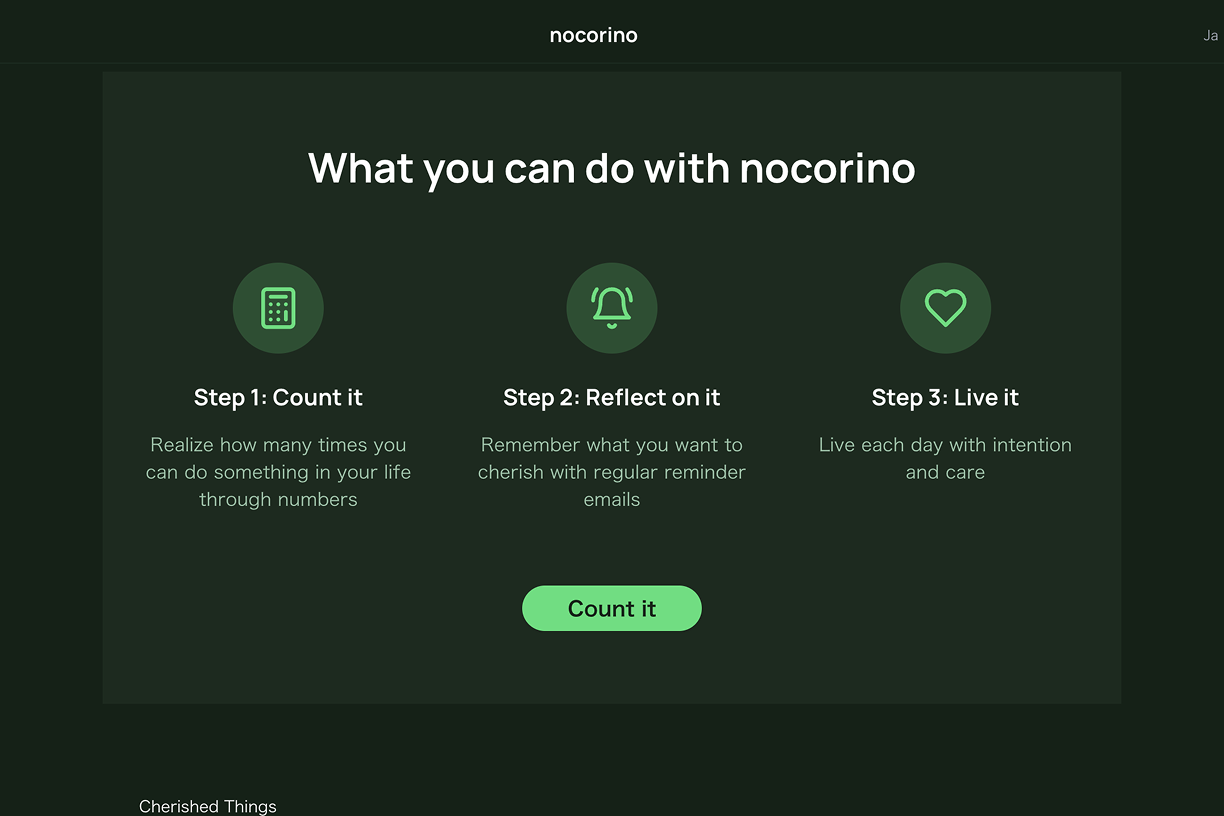
Landing page asking "How many times can you do ____?"
-
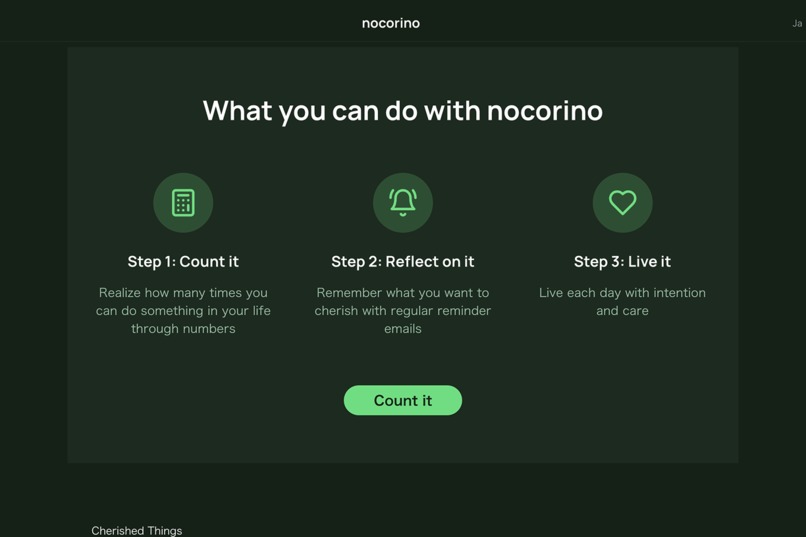
Three simple steps: Count it, Reflect on it, Live it
-
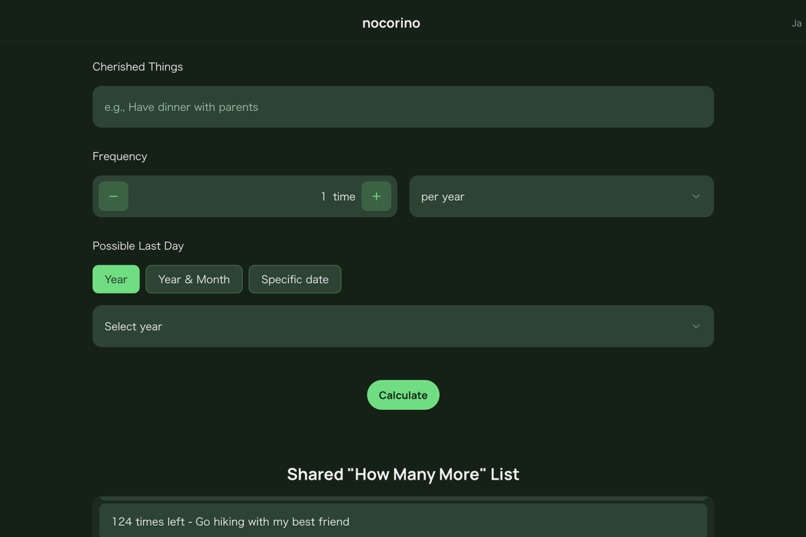
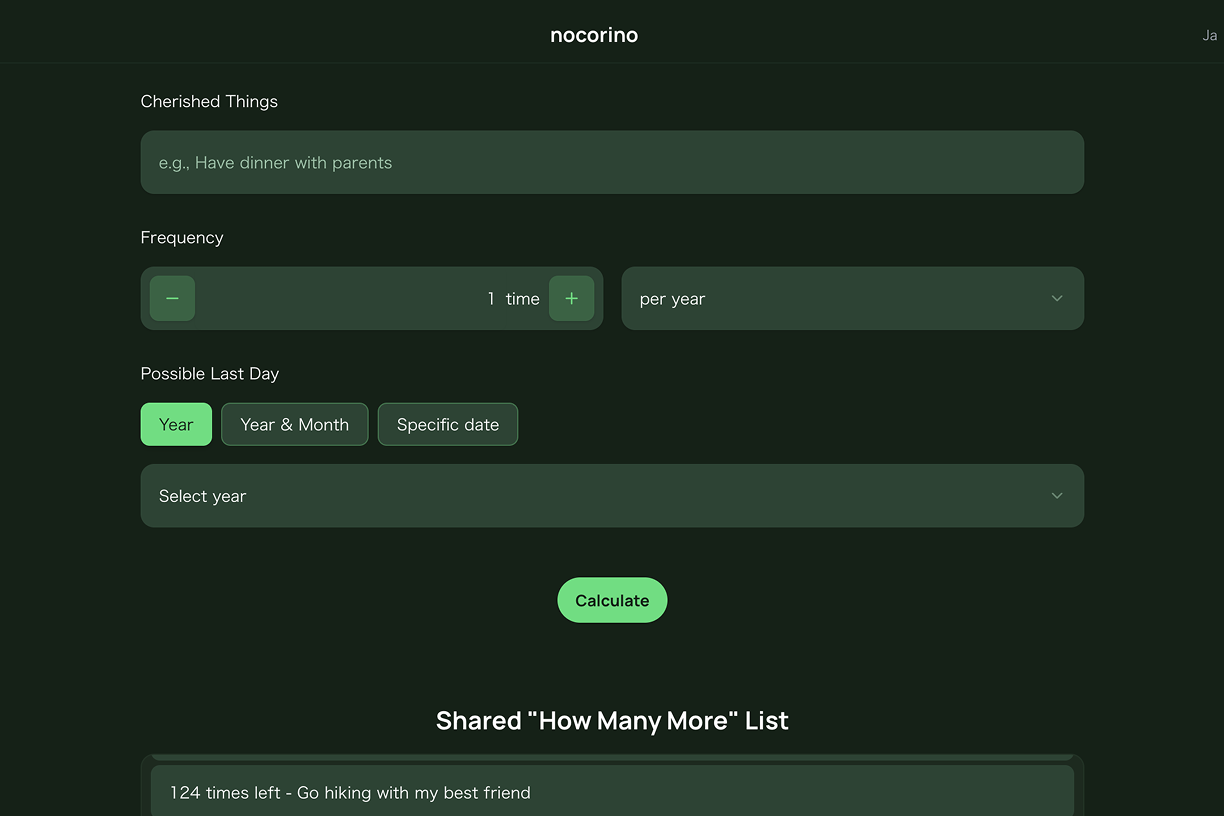
Users input what they cherish, how often they do it, and by when — to calculate how many times are left.
-
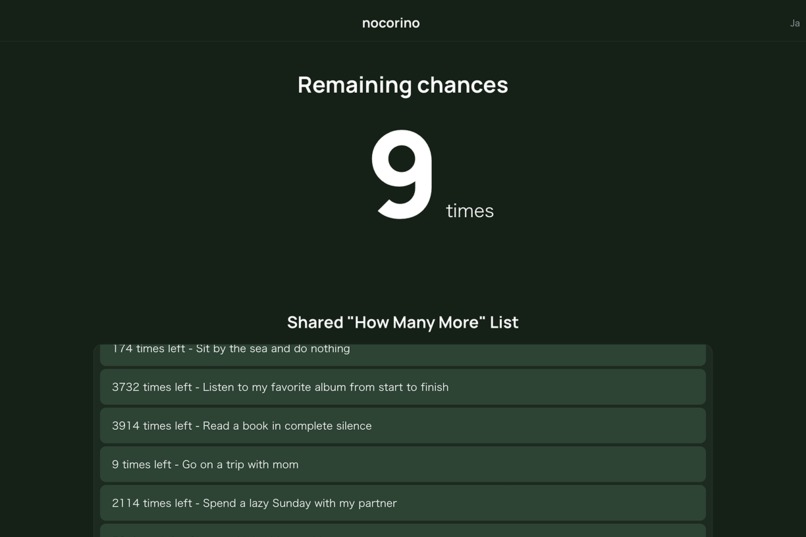
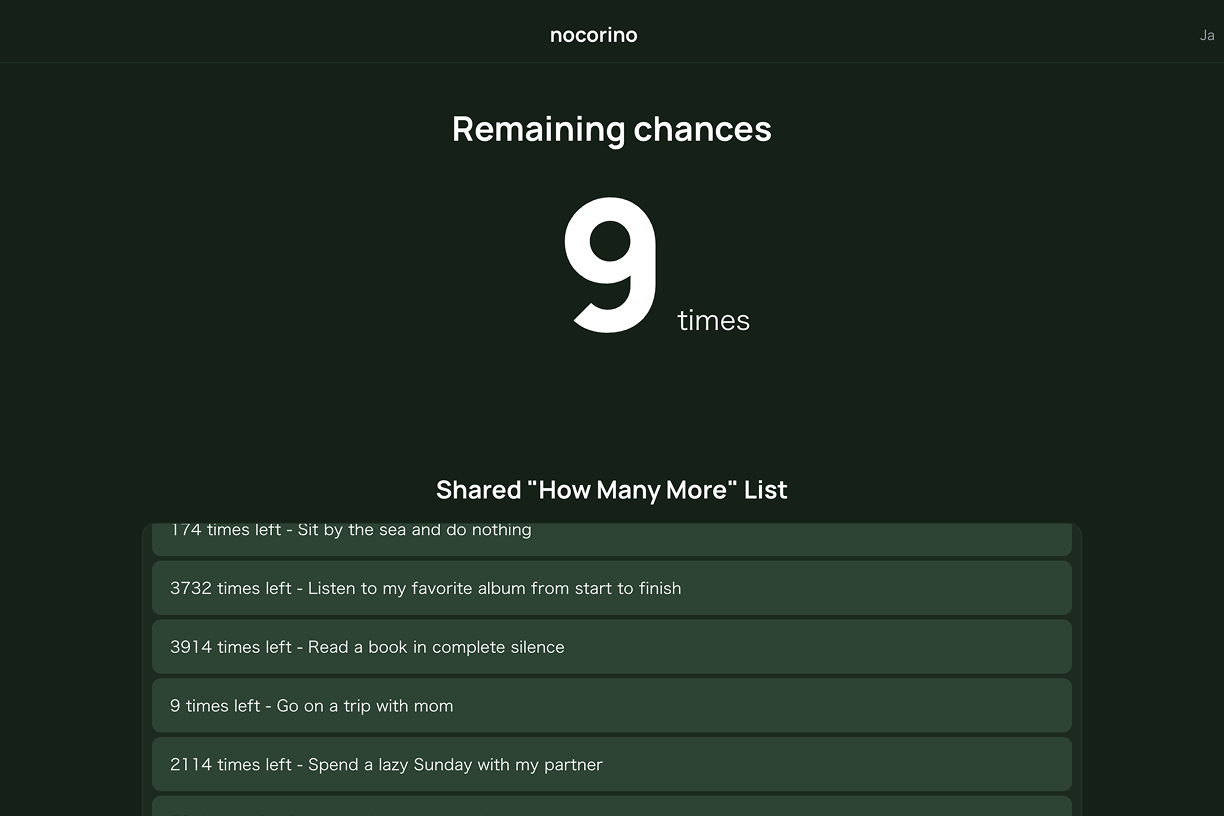
Remaining chances are shown after calculation, along with the shared “How Many More” list.
-
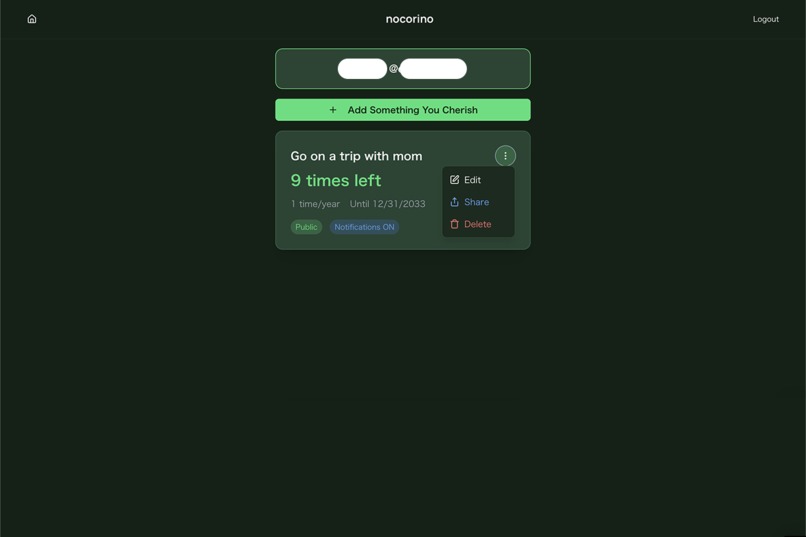
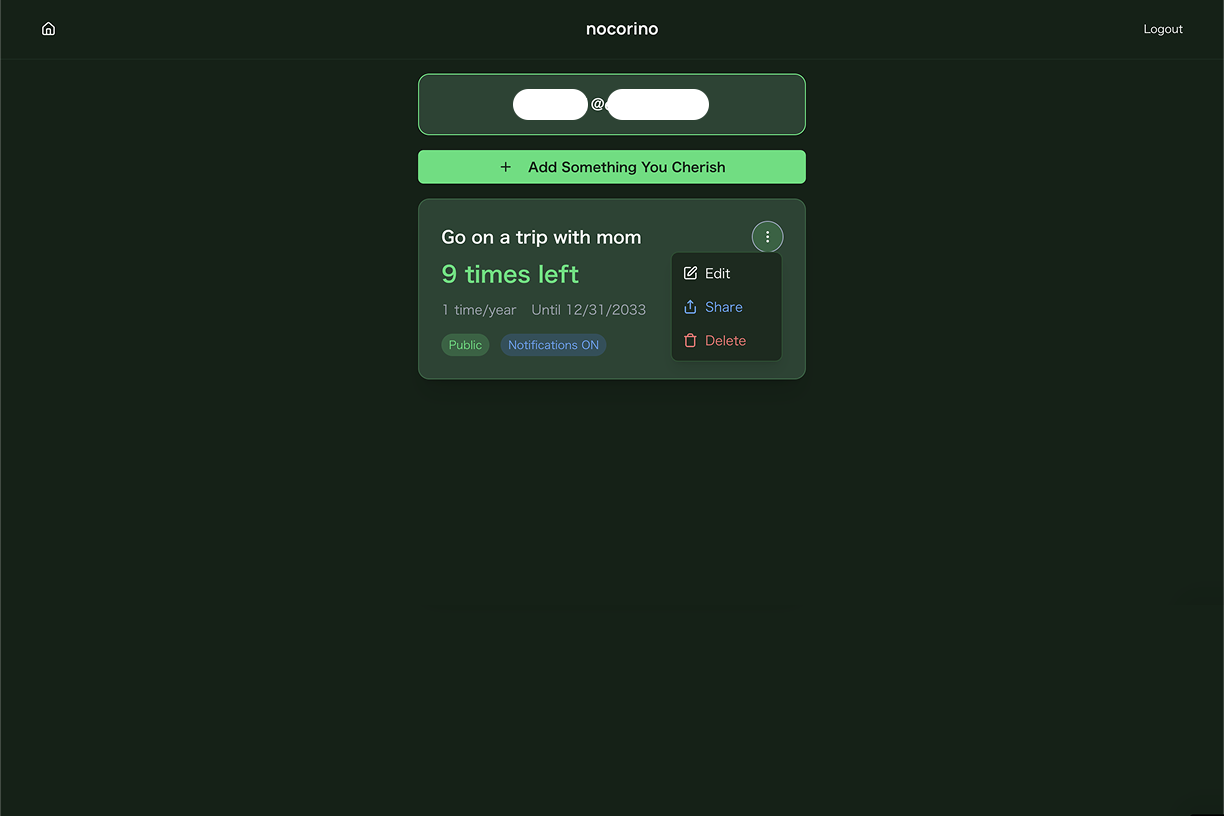
Your cherished entries are listed with remaining counts and action buttons to edit, share, or delete.
-
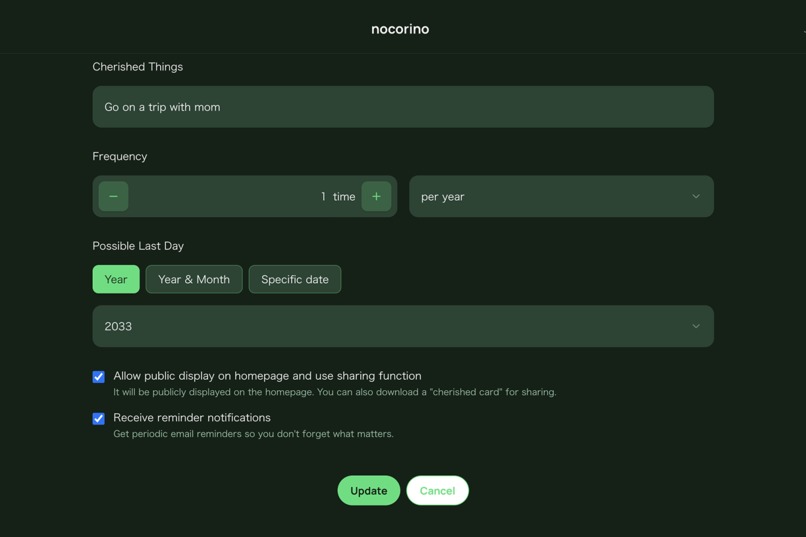
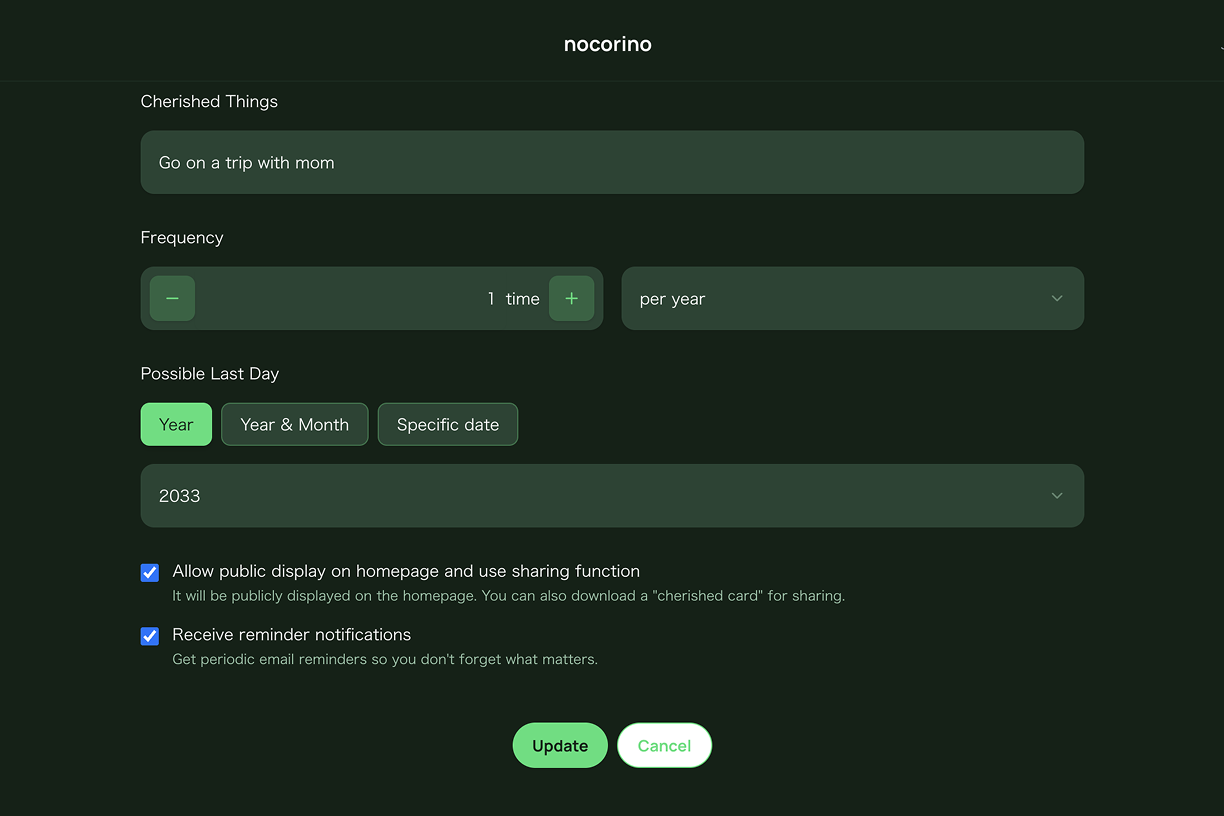
You can edit your entry and update sharing and reminder settings on the edit screen.
-
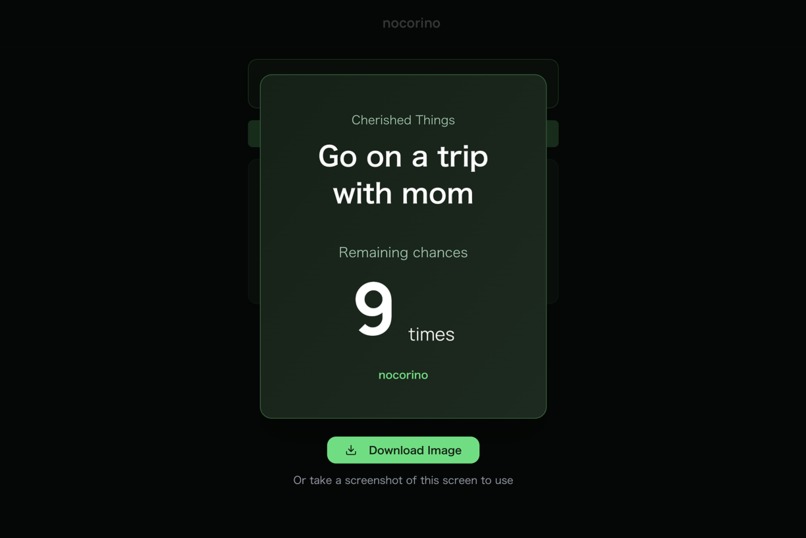
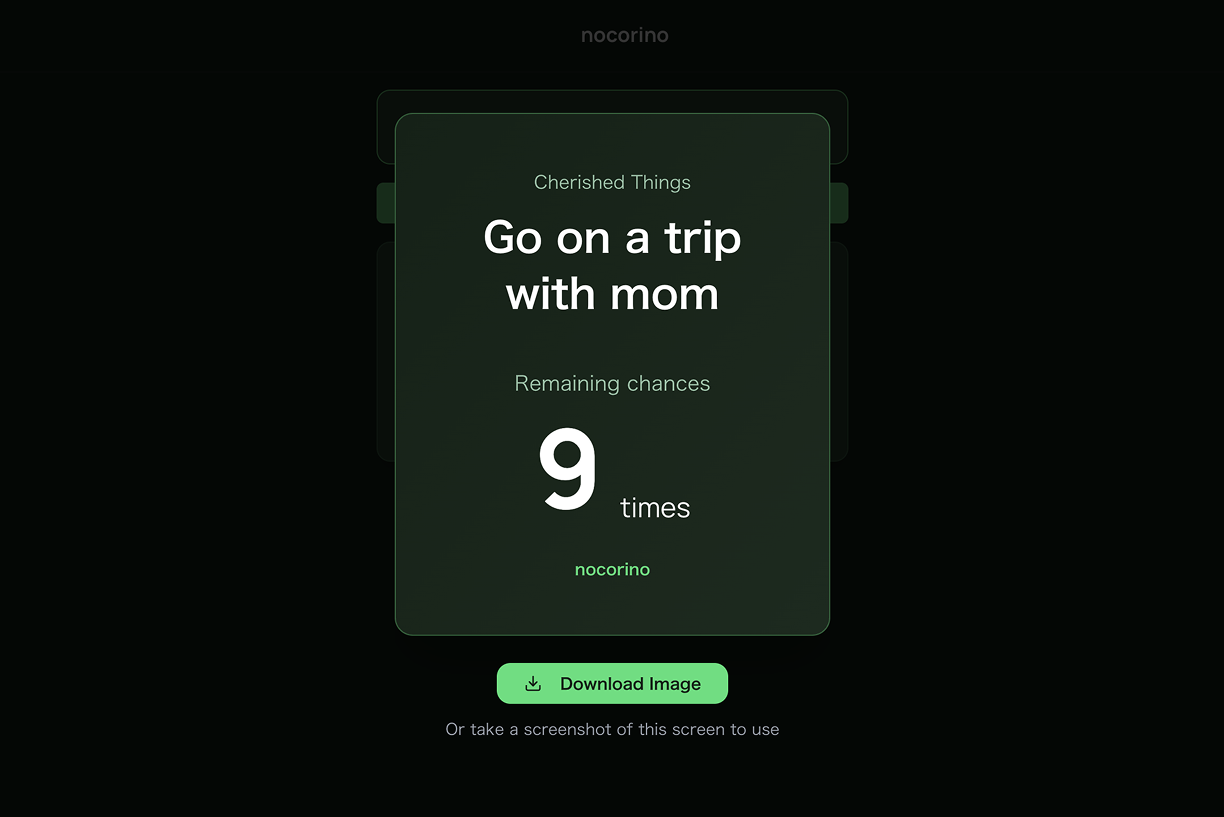
A shareable image card is generated with your entry, along with a download button for saving and sharing.
Inspiration
My father was diagnosed with Alzheimer's disease, and his symptoms are gradually progressing.
It’s been painful to realize that the memories we once shared are slowly fading away.
But instead of focusing on the sadness of losing those memories, I chose to focus on the joy of creating new ones.
Since we live apart and have limited chances to meet, I decided to treasure each opportunity we do have.
Eventually, everything comes to an end.
We all know that in theory — but it’s hard to truly feel it in our everyday lives.
I wanted to create something that helps people recognize that truth earlier, remember it often, and live more intentionally.
That’s why I built nocorino.
What it does
nocorino is a simple web tool that visualizes how many times you can still do what matters most in your life —
like having dinner with your parents or going on a walk with your partner.
Users input what they want to cherish, how often they do it, and until when.
The system then calculates how many times are left, and sends periodic reminder emails to help them remember it before it’s too late.
All posts can be kept private or made public to inspire others.
How we built it
We built nocorino using:
- bolt.new for rapid frontend prototyping
- Supabase as the backend and database
- SendGrid for scheduled email reminders
The app is web-based and intentionally simple, focusing on emotional clarity and ease of use rather than heavy technical features.
Challenges we ran into
The biggest challenge was how to keep the interface emotionally simple and minimal — without making it feel like just a number-crunching tool.
We needed to strike the right balance between function and feeling.
Also, ensuring that every part of the experience reinforces the idea of quiet reflection rather than gamification was a constant design decision.
Accomplishments that we're proud of
Design.
In particular, the initial vibe coding process — when you generate the first visual impression of the service — was surprisingly smooth this time.
That initial result determines how much refinement will be needed down the line, and thankfully, this time it aligned closely with my original vision.
It allowed me to focus more on experience than firefighting visuals.
What we learned
We couldn't begin working on nocorino until June 25, because we'd already used up our tokens on another project.
With so little time left, we aimed to build something as simple as possible.
In the end, though, time wasn’t the issue — thanks to tools like bolt.new and Supabase, development went surprisingly smoothly.
What held us back was mostly... me.
This project reminded me that even as technology keeps evolving to remove barriers, the real bottleneck is often ourselves.
If the tools are getting better, we have to grow with them too.
What's next for nocorino
- Improve the first-time user experience (onboarding flow and input clarity)
- Allow more granular customization of reminder frequency
- Implement moderation tools to handle inappropriate public posts
Built With
- deno
- framer-motion
- html2canvas
- i18n
- json
- postgresql
- react
- react-router-dom
- sendgrid
- shadcn-ui
- supabase
- supabase-auth
- supabase-edge-functions
- tailwind-css
- typescript
- vite


Log in or sign up for Devpost to join the conversation.