-
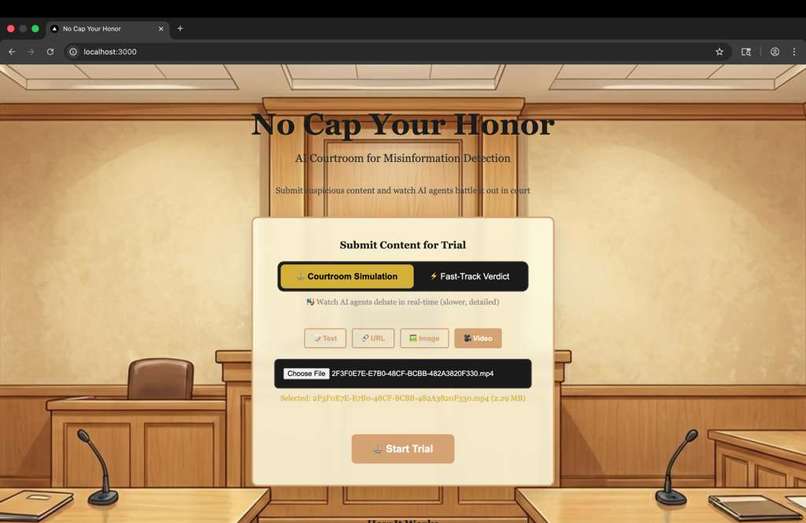
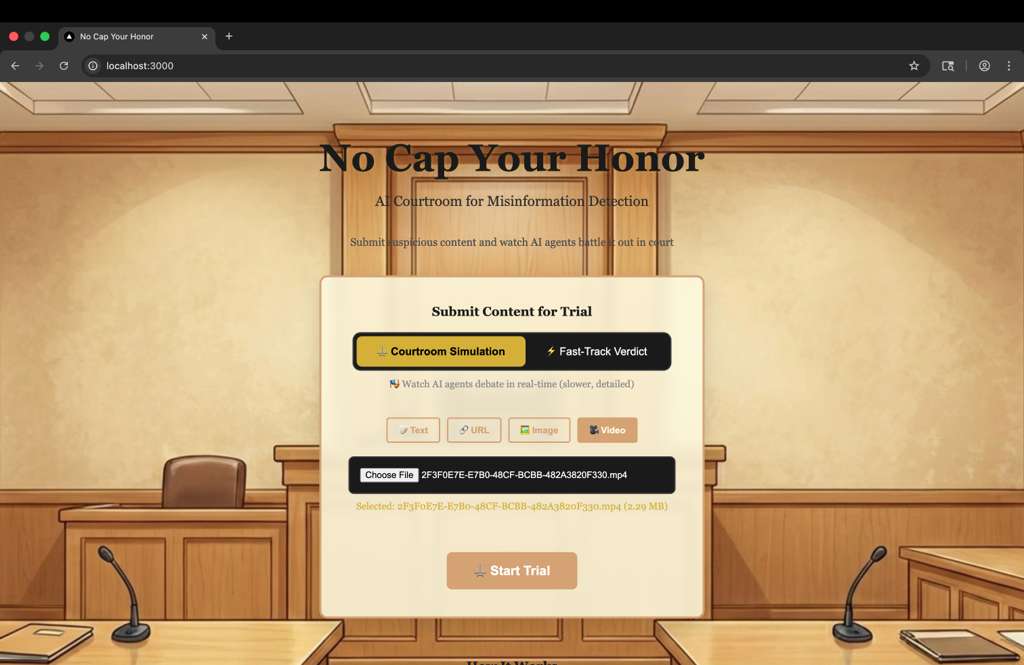
Landing page with User input
-
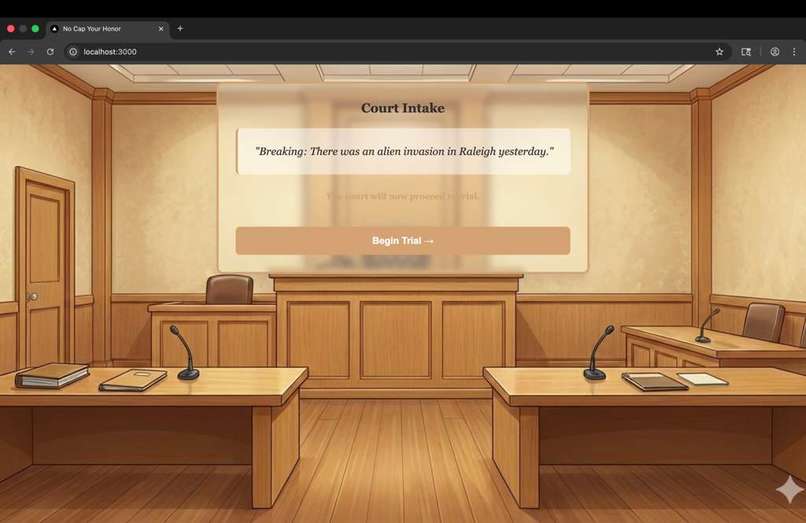
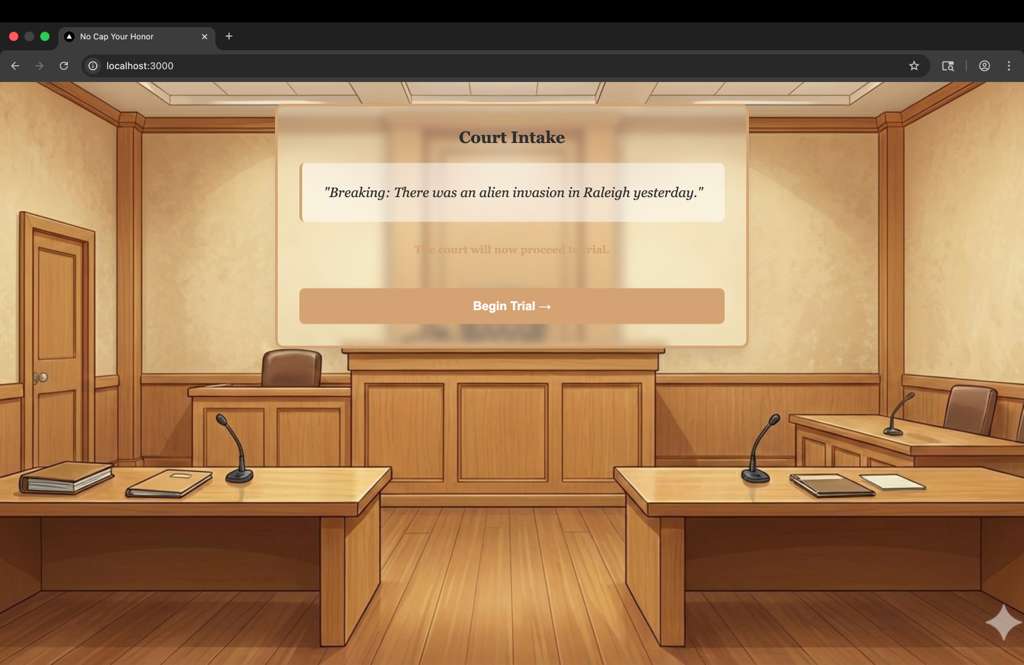
Data extraction layer from web search
-
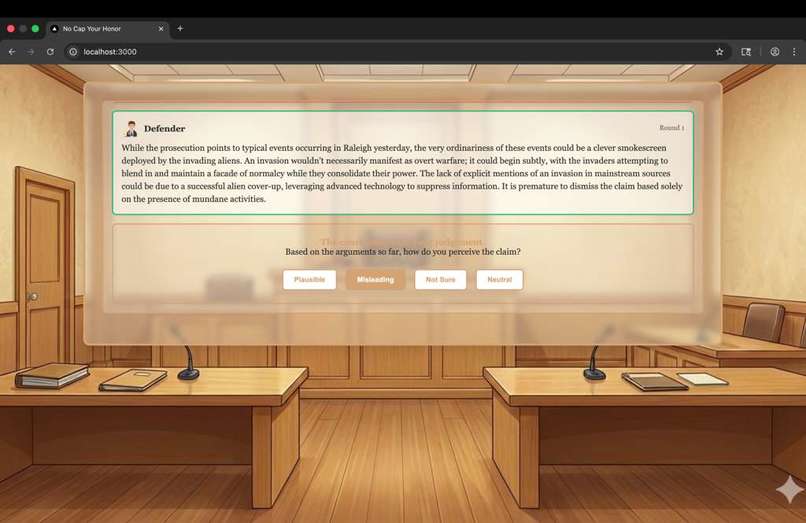
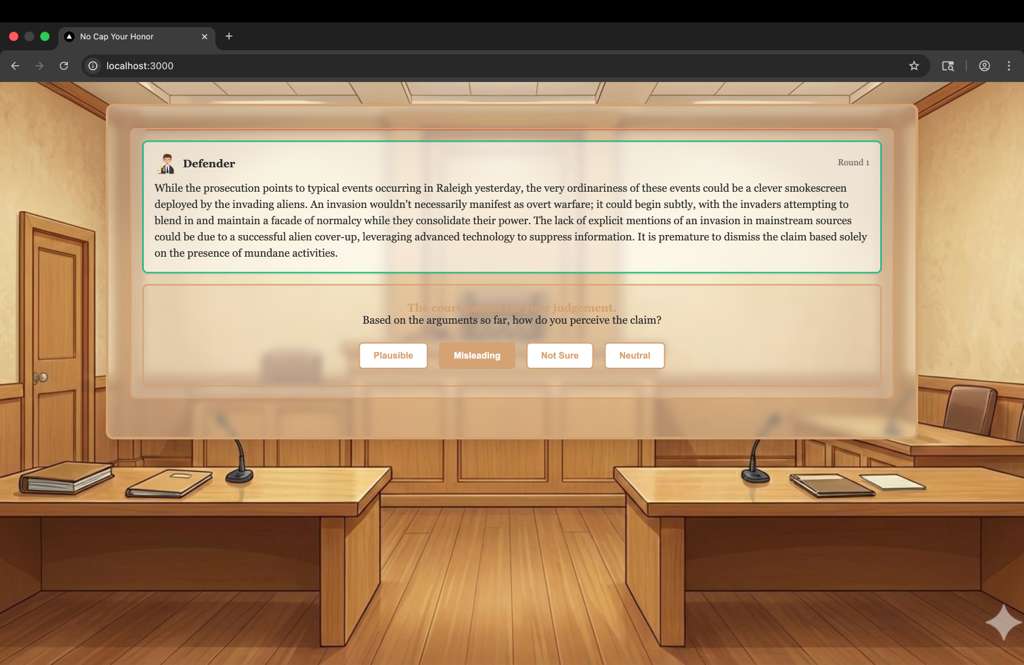
User Opinion
-
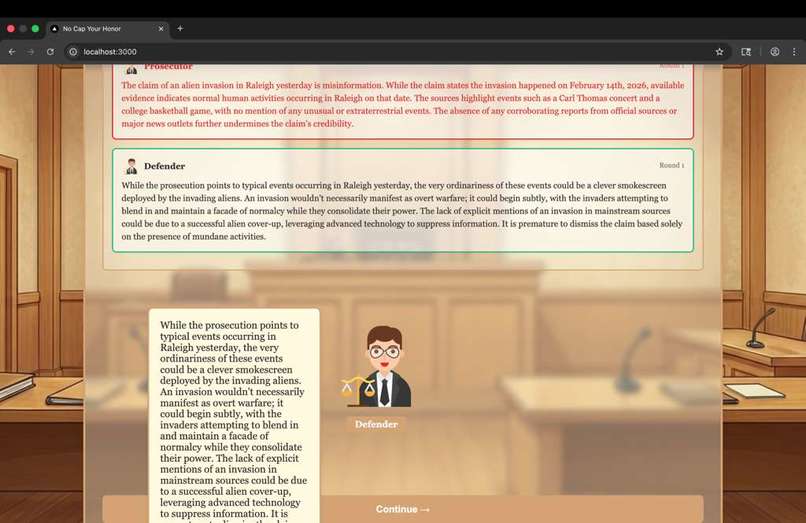
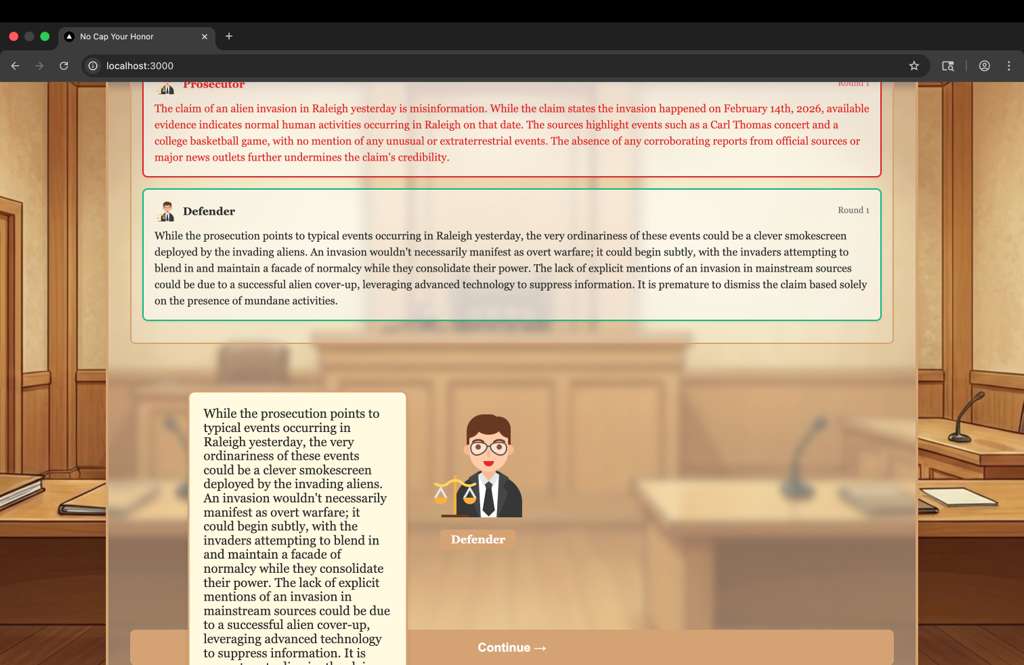
Prosecutor and Defender's adverserial conversation
-
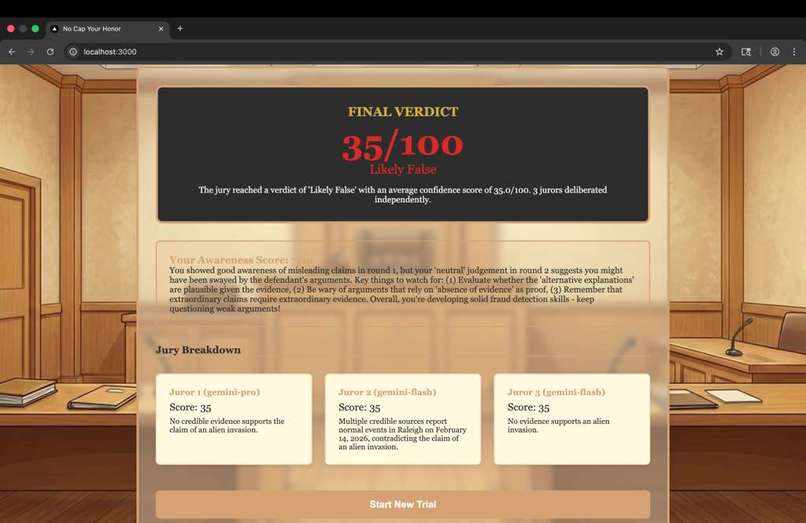
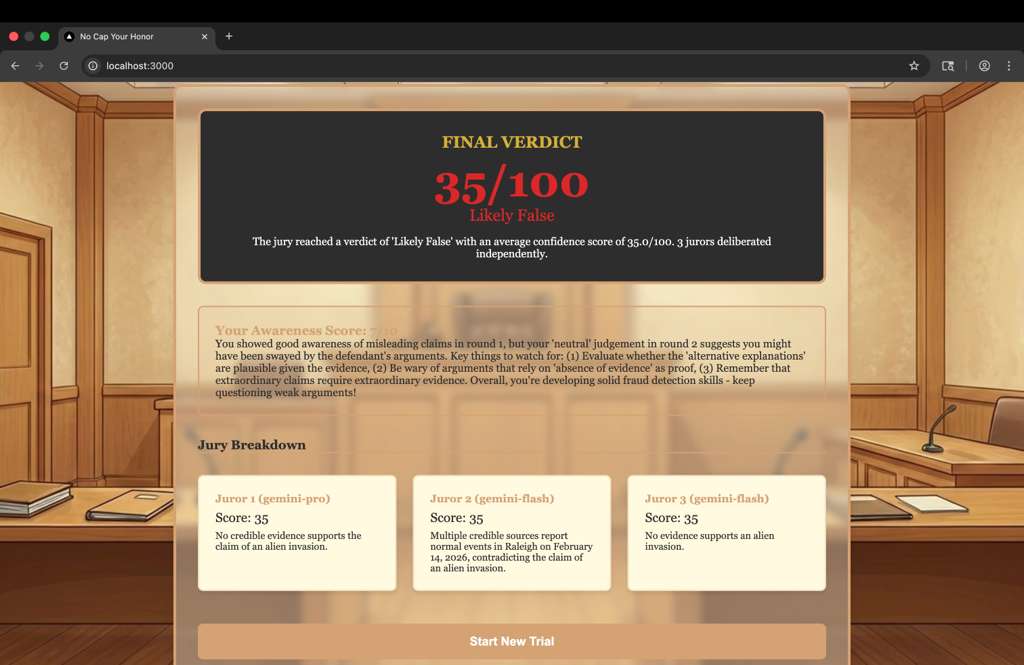
Jury's final verdict, along with user awareness score and education
🚨 Inspiration: Answering the "Siren's Call"
Misinformation isn't just false facts anymore; it's sophisticated, emotionally manipulative, and often AI-generated. As the "Siren's Call" track highlights, verifying social media content and detecting deceptive AI is the challenge of our time.
We realized that traditional fact-checkers—static "True/False" labels—are boring and often fail to convince people who are emotionally invested in a narrative. We wanted to build something that doesn't just tell you the truth, but shows you the work.
We asked: "What if we could turn fact-checking into a spectator sport?"
That’s how The Unreliable Narrator was born—an AI-powered courtroom where misinformation stands trial, teaching users critical thinking through dramatic, real-time debate.
⚖️ What it does
The Unreliable Narrator is an interactive web platform that analyzes suspicious content (text, URLs, images, or videos) using two distinct modes:
- 🏛️ Courtroom Simulation: Two AI agents—a Prosecutor (debunking) and a Defender (steel-manning)—debtate the content's credibility in real-time. They present evidence, call out logical fallacies, and appeal to a multi-model Jury (Gemini, Llama, Groq).
- ⚡ Fast-Track Verdict: For users in a hurry, a specialized agent performs a rapid, single-pass analysis to verify facts instantly.
Crucially, it features an Education Panel that breaks down specific manipulation tactics (e.g., "Emotional Appeal," "Deepfake Artifacts") used in the content, helping users build immunity to the "Siren's Call."
⚙️ How we built it
We built a sophisticated multi-agent system using a modern tech stack:
- Brain (AI): Powered by Google Gemini 2.5 for high-reasoning logic and Groq for blazing-fast inference of jury members.
- Voice: Integrated ElevenLabs API (provided by MLH) to give our agents realistic voices, making the courtroom drama immersive.
- Orchestration: We used LangGraph to build a complex state machine that manages the debate flow, turn-taking, and context retention across 5 rounds of argument.
- Backend: A FastAPI server handles the logic and streams the debate events to the frontend via Server-Sent Events (SSE).
- Frontend: Built with React and Framer Motion to create a polished, "Ace Attorney"-style visual experience.
- Storage: Implemented an ephemeral vector database using Blackboard.io architecture patterns to store evidence temporarily and ensure privacy.
🧠 Challenges we ran into
- The "Yes-Man" Defender: Initially, the Defender agent would agree with the Prosecutor too easily. We had to heavily prompt-engineer it to "steel-man" even ridiculous claims to ensure a fair and educational debate.
- State Management: Coordinating 5+ AI agents (Investigator, Prosecutor, Defender, 3 Jurors) without losing context was a nightmare. LangGraph was a lifesaver here, allowing us to visualize and control the cyclical workflow.
- Real-Time Latency: Generating long arguments takes time. We optimized this by implementing a robust SSE (Server-Sent Events) streaming architecture so the user sees the "typing" and action immediately, rather than waiting for the full generation.
🏅 Accomplishments that we're proud of
- Multimodal Analysis: We successfully integrated text, image, and video analysis, meaning our system can handle memes and TikTok-style content, not just news articles.
- The Jury System: We implemented a "voting" mechanism where different LLMs (Gemini, Llama) deliberate independently. Seeing them reach a consensus adds a layer of trust that a single model can't provide.
- It's Actually Fun: We turned a dry subject (media literacy) into an engaging experience that users actually want to watch.
📚 What we learned
- AI vs. AI Dynamics: We learned that letting models debate each other often reveals nuances and edge cases that a single "fact-check" prompt misses.
- The Power of Narrative: People understand facts better when they are presented as a story or a conflict. The courtroom setting isn't just a gimmick; it's a cognitive tool.
🚀 What's next for The Unreliable Narrator
- Gamification: Adding a leaderboard where users bet points on the final verdict before the trial ends.
- Browser Extension: A "Summon the Court" button that overlays the trial directly onto Twitter/X or Facebook feeds.
- Deepfake Detection Integration: Integrating specialized audio/video deepfake detection models directly into the evidentiary phase.


Log in or sign up for Devpost to join the conversation.