-
-
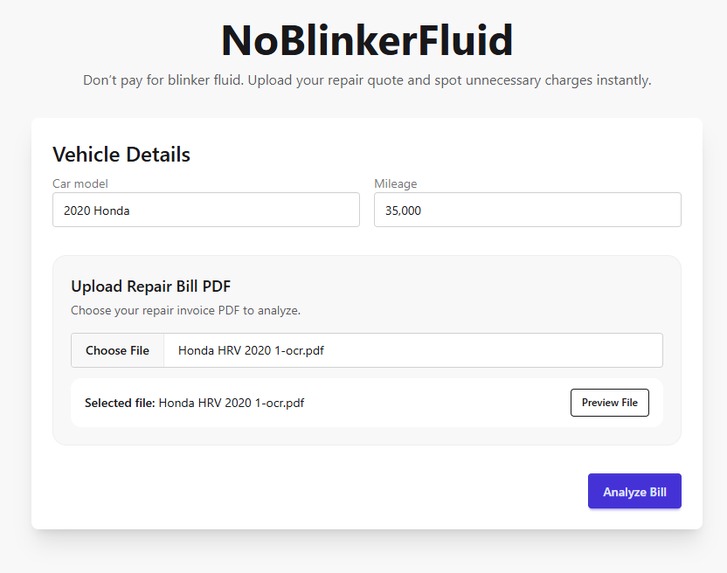
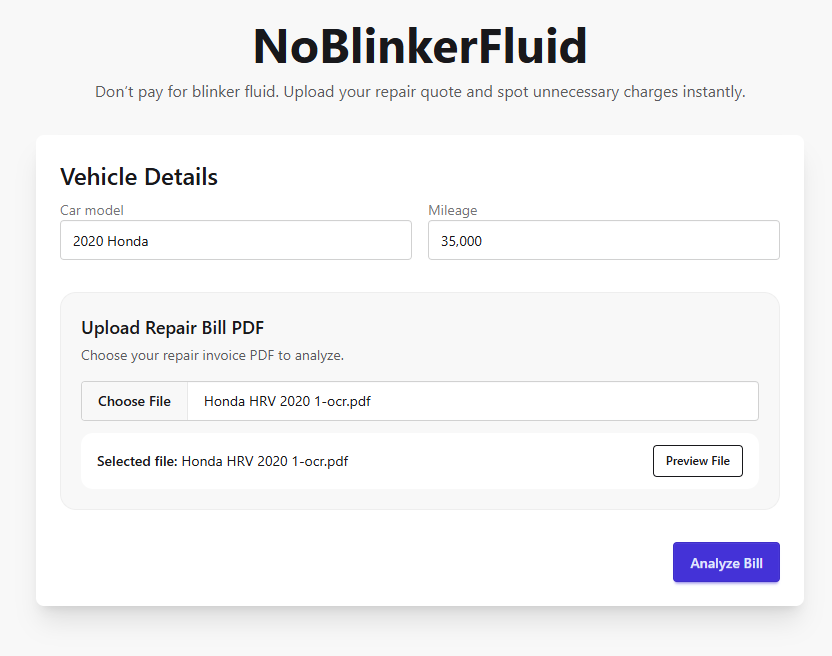
Home page
-
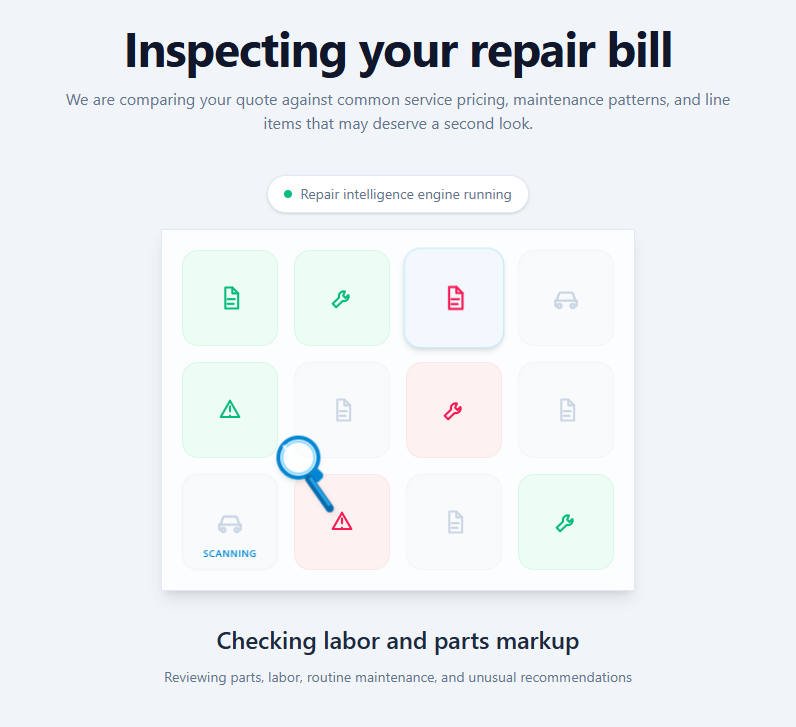
Loading page
-
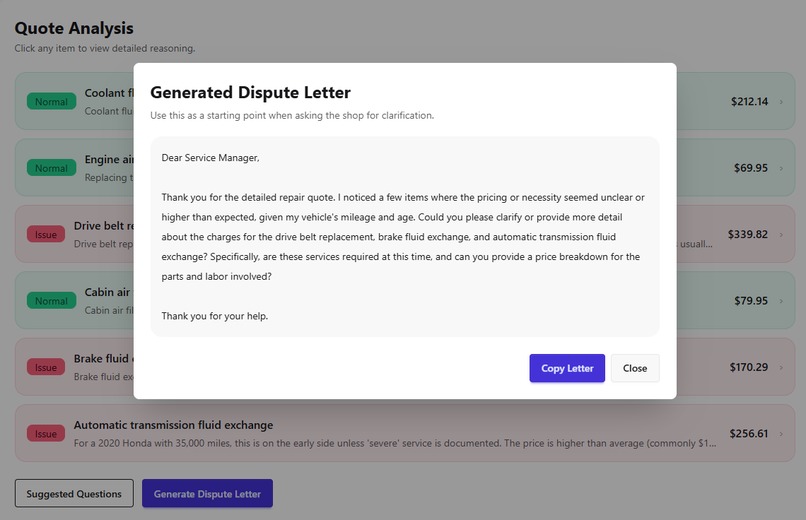
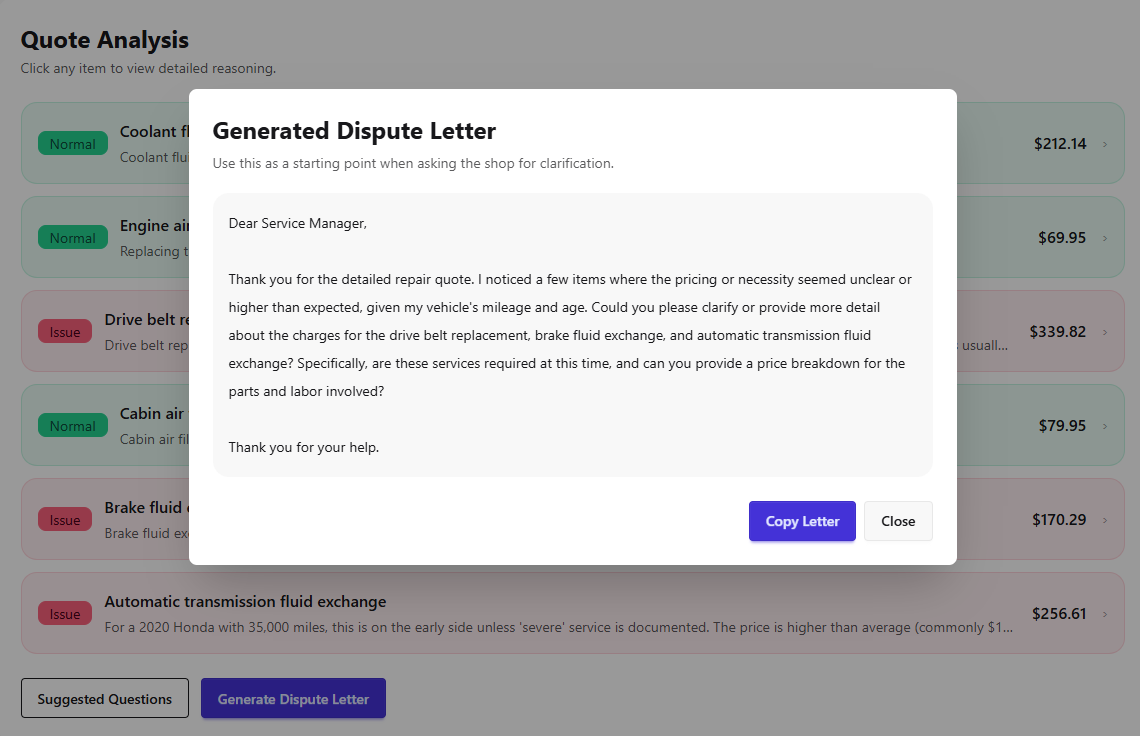
Dispute letter
-
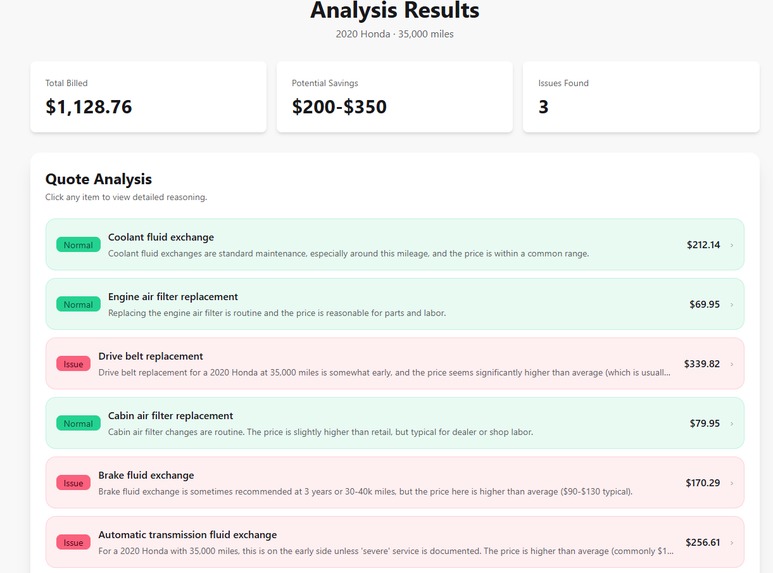
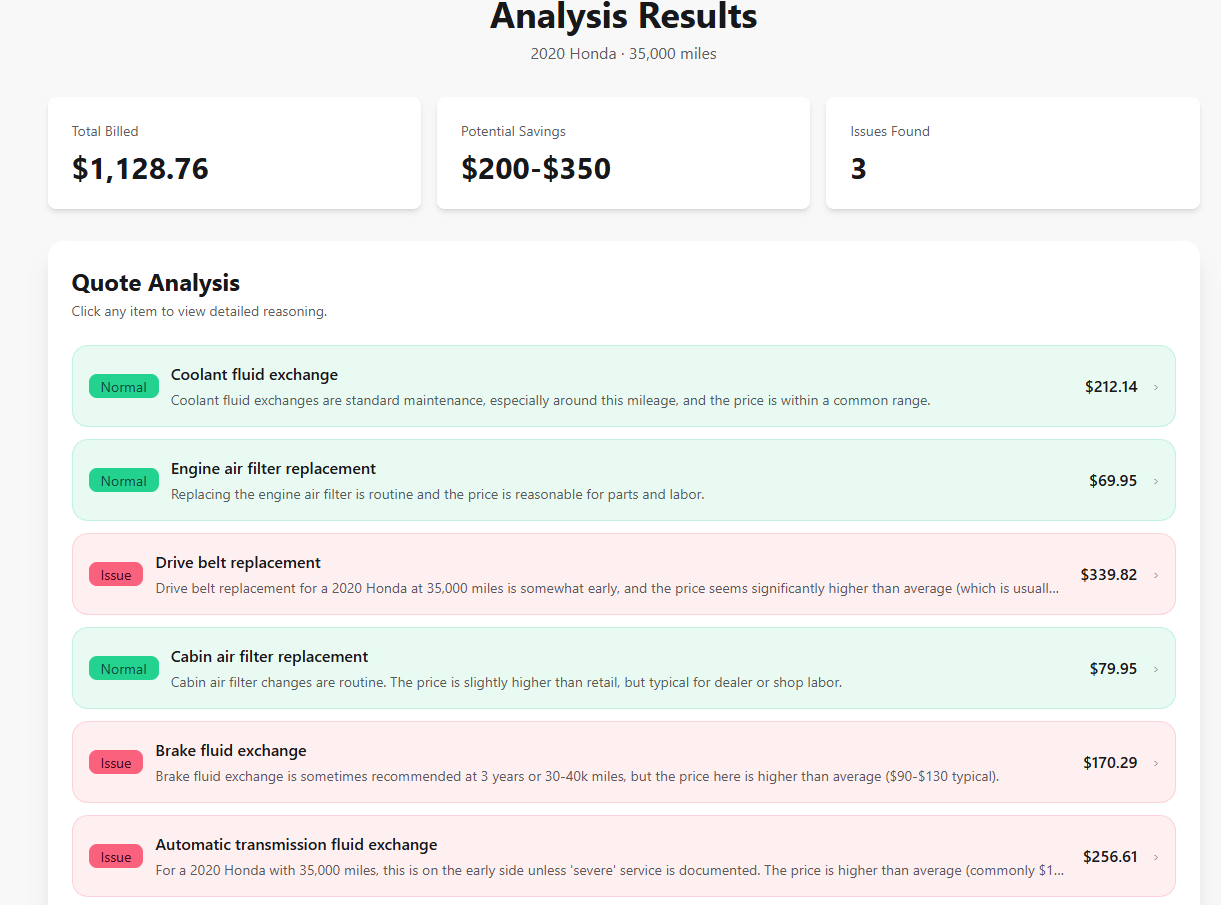
Analysis page
Inspiration
We were inspired by the Eightpoint challenge to turn unstructured, real-world inputs into something useful. Car repair invoices are a perfect example since most people do not understand them, which creates a gap between mechanics and everyday consumers. The idea of “blinker fluid” represents that gap, where people can be charged for things they do not fully understand. We wanted to build something that gives users clarity and confidence in those situations.
What it does
NoBlinkerFluid analyzes car repair estimates and invoices to identify overpriced or unnecessary charges. Users upload a document and the app breaks it down into clear insights. It highlights what looks reasonable, what may be questionable, and what actions the user can take. It also generates questions and dispute messages so users can follow up with mechanics confidently.
How we built it
We built the frontend using React, Vite, TypeScript, and Tailwind CSS with DaisyUI for a clean and intuitive interface. The backend is built with FastAPI in Python.
When a user uploads a repair estimate, the system processes the document using PyMuPDF to convert the PDF into images. These images are then sent to the OpenAI API, which visually analyzes the document and extracts the relevant line items. From there, each charge is evaluated for pricing, necessity, and clarity. The results are returned to the frontend and presented as a structured report, along with generated questions and dispute messages.
What's next for NoBlinkerFluid
We plan to expand the app to support multiple documents, such as comparing inspection reports with final invoices to detect inconsistencies. We also want to incorporate real-time market pricing data to improve accuracy and provide stronger recommendations. Longer term, we envision a mobile version where users can take a photo of a repair estimate and receive instant feedback, making the tool even more accessible in real-world situations.
Company Challenges: Eightpoint
Built With
- daisyui
- fastapi
- pymupdf
- python
- react
- tailwindcss
- typescript
- vite


Log in or sign up for Devpost to join the conversation.