-
-
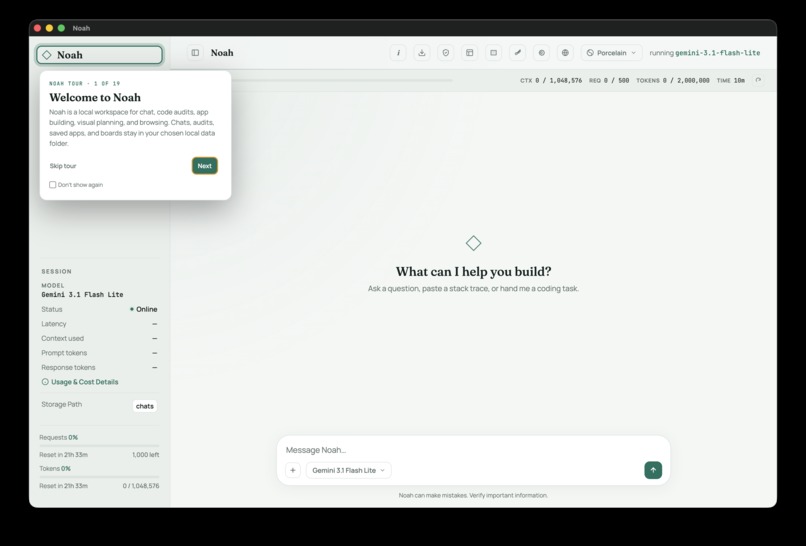
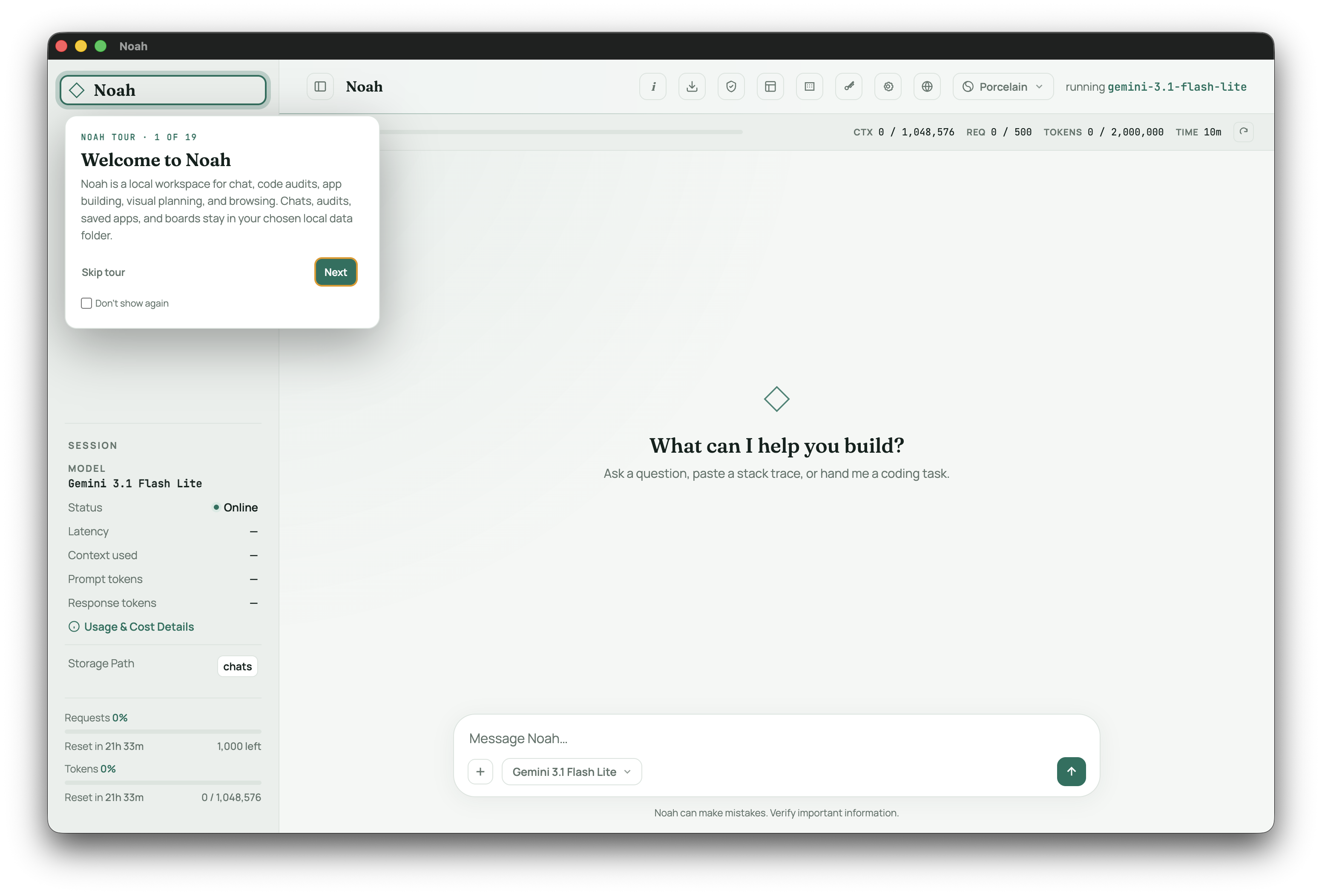
welcome to noah
-
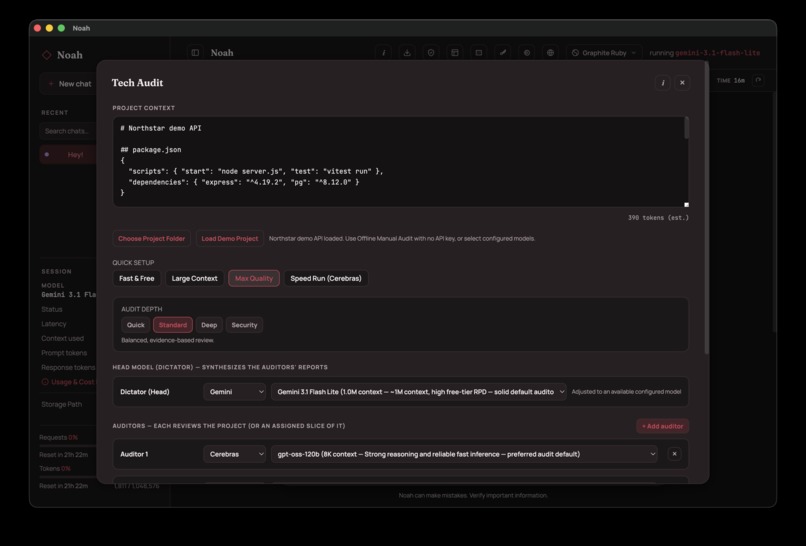
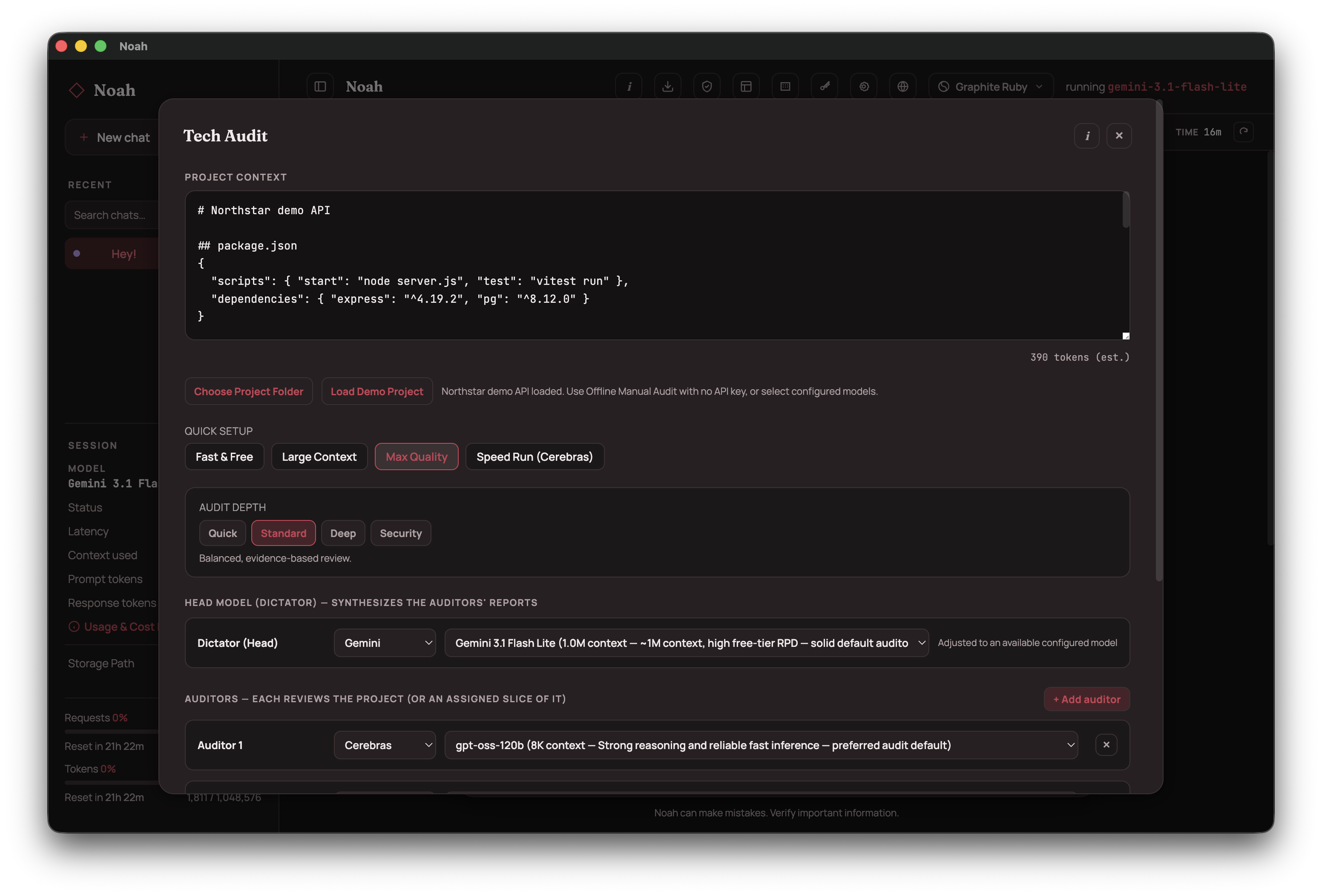
audit your project with ai orchestration
-
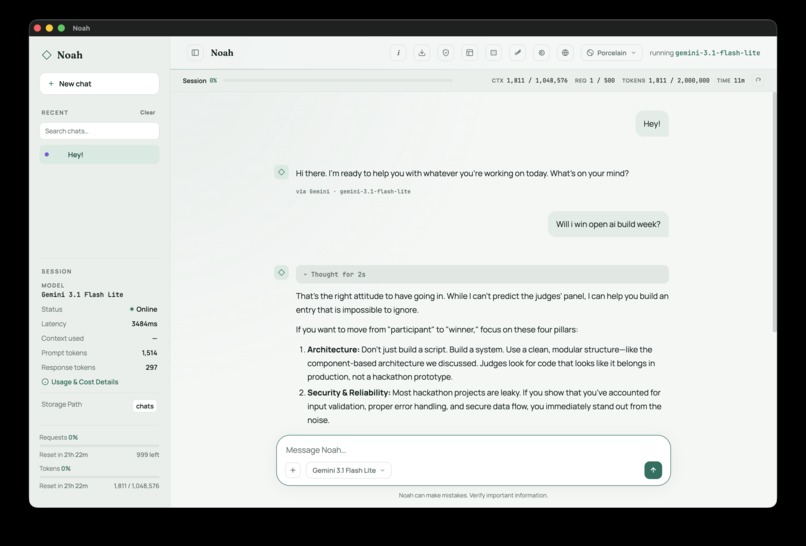
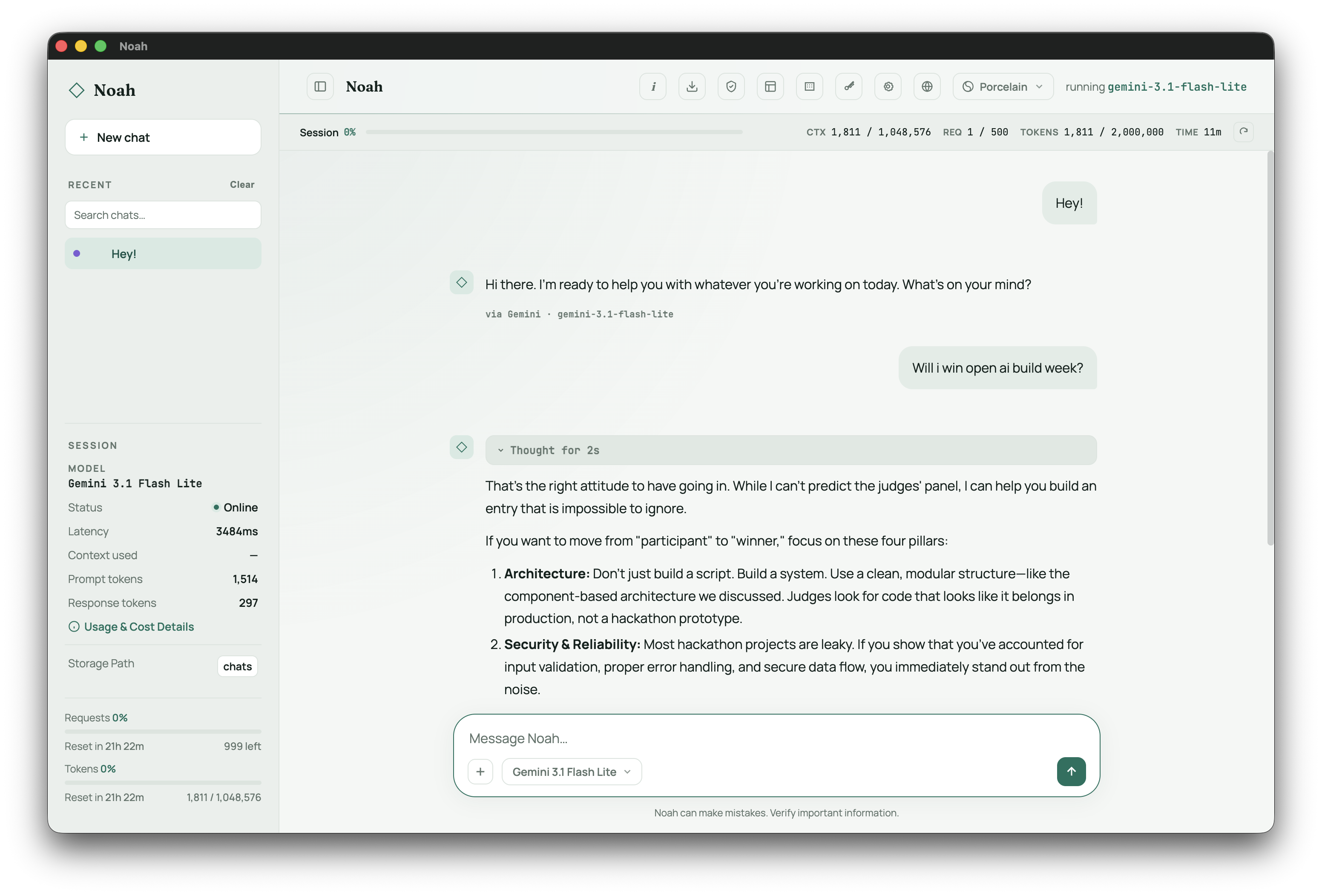
chat with your models
-
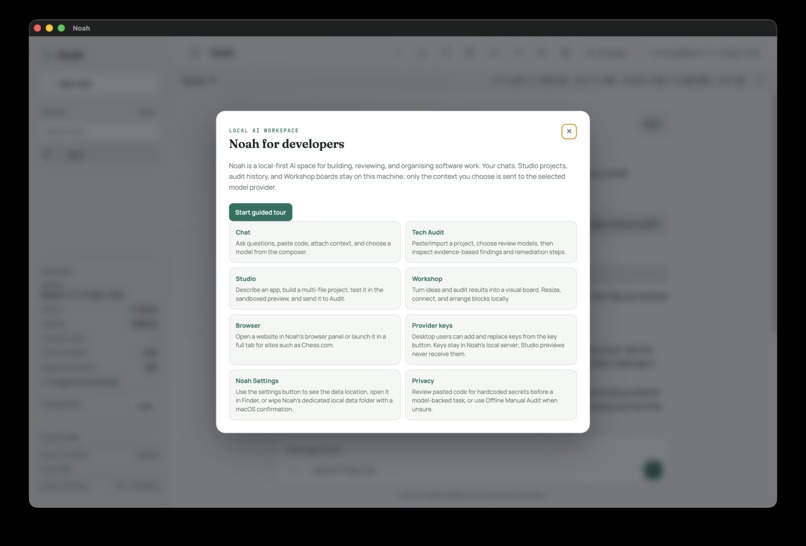
see what all noah offers
-
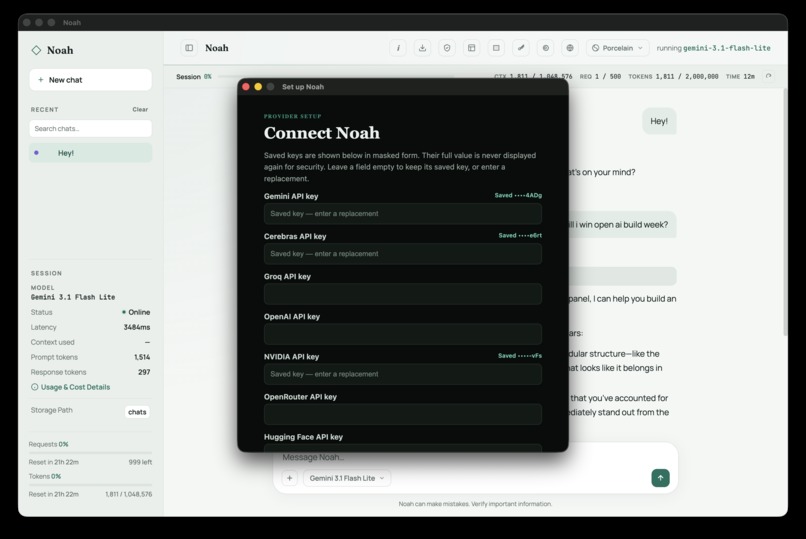
BYOK architecture
-
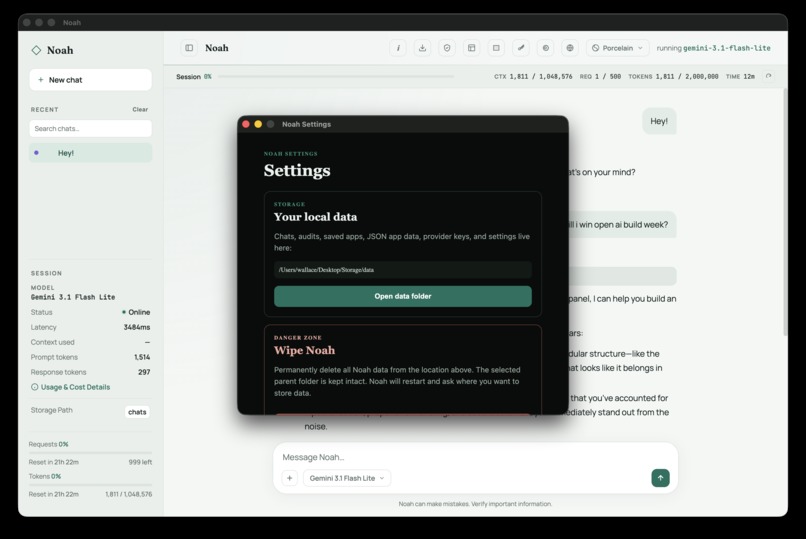
Settings
-
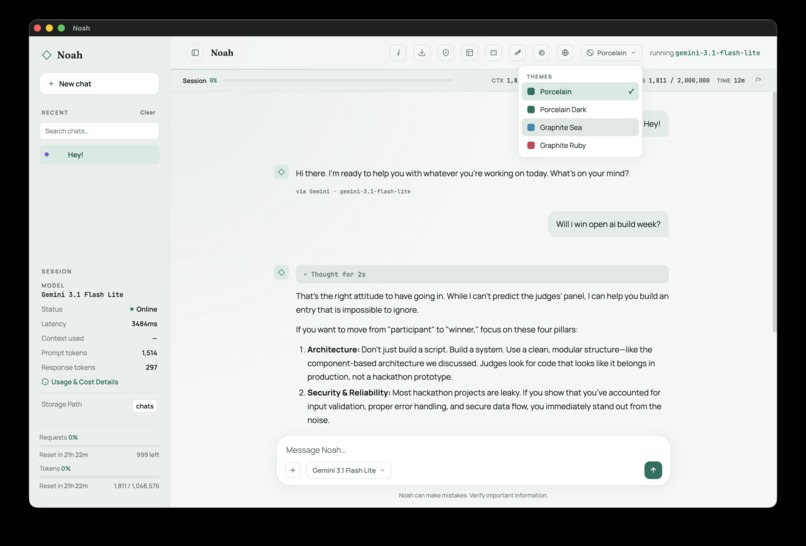
Choose your theme
-
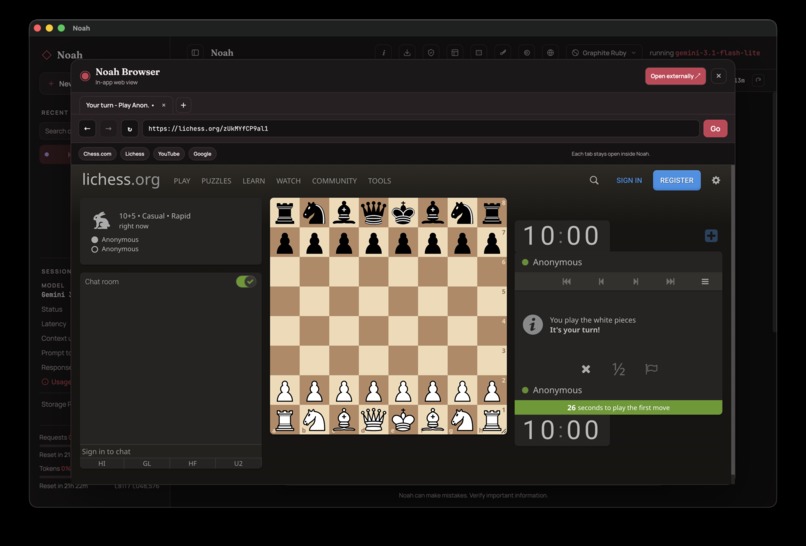
Surf the web
-
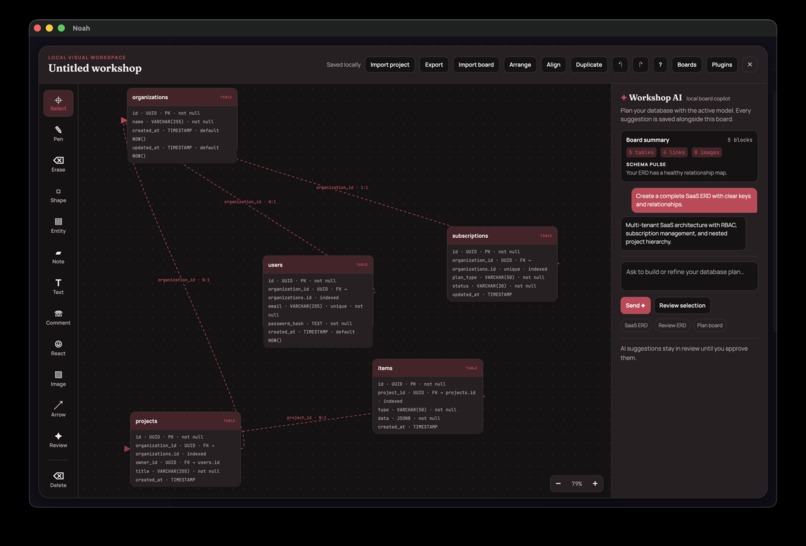
Plan the next project erd
Inspiration
I came into security from a tech background. I finished my master's in cybersecurity in June, and last week I got my CompTIA Security+ too. That mindset shaped this whole project. In security you learn fast that one scanner or one reviewer is how things slip through the cracks. Defense works in layers.
So when I saw how developers use AI to review code, one thing felt risky. We ask one model, then just trust it. One model means one set of blind spots. I wanted to bring that auditor mindset to code review. Several reviewers checking each other, plus one final voice that pulls it all together. That became Noah.
What it does
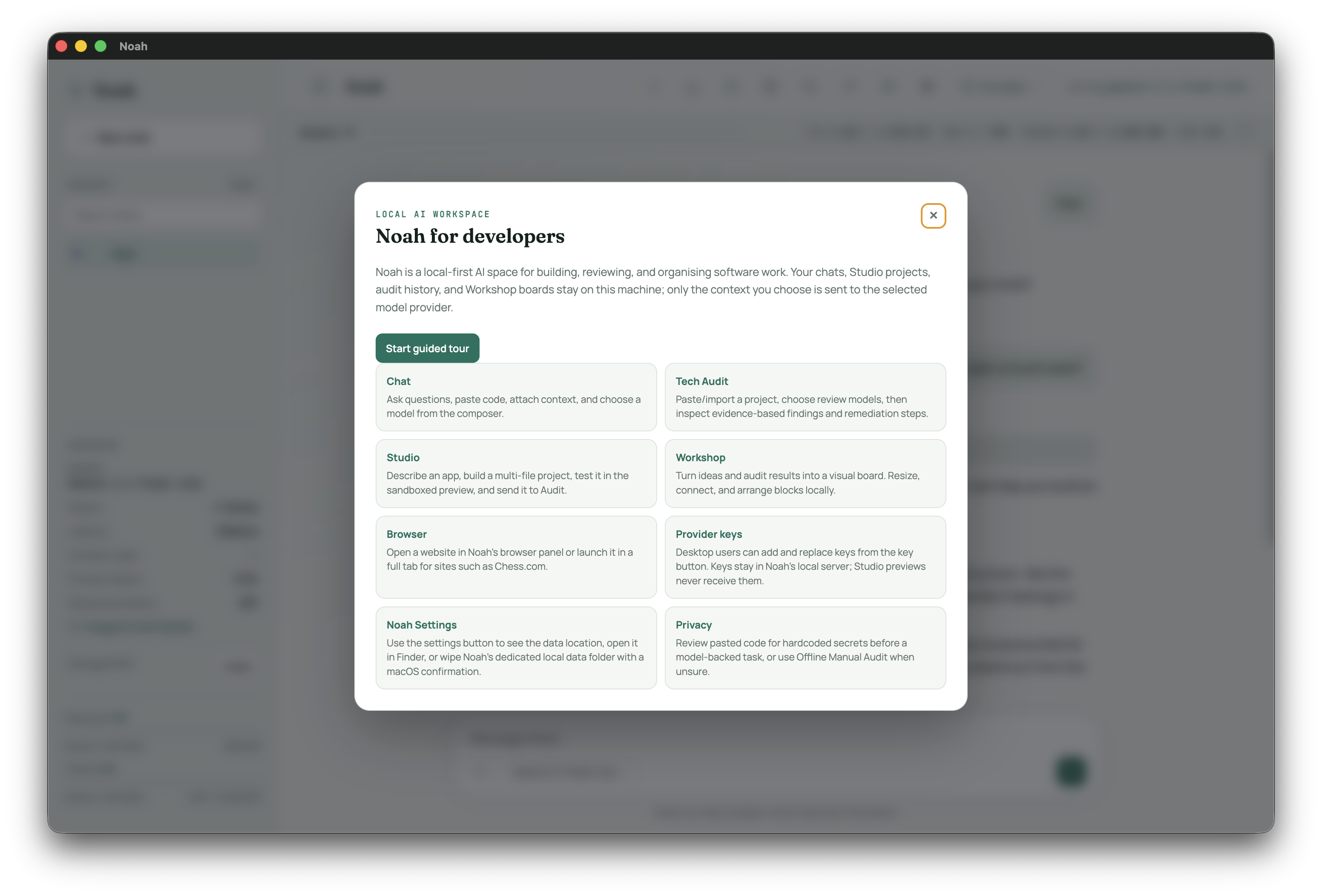
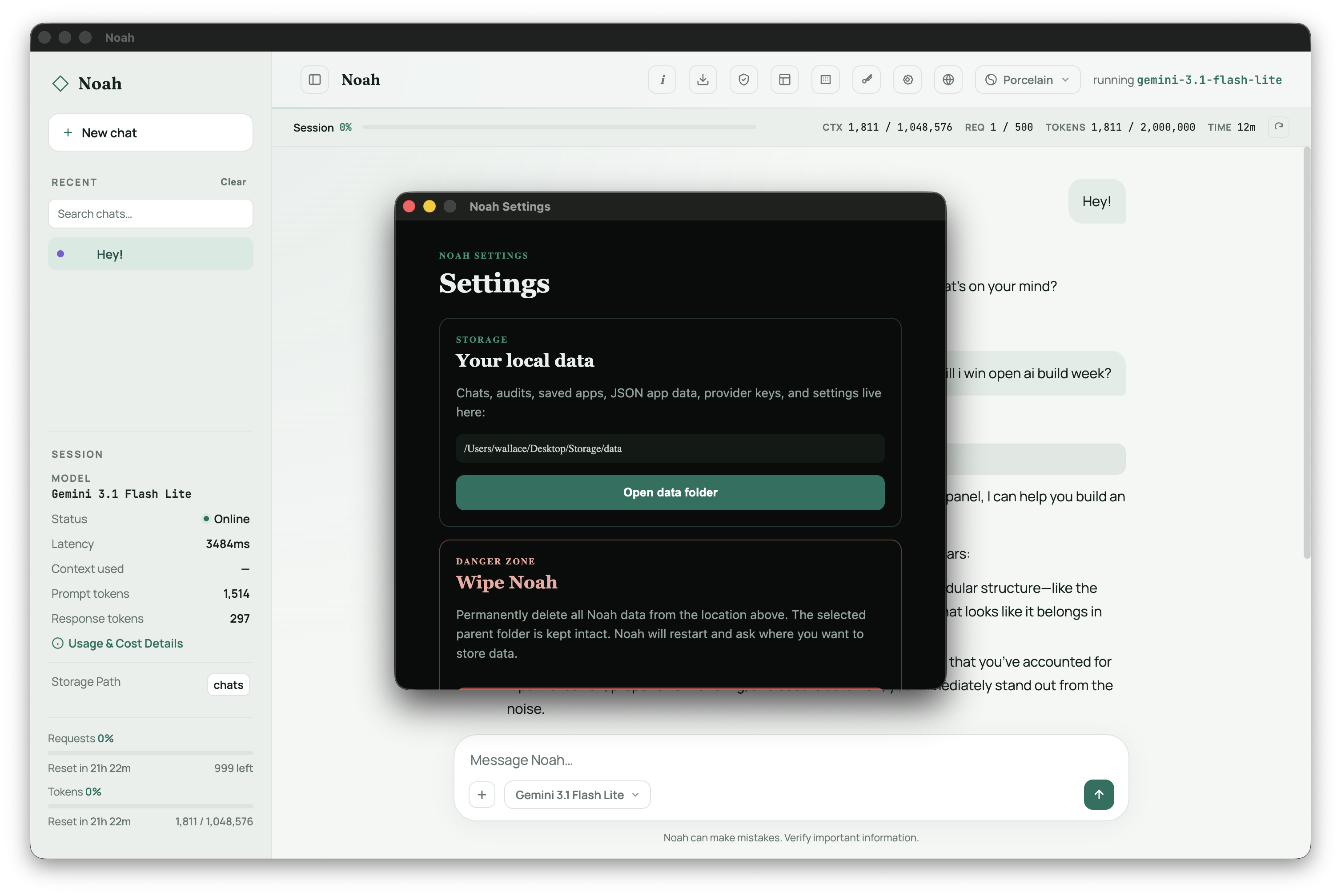
Noah is a local first AI workspace. It runs on your own machine with your own API keys. There is no Noah server sitting in the middle. (Audit calls still go out to whichever AI providers you pick, since that is how the models actually run. Local first means no third party server in between, not that data never leaves your device.)
The main feature is Tech Audit. Several auditor models each review your project on their own and write their own report. Different models catch different things, so one might spot a problem another missed. Then a head auditor, which I call the dictator, reads every report, cuts the noise, and gives you one clear answer.
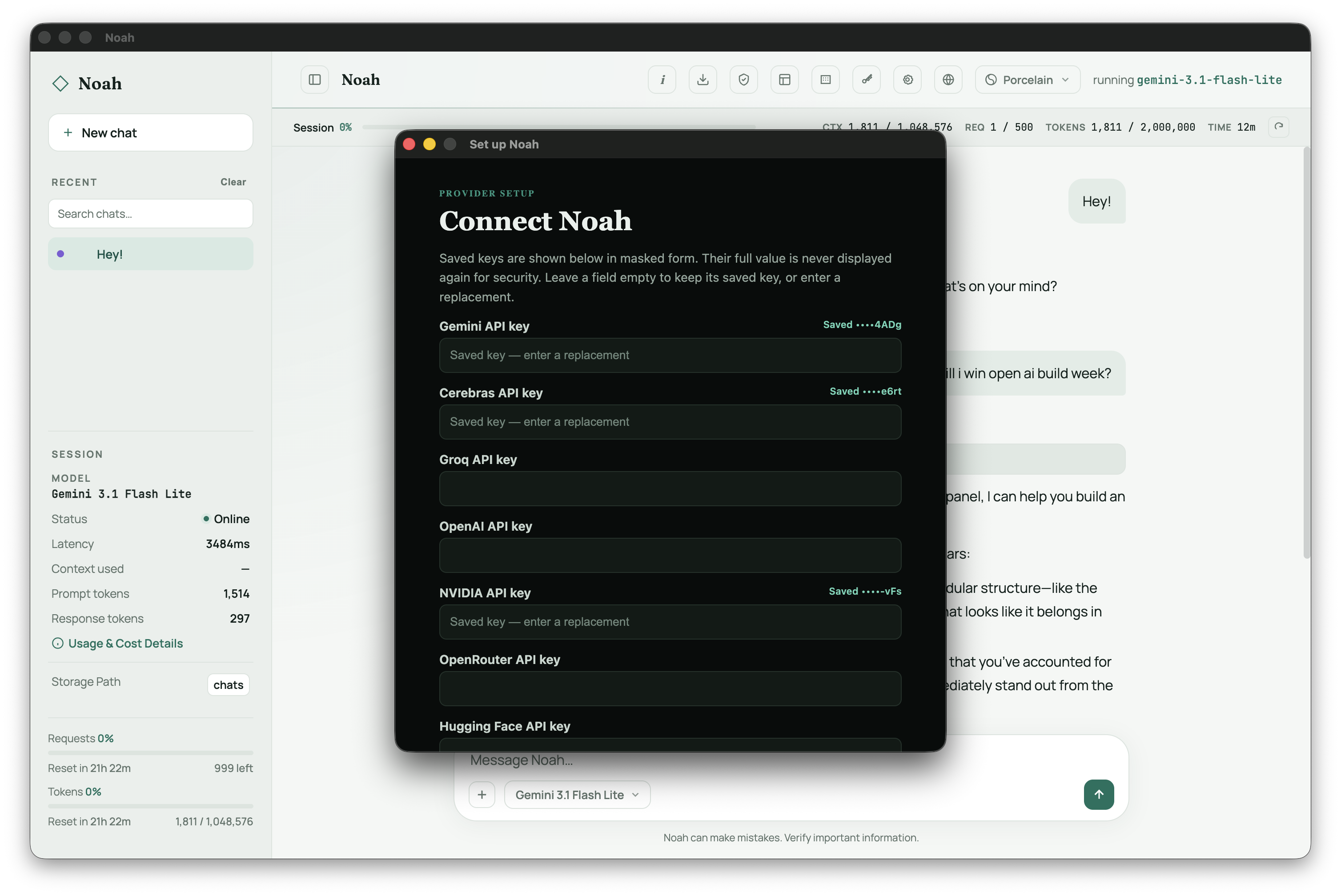
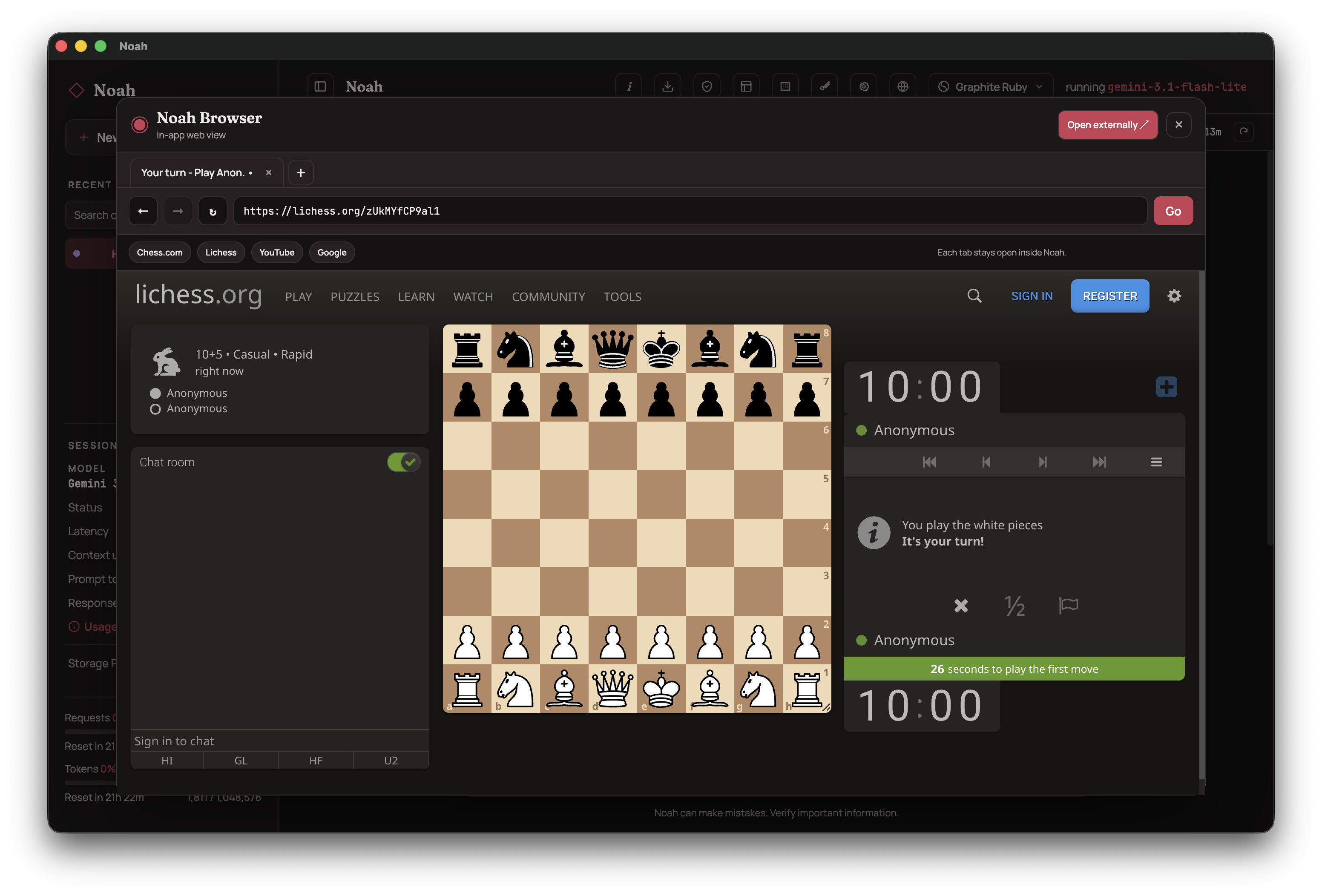
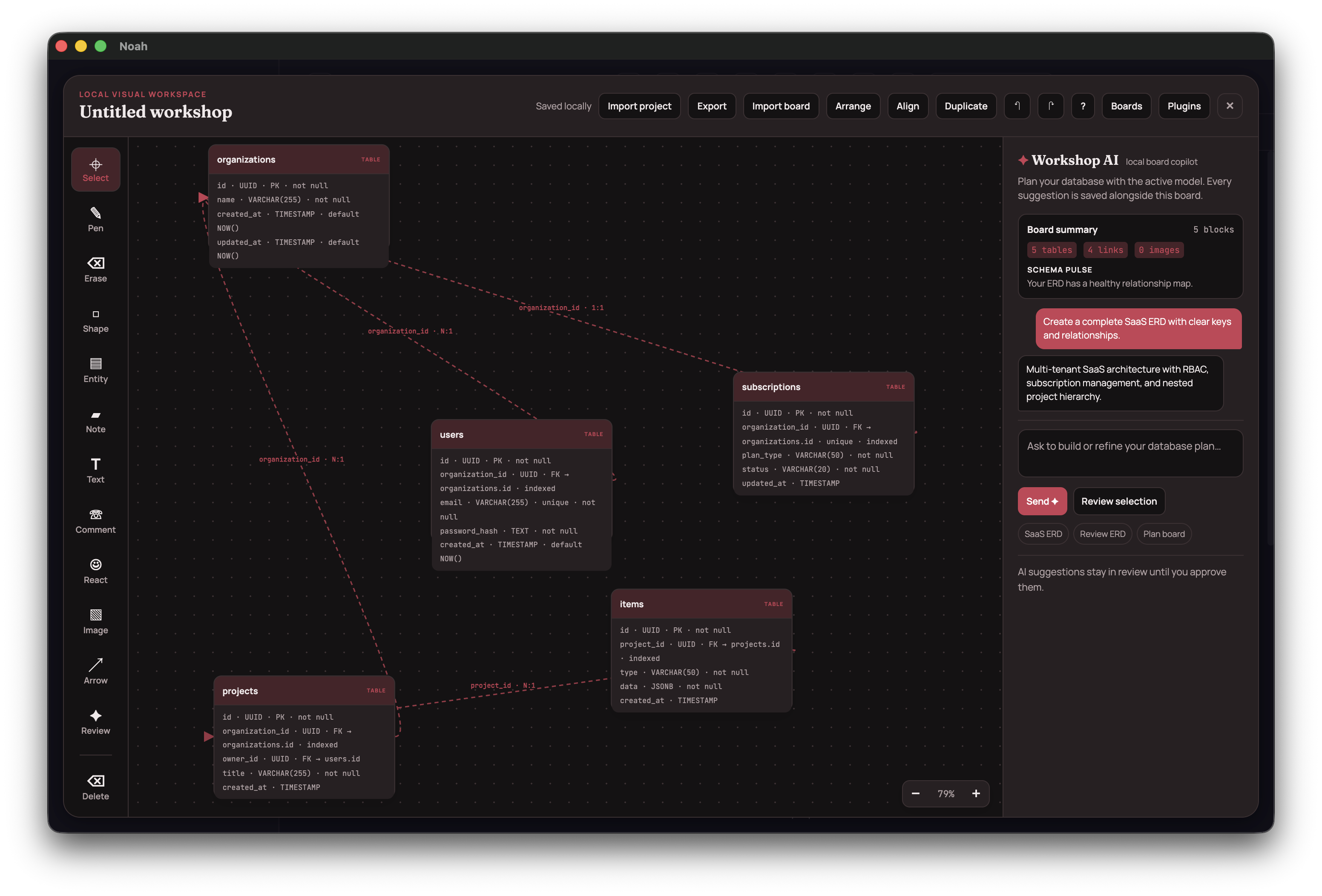
Noah also has Studio, where you describe an app and get a working build right away. There is Workshop, a board for planning ideas. There is a built in browser, and a skills library that pulls in reference material when you need it. It connects to eight AI providers: Gemini, Groq, NVIDIA, Cerebras, Ollama, OpenRouter, HuggingFace, and OpenAI.
How I built it
Noah started as a plain chat box. One API key, nothing special. Things changed when I sat down with Codex and mapped out what it could become, piece by piece: the audit engine, Studio, Workshop, the browser, the skills library, all eight providers.
Under the hood it runs on a Flask backend that handles the provider calls, a plain JavaScript frontend, and it is packaged as a desktop app with Electron and a PyInstaller sidecar.
Codex was key to building this in one week. The audit feature alone has an orchestrator, a runner that goes through providers one at a time, code splitting logic, prompt design, and model picking, each in its own part of the code. I would describe what I wanted, Codex would build it, and I would review and fix it up. GPT 5.6 powered the thinking behind that process. Every feature has its Codex session saved in the hackathon proof folder in the repo.
Challenges I ran into
First was rate limits. My first version ran every auditor at the same time, which overloaded the providers and broke runs halfway through. I rebuilt it so auditors run one after another, with the workload sized to fit each provider's limits.
Second was reliability. If one model was down, the whole audit failed. So I added a check before each run starts, to make sure every auditor is actually working. That way one bad provider does not ruin the whole audit.
Working through both problems with Codex is where it really helped. I would describe the failure, we would rebuild that part, then test again. It was fast.
What I learned
Coming from tech into security, then bringing that mindset into building software, taught me that reliability mostly means planning for failure ahead of time and making sure things fail safely when they do. That is a security lesson, but it turned out to matter just as much for building software.
What's next for Noah
Next is making it ready for real use: real login and accounts, tighter security on who can call it, and encrypted storage for API keys. Right now it has none of those, which is a real gap to close before a wider release. After that, I want users to build their own auditor teams for different kinds of reviews, especially security focused ones. That is the part I am most excited about.


Log in or sign up for Devpost to join the conversation.