-
-
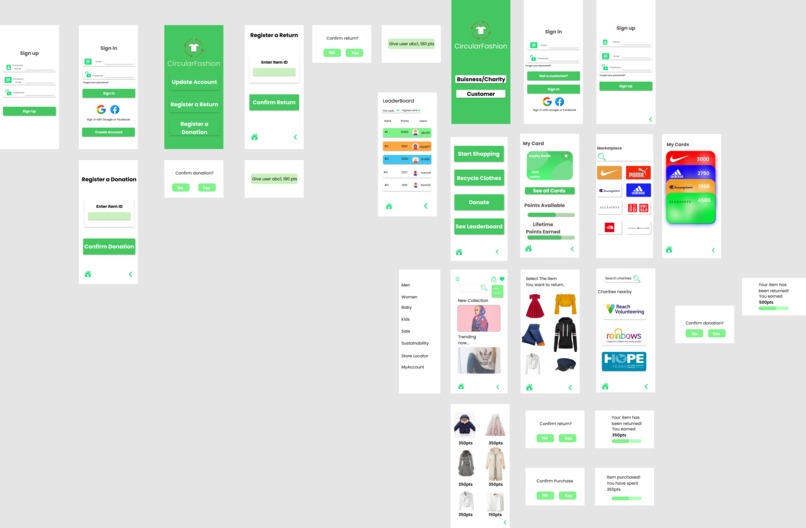
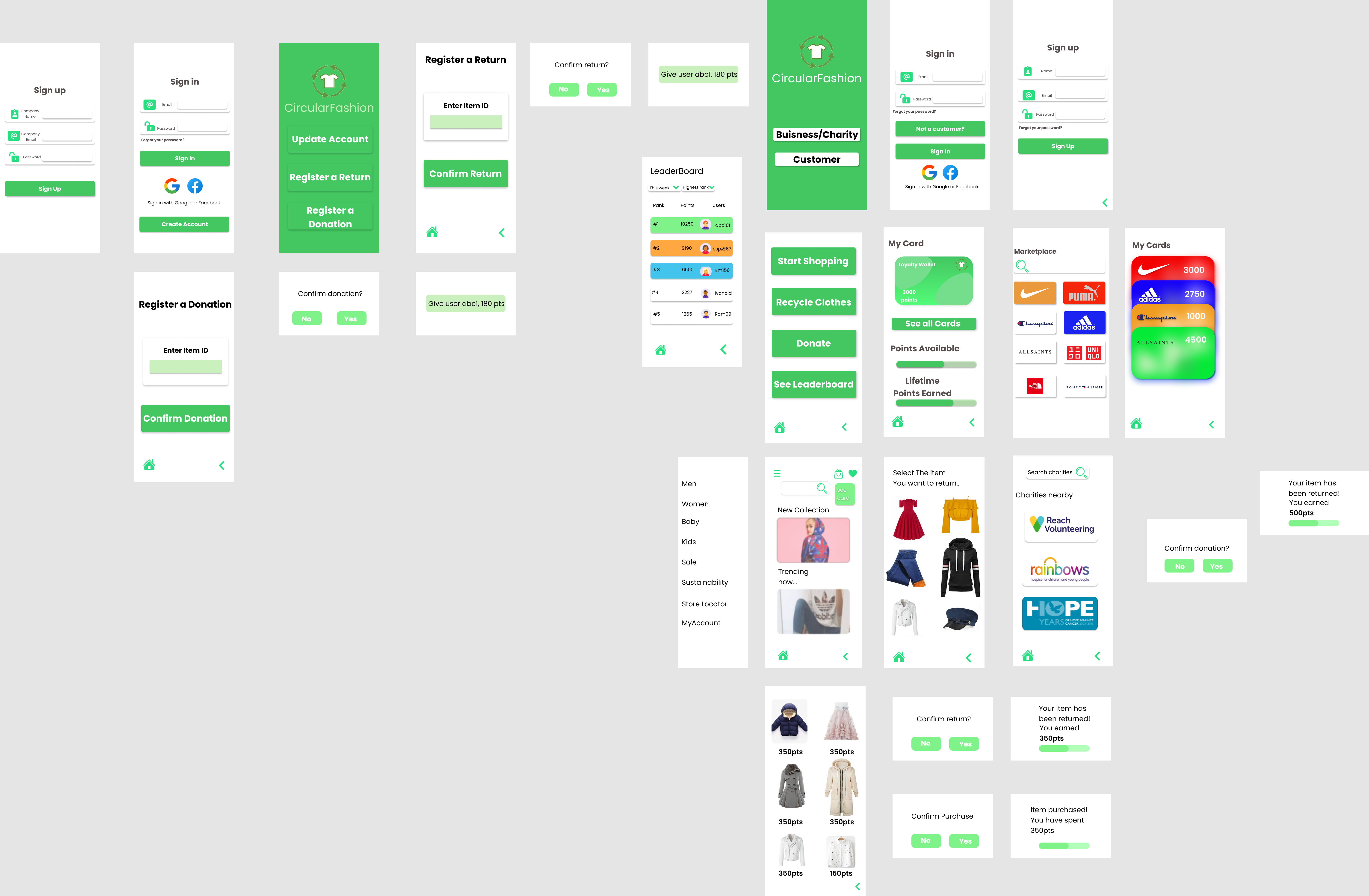
Prototype Overview
Inspiration
The idea was to find a project that would be in line with the theme: Circular Economy and help solve an instance of wastage that we believed needed more attention. In our generation, clothes come and go easily at a fast rate: we buy them, use them for some time, then more often than not, throw them away. As a result, we felt that if given proper incentive, people might be more inclined to change their clothes' life cycle; and that is how we came up with CircularFashion.
What it does
CircularFashion is an application that allows customers and businesses in the Fashion industry to lengthen the life cycle of clothing. Customers are given an identification (I.D) number for every item they buy from the store, which they then use to add said items to their "Belongings" on the application. Using the same I.D number, customers, can return or donate their Belongings and receive points in return. The points are used as an incentive to keep customers increasingly involved. Stores and charities registered on the application are in charge of allocating points to users by confirming (with the I.D number) a return or donation has been made.
How we built it
We used Figma to create a prototype of the application, using features such as frames, pictures, theme colour (green), and overlays; to make it come to life. Microsoft Word was used to make the logo (see thumbnail) and Android Studio for the skeleton application.
Challenges we ran into
The real struggle was to filter our ideas and materialize them. We let go of a few ideas, by thinking about their practicality and achievability. It took some time to get a clear idea of the flow of the whole project, but eventually, we made a more than decent prototype along with a skeleton application.
Accomplishments that we're proud of
We are proud that we accomplished a prototype that showcases the full functionality of the proposed application. By showing the way our app interacts between each frame and the design ideas we give a good impression of how we would like our app to work. We also learnt how to use Figma (our prototyping tool) and over the course of the weekend developed our design skills as well as developing our ideas. Despite a difficult start trying to find some software we could work on together, we moved forward and created a project we are proud of.
What we learned
As part of this hack, the theme of circular economy was not one we had researched or read about before and as such, we have learnt about the benefits and meaning behind a circular economy. We found this interesting and enjoyed trying to put a sustainable spin on the project we have developed. As well as this we learnt about new ways to prototype and show how our app would work. We learnt about the importance of quick design decisions and that it was okay for our project to evolve as we were building it. In order to create the app, we decided to start with Android Studio, something which we had not utilized in the past.
What's next for CircularFashion
For the future of CircularFashion, we would intend to develop the application by adding sustainability ratings for each company. This would allow customers to make more informed decisions when deciding which companies to engage in the buying and selling process with.
Built With
- android-studio
- figma
- java

Log in or sign up for Devpost to join the conversation.