-
-
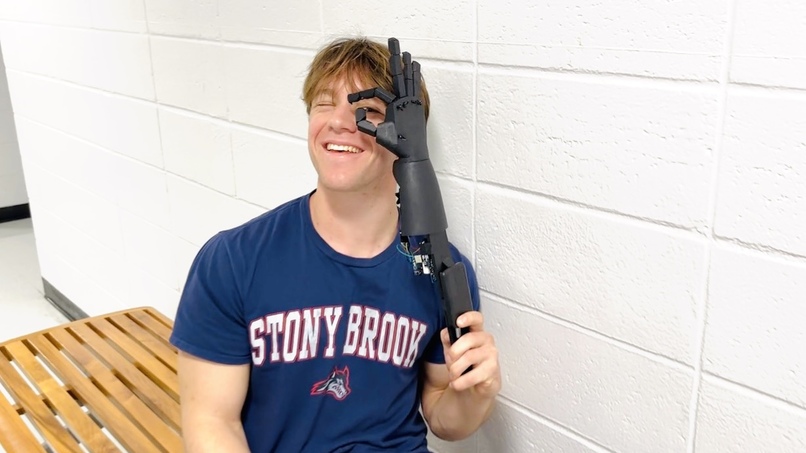
Andrew
-
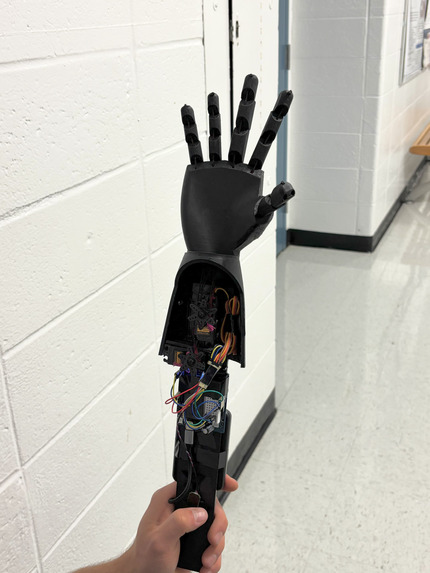
Final Demo
-
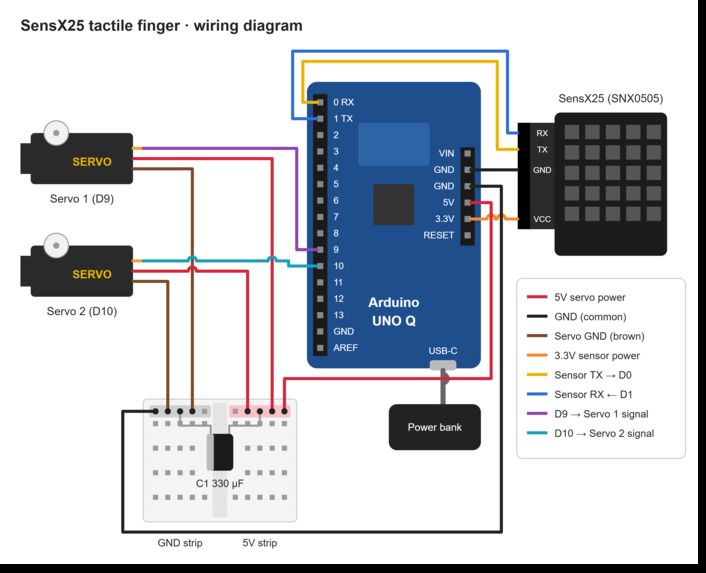
Circuit
-
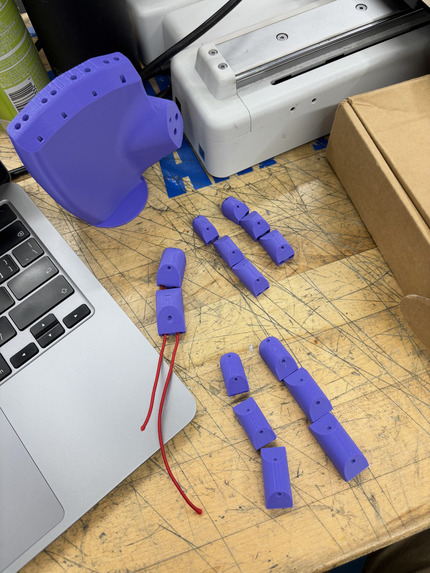
3D printed parts
-
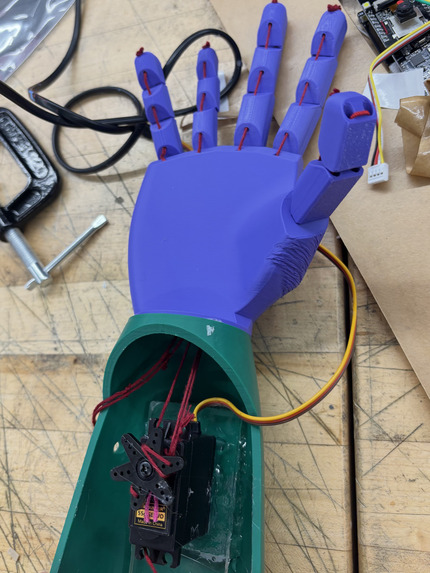
Early stage
-
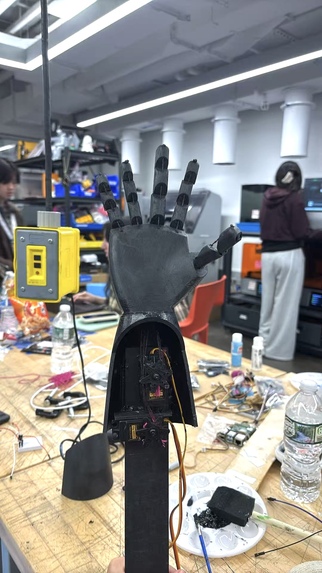
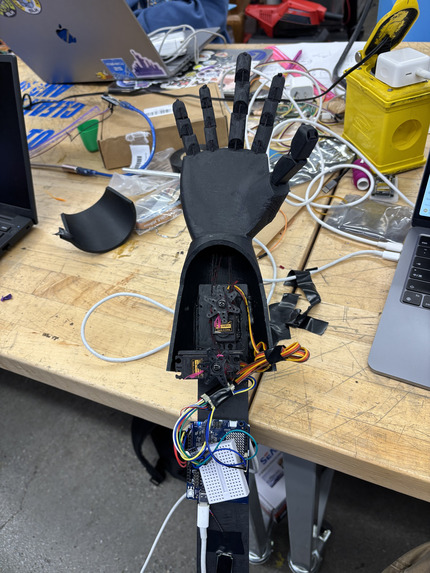
Attached the motors and painted the hand
-
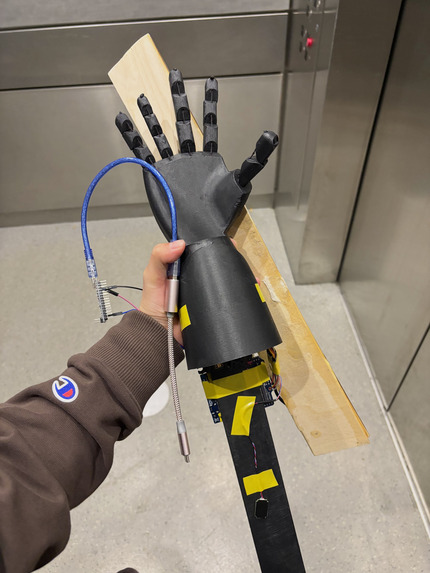
After first day
-
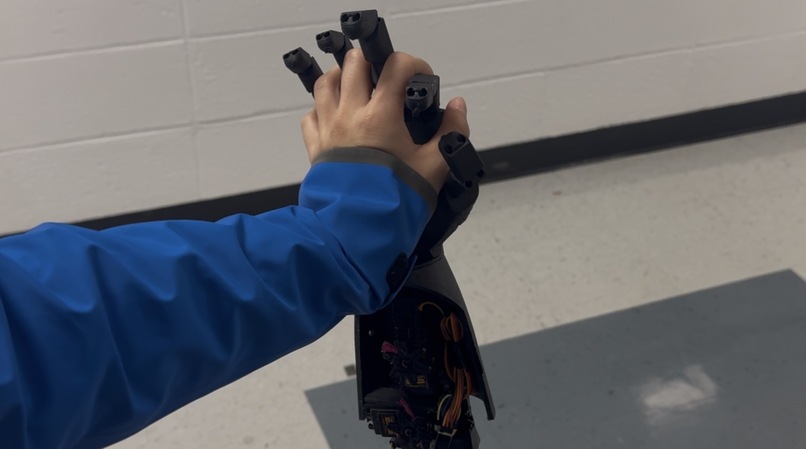
Romantic purposes?
-
OK!
-
Prototype
Inspiration
Reading about The Third Thumb by Dani Clode inspired us to use prosthetics not just to assist people with disabilities, but also to enhance human abilities and push beyond natural limitations. With the Creativity Track in mind, we knew we wanted to build something mechanical. We explored several possibilities, including wheeled robots, purely mechanical systems, and more human-centered designs.
We were also particularly interested in the SensX25 sensor challenge and its potential for human interaction. As we explored different applications, we became fascinated by how its pressure-sensing capabilities could control mechanical movements. Ultimately, we decided to build a robotic hand because it offered the most intuitive, visually engaging, and fun way to demonstrate this interaction.
What it does
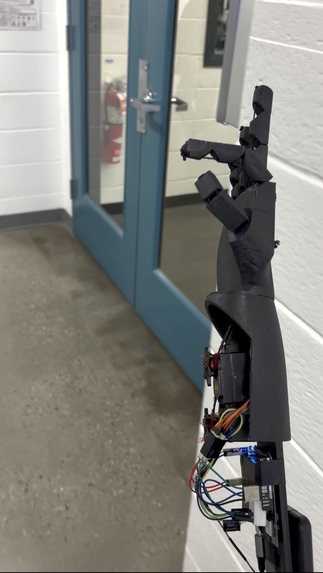
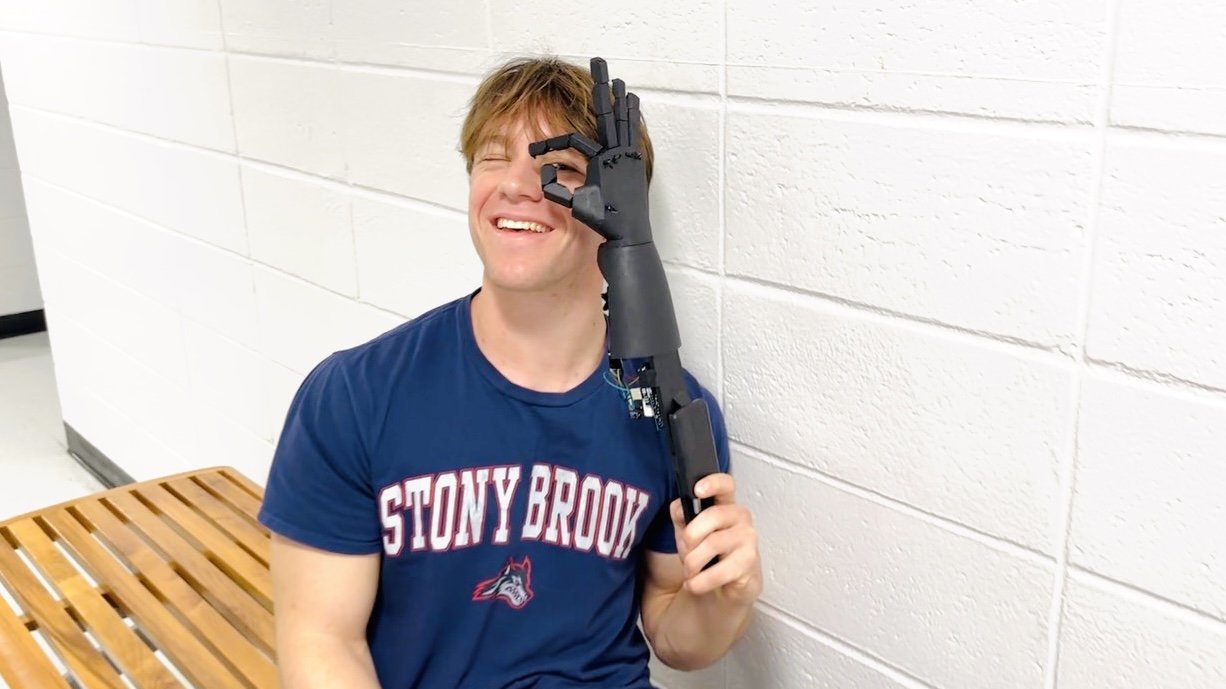
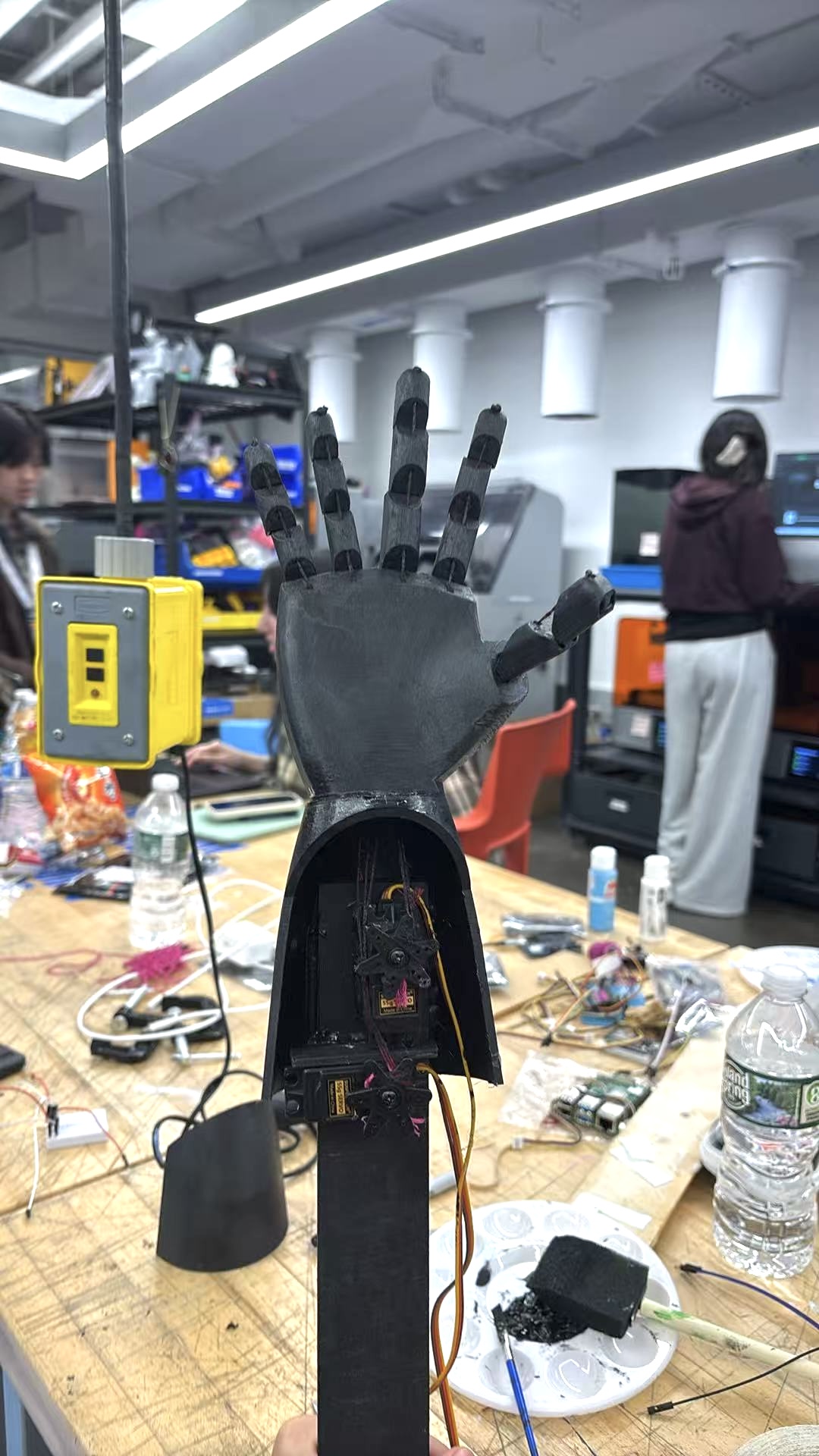
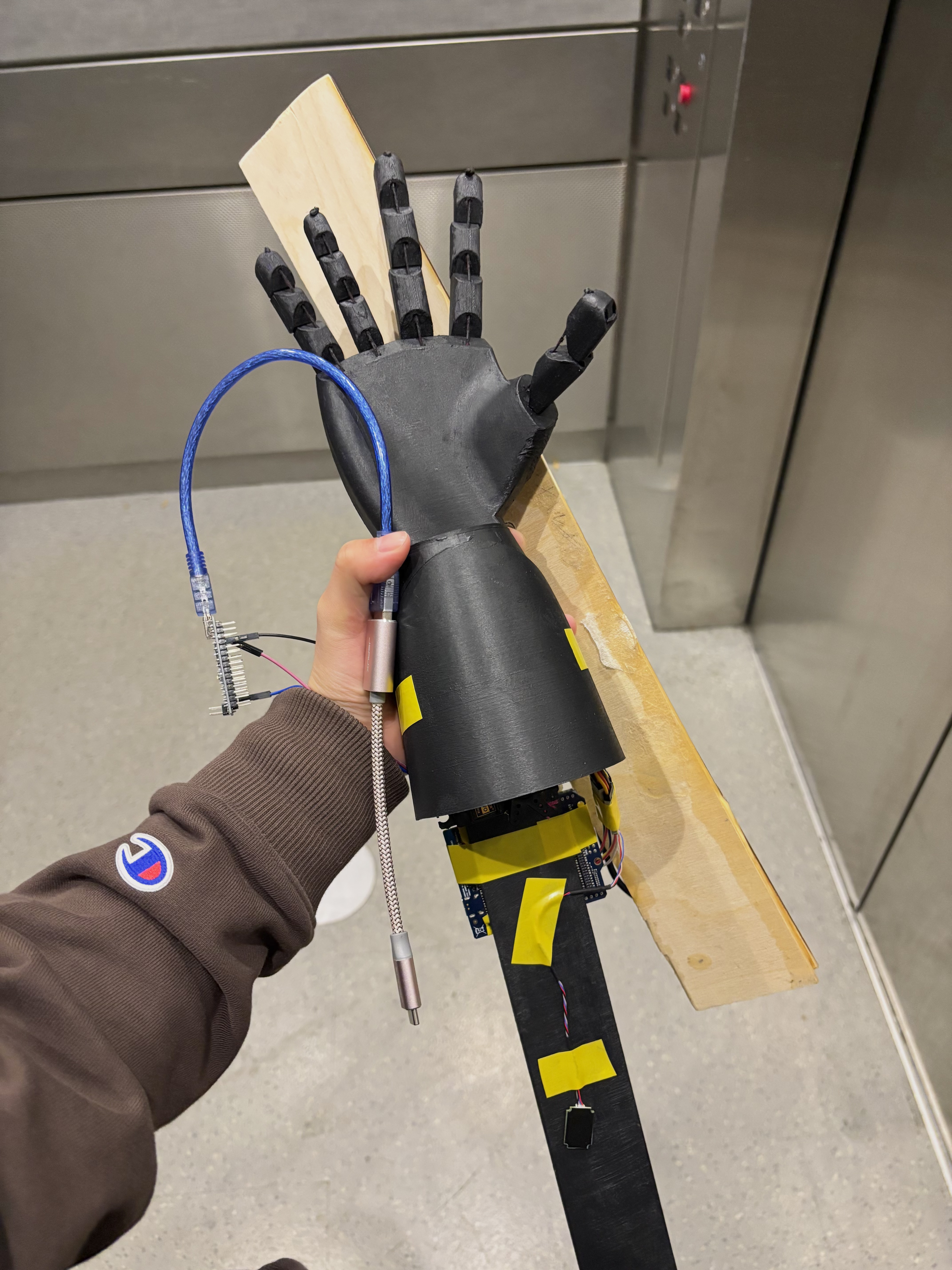
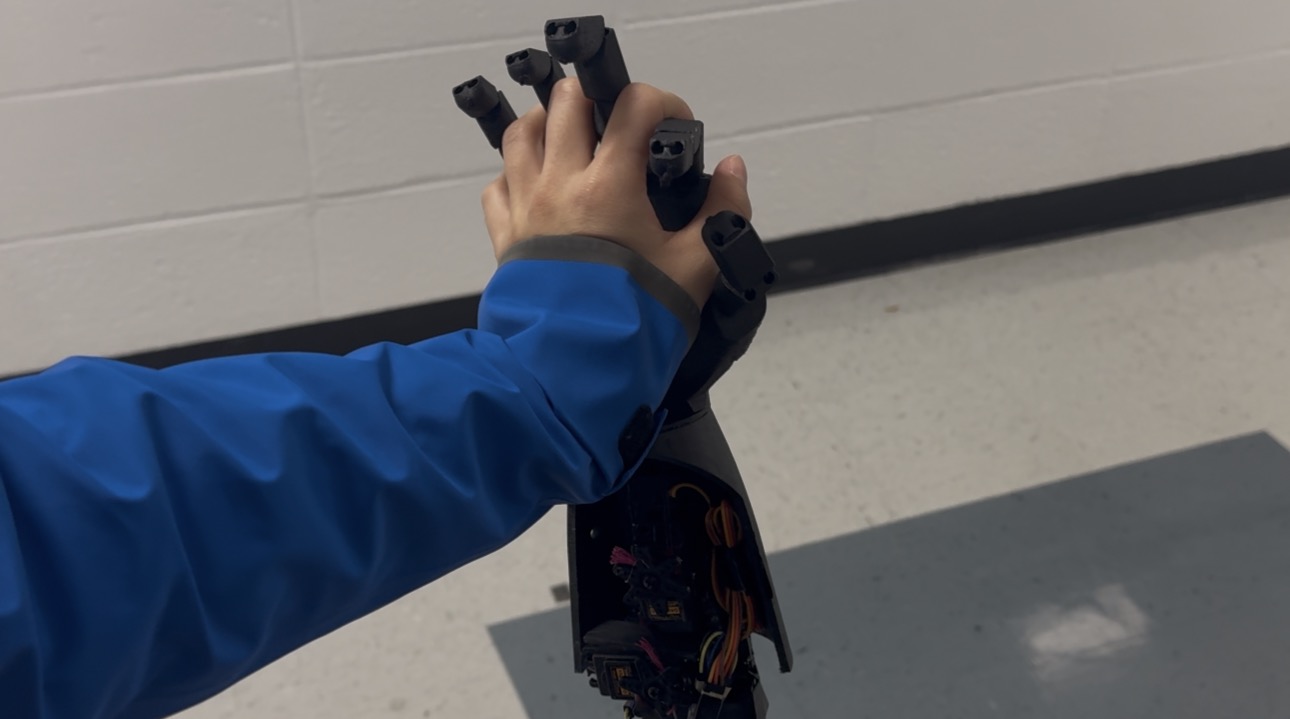
No More Itch is a handheld back scratcher with a 3D-printed robotic hand that scratches the way a real hand does. (You can also hold hands with it for romantic purposes~)
How we built it
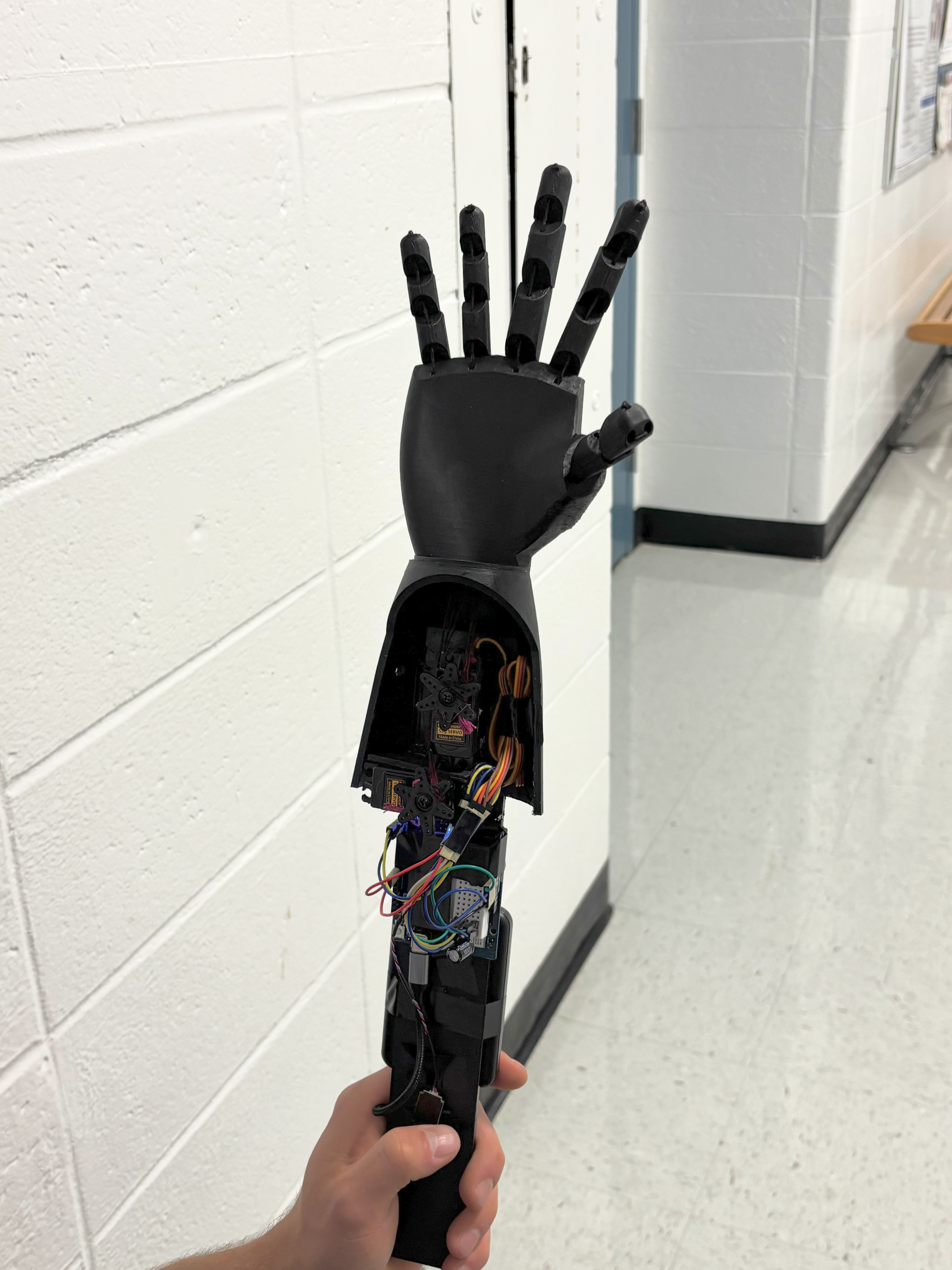
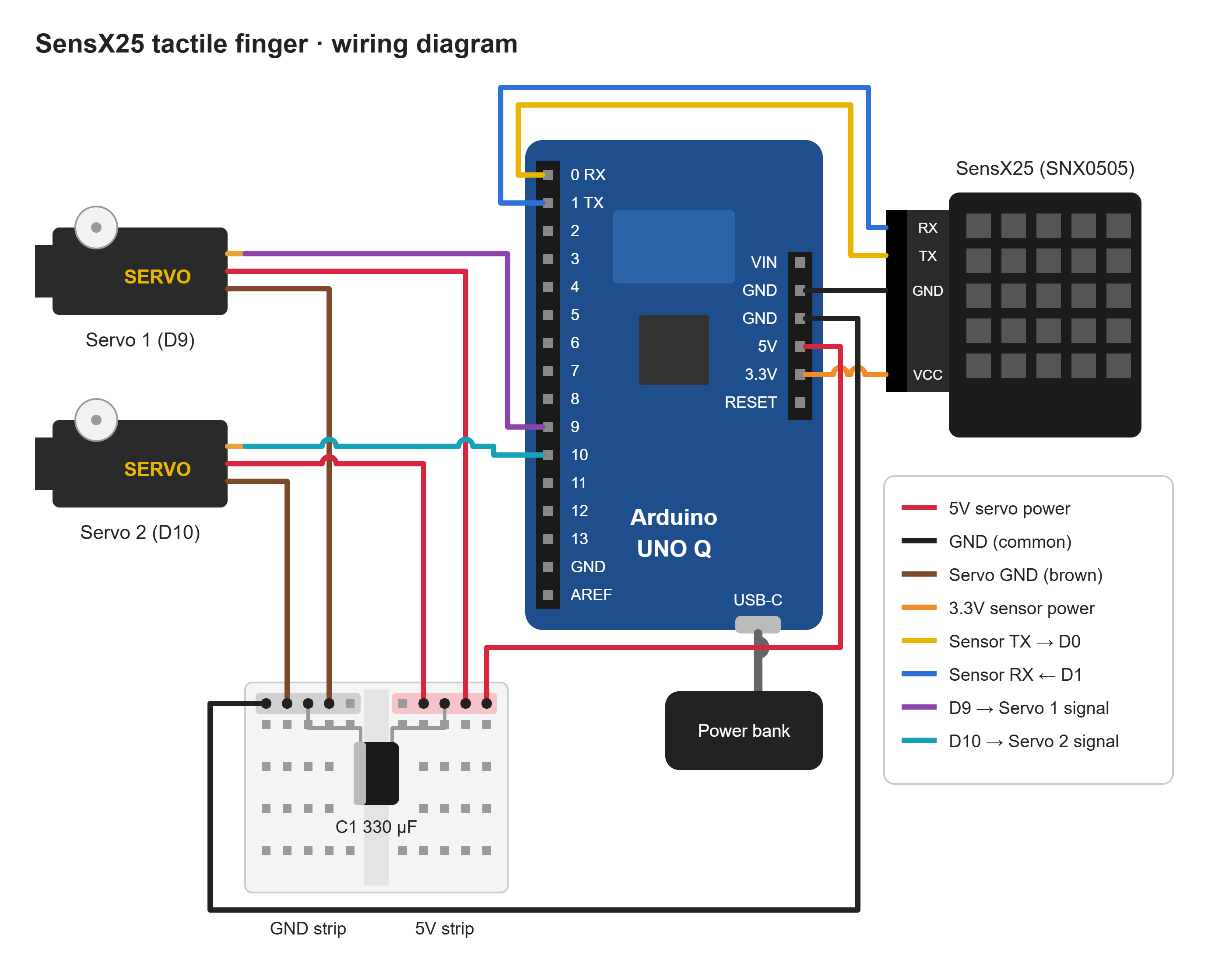
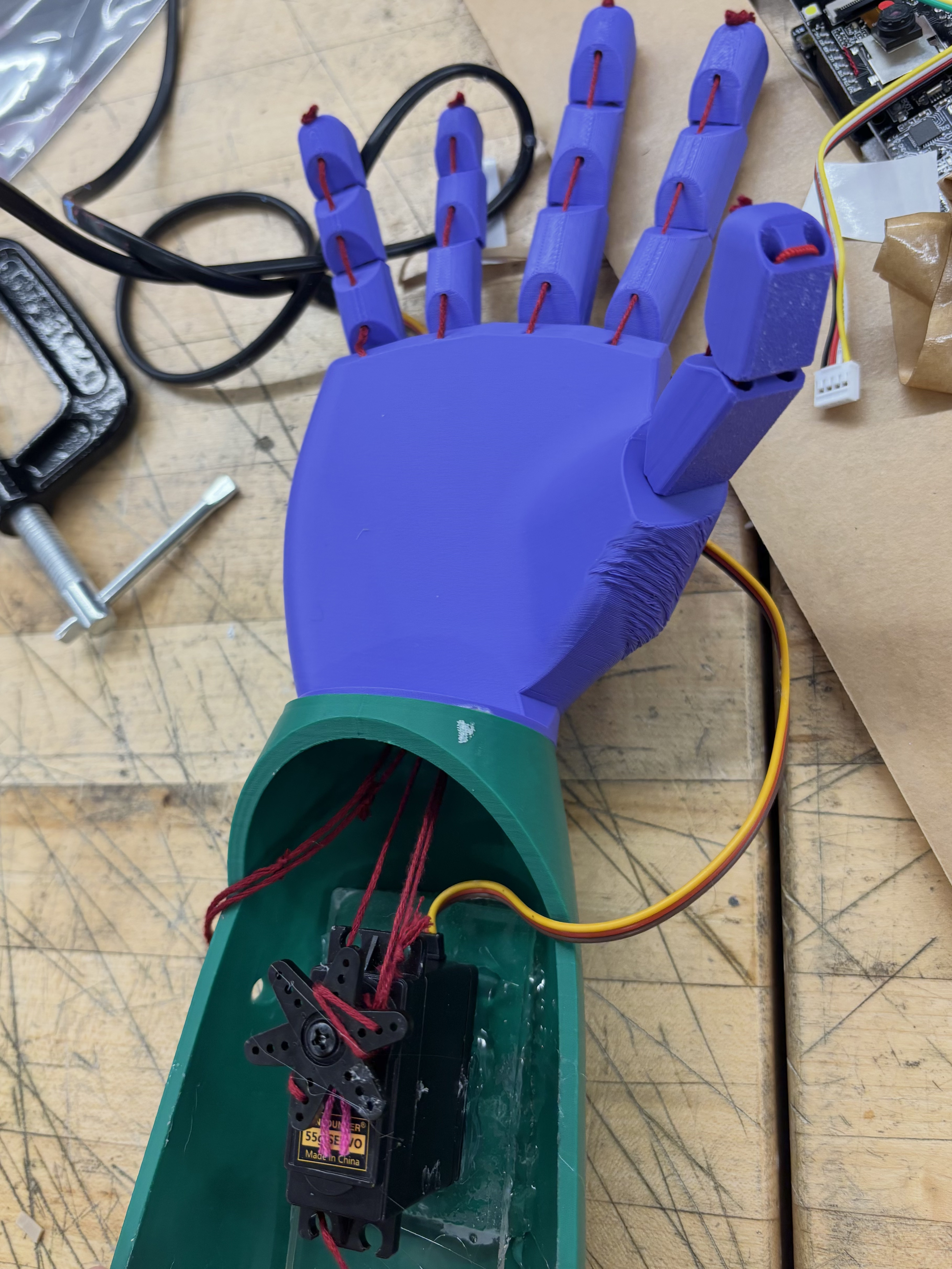
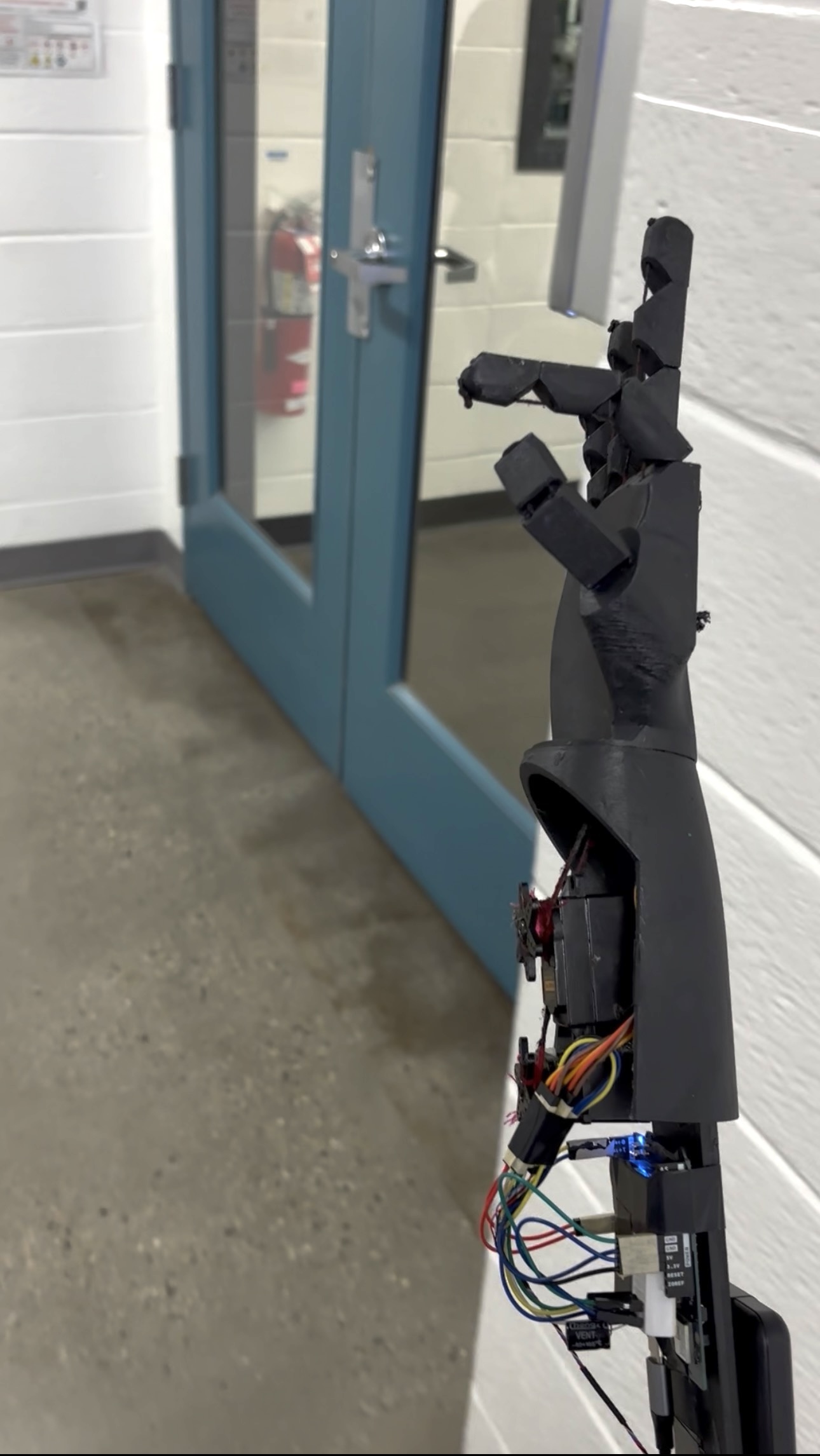
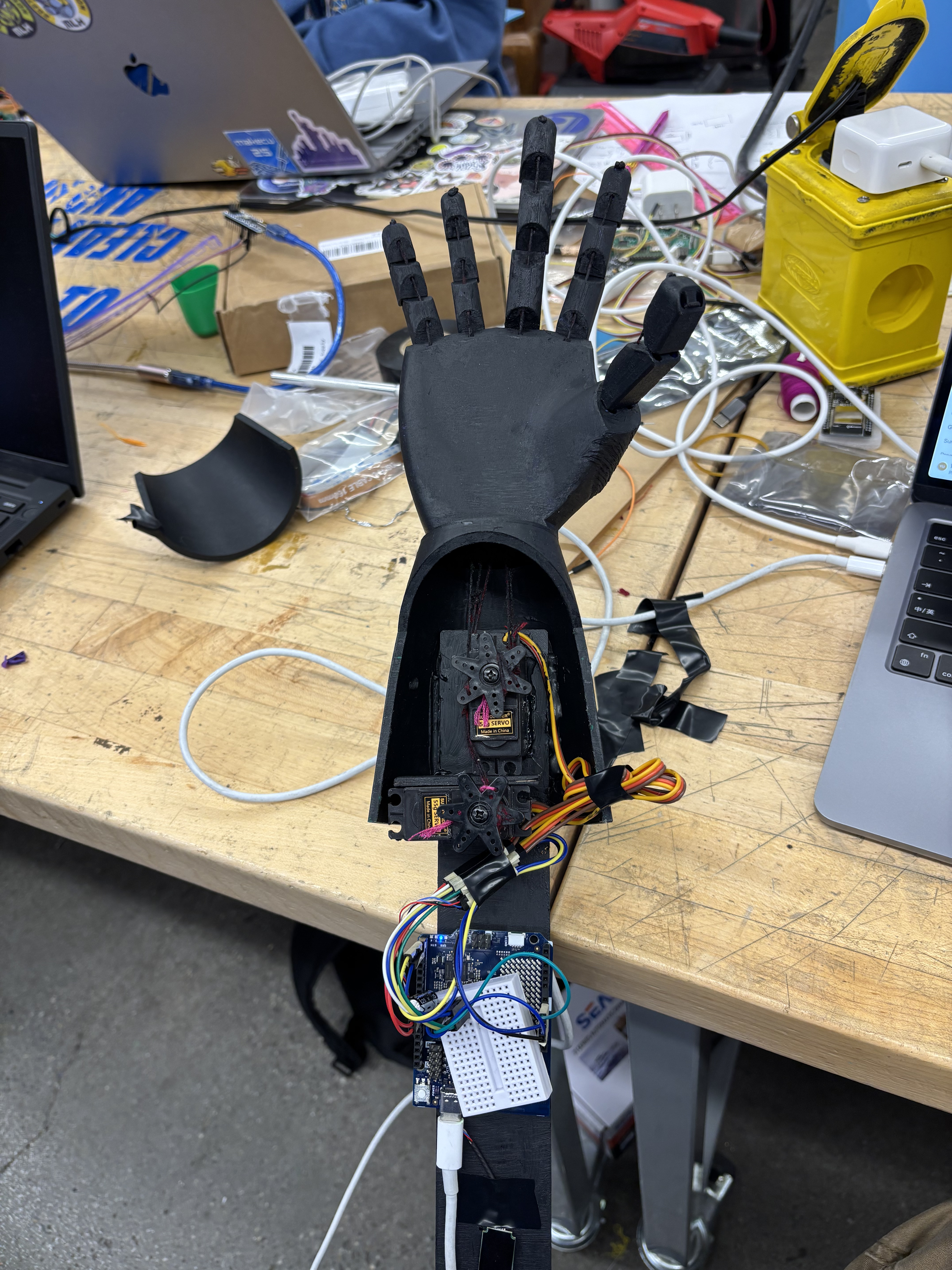
You hold the handle and steer it to the itch with your own arm, while your thumb rests on a TouchTronix SensX25 pressure sensor. The sensor reads both where your thumb presses and how hard. An Arduino UNO Q turns that into motion: two servos pull strings through the finger joints, curling the fingers like tendons. Press the top of the sensor and the middle, ring, and pinky fingers curl. Press the bottom and the thumb and index finger curl. Press the center and the whole hand curls. A light press gives a gentle scratch, and a harder press makes the fingers dig in further. The result is a scratcher you can aim and adjust in real time. Unplug the sensor, and it goes back to being just a stick.
Challenges we ran into
1. Powering everything on one Arduino board: Running two servo motors and the SensX25 sensor simultaneously on the Arduino UNO Q was challenging. Since the Arduino has only one 5V pin, we couldn't connect both motors and the sensor directly to the board. To solve this issue, we used an external breadboard to distribute power and added a capacitor to the servo power line, allowing the robotic hand to move without disrupting the sensor data.
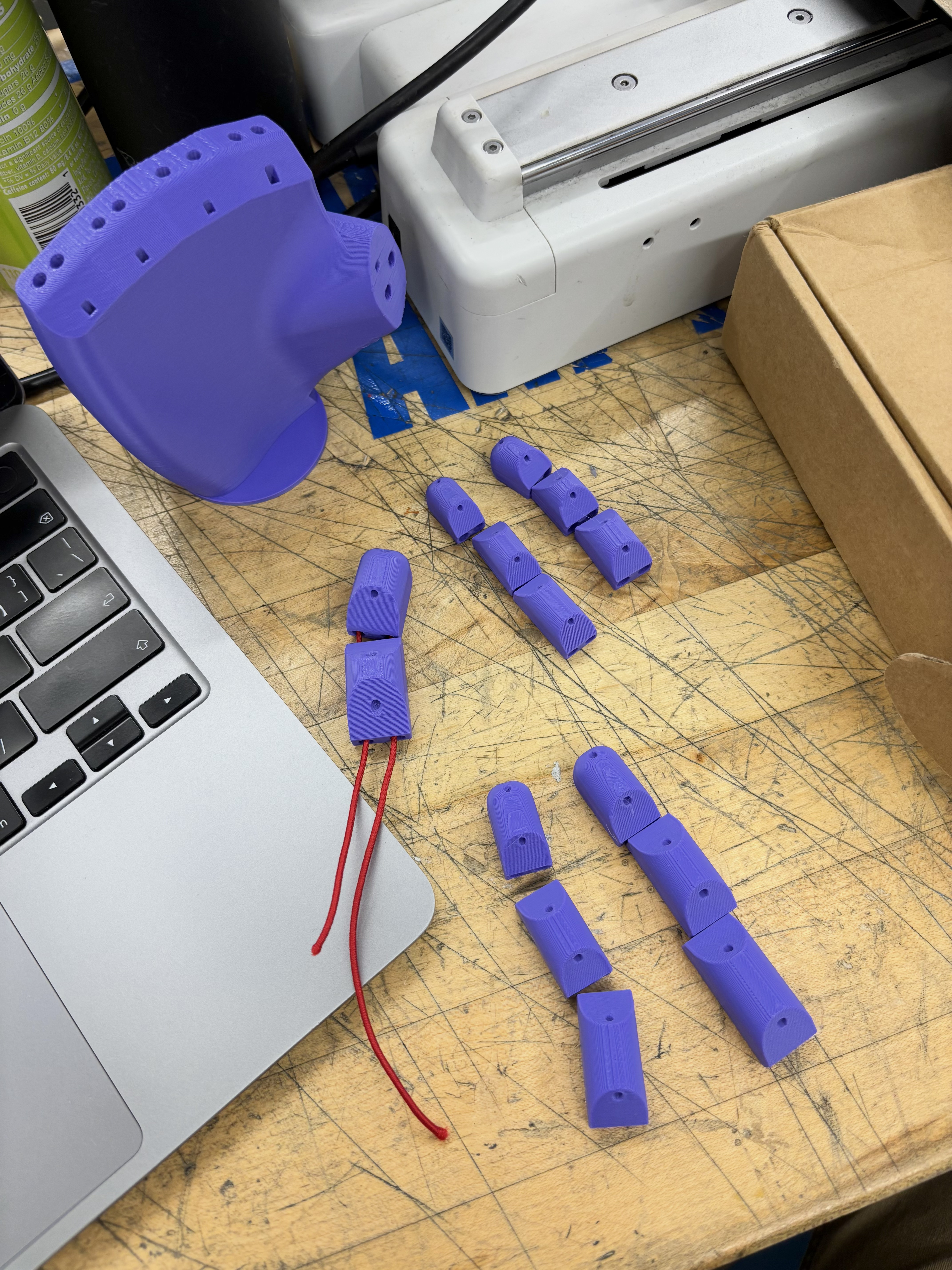
2. Creating finger joints and making them move: Each finger joint needed to bend independently, and figuring out a mechanism to achieve this was one of our biggest challenges. We eventually divided each finger into three segments (and the thumb into two), designing holes at the joints to connect the segments. We attached elastic bands to the back of the fingers to maintain tension and help them return to their original positions, while using strings on the opposite side to connect the fingers to the motors and pull them into a bending motion.
When testing the finger movements, we discovered that the initial MG90 servo motors did not provide enough torque to bend the fingers effectively, so we switched to larger 55g servo motors. However, these motors took up significantly more space, creating additional challenges in arranging them within our design. Given the limited number of motors and the space constraints, we experimented with different motor configurations and string lengths to find the most effective arrangement for controlling the fingers.
3. Making the hand sturdy enough for real-world use: A back scratcher needs to be held upside down, reached over the shoulder, and moved around at different angles, so we had to ensure that the hand would remain securely attached and stable in all these positions. We explored different materials and methods for supporting the hand, including 3D-printed structures and wood, before ultimately deciding to laser-cut a piece of acrylic to serve as the handle. We also used a combination of superglue, double-sided tape, and hot glue to reinforce the structure and keep everything firmly in place.
4. Mapping sensor readings to finger movement: The raw pressure values and the servo angles that actually curl the fingers don’t line up on their own. We tuned the mapping so a light press gives a gentle curl and a hard press gives a full curl, while keeping each servo within the range our fingers can physically move.
5. Controlling motor movements: Another challenge was programming the servo motors to move correctly. Since our servos are position-controlled and have a limited rotation range, translating pressure sensor readings into smooth finger movements was difficult. We had to carefully calibrate the motor angles and set safety limits to ensure the fingers could fully bend and return to their original positions without damaging the mechanism.
Accomplishments that we're proud of
We managed to attach all parts and hardware onto one stick, making it a portable device. We also used the sensor to determine which parts of the hand move based on where it was pressed. At first, the original motors were not strong enough to move the entire hand. Using larger motors made it possible, with a lot of alterations within the software and the hardware.
What we learned
We learned to make compromises when many different conflicting ideas fall short. At first, we did not have much of a direction for our project. We started making many different designs and realized we had to come together on one idea. We decided on the backscratcher, and everyone came to an agreement. Because we changed our minds, we needed to figure out how to make something very similar to our new design even when we were missing many parts that were required.
What's next for No More Itch!
1. A more comfortable grip: We’ll redesign the handle around the shape of a hand, so it’s comfortable to hold for longer and the thumb rests naturally on the sensor. That makes control more accurate and less tiring.
2. Finger movements: Currently, due to the limited number of motors available, we use just two motors to control all five fingers. In the future, we hope to assign an individual motor to each finger and explore more advanced motor configurations to enable greater precision and flexibility.
3. Wrist movement: We are hoping to add a motorized wrist that can tilt and rotate the hand, so it reaches awkward spots and make back-and-forth scratching motions without the user moving their whole arm.


