-
-
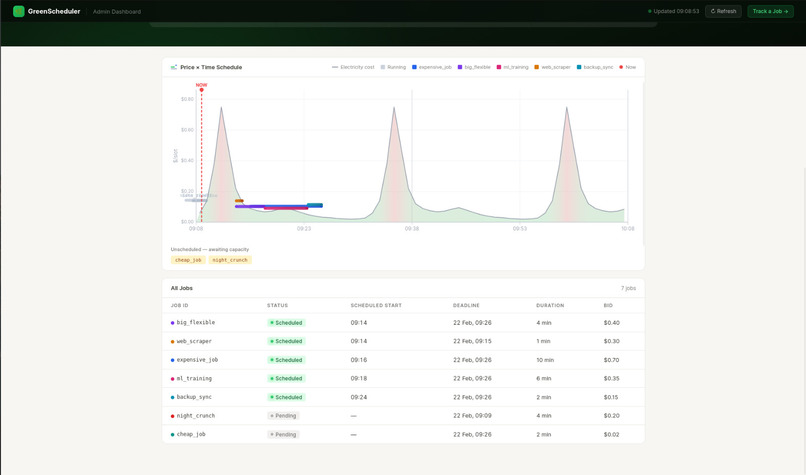
Dashboard01
-
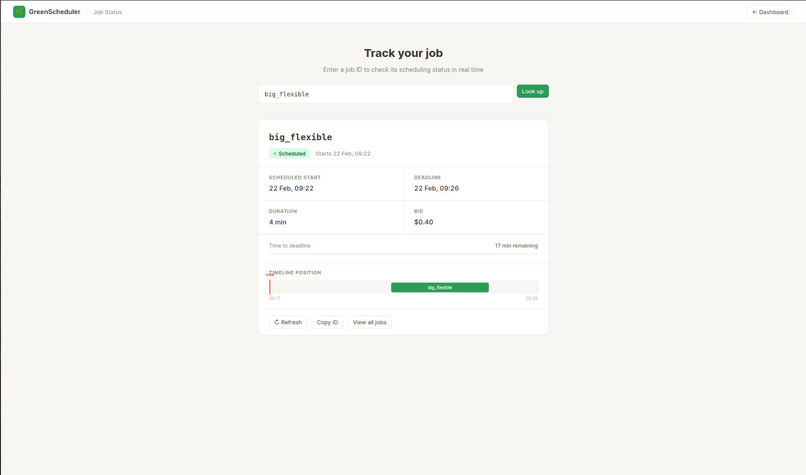
SingleJob
-
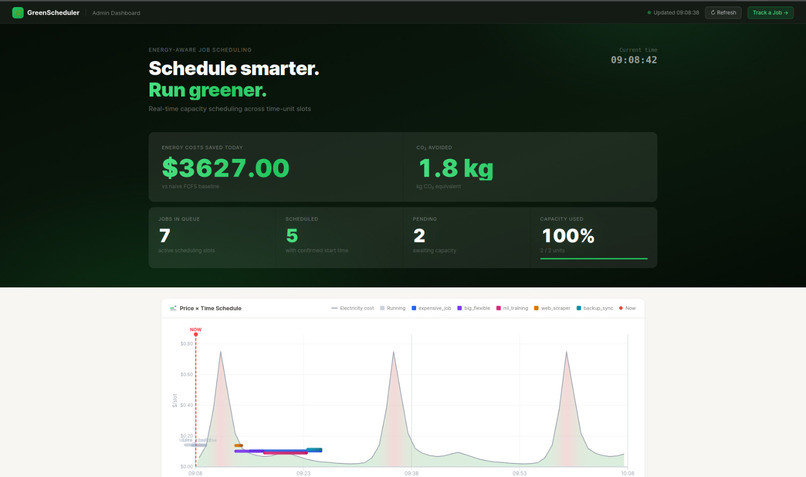
Dashboard02
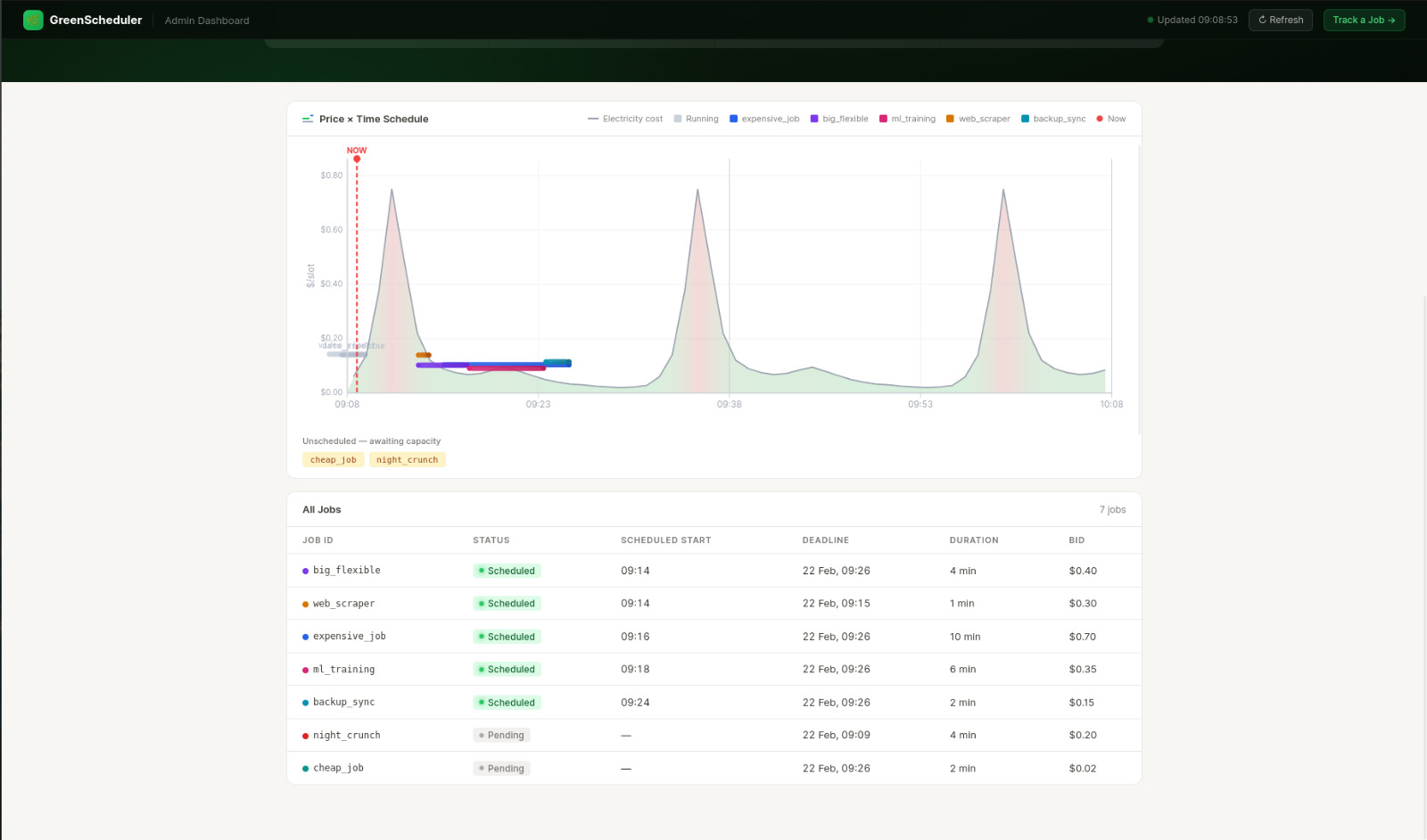
GridSurf
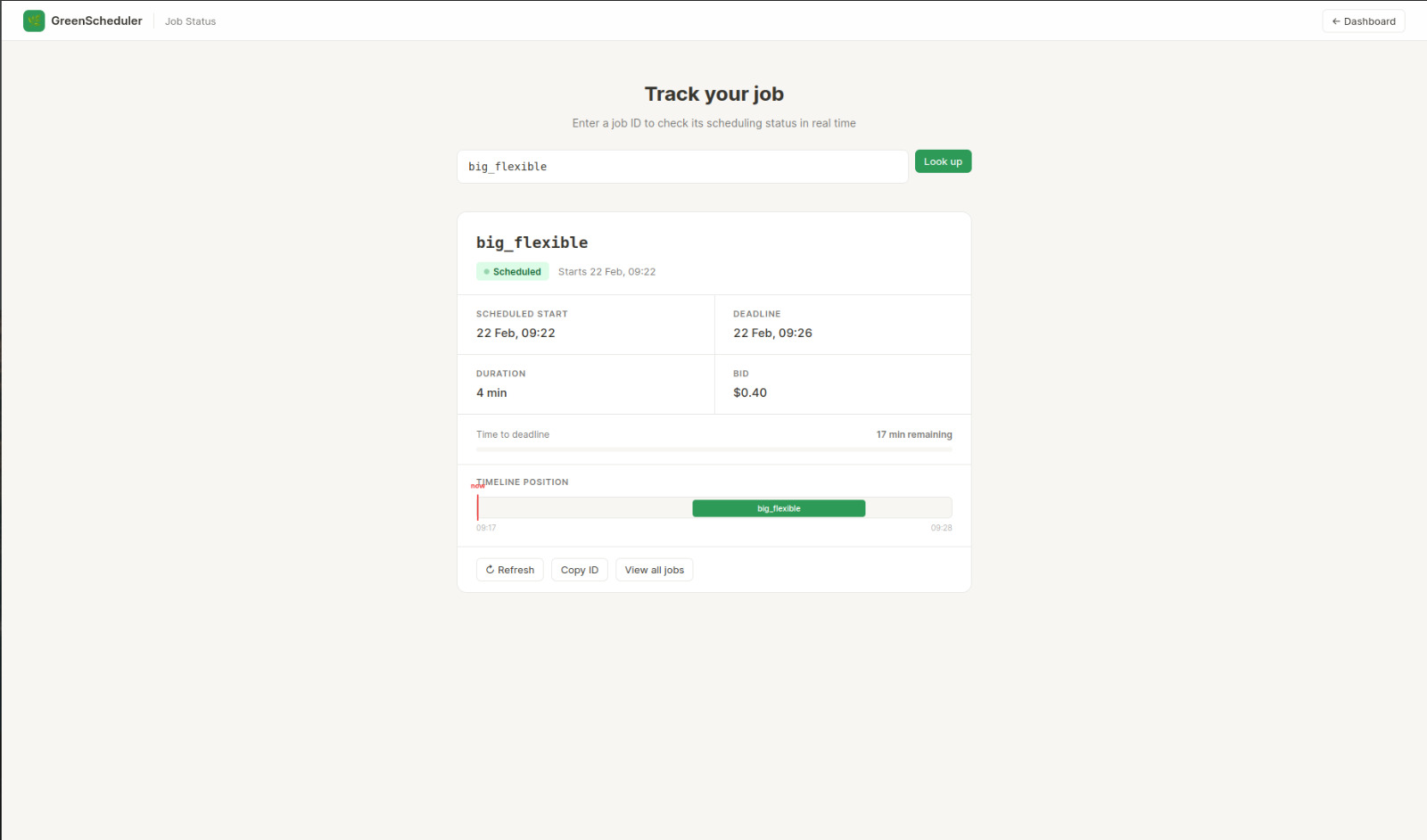
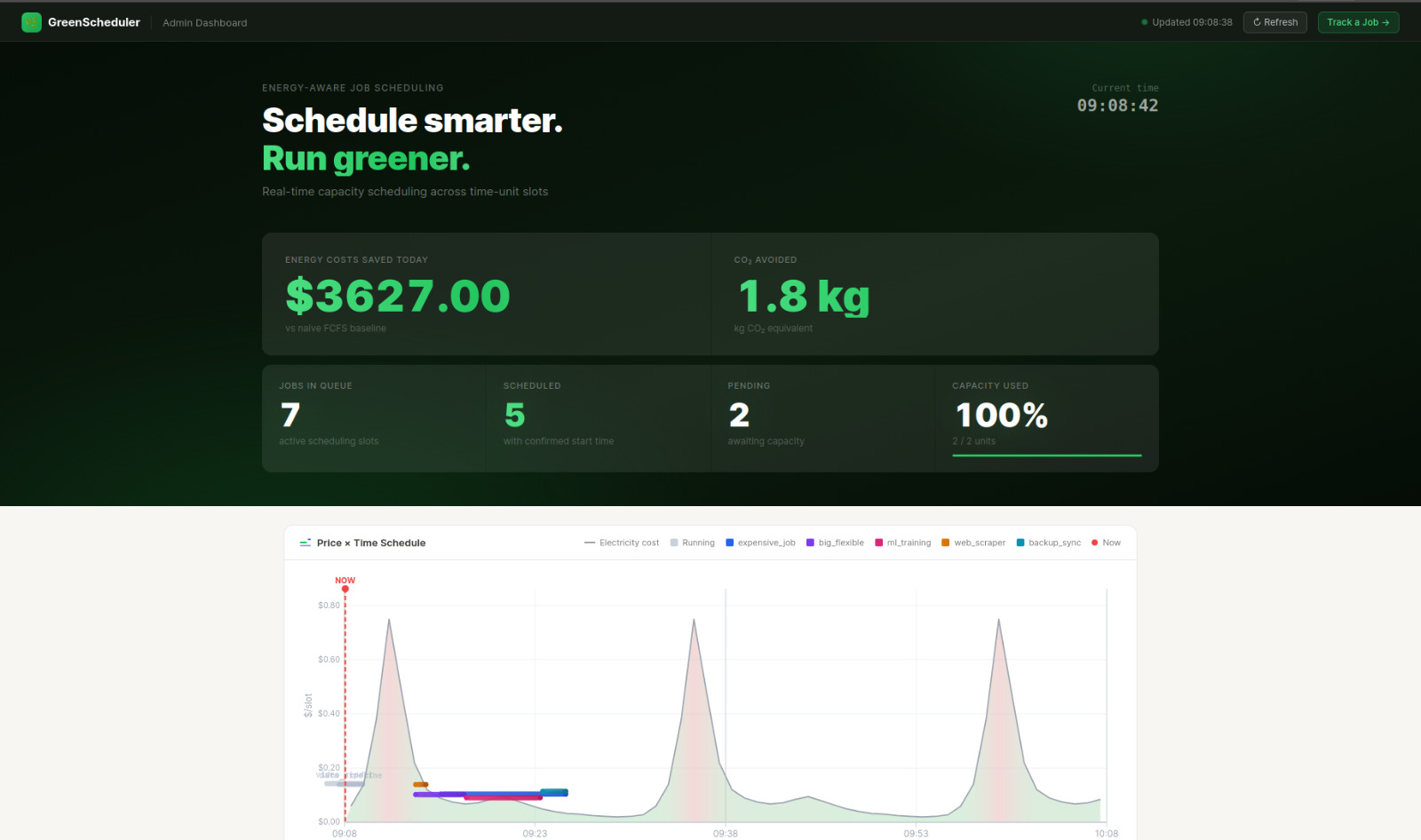
A Nobel Prize-winning pricing mechanism meets cloud scheduling. GridSurf is an incentive-compatible job scheduler that uses real-time electricity data to shift compute into the cheapest, greenest time slots, and rewards users for being flexible. The result: lower bills, lower carbon, and a system where nobody can game the price.
Inspiration
Most compute jobs don't need to run right now. Some people are willing to be patient for a lower price by waiting out high-load periods. The obvious fix: let users set deadlines and shift work off-peak. But we hit a trap. If everyone pays the same rate, the rational move is to declare the tightest deadline possible to be executed first. Patience gets punished, flexibility evaporates, and you're back to first-come-first-served. This isn't an engineering problem. It's an economics problem. With a team spanning economics and software engineering, that was our cue. It led us to the VCG mechanism, a framework that won Vickrey his Nobel Prize: each participant pays for the harm their presence causes to everyone else.
What it does
Users submit jobs with a deadline and budget cap. GridSurf estimates compute time, then an integer linear programme finds the optimal allocation across time slots with varying electricity prices. VCG pricing ensures flexible jobs pay less and urgent jobs pay fairly for displacement. Honesty is provably the best strategy.
How we built it
Three layers: an ILP-based welfare-maximising scheduler, a VCG pricing engine that re-solves per job to measure externalities, and an API with interactive visualisation.
Challenges we ran into
VCG in theory is elegant. In practice, if the platform extracts surplus, users shade bids or leave for flat-rate competitors. Our key decision: VCG surcharges are a fairness correction, not revenue. Revenue comes from a flat platform fee.
Accomplishments that we're proud of
An incentive compatible algorithm. A working server with API endpoint. All that's left is AI platform integration.
What we learned
Incentive design matters more than algorithm design. Without correct pricing, a better scheduler just creates new ways to game the system.
What's next for GridSurf
Live electricity market integration, multi-resource scheduling, and cloud provider partnerships.
FAQ
Why not just schedule everything at night? Because "night" isn't always cheap. Solar-heavy grids are cheapest at midday. GridSurf follows the actual cost curve, whatever shape it takes.
What stops users from gaming the system? The VCG mechanism makes honesty the dominant strategy. Faking a tight deadline can only result in rejection or higher prices, never a better outcome.
How is this different from spot pricing on AWS/GCP? Spot instances fluctuate unpredictably and can be interrupted. GridSurf targets an optimal schedule around your deadline and budget. You trade flexibility for savings, not reliability.
Does the user need to specify willingness-to-pay precisely? No, and it depends on the role. A business user might simply pick a pricing tier (economy / standard / priority). A developer could set a budget cap per job in a config file. A platform admin might define org-wide spending policies. The mechanism is robust to approximation because honesty is always weakly better than any alternative.
Where does revenue come from if VCG surcharges aren't profit? A flat, transparent platform fee per compute-slot. It doesn't depend on your budget or flexibility, so there's no incentive to hide information.
Built With
- css
- fastapi
- html
- javascript
- python
- vscode


Log in or sign up for Devpost to join the conversation.