-
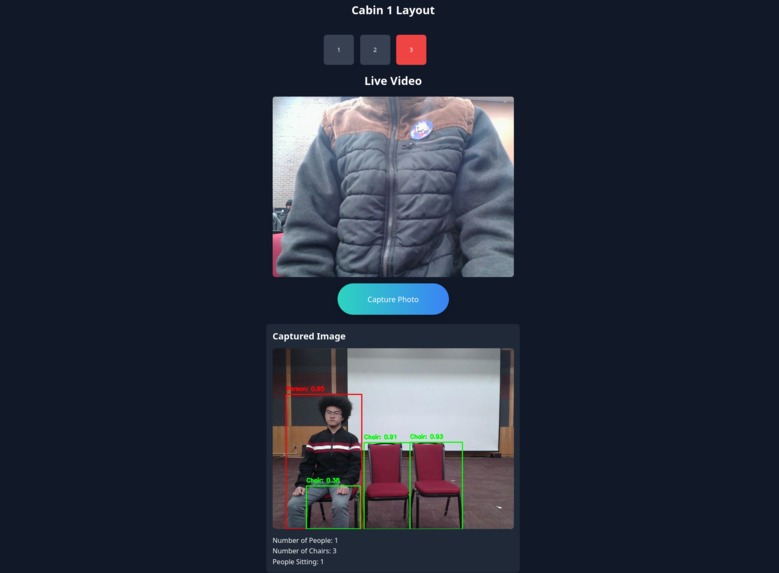
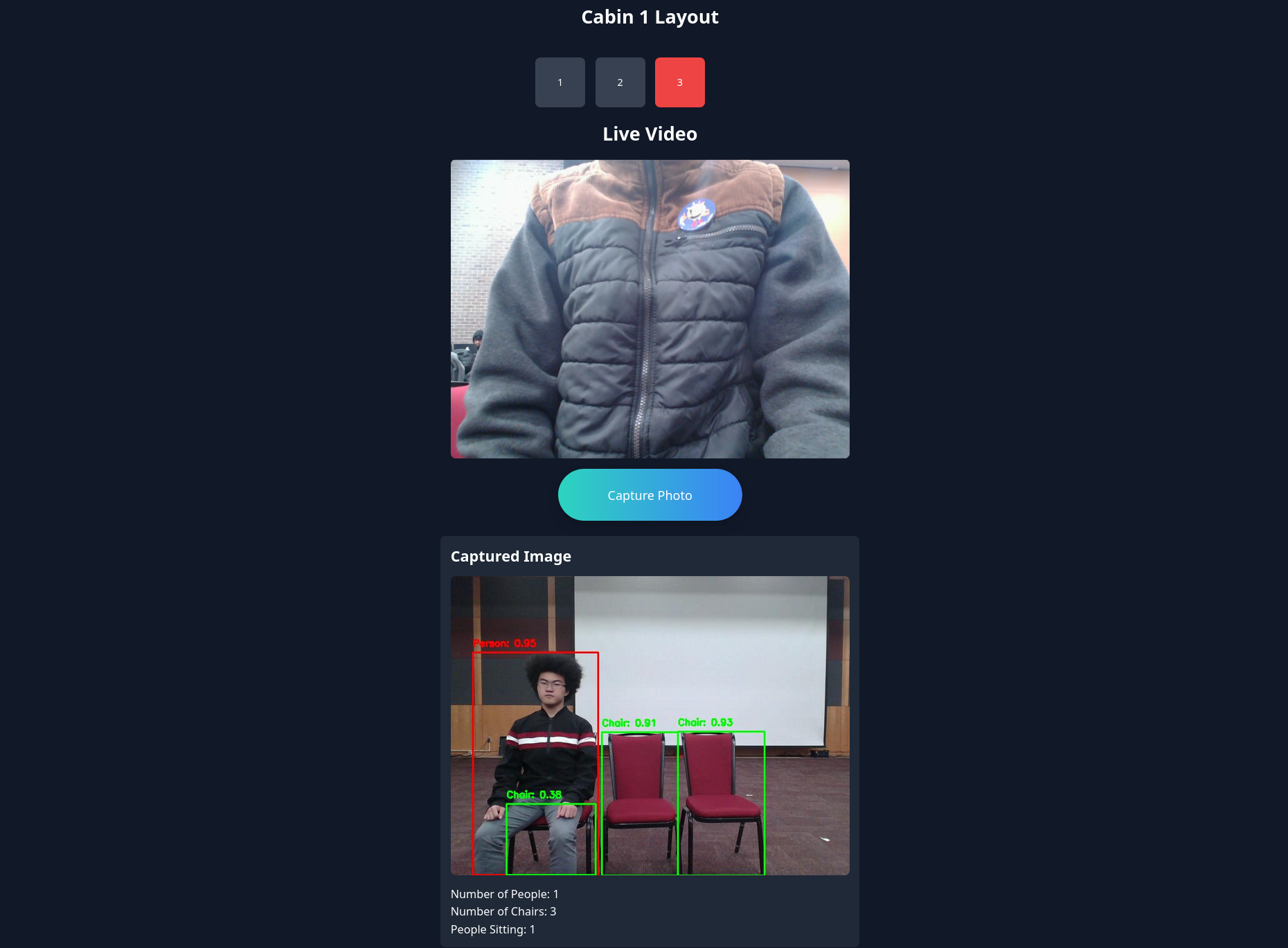
Web page for cabin 1
Inspiration
As avid commuters on the NJ Transit, we often notice passengers obtaining free rides by sitting at seats with tickets attached to them. Furthermore, we noticed how disturbances in the train force the conductor to leave their position for periods of time, slowing everyone down.
What it does
By utilizing computer vision, NJ Track analyzes the interior of a cabin, automatically creates a seating chart, and marks seats as either taken or empty, allowing staff to monitor the cabin without entering it.
How we built it
We used Django Framework for the backend, ReactJS for the frontend along with Tailwind for styling, and the YOLO Object Detection Model to analyze images.
Challenges we ran into
Implementing the model into the web application proved troublesome as it took extremely long to load. Instead of applying the model directly to the video feed, we switched to the model being applied to snapshots of the video feed which can be taken manually.
Accomplishments that we're proud of
We are all freshmen entering our first hackathon and were not expecting anything other than a beneficial learning experience. However, we are all proud of ourselves for managing to construct an idea, design the app, and build it to our satisfaction after a surprisingly short 16 hours of sweat and frustration.
What we learned
We learned useful web development skills such as React, Django, and Tailwind. We also learned how to collaborate with one another and establish a work flow that benefits each of our skills.
What's next for NJ Seat Tracker
We firmly believe that NJ Seat Tracker does not have to be limited to seat tracking on New Jersey trains. The safety monitoring capabilities would allow drivers of any vehicle, from parents to ubers to limo drivers, to monitor the backseats without turning their heads. Our next steps would either be to fine-tune or create our own object detection model to look for other disturbances such as fighting, smoking, and seat crawling. We will also add the usage of digital tickets to correlate a specific passenger being analyzed with a specific ticket.


Log in or sign up for Devpost to join the conversation.