Inspiration
The Motihari-Amlekhgunj pipeline, a lifeline spanning 69 km between India and Nepal, delivers vital petroleum from the Indian Oil Corporation (IOC) to the Nepal Oil Corporation (NOC). The first pipeline between India and Nepal, the Motihari-Amlekhgunj pipeline, acts as a bridge and benefits both countries.
Our concept was inspired by the understanding that this important bridge can have difficulties. We therefore needed to build strong security protection to shield it from any harm. The pipeline needs to continue operating efficiently for the benefit of our economy and communities, and this shield helps to ensure it does.
What it does
Our security system is like an attentive guardian of the pipeline. It includes unique sensors, including vibration sensors that function like its touch sense to detect tampering, and flow sensors that operate to hear where the fuel is going by measuring the flow of a fluid.
When these sensors detect something unusual, they alert our system. The alert is sent to the appropriate persons, such as pipeline operators and authorities so that they can act quickly.
This technology is a lifesaver because it ensures the fuel keeps flowing smoothly, making sure our communities have the fuel they require. It's all about safety, making sure the environment stays protected, and being a trustworthy companion to the pipeline and the people who rely on it.
How we built it
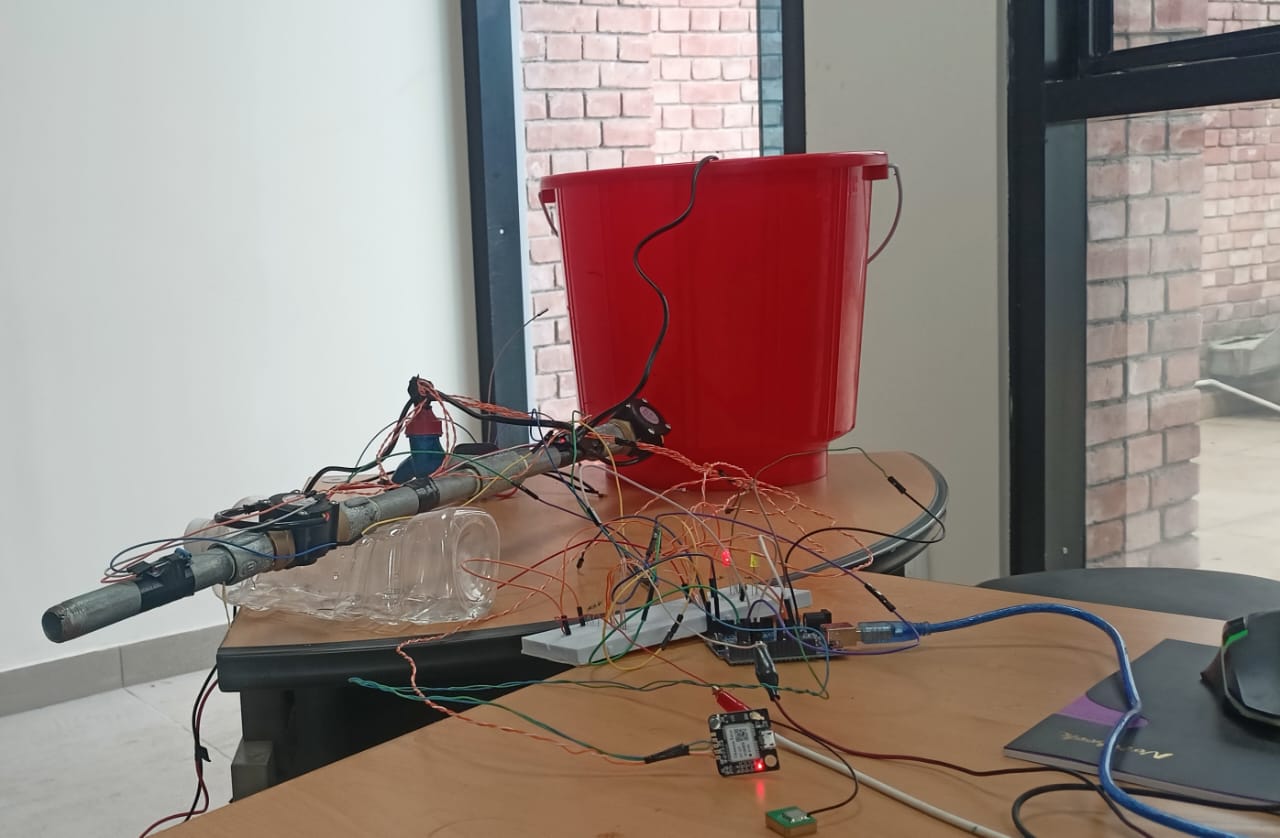
We built our project using a smart plan and teamwork. We commenced this project using an iterative and collaborative approach. We have utilized a combination of hardware and software technologies, including Arduino for sensor integration. The GPS module was integrated to provide precise location data during events. Key components and the process involved in creating this project are :
- Hardware Components a) Sensors i)Vibration Sensor - detects vibration and indicates the potential tampering or intrusions in the pipeline. ii) Flow Sensor - monitors the flow rate of substances through the pipeline.
b) Microcontroller (Arduino) Acts as CPU, interfacing different sensors, GPS modules, and other hardware components to gather and process data.
c) GPS Module: Provides precise location data during security events. Pump, Reservoirs, Motor, Relay Module - used for different purposes.
II. Software Component a) Arduino Programming Based on the received input, the Arduino microcontroller was programmed using Arduino IDE, and C/C++ languages to interface with sensors, process data, and trigger actions.
b) UI (User Interface) i) Frontend: Utilized HTML, CSS, and javascript to create charts. ii) Backend: employed python-django for backend development.
c) Integration and Communication Integrated the vibration sensor and flow sensor, alert system with the Arduino microcontroller and established a connection among them.
d) Alert - It blinks red led as an alert while an event occurs.
e) Testing and Iterative Development Extensive testing was done while validating the system’s functionality. Iteratively refined the system on testing results.
Challenges we ran into
We faced a few tough problems during our project. Firstly, finding the right IoT equipment like the Lora sensors, and solenoid valves was hard because they weren't readily available in the market. So we removed the valve system. Secondly, the internet was slow because many students were using it, so we had to set up our router cleverly to make it work better for us. Lastly, getting the sensors to work just right and making all these parts work together was the biggest challenge.
We learned that when we work together and think in new ways, we can solve problems. We have used alternative ways to overcome the challenges. Instead of using a valve because it was not found in the shop, we have used a tap for reservoir C. Challenges give hidden lessons, so we have to tackle them.
Accomplishments that we're proud of
We learned so much from this project! We got really good at making special sensors work together and understanding their data. It was like being detectives for the pipeline! Also, we learned how important it is to work together smoothly and manage our project smartly. This project showed us that learning never stops and being able to change and learn new things is like having a superpower in the world of security. Working with our friends taught us how to be good team players, talk nicely to each other, and help one another. We also learned how to plan our work and get things done on time. Understanding pipelines and security made us realize how important it is to keep things safe and protected.
What we learned
We have gained invaluable insights, lessons, and skills during this project. Technically, we honed our proficiency in sensor integration or simply software and hardware integration because our project is related to IOT (Internet of Things). Understanding the complicated details of pipeline security has broadened our knowledge of critical infrastructure and the need for advancement monitoring systems. Additionally, we enhanced our teamwork and PM(Project Management) skills through effective collaboration and iterative development cycles. Lastly, we learned how important it is to work together smoothly and manage our project smartly.
What's next for NiyantaPipeline
Our project has big possibilities to grow and help even more people. We want to add more special sensors to watch the pipeline, like ones that can measure temperature and pressure. We plan to make a phone app that tells people if there's a problem right away, and we want to make sure our system works well with how things are usually done in the pipeline world. We'll work with pipeline experts to make sure our system is really good and helps keep everyone safe. Our main goal is to make a system that's ready for the real world, making pipelines safer and better for everyone. (main focus in the context of Nepal)

Log in or sign up for Devpost to join the conversation.