-
-

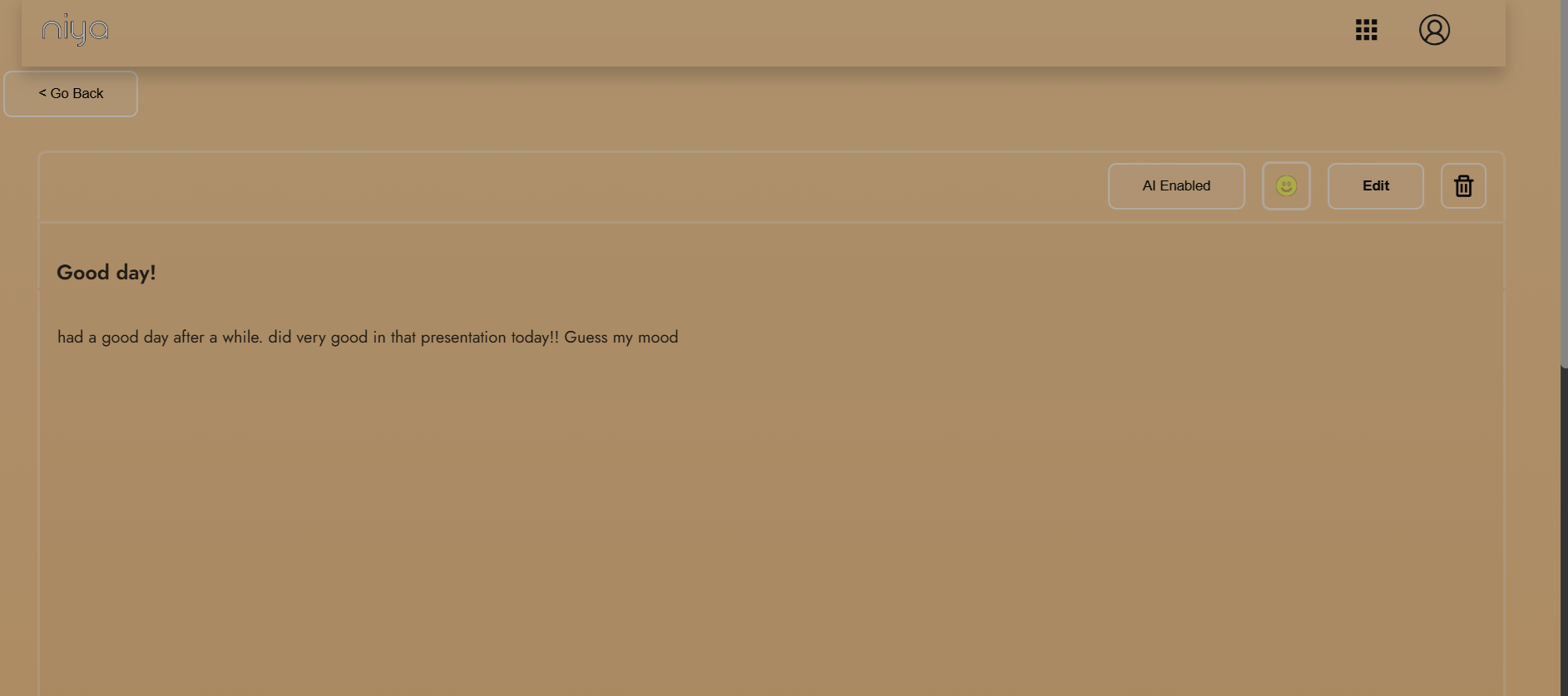
AI Response and summary for journal (can be turned off for privacy)
-
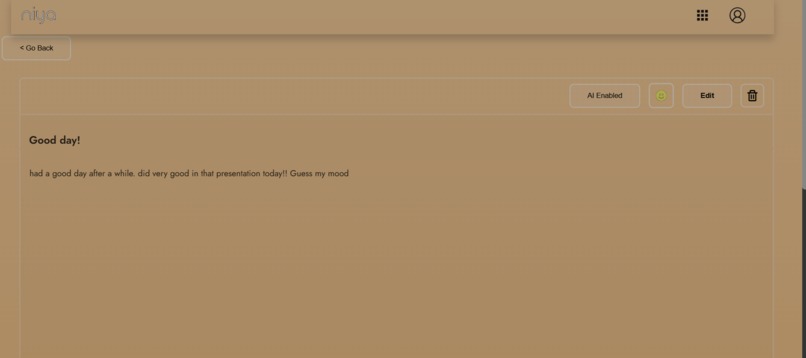
Journal entry page
-

mood tracking page
-
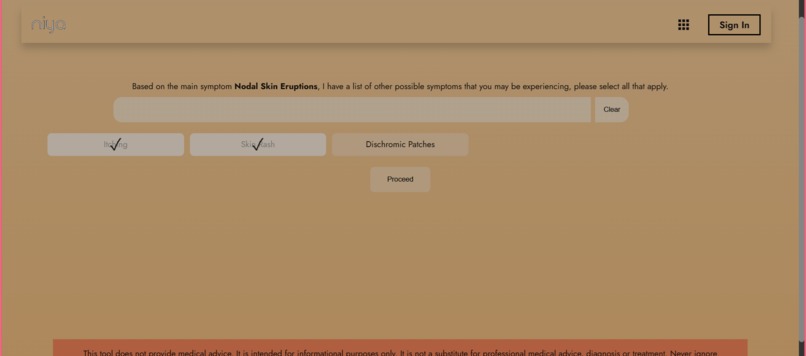
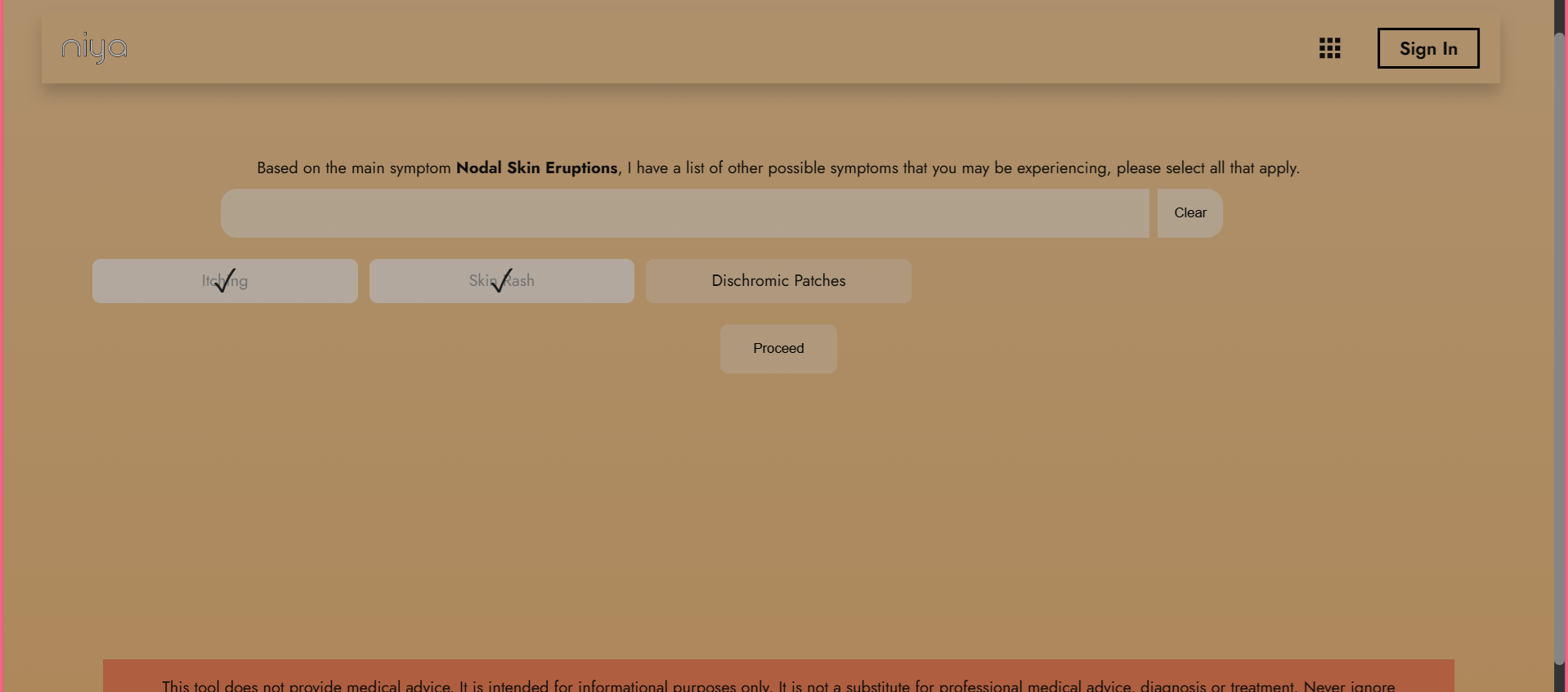
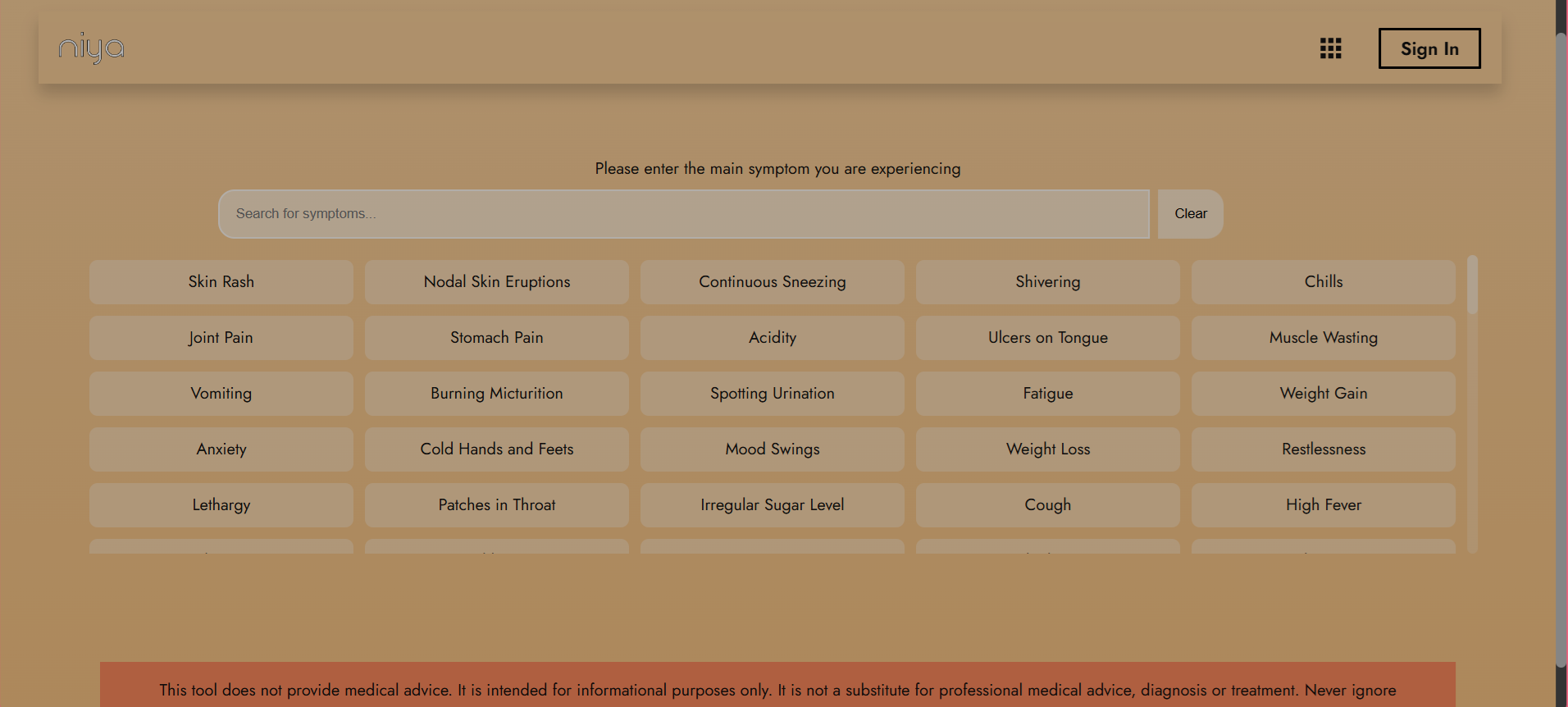
From main symptoms, find related symptoms
-
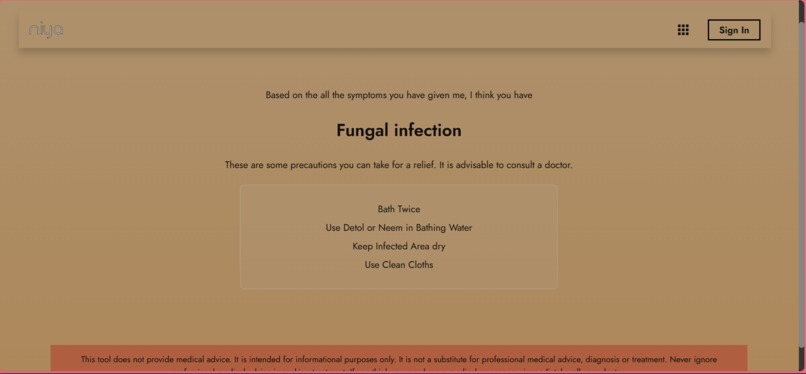
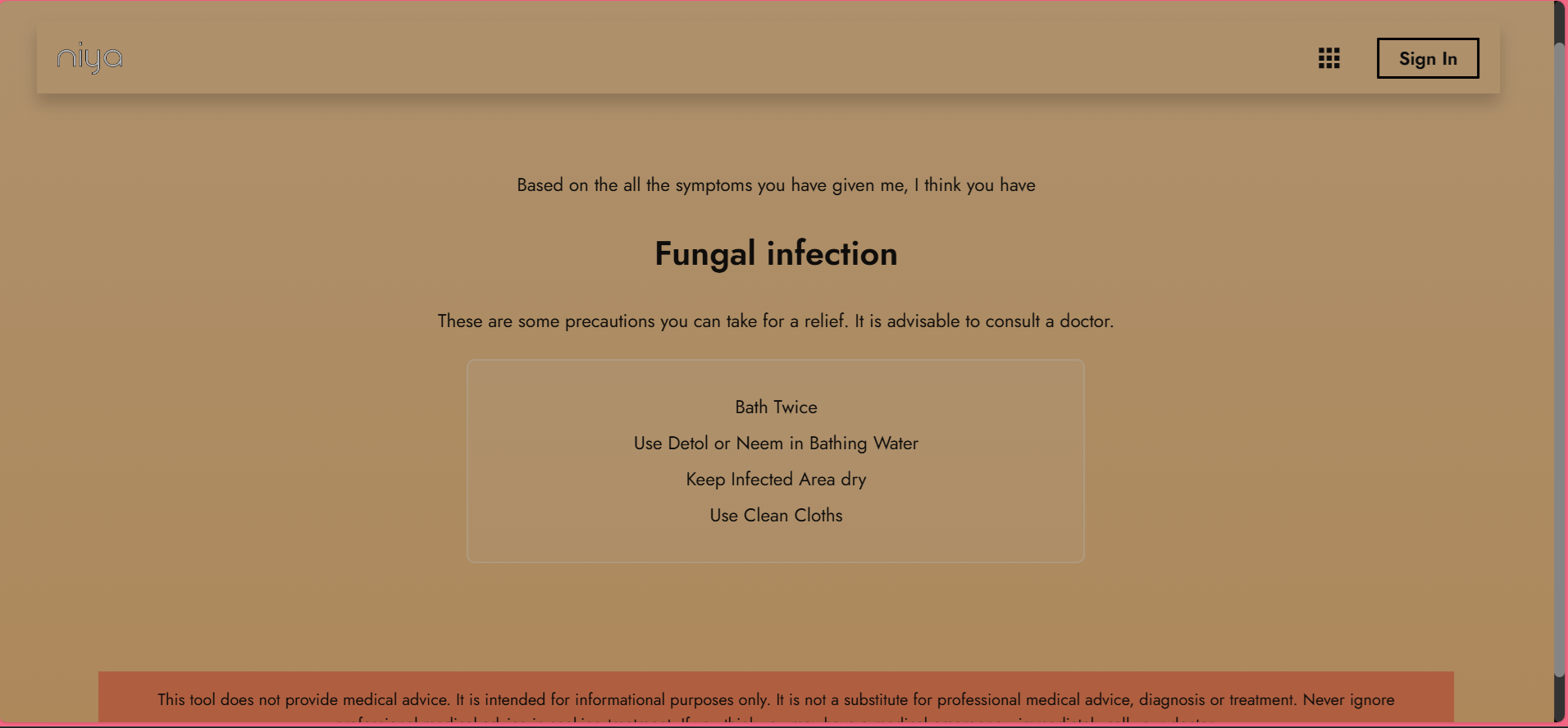
Prediction page
-
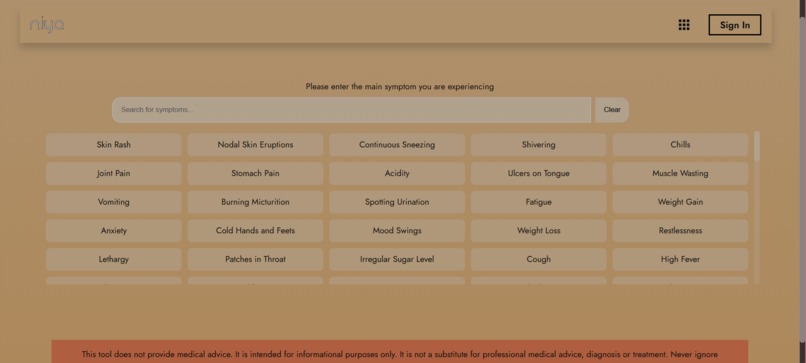
Disease symptoms page
-
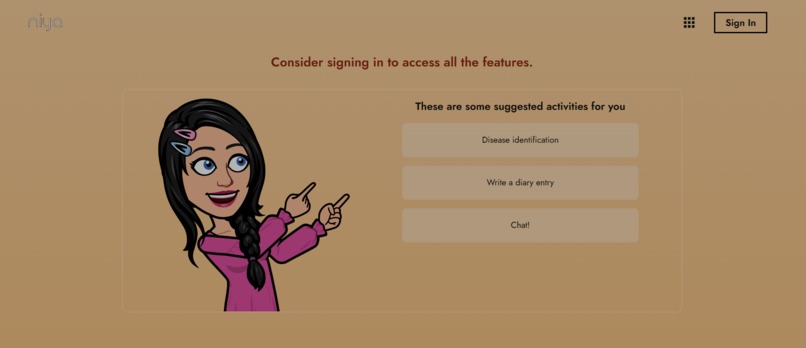
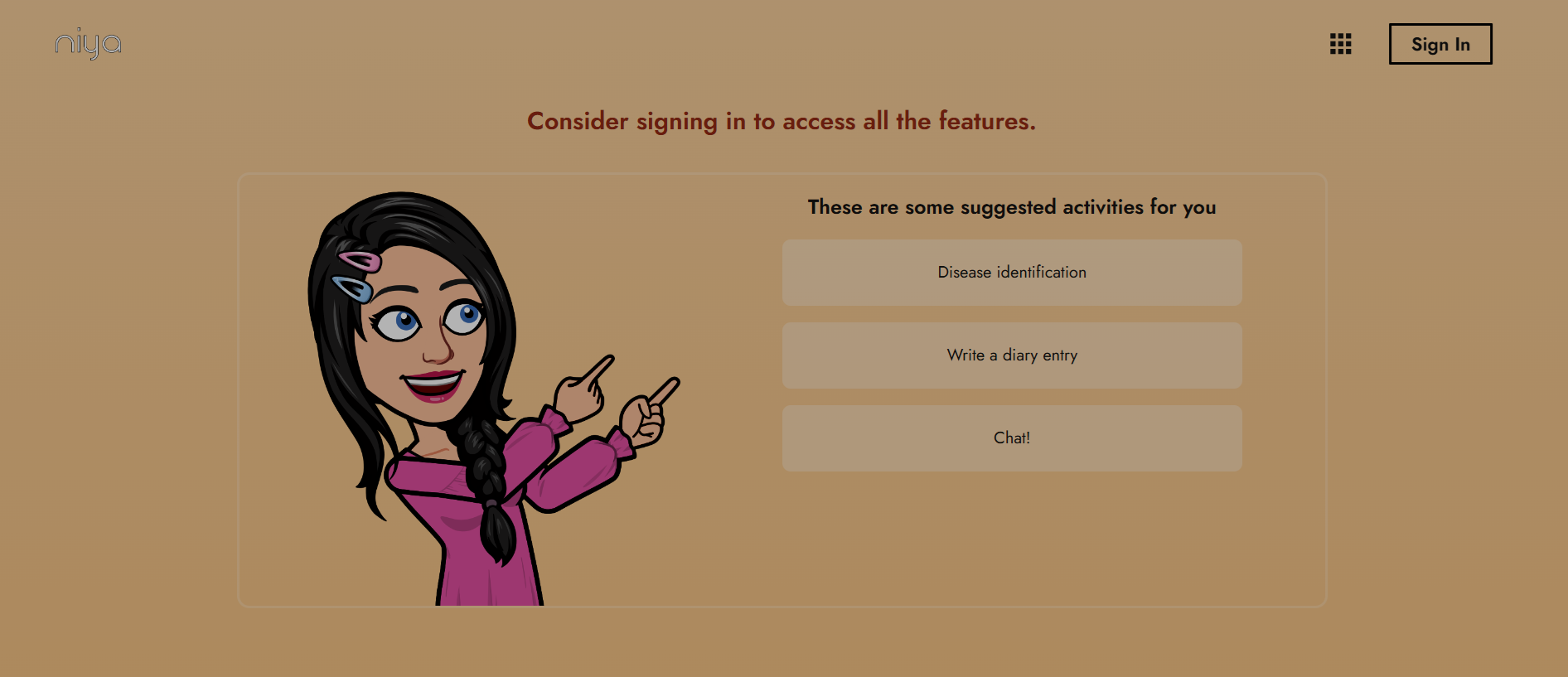
Main Page


Inspiration
Niya was inspired by the growing need for accessible health management tools that cater to both physical and mental well-being. Observing friends and family struggle with health-related challenges sparked the idea of creating a comprehensive platform that integrates technology with self-care. Extremely many people faced a lack of self-assessment of themselves; a significant number had unfulfilled symptoms as they mostly forgot to analyze their feelings and emotions at different periods. The common tendency to take care of mental problems along with other diseases opened the way to need help through some tool in life.
Ultimately, the motivation behind Niya is a passion for using technology to make a positive difference in people's lives, making health management more accessible and effective for everyone.
What it does
Niya is a diversified web application with the goal of making people healthier both in their body and mind. Some of the key features of this software application are given below.
Disease Prediction:
By applying more advanced machine learning algorithms, Niya analyses the reported symptoms from the users to predict the probability of any health issues. By this approach, patients have a chance to get professional advice before the problem gets worse.
The mental health journal provides users with private documentation of their thoughts, emotions, and experiences. Reflective practice may help in providing emotional well-being and facilitates the tracking of mental health over time.
AI-driven Summaries
Niya provides an AI-driven summarization feature that analyzes entries in the journal, establishes recurring themes, and the emotional patterns. This insight would allow users to gain deeper understanding of their mental health journey.
Mood Tracker
Users can input daily moods, allowing visualization of emotional trends and thus gaining a better understanding of one's mental state. It supports mindfulness and awareness about emotions.
Positive Quotes
To promote a healthy mind, Niya presents uplifting quotes and affirmations that encourage users to view life positively.
How we built it
The app was built using the newest technologies and frameworks so as to give a solid yet user-friendly application.
Front-End Development This involves the design of the front end with React. Here, we were in a position to create dynamic components that could be very responsive. The styling used is SCSS, enabling the authoring of modular, maintainable, and hence stylish stylesheets that add much to the overall experience.
Back-end development: The back-end was determined with the choice of Flask. Being a minimalistic Python web framework, it proved convenient and fast for rapid prototyping and deployment. Handling all the requests, providing the APIs, and the need to integrate them into a machine learning model seemed rather feasible.
Machine Learning: We have implemented the disease prediction feature with the help of a Random Forest algorithm using scikit-learn. We took datasets from Kaggle and used them to train our model. This model helps us to analyze the symptoms and suggests related health issues. We also used the node traversal technique to know the related symptoms and increase prediction accuracy.
Database Management: User entries, such as journal logs and mood tracking, will be saved to Firebase. The application will guarantee real-time data synchronization in addition to user authentication as part of a secure yet scalable environment.
Deployment: Front-end deployment was provided through Vercel. For hosting the Flask-based back-end, we were using PythonAnywhere. So, this would ensure it was fast, reliable, and easily accessible to a user.
Challenges we ran into
Accuracy: One of the biggest problems was to get high accuracy from the disease prediction model. The Random Forest algorithm has to be fine-tuned by running different parameters and data preprocessing techniques. We combined multiple models and datasets from Kaggle and other sources to increase the accuracy.
Data Privacy and Security: Since we were dealing with sensitive user information, data privacy was the most important concern. Although ensuring authentication through Firebase was secure, maintaining trust with users was a much more significant challenge. We needed to establish clear protocols for the storage and access of data while still being in line with the privacy regulations that were quite complex.
Accomplishments that we're proud of
Through Niya, we have reached the following key accomplishments, pointing to our dedication to providing a valuable health management tool:
We successfully integrated a machine learning model with the help of scikit-learn and the Random Forest algorithm, which accurately makes disease predictions based on the symptoms reported by users. This feature not only upgrades the user experience but empowers individuals to take proactive steps toward their health.
User-Centric Design: We made sure that through development, user feedback comes first in order to finish the application's interface towards ease of use and entertainment value. Therefore, early testers have provided feedback saying the app is indeed easy to navigate and efficient in its purpose.
Real-Time Data Management: Using Firebase for the database management would allow us to implement real-time data synchronization, meaning that the user can see their information seamlessly across any device, enhancing app usability and reliability.
What we learned
We realized the complexity of how data was being handled and model training with machine learning. It taught us how it is important to have diversified and representative datasets, selection of features, and evaluating the model to get accuracy in predictions.
Data Privacy Awareness taught us the importance of ensuring good security measures in this era of data privacy. Familiarity with regulation and best practices in handling data not only safeguarded users' information but also won their trust for the platform.
What's next for Niya - AI-Powered Health and Wellness Companion
Built With
- css3
- firebase
- flask
- gemini
- google-gemini
- html5
- javascript
- machine-learning
- python
- pythonanywhere
- react
- scikit-learn
- scss
- vercel
- vite


Log in or sign up for Devpost to join the conversation.