-
-
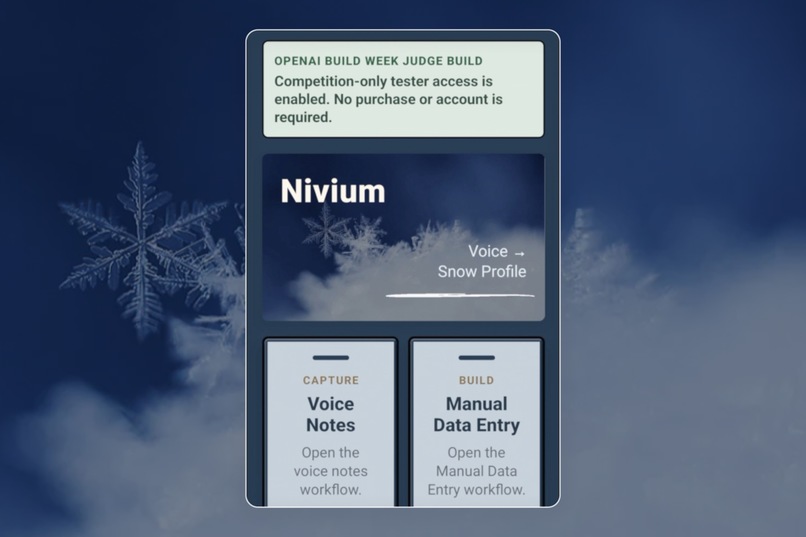
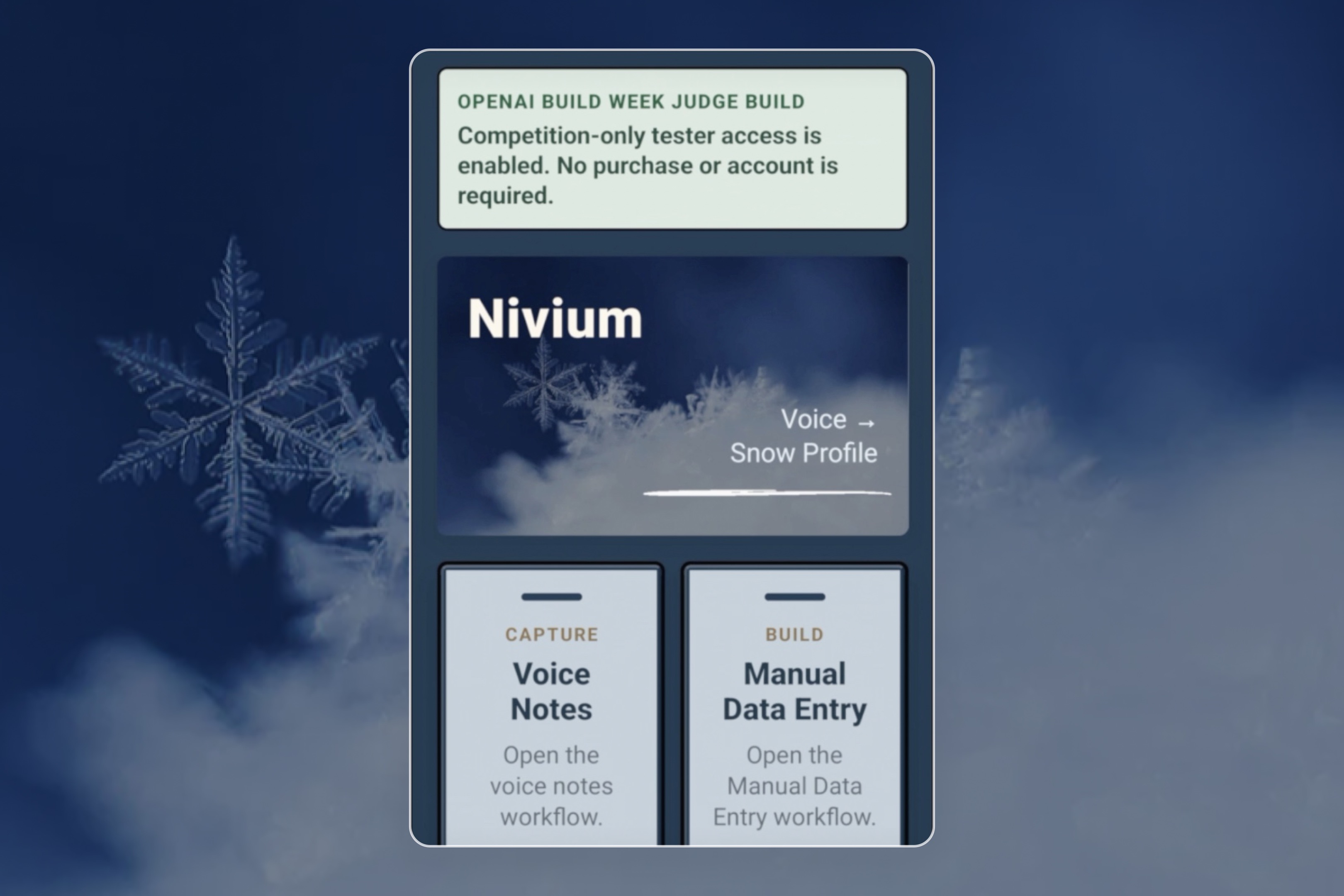
Competition judge build: voice capture with no account or purchase required.
-
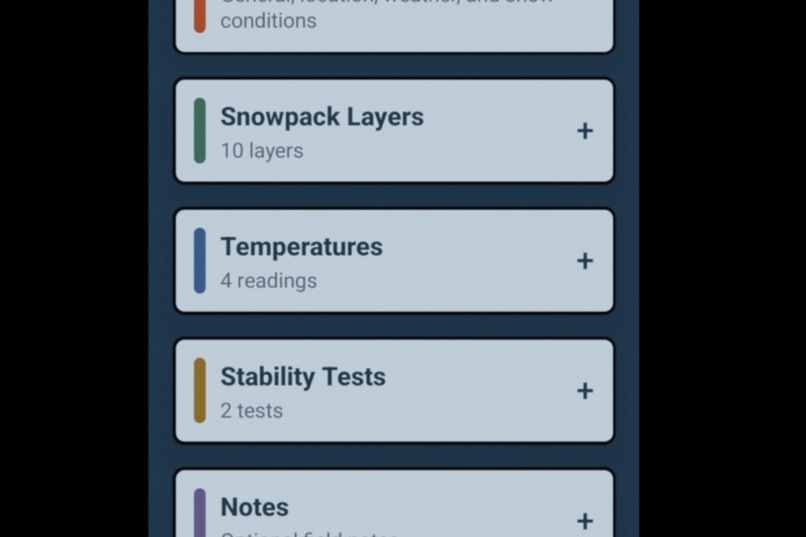
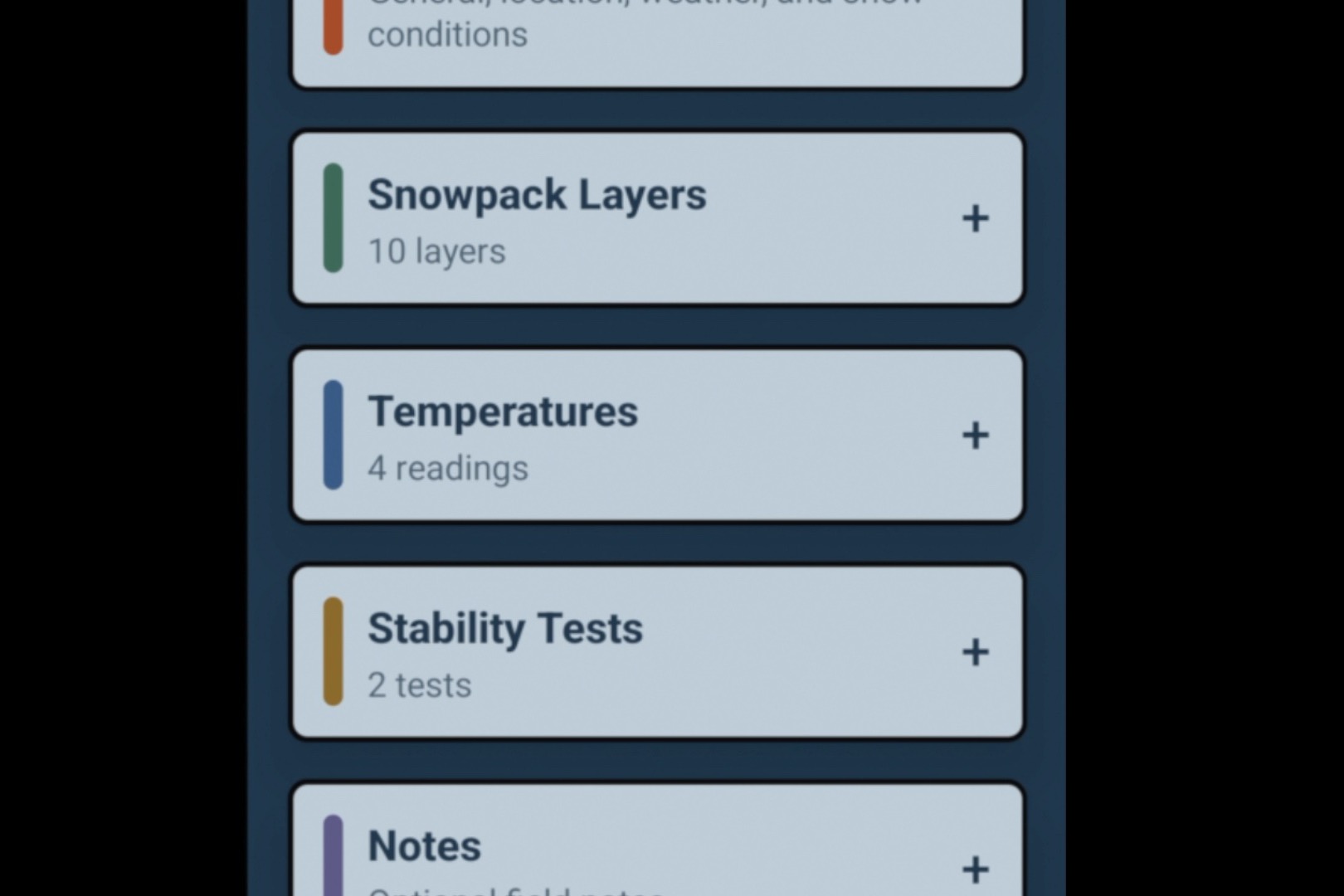
A spoken observation becomes an editable profile with layers, temperatures, and stability tests.
-
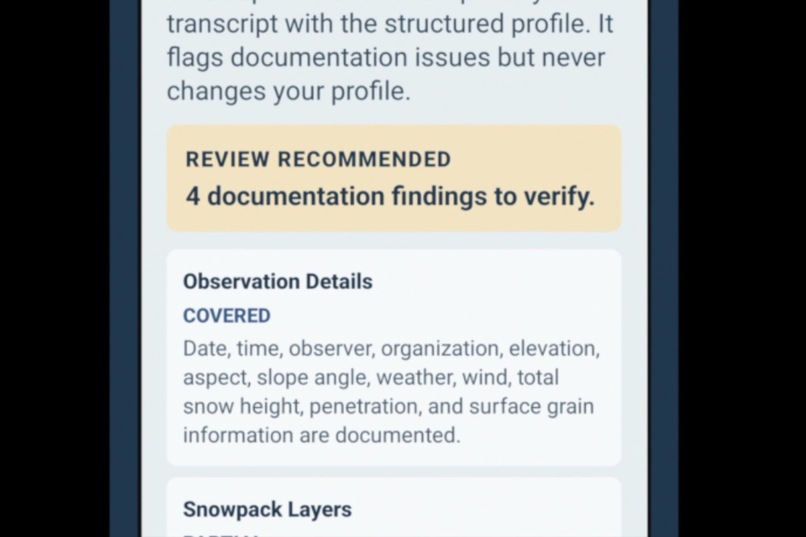
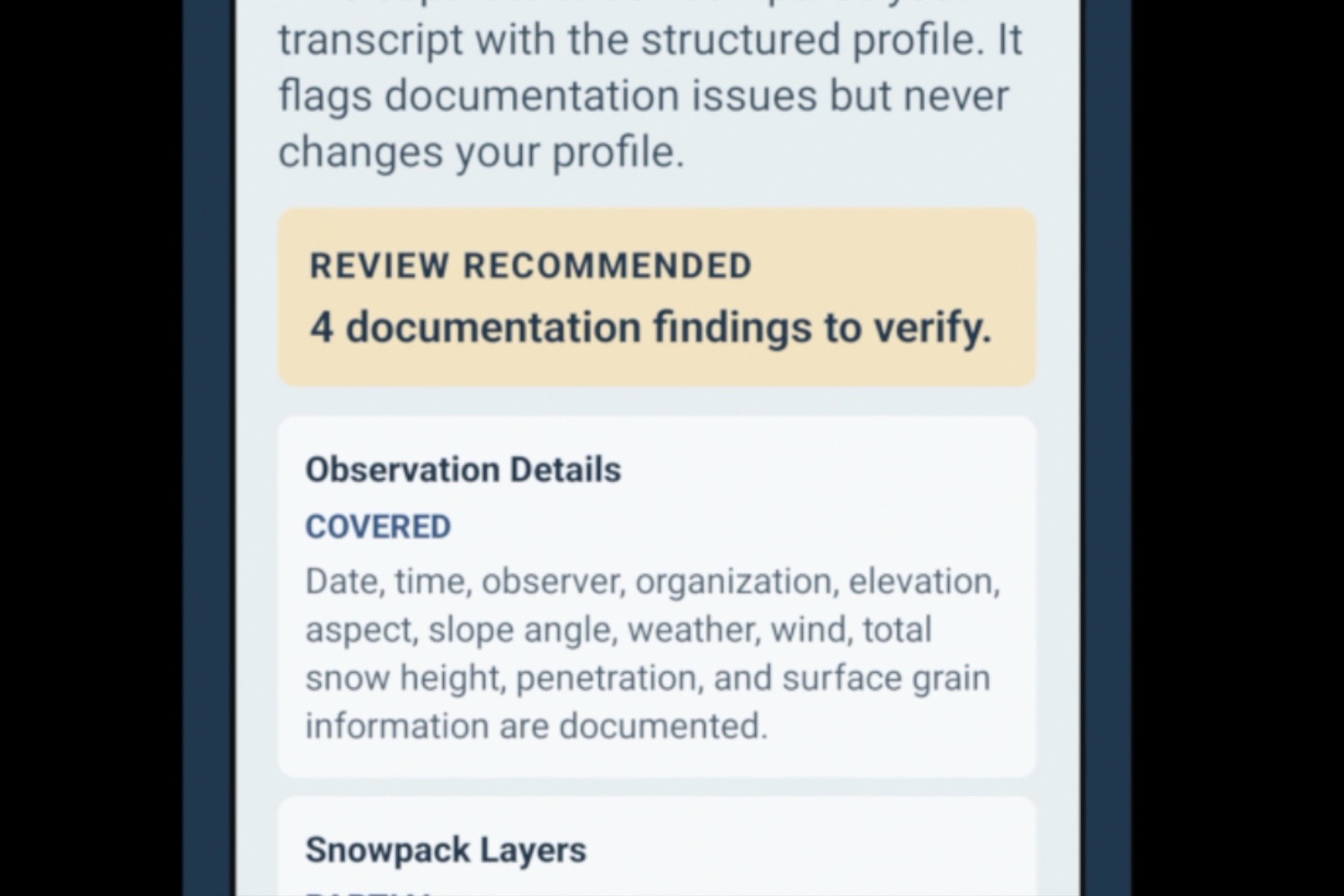
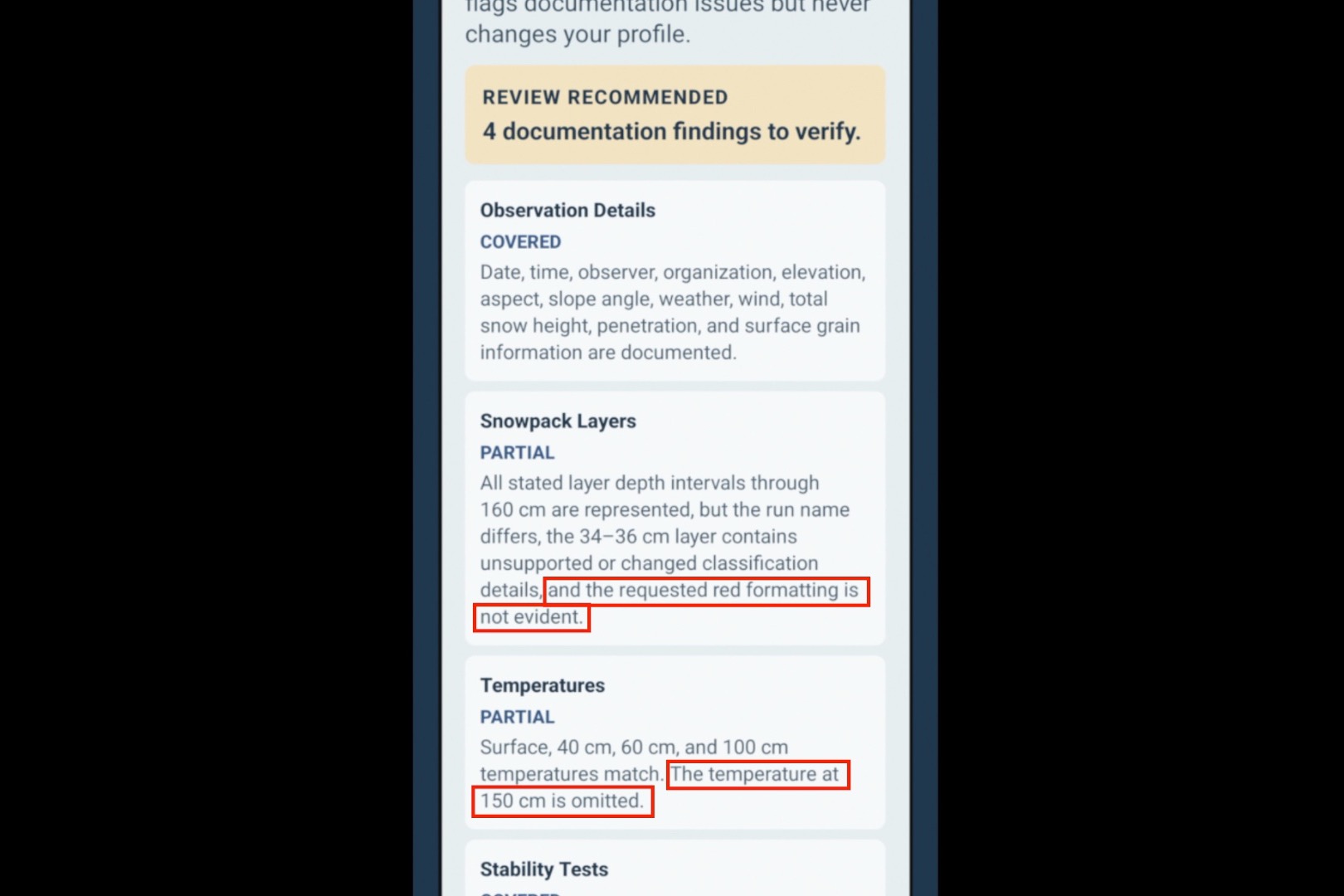
GPT-5.6 reviews documentation coverage and identifies findings for human verification.
-
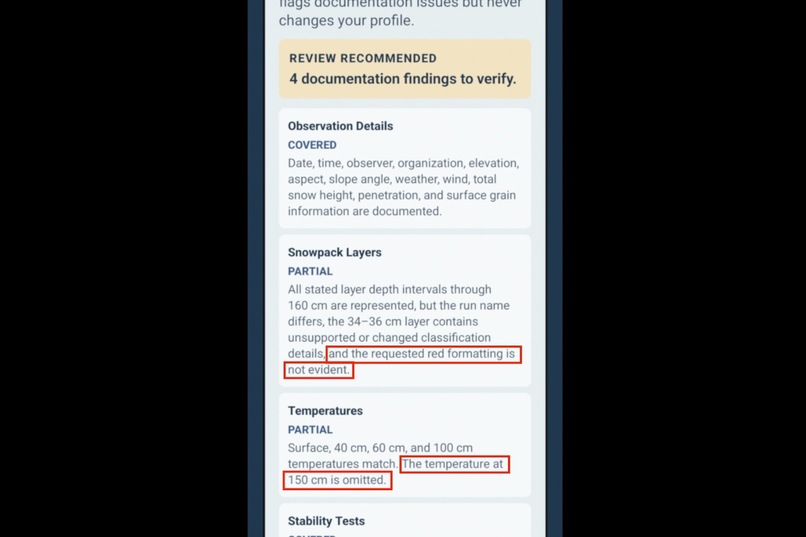
Evidence-grounded findings highlight a missing concern-layer marking and temperature measurement.
-
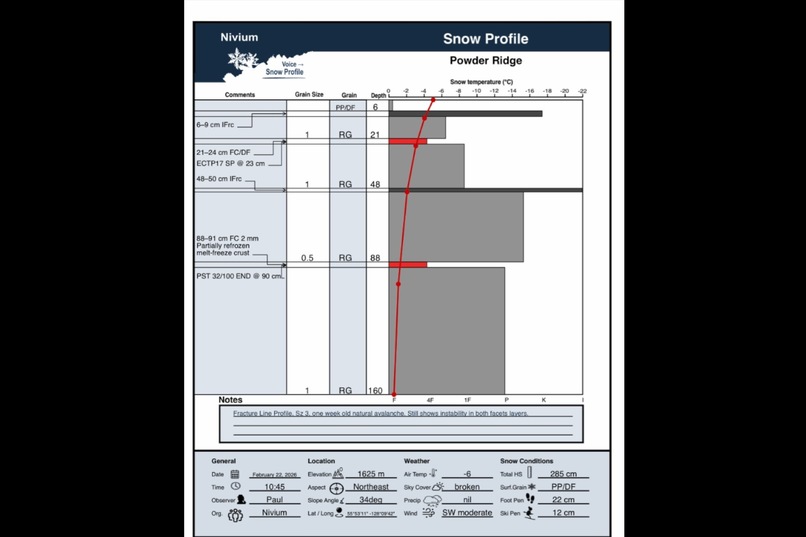
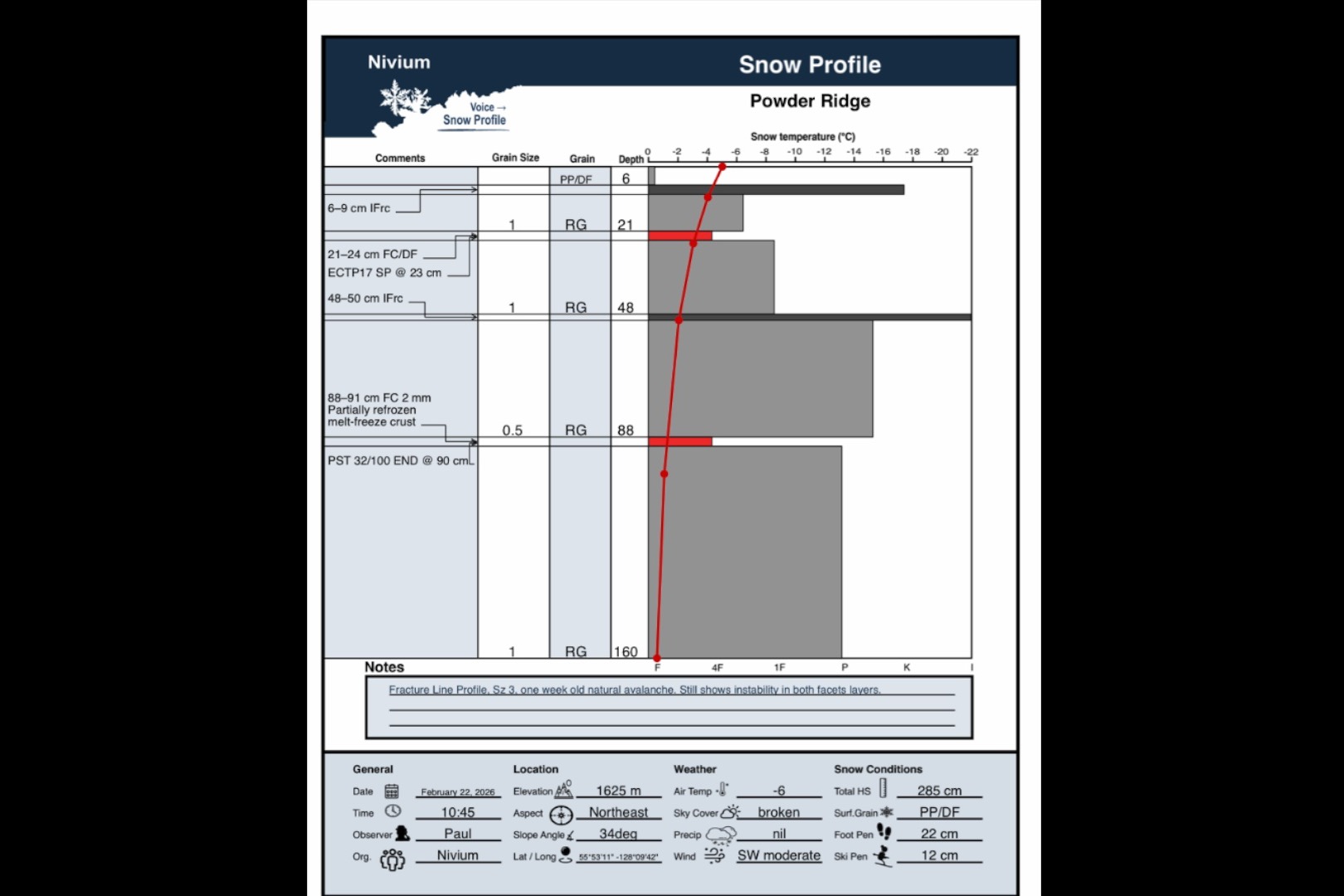
Example of Nivium's finished plotted snow profile with complete field metadata.
Inspiration
Snow-profile observations contain a large amount of technical information: location, elevation, weather, snow layers, grain forms, hardness, temperatures, and stability-test results. Recording all of this manually can be slow and awkward in winter field conditions.
I created Nivium to make that documentation workflow faster. Instead of typing every observation, a field worker can speak naturally, review the resulting structured profile, correct it, and generate a professional snow-profile plot.
Nivium supports field documentation. It does not provide avalanche forecasts or make terrain or travel decisions.
What it does
Nivium converts spoken snowpack observations into structured technical records.
The workflow is:
- Save location and elevation.
- Record a spoken field observation.
- Transcribe and format the observation.
- Review and edit the structured profile.
- Generate a professional snow-profile plot.
- Save the completed observation in an archive.
For Build Week, I am extending Nivium with a GPT-5.6 Field Note Quality Review. It compares the original transcript with the structured profile and identifies information that may be missing, ambiguous, or mismatched. The observer remains responsible for confirming and correcting the final record.
What existed before Build Week
Before the competition, Nivium was already a functional production mobile application with:
- iOS and Android applications
- voice recording and transcription
- snow-profile formatting
- GPS and elevation capture
- structured review and editing
- professional profile plotting
- PDF, sharing, and printing workflows
- a saved-profile archive
- subscription access
What I am adding during Build Week
The Build Week version is being developed in a completely isolated competition environment so the operational application and its subscribers are not affected.
The new competition-only work includes:
- GPT-5.6 transcript-to-profile quality review
- section-by-section documentation coverage
- evidence-grounded warnings for possible omissions or mismatches
- judge-friendly sample observations
- a separate Android demonstration build
- explicit human-review and scope boundaries
The repository and commit history clearly distinguish the existing application from the work completed during the competition period.
How I built it
The mobile application uses React Native and Expo. Separate backend services handle authentication, transcription, snow-profile formatting, rendering, and saved-profile workflows.
The Build Week quality review uses GPT-5.6 through the OpenAI Responses API. The model receives the transcript and structured formatter output and returns a schema-constrained documentation audit. It is instructed not to add observations, change the profile, or provide avalanche advice.
I used Codex with GPT-5.6 to inspect the existing architecture, establish strict production-isolation controls, design the quality-review workflow, implement the competition extension, and validate the mobile and backend changes.
Challenges I ran into
The main challenge is that generic speech-to-text is not enough. Spoken snow science contains abbreviations, hardness scales, grain types, relative layer boundaries, and stability-test results that must be translated into a strict technical format.
A second challenge was extending an existing production application without creating any risk for current subscribers. I created a physically separate competition workspace with different app identifiers, no production Git remotes, no production endpoints, and automated isolation checks.
Accomplishments that I’m proud of
I am proud that Nivium is a complete field-to-archive workflow rather than a transcription demonstration. It combines mobile recording, domain formatting, human review, professional output, and saved records.
I am also proud that the Build Week extension adds useful AI review while keeping the trained observer in control.
What I learned
AI is most useful in technical field documentation when it reduces repetitive transcription and formatting work without replacing professional judgment.
The model’s output needs domain constraints, structured validation, visible uncertainty, and a human approval step.
What’s next for Nivium
Next steps include expanding field-audio regression coverage, refining uncertainty indicators, testing additional observation styles, and evaluating the quality review with more field users.
The temporary competition environment will be removed after the event. The operational Nivium application will remain unchanged throughout the competition.
Built With
- api
- codex
- expo.io
- gpt-5.6
- native
- node.js
- openai
- outputs
- react
- responses
- structured
- typescript

Log in or sign up for Devpost to join the conversation.