-
-
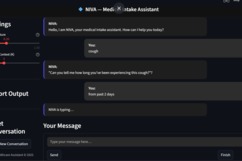
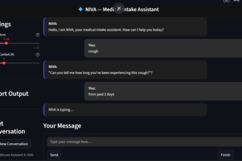
interface for our 1st prototype of niva
-
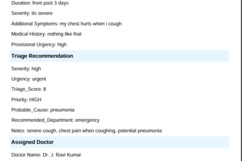
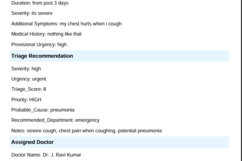
sample report generated and sent to the doctor (prototype)
Inspiration
Being a student living far from home, I often struggled when I got sick not knowing which doctor to consult, dealing with delays, and wishing I had instant guidance. NIVA was inspired by the idea of making healthcare more accessible, faster, and supportive for anyone who feels alone when unwell.
What it does
NIVA is an end-to-end AI healthcare assistant that performs symptom analysis, triage, doctor assignment, and enables online consultation. It automatically generates structured medical reports and creates a seamless digital journey from “I’m not feeling well” to “Here’s what to do next.”
How we built it
We built NIVA using LLM-powered reasoning (Groq), dataset-backed symptom recognition, a rule-based triage system, and a doctor-mapping engine. The UI is built with Streamlit, integrated with Python backends, automated PDF generation, and secure environment handling for APIs and deployment
Challenges we ran into
Maintaining medically safe AI responses, enforcing strict JSON formats, and ensuring consistent triage logic were major challenges. Streamlit session behavior caused UI state issues, and migrating from local models (Ollama) to cloud models (Groq) required redesigning parts of the pipeline. Ensuring all modules worked together smoothly was complex.
Accomplishments that we're proud of
Maintaining medically safe AI responses, enforcing strict JSON formats, and ensuring consistent triage logic were major challenges. Streamlit session behavior caused UI state issues, and migrating from local models (Ollama) to cloud models (Groq) required redesigning parts of the pipeline. Ensuring all modules worked together smoothly was complex.
What we learned
We learned how to design multi-step AI systems, integrate LLMs with traditional logic, build scalable UI workflows, and debug real-world deployment issues. We also gained experience in healthcare data handling, system architecture, API integration, and user-focused design
What's next for NIVA
We plan to add real-time video consultations integrated directly inside the platform, expand doctor databases, support multilingual conversations, and integrate with hospital systems. We also aim to enhance triage accuracy and add wearable/IoT health data for smarter decision-making


Log in or sign up for Devpost to join the conversation.