-
-
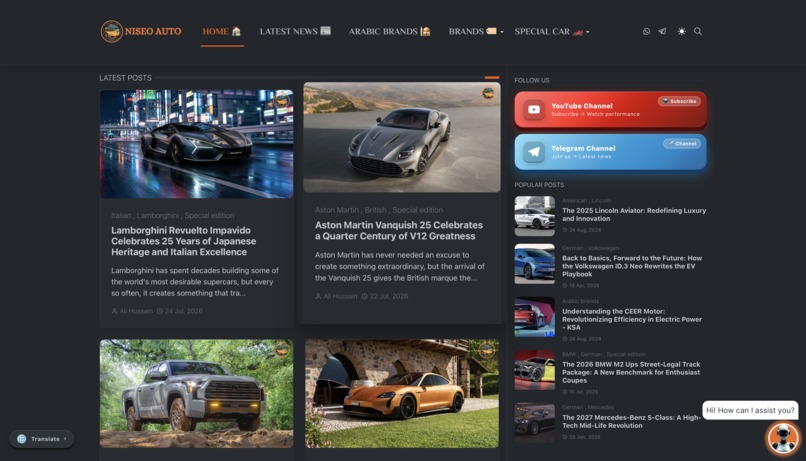
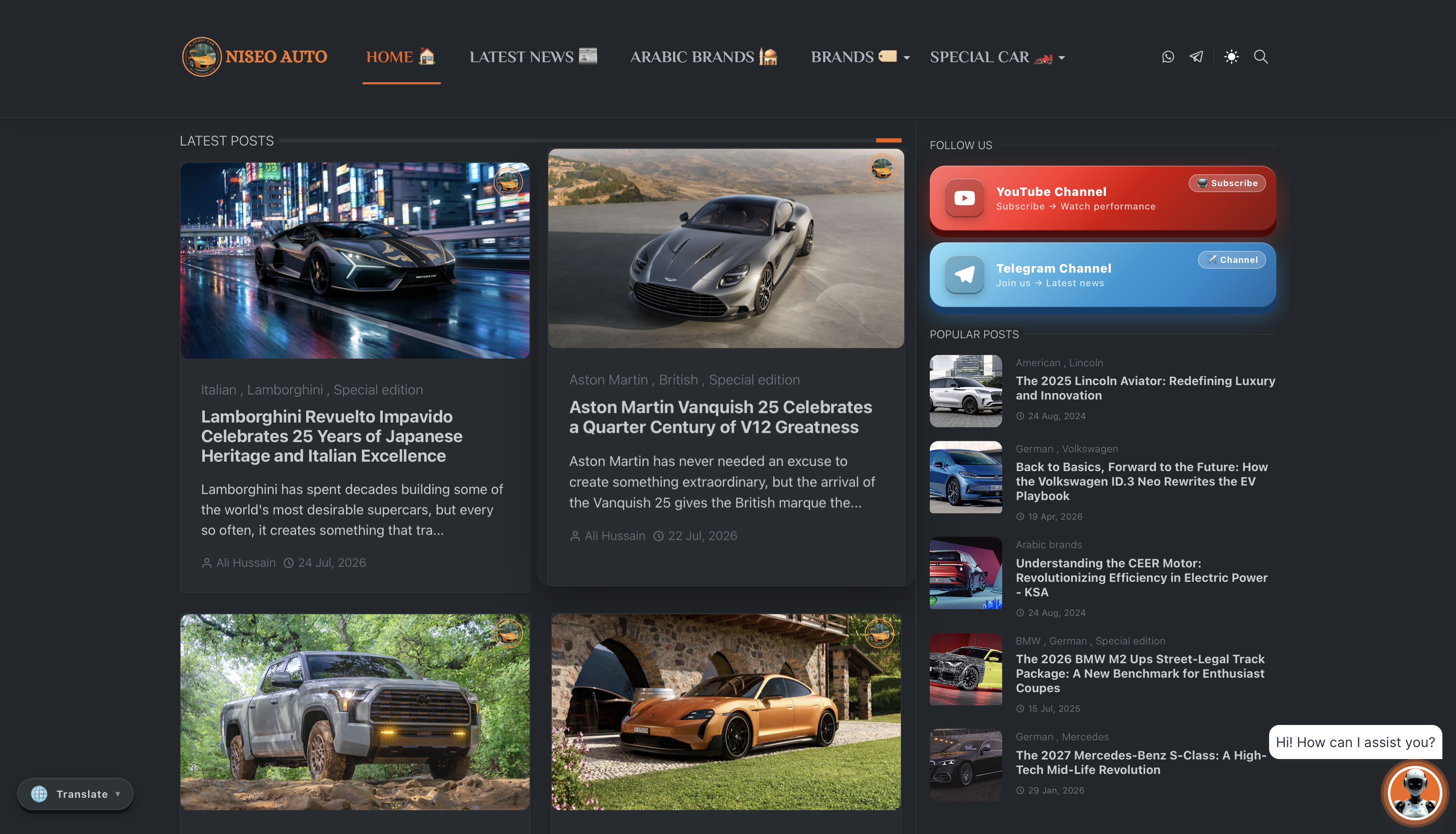
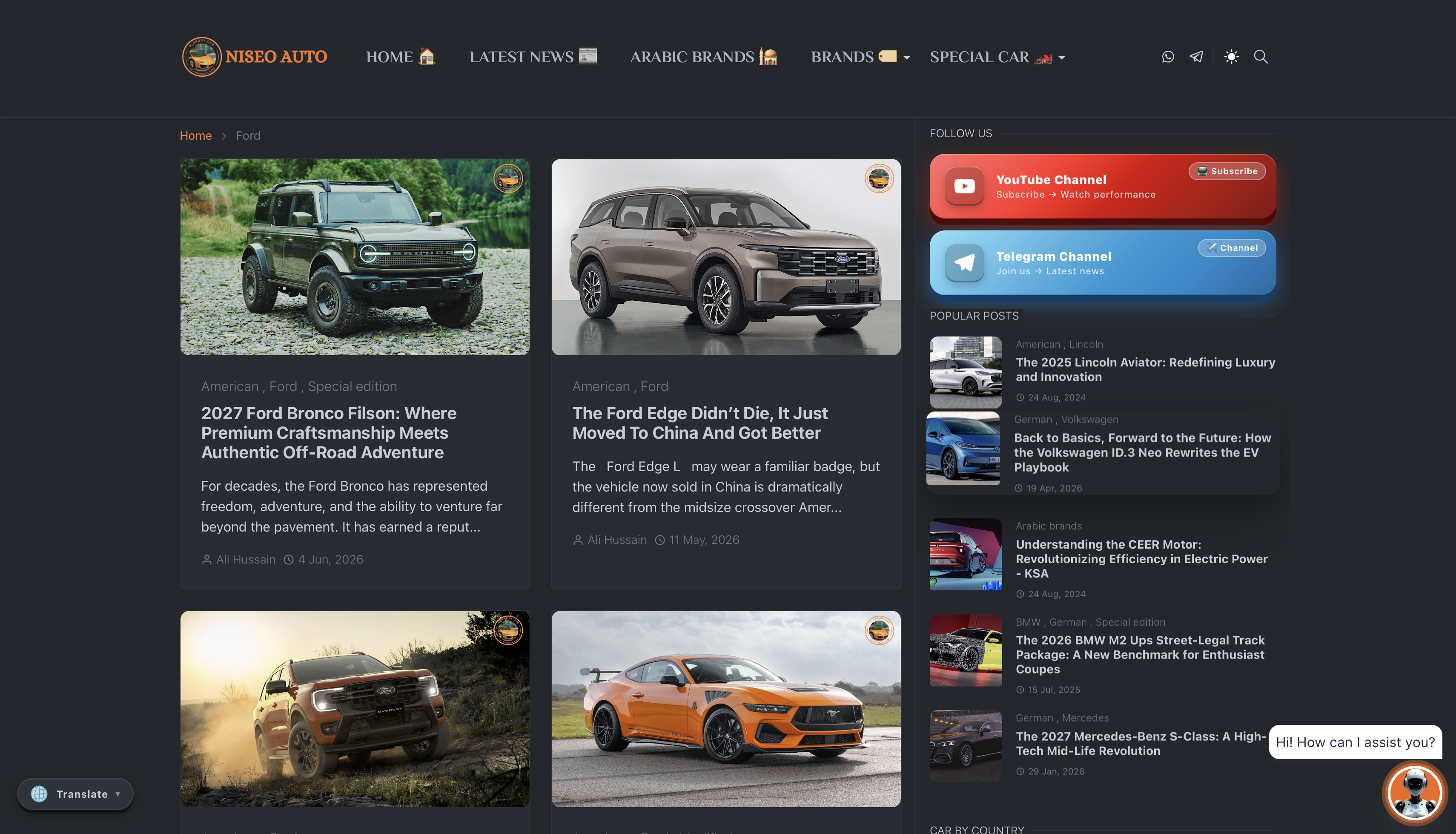
NISEO AUTO features a dark/light mode toggle and a clean grid layout, offering seamless navigation and high contrast UX.
-
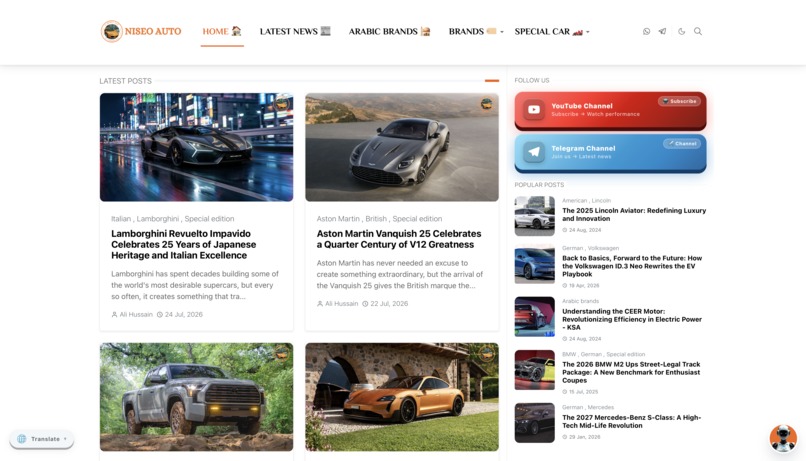
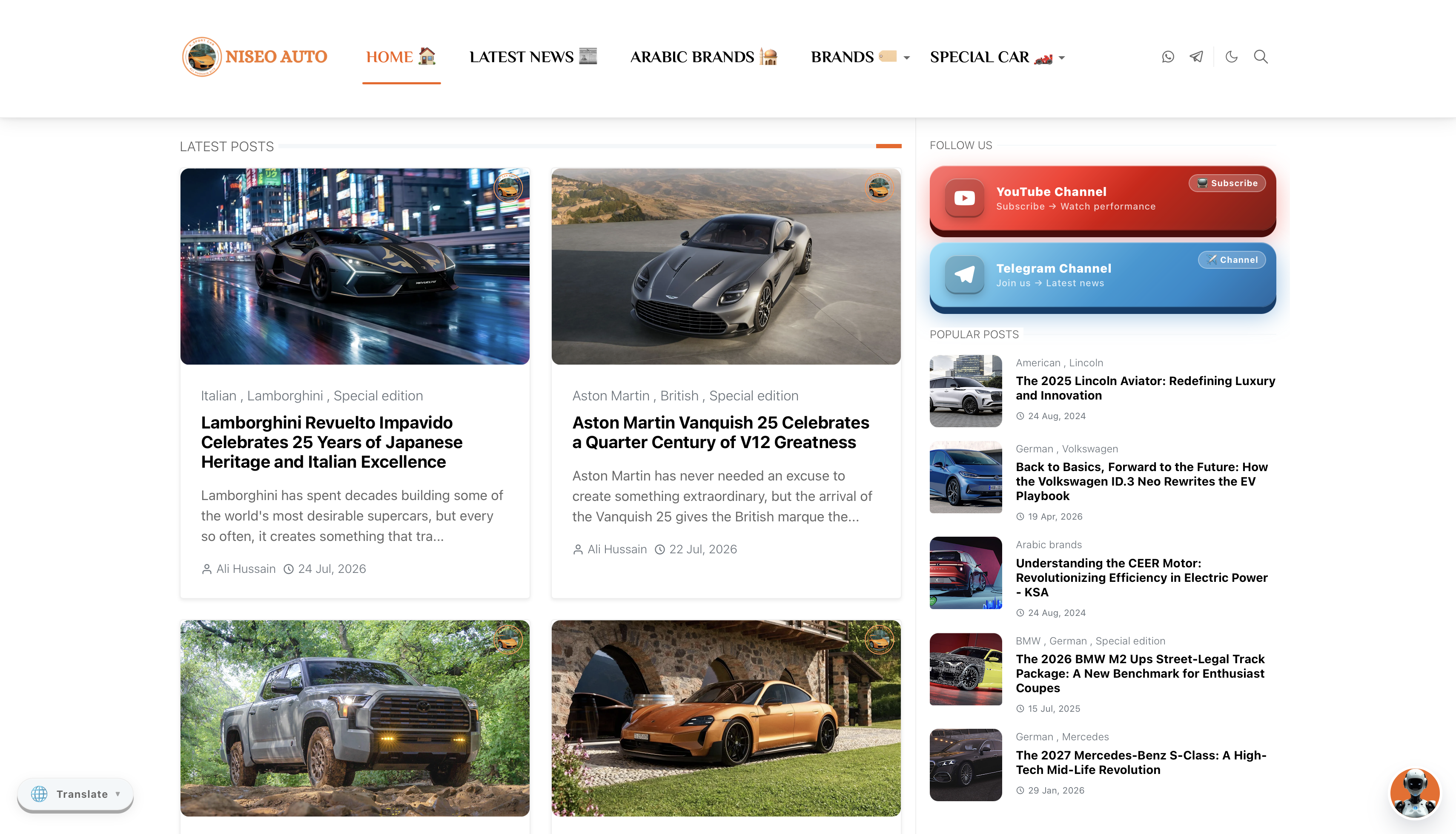
NISEO AUTO's light mode provides crisp contrast with a dark toggle, featuring a clean grid layout for effortless browsing.
-
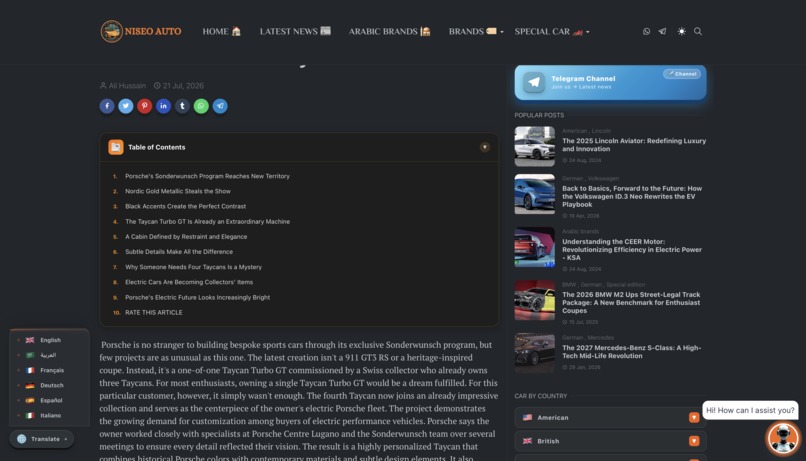
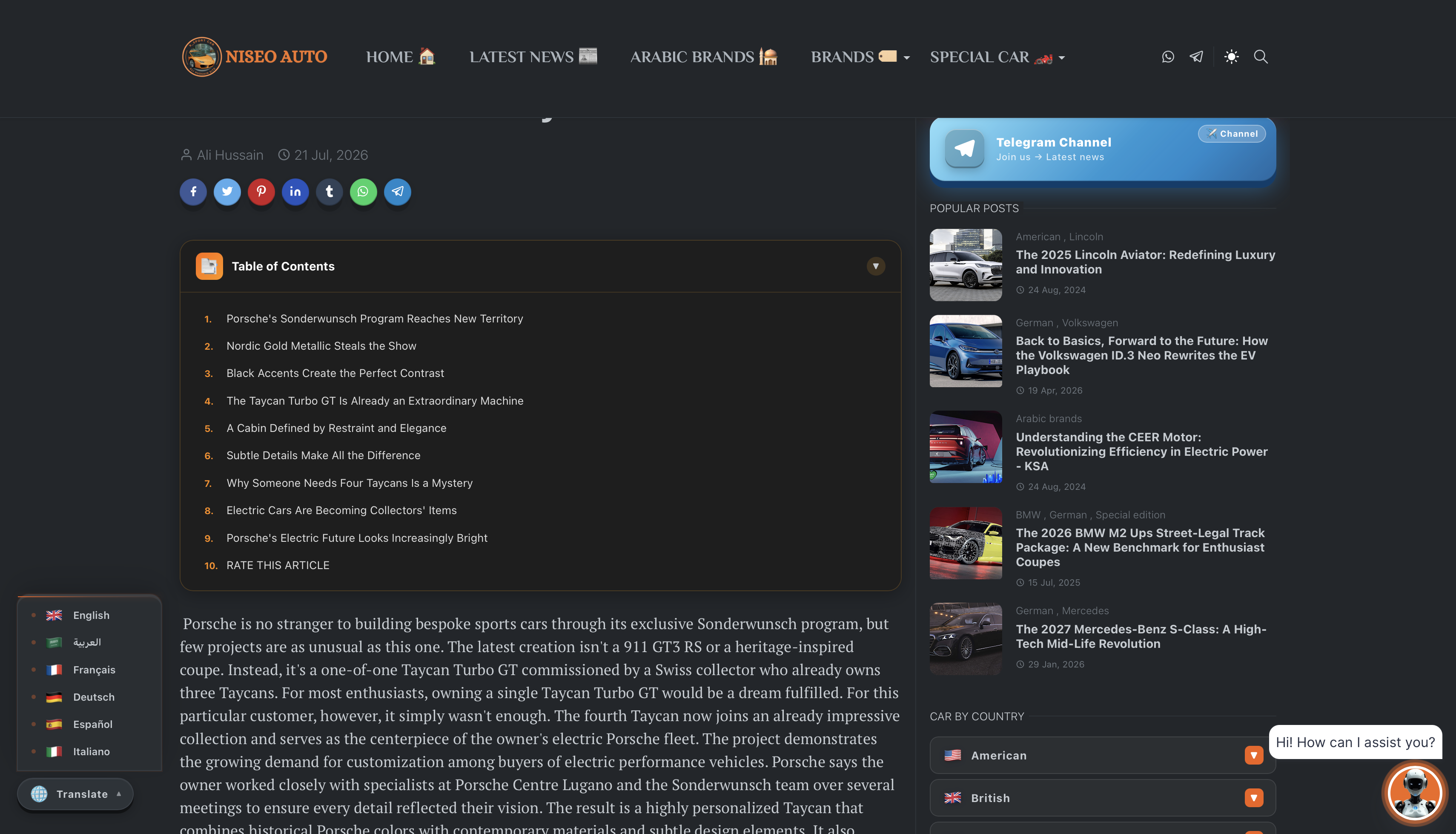
NISEO AUTO’s article page features an interactive table of contents, quick social sharing, and seamless multi-language translation.
-
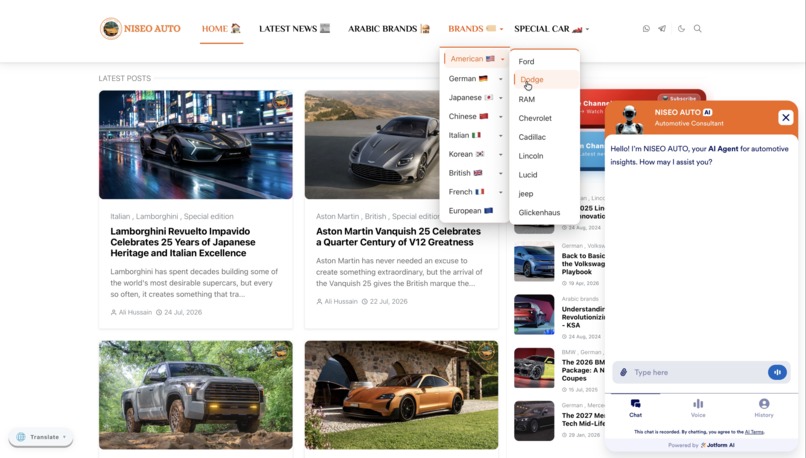
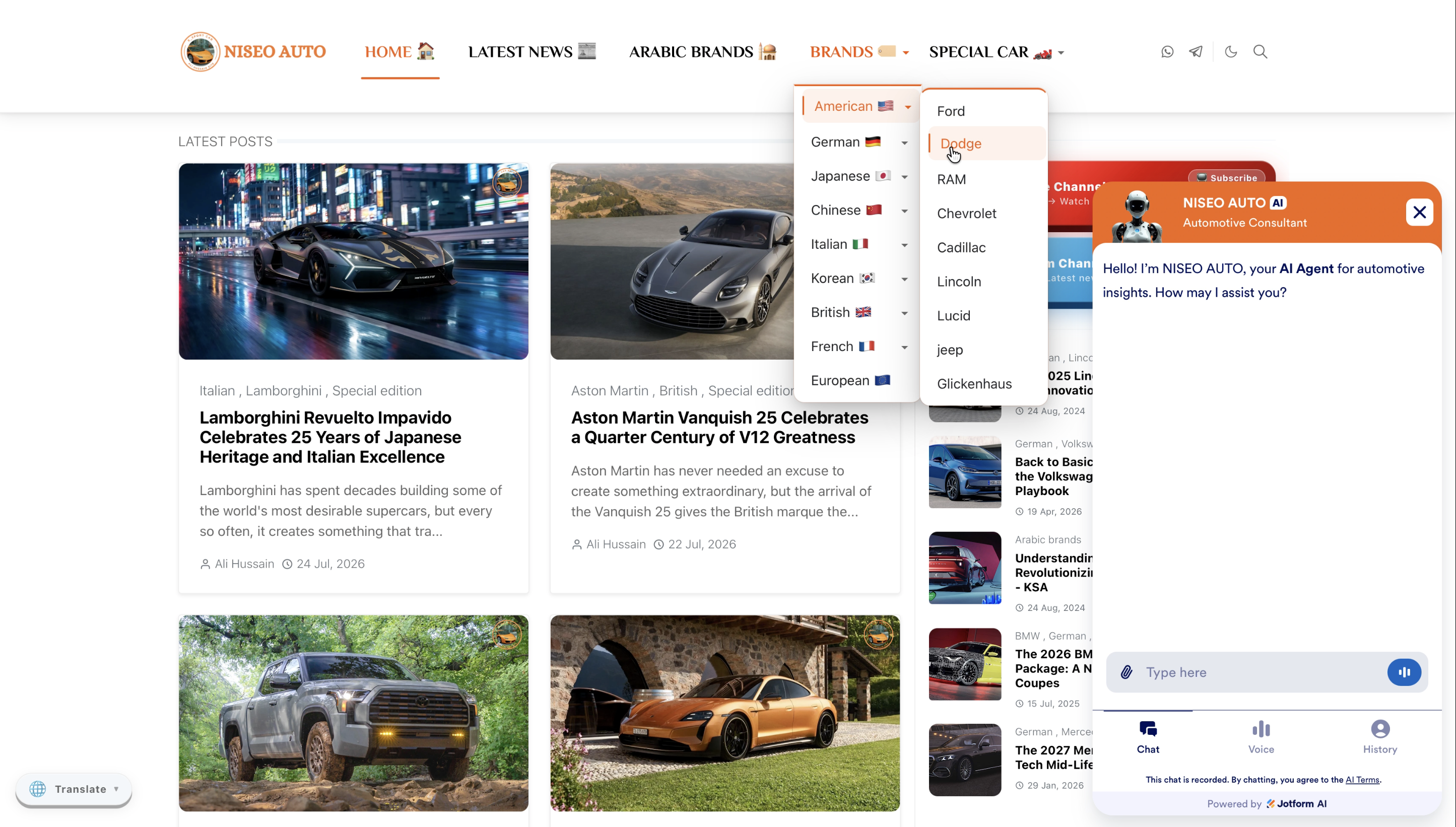
NISEO AUTO integrates an AI assistant and country-based filtering, enabling smart navigation and instant automotive insights.
-
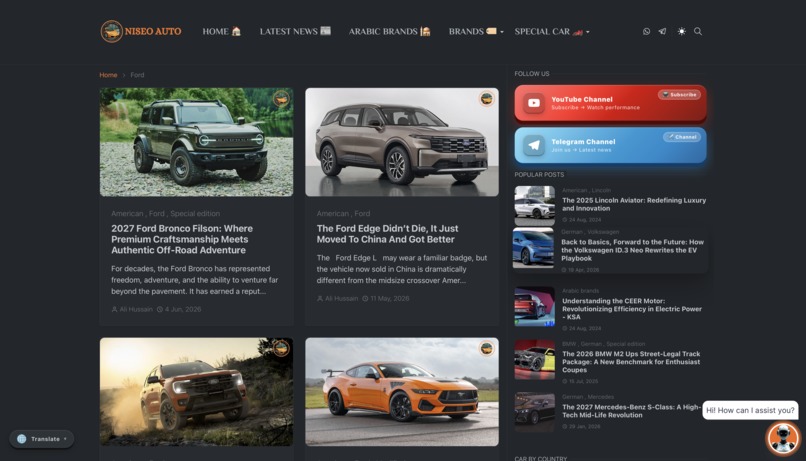
NISEO AUTO's category page offers precise brand and origin filtering, providing streamlined content organization and fast access.
-
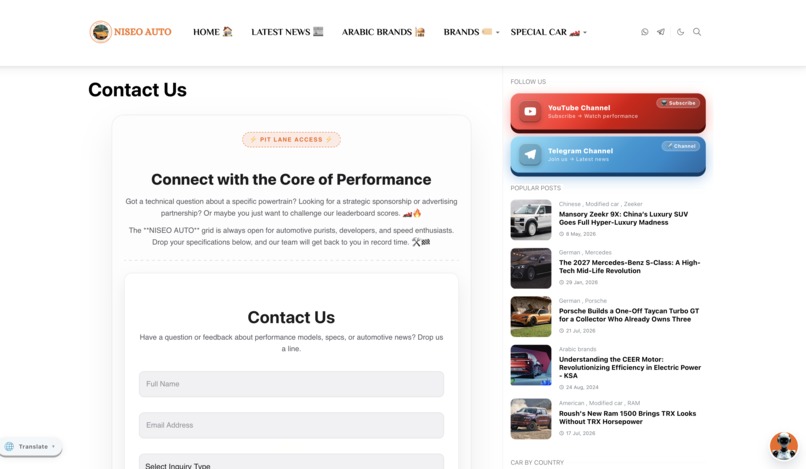
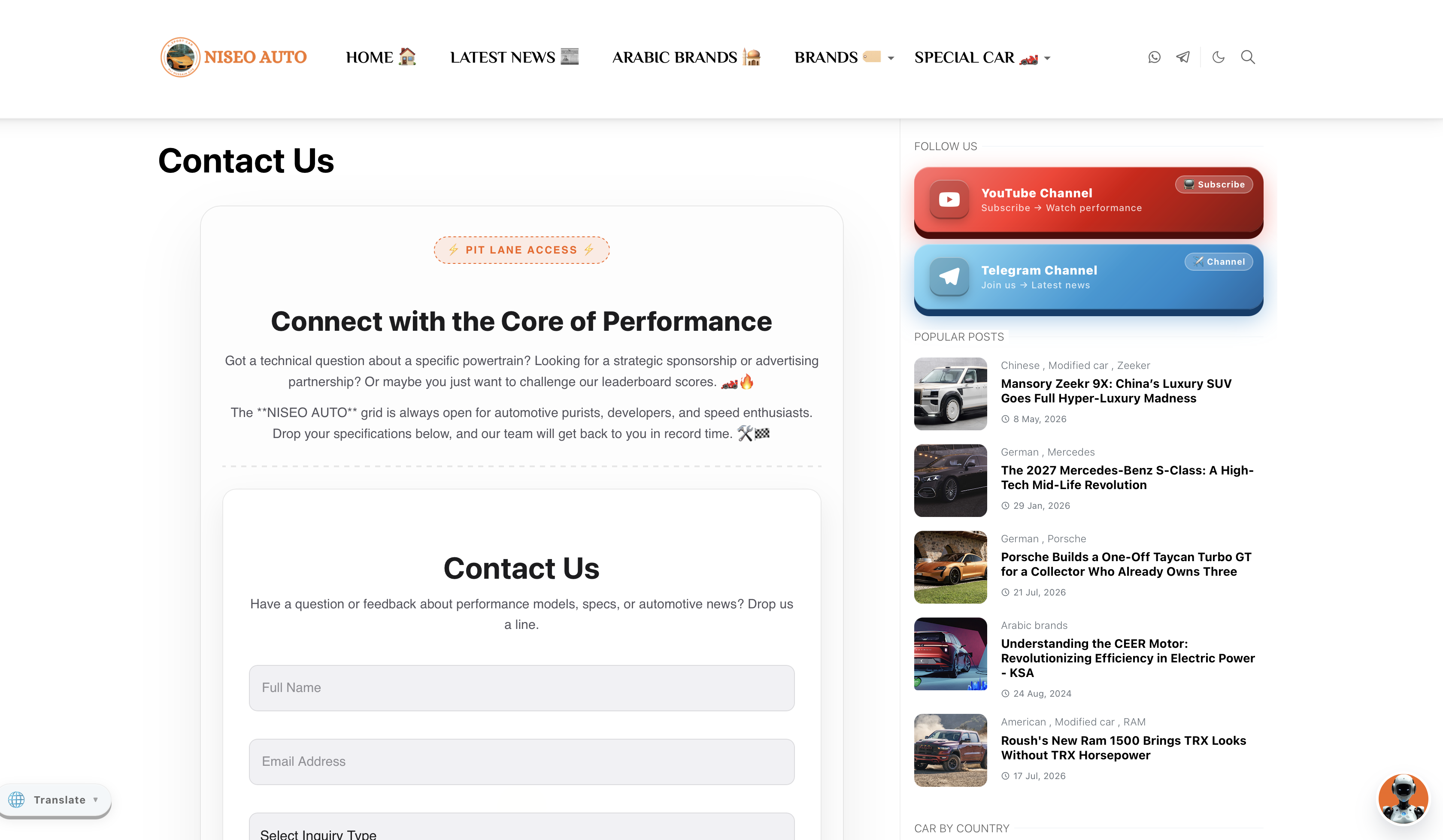
NISEO AUTO's Contact Us page features a clean form with intuitive input fields, ensuring effortless and direct user communication.
-
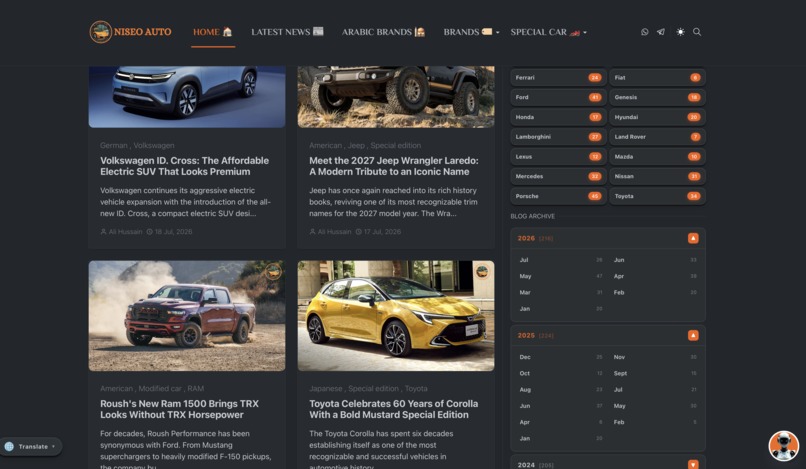
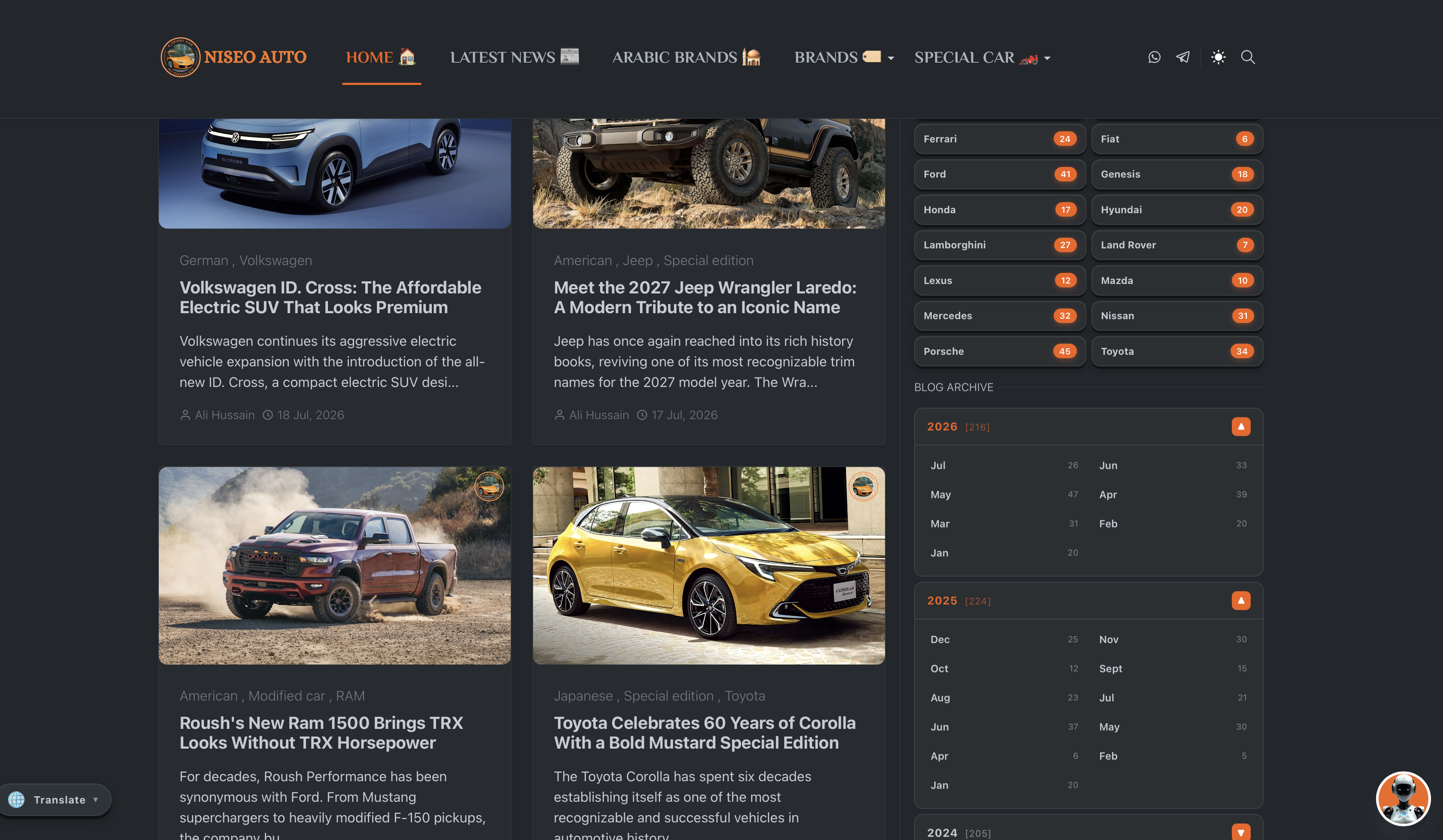
NISEO AUTO's Archive section categorizes posts chronologically by year and month, offering seamless browsing and fast content access.
-
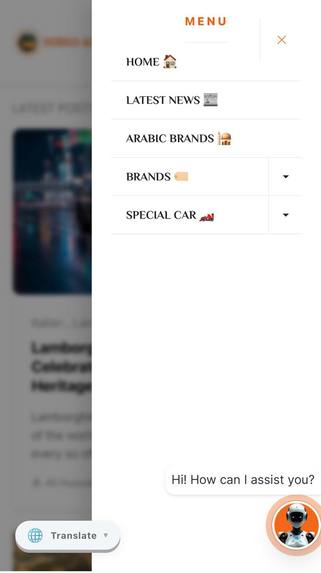
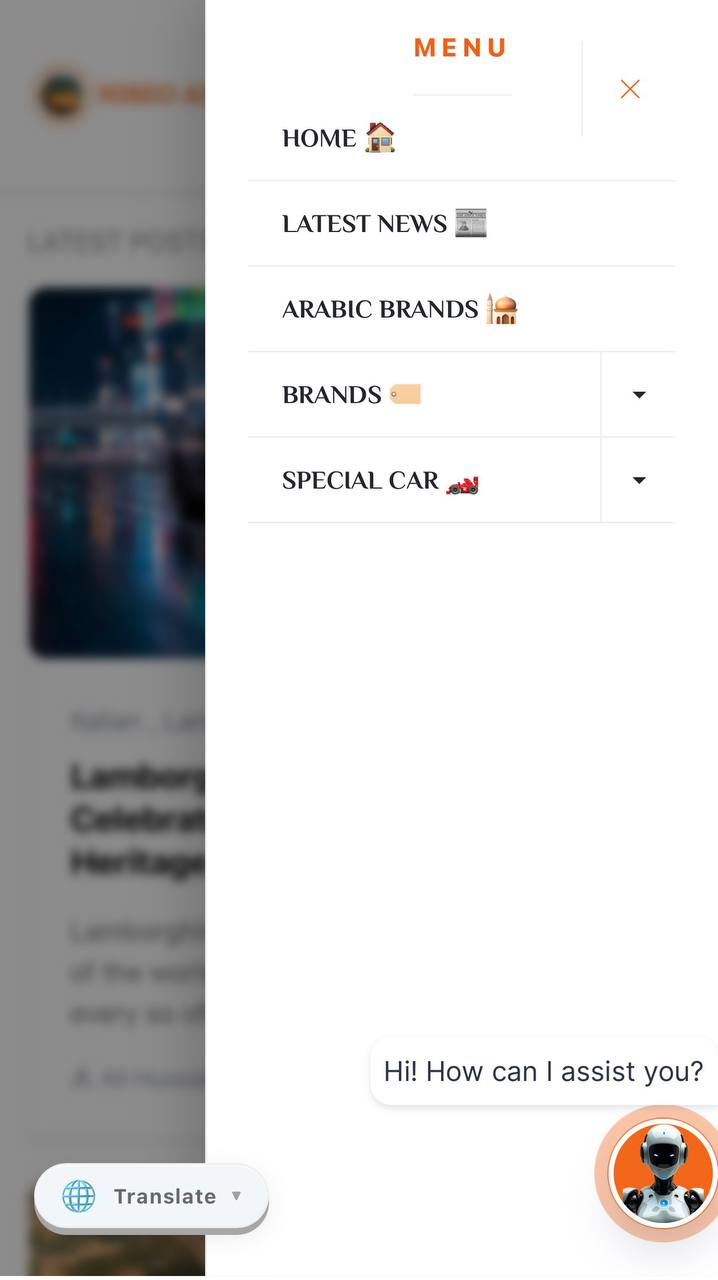
NISEO AUTO's mobile slide menu provides effortless navigation with collapsible submenus for fast, on-the-go browsing.
-
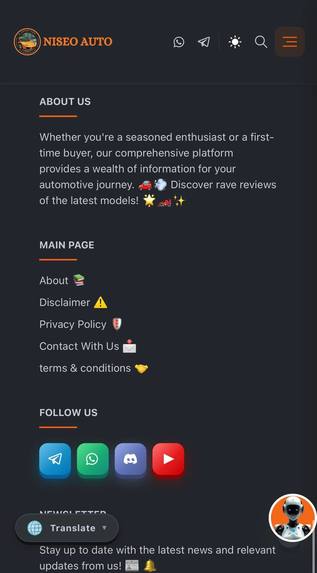
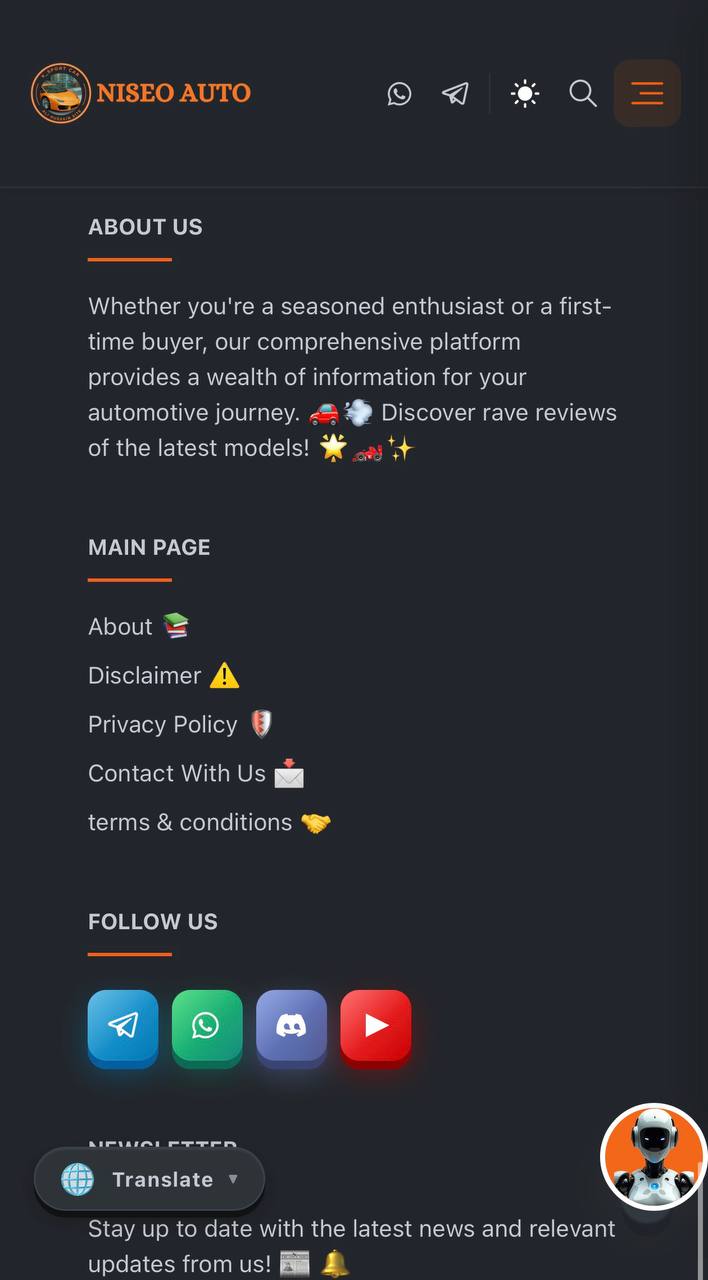
NISEO AUTO's footer provides a quick about overview, essential page links, and social channels for seamless mobile exploration.
NISEO AUTO: An Automotive Tech Experience
💡 What Inspired Me
As a high school student with a deep passion for both technology and the automotive world, I noticed a gap between complex car specifications and modern, user-friendly digital experiences. I wanted to build a centralized, sleek, and high-performance platform that provides car enthusiasts, buyers, and tech-savvy driver's with precise insights, performance metrics, and updated specs.
🛠️ How I Built the Project
Building NISEO AUTO required a modern web stack designed for speed, responsiveness, and scale:
- Frontend & UI: Designed with clean, mobile-first responsive architecture to ensure seamless browsing across all devices.
- Backend & Data Integration: Configured to manage structured automotive databases (models, engine power, performance statistics, and user interactions).
- Optimization: Optimized image assets, caching mechanisms, and page load speeds to deliver an instant user experience.
📐 Mathematical & Performance Modeling
To accurately evaluate vehicle metrics (such as power-to-weight performance), I integrated mathematical modeling into our performance algorithms:
The power-to-weight ratio metric is calculated as: $$ P_{ratio} = \frac{P_{horsepower}}{m_{kg}} $$
And for real-time acceleration estimation under ideal conditions: ( a = \frac{F_{engine} - F_{drag}}{m} )
🎓 What I Learned
Through developing NISEO AUTO alongside my high school studies, I gained valuable hands-on experience in:
- Full-stack web development and responsive UI/UX design.
- Database management and content delivery optimization.
- Project management, problem-solving, and managing tight deployment schedules.
🚀 Challenges Faced
- Time Management: Balancing high school coursework and exams with coding, testing, and maintaining a live web platform.
- Data Structuring: Organizing large volumes of technical specs (horsepower, torque, fuel efficiency) into a clean, searchable database.
- Cross-Browser & Mobile Optimization: Ensuring all interactive elements perform smoothly on both high-end desktops and mobile browsers.


Log in or sign up for Devpost to join the conversation.