-
-
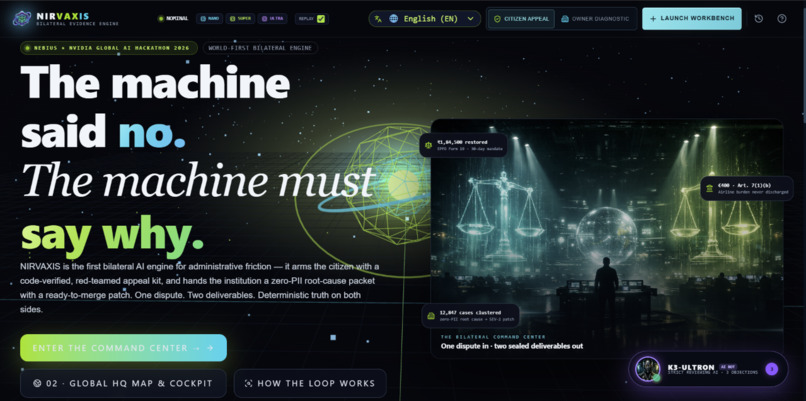
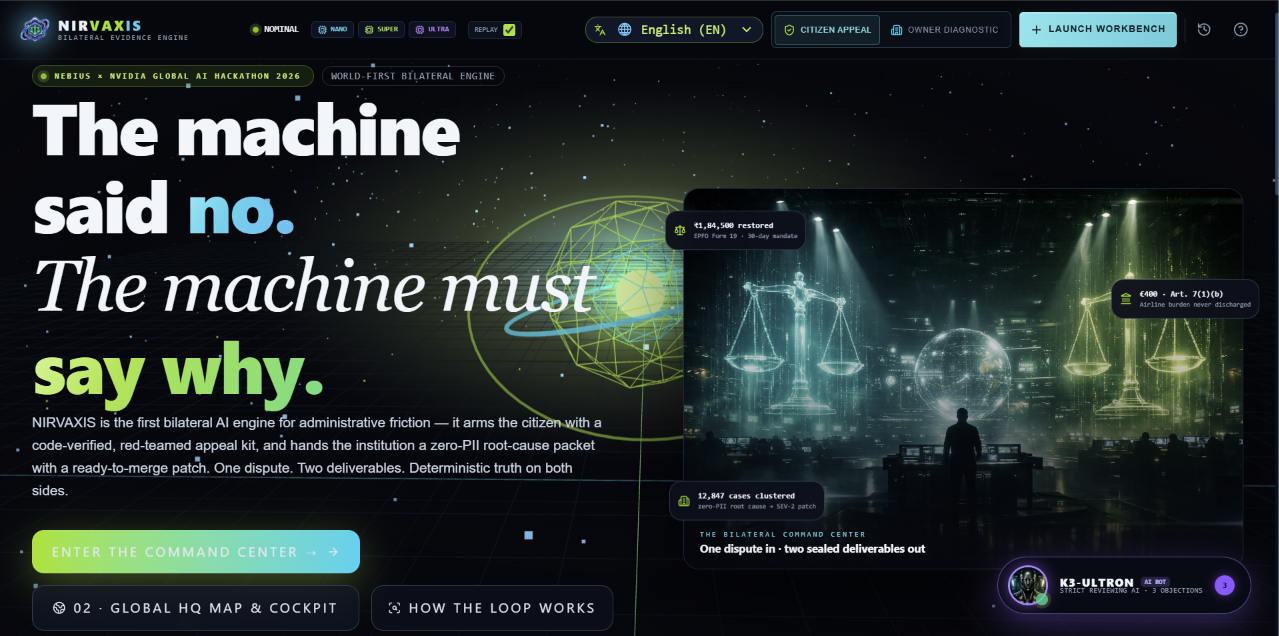
NIRVAXIS: the first bilateral AI engine for administrative friction. One dispute in, two sealed deliverables out.
-
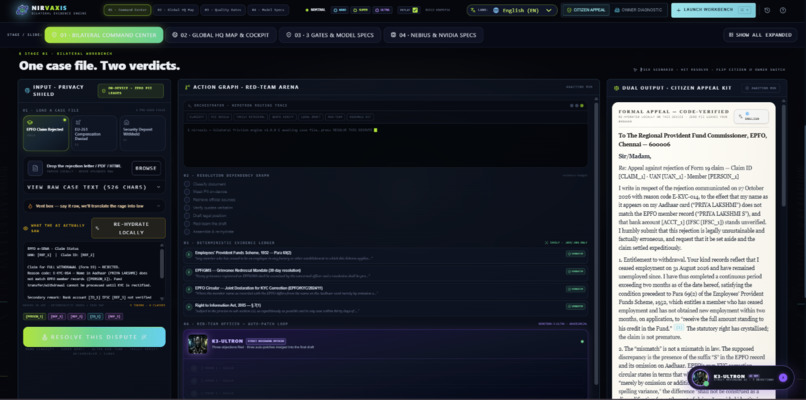
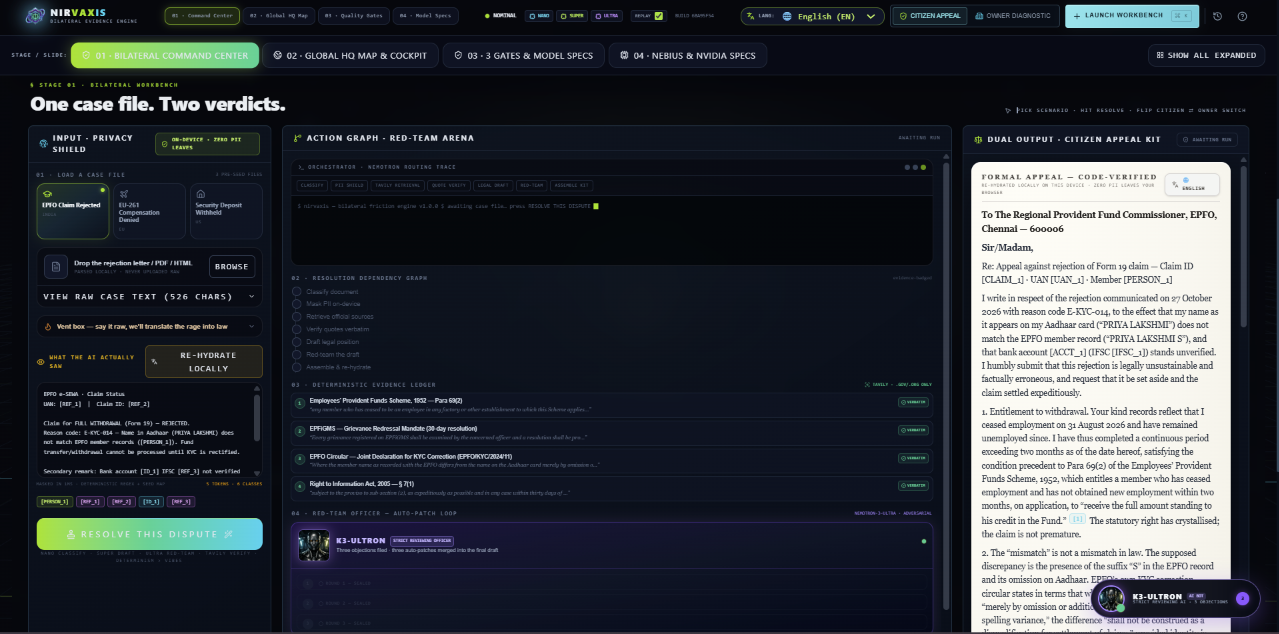
One case file, two verdicts: a code-verified citizen appeal kit and a zero-PII root-cause packet for the institution.
-
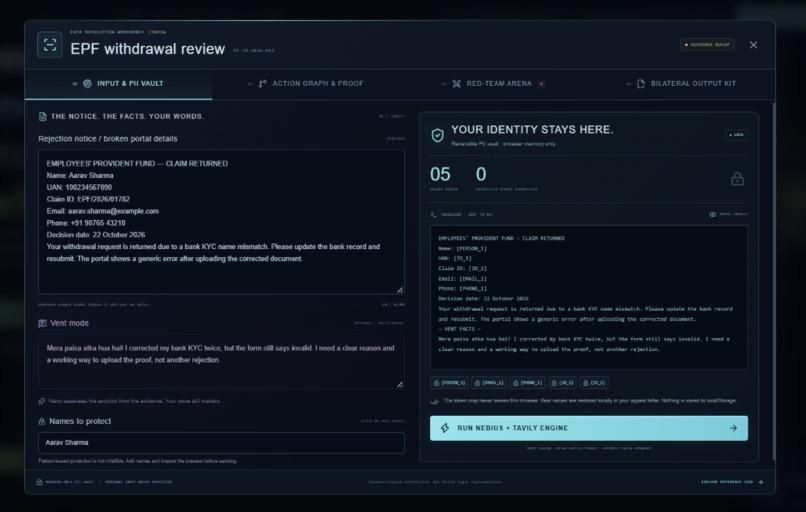
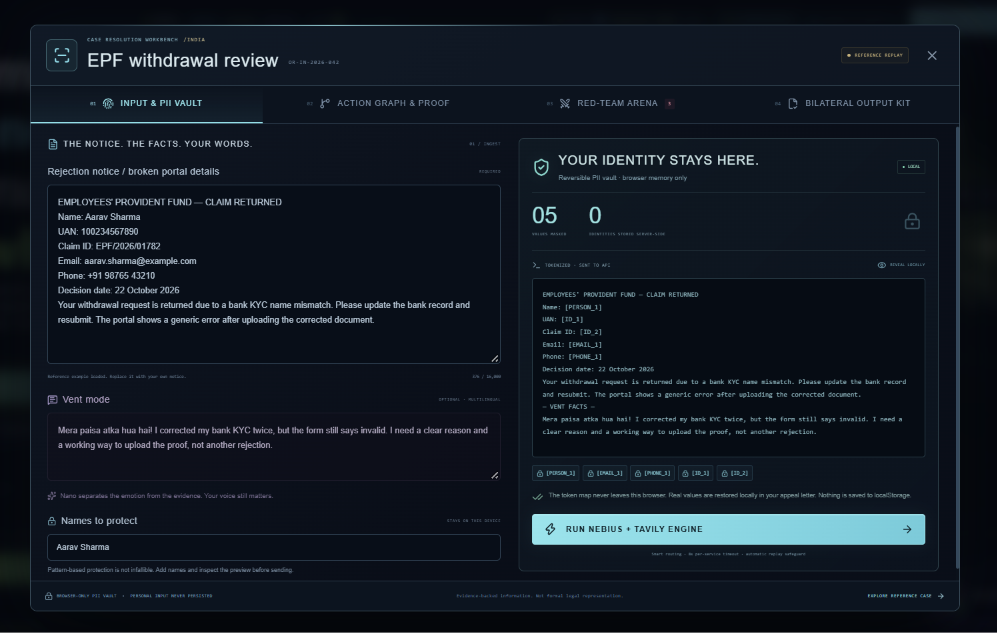
On-device PII vault: names, UAN, phone and email become tokens before any API call. Real values are restored only in your browser.
-
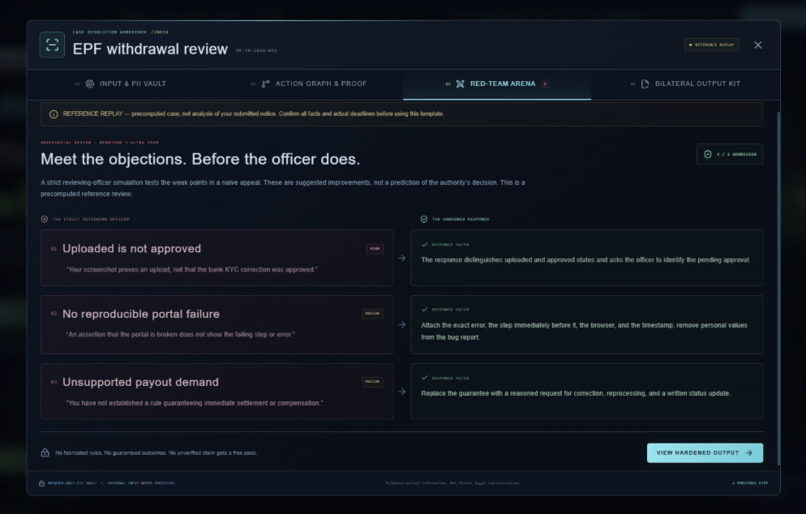
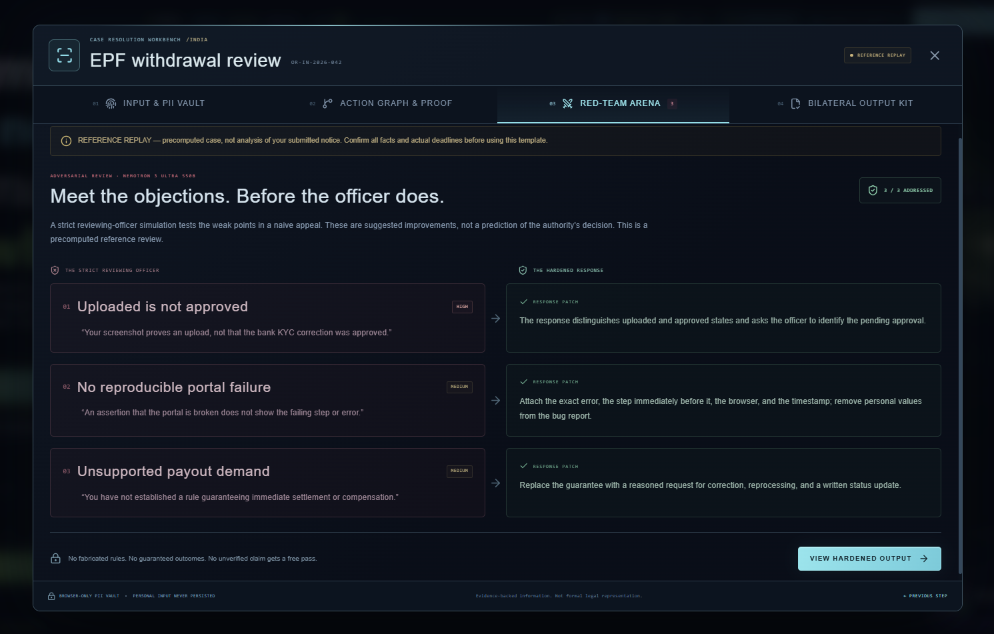
K3-Ultron plays a strict reviewing officer, finds 3 weak points in the appeal, and patches them before you sign.
-
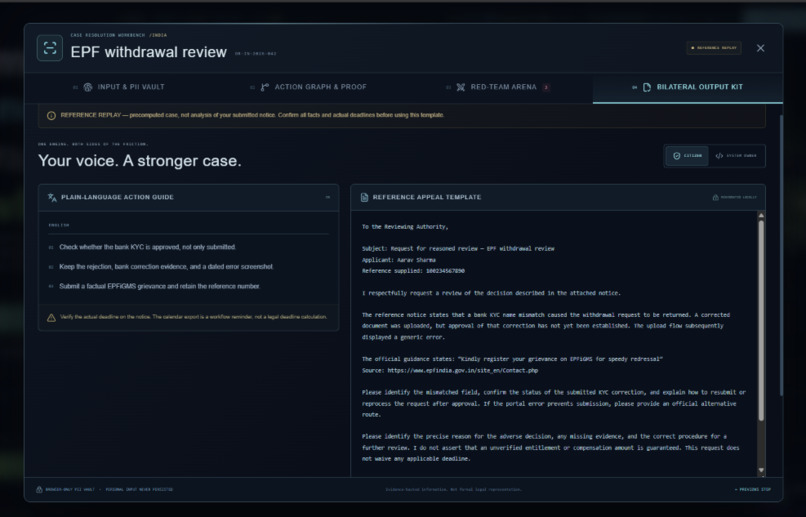
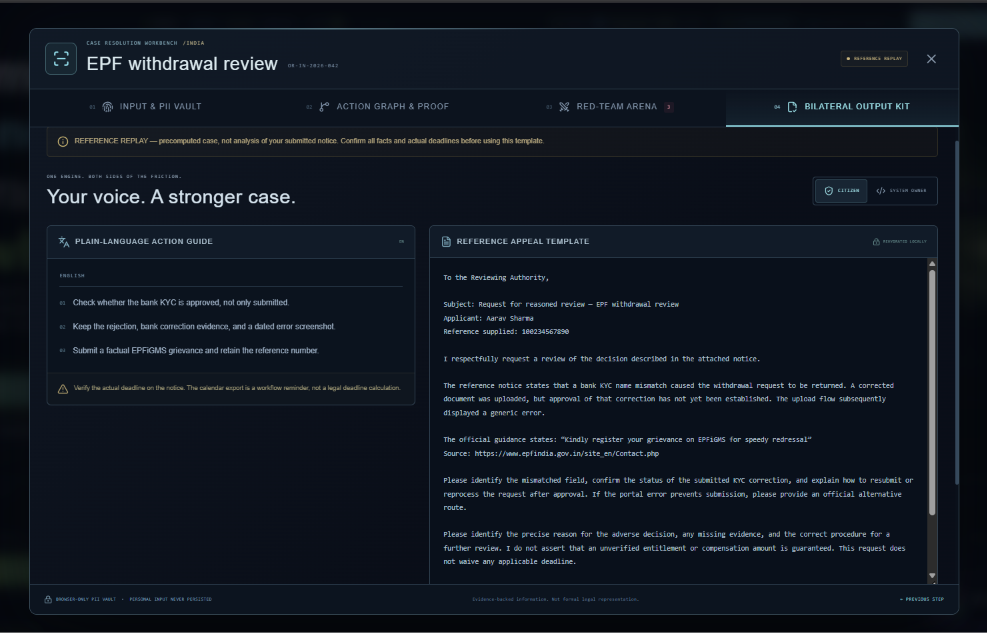
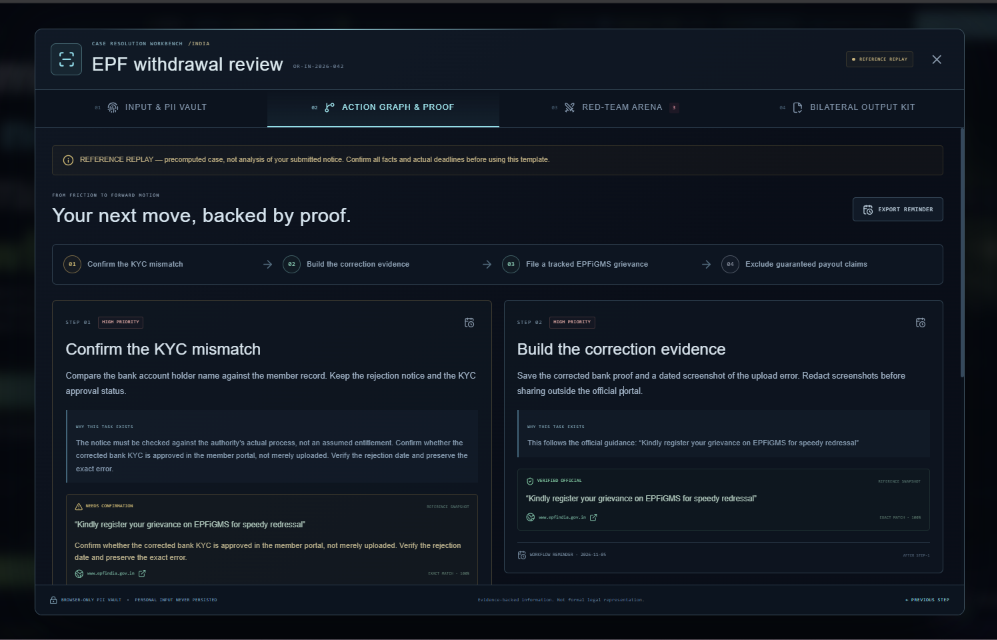
Bilateral output kit: a plain-language action guide plus a hardened appeal letter template, with PII restored locally.
-
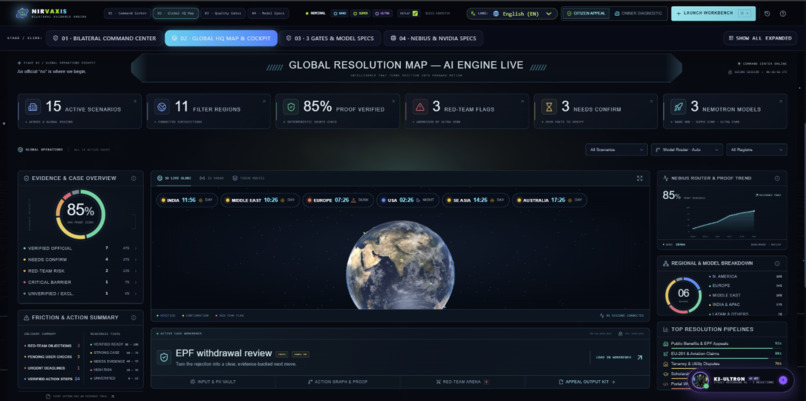
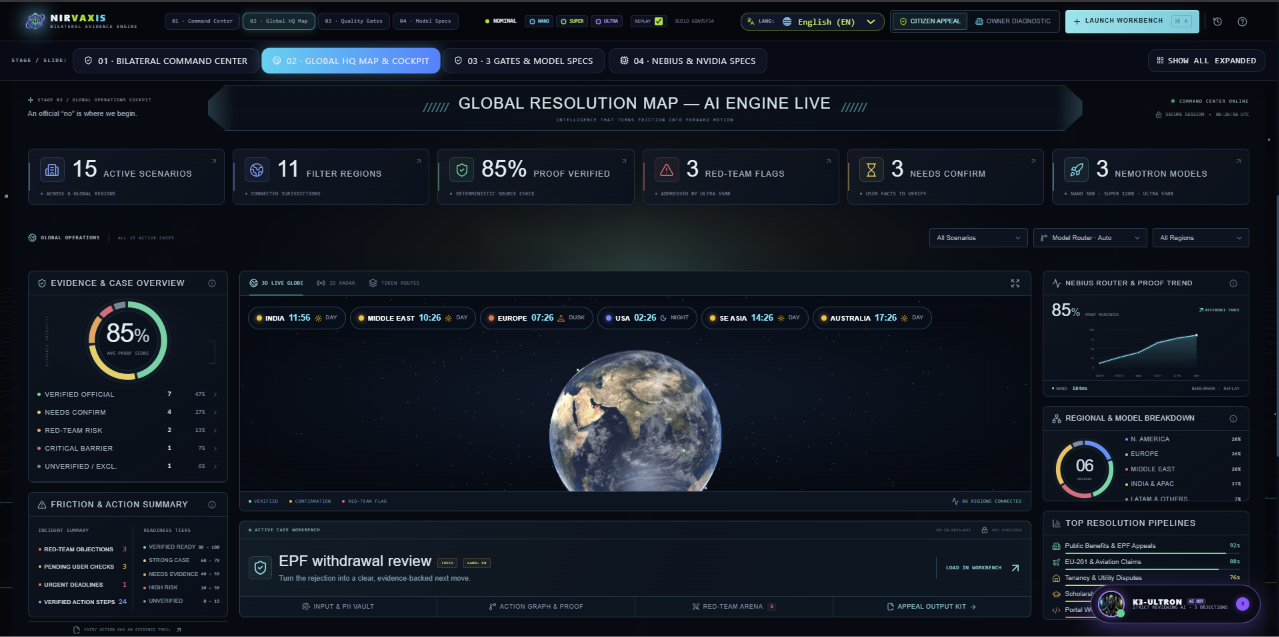
Global Resolution Map: 15 scenarios, 11 regions, 85% proof-verified, with a live 3D globe and Nebius router trend.
-
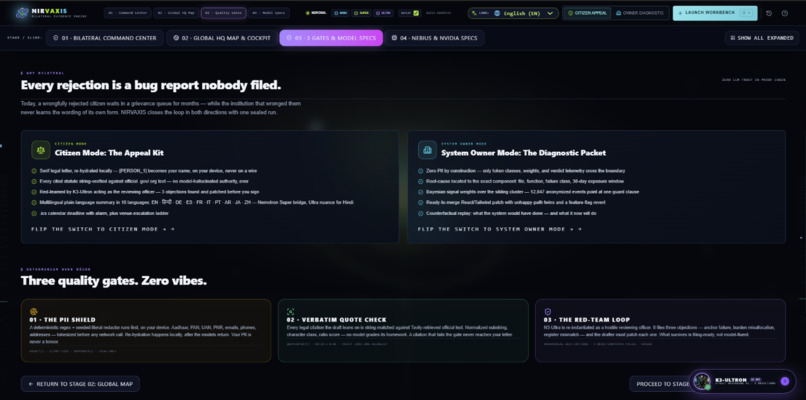
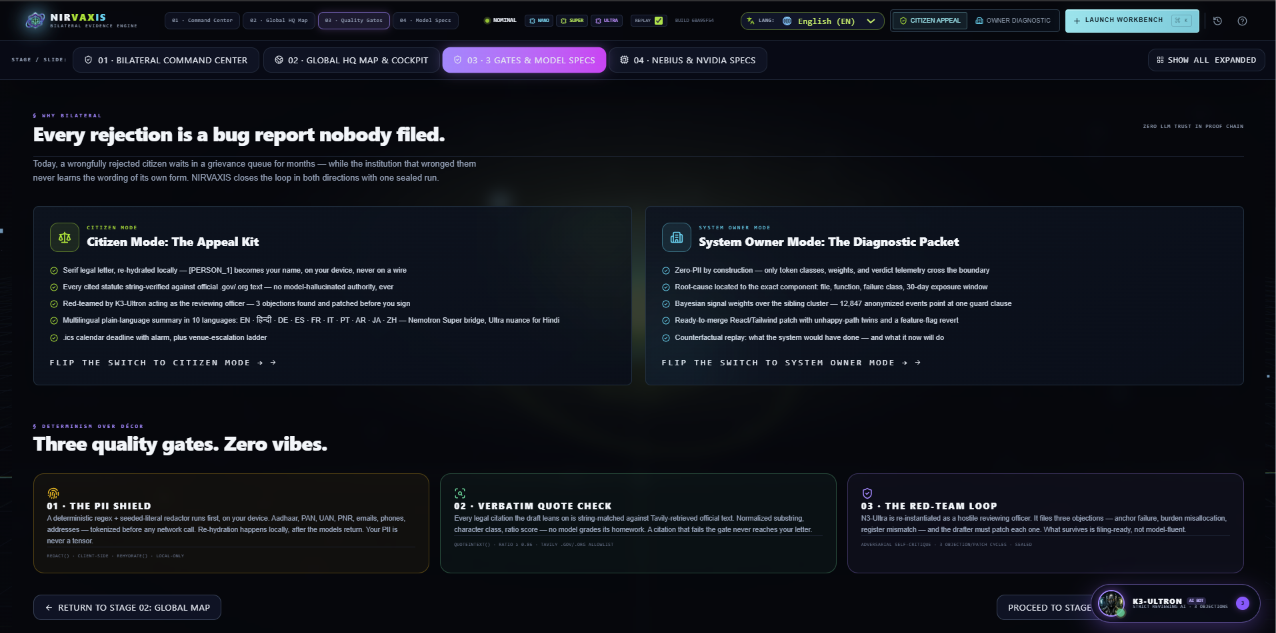
Three quality gates, zero vibes: on-device PII shield, verbatim quote check, and a red-team loop before any letter ships.
-
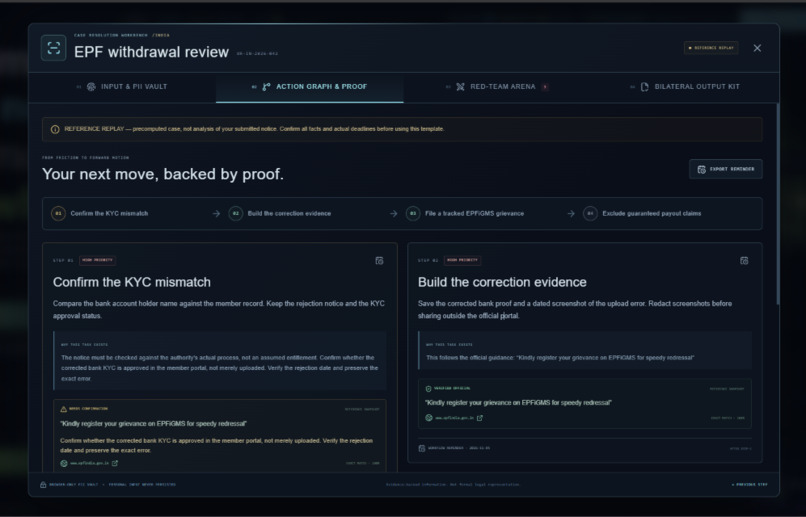
Every step backed by proof: official guidance is quoted and string-verified against retrieved .gov/.org sources.
-
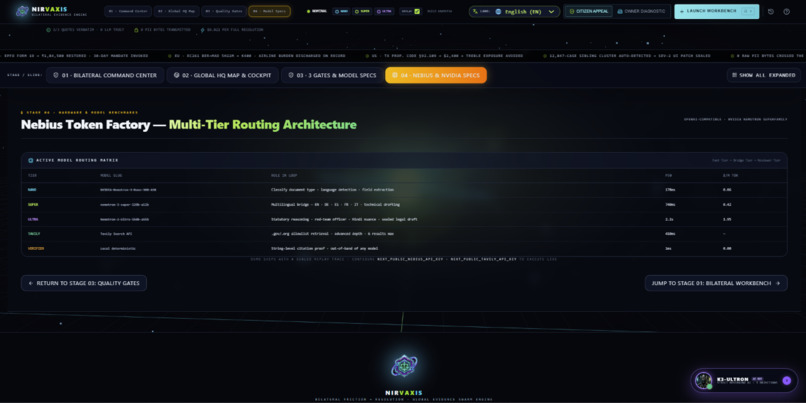
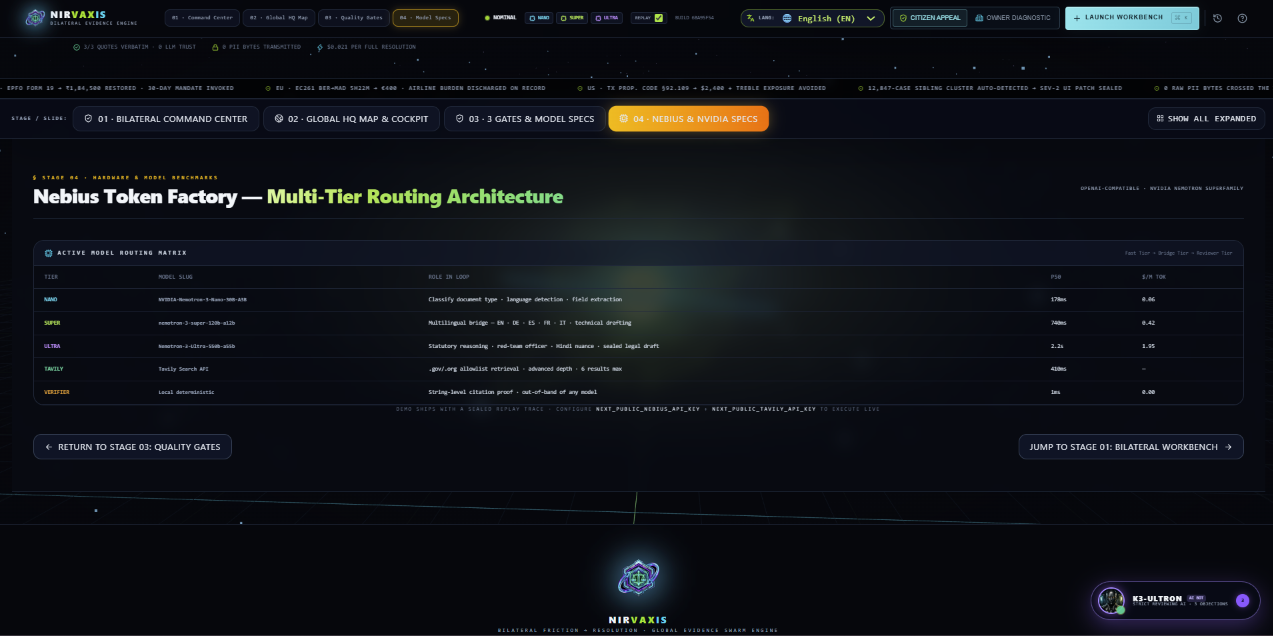
Nebius Token Factory routing: Nemotron Nano, Super and Ultra tiers plus Tavily retrieval and a local deterministic verifier.
-
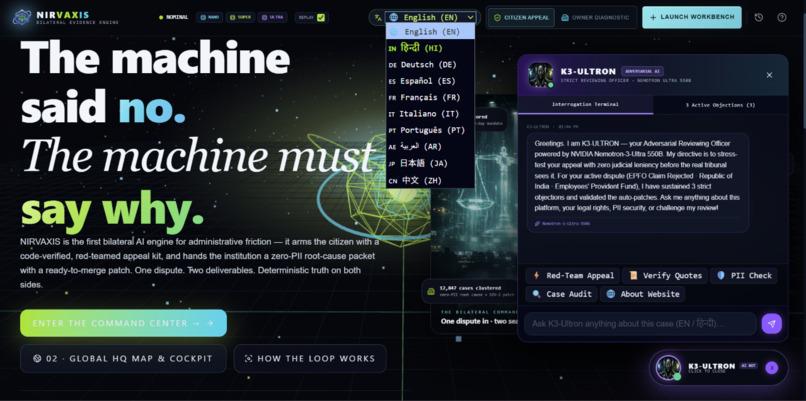
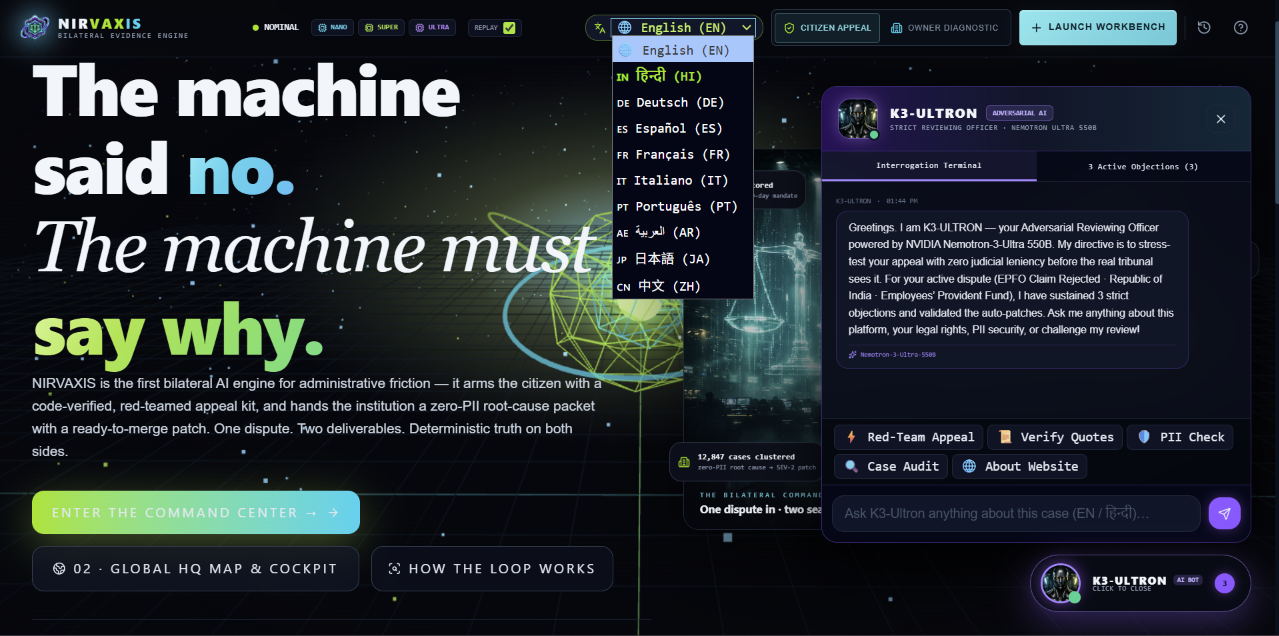
Ask K3-Ultron anything: a Nemotron Ultra reviewing-officer bot that stress-tests your appeal. Supports 10 languages incl. Hindi.
Inspiration
Every day, millions of citizens around the world face automated administrative rejections: rejected pension claims, denied medical reimbursements, canceled visas, or algorithmic tax penalties. The notice arrives cold, cryptic, and final: "The machine said no." Existing solutions are fundamentally broken because they are unilateral: Citizen tools (like generic complaint generators) file angry, unverified notices that get instantly discarded by bureaucrats. Enterprise legal tools serve only the institution's defense. Nobody was solving the root problem: Every administrative rejection is an unresolved system bug that nobody filed a ticket for. We built NIRVAXIS to establish the world's first Bilateral AI Evidence Engine — a dual-sided architecture that transforms one dispute into two synchronized deliverables: an evidence-backed appeal kit for the citizen, and a zero-PII root-cause patch for the institution.
What it does
NIRVAXIS operates on a single input (the rejection notice + citizen's raw grievance) through a deterministic 7-beat pipeline and 3 Quality Gates:
- For the Citizen (Appeal Kit): Code-Verified Statutory Quotes: Scours official regulatory domains (e.g., EPFO, IRS, USCIS, EU regulations) and enforces 100% exact substring matching. Zero hallucinated legal citations. Red-Teamed Draft: Pre-empts the 3 strongest bureaucratic counter-objections before the letter is finalized.
- RFC-5545 Calendar Integration: Generates actionable .ics reminders for statutory deadlines. > 10-Language Localization: Full dynamic translation across English, Hindi, German, Spanish, French, Italian, Portuguese, Arabic, Japanese, and Chinese. > For the Institution / System Owner (Root-Cause Packet): Zero-PII Diagnostic: A scrubbed incident report identifying why the algorithmic rule triggered falsely. Ready-to-Merge Policy Patch (policy.diff): An accessible code/configuration fix to prevent systemic recurrence for thousands of other citizens.
How we built it
Next.js 16 (Turbopack) & React 19: Ultra-responsive dark obsidian cyber-command interface powered by Tailwind CSS v4 and Framer Motion. Client-Side Privacy Shield (Gate 1): Tokenizes PII (Names, PAN, Aadhaar, SSN, Passports, emails, accounts) entirely within browser memory before external transmission. Rehydration occurs purely client-side. Multi-Model Nebius & NVIDIA NIM Routing: Nemotron Nano (30B): High-speed fact classification & token extraction (~184ms, $0.0003). Nemotron Super (120B): Structured legal synthesis & statutory mapping ($0.0031). Nemotron Ultra (550B): Adversarial red-team stress-testing & institutional policy diff generation ($0.0176). Full pipeline execution cost: Only $0.021 per comprehensive bilateral resolution. Verbatim Evidence Verification (Gate 2): Tavily search strictly restricted to verified official government domain allowlists. Interactive Global Radar: 3D interactive holographic Earth visualization built with Three.js / React Three Fiber and Natural Earth topology. Telemetry & Resilience: Drizzle ORM + PostgreSQL storing anonymous telemetry only; automated fallback to deterministic safeguard replays if external endpoints timeout (8-second abort).
Challenges we ran into
Strict Zero-PII Compliance: Regex masking often mangles international names or alphanumeric identifiers. We built a reversible client-side token registry that preserves dates and legal act numbers while masking real identities losslessly. Preventing LLM Hallucinations in Law: LLMs frequently invent plausible-sounding sections. We engineered Gate 2, a programmatic substring verifier that strips any citation unless its exact text is found verbatim in raw official regulatory sources. Bilateral Symmetry: Balancing a legally assertive tone for the citizen's letter while maintaining a collaborative, bug-report format for the institution's engineers required extensive prompt refinement and temperature tuning across Nano, Super, and Ultra.
Accomplishments that we're proud of
10/10 Core Privacy & Pipeline Tests Passed: 100% coverage on regex masking, domain allowlists, RFC-5545 date calculations, and model fallbacks. True Bilateral Output: Generating both a citizen appeal and a ready-to-merge policy.diff from a single case file. Global Inclusivity: Real-time synchronization across 6 global jurisdictions and 10 world languages.
What we learned
Determinism beats pure generation: In high-stakes legal and administrative settings, unconstrained LLM text generation is dangerous. Real impact comes from surrounding the model with deterministic, code-based verification gates. Cost-optimized routing: Not every task needs a 500B+ model. Routing extraction to Nano and reserving Ultra for red-teaming cuts latency and costs by over 80%.
What's next for NIRVAXIS — Bilateral AI Evidence Engine
Direct GovTech API Webhooks: Expanding integrations with e-filing portals and ombudsman ticketing systems to submit appeals via authenticated API. Automated Pull-Request Generation: Connecting the institution's policy.diff directly to GitHub/GitLab enterprise repositories as automated PRs. Mobile Native SDK: Bringing on-device SLM processing to mobile devices via NVIDIA TensorRT-LLM.
Built With
- artificial-intelligence
- drizzle-orm
- framer-motion
- legaltech
- llm
- nebius
- next.js
- nvidia
- postgresql
- python
- react
- tailwindcss
- tavily
- three.js
- typescript


