Inspiration
RecoverAI was inspired by a simple question: “What if a selfie could help people better understand how they’re feeling and recovering over time?”
Most facial AI applications today focus on beauty filters, makeup, or entertainment. We wanted to explore a more meaningful use case by combining facial analysis with wellness and recovery tracking. Mental fatigue, stress, emotional burnout, and physical recovery often show subtle visual changes in the face that people may not notice themselves.
We were especially inspired by situations like:
- post-surgery recovery monitoring
- stress and anxiety check-ins
- emotional wellness tracking
- fatigue detection
- self-care coaching
Our goal was to create an AI-powered wellness companion that helps users reflect on their condition through visual insights and supportive recommendations.
What it does
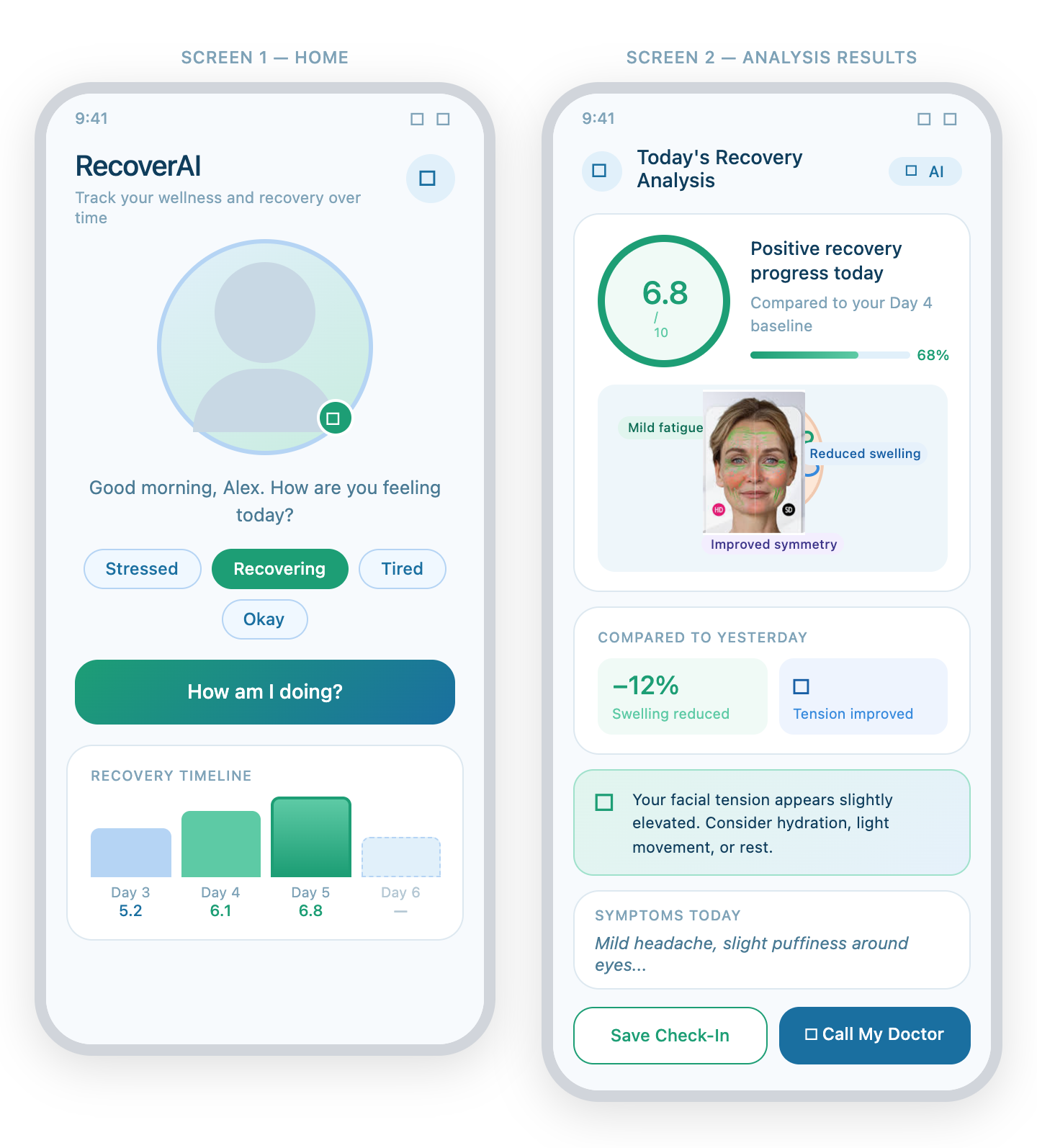
RecoverAI is an AI-powered facial wellness and recovery assistant.
Users take a selfie, and RecoverAI analyzes facial indicators such as:
- facial symmetry
- skin tone changes
- eye strain and fatigue
- swelling and redness
- emotional expression patterns
Using these insights, the app provides:
- wellness feedback
- recovery progress tracking
- stress and fatigue indicators
- emotional support suggestions
- before-and-after comparisons over time
For example:
- A user feeling anxious can take a photo and receive calming recommendations like breathing exercises or a short walk.
- Someone recovering from surgery can monitor swelling and healing progression over several days.
- Users can track trends in stress, fatigue, and wellness through daily check-ins.
RecoverAI is designed to support self-awareness and recovery, not replace professional medical advice.
How we built it
We built RecoverAI using AI-powered facial analysis and a lightweight wellness recommendation system.
Our stack included:
- Perfect Corp facial analysis APIs for face landmark detection and skin analysis
- A frontend interface for selfie capture and progress tracking
- AI-generated wellness insights based on detected facial trends
- Timeline comparison features to analyze changes over time
The workflow:
- User uploads or captures a selfie
- Facial regions and landmarks are analyzed
- The system compares indicators against previous check-ins
- AI generates supportive feedback and wellness recommendations
- Progress is visualized through trend tracking and recovery comparisons
We focused heavily on creating a clean and emotionally supportive user experience that feels approachable rather than clinical.
Challenges we ran into
One of the biggest challenges was balancing innovation with responsible healthcare messaging.
We quickly realized that making direct medical claims could create ethical and regulatory concerns, so we shifted our focus from “diagnosis” to “wellness insights” and “recovery tracking.”
Other challenges included:
- interpreting facial analysis data meaningfully
- reducing false assumptions from a single image
- creating supportive AI responses without sounding overly medical
- handling variations in lighting, angles, and facial expressions
- designing a user experience that feels encouraging and trustworthy
Another challenge was building meaningful progress comparisons over time while keeping the demo lightweight enough for a hackathon.
Accomplishments that we're proud of
We’re proud that RecoverAI transforms facial AI into something more human-centered and supportive.
Some of our favorite accomplishments include:
- creating a wellness-focused use case for facial analysis
- building a recovery tracking experience instead of a simple “scanner”
- designing emotionally supportive AI interactions
- integrating before-and-after facial trend comparisons
- positioning AI as a companion for self-awareness and recovery
We’re especially proud that RecoverAI explores how AI can support emotional wellness and healing in a non-invasive, accessible way.
What we learned
Through building RecoverAI, we learned that healthcare-adjacent AI requires thoughtful design, careful wording, and ethical responsibility.
We also learned:
- facial analysis can be powerful beyond beauty applications
- users respond positively to supportive and empathetic AI experiences
- longitudinal tracking is more valuable than one-time analysis
- wellness-focused framing is safer and more practical than medical diagnosis
- trust and user experience are just as important as technical accuracy
This project helped us better understand the intersection of AI, emotional wellness, and human-centered design.
What's next for RecoverAI
In the future, we’d like to expand RecoverAI into a more comprehensive wellness and recovery platform.
Potential next steps include:
- personalized recovery timelines
- emotion and stress trend analytics
- integration with wearable health devices
- guided breathing and grounding exercises
- clinician dashboards for recovery monitoring
- AI-powered journaling and wellness coaching
- secure health data storage and privacy controls
We also want to explore partnerships in:
- post-operative care
- telehealth
- mental wellness
- physical rehabilitation
- elder care monitoring
Our long-term vision is to make RecoverAI a trusted AI companion for wellness, recovery, and emotional self-awareness.


Log in or sign up for Devpost to join the conversation.