-
-
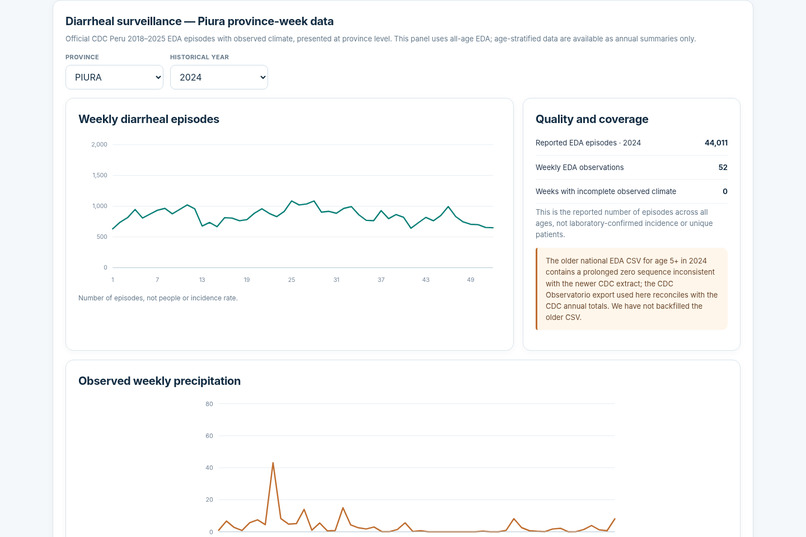
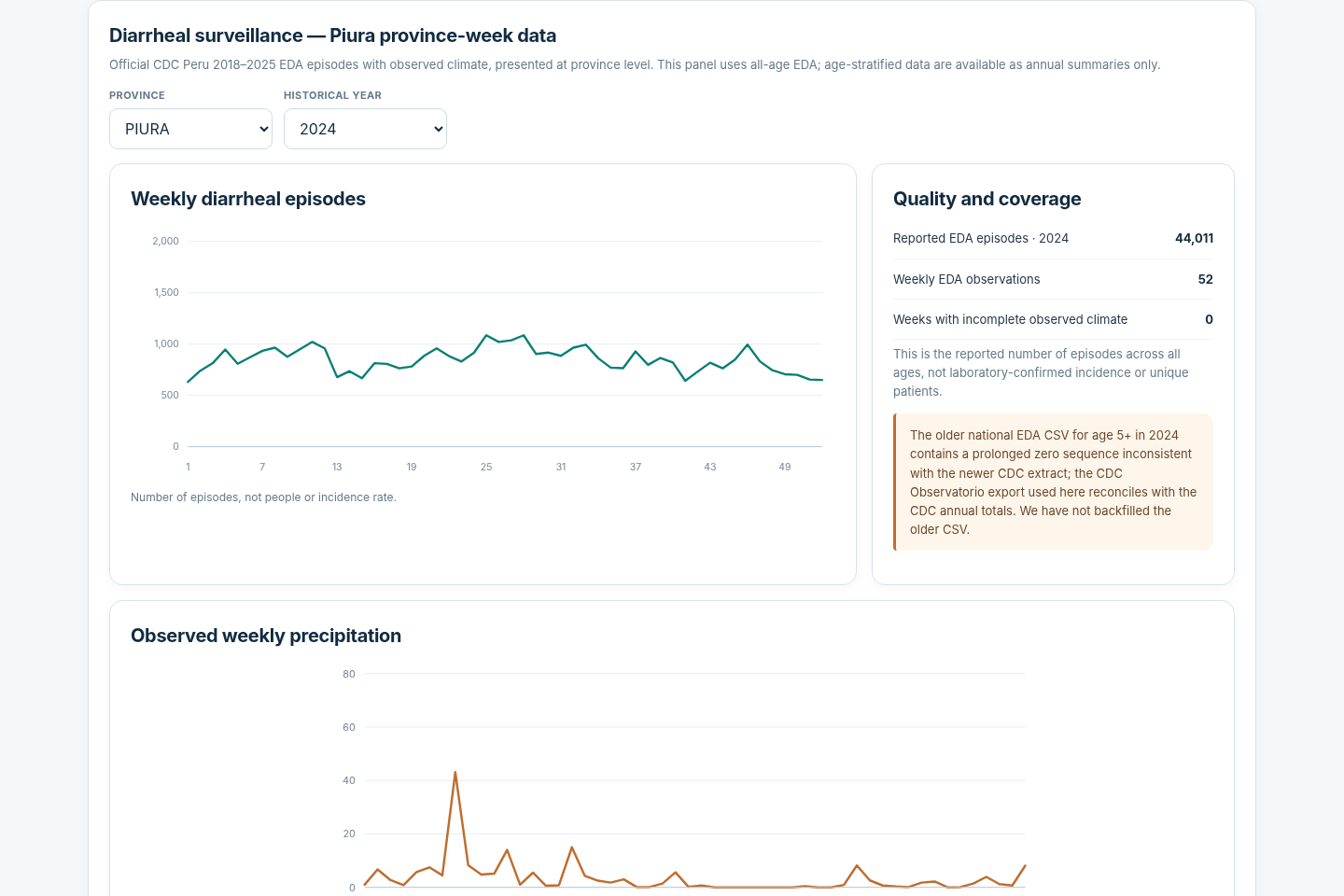
Weekly diarrheal disease reports and observed rainfall in Piura, using official Peruvian data.
-
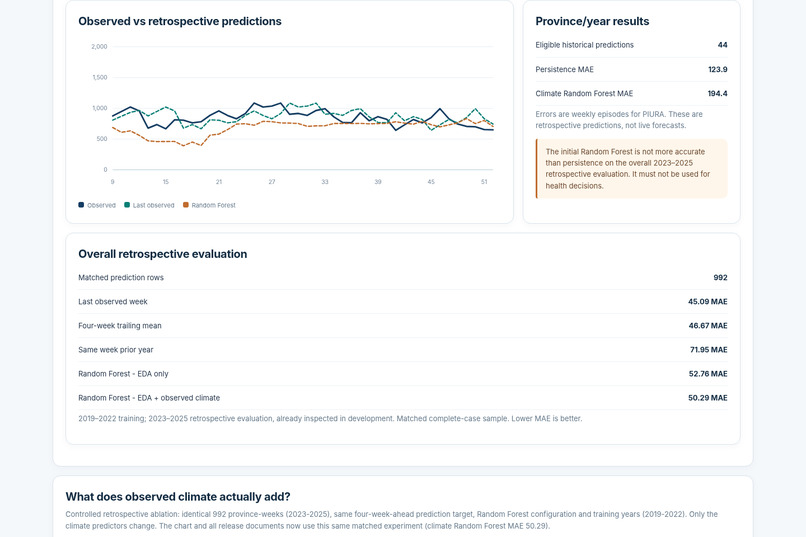
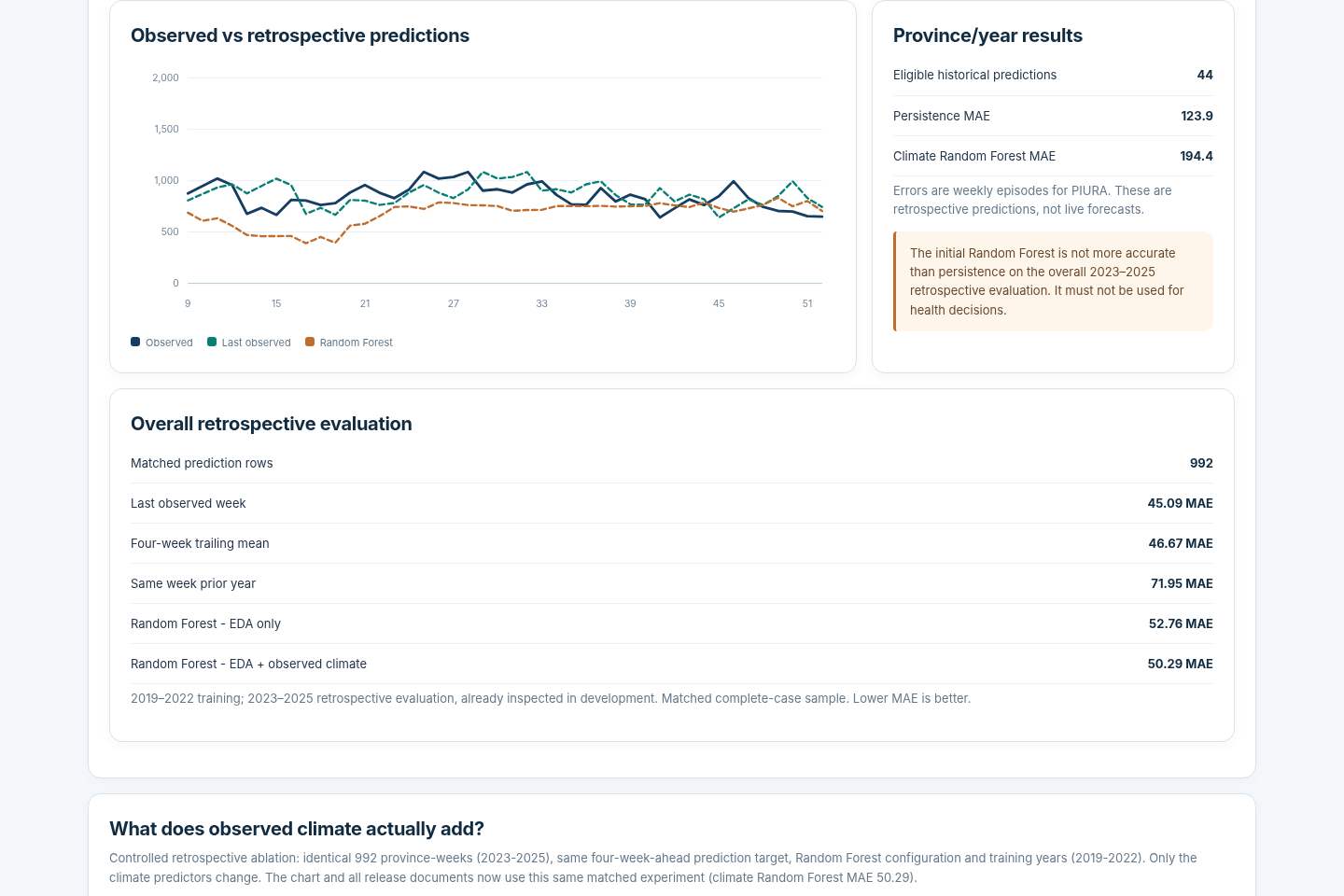
Comparing Random Forest predictions with simpler baselines across 992 historical observations.
-
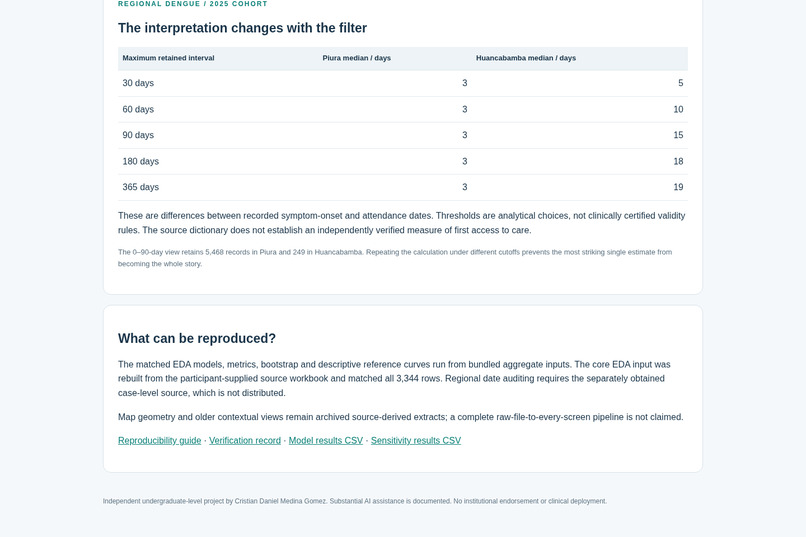
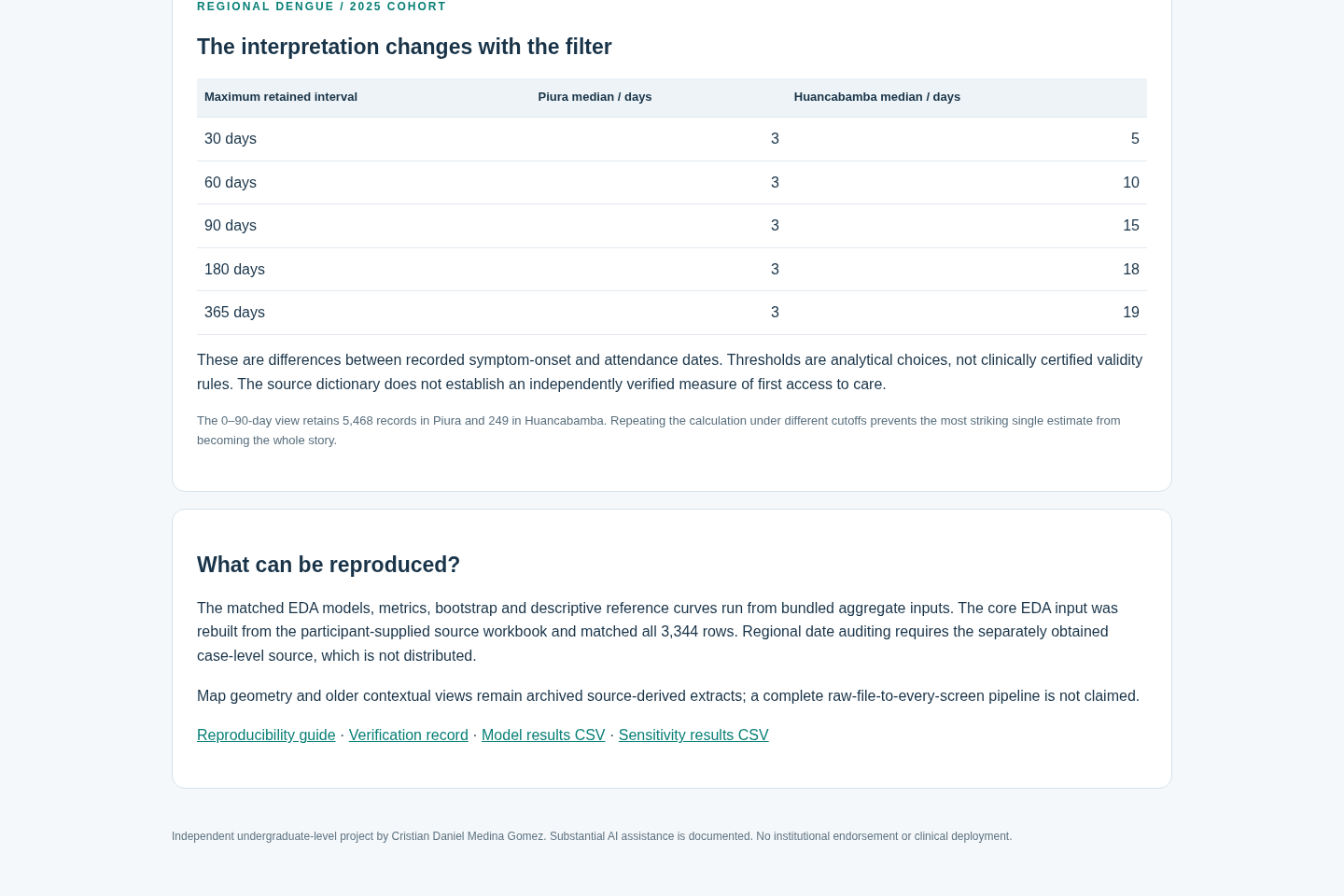
Exploring how data-cleaning choices affect the interpretation of regional dengue records.
-
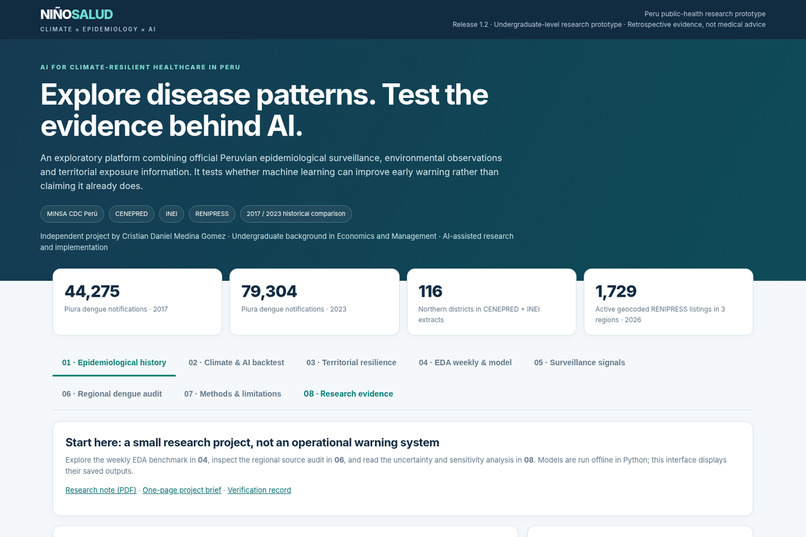
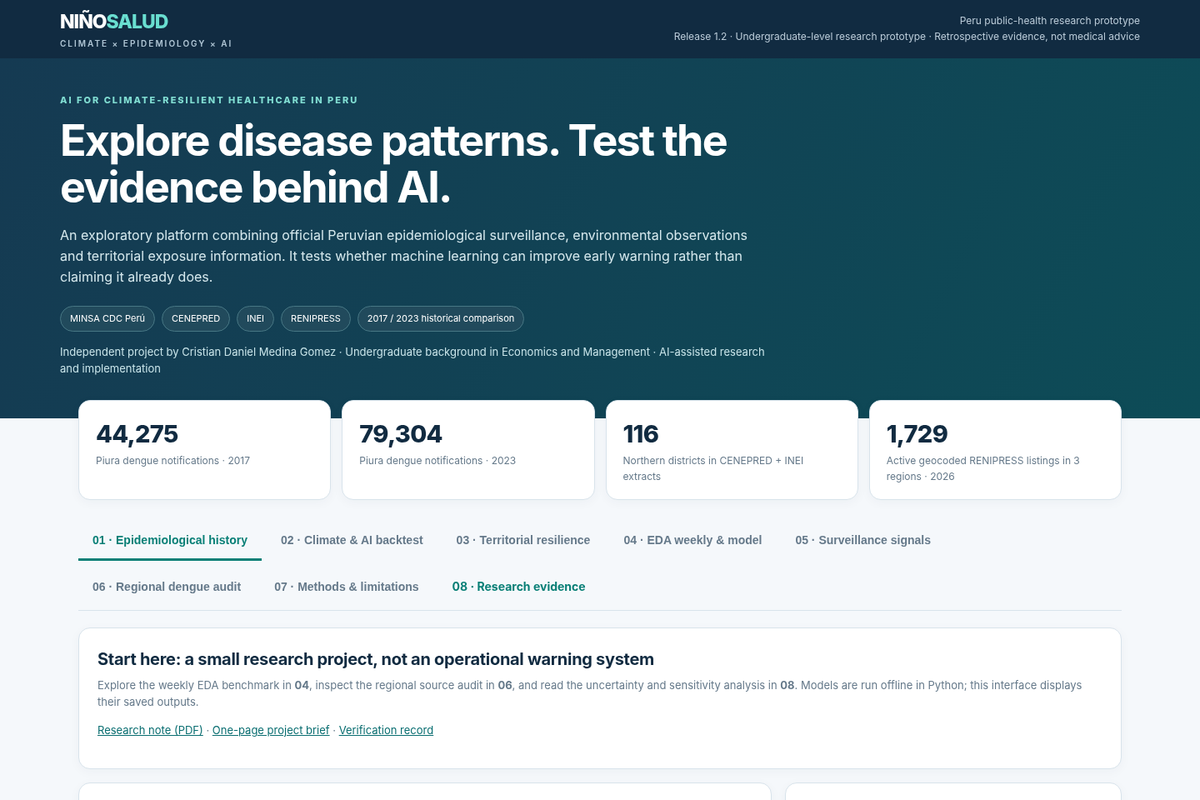
NiñoSalud AI: exploring public-health data, climate patterns and AI in northern Peru.
Inspiration
I moved to Italy when I was 15. I had to adapt to a new country, learn a new language, and find my place in an unfamiliar environment. Looking back, that experience taught me something important: being outside my comfort zone can also be an opportunity to grow.
Today, I'm completing my BSc in Economics and Management at Bocconi University, with graduation expected in March 2027. During my studies, I became increasingly interested in statistics, data analysis, and programming. Working with tools such as R, Python, and Excel made me curious about how quantitative methods could be applied beyond economics and business.
Healthcare particularly caught my attention. I wanted to understand how data could help us study public-health challenges, especially in places where environmental conditions and access to healthcare can make those challenges more complex.
Peru has a personal meaning to me, so I decided to start there. I began exploring publicly available epidemiological and environmental data from northern Peru, focusing on diseases such as dengue and acute diarrheal disease.
That curiosity eventually became NiñoSalud AI.
I didn't start with the ambition of building a sophisticated medical system. I wanted to challenge myself, learn how to work with real public-health data, and understand whether machine learning could offer something useful beyond simpler statistical methods.
For me, this project represents a first step toward combining my background in economics with my growing interest in data science, artificial intelligence, and health sciences.
What it does
NiñoSalud AI is an interactive research dashboard focused on climate, epidemiological surveillance and public health in northern Peru.
It brings together information from Peruvian public institutions, including MINSA, CENEPRED, INEI and SUSALUD, to explore disease trends and their wider environmental and territorial context.
Visitors can explore historical dengue patterns, examine weekly diarrheal disease reports, compare provinces, and investigate data-quality issues.
One of the main experiments tests whether a machine-learning model can predict reported acute diarrheal disease (EDA) episodes four weeks ahead more accurately than simple statistical alternatives.
The weekly EDA analysis uses all-age reported episodes, not individual patient records or child-specific weekly data.
The goal isn't to present a finished medical prediction system. It's to make the evidence easier to explore and show what the models can and cannot tell us
How we built it
I started by collecting publicly available data from official Peruvian sources and trying to understand how the different datasets were organized.
This was more complicated than I expected. The datasets covered different years, geographic areas and reporting definitions, so I had to pay attention to whether the numbers were actually comparable.
The project uses Python for data analysis, model evaluation and statistical checks, while HTML, CSS and JavaScript power the interactive dashboard. I also used AI tools to support development and documentation, reviewing the outputs and iterating on the research.
For the main experiment, I compared a Random Forest model using climate observations with simpler approaches, including persistence and a four-week moving average.
The models were fitted using historical data from 2019–2022 and evaluated retrospectively on 992 matched province-week predictions from 2023–2025.
I documented the methods, data sources, limitations and reproducibility steps on GitHub so that others can inspect the work.
Challenges we ran into
The biggest challenge wasn't building the interface. It was understanding the data well enough to avoid drawing misleading conclusions.
Some official datasets contained conflicting totals, while others had missing climate observations or differences in reporting definitions.
I also discovered that choices made during data cleaning could substantially affect the results. For example, in the regional dengue records, changing the threshold for excluding unusually long symptom-to-attendance intervals changed the summary statistics for some provinces.
Another challenge was evaluating machine learning fairly.
Initially, I expected a model that included climate information to perform better than a simple baseline. The results were more interesting than that.
Accomplishments that we're proud of
I'm proud that NiñoSalud AI became more than a collection of graphs.
It now includes an interactive dashboard, documented data sources, reproducible analytical code, model comparisons and explicit discussions of uncertainty.
The main experiment produced an important result: the simple persistence baseline performed better than the Random Forest model on the evaluation sample.
Persistence achieved a mean absolute error of approximately 45.1 reported episodes per province-week, compared with 50.3 for the climate-informed Random Forest.
Adding climate information improved the Random Forest compared with its version without climate data, but not enough to outperform persistence.
It wasn't the result I initially expected, but I think reporting it openly makes the project more valuable
What we learned
What I value most about this experience is that it pushed me into a field I am still learning to understand.
Coming from Economics and Management, I had to become more familiar with epidemiological data, research methods, model evaluation, and the limitations of real-world datasets.
I also learned that machine learning is not automatically better than a simpler approach. In my main experiment, the Random Forest model did not outperform the persistence baseline. Rather than hiding that result, I wanted to understand it and document it.
This project reminded me of something I have experienced throughout my life: meaningful progress often begins when I challenge myself to learn something unfamiliar.
I still have a lot to learn, but NiñoSalud AI has made me more certain that I want to continue studying at the intersection of data science and healthcare.
What's next for NiñoSalud AI
I'd like to continue developing the project as I strengthen my technical and scientific background.
My next priorities would be to improve the handling of missing data, explore additional climate variables, and evaluate the models on genuinely unseen future observations.
I'd also like to understand whether similar approaches could be useful in other regions of Peru.
NiñoSalud AI is still an exploratory student project, not a validated early-warning or clinical system.
For me, its greatest value has been the opportunity to ask a meaningful question, work through the uncertainty, and learn from the results — including the ones I didn't expect.
Built With
- css
- data
- github
- html
- javascript
- learning
- machine
- pages
- python
- visualization

Log in or sign up for Devpost to join the conversation.