-
-
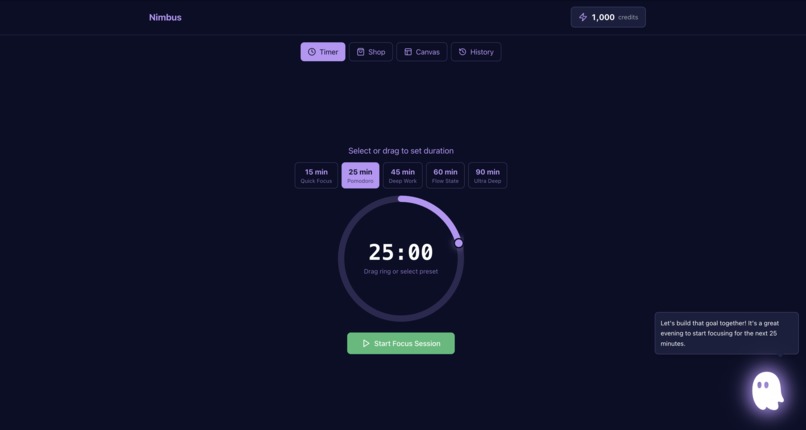
Home page
-
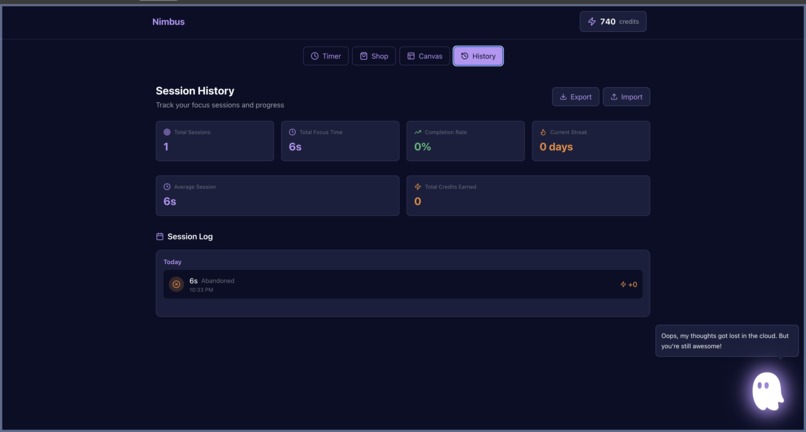
User data history
-
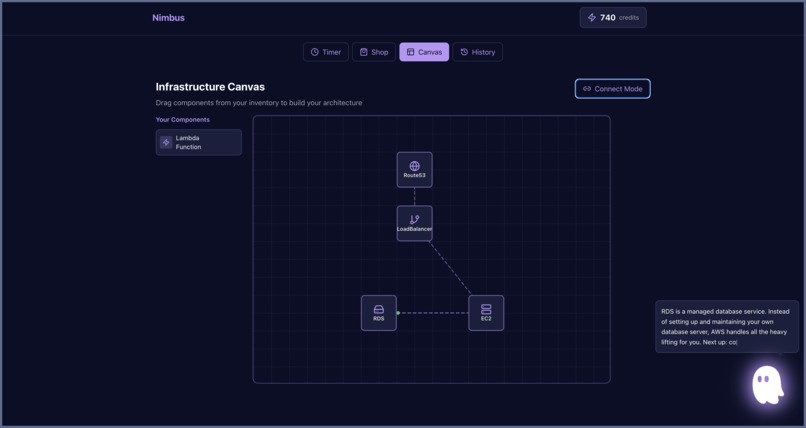
Designing the architecture
-
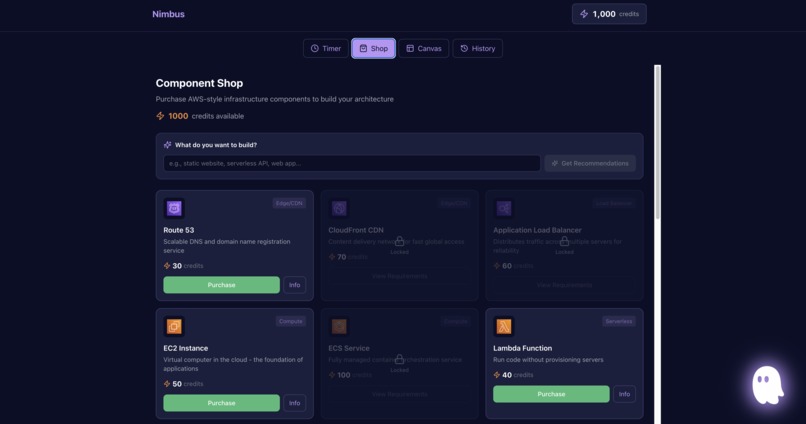
Shop page
Inspiration
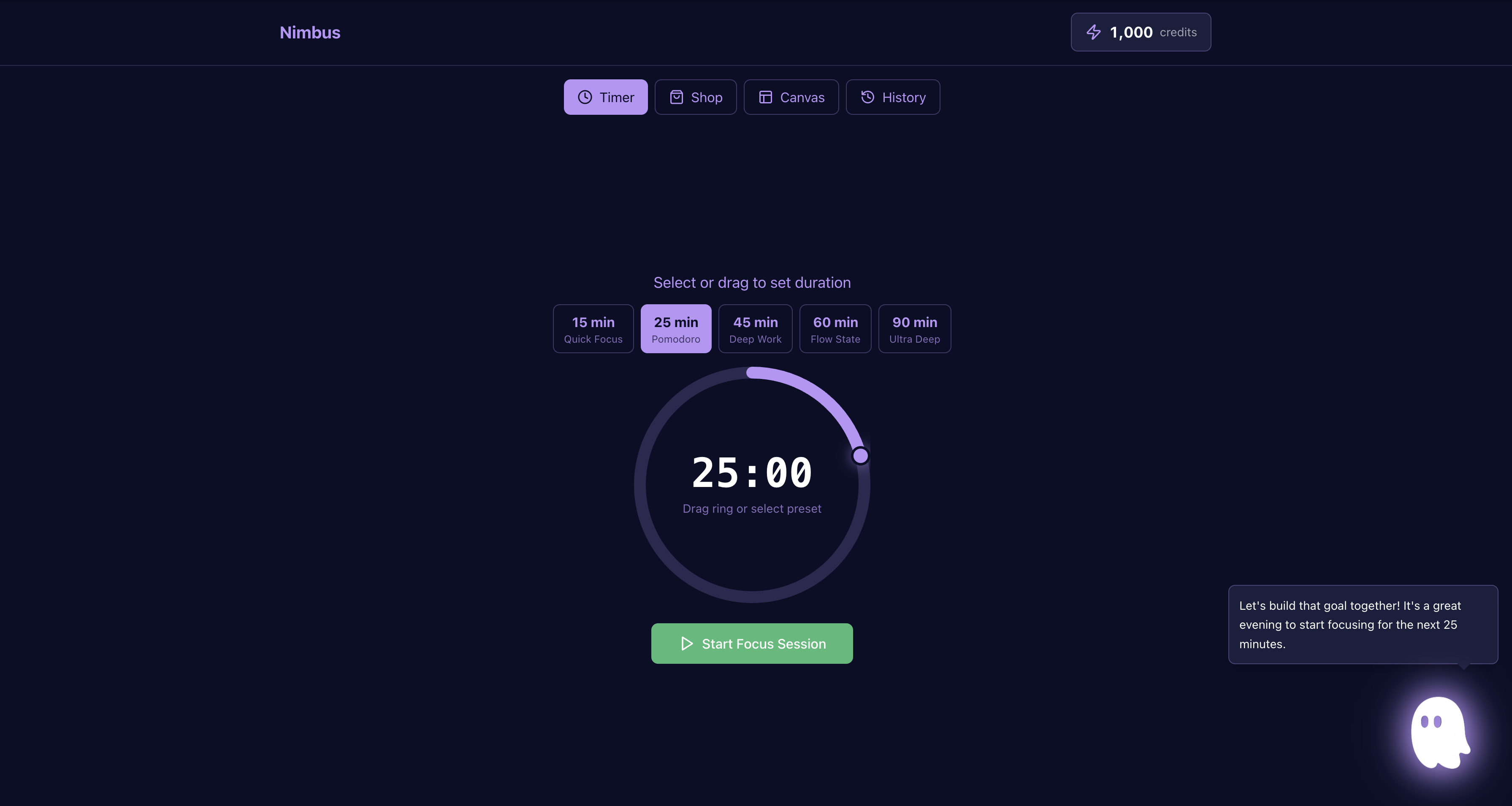
As students, we use Pomodoro apps that help us with studying. We wanted a way to study and learn real cloud architecture at the same time. Nimbus turns focused study sessions into progress on an AWS-style cloud you build yourself.
What it does
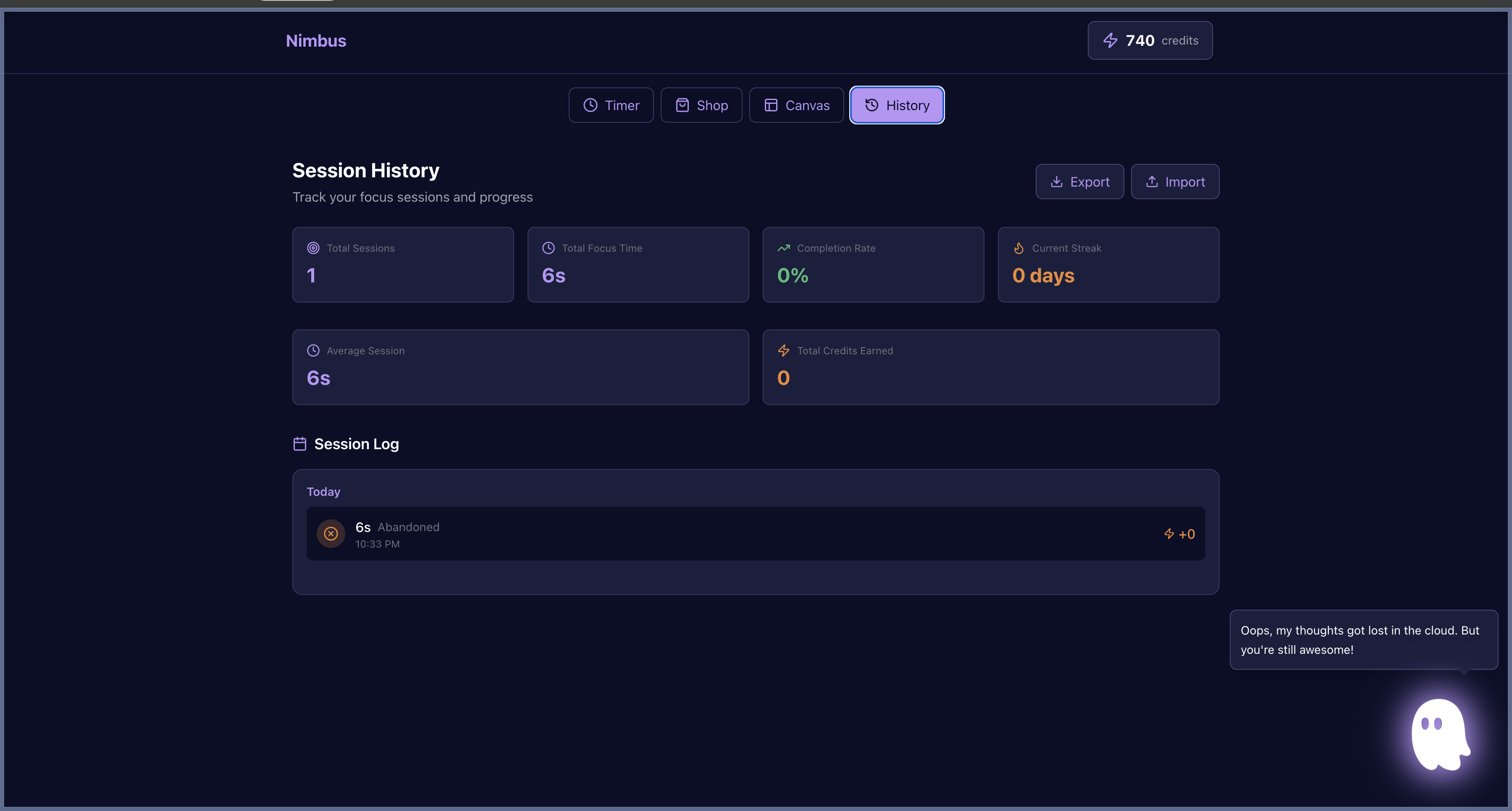
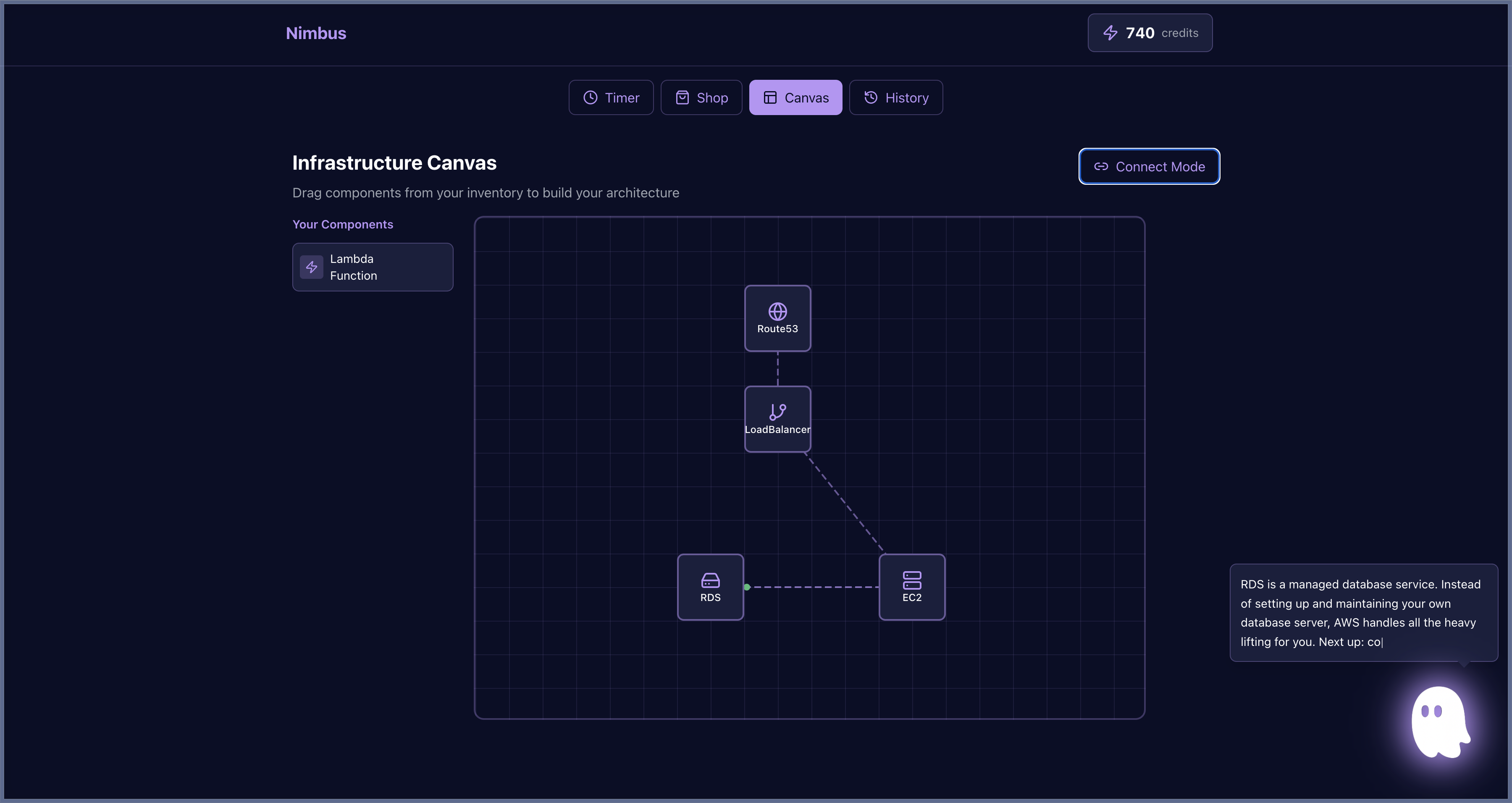
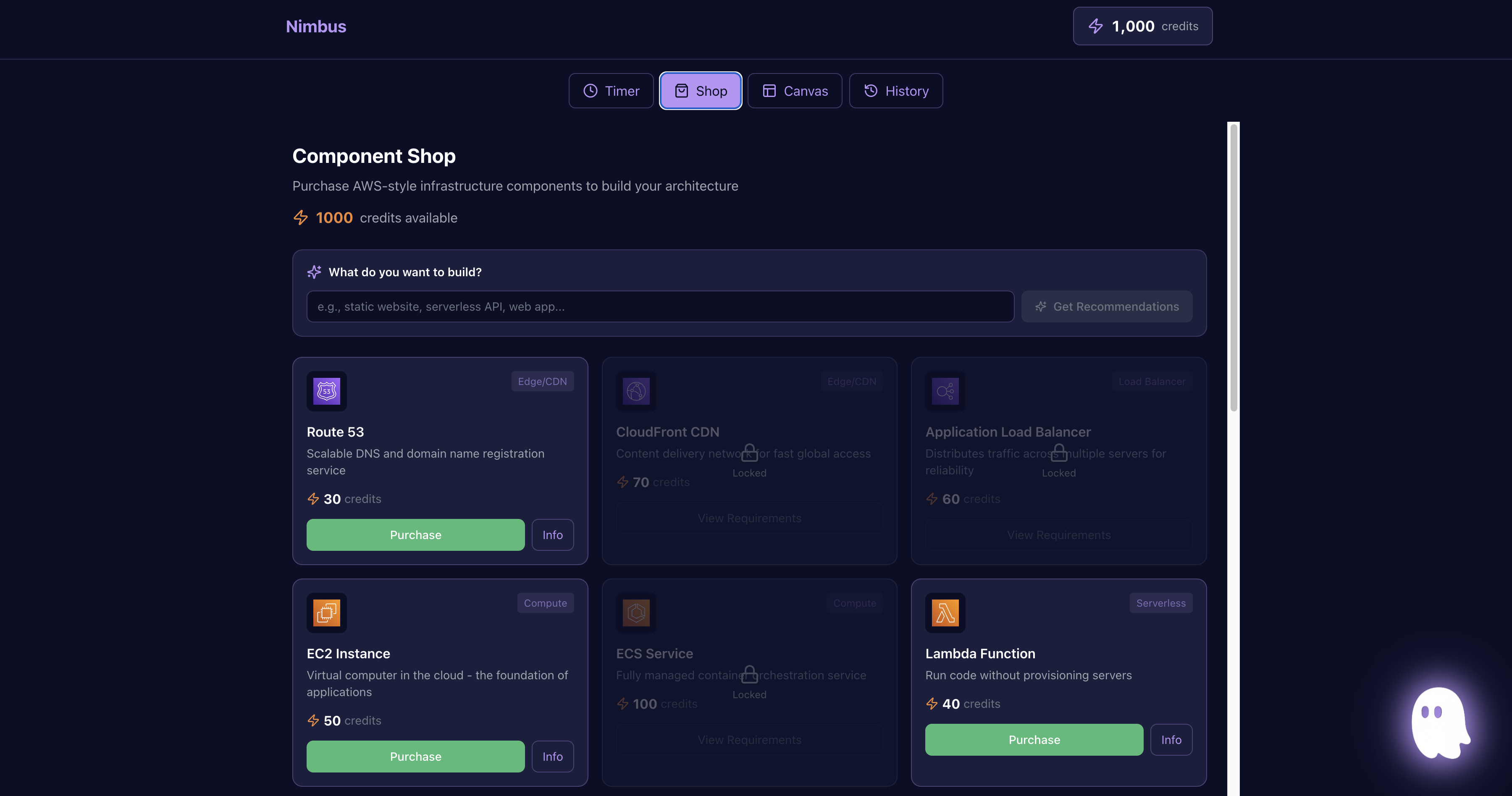
• Focus Timer & Credits • Timed sessions (15–90 min) with streaks and bonuses. • Every 15 minutes of focus earns Cloud Credits; bonuses for no pauses, long sessions, and streaks. • Build Realistic Cloud Architectures • Spend credits in a Component Shop with AWS services (EC2, S3, RDS, Lambda, etc.). • Each component has real-world examples and links to official AWS docs. • A Canvas lets you drag, connect, and validate services using real AWS patterns. • AI Agents • Focus Coach: Encouragement, pattern analysis, suggested session lengths, gentle re-engagement. • Cloud Architect: Explains services, suggests next components, recognizes patterns (e.g., 3-tier), and can recommend services based on a goal (e.g., “static website”). • Progress & Persistence • Session history, stats, export/import. • Anonymous cloud saves via AWS backend so progress isn’t lost.
How we built it
• Spec-First Development • requirements/design/tasks files with detailed user stories, data models, and ~35 correctness properties. • This let Kiro IDE implement features consistently and avoid scope creep. • Steering Docs & Hooks • Steering docs define product, structure, and tech stack (React, Tailwind, no localStorage). • Kiro hooks act like automated code review: check for missing error handling, style consistency, and requirement coverage. • MCP + AWS Docs • MCP servers used to fetch up-to-date AWS docs/pricing so component descriptions, examples, and upgrade paths are realistic.
Challenges we ran into
• Timer accuracy with inactive tabs → solved via timestamp-based drift correction. • Cloud state sync without localStorage → Lambda + DynamoDB anonymous saves retrofitted into the app. • Connection validation across many AWS services → solved with category-based rules instead of enumerating every pair. • LLM reliability & cost → rate limiting, fallbacks, and defensive parsing of agent responses.
Accomplishments that we're proud of
• Production-grade architecture: AI agents, cloud persistence, error handling, rate limits, responsive UI. • Educationally accurate AWS modeling: 16+ services, real patterns (edge → LB → compute → DB), realistic relative costs, official doc links. • Elegant validation system: service categories + rules = scalable, teachable architecture constraints. • Spec-driven AI workflow: proved that detailed specs + AI (Kiro) dramatically increase delivery speed and quality.
What we learned
• Detailed specs and steering docs massively improve AI-assisted development. • MCP turns the AI into a live research assistant, not just a static model. • Category-based rules, timestamp-based timers, and defensive LLM parsing are robust patterns we’ll reuse. • AI agents need budgets and guardrails (rate limiting, error handling) to be practical.
What's next for Nimbus
• More polish (animations, achievements, analytics, ambient audio). • Broader cloud coverage (multi-cloud, templates, cost estimation, deeper validation). • Stronger learning paths (certification prep, course integration, community architectures). • Long-term vision: design architectures, learn best practices, estimate real cloud cost, and eventually generate deployable infra from the canvas.
Built With
- amazon-web-services
- amplify
- css
- dynamodb
- html
- javascript
- kiro
- lambda
- mcp
- tailwind
- yml

Log in or sign up for Devpost to join the conversation.