STOCK AI – Intelligent Inventory Management Platform
Team: Axions
Inspiration
We noticed that managing inventory is not always easy, especially for small and medium-sized businesses. Many businesses still use notebooks, spreadsheets, or different tools to keep track of their products, suppliers, purchases, and sales. This can make things confusing and sometimes leads to incorrect stock records or unexpected shortages.
We wanted to build something that could make this process easier. Instead of having everything managed separately, we thought of bringing all the important inventory operations into one platform and adding AI to make it even more useful.
That's how STOCK AI started. Our aim was to make inventory management simple, organized, and smarter with the help of AI.
What it does
STOCK AI is an inventory management platform that helps businesses handle their daily inventory activities in one place.
With STOCK AI, users can:
- Dashboard: Get a quick overview of products, available stock, revenue, and inventory alerts.
- Inventory Management: Add new products, update stock quantities, and keep track of available inventory.
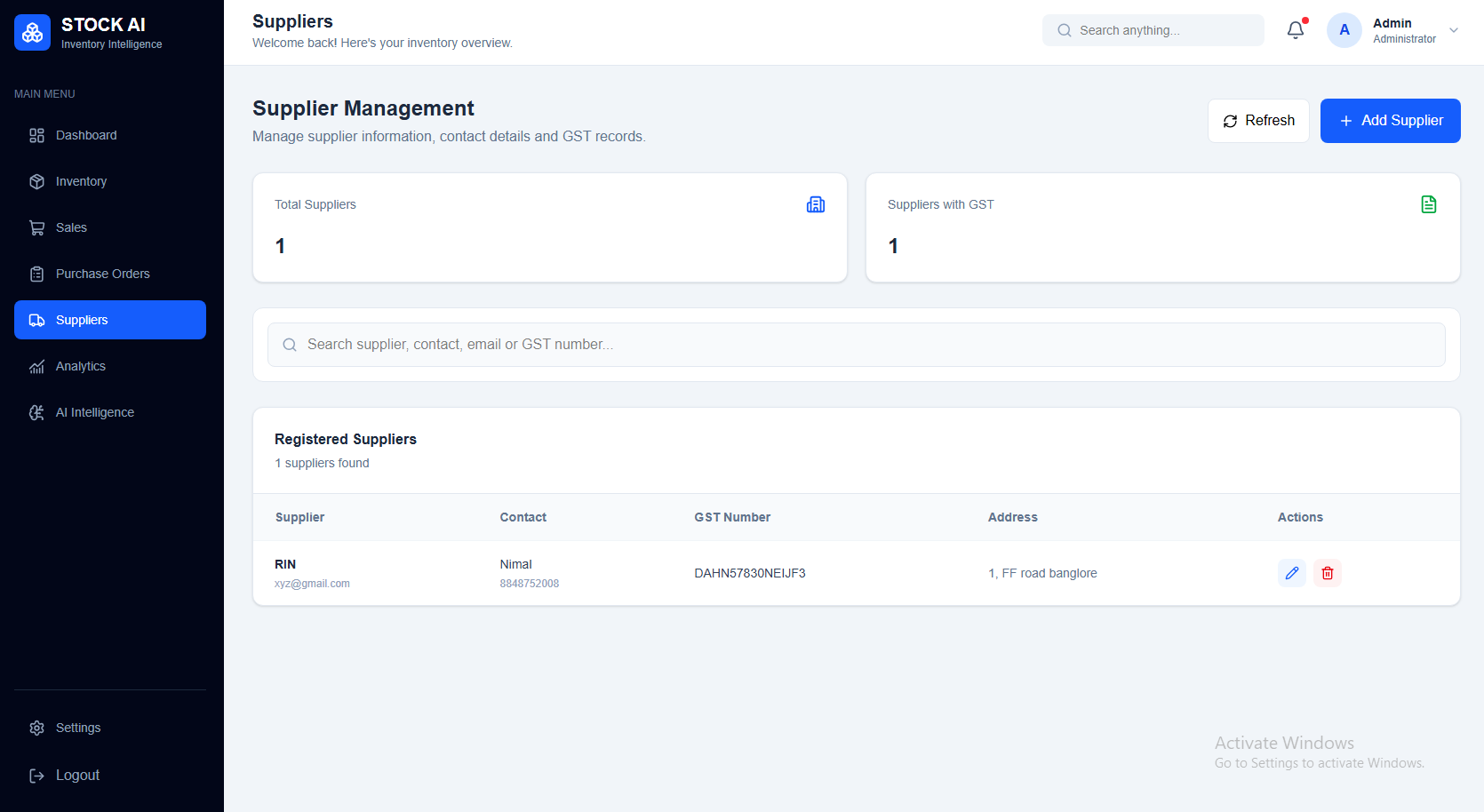
- Supplier Management: Add suppliers and maintain their contact and business details.
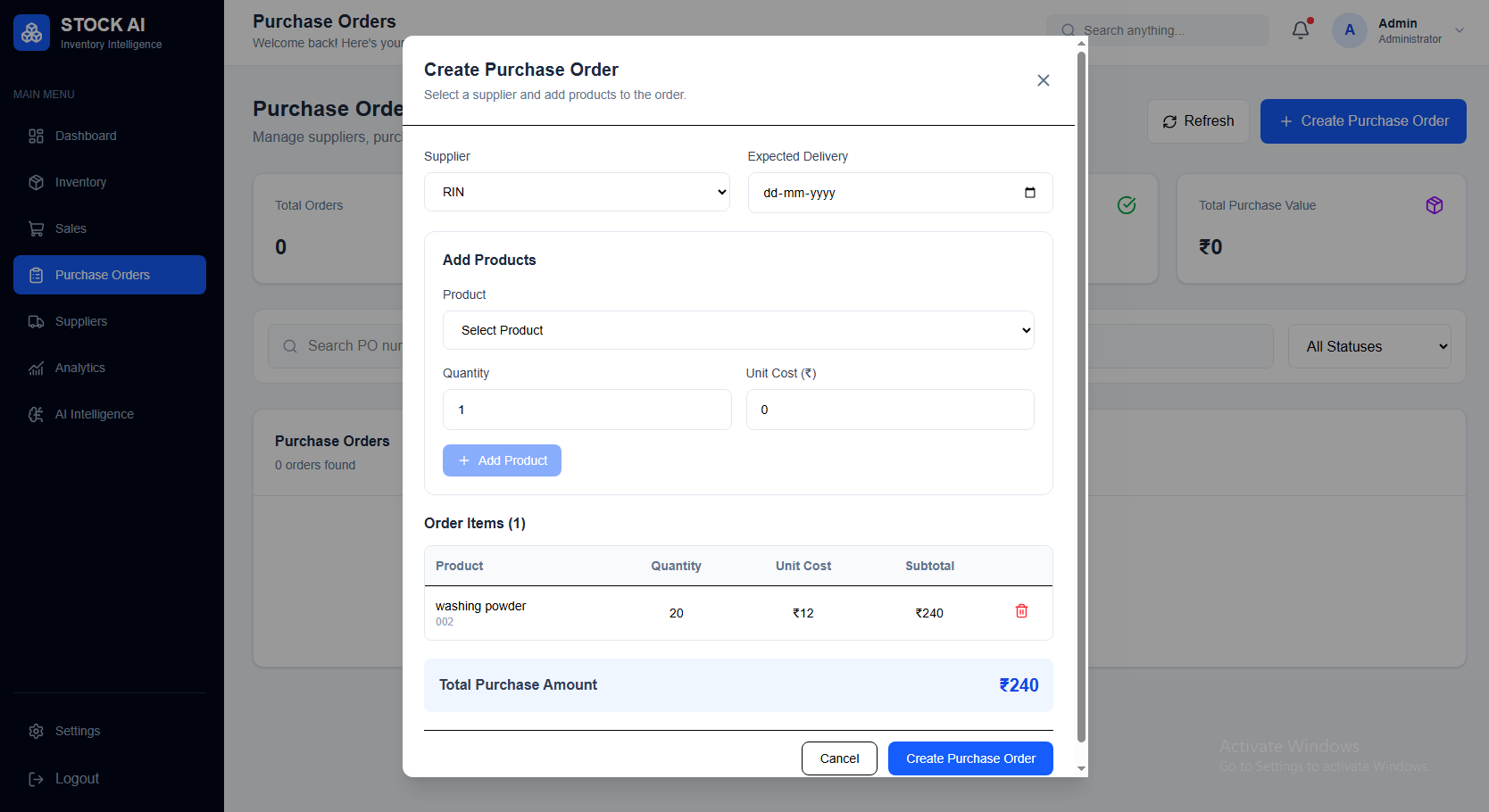
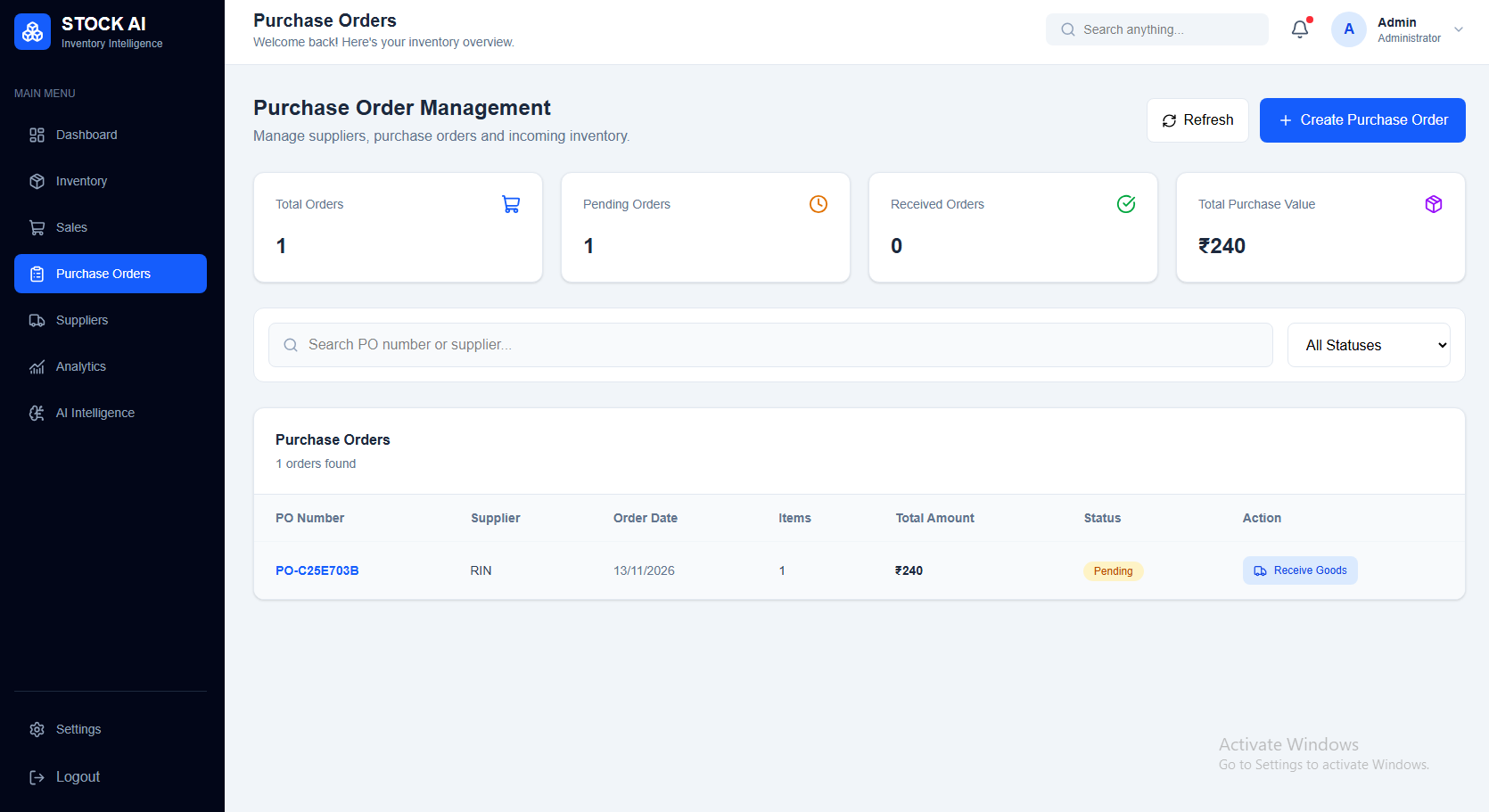
- Purchase Orders: Create and manage purchase orders to keep track of products being purchased.
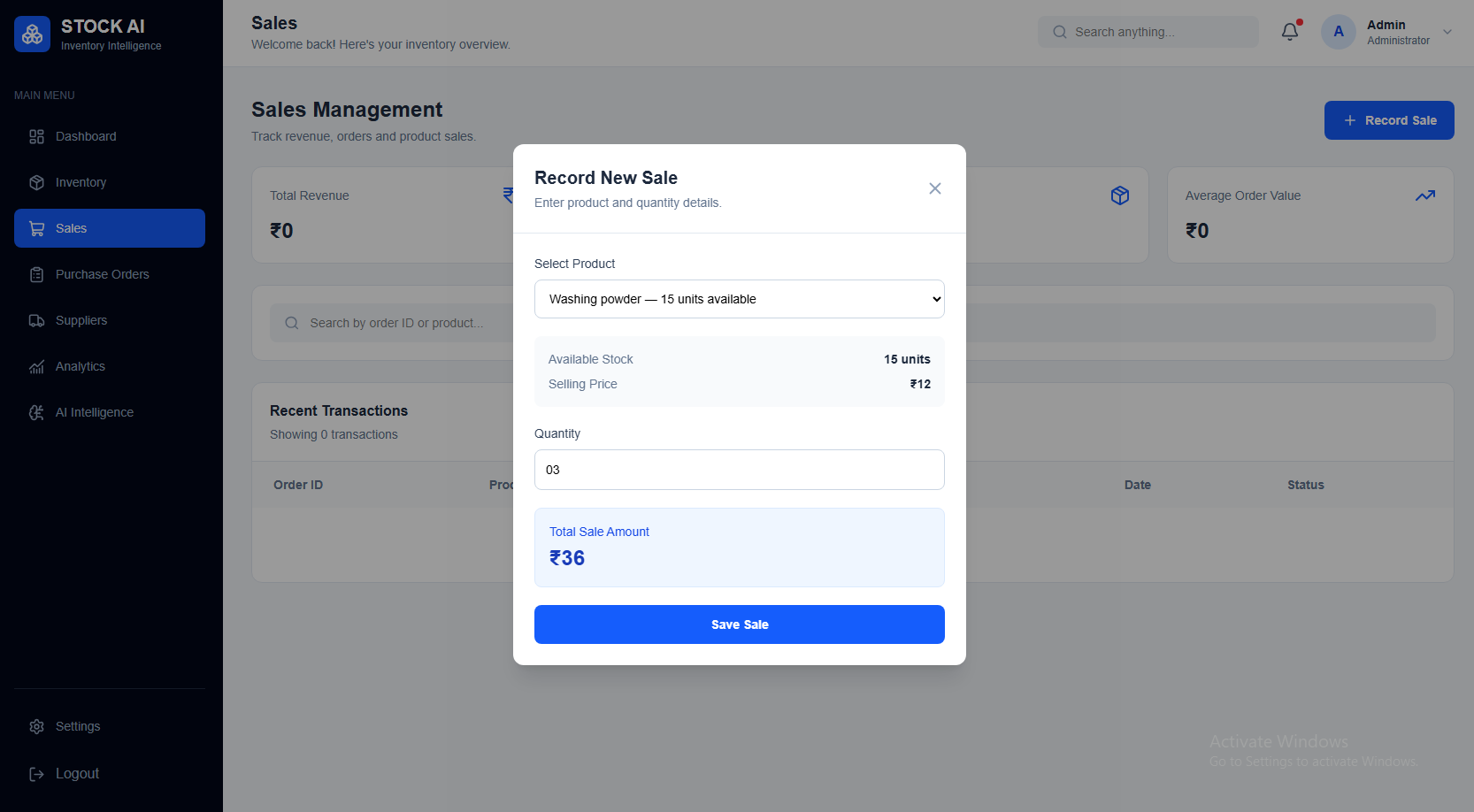
- Sales Management: Record sales transactions and maintain sales information.
- Analytics: View revenue trends and business performance through visual charts.
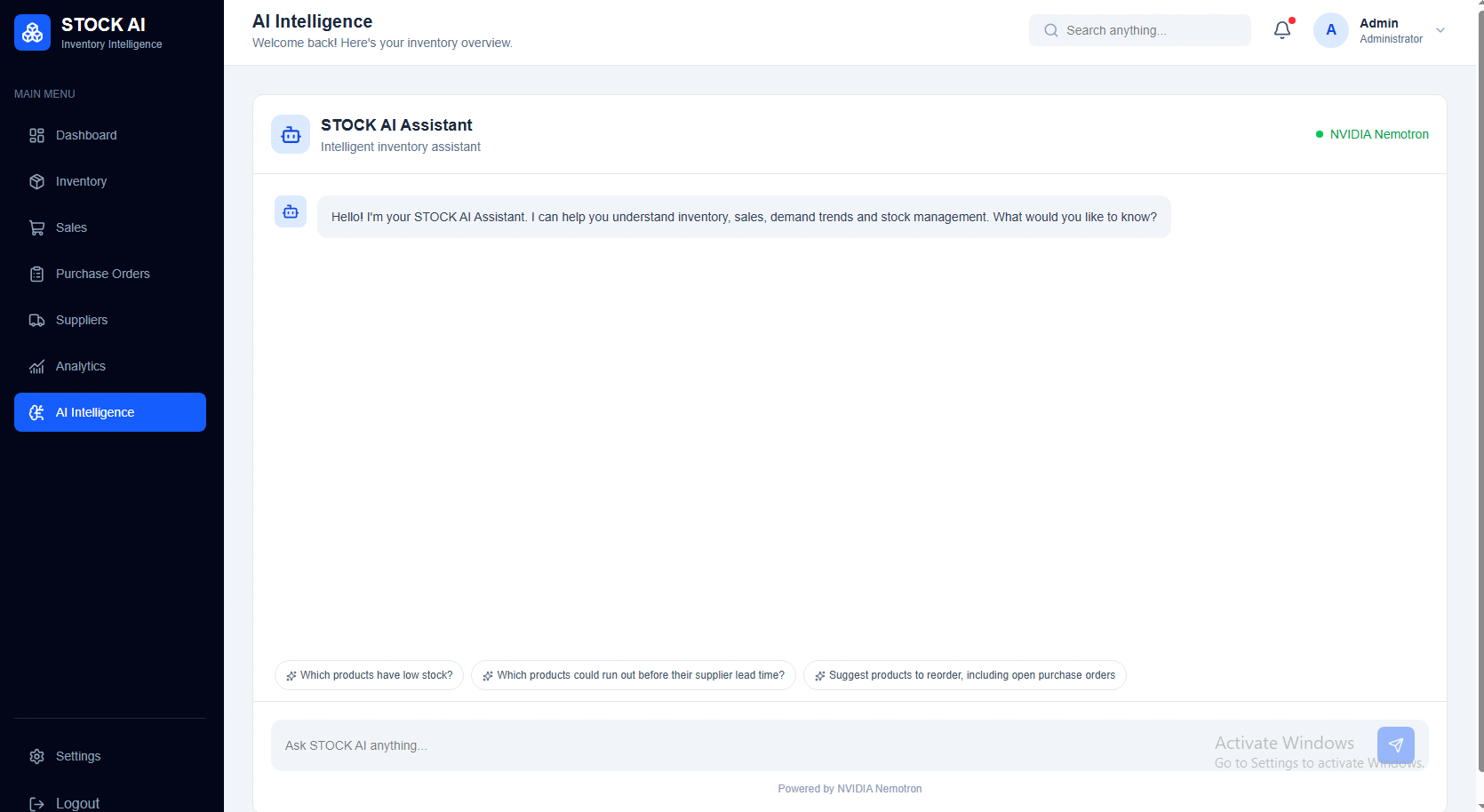
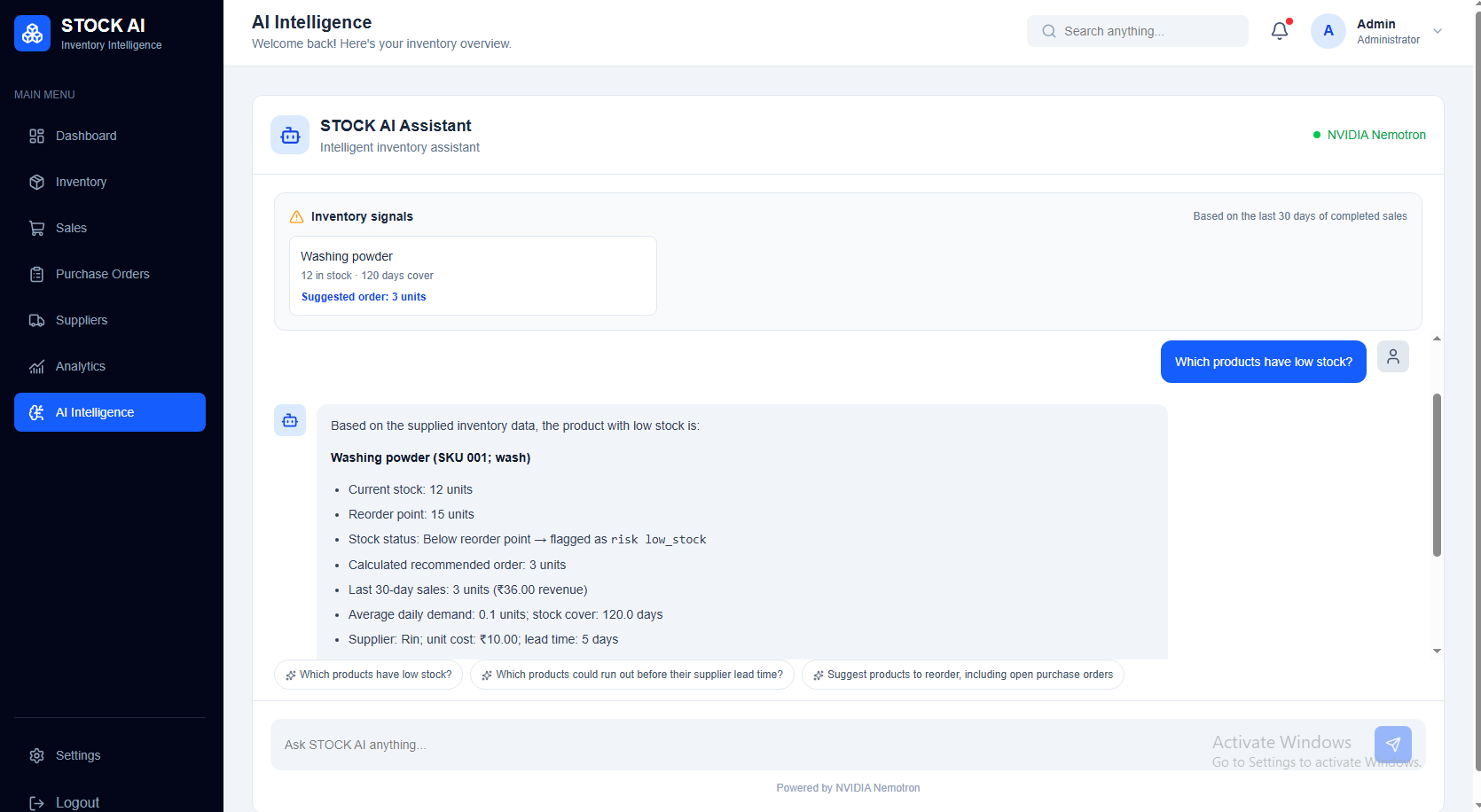
- AI Intelligence: Use an AI assistant powered by NVIDIA Nemotron through the Nebius AI platform to interact with inventory-related information and get useful insights.
We wanted to make it possible for businesses to manage these activities without switching between multiple tools.
How we built it
We built STOCK AI by bringing together different technologies for the frontend, backend, database, and AI integration.
For the frontend, we used React.js with TypeScript, Vite, and Tailwind CSS to create a clean and user-friendly interface.
For the backend, we used Python and FastAPI to handle the application logic and API requests. SQLite is used to store information about products, suppliers, sales, and other inventory activities.
One of the interesting parts of our project was integrating NVIDIA Nemotron through the Nebius AI platform. We connected the model through an API so that users could access AI-powered assistance within our application.
For deployment, we used Vercel to host the frontend and Render to host the backend.
Connecting all these technologies helped us turn our initial idea into a working full-stack application.
Challenges we ran into
Building STOCK AI was not always smooth. We faced quite a few challenges along the way.
One of the biggest challenges was connecting our React frontend with the FastAPI backend and making sure the data was transferred correctly.
We also faced difficulties with database operations, API errors, environment variables, and cloud deployment.
Integrating NVIDIA Nemotron through the Nebius platform was another learning experience. We had to spend time understanding API configurations and fixing errors to get the integration working.
There were also situations where the application worked locally but needed additional changes to work properly after deployment.
We handled these problems by testing different approaches, debugging errors, and working together to improve the application step by step.
Accomplishments that we're proud of
What makes us happy is that we were able to take an idea and turn it into a working application.
We are especially proud of:
- Building a centralized dashboard for inventory management.
- Bringing product and supplier management into one platform.
- Implementing purchase order and sales management.
- Creating visual analytics to understand business performance.
- Integrating NVIDIA Nemotron for AI-powered assistance.
- Successfully deploying our frontend and backend.
- Connecting different technologies to build one complete application.
For us, the biggest achievement was not just building the interface, but making different parts of the application work together as a single system.
What we learned
This project taught us a lot, both technically and as a team.
We got hands-on experience with React, TypeScript, FastAPI, SQLite, API integration, and cloud deployment. We also learned how to connect an AI model to an application using NVIDIA's AI ecosystem and the Nebius platform.
Along the way, we understood that development is not just about writing code. Debugging, testing, finding solutions when something goes wrong, and working together are equally important.
Most importantly, we learned that AI becomes much more meaningful when it is used to solve an actual problem.
What's next for Axions
We don't want STOCK AI to stop as just a hackathon project. There is still a lot we would like to improve and explore.
Some of our future plans are:
- Making the AI assistant more useful for inventory-related questions and recommendations.
- Adding demand forecasting to estimate future product requirements.
- Improving automatic low-stock alerts and reorder suggestions.
- Adding more detailed sales and revenue analytics.
- Introducing different user roles for administrators, employees, and managers.
- Improving application security and scalability.
- Exploring integrations with billing systems and other business platforms.
- Testing STOCK AI with real business data and getting feedback from actual users.
We see STOCK AI as a starting point, and we hope to continue improving it into a practical solution that can make everyday inventory management easier for businesses.
Team Axions – Turning ideas into smarter solutions.
Built With
- fastapi
- nebius-ai
- nvidia-nemotron
- python
- react
- render
- rest-api
- sqlite
- tailwind-css
- typescript
- vercel
- vite
