-

Our Splash Page
-

Our Logo. Sardines in a can.
-
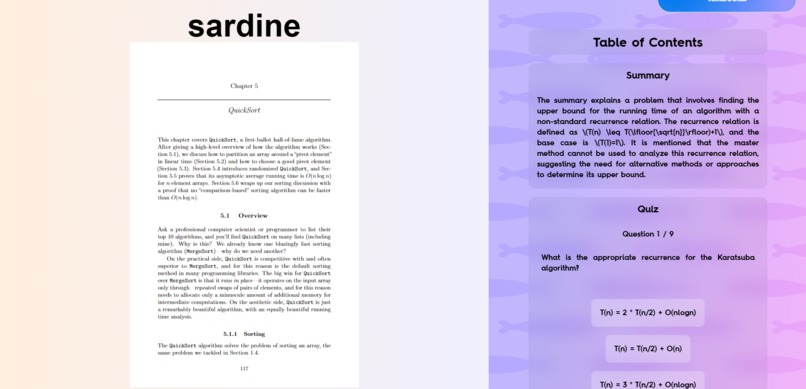
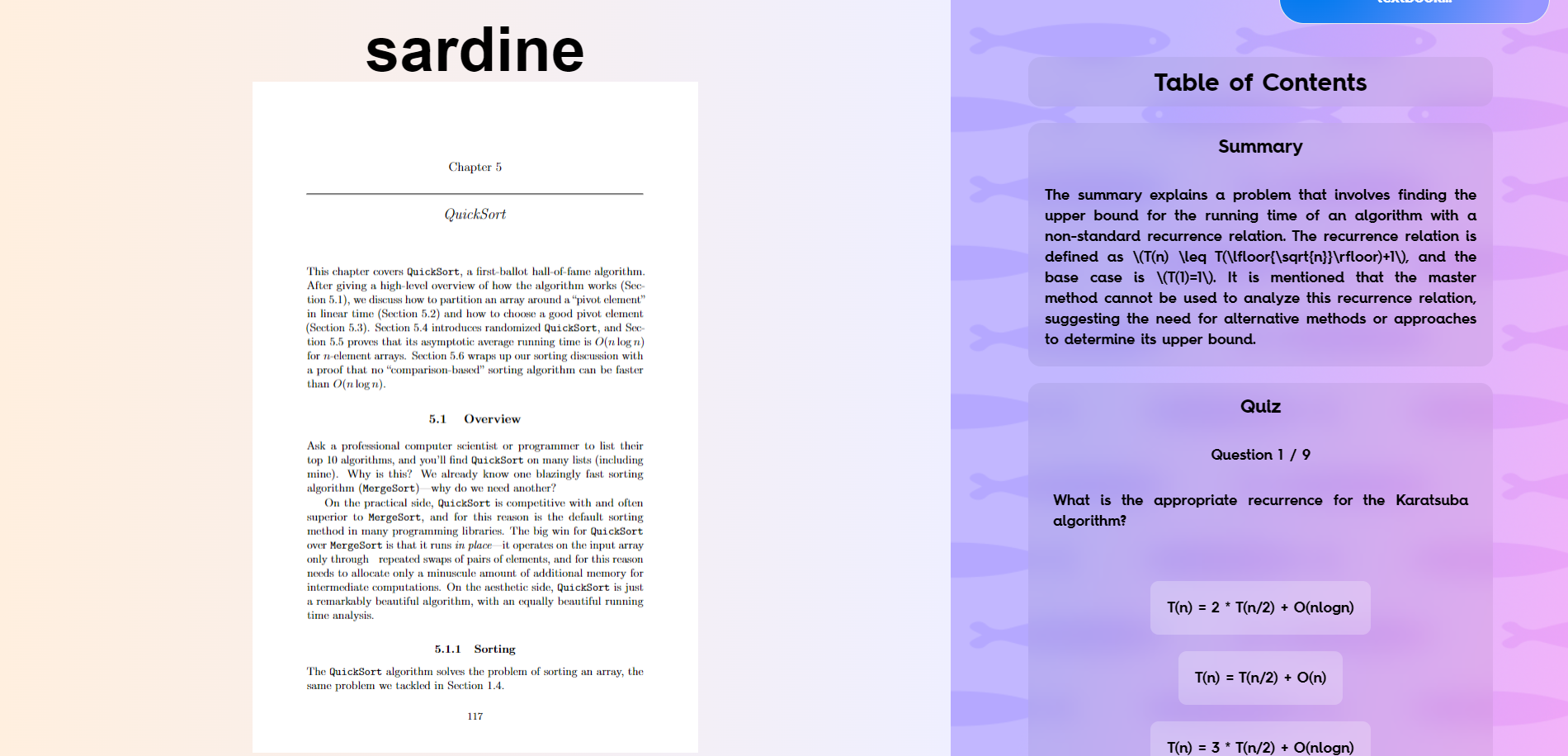
Screenshot of Main Site 2
-
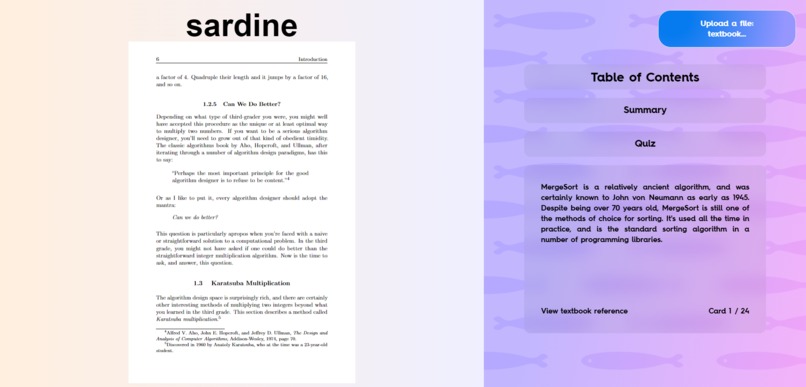
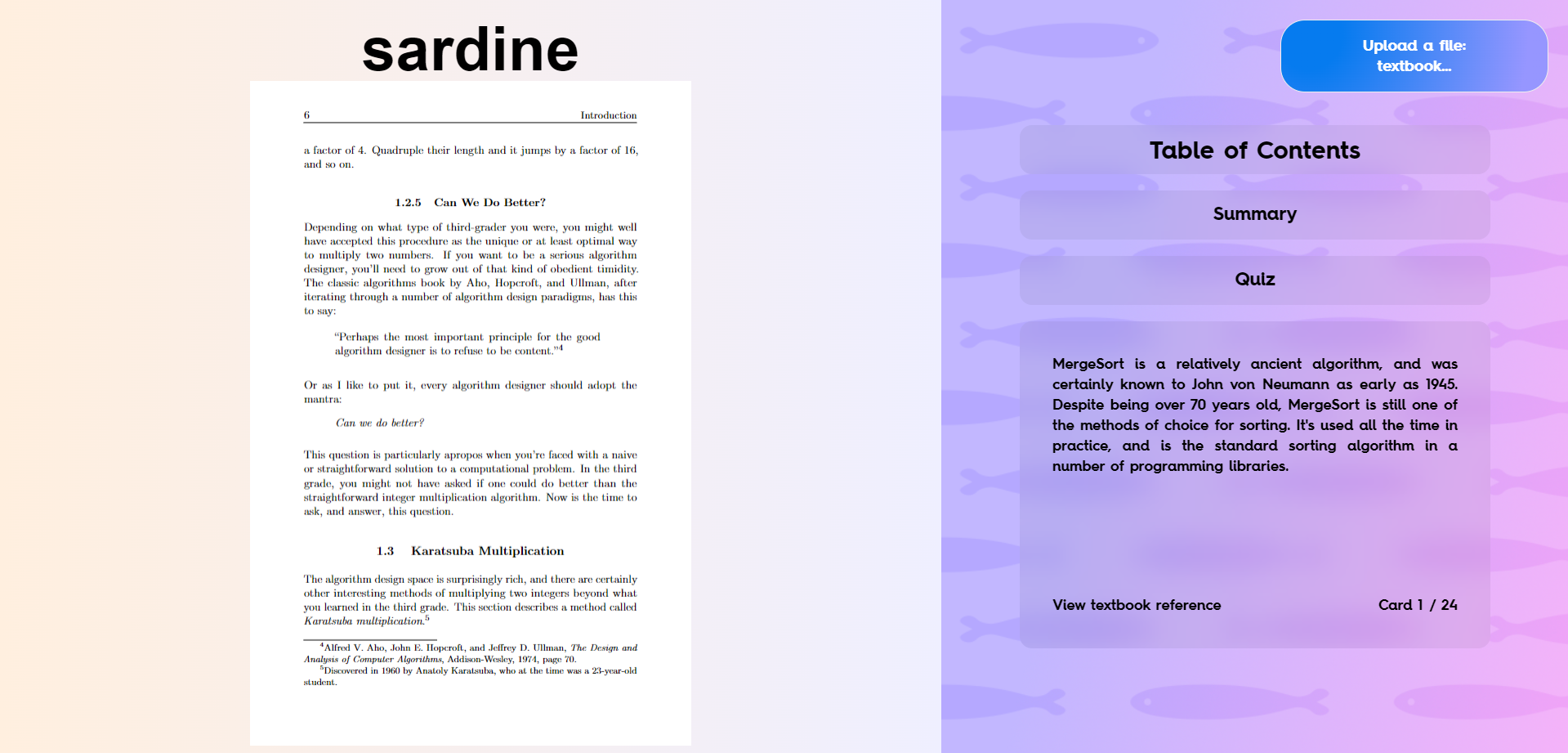
Screenshot of Main Site 1


Inspiration
After experiencing some of the most intense midterms in our entire academic career, we thought it would be a noble pursuit to help students study and learn in a more streamlined process.
What it does
Sardine takes in all sorts of image documents, utilizing pre-trained ML models to process and generate an outline for the uploaded document before developing flashcards and quizzes exclusive to each designated section.
How we built it
We used FastApi, Nougat, and GPT-4 as to build the backend with Javascript, React.js, Tailwind CSS, and Material UI providing for the frontend.
Challenges we ran into
The image processing model we chose struggled to process and interpret the documents was computationally expensive to run, so we were unable to deploy it for real-time applications. We also struggled to add some of the dynamic aspects of our UI that we were striving for in order to build an aesthetic website.
Accomplishments that we're proud of
Getting a high accuracy rate on our image processor allows for accurate breakdowns of textbook pages. Proper prompt engineering with ChatGPT was also a hurdle that we were proud to pass in order to develop the study tools available on our website.
What we learned
We learned about the pretrained model deployment process and various optimizations such as bfloat16 format, libraries like BetterTransformer, and trying smaller versions of models. We also learned about integrating ChatGPT into the application to provide some of the more interesting features which would have been impossible otherwise.
What's next for sardine
We're aiming for scalability in our app, allowing users to be able to save their processed documents to a personal library in addition to extending the study methods to be downloadable. We also considered a chatbot that would be able to answer general questions regarding the document.
Built With
- huggingface
- javascript
- materialui
- python
- react
- tailwind

Log in or sign up for Devpost to join the conversation.