-
-
Product
-
Product(outward)
Inspiration
Before entering an unknown, closed, dark environment, responders often have little to no information about what is inside: people, obstacles, hazards, or the room layout. Sending humans in first creates unnecessary risk, especially when satellites cannot see indoors, drones may not fly safely inside, and larger vehicles are too bulky.
Nightwing was inspired by the idea of reducing the cost and danger of reconnaissance: send a small, low-cost autonomous system first, gather information, and let humans make safer decisions.
What it does
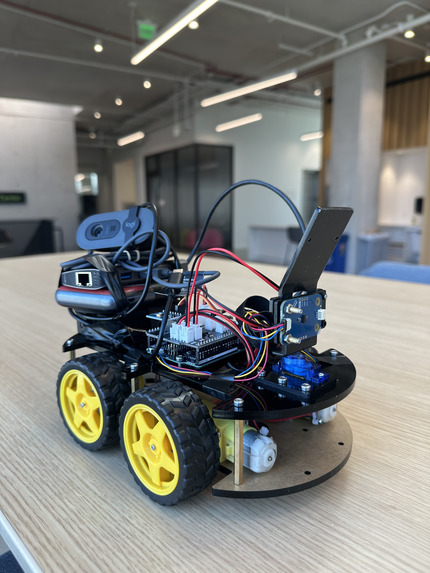
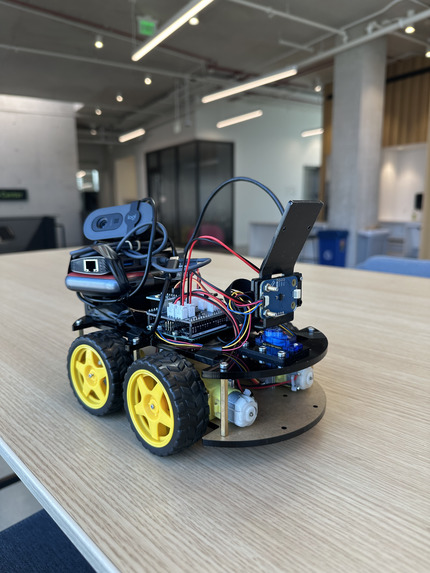
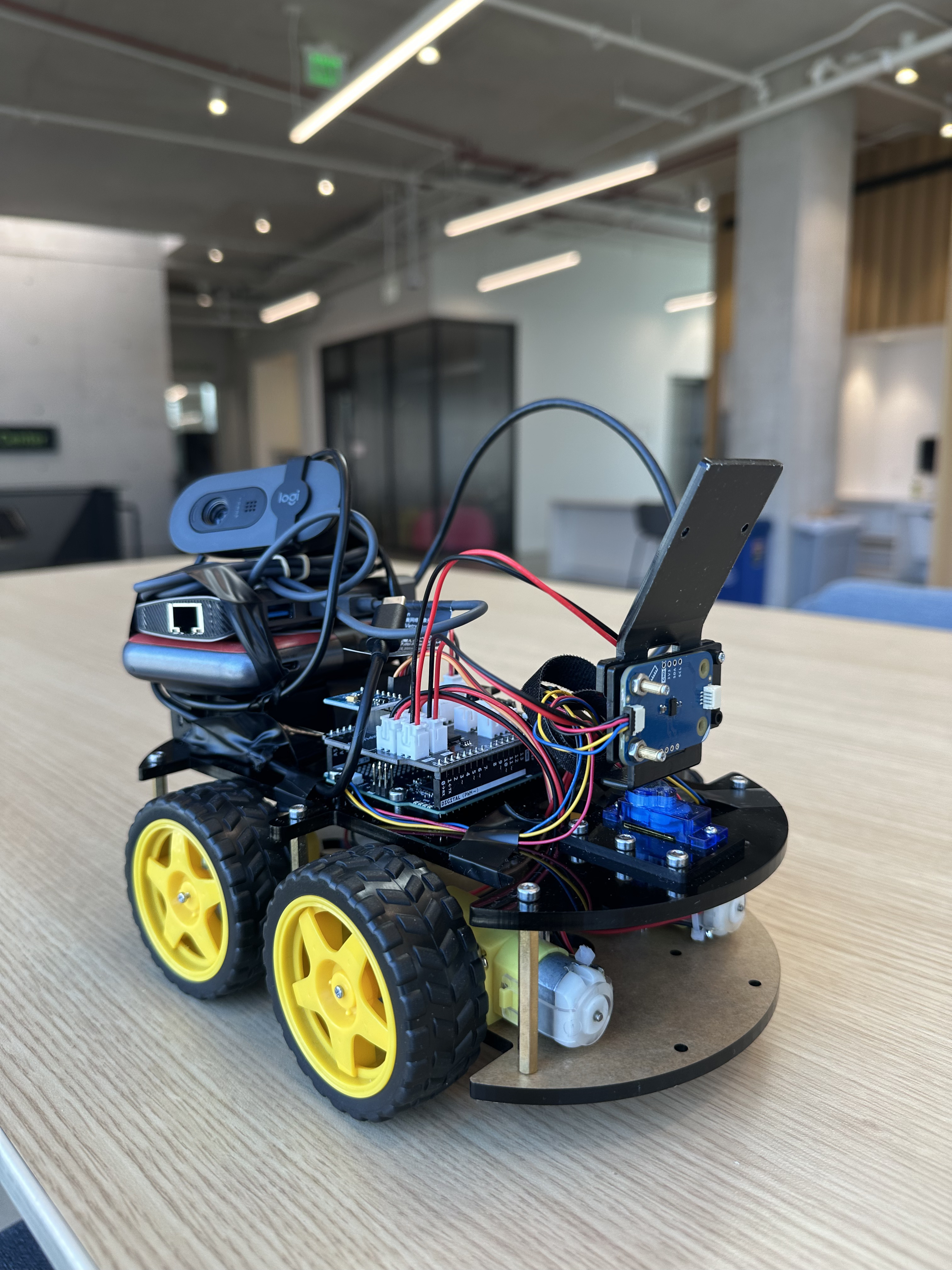
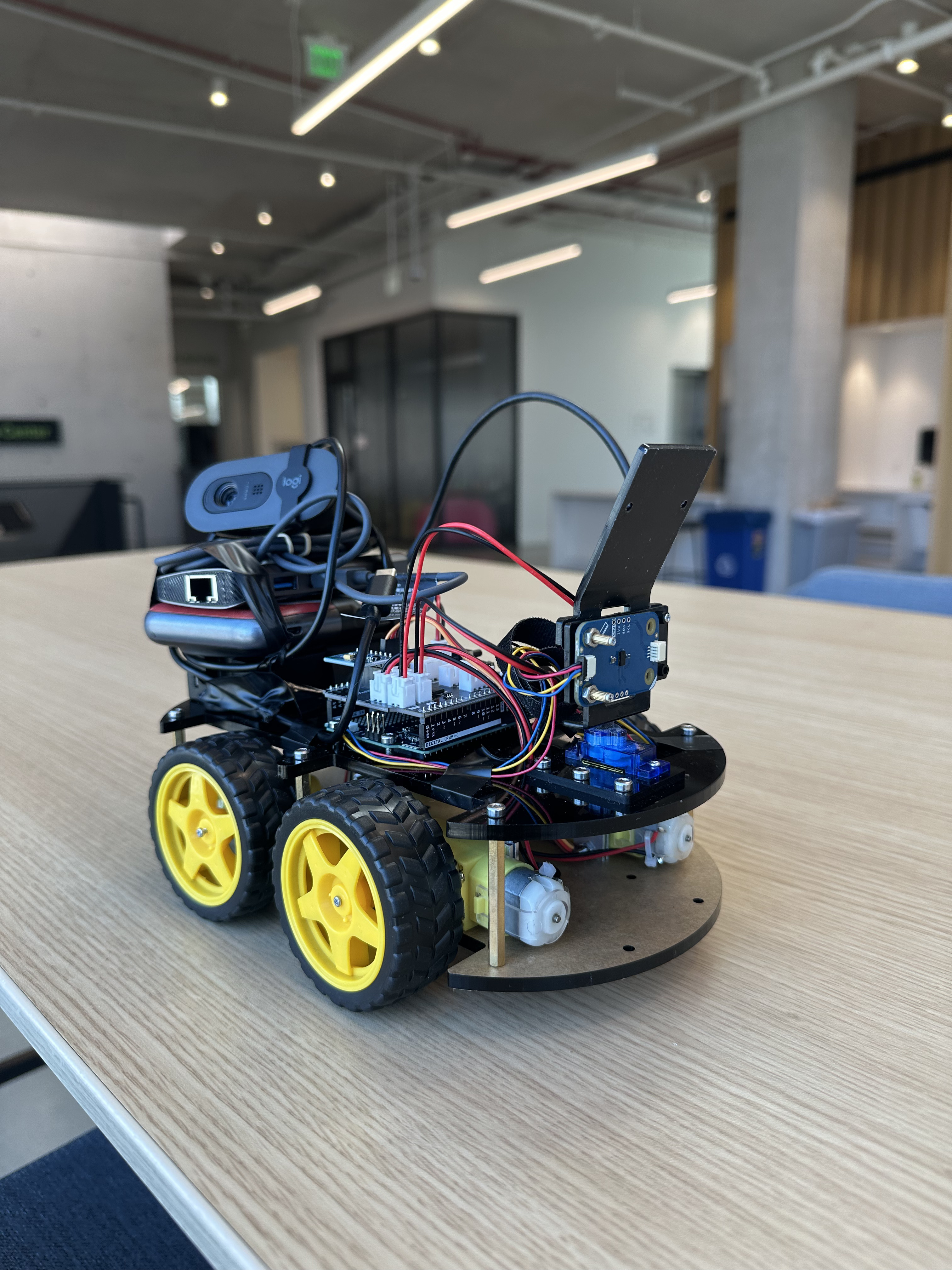
Nightwing is a low SWaP-C autonomous reconnaissance rover/module that can enter dark or unknown indoor spaces before humans do.
It uses onboard distance sensing to avoid obstacles and collect basic mapping data, while a camera and YOLO-based vision model detect and count people in the environment. The system is designed to operate locally on-device, making it useful in GPS-denied or low-connectivity environments.
Core capabilities:
- Autonomous obstacle avoidance
- 2D environment scanning/mapping
- YOLO-based person detection
- Offline edge-AI operation
- Low-cost modular design for unmanned platforms
How we built it
We built Nightwing using the Arduino Uno Q platform, an RC rover chassis, distance sensing, a Logitech camera, and Python-based edge AI software.
The microcontroller side handles rover movement, obstacle avoidance, and sensor readings. The Linux side handles higher-level processing, including camera input, YOLO inference, mapping logic, telemetry handling, and visualization. We connected these pieces through serial communication so the rover’s movement and sensing data could be combined with AI-based detection.
We also designed the project to be modular, so the same sensing and detection stack could later be adapted to other unmanned vehicles, including drones.
Challenges we ran into
One of the biggest challenges was integrating hardware and software within the hackathon time limit. We had to debug motor control, sensor behavior, camera connectivity, serial communication, and model deployment all at once.
We also ran into networking and device-access issues while moving files to the Uno Q and testing the Logitech camera. Running AI models on edge hardware required us to think carefully about performance, model size, and how much processing could realistically happen on-device.
Another challenge was mapping: full SLAM is difficult to build in a short hackathon, so we focused on a practical 2D scanning and telemetry-based approach instead.
Accomplishments that we're proud of
We are proud that we built a working defense-oriented prototype that combines robotics, sensing, and edge AI into one system.
In a short amount of time, we created a rover concept that can scout ahead, avoid obstacles, collect environment data, and use YOLO to identify people. We also built a clear mission use case around reducing human-first reconnaissance risk in dark, unknown indoor spaces.
We are especially proud of making the system low-cost and modular. Even if the rover is damaged or lost, the information it provides can still be valuable.
What we learned
We learned how difficult real-world autonomous systems are compared to software-only projects. Hardware introduces uncertainty: sensors are noisy, motors need calibration, cameras may not connect cleanly, and networking can break at the worst time.
We also learned how important it is to scope the problem correctly. Instead of trying to build full indoor SLAM, we focused on achievable capabilities: obstacle avoidance, 2D scanning, telemetry, and person detection.
Most importantly, we learned that edge AI is not just about running a model. It is about building an end-to-end system where movement, sensing, detection, and decision-making all work together.
What's next for Nightwing
Next, we want to improve Nightwing’s mapping from basic 2D scanning toward more accurate 3D reconstruction. We also want to add more environmental sensors, such as carbon monoxide, temperature, air quality, and smoke detection, to expand its use in mining, industrial safety, and emergency response.
We also see Nightwing evolving from a single rover into a modular payload that can attach to different unmanned systems, including drones and ground robots. Future versions could support better autonomy, stronger edge-AI models, multi-robot coordination, and secure delayed transmission when operating in disconnected environments.


Log in or sign up for Devpost to join the conversation.