-
-
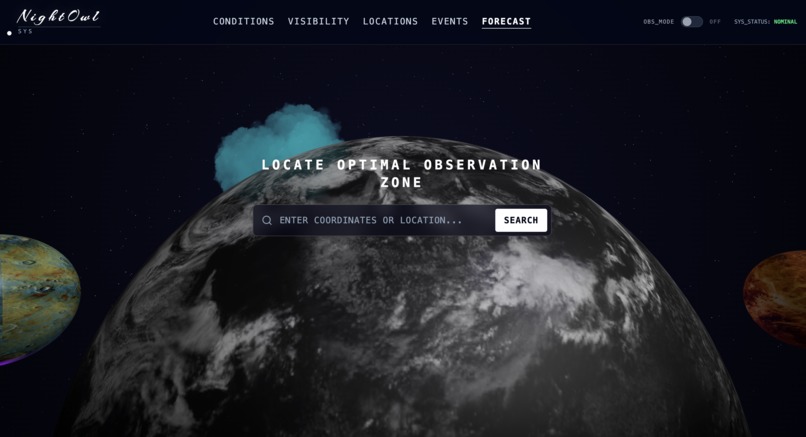
LandingPage
-
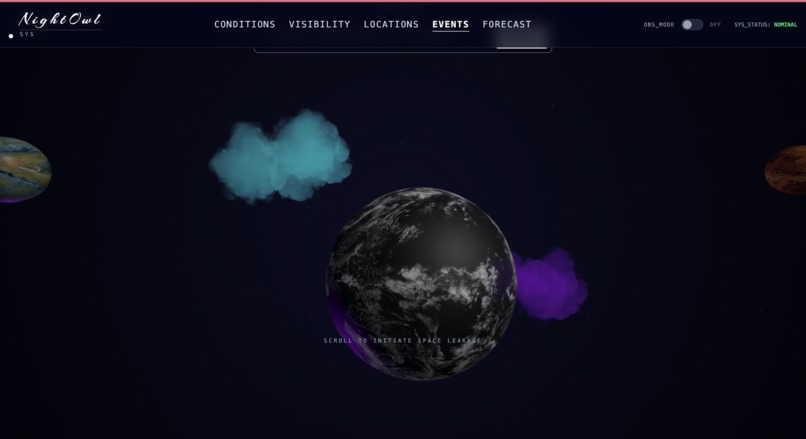
3-D View
-
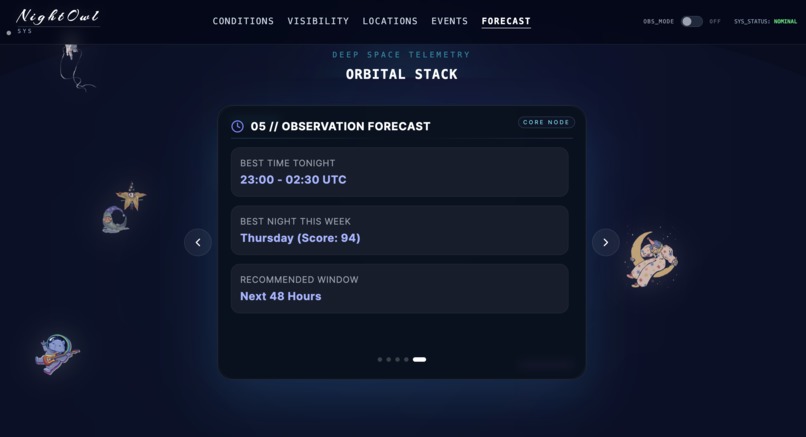
Forecast
-
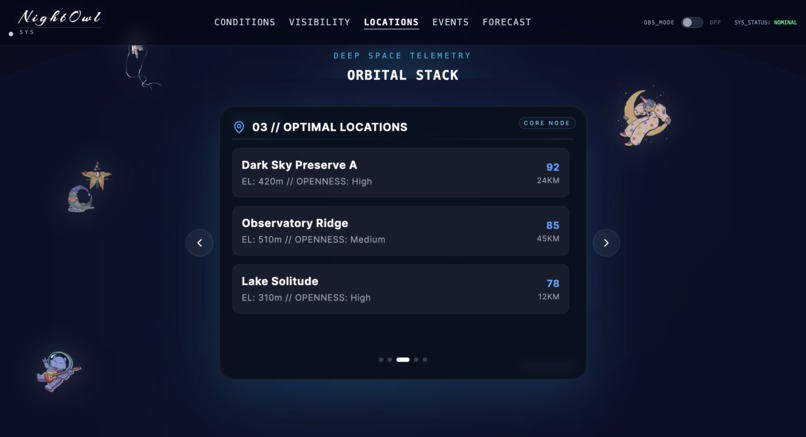
Location
-
Visibility
🌌 Night Owl — Intelligent Stargazing Platform 🚀 Tagline
Find the best place and time to see the universe using real-time astronomy, weather, and AI.
🧠 Inspiration
Stargazing sounds simple — but in reality, it depends on many unpredictable factors like weather, light pollution, moon brightness, and celestial positioning.
My colleague once missed a rare solar eclipse due to cloud cover despite careful planning. That moment sparked a question:
What if we could predict the perfect sky like a navigation system?
Night Owl was built to solve exactly that.
🌟 What it does
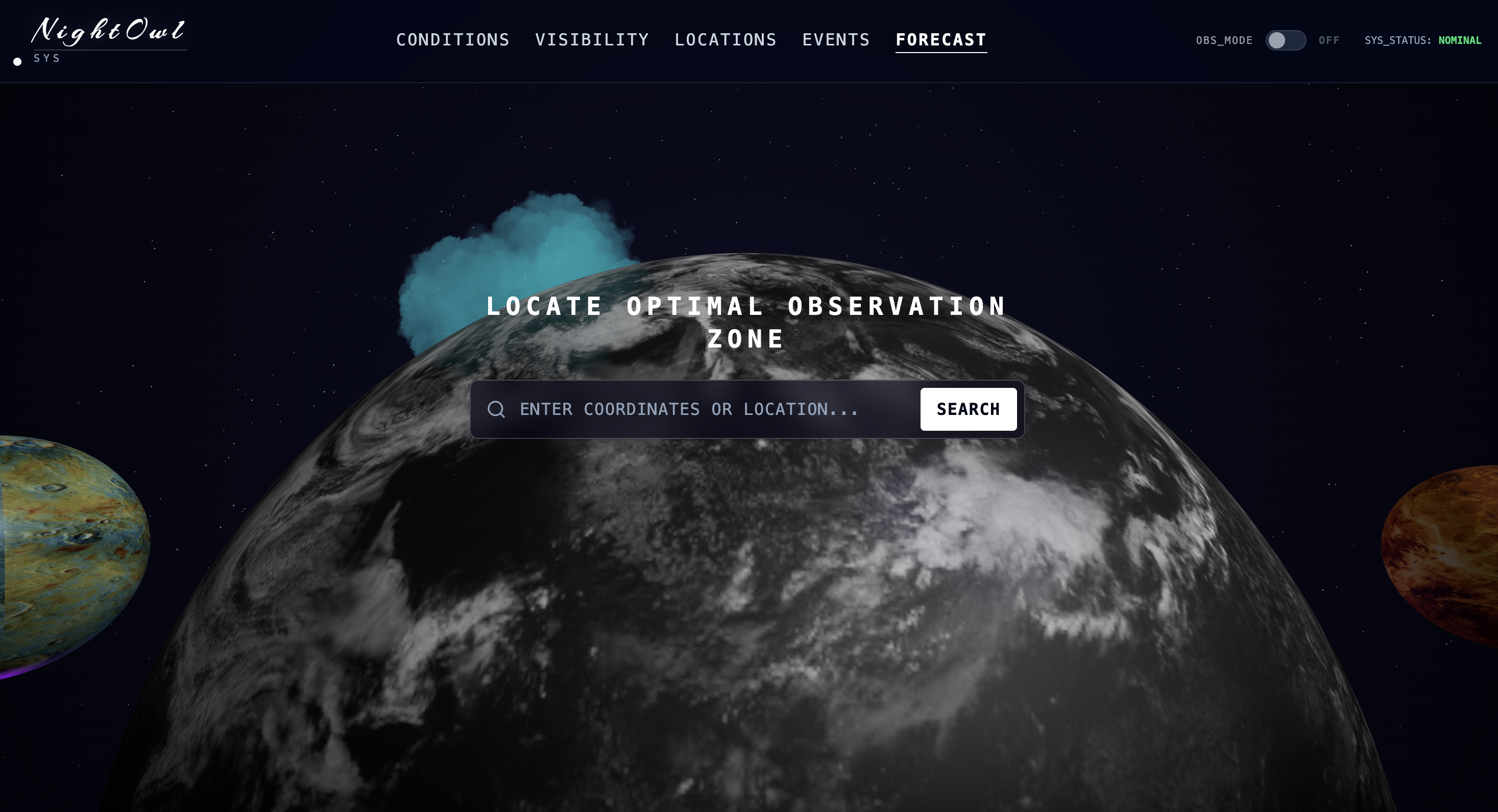
Night Owl is an intelligent stargazing engine that helps users find the best time and place to observe the night sky.
It:
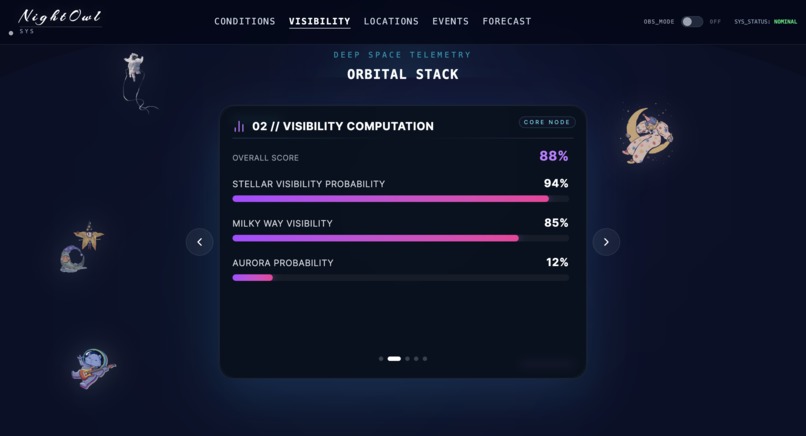
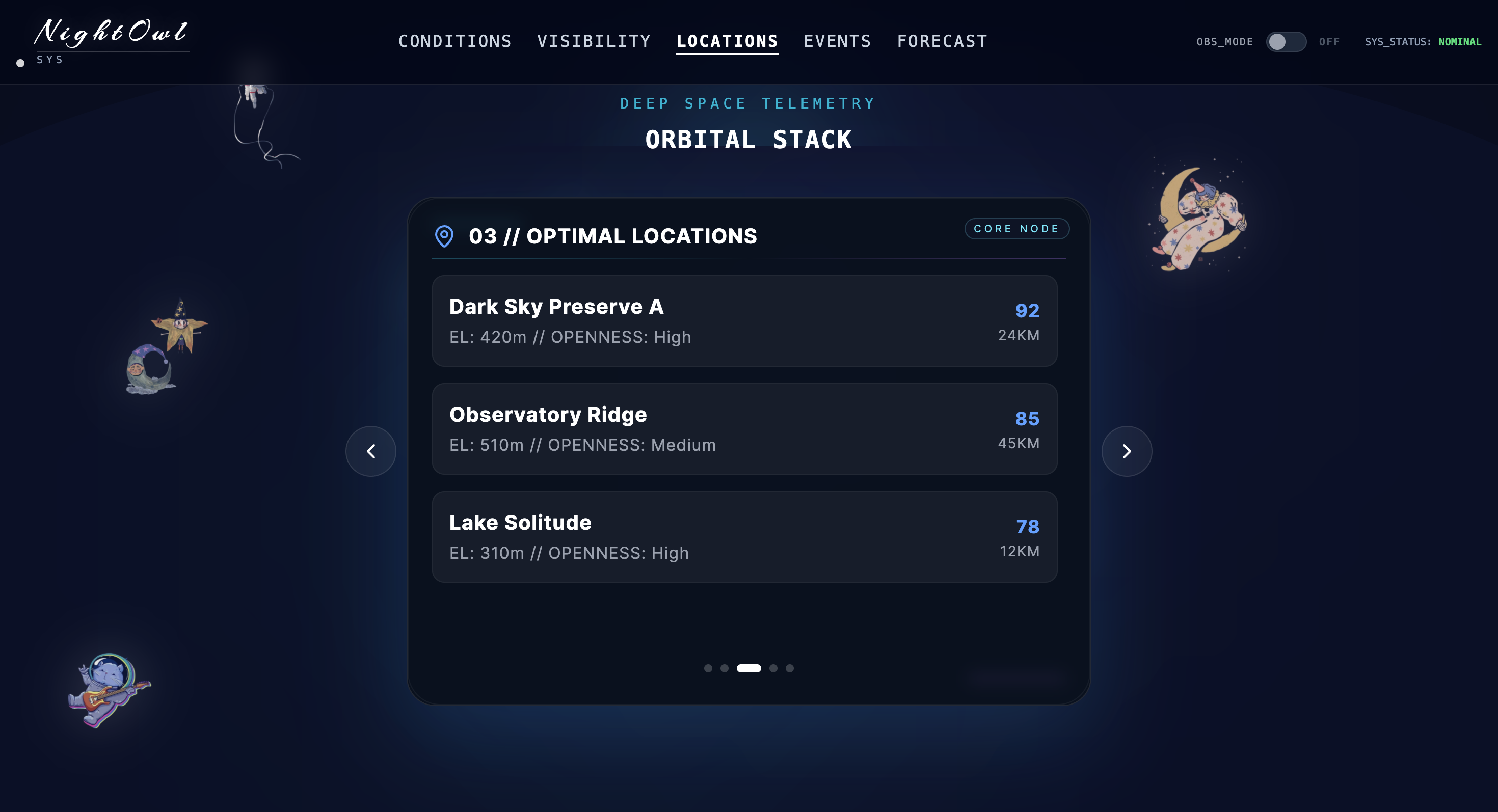
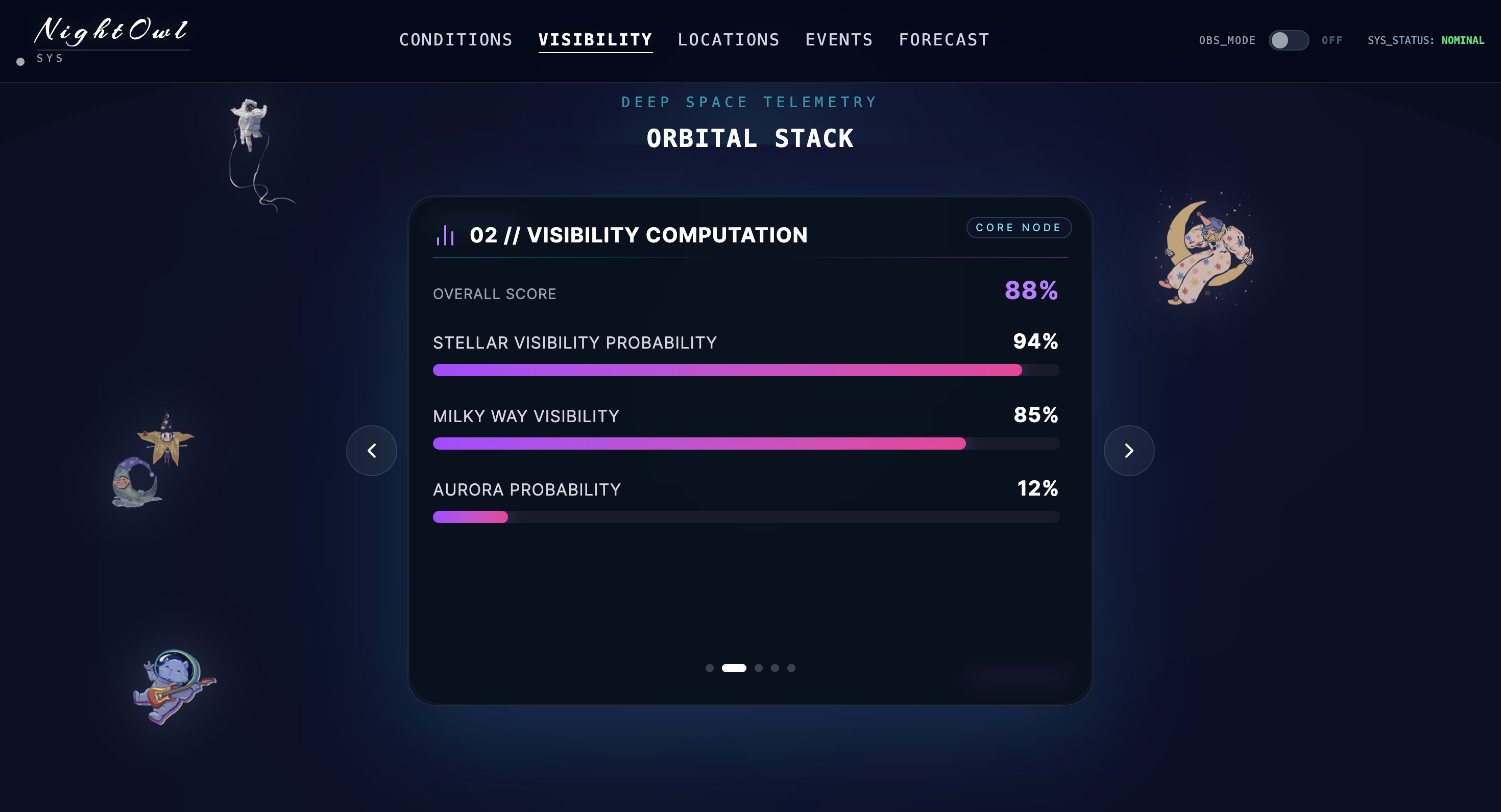
Calculates a Visibility Score (0–100) based on real conditions Finds optimal locations for astrophotography and sky viewing
Supports natural language queries like:
“I want to see the Milky Way near Kitchener this weekend”
Use Cases: 🌌 Milky Way photography planning 🌠 Aurora viewing predictions 🔭 Deep-sky observation timing 🌃 Night sky exploration spots
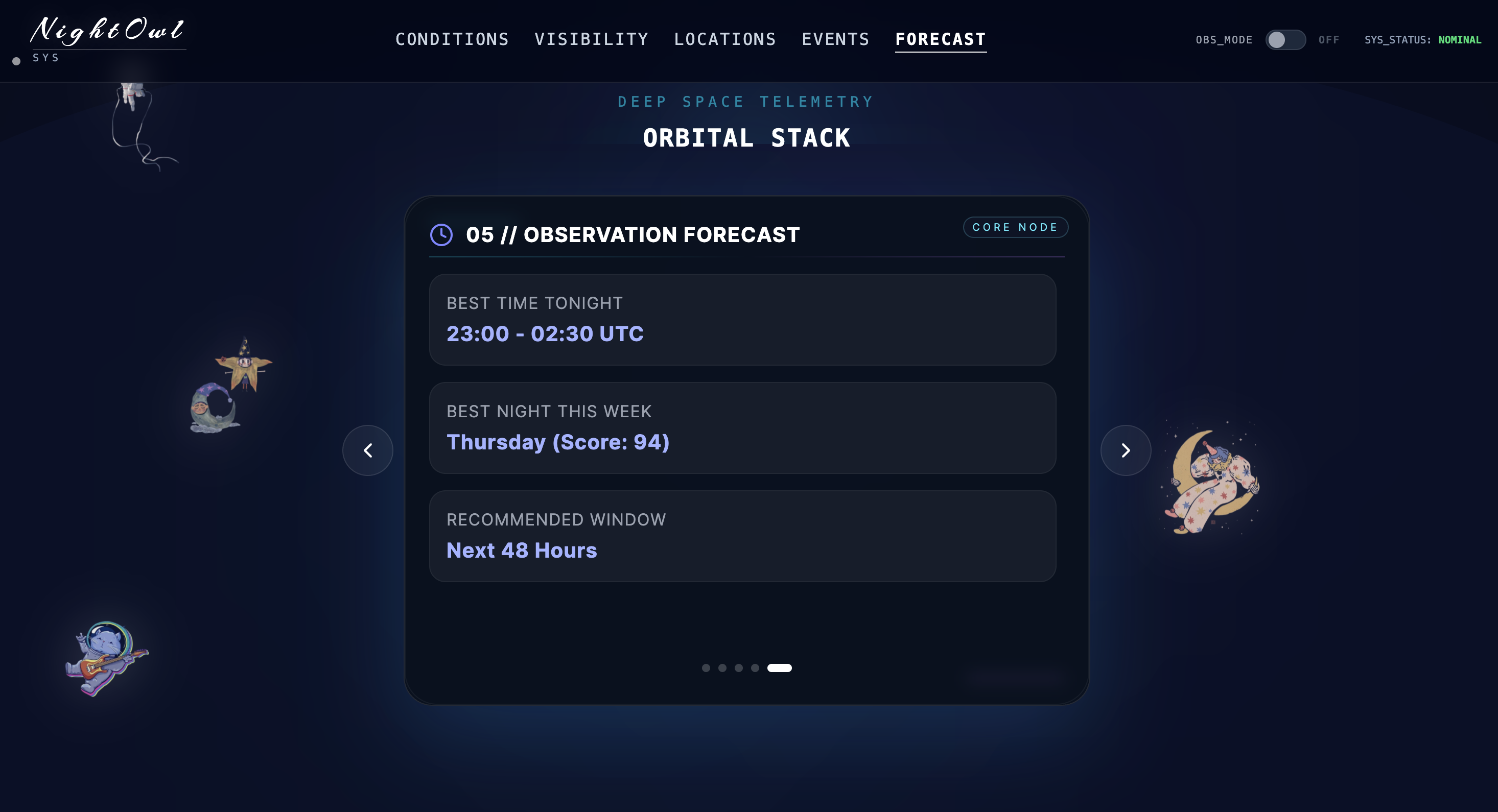
It also returns:
Best exact coordinates Nearby real-world viewing locations (parks, reserves, lookouts) Weather + sky condition breakdown 🛠️ How we built it Backend FastAPI (Python) for high-performance API system Skyfield for precise astronomical calculations Async processing for parallel location scoring Frontend React + Three.js (React Three Fiber) Real-time 3D sky visualization Interactive celestial motion system Data Sources Open-Meteo → Weather forecasting OpenStreetMap → Location + light pollution NOAA → Aurora predictions Google Gemini → AI-powered sky explanations Core Engine
A grid-based optimization system:
Scans 40–50+ nearby coordinates Scores each location in parallel Returns the best possible sky conditions in the region ⚔️ Challenges we ran into
- Concurrency & Performance
Running multiple astronomical + weather calculations in parallel required careful throttling to avoid overload.
- 3D Rendering Stability
Integrating React with Three.js caused rendering and context issues that required architectural refactoring.
- Data Synchronization
Weather data, celestial calculations, and light pollution maps all update at different rates — syncing them accurately was complex.
- Balancing Accuracy vs Speed
High-precision astronomy calculations had to be optimized to maintain real-time API response speeds.
🏆 Accomplishments Built a full end-to-end astronomy intelligence system Integrated real-world + astronomical + AI data sources Created a working grid-based sky optimization engine Designed a cinematic 3D interactive sky interface Successfully unified multiple complex APIs into one system 📚 What I learned How to structure scalable backend systems with FastAPI Real-world challenges of combining multiple asynchronous APIs 3D rendering architecture using React Three Fiber Importance of caching and performance optimization How to turn complex scientific data into a user-friendly experience 🔮 What’s next for NightOwl 🤖 Predictive AI for multi-day sky forecasting 🌍 Community-driven sky condition reports 📱 Mobile app version 🛰️ Satellite-based real-time sky tracking 🎯 Personalized recommendations based on user preferences 🧰 Built With FastAPI Python Skyfield React Three.js (React Three Fiber) Open-Meteo API OpenStreetMap Google Gemini API

Log in or sign up for Devpost to join the conversation.