Inspiration
The theme Visibility led us to one question: what if being seen was both how you scored and how you became a target?
That became Nightlight's central choice. Stay in the dark to approach unseen, or step into the spotlight to earn points while everyone watches. We wanted a game that friends could understand quickly, join from a phone, and immediately want to play again.
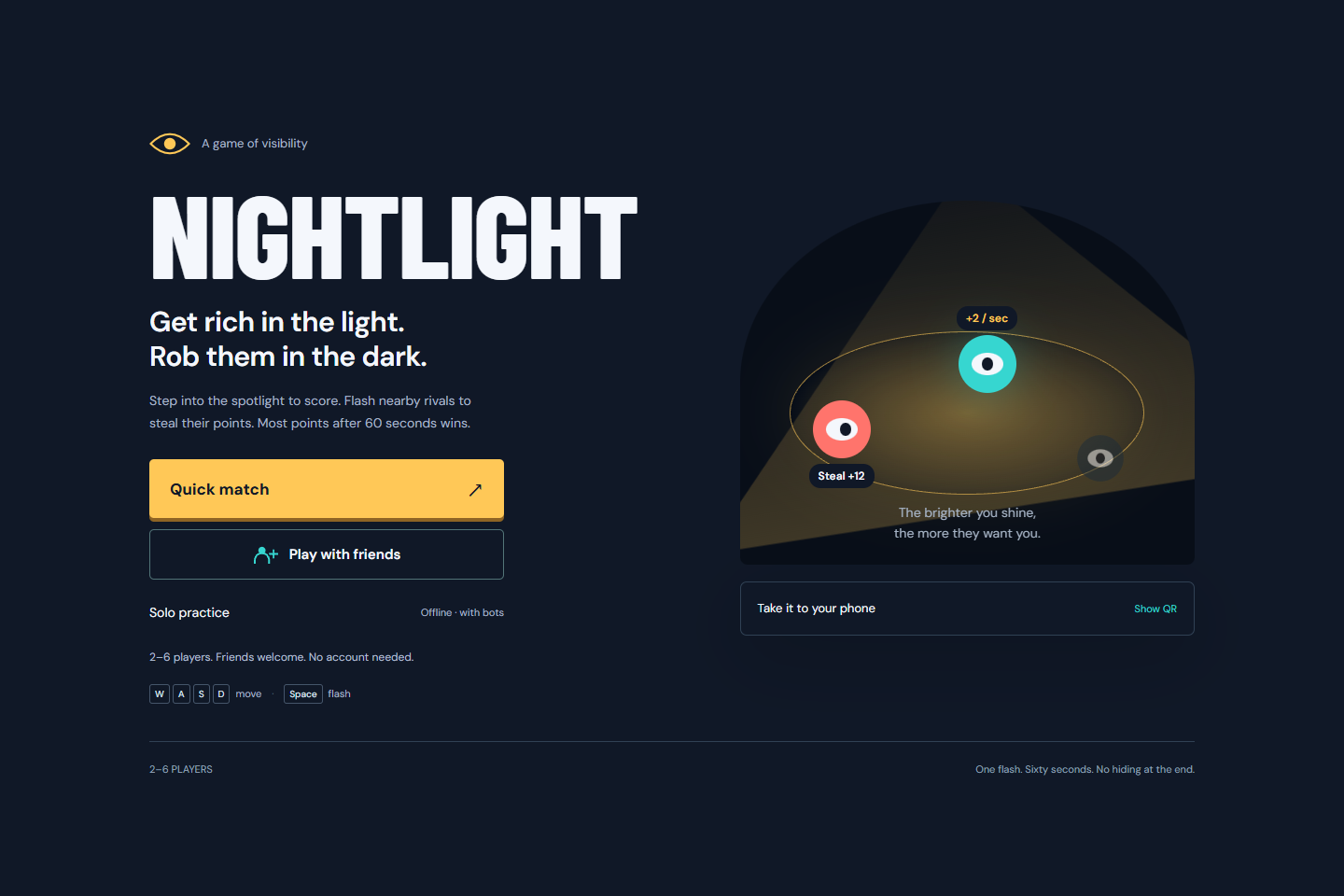
Get rich in the light. Rob them in the dark.
What it does
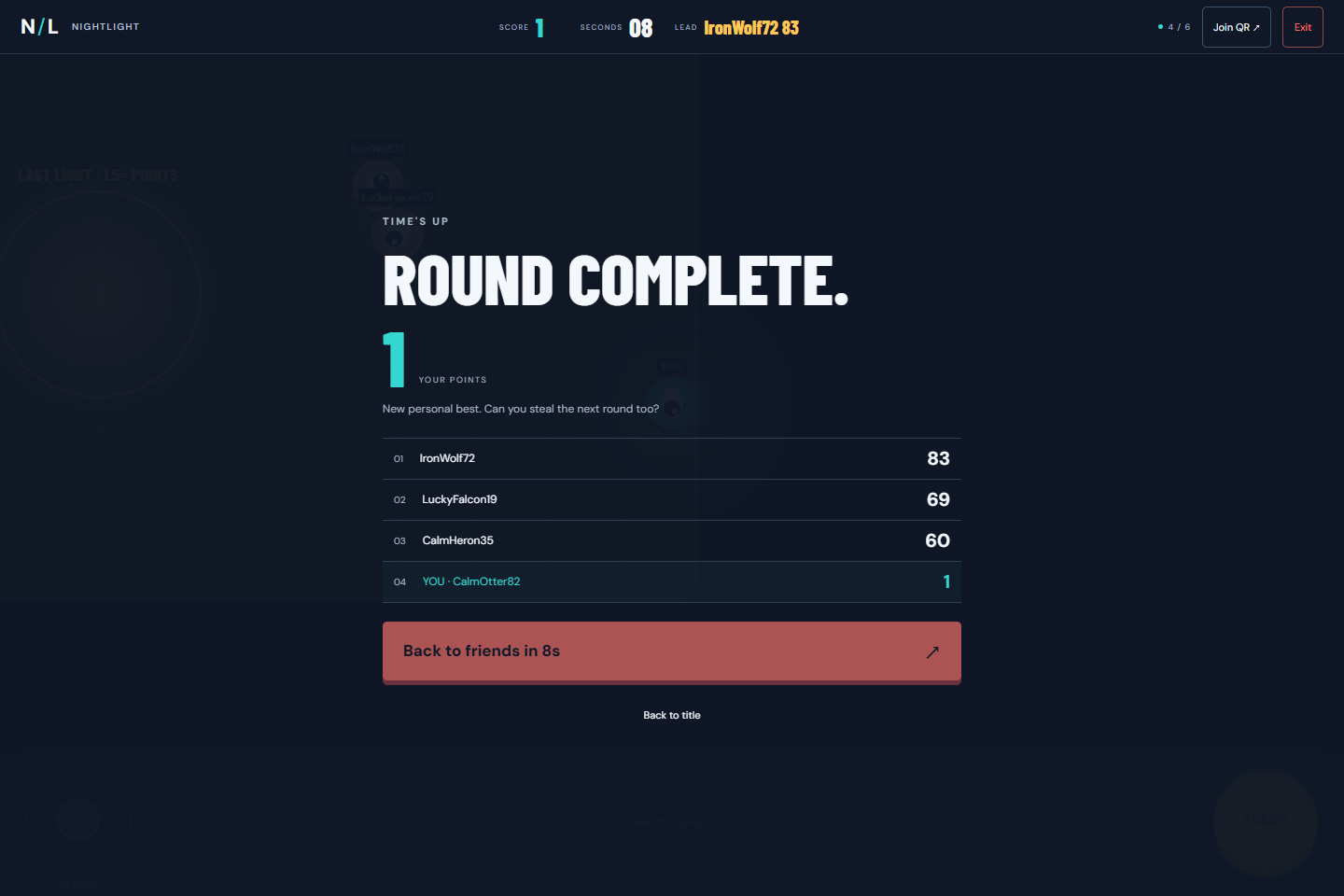
Nightlight is a browser arena game for 2–6 players, with 60-second rounds and one action: Flash. Most points at the buzzer wins.
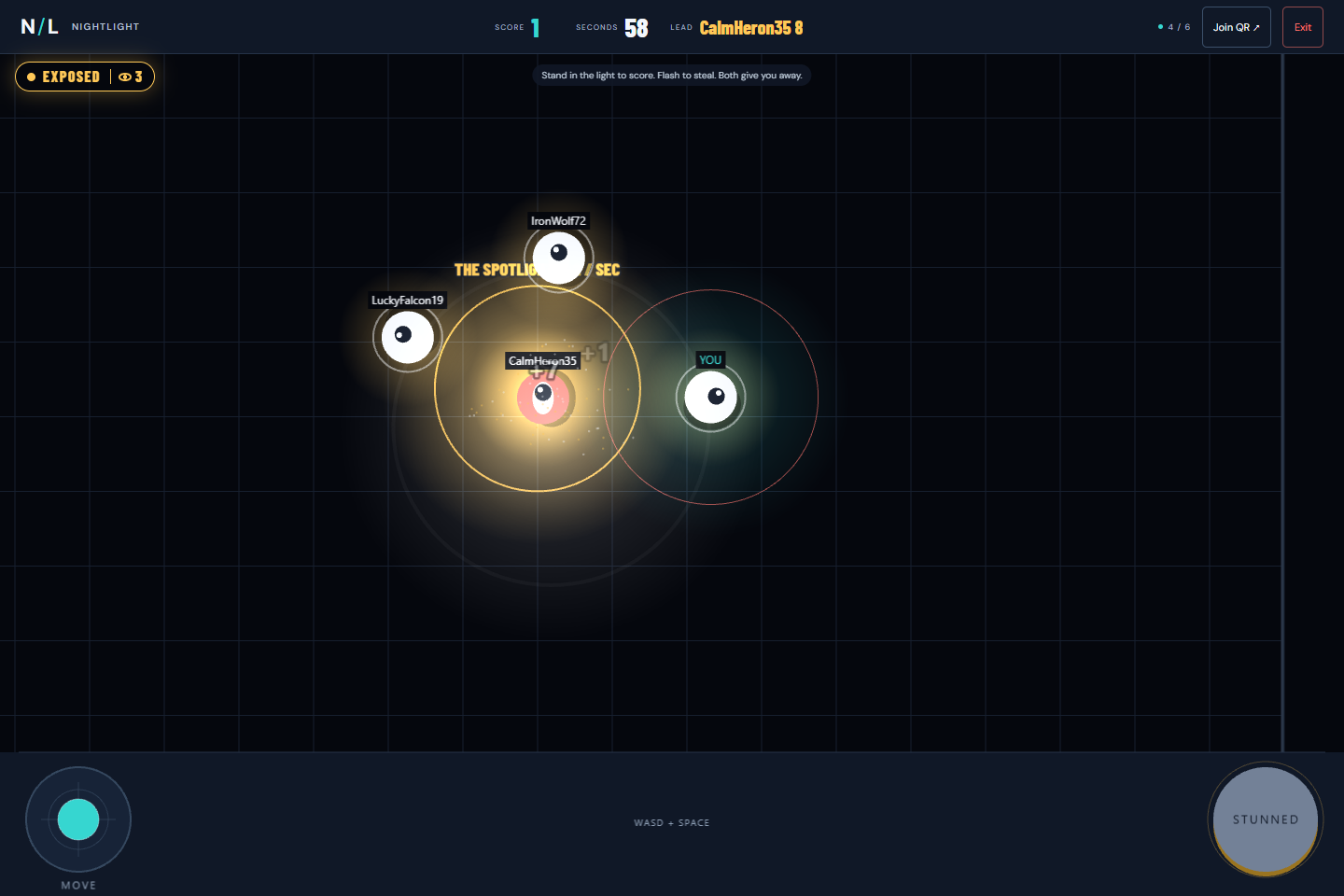
- Enter the spotlight: earn points while revealing yourself to every rival.
- Flash nearby players: steal points, but briefly expose your own position.
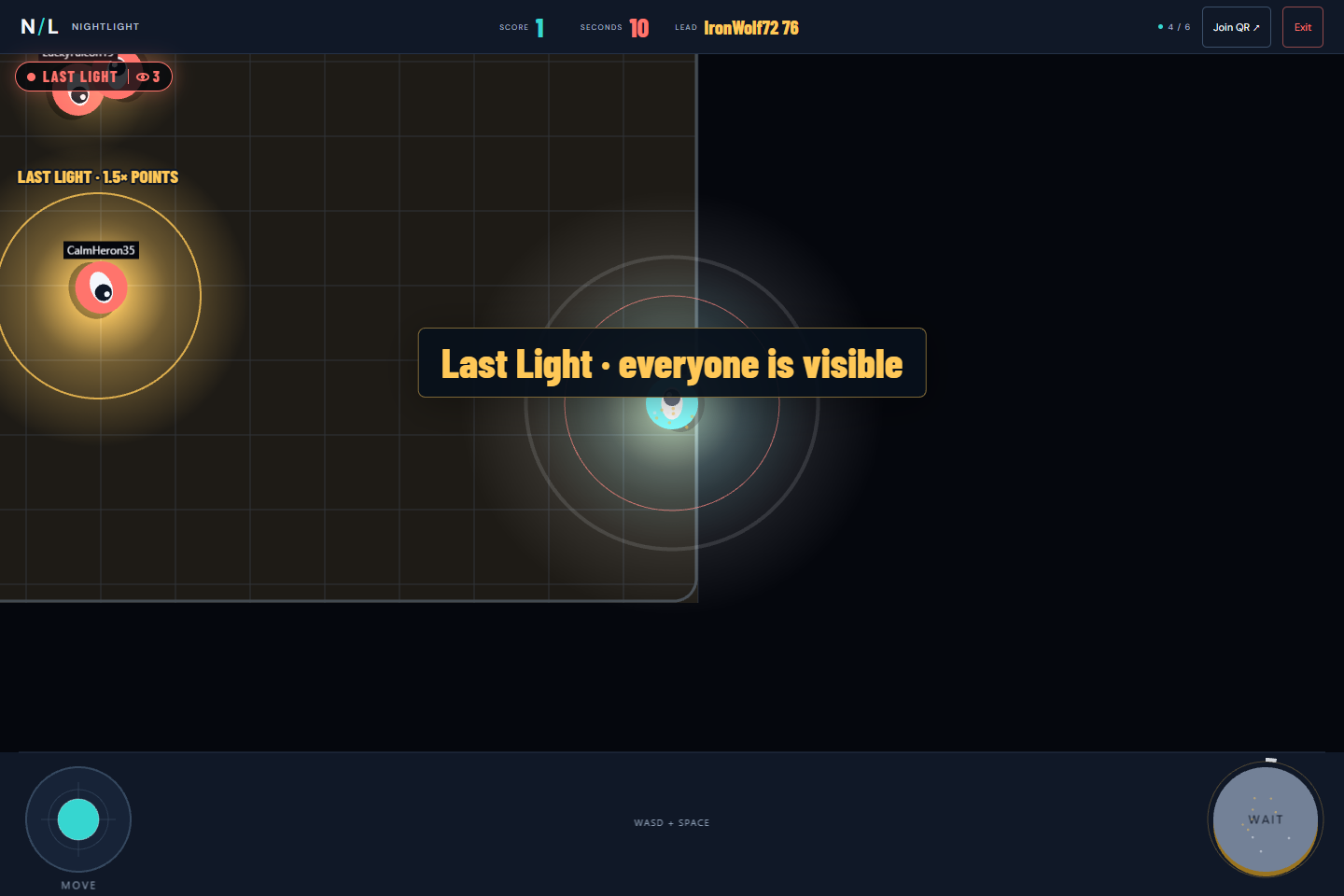
- Watch your visibility: see when you are hidden, exposed, or being watched.
- Race through Last Light: everyone becomes visible for the final ten seconds, giving the round a frantic finish.
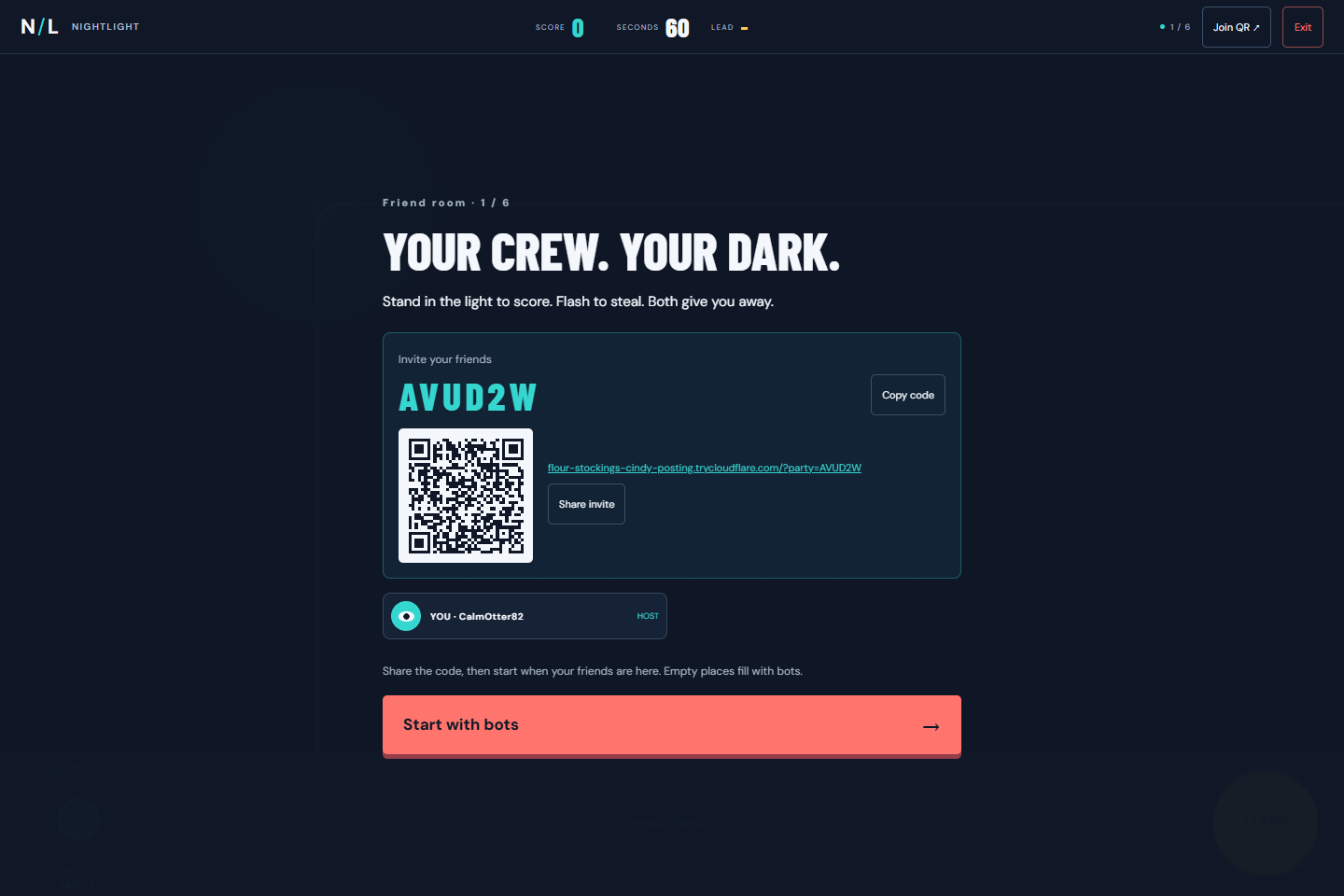
Players can enter a quick match, create a private friend room and share its QR/link/code, or practice against bots. Friend groups return to the same lobby between rounds, and host ownership transfers when the host leaves. Solo practice works offline after the game has been cached.
Desktop players use WASD and Space. Phone players use a virtual joystick and one large action button, in portrait or landscape.
How we built it
We split development between the game client and an authoritative multiplayer server.
The client uses Phaser 4, Vite, and strict TypeScript, with HTML/CSS overlays for the home screen, lobbies, and results. Code-drawn shapes, a strong color palette, particles, screen shake, score popups, and short sound effects make the action readable and responsive.
The backend uses Node.js, Colyseus, Express, and SQLite. A shared TypeScript simulation powers the online game and local practice, keeping their rules consistent. The server controls scoring and visibility; hidden player positions are withheld until the player becomes visible. Remote movement is interpolated on the client.
Challenges we ran into
Making two-thumb controls reliable required handling simultaneous touches, releases outside controls, rotation, backgrounding, and focus changes without leaving movement stuck.
Joining also needed real-device testing. Shared Wi-Fi could block local connections, so we added an HTTPS test route. Offline caching revealed another edge case: the page could still appear after its backend stopped. We added server availability checks, retry feedback, and safe session cleanup.
A multiplayer timing bug appeared when one friend reached the arena before another. Fixing the initial state and adding a delayed-join regression check made that handoff reliable.
What we learned and are proud of
Visibility became part of the rules, interface, and networking. Deciding when to reveal yourself changes how you move, score, and attack.
We learned how much the surrounding experience matters: scanning a QR, finding a friend, leaving a match, and returning for another round all contribute to whether a short game is enjoyable. We validated full rounds, reconnects, offline play, and phone layouts, and confirmed shared play on a real laptop and phone.
What's next
More human playtesting will help us tune beacon movement, flash range, and comeback opportunities. We also want persistent public hosting so friends can keep playing after the jam.
Play and source
Open the demo and choose Quick match, Play with friends, or Solo practice. For a private game, create a room, share its QR/link/code, and start when your friends arrive.
The temporary demo depends on our laptop and tunnel remaining online. To run a local copy, use Node.js 24, clone the repository, and run these commands from its root:
npm ci --ignore-scripts
npm run build
npm start
Then open http://localhost:2567/ on that computer.
Credits
Sound effects: Kenney Interface Sounds, CC0. Fonts: Barlow Condensed and DM Sans, SIL Open Font License. Framework and dependency notices are included in the repository. Visuals are drawn in code; no AI-generated artwork is used. Codex assisted with implementation, UI iteration, debugging, and test automation.
