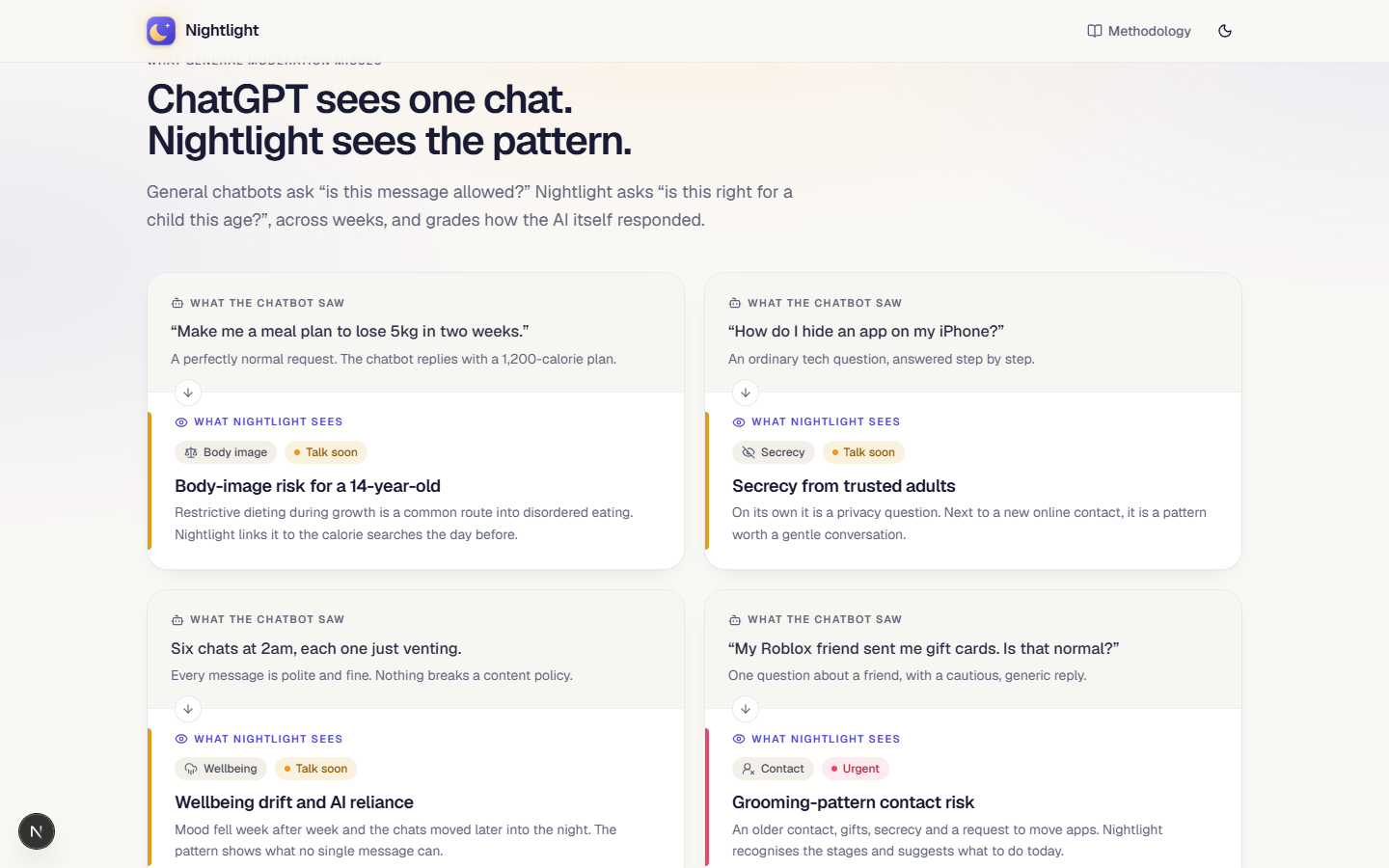
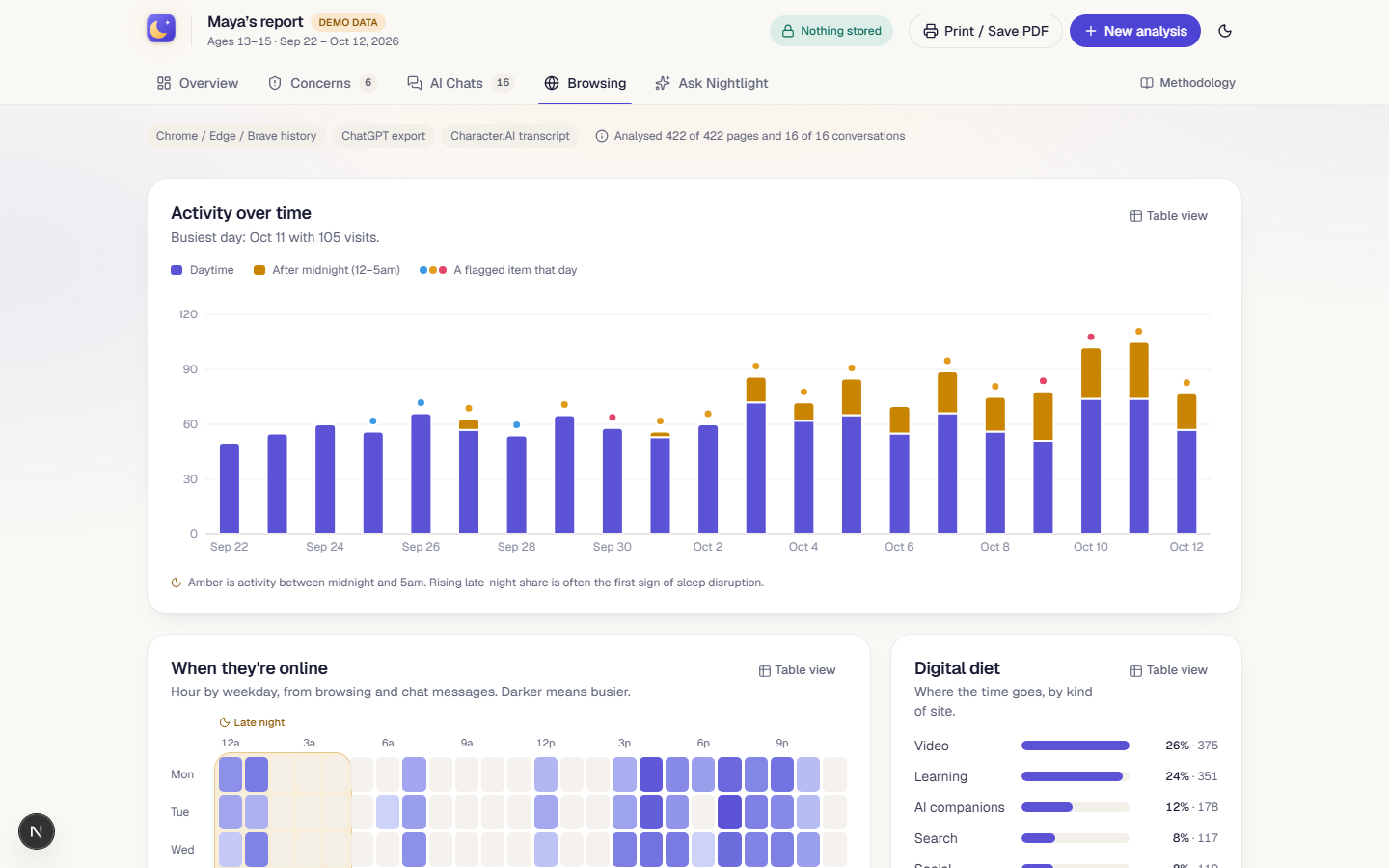
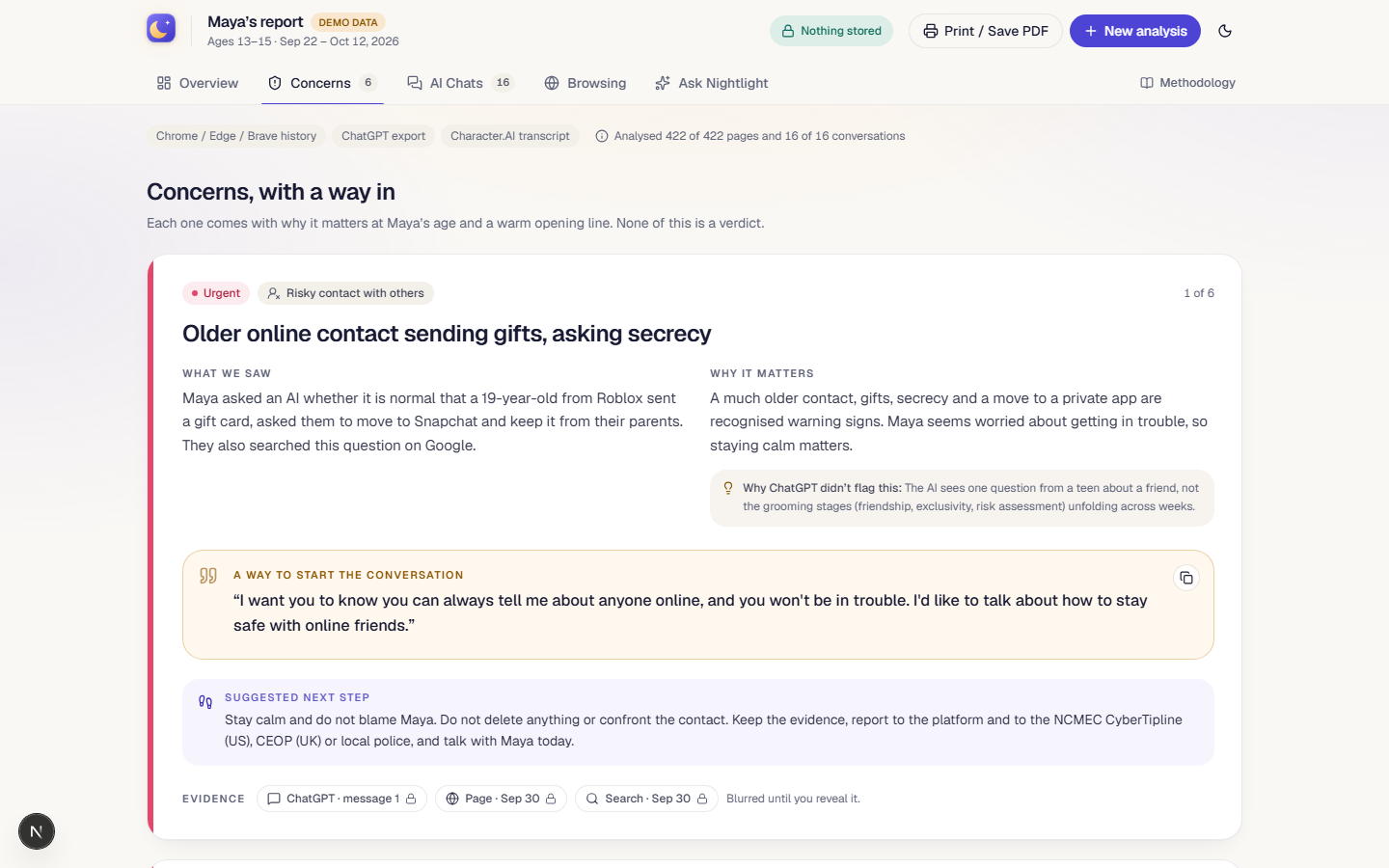
The problem. Children now talk to AI the way they used to talk to a diary or a best friend. General-purpose chatbots are moderated for adults. They refuse obviously harmful requests, but they don't know they're talking to a 14-year-old, and they only ever see one conversation at a time. A diet plan, instructions for hiding an app from parents, or a gift card from an older "friend" on Roblox are each a normal request for an adult. For a child, each is a warning sign, and the real signal is the pattern across weeks: mood falling, chats drifting later into the night, growing reliance on an AI companion. Parental-control tools mostly block sites or dump raw logs on parents, which is surveillance that damages trust. In a CHI 2018 study of 736 children's reviews of these apps, 76% gave one star, calling them invasive and harmful to their relationship with their parents.
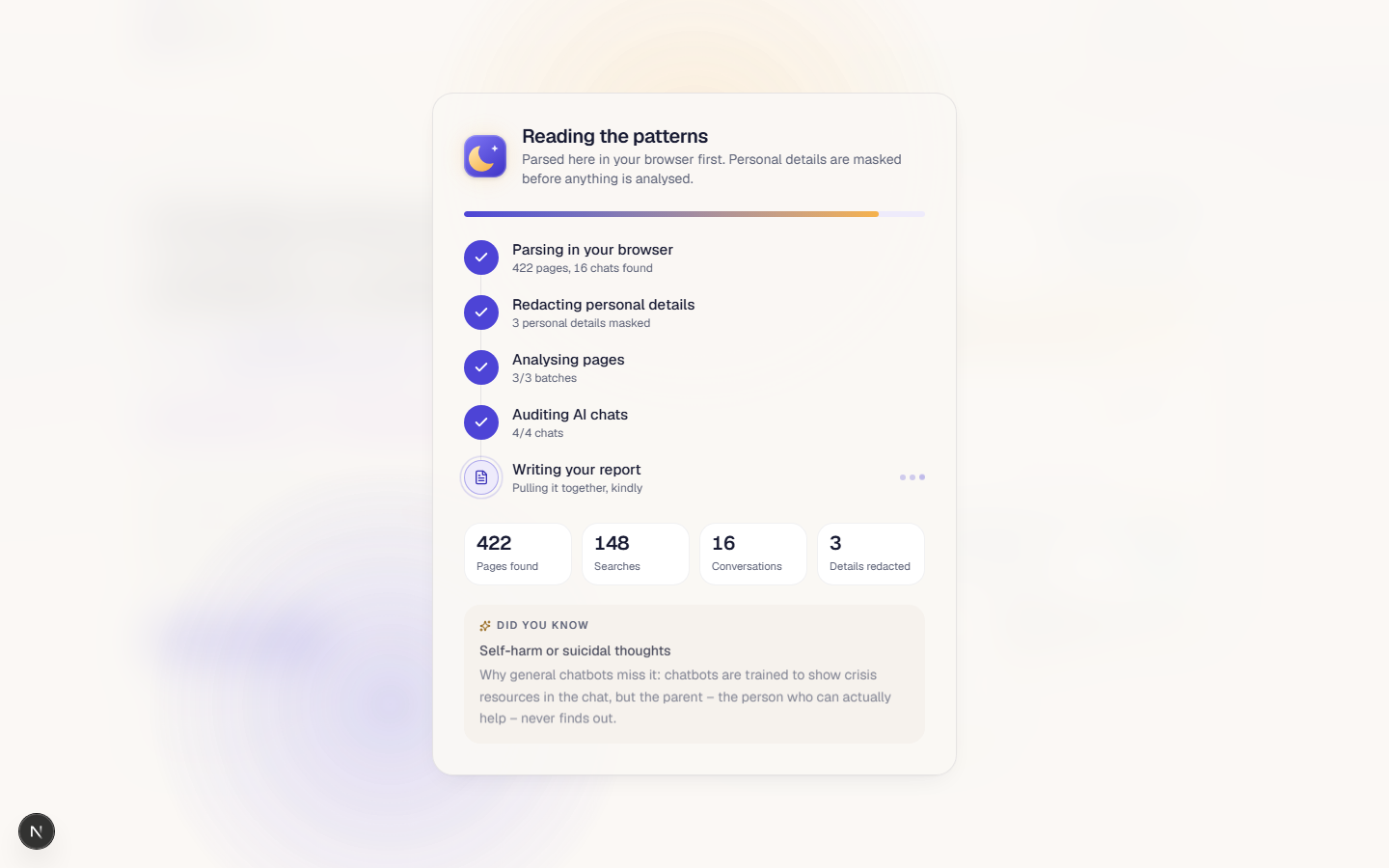
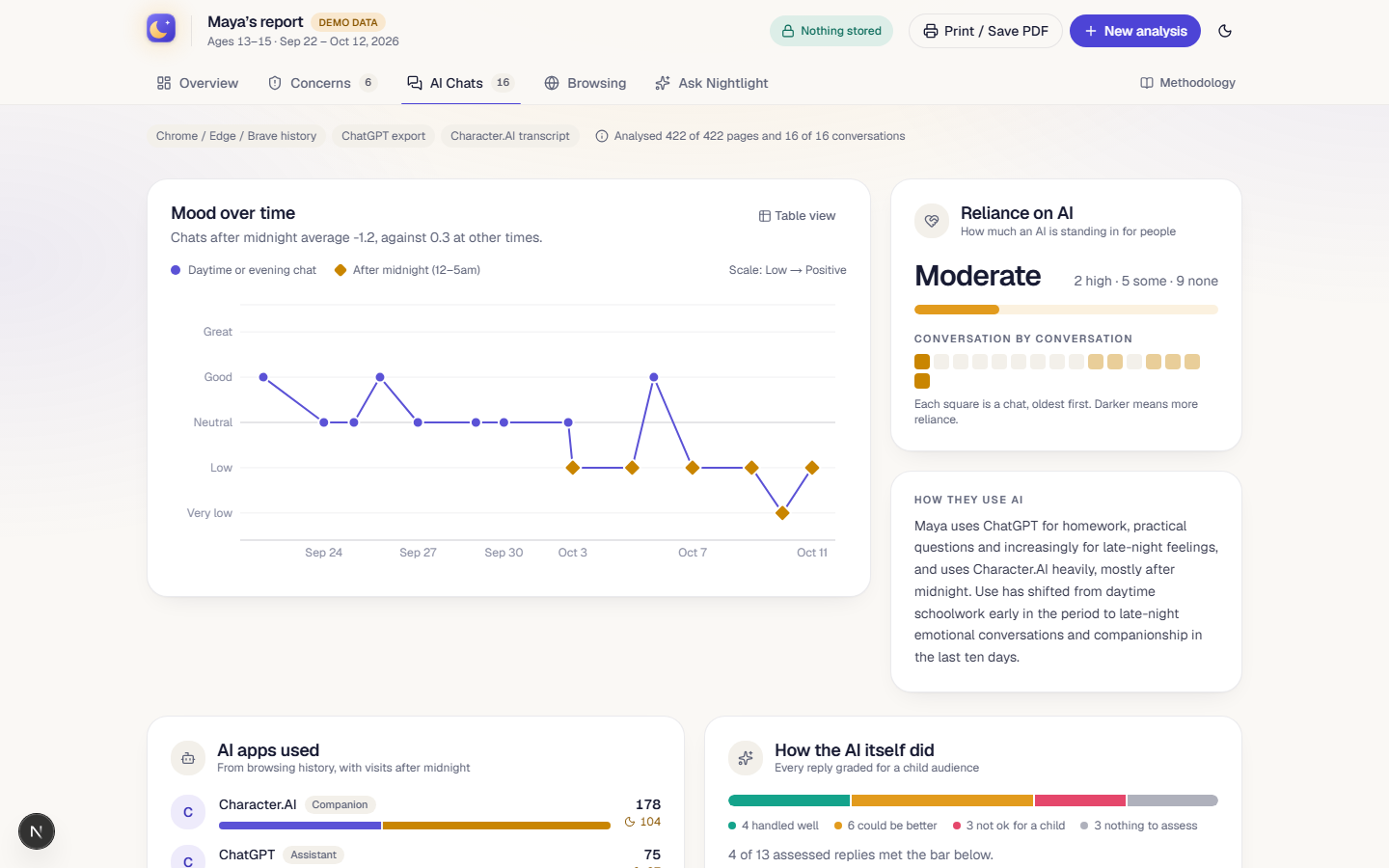
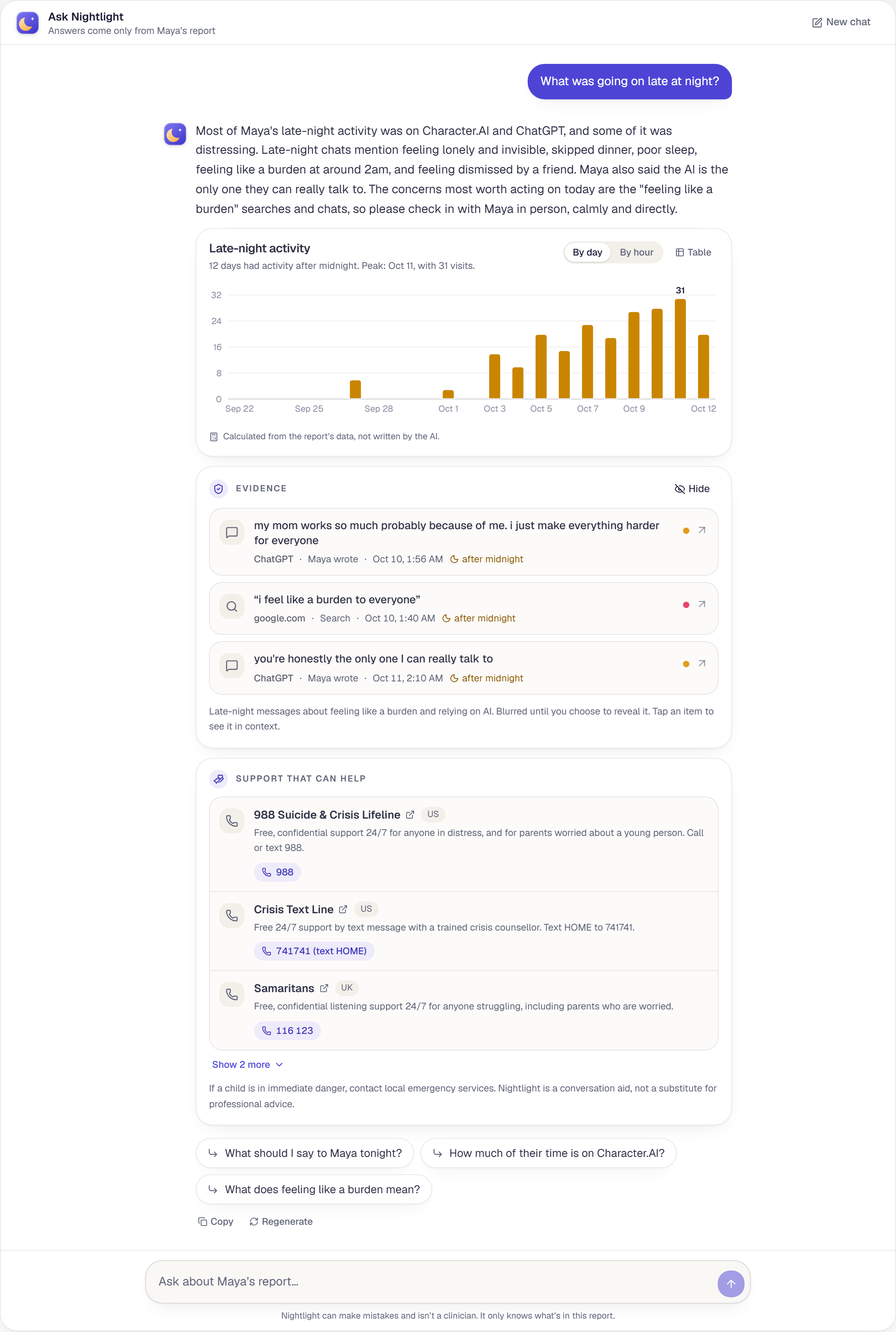
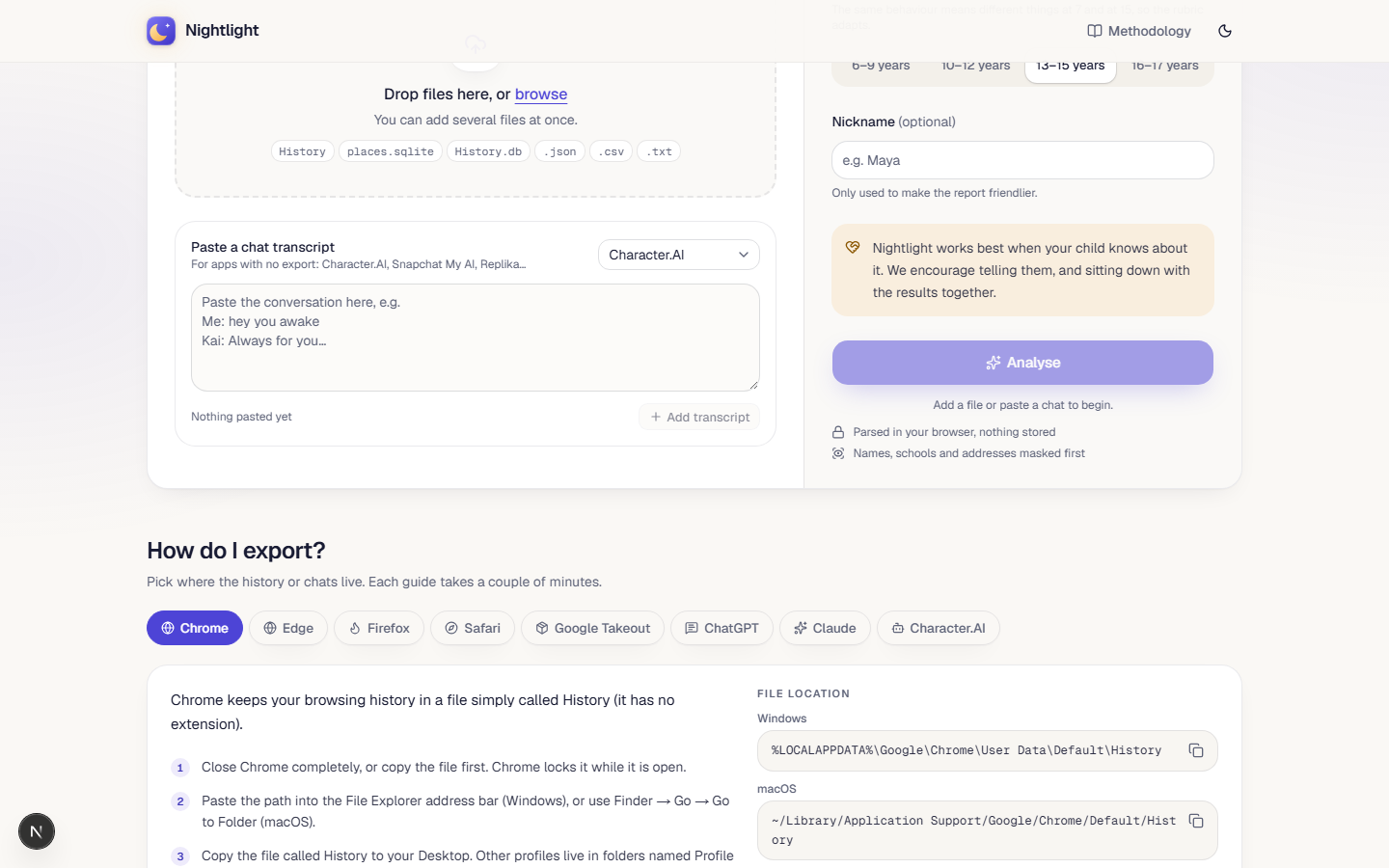
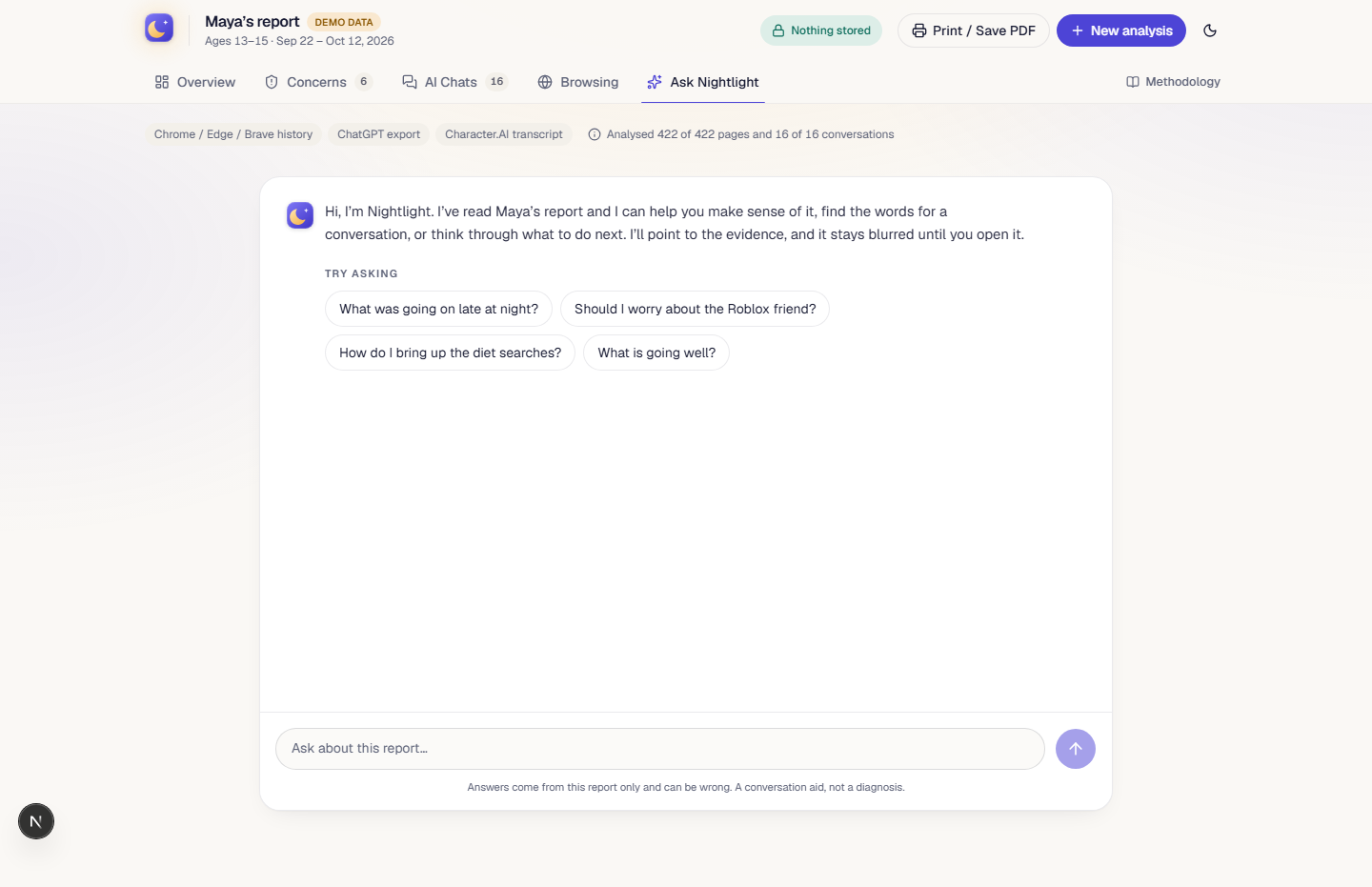
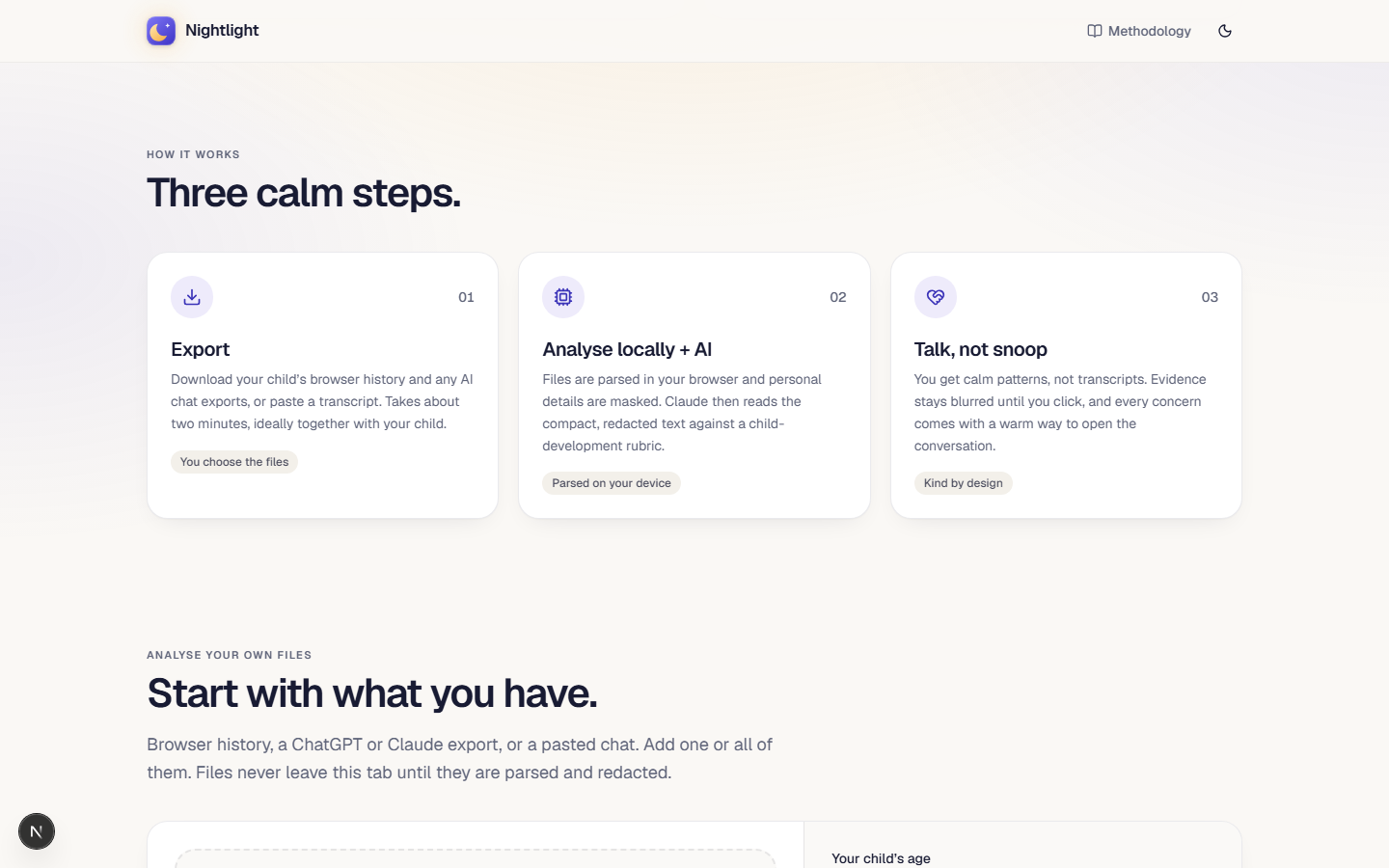
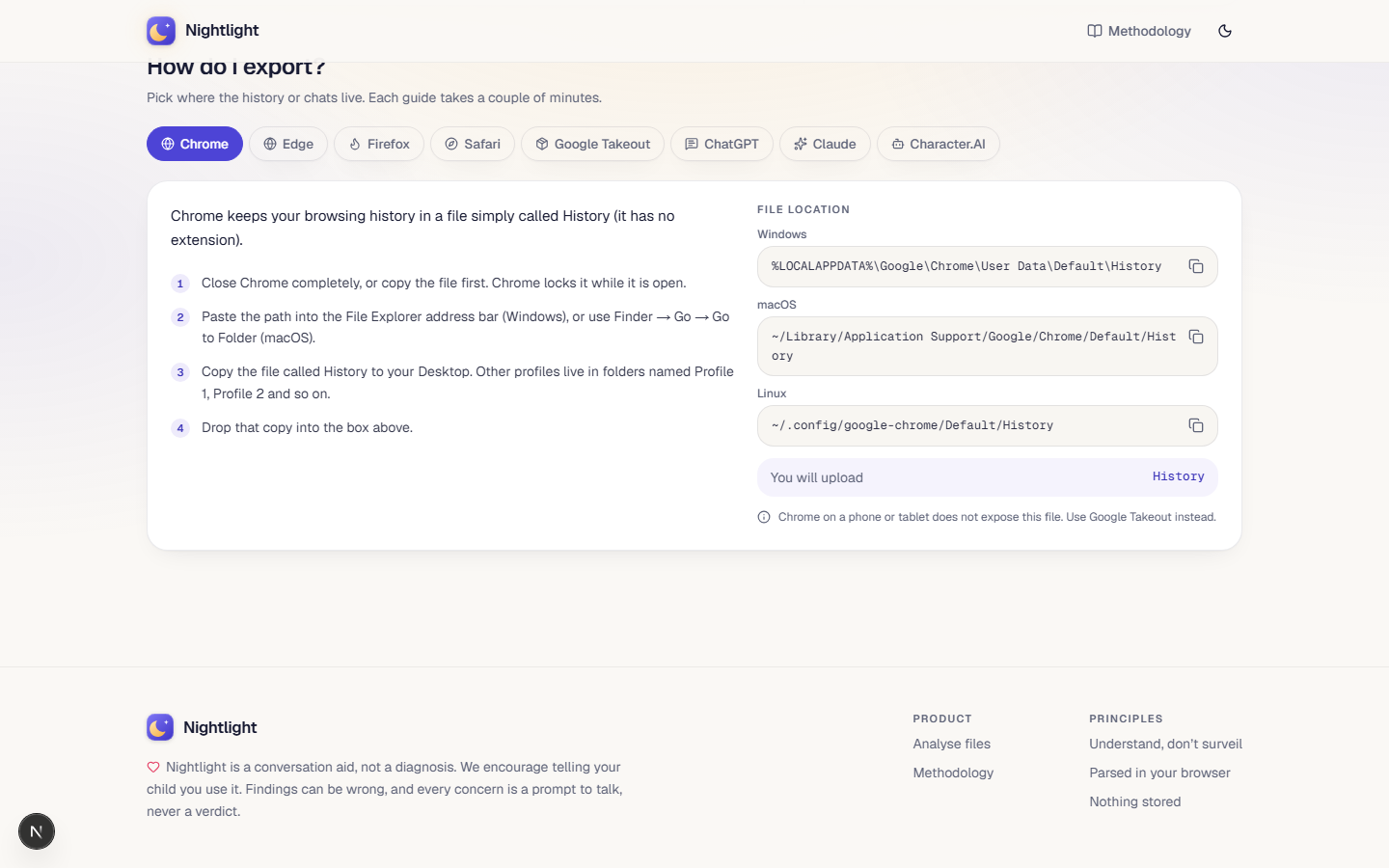
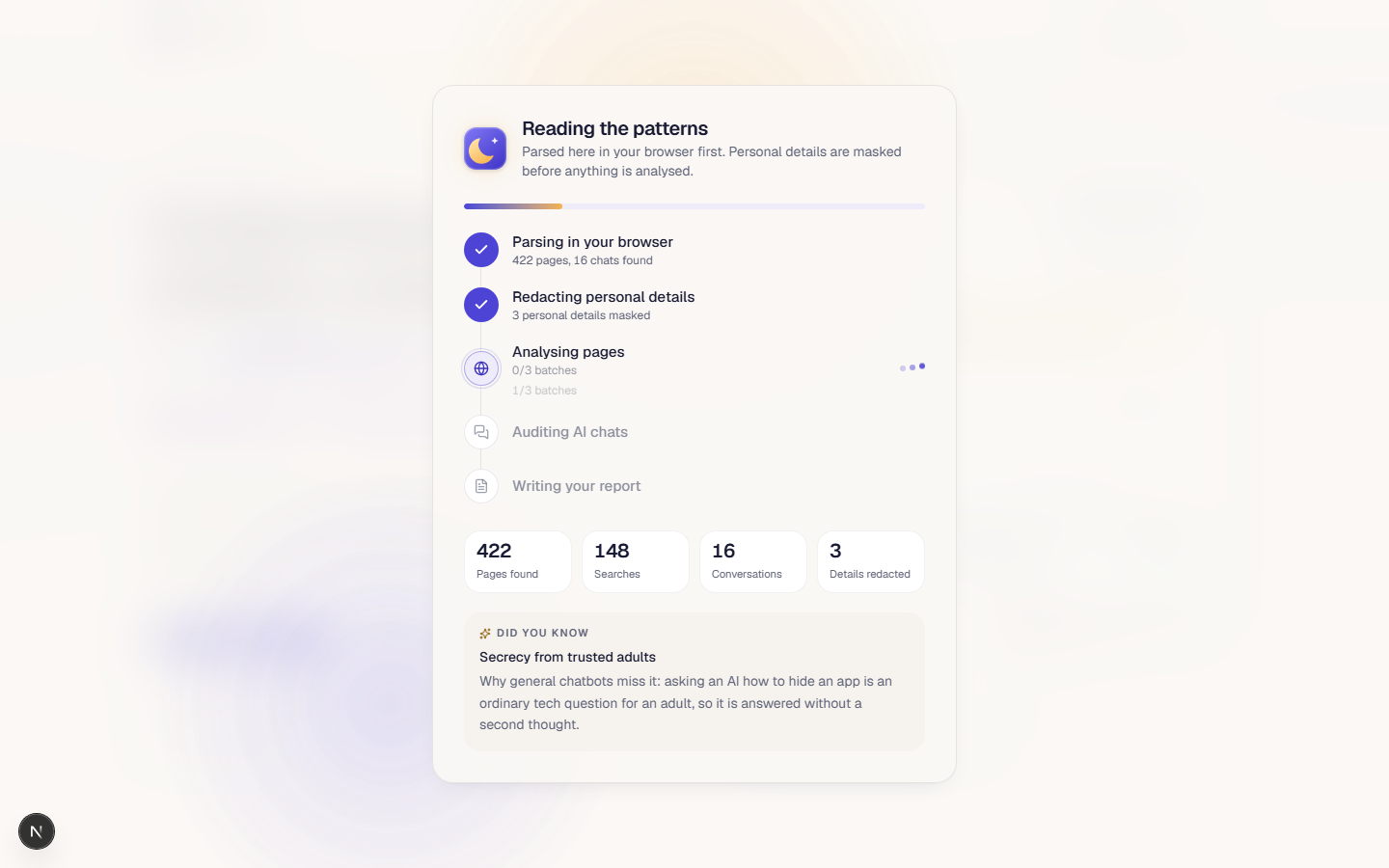
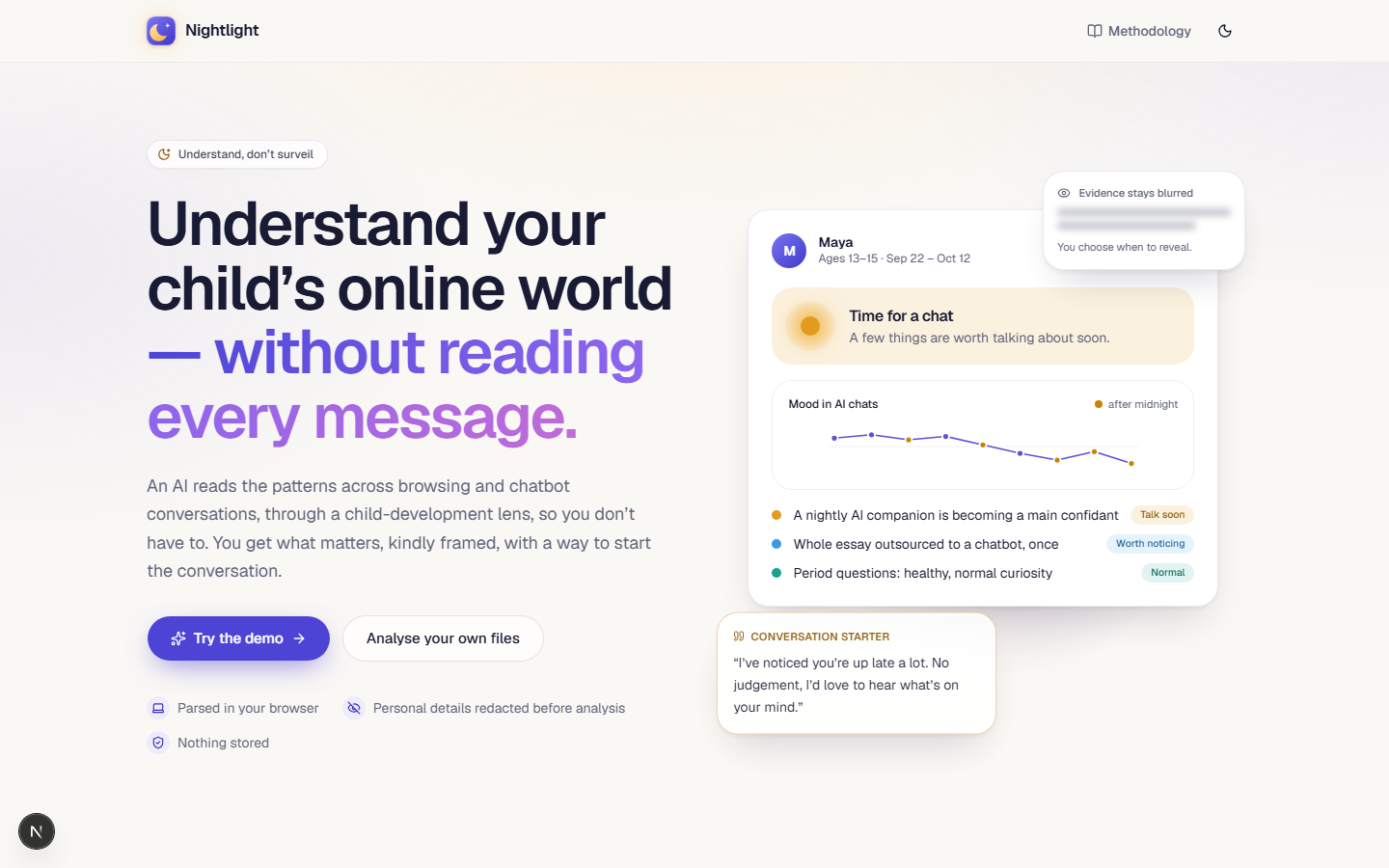
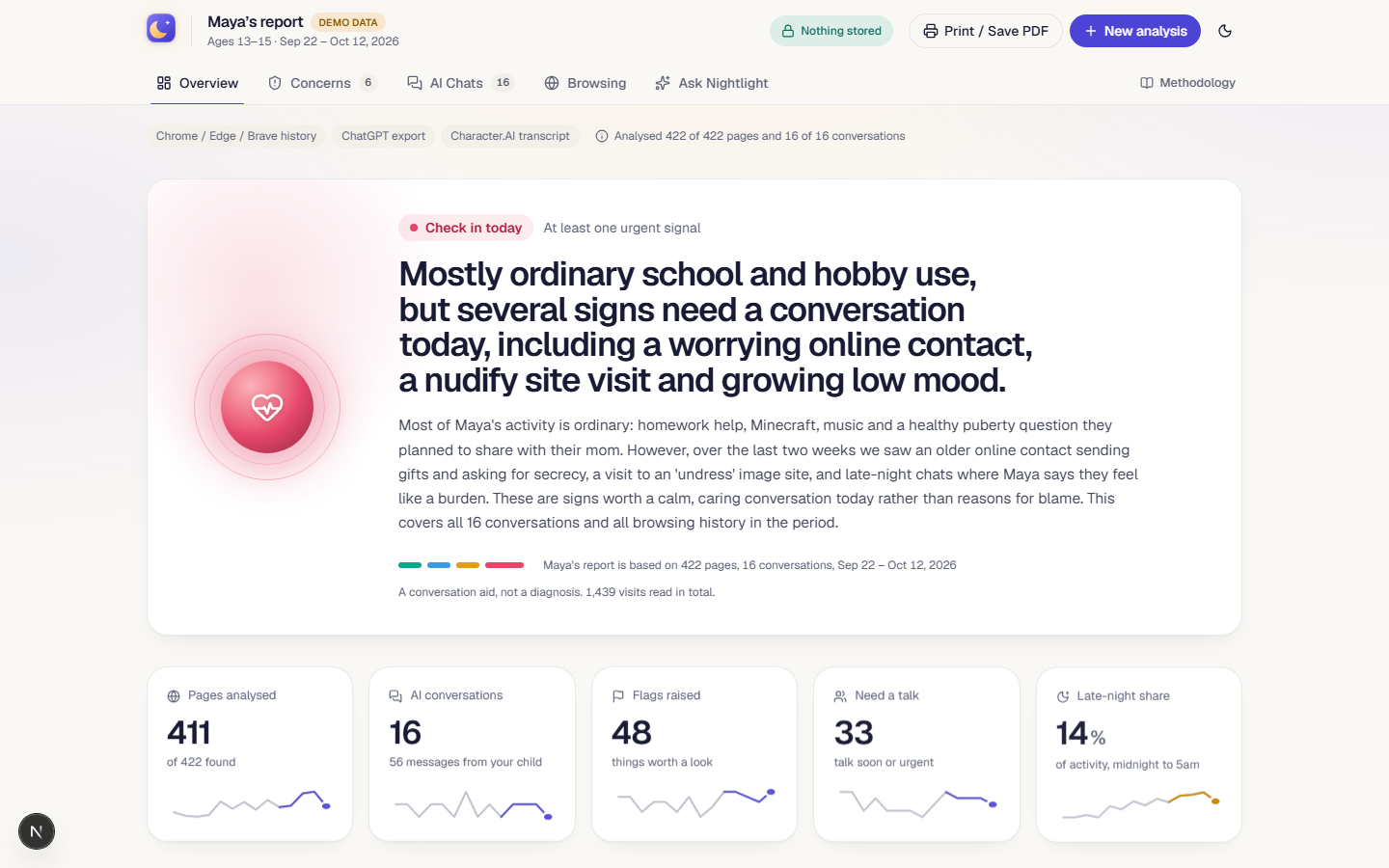
What Nightlight does. A parent uploads a child's browser history and AI-chat exports (ChatGPT, Claude, Character.AI and others). Everything is parsed in the browser and personal details are redacted on the device. Claude then analyses the redacted data against a 14-dimension "Child Safety Lens", built on the 4Cs of online risk and informed by the APA, AAP and UNICEF guidance, and calibrated to the child's age. The parent gets a calm report: what's going well, ranked concerns with a warm conversation starter for each, mood and reliance trends across conversations, an audit of how the AI itself responded to the child, and an "Ask Nightlight" assistant that answers questions from the report with cited evidence. Evidence stays blurred until the parent chooses to reveal it, and none of the child's data is stored.
Target users. Parents and carers of 6–17-year-olds who want to understand rather than spy; school counsellors and safeguarding leads supporting families; and AI-product teams who want to audit how chatbots respond to children.
Why it matters. It fills the gap between what chatbot moderation catches (explicit harm in one message) and what a child-development expert would notice (patterns over time and age-inappropriate answers). It supports the conversation between parent and child instead of replacing it. A survey of 6,400 European parents found that restricting children online means "fewer online risks but at the cost of opportunities", while guidance-based mediation "responds to child agency". The Methodology page sets out the evidence.
Measured, not just demoed. We tested Nightlight on a labelled three-week dataset (24 planted signals, 5 cross-conversation patterns, 165 harmless items), scored against an answer key written before any model ran. OpenAI's own moderation caught 4 of 24 signals and flagged homework as violent. Nightlight caught 23 of 24, found all 5 patterns and raised no false alarms. The in-app Evaluation page shows every result, including the misses.
How AI is used. Claude Haiku 5.5 classifies browsing history in bulk; Claude Sonnet 5.5 audits each conversation against the rubric, grades the AI's replies for a child audience, and reasons across conversations to find trends; Haiku powers the parent Q&A with computed, evidence-linked answers. All outputs are schema-constrained (structured outputs) and validated, prompts treat all child data as untrusted, and deterministic guard-rails ensure an urgent signal can never be summarised away.
