Inspiration
Everyone knows hide-and-seek. Nobody needs rules for it. We wanted that feeling on Reddit: a game where the other players are the puzzle. Where will people hide tonight? Where would you hide so nobody finds you?
What it does
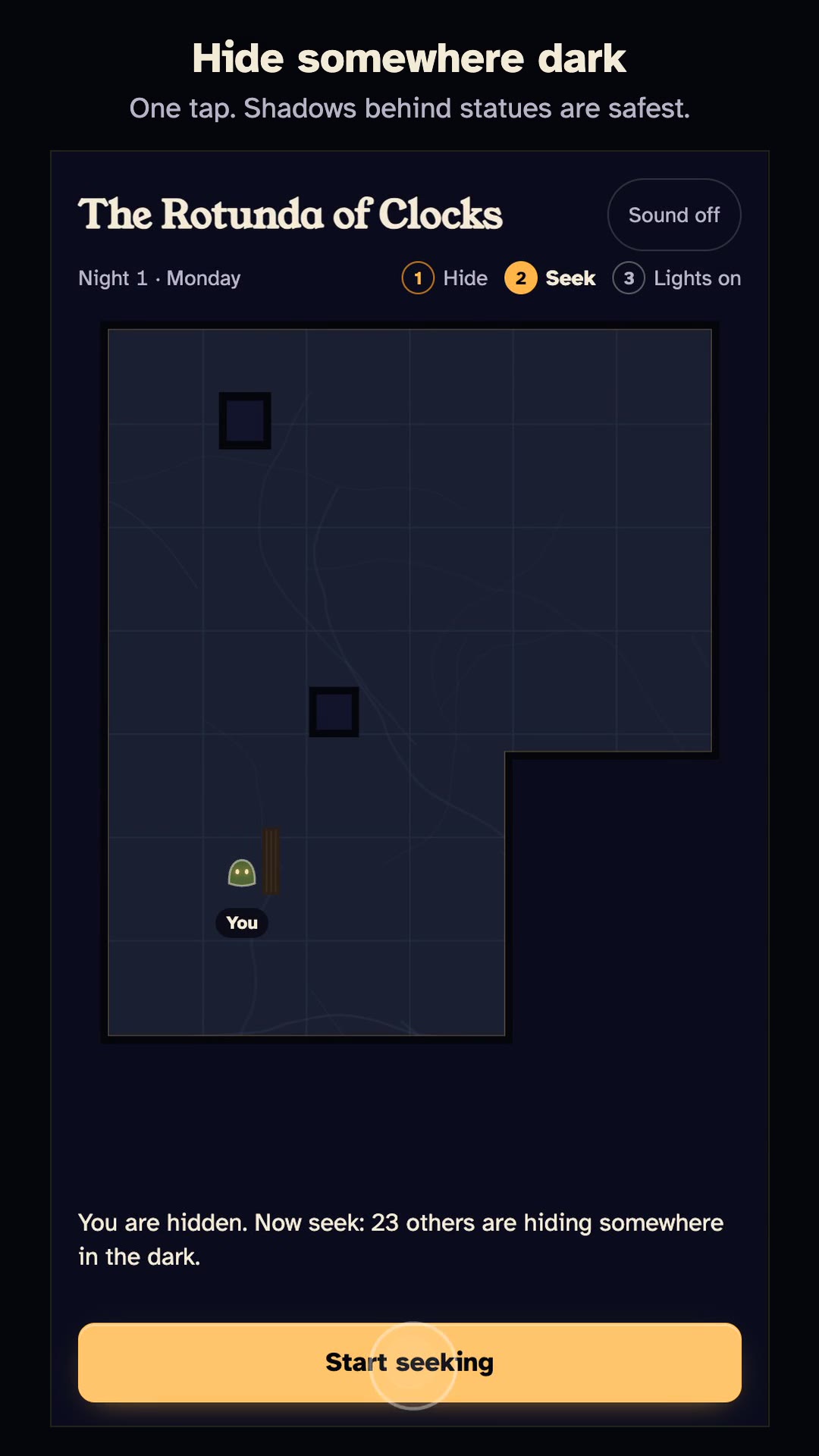
Every night Nightlight posts a new dark museum gallery. Everyone gets the same room.
- Hide: tap a spot on the floor. You can do it right in the feed.
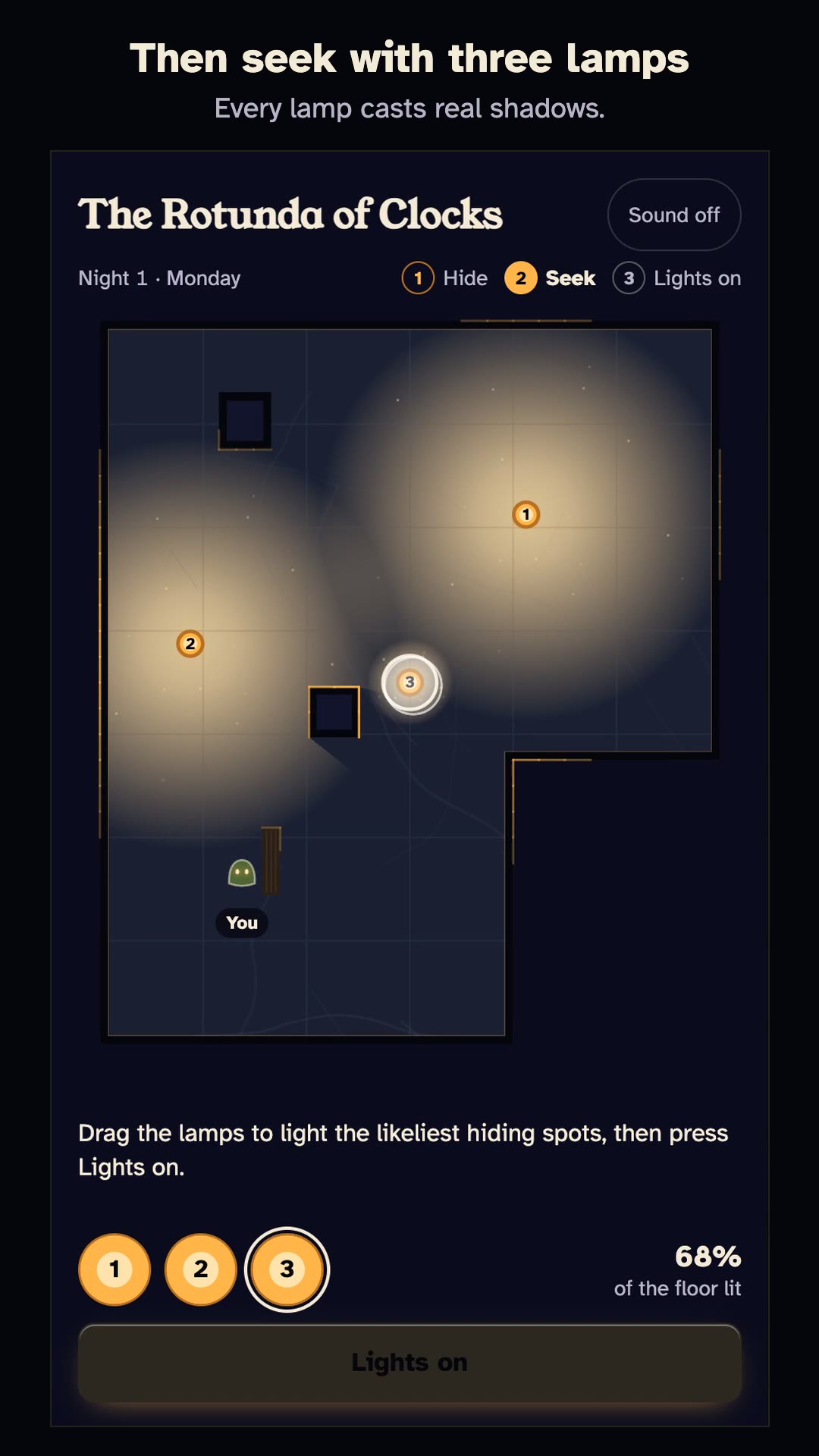
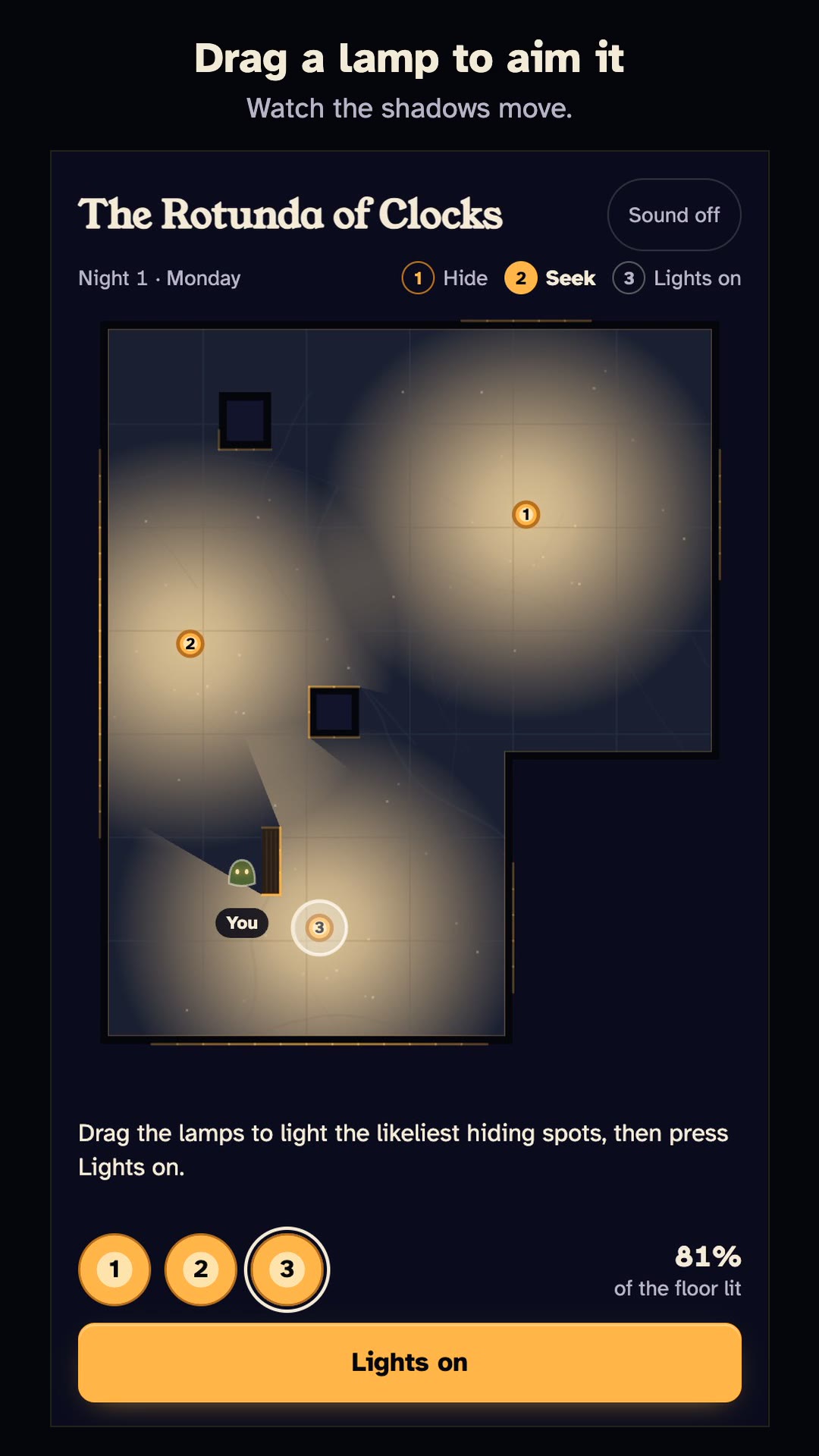
- Seek: place three lamps. Light travels in straight lines and stops at walls, pillars and statues, so every lamp throws real shadows. You see your light live while you place it.
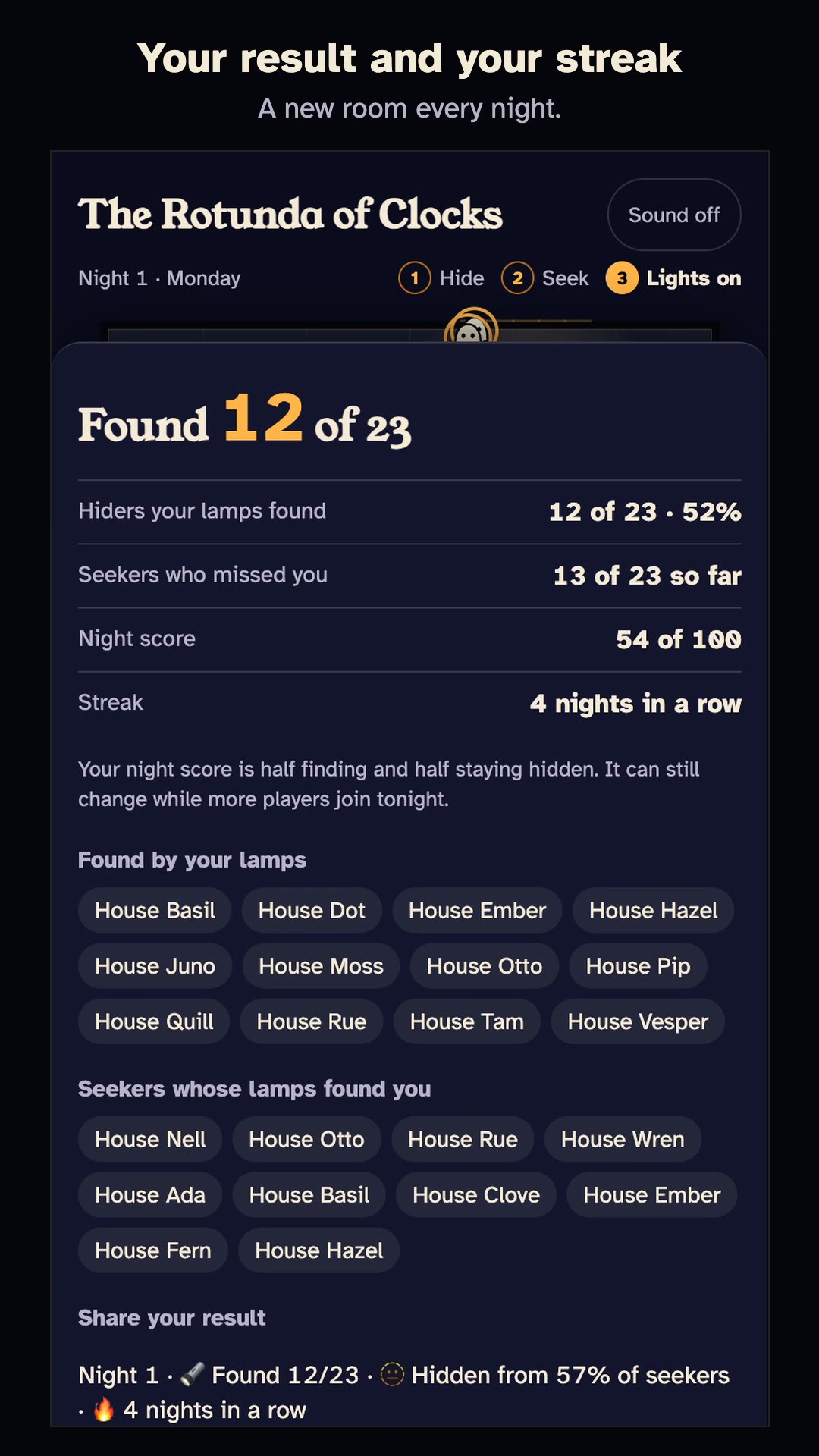
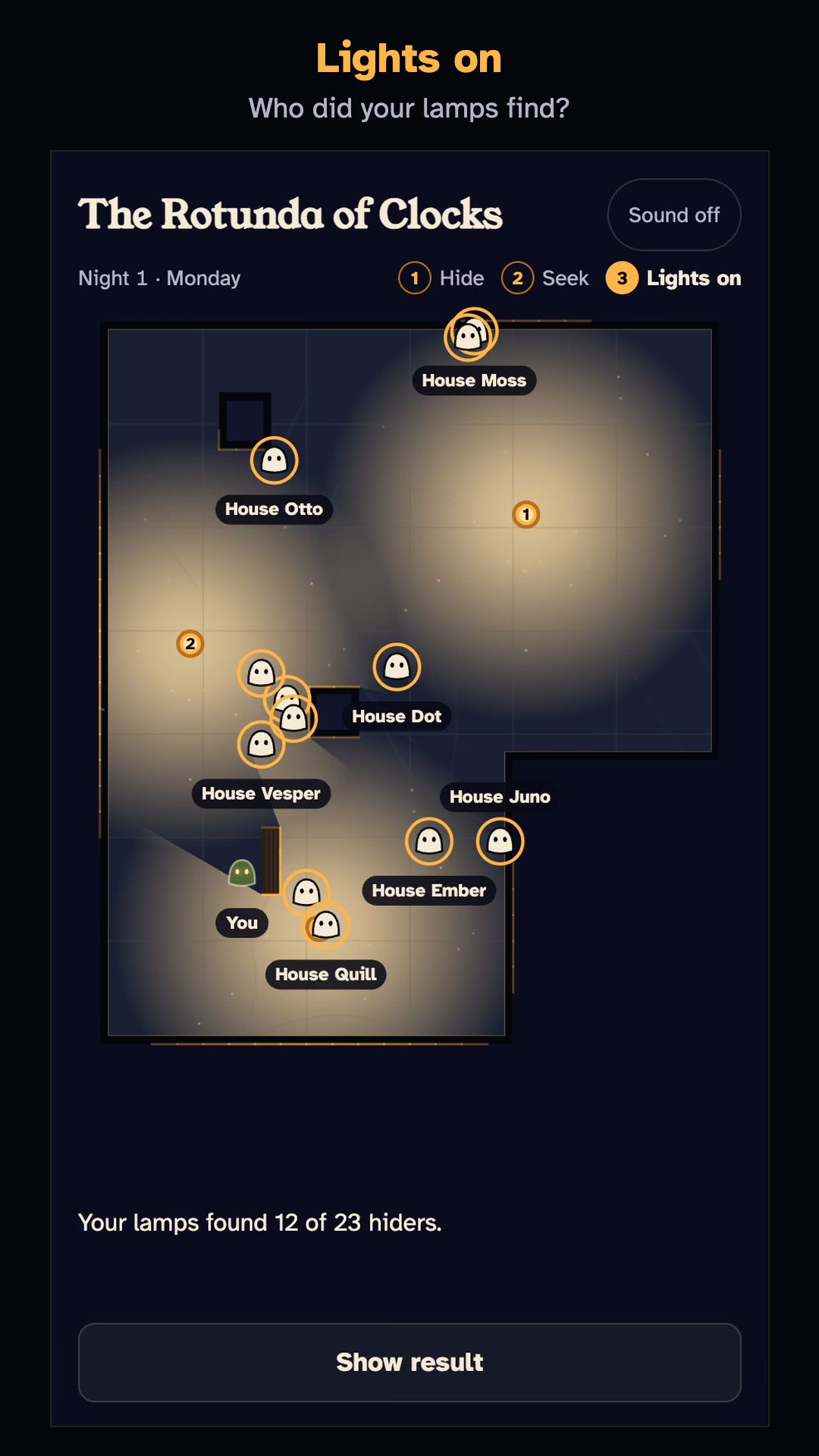
- Lights on: everyone hiding inside your light pops up with their name.
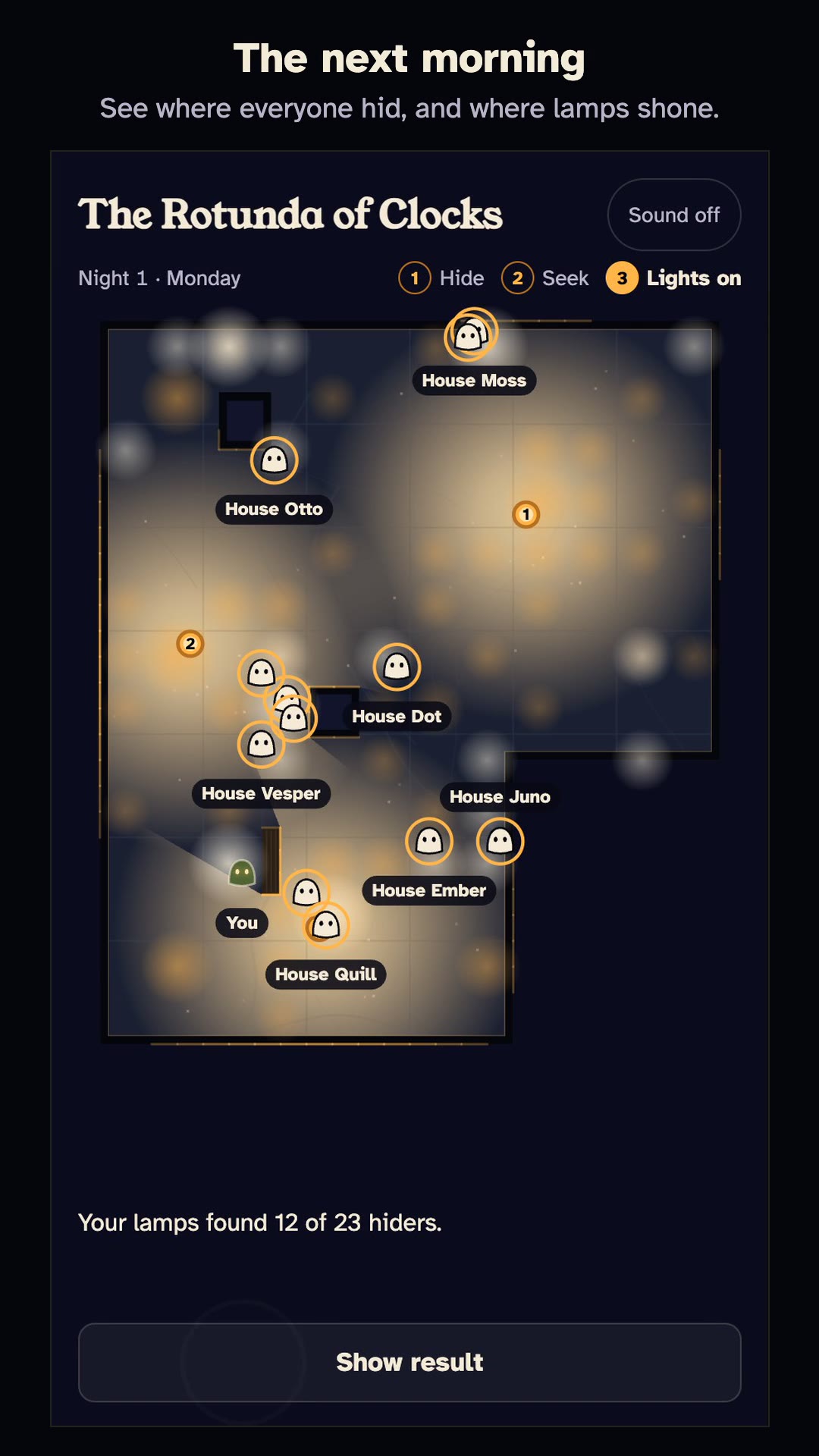
Your result shows how many you found, how many seekers missed you, a night score, and your streak. You can share it as a spoiler-free comment with one button. The next morning the post becomes the morning reveal: a map of where everyone hid and where every lamp shone, a natural start for the comment thread. Then a new gallery appears.
Why it fits Reddit
- The crowd is the content. You hide from real Redditors and hunt real Redditors. The more people play, the better each night gets.
- No empty rooms. 24 house hiders and 24 house seekers fill every night and step aside one for one as real players arrive, so the game works in a brand-new community too.
- Daily by design. A new seeded gallery every night, open halls on Monday and mazes on Sunday, streaks, and a reveal each morning.
- Spoiler-safe. Nobody can see where others hid until they have played, and the full map only appears after the night is over. Shared comments never contain positions.
How we built it
- Devvit Web with a Hono server and Redis. A scheduled job posts each night at 00:01 UTC; a moderator menu item is the fallback, and it never posts a night twice.
- One set of game rules shared by browser and server: seeded room generation with checks (connected floor, best coverage between 55% and 85%, at least three dark pockets), visibility polygons for light and shadow, house players and scoring. The server decides who is found.
- Everything is drawn in code on a Canvas 2D: marble floor, ink walls with a warm edge, shadow-casting lamps, dust in the light, small glowing-eyed figures. No image files, no engine.
- Sound made in code with the Web Audio API: a soft tick per lamp and a rising chime for each player found. Off until the player turns it on.
- Tested: 152 unit tests with Node's test runner, about 99% line coverage of the game logic.
Challenges
- Making light feel real on a phone: exact shadows from many obstacles, redrawn only when a lamp moves, with a loop that sleeps when nothing changes.
- Fairness with no spoilers: the server only ever sends hider positions that sit inside your own light, after you have sought.
- Following Reddit's data rules without an "account deleted" event: every row expires on its own within 30 days, and deleting a post erases that night's player data at once.
Accomplishments
- A game that is understood in seconds, plays in about a minute, and is different every night.
- Hiding works right inside the feed post; seeking opens the full view.
- Clear wording at every step, keyboard play, reduce-motion support, 44 px touch targets.
What we learned
The best daily games give one strong decision per day. In Nightlight it is two: where to hide, and where to shine.
What's next
Best-hider flair, a weekly leaderboard, rule twists (narrow spotlights, a mirror), and player-designed galleries.
Built With
- canvas
- devvit
- hono
- react
- redis
- typescript
- web-audio-api
