-
-
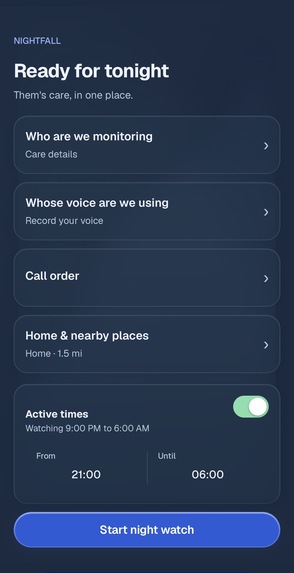
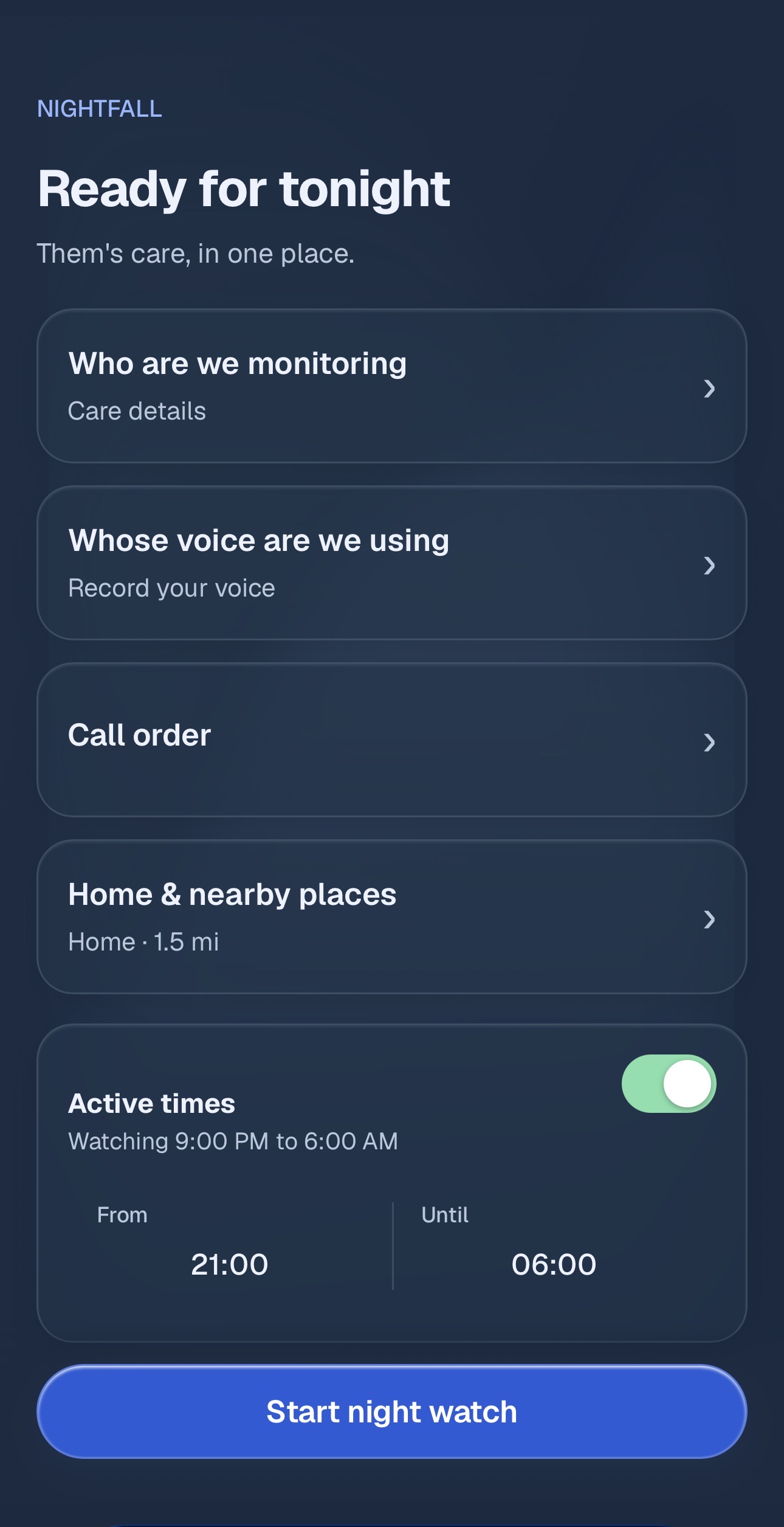
Home page
-
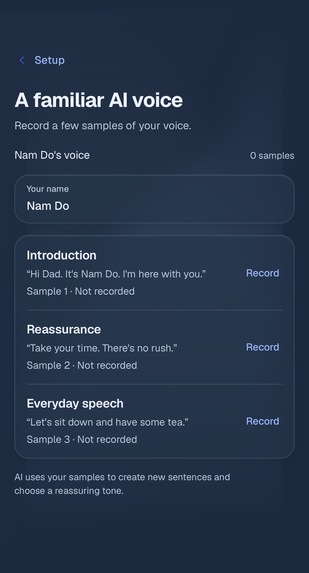
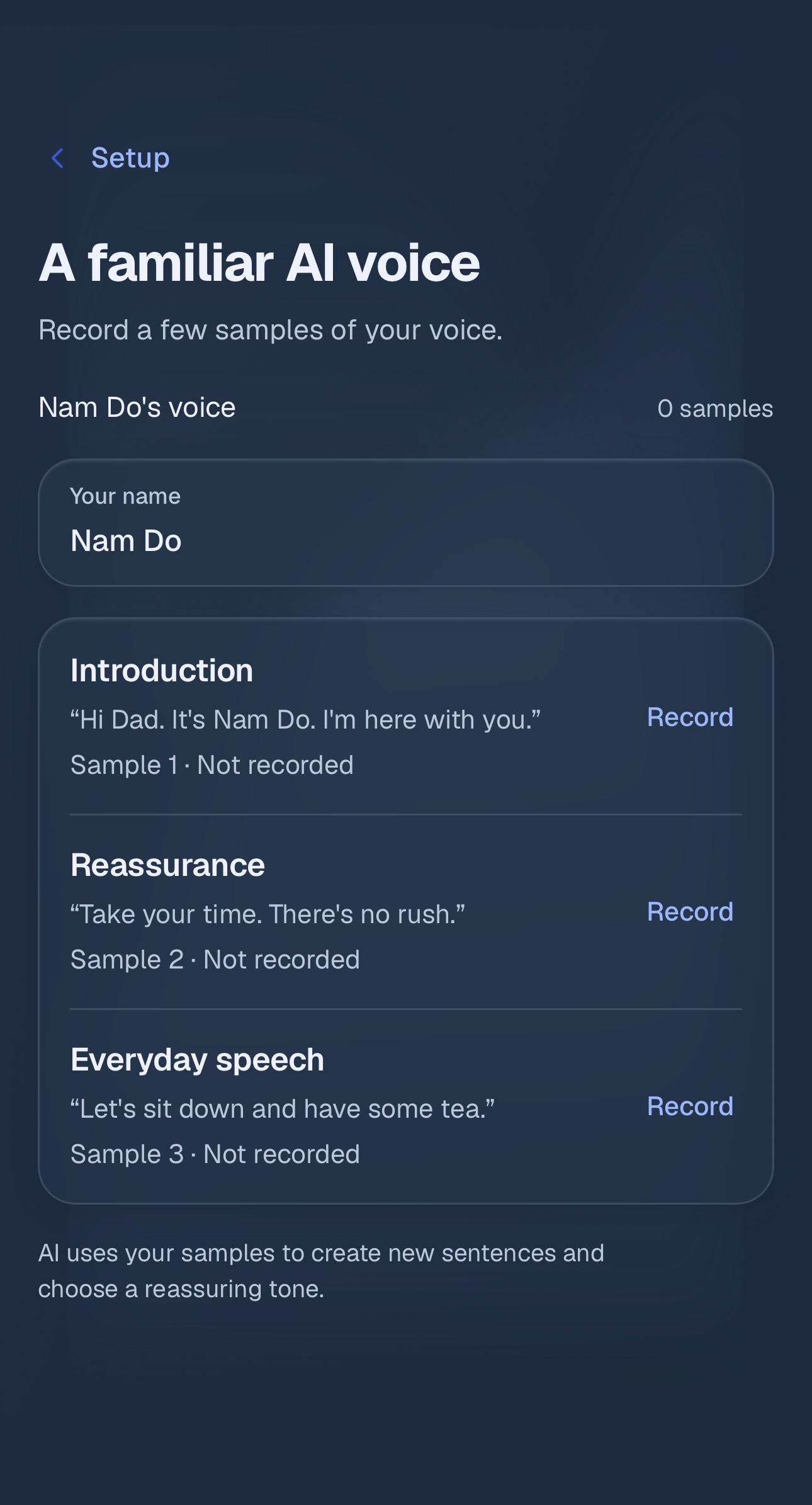
Relatives record a few sentences, allowing AI to recreate their voices and automatically communicate with the person with dementia
-
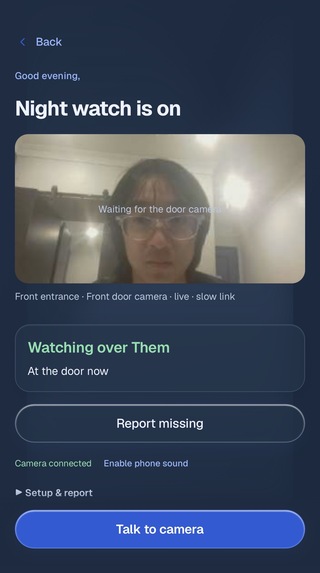
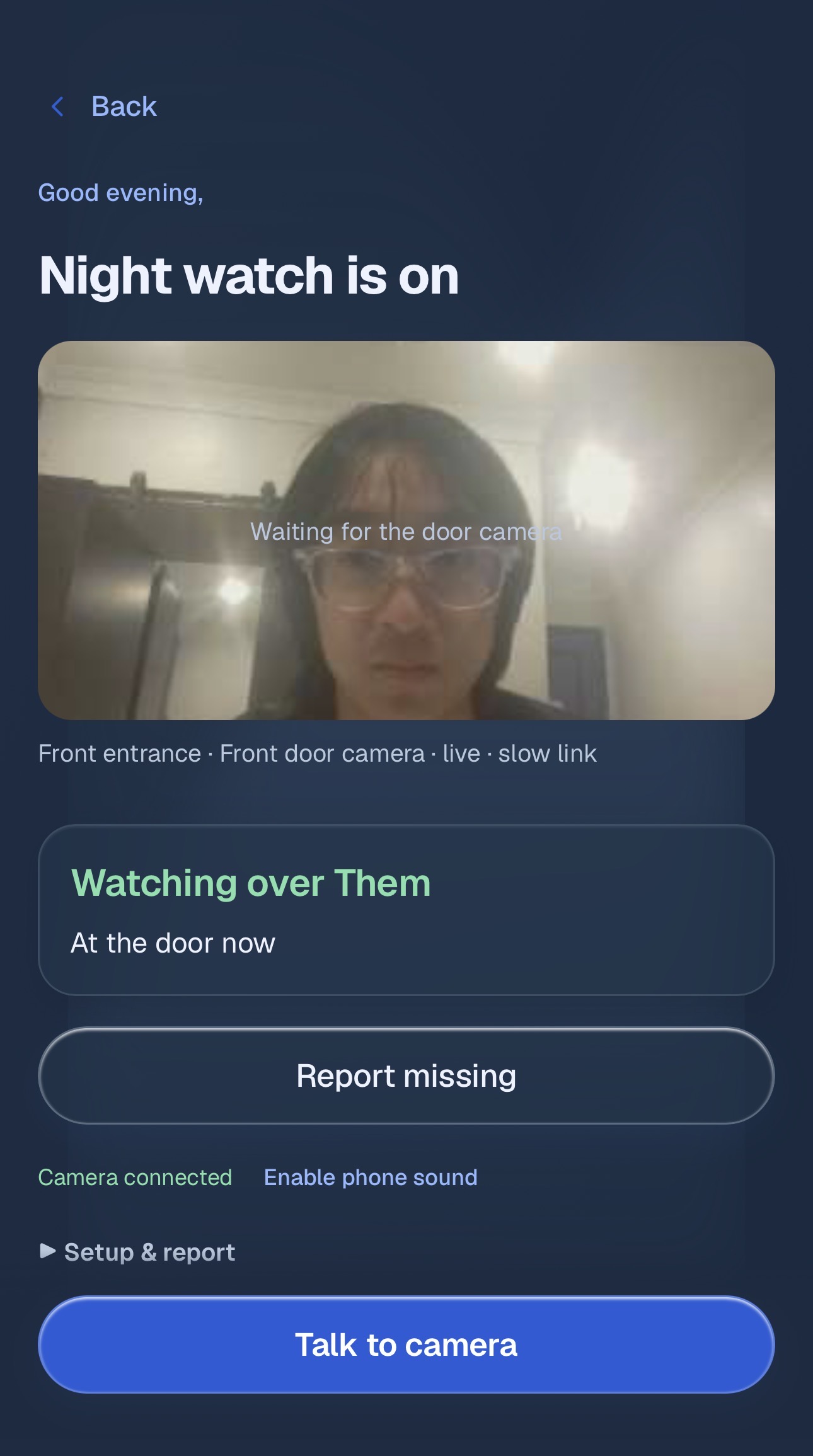
Door camera detects a person with dementia and uses voice prompts to guide them back inside
-
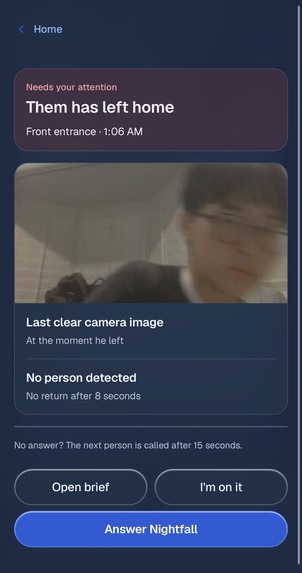
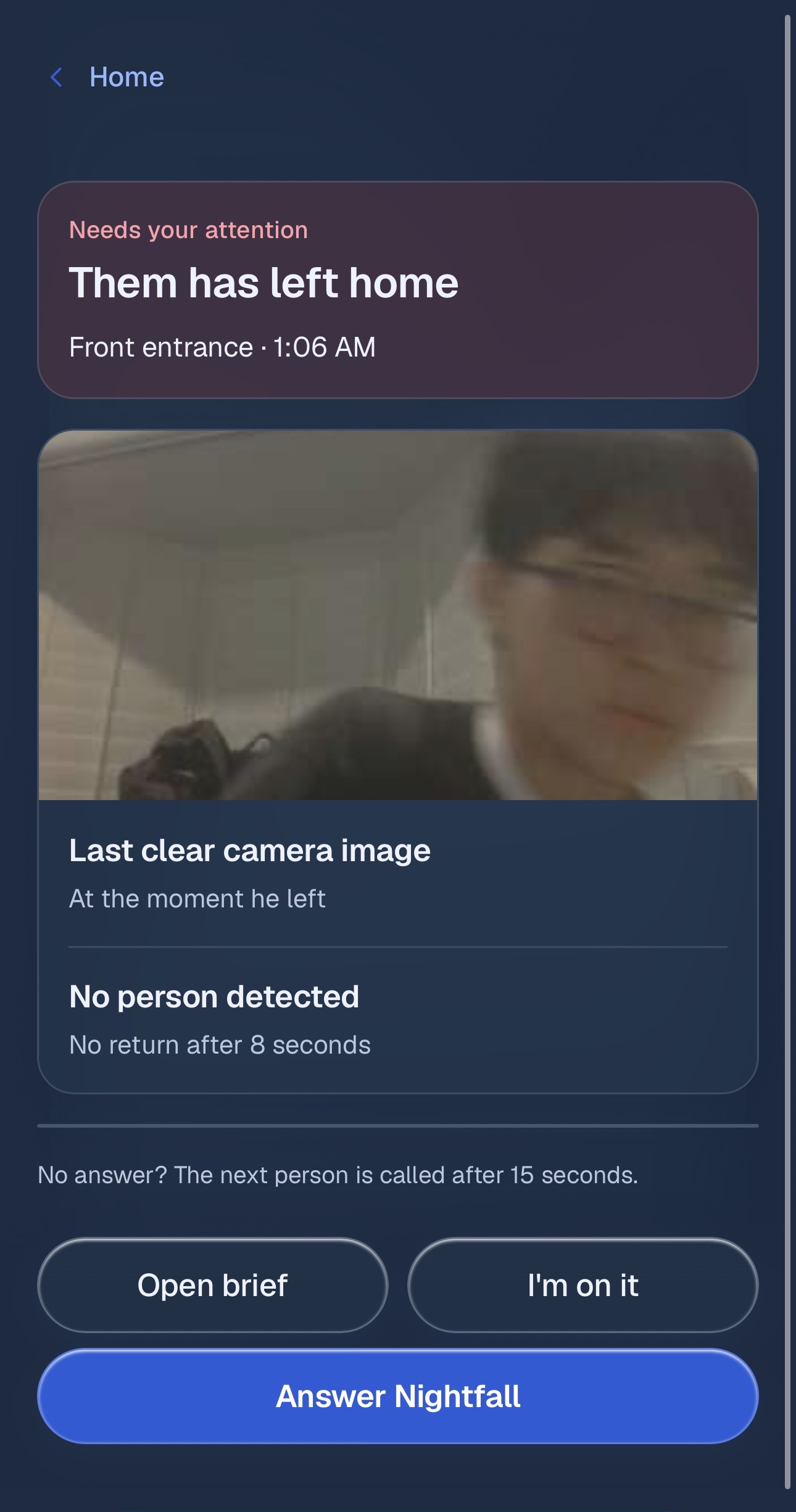
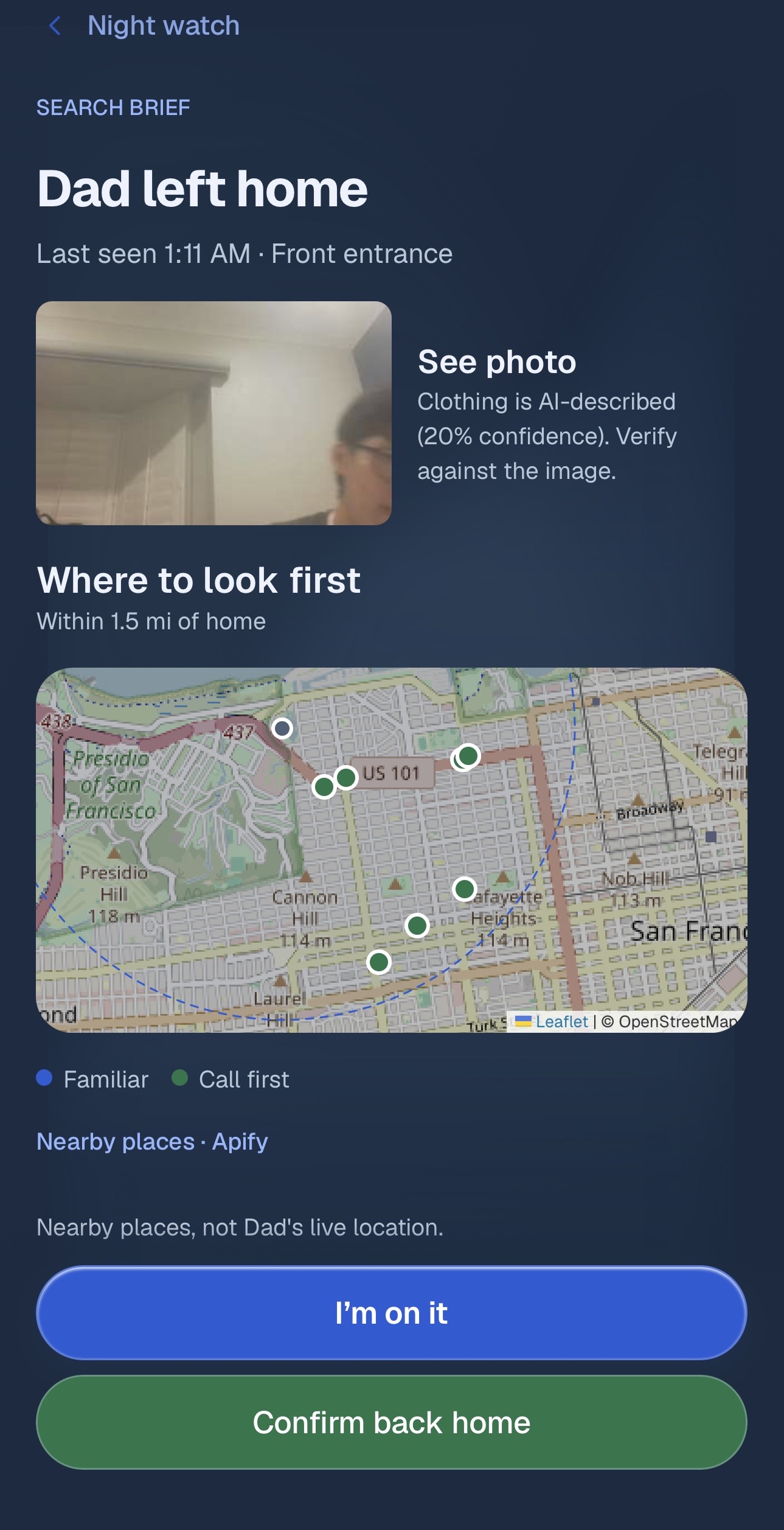
If the person till leaves, the app records their last known image and time
-
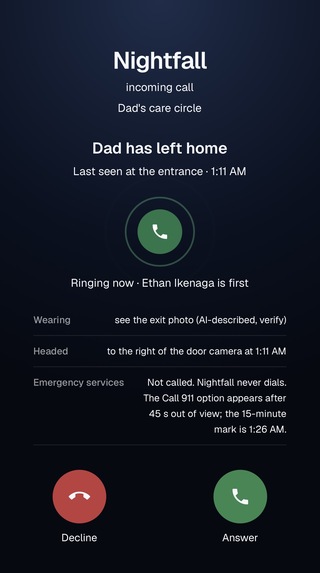
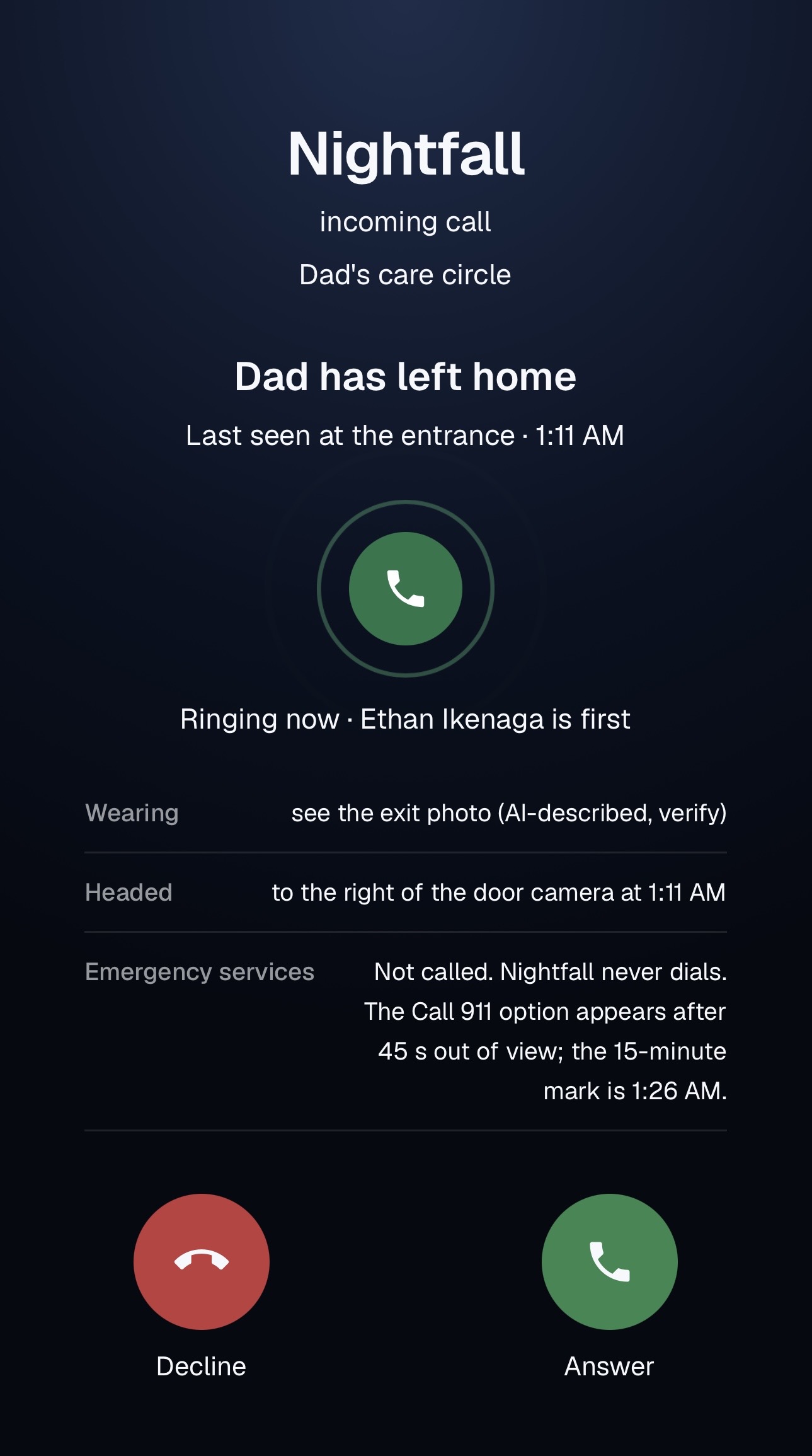
Relatives receive an automated call alerting them that their loved one has left home and may be wandering
-
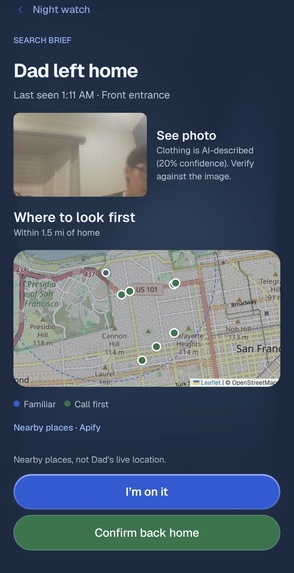
The app identifies potential destinations and nearby danger zones
-
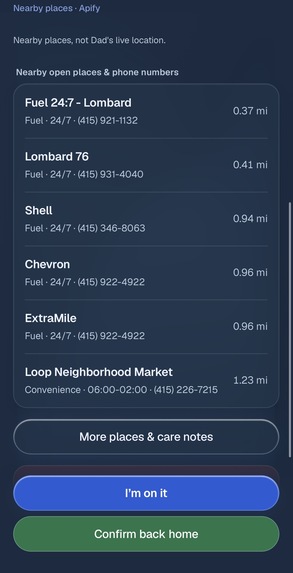
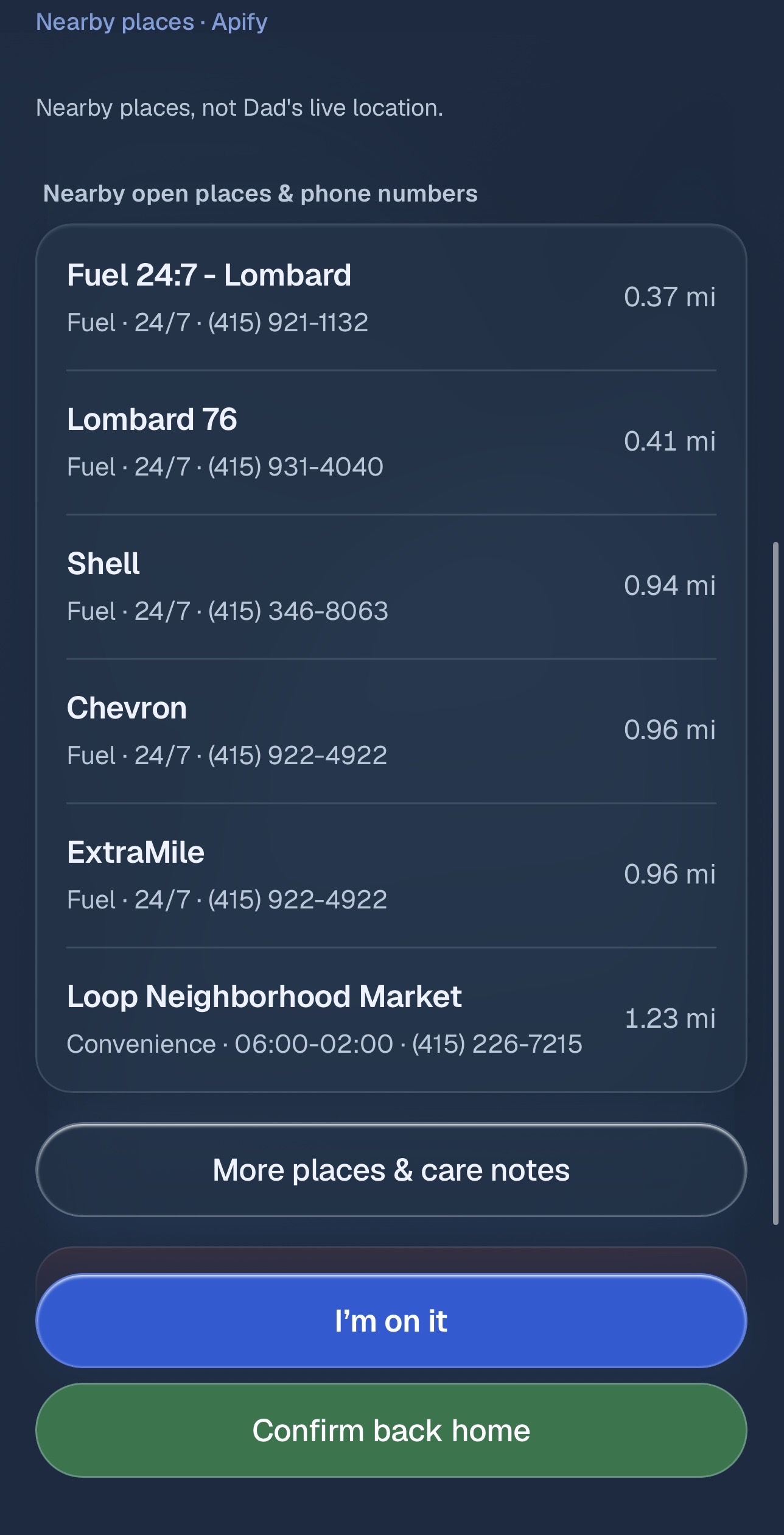
The app also lists nearby open businesses and their phone numbers so relatives can ask staff to look out for the person
-
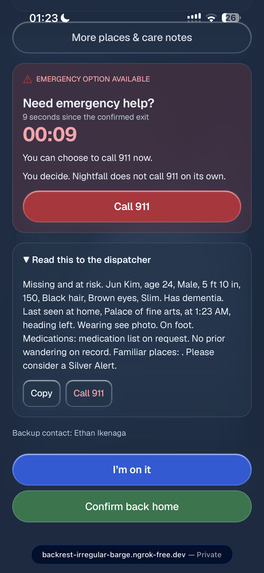
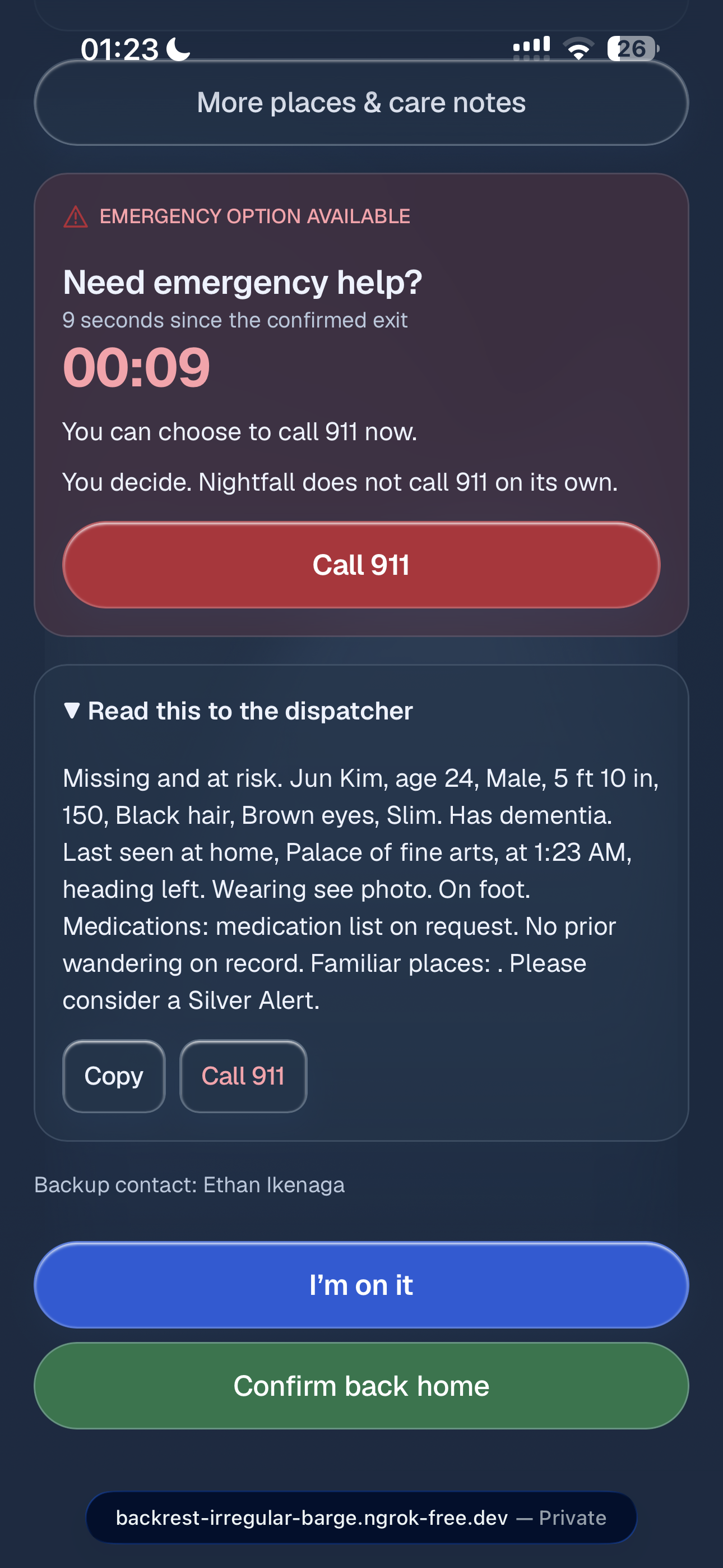
Relatives can call 911 using an automatically generated script containing all essential details about the missing person
Inspiration
NightFall began at a kitchen-table conversation. Our teammate Evan grew up around his great-grandmother's dementia, and when we asked his mom what caring for her had been like, she was quiet for a moment. Then she said:
"It was hard seeing her memory and all that diminish... We just couldn't connect anymore. I didn't have what I needed to protect her... especially at night."
That last sentence has stayed with us. She wasn't only grieving the slow loss of someone she loved. She was exhausted, carrying the daily weight of caregiving on top of everything else in her life. She also kept running into the same painful moment: trying to explain why something was no longer safe to a person who could no longer hold on to the explanation. Then there's the fear that comes at night. According to figures cited by the Alzheimer's Association, six in ten people with dementia will wander, and up to half of those not found within 24 hours may be seriously hurt or die. Picture waking up at 2 AM and finding your father's bed empty. Your first minutes go to digging for a recent photo, trying to remember what he was wearing, calling relatives, and guessing where he might have gone. Those are the minutes families can't afford to lose. We realized that most door alarms and cameras only tell you that someone left, and that's often too late. They don't help the person turn around, and they don't help the family in the frantic minutes afterward. So we built NightFall.
What it does
NightFall is a safety companion that helps prevent wandering and, if it happens anyway, helps a family respond fast. It pairs a smart door device with a web app for caregivers:
- It notices. Computer vision watches the doorway at night and tells a possible exit apart from ordinary visitors.
- It reassures. Instead of a blaring siren, which would frighten someone who is already confused, NightFall speaks to them calmly using Cartesia voice AI, and can use the voice of a family member they know and trust.
- It calls for help. If the person leaves anyway, caregivers are phoned right away.
- It does the frantic work for you. The system captures what the person looks like, what they're wearing, when they left, and which way they went, and puts it all into a shareable missing-person brief, so nobody has to dig for those details at 2 AM.
- It helps you decide where to look first. Using Apify and map data, it finds nearby hazards, places that are open all night, and spots that matter to the person. A search circle becomes a plan.
- It lets you be there. Caregivers can watch a live camera feed and speak through the door device in their own voice.
- It keeps one simple thing within reach. A big red HELP button lets the resident reach family anytime, with no smartphone needed. And when a friend or neighbor drops by, NightFall just acts like a friendly doorbell, with a chime and a polite hello instead of an alarm. We didn't want to build something that merely detects wandering. We wanted to help prevent it, and to give families the tools to act when every second counts.
How we built it
We wanted NightFall to feel like one coordinated response, not a pile of separate AI features. Under the hood, that meant bringing several pieces together:
- Computer vision to watch the doorway, flag potential exits, and capture the visual details that help someone find a person who has left.
- Cartesia for natural, soothing speech, so NightFall sounds more like a gentle presence than a machine.
- Phone alerts and a caregiver dashboard so families can respond to incidents, check the doorway, and talk through the device from anywhere.
- Apify and mapping data to turn the area around the home into a practical search plan of nearby businesses, hazards, and familiar places.
- A backend orchestrator that ties everything together: detection, the voice conversation, caregiver notifications, and search planning.
- A web dashboard that puts monitoring, incident details, emergency contacts, and search results in one place.
Challenges we ran into
Telling a wanderer from an ordinary night. Not everyone near the door is leaving, and not everyone outside is a threat. A system that cries wolf wears families out and teaches them to ignore it, so we worked hard to separate real exits from normal household life and visitors.
Making the voice feel human. Someone living with dementia may already be frightened or disoriented, so one wrong tone can make things worse. We spent a lot of time on making the conversation calm and familiar rather than robotic, while still responding quickly enough to matter.
Making many real-time systems work as one. Vision, voice synthesis, phone calls, and map data all behave differently. Getting them to cooperate under a hackathon deadline meant thinking carefully about delays, events, and what happens when one piece fails.
Building responsibly. This is a product for a vulnerable person and the family who loves them. Privacy, consent, reliability, and human oversight weren't extras we added at the end. They shaped our decisions throughout, including the plain fact that a cloned family voice should only ever be used with that person's permission.
Accomplishments that we're proud of
We're proudest that NightFall came from one real family's experience, and that we built it around a problem that truly matters. We're also proud of:
- Building something that tries to comfort a person rather than scare them.
- Joining computer vision and voice AI into a proactive safety flow.
- Connecting the moment of detection to the people who need to know right away.
- Turning an empty search radius into a map of places and hazards that tells you where to look.
- Gathering the details families would otherwise scramble for under pressure.
- Designing for accessibility, with familiar voices and a physical HELP button. Our guiding idea was simple: technology should do more than recognize an emergency. It should help people respond to it.
What we learned
We learned that the AI that matters most isn't always the most complicated. Often it's the AI that listens closely to a real human need. On the technical side, we got hands-on with computer vision, real-time voice, external APIs, and event-driven backends, and we learned how hard it is to make separate AI components work reliably together when timing matters. The bigger lesson was about design. For someone with dementia, a familiar voice can offer comfort that no alarm can. For a caregiver, the right information at the right moment can make an overwhelming night a little more manageable. AI shouldn't replace the care and connection families give each other. It should help that connection reach across a distance, even when they can't be in the room.
What's next for NightFall
We'd love for NightFall to become an affordable safety companion that any family can use. Next, we want to:
- Make detection more reliable across different homes and lighting conditions.
- Add more languages and more personalized voice interactions.
- Support more smart-home devices and sensors.
- Sharpen search planning with better real-time location information.
- Strengthen privacy, security, and emergency reliability.
- Work with caregivers and dementia-care professionals to test and improve NightFall in real homes. In the end, we want to give caregivers something priceless: peace of mind. Nobody should have to choose between a good night's sleep and knowing their loved one is safe.


Log in or sign up for Devpost to join the conversation.