Inspiration
Night Market Spirits was inspired by the atmosphere of Southeast Asian night markets, cozy management games, and the idea that a forgotten place can become alive again through small, meaningful upgrades. I wanted to design a mobile-first simulation game where players can see growth immediately: one empty alley becomes a warm, glowing market filled with food stalls, decorations, and spirit customers.
What the Game Is
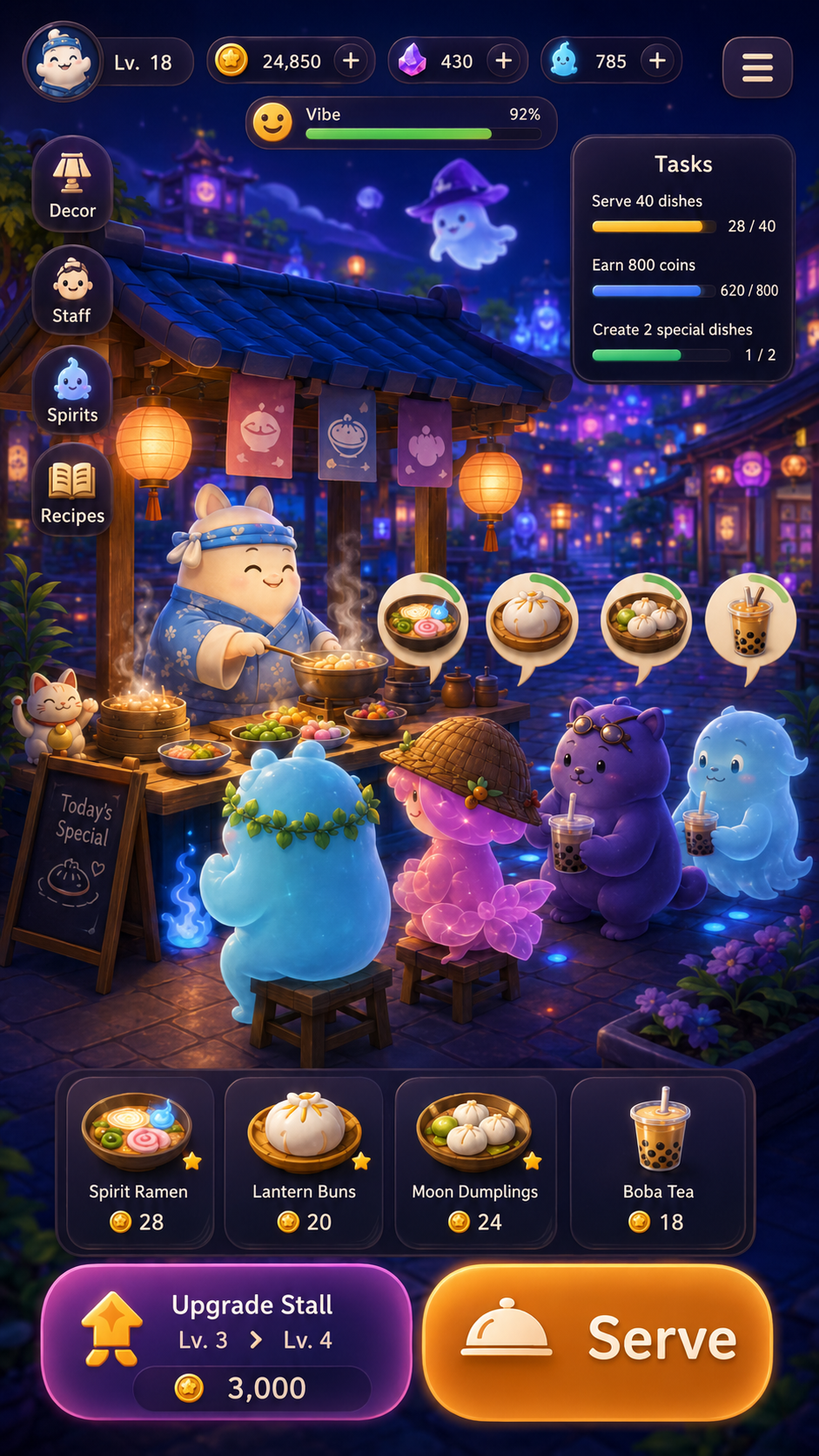
Night Market Spirits is a cozy Simulation & Management mobile game where players manage a supernatural night market for friendly spirits. Players cook snacks, decorate stalls, serve different ghost customers, balance each spirit’s preferred “vibe,” and reinvest earnings to expand the market one stall at a time.
The core loop is simple: prepare goods, serve spirits, earn coins and reputation, upgrade stalls, improve the market atmosphere, and unlock new customers and areas. The management depth comes from balancing short-term income with long-term market identity. For example, a player can spend resources on faster food production, better decorations, or mood-based upgrades that attract rarer spirits.
Design Approach
I focused on making the first 15 minutes clear, rewarding, and production-ready. The player starts with a dark, empty alley and one small stall. Within the first session, they serve their first spirit, make their first upgrade choice, see the alley visually improve, and unlock the promise of a larger market.
The design prioritizes short mobile sessions, readable UI, visible progression, and a cozy “one more upgrade” feeling. Every system is scoped around a buildable MVP: a small market area, a few spirit types, a limited set of resources, and a clear upgrade path.
Challenges
The main challenge was keeping the concept charming without making the scope too large. A night market could easily expand into many characters, stalls, recipes, stories, and social features, so I focused the first version on the essential loop: serve, earn, upgrade, and grow. I also worked to make each visual element support gameplay, so decorations are not just cosmetic but part of the management system through customer mood and market atmosphere.
What I Learned
This project helped me think more deeply about how simulation games create retention. The most important lesson was that progression should be both mechanical and emotional: players should earn more resources, but they should also feel that they are bringing a forgotten place back to life.
Built With
- ai-assisted-visual-exploration
- canva
- economy-planning
- figma
- google-docs
- meta-horizon-creator
- mobile-first-ux-design
- systems-design


Log in or sign up for Devpost to join the conversation.