-
-
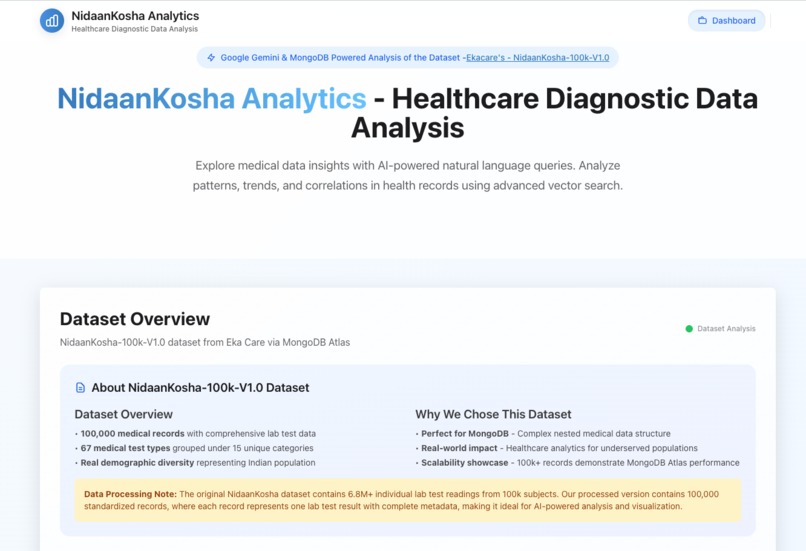
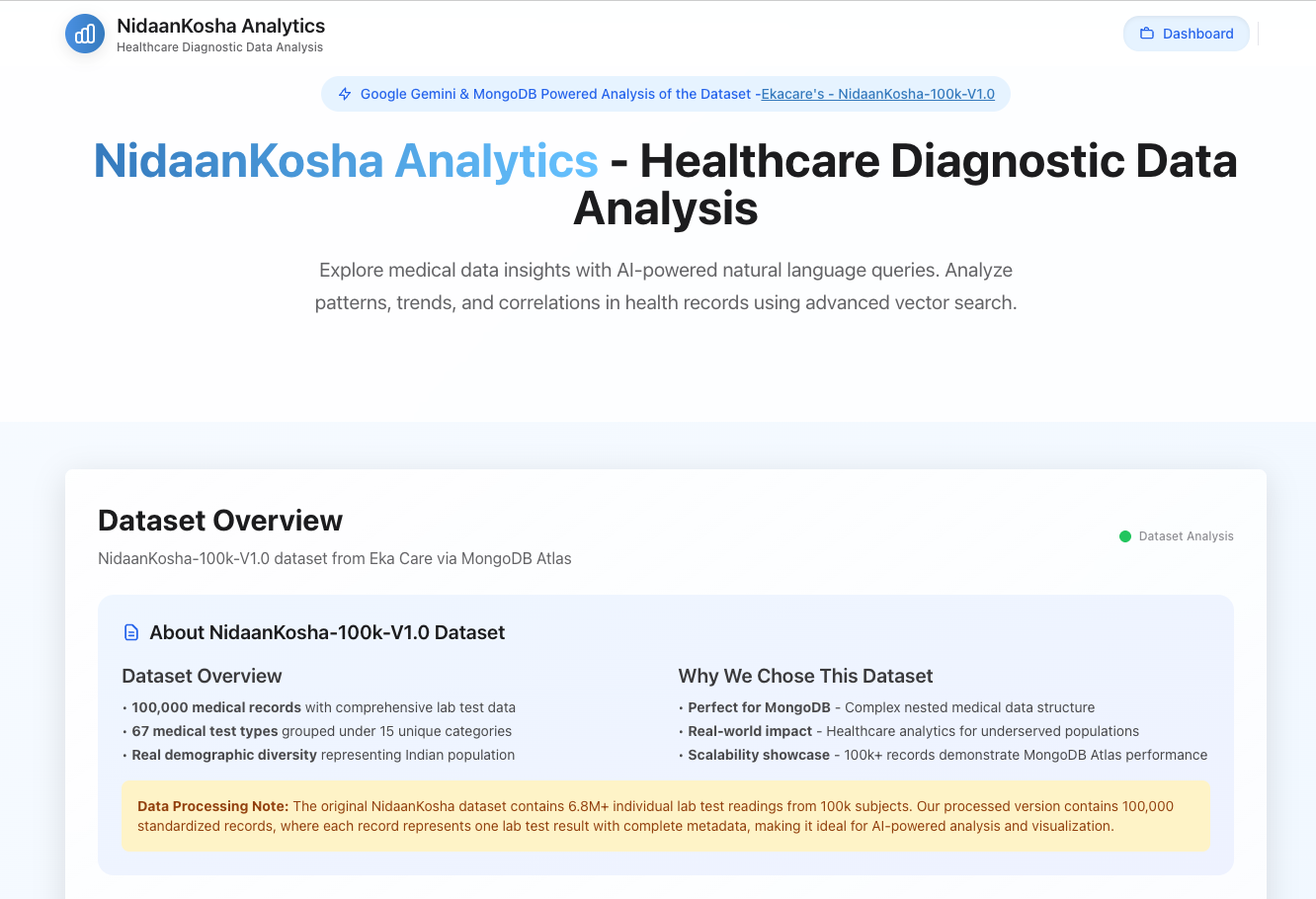
NidaanKosha Analytics - Healthcare Diagnostic Data Analysis
-
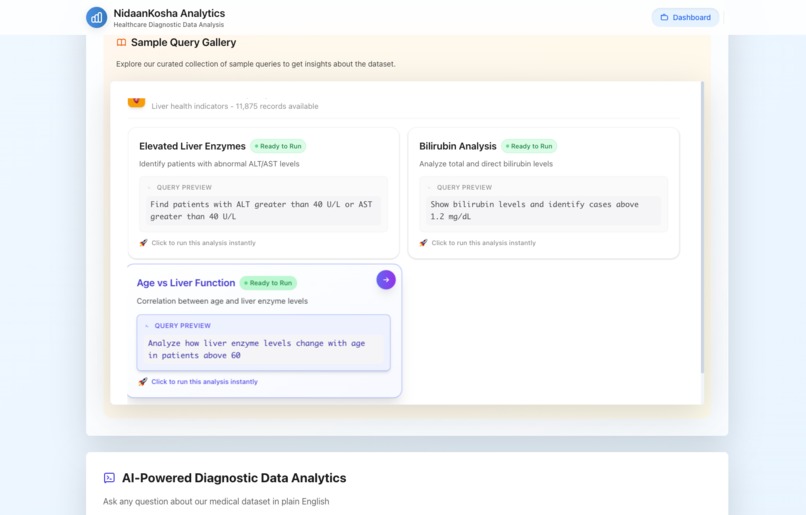
AI-Powered Diagnostic Data Analytics Ask any question about our medical dataset in plain English
-
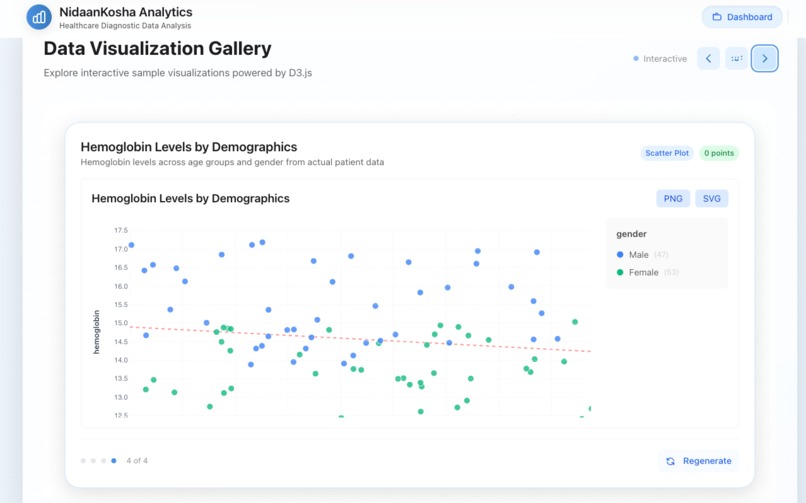
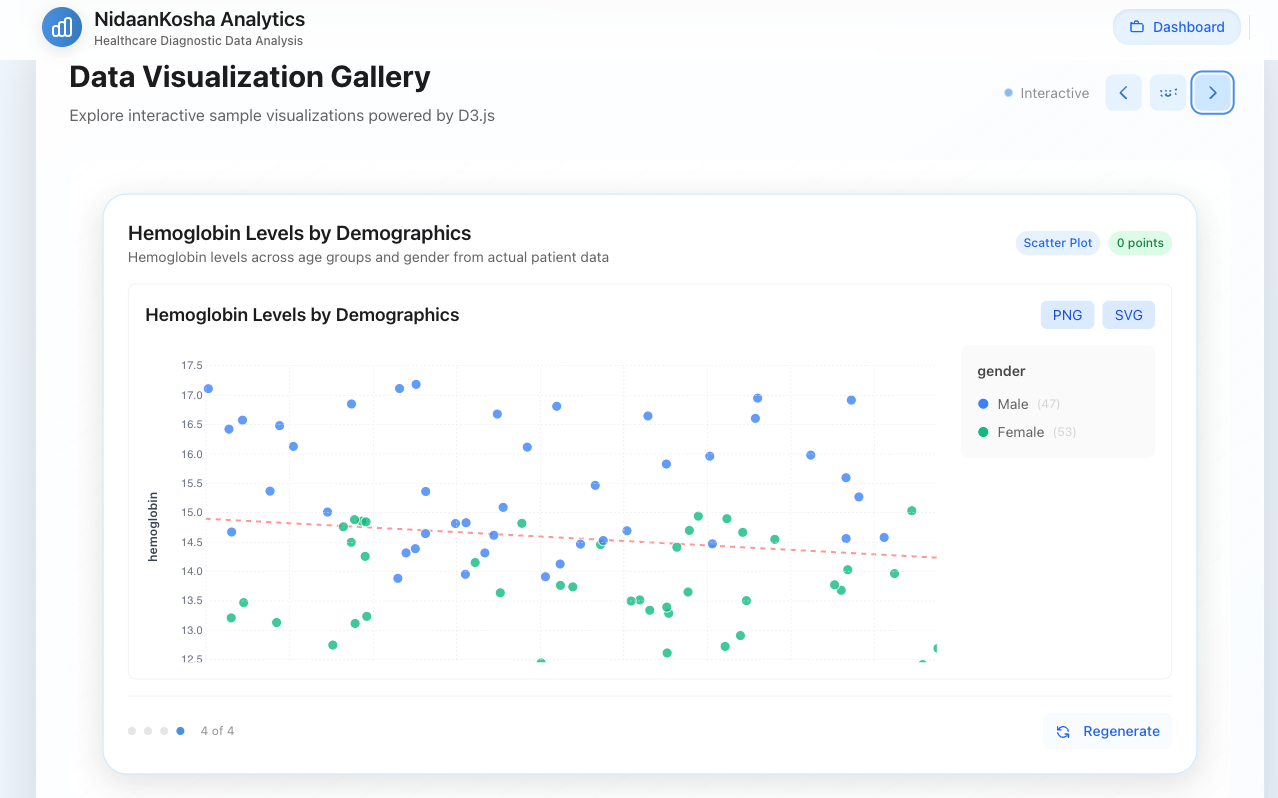
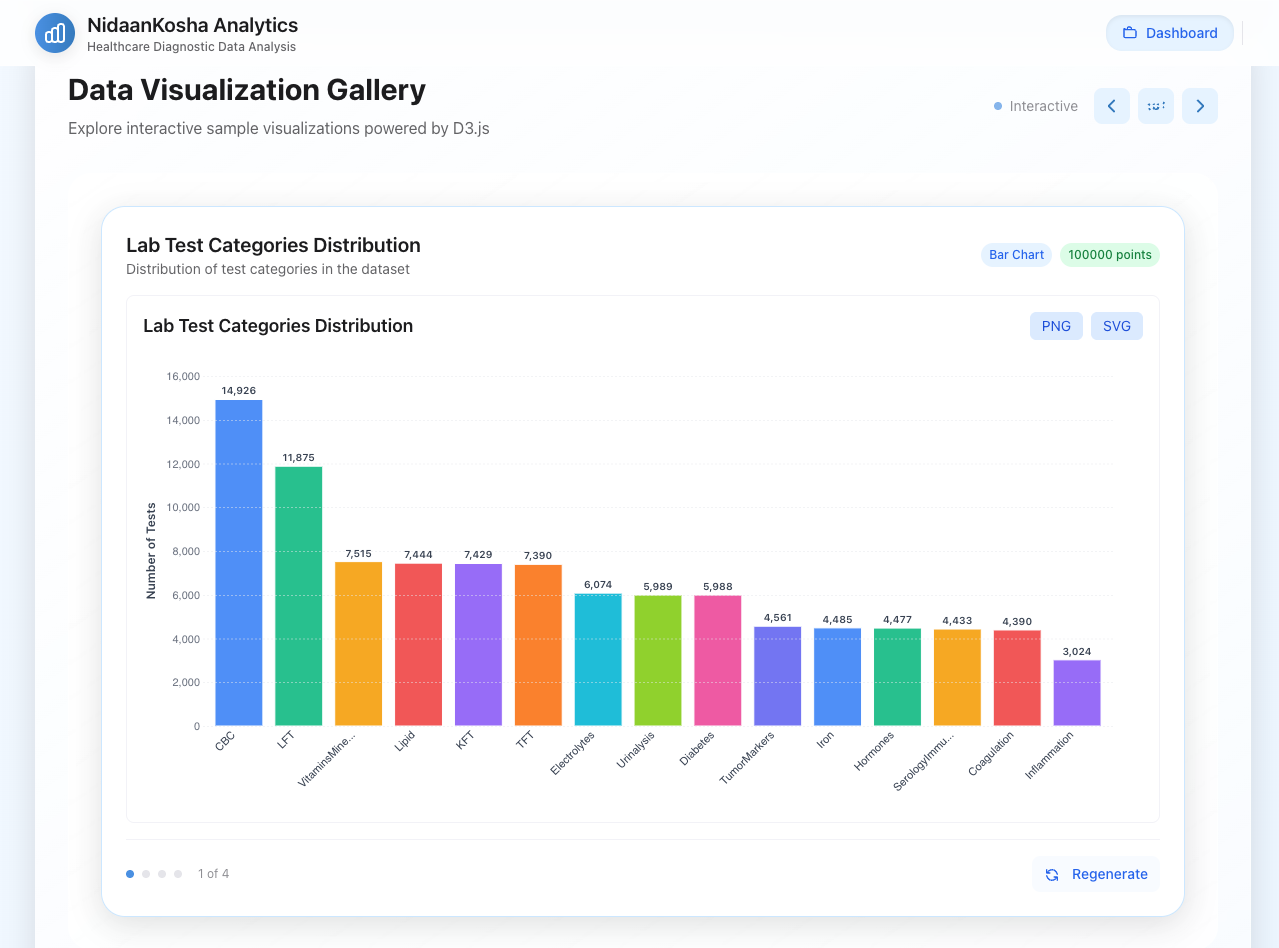
Data Visualization Gallery Explore interactive sample visualizations powered by D3.js
-
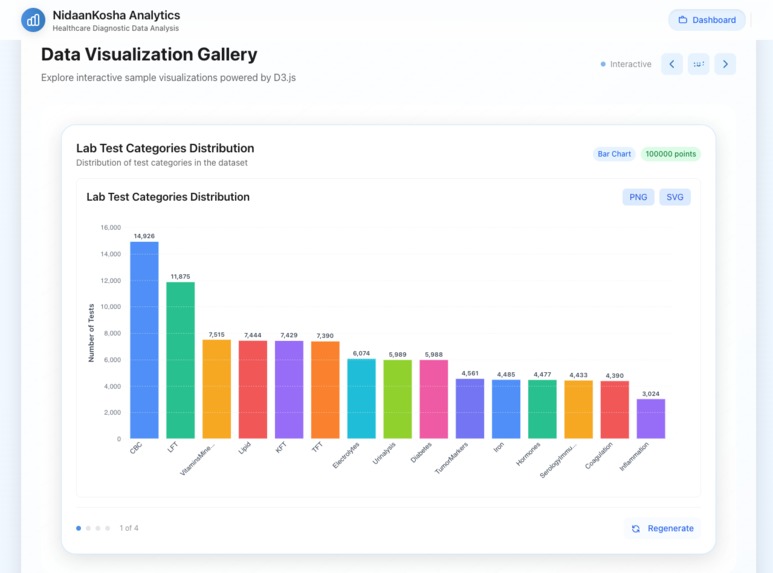
Data Visualization Gallery Explore interactive sample visualizations powered by D3.js
🏥 The Medical Doctor's Dilemma
As a practicing medical doctor, I've always been fascinated by the wealth of information hidden within medical data. However, traditional analytics tools often require technical expertise that creates barriers between healthcare professionals and the insights that could improve patient care. The frustration of seeing patterns in data but lacking the tools to explore them efficiently sparked my journey toward this project.
🎯 The Serendipitous Convergence
Three key events converged to create the perfect storm for this project:
- The AI in Action Hackathon - Providing the platform and motivation to build something meaningful
- MongoDB Atlas & Vector Search - Discovering the power of semantic search for medical data
- Eka Care's NidaanKosha-100k Dataset - A treasure trove of 100,000+ real Indian medical records becoming publicly available
The timing felt serendipitous - here was an opportunity to combine my medical background with cutting-edge AI technology to create something that could genuinely impact healthcare analytics.
🛠️ Building the Vision
The Challenge
Medical data analysis traditionally requires:
- Complex SQL queries that most doctors can't write
- Statistical knowledge beyond clinical training
- Time-consuming data exploration processes
- Technical barriers that prevent rapid hypothesis testing
The Solution: Natural Language Medical Analytics
I envisioned a platform where healthcare professionals could simply ask questions in plain English:
- "What are the average hemoglobin levels by age group?"
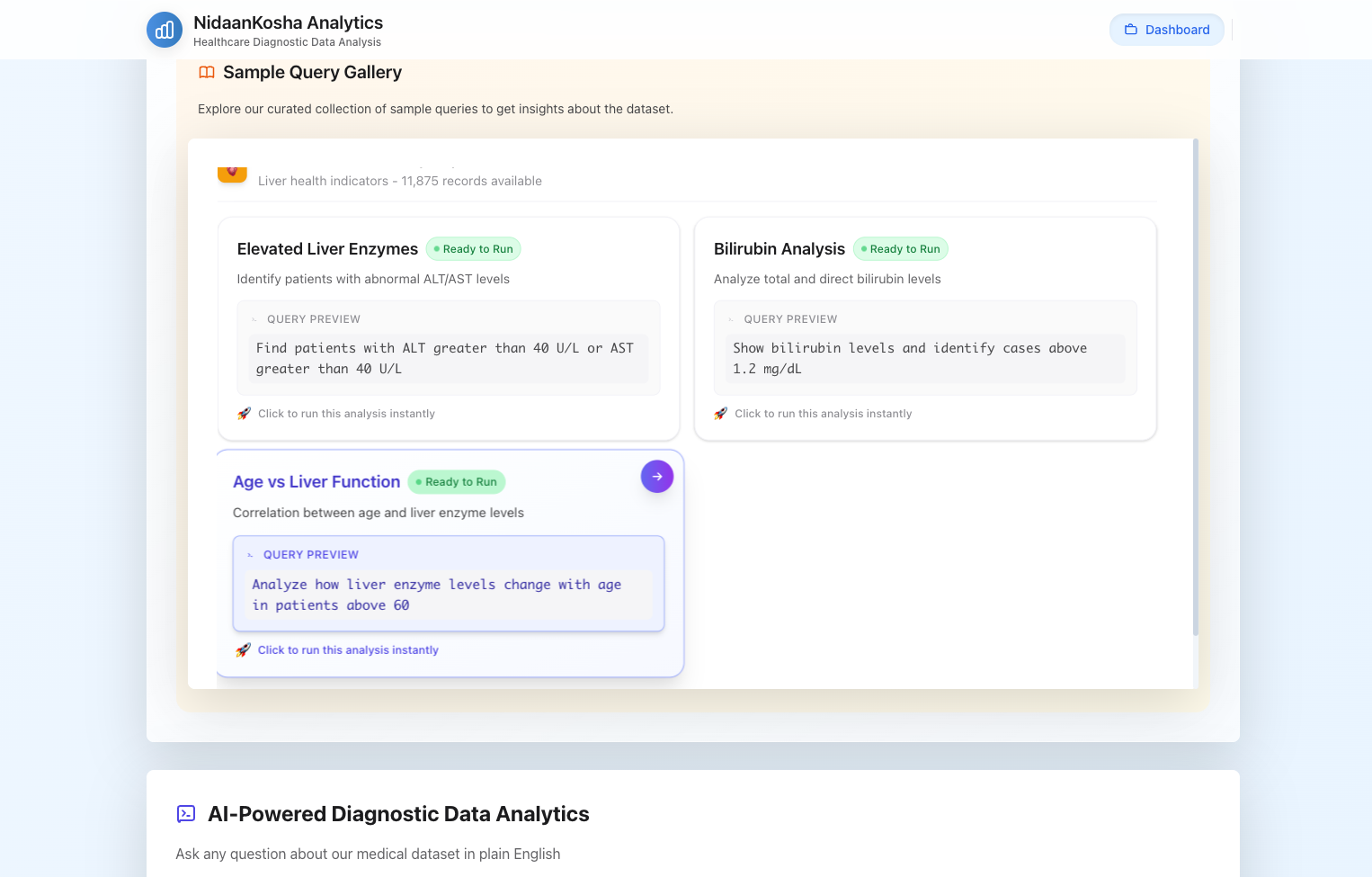
- "Show me patients with abnormal liver function tests"
- "How do cholesterol levels vary between genders?"
Technical Architecture
Frontend (Vue.js 3 + Apple-Inspired Design)
- Implemented a clean, medical-professional friendly interface
- Used D3.js for interactive visualizations that doctors can intuitively understand
- Created a responsive design that works on tablets and mobile devices used in clinical settings
Backend (Node.js + Express)
- Built RESTful APIs for seamless data access
- Implemented caching strategies for real-time performance
- Added comprehensive logging for debugging and monitoring
AI Integration (Google Gemini 2.0 Flash)
- Integrated natural language processing for query understanding
- Implemented ambiguity detection to clarify user intent
- Built an iterative conversation system for complex queries
Database (MongoDB Atlas on Google Cloud)
- Processed and imported 100,000+ medical records from NidaanKosha dataset
- Implemented vector search for semantic query matching
- Optimized aggregation pipelines for real-time analytics
📚 What I Learned
Technical Discoveries
- MongoDB Vector Search - The power of semantic similarity for medical queries exceeded expectations
- Google Gemini 2.0 Flash - Its ability to understand medical terminology and context was remarkable
- Vue.js Composition API - Provided excellent reactivity for real-time data updates
- Medical Data Complexity - Real-world datasets require extensive cleaning and normalization
Medical Insights
- Data Patterns - Discovered interesting correlations in the Indian population health data
- Query Patterns - Understood how medical professionals naturally ask questions about data
- Visualization Preferences - Learned what chart types are most intuitive for clinical decision-making
Integration Challenges
- API Rate Limiting - Managed Google Gemini API calls efficiently
- Data Volume - Optimized queries for 6.8M+ individual test readings
- Response Time - Balanced AI processing with user experience expectations
🚧 Challenges Faced & Solutions
1. Natural Language Understanding
Challenge: Medical queries often contain ambiguous terms and complex medical relationships. Solution:
- Implemented clarification question system using Gemini AI
- Built conversation context management
- Added fallback mechanisms for edge cases
2. Performance at Scale
Challenge: Real-time analytics on 100,000+ records with complex aggregations. Solution:
- Optimized MongoDB aggregation pipelines
- Implemented intelligent caching strategies
- Used indexing for frequently queried fields
3. User Experience Design
Challenge: Making complex medical data accessible to healthcare professionals with varying technical skills. Solution:
- Designed Apple-inspired interface focusing on simplicity
- Created sample query gallery for quick starts
- Implemented auto-scroll and visual feedback systems
🎯 Impact & Future Vision
This project demonstrates how AI can democratize medical data analysis, making it accessible to healthcare professionals without requiring technical expertise. The ability to query real Indian health data using natural language opens possibilities for:
- Clinical Data Research Agent - Agentic workflow development for Processing of existing health datasets along with comparison against published studies - Automating the picking up of correlational data findings based on existing studies across available datasets to augment understanding.
- Population Health Studies - Understanding demographic health trends
- Medical Education - Interactive learning with real-world data
- Healthcare Policy - Data-driven decision making for public health
This platform represents a step toward the future of medical informatics, where the barrier between clinical questions and data-driven answers becomes seamless.
VibeCoded Extensively using Cursor! All done in good-faith - Kindly pardon any hallucination resulting in errors or mis-steps.

Log in or sign up for Devpost to join the conversation.