Inspiration
Our project was inspired on the issue of when given images of dermatological diseases, certain skin types were harder to diagnose than others. Based on the article from mit news, from a group of 1000 dertmatologists only ~38% images with skin disease were accurately determined. Additionally, only 12.9% of darker skin images were correctly classified. We wanted to help advance equity in healthcare by centering those historically excluded in AI.
What it does
We built a machine learning model that takes in images of skin conditions, and detects the type of disease out of the 21 diseases from our dataset.
How we built it
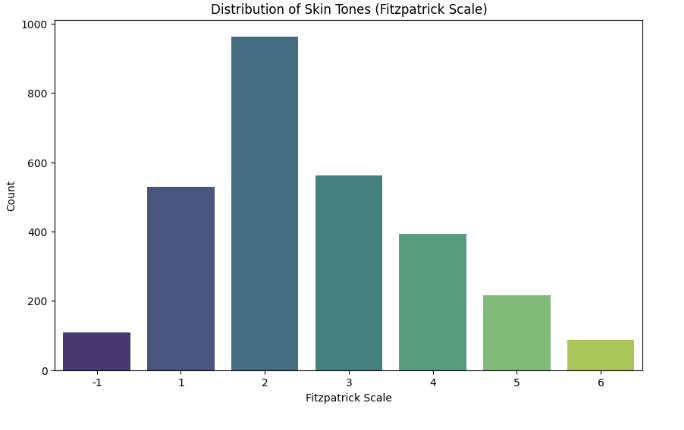
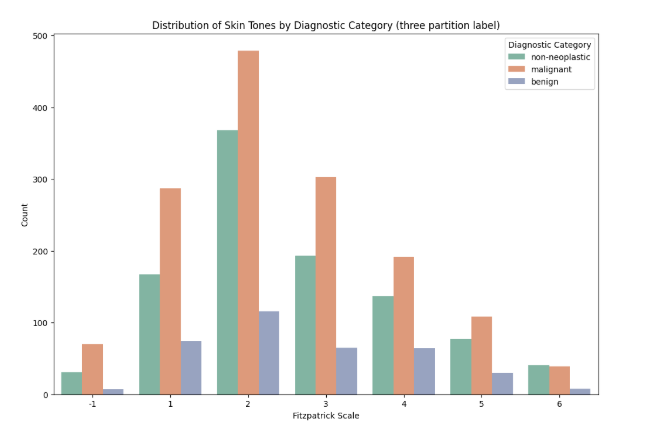
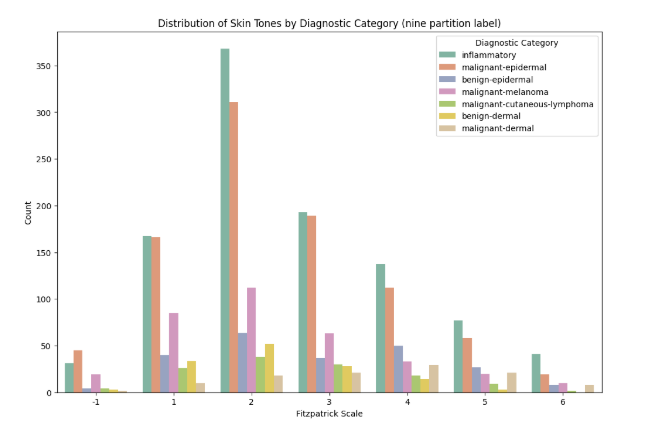
- Data augmentation and resampling - to redistribute of unevenly distributed data for different skin tones on the Fitzpatrick scale.
- ConvNeXtSmall Model - A model commonly used in image classification tasks, especially in the medical field We used Python, Pandas, Tensorflow, and Jupyter Notebooks.
Challenges we ran into
Due to the nature of the project, training the models took up majority of the time. We needed to do quick iterations, with smaller models, and used techniques like transfer learning.
Accomplishments that we're proud of
We were able to improve our validation accuracy from 7% to 60.9%. It was our first time working with computer vision so we are proud of that result.
What we learned
We learned a lot about image classification, from cleaning the data, augmenting the images, and the types of models and how to train them.
What's next for NiceDay - Skin Disease Detector
We’d need to finish up by using the F1 formula to calculate the actual accuracy of the model. With enough training and a satisfactory score we would be able to export the model for future uses.


Log in or sign up for Devpost to join the conversation.