Inspiration
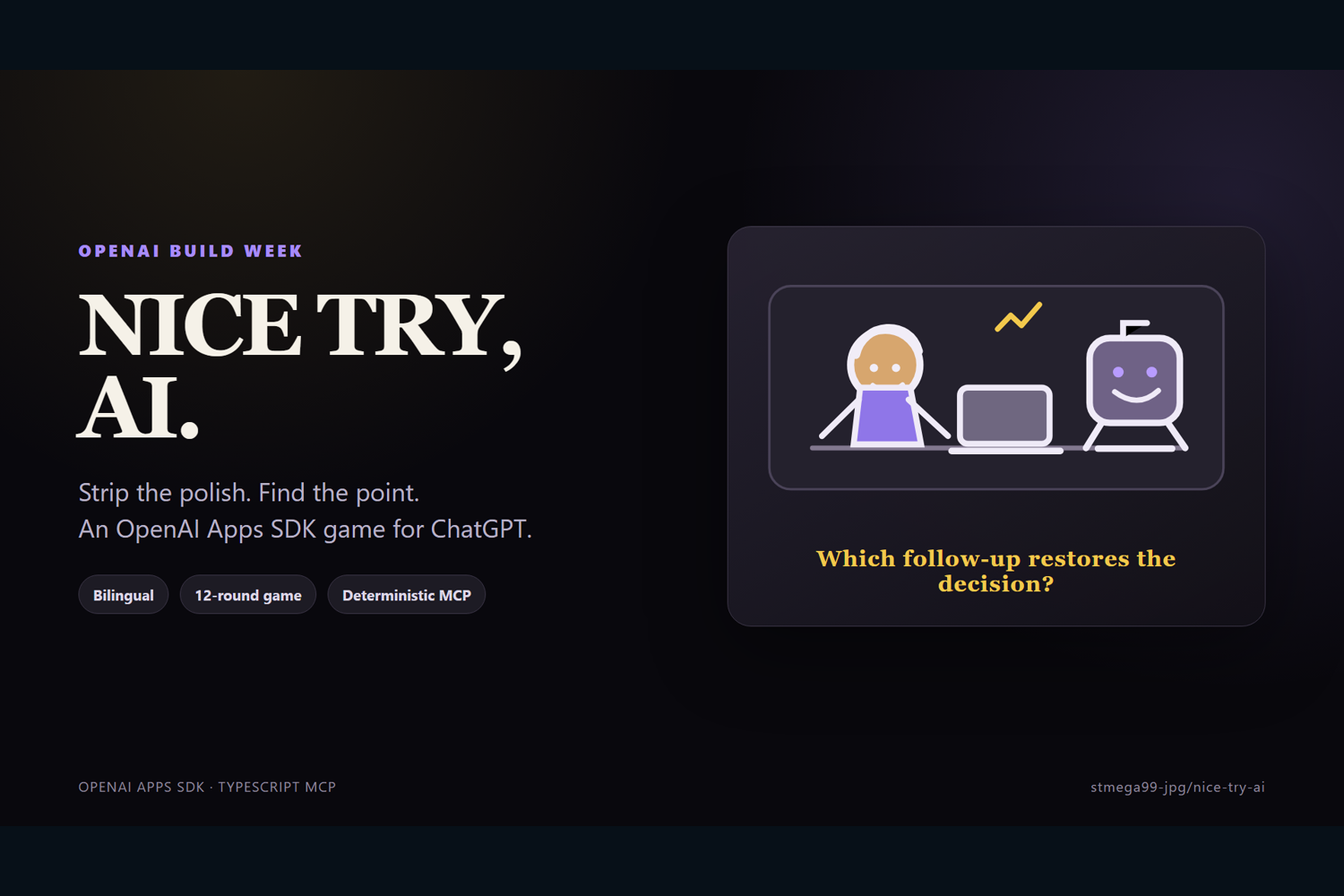
AI responses can sound polished, cautious, and convincing while still failing to perform the conversational job the user requested. NICE TRY, AI turns the act of noticing that gap into a game.
What it does
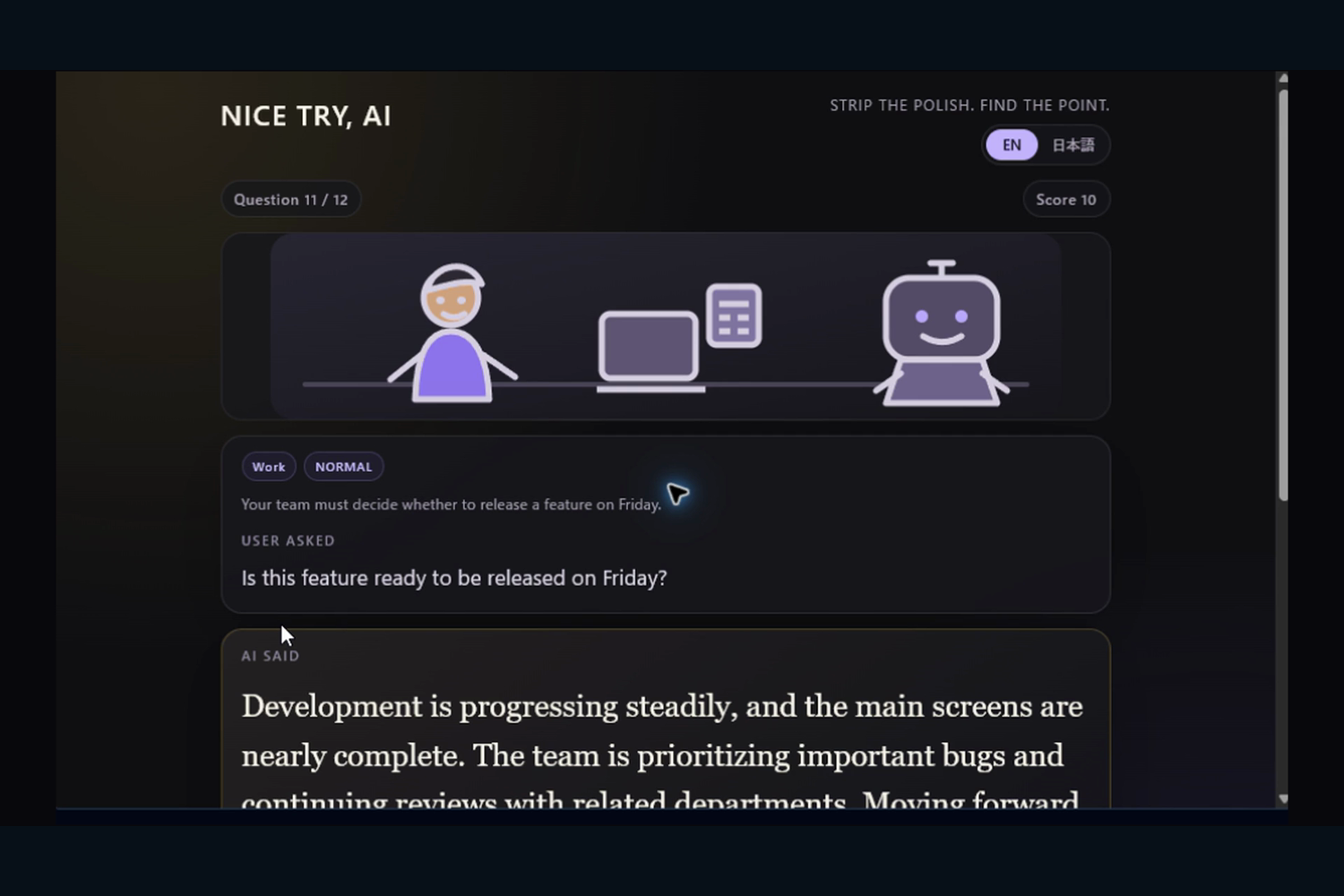
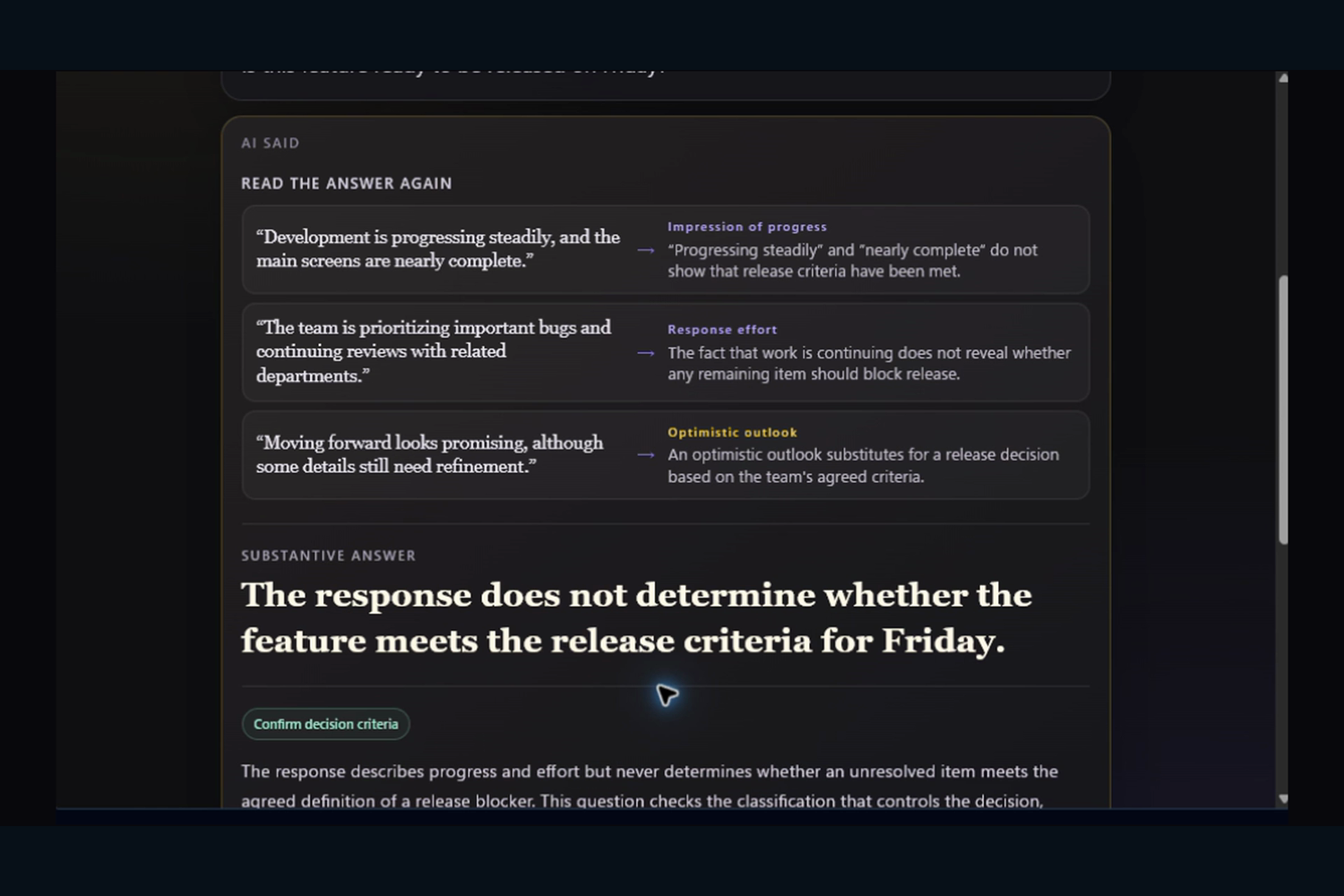
The player reads a plausible AI response and chooses the best follow-up from four credible options. The goal is not to identify “bad words,” but to understand what each sentence is doing, what has actually been established, and what important judgment is still missing.
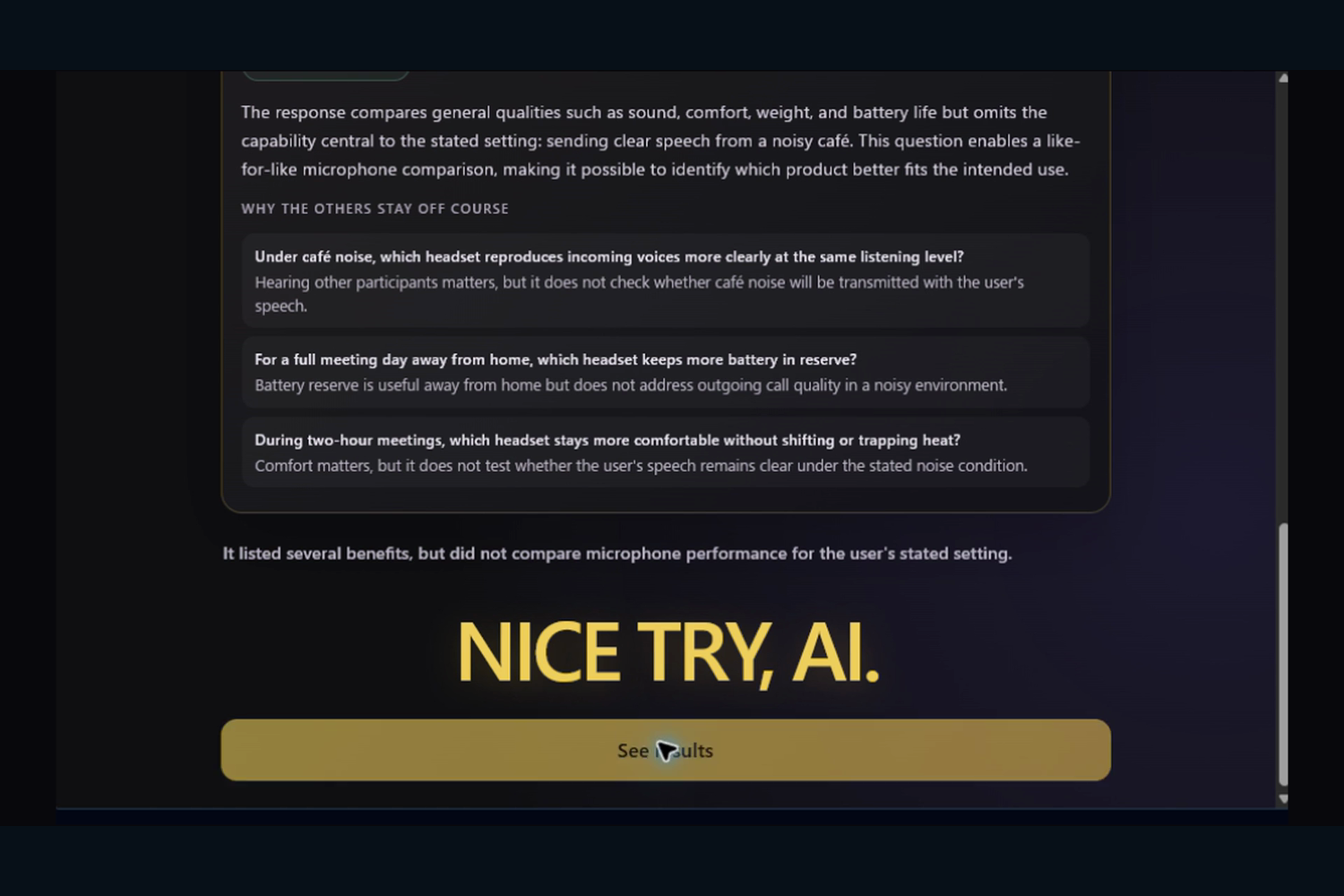
A correct intervention peels away the rhetorical camouflage, dissects the role of each sentence, and reveals the substantive answer underneath: what the response actually established after the polish is removed.
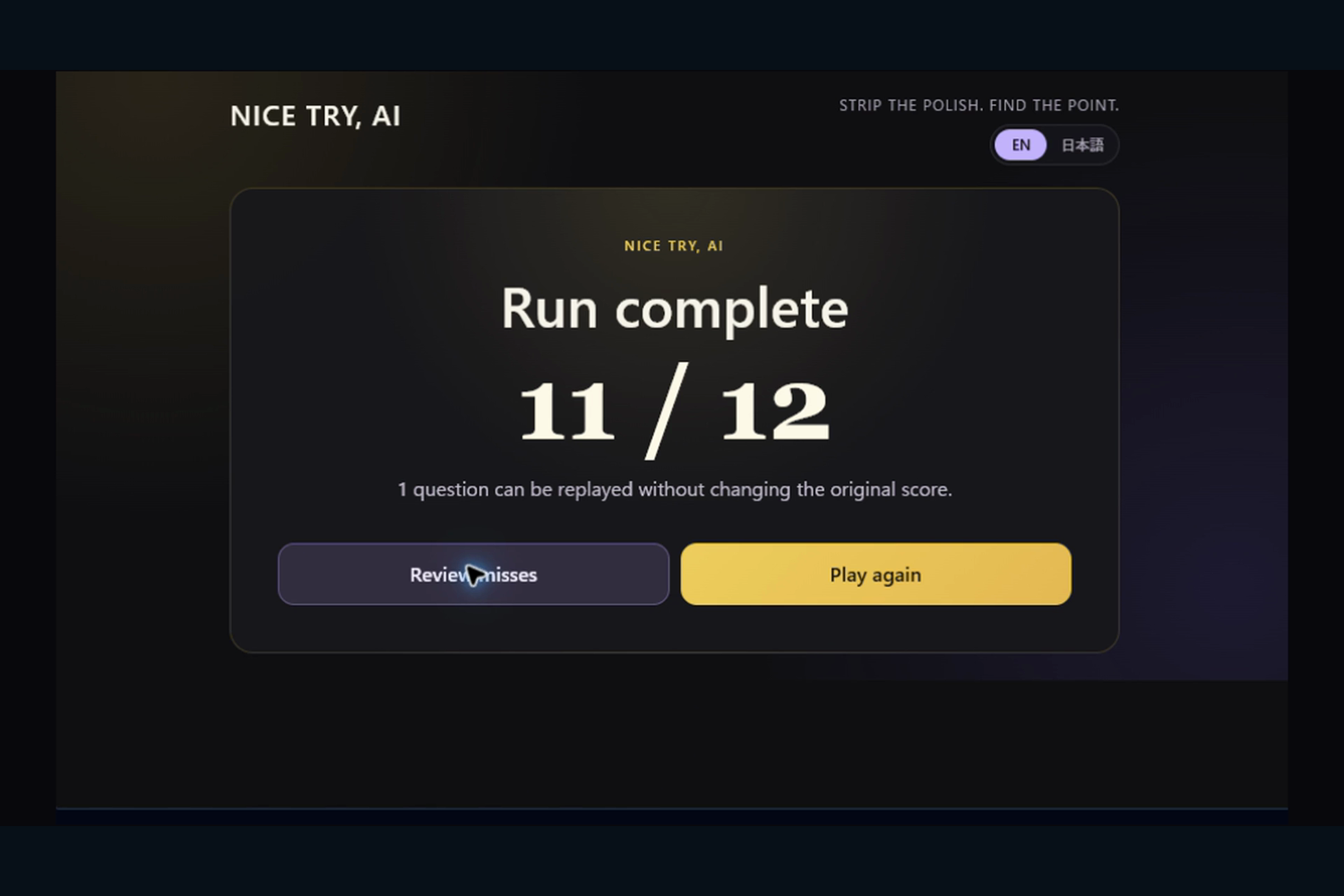
The game includes 12 Japanese questions and 12 corresponding English questions, randomized play order, scoring, explanations, missed-question review, restart, language switching, responsive mobile layout, and accessible reduced-motion behavior.
How we built it
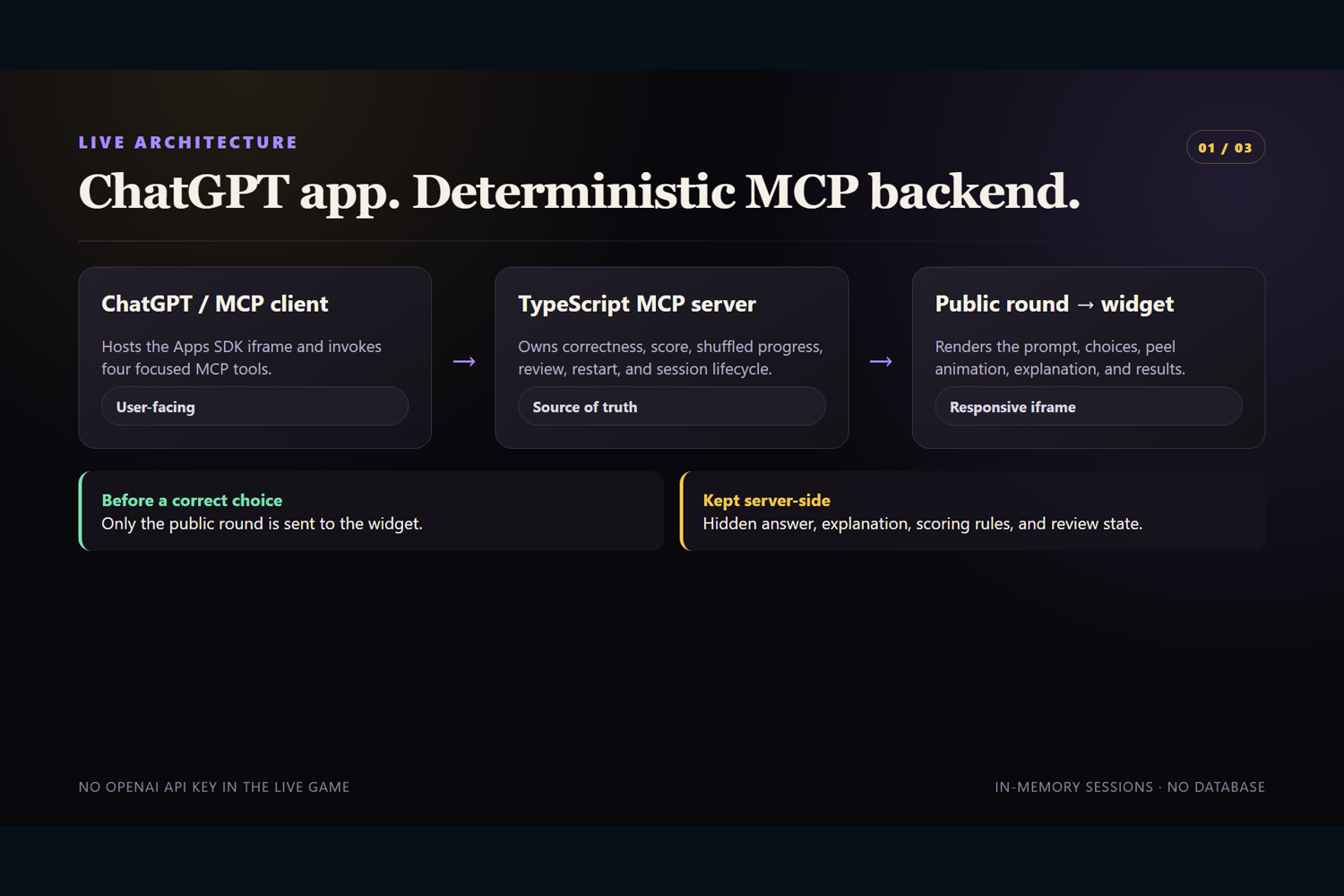
NICE TRY, AI runs as an OpenAI Apps SDK iframe widget inside ChatGPT, backed by a TypeScript MCP server. Correct answers, scoring rules, explanations, and session state remain server-side, so the initial widget payload never reveals the answer.
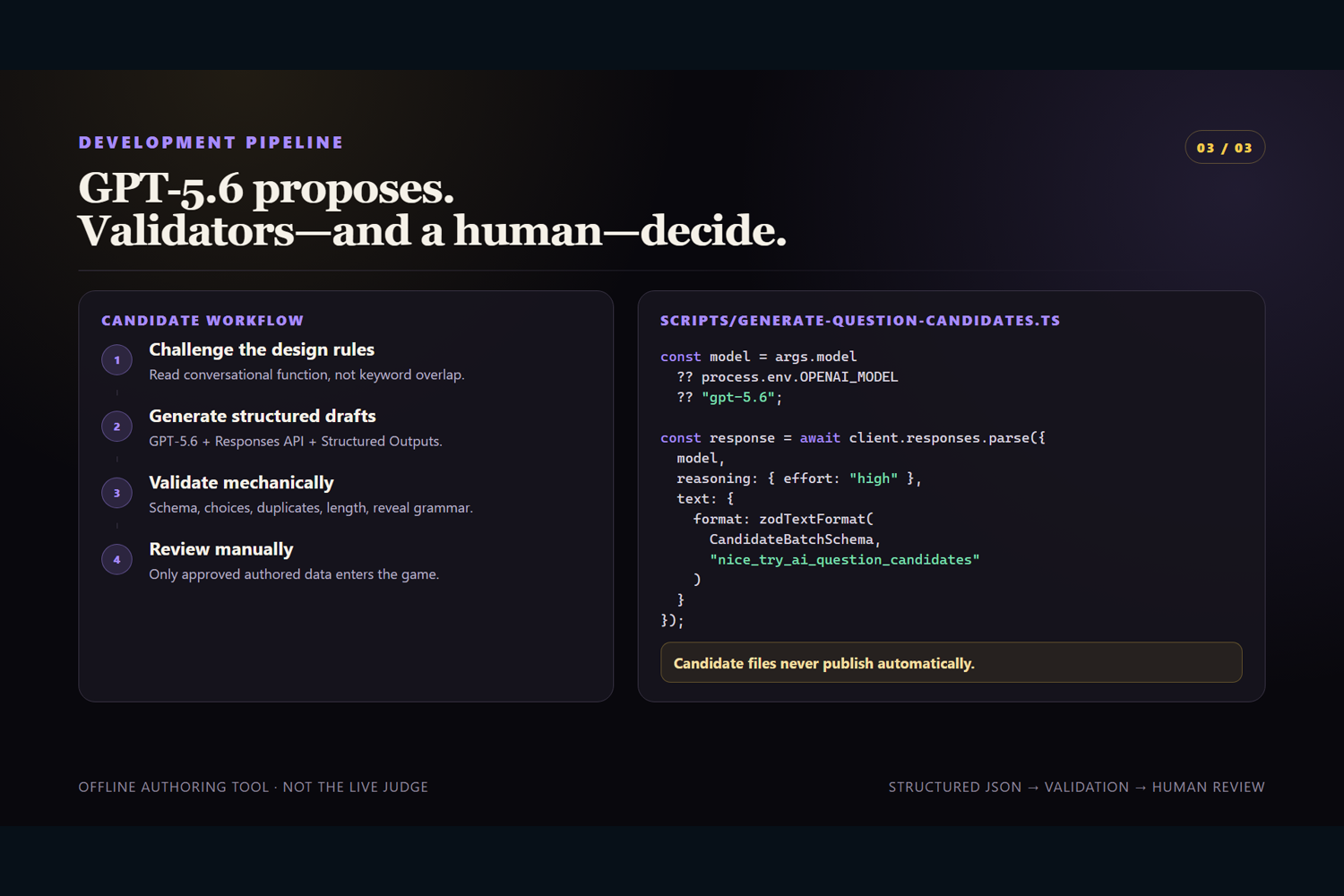
The runtime is deterministic and requires no OpenAI API key. GPT-5.6 is used in a separate development-only question-generation pipeline with the Responses API, Structured Outputs, Zod schema validation, automated quality checks, and mandatory human review before any question can enter the published game.
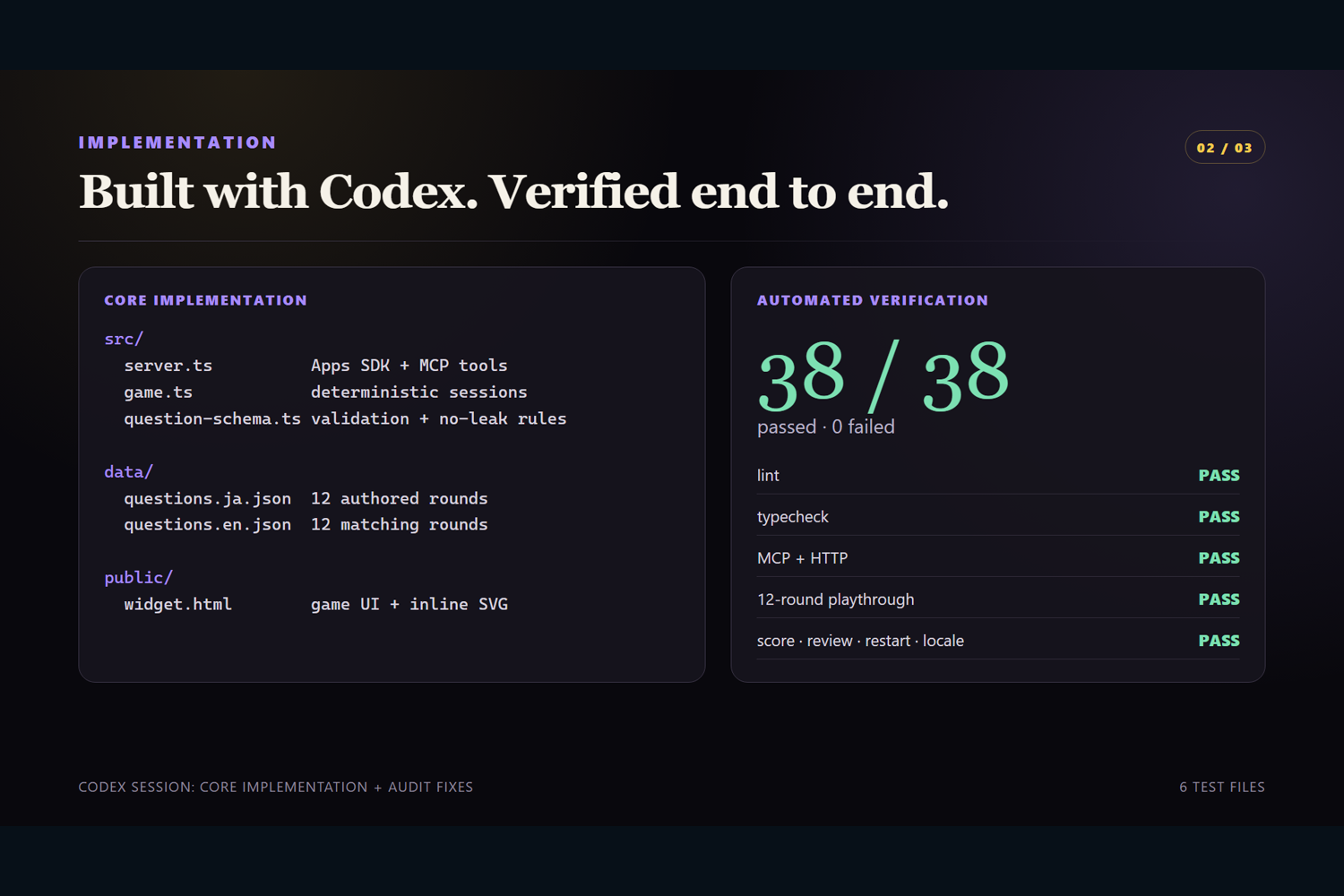
Codex implemented the central data model, MCP tools, session lifecycle, bilingual question banks, widget progression, inline SVG illustrations, generation tooling, and automated tests. Independent audit findings were also fed back into the same Codex session and resolved. The final project passes all 38 automated tests.
Why it matters
NICE TRY, AI teaches a practical AI-literacy skill without turning the experience into a lecture: separating confidence from evidence, valid caveats from judgment substitutes, and surrounding context from the answer the user actually needed.
Built With
- api
- apps
- context
- css
- gpt-5.6
- html
- javascript
- model
- node.js
- openai
- outputs
- protocol
- responses
- sdk
- structured
- typescript
- zod

Log in or sign up for Devpost to join the conversation.