-
-
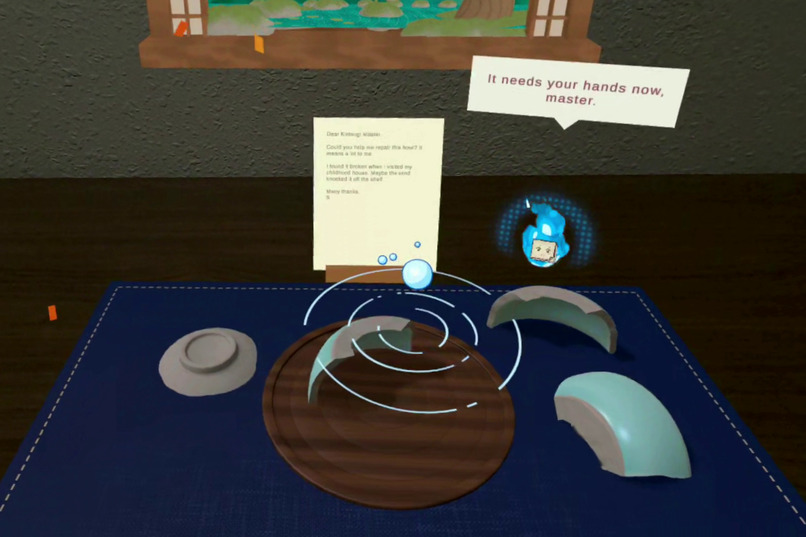
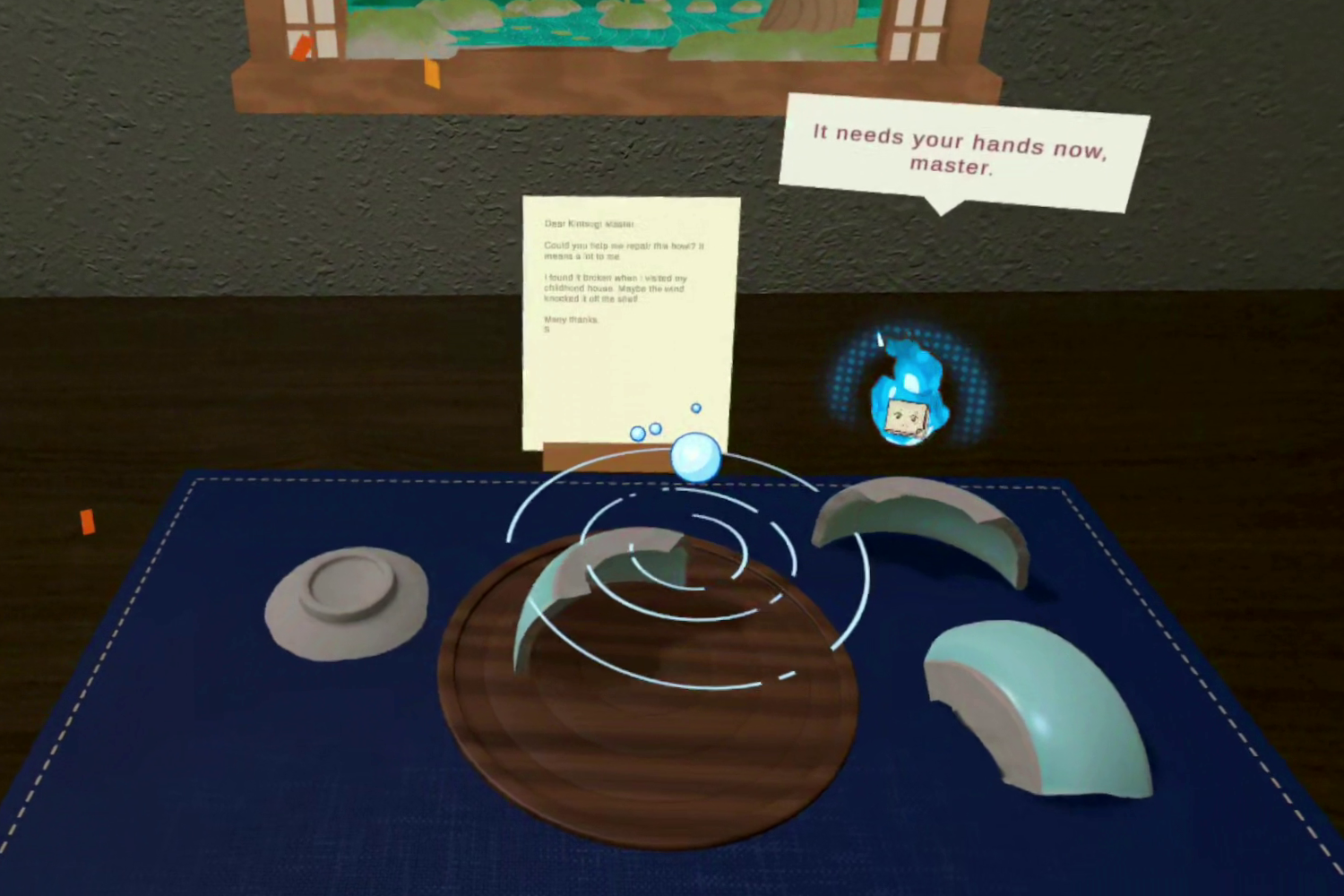
Every repair begins with a story, a broken object and a little help from your spirit companion.
-
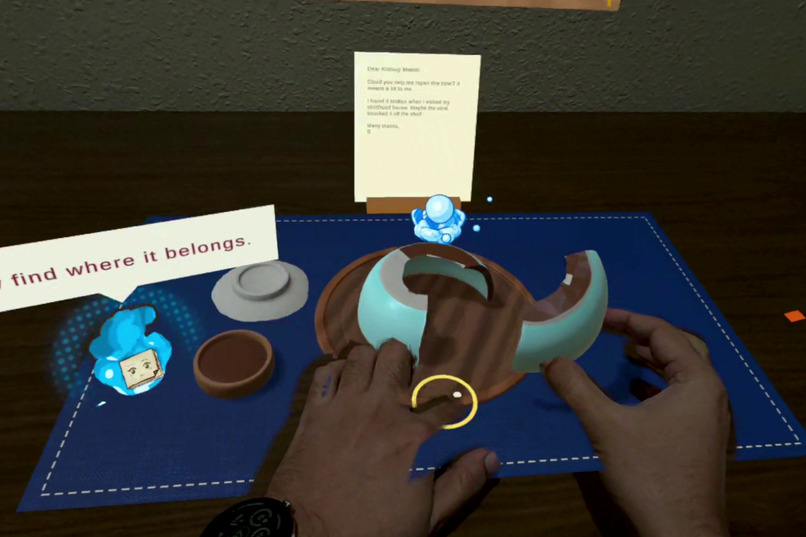
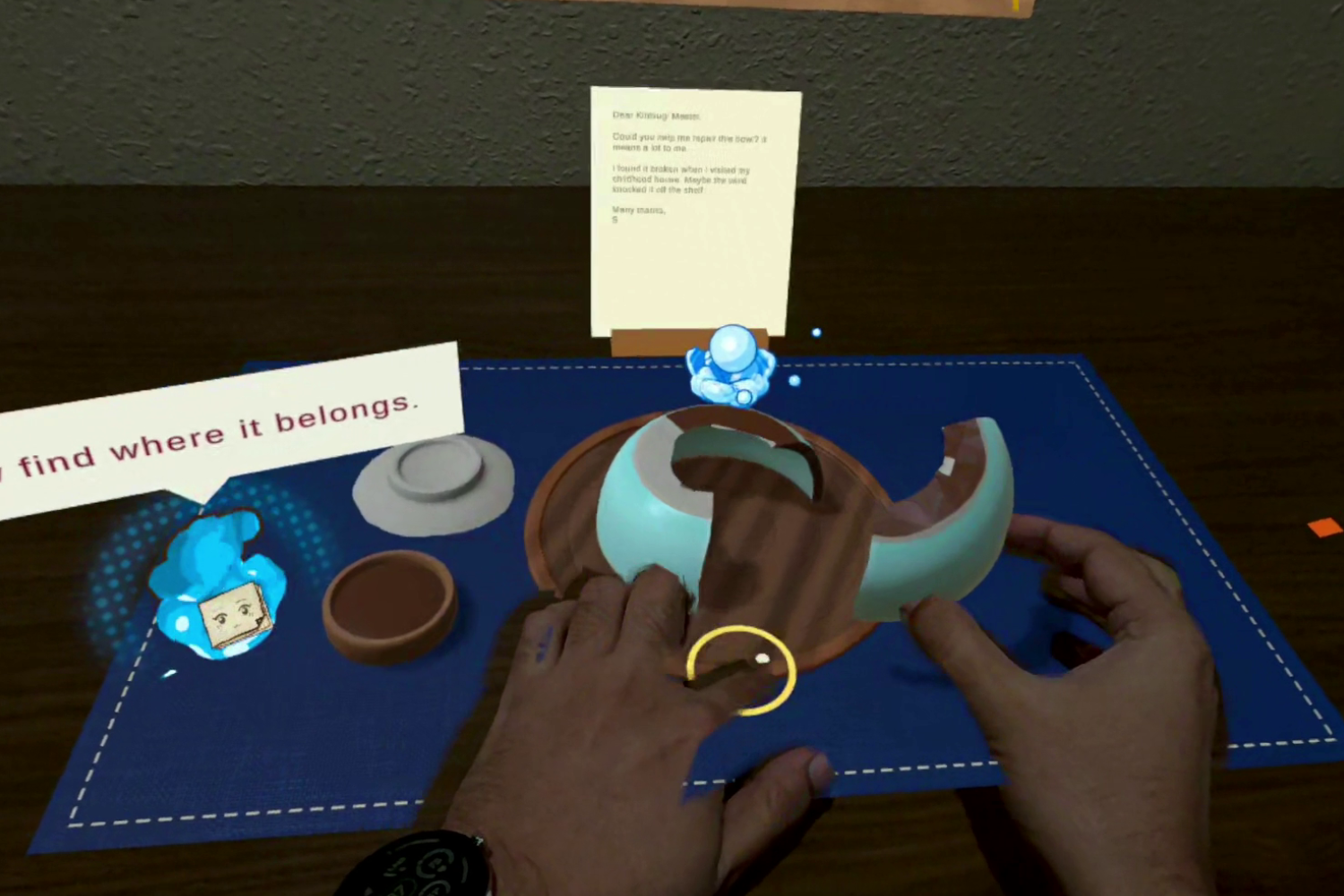
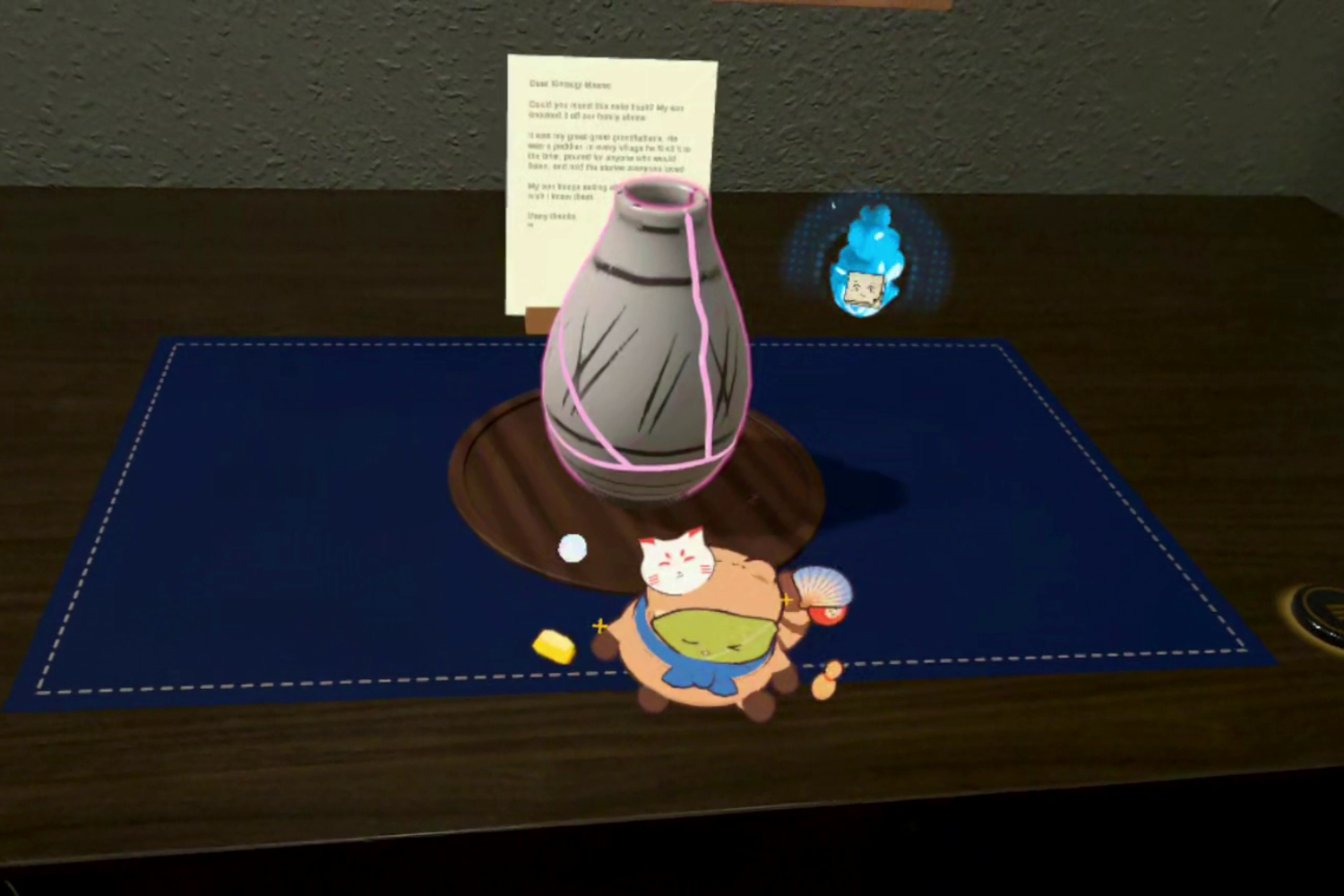
Use your hands to carefully bring the broken pieces back together, guided by your spirit companion.
-
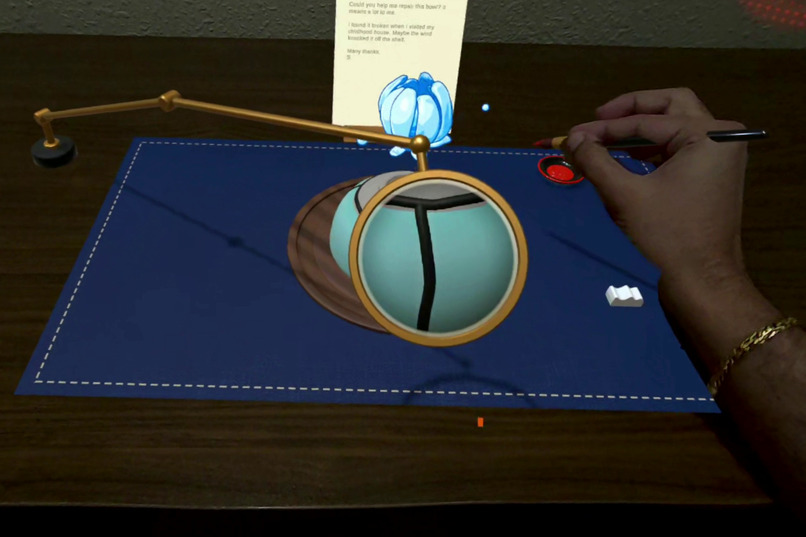
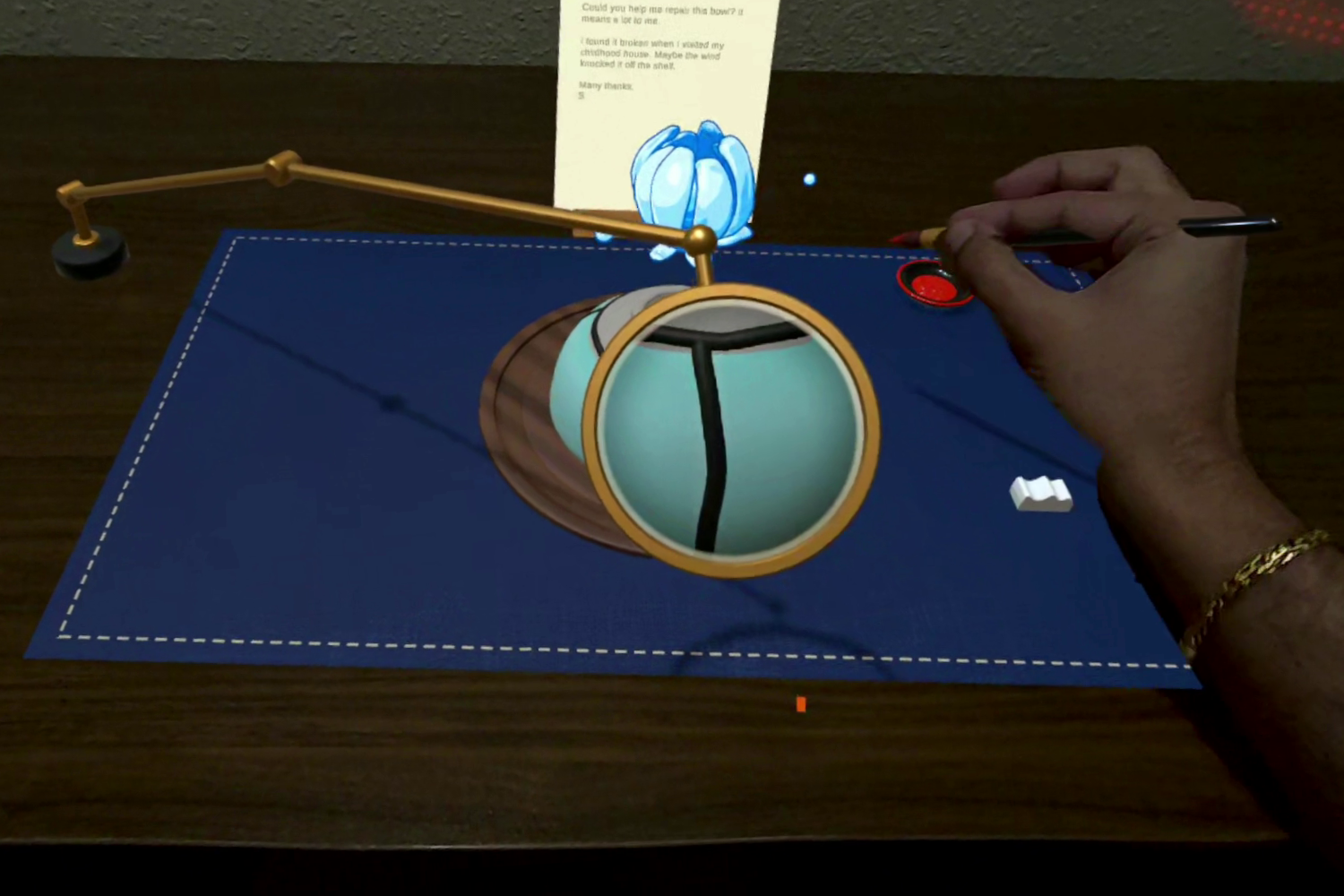
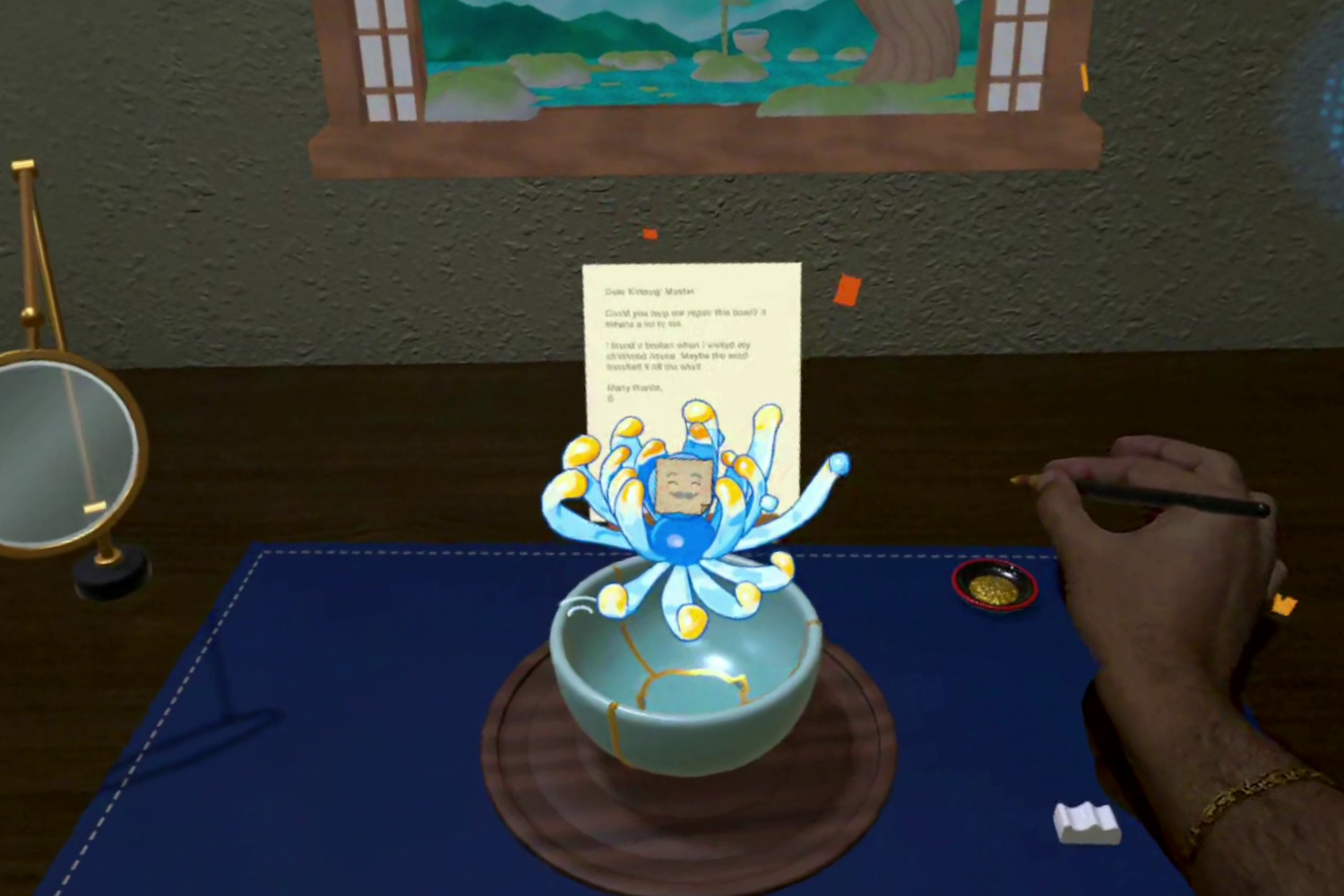
Take a closer look and carefully seal each seam as you restore the bowl.
-
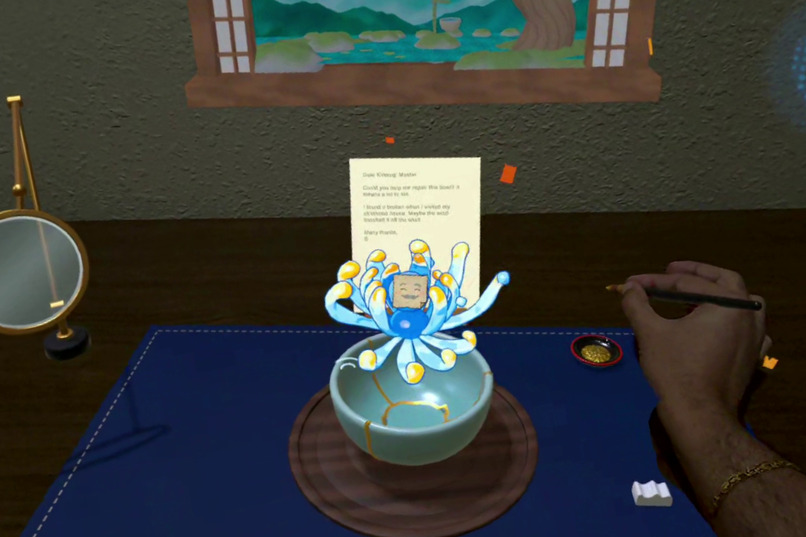
A bowl made whole, and a new friend brought to life through the art of kintsugi.
-
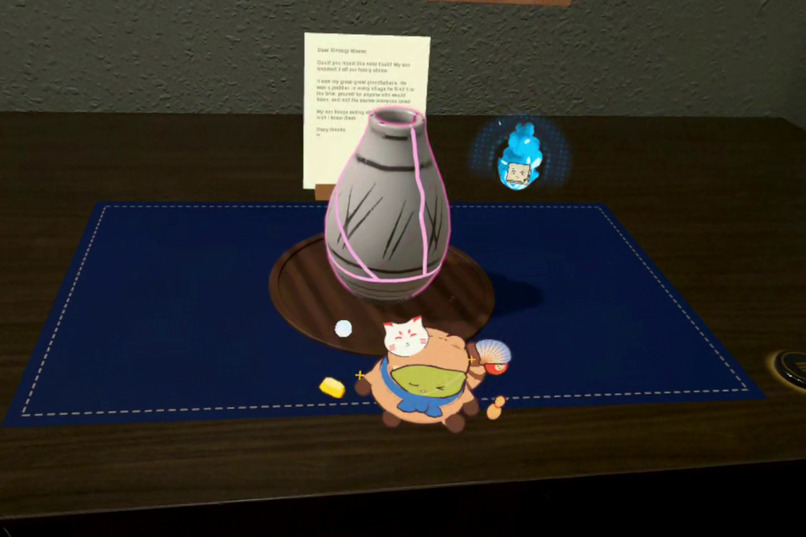
Discover and repair a variety of treasured objects, each with its own story.
Inspiration
We were drawn to the way kintsugi makes a repair part of an object’s story. We wanted to capture the satisfaction of bringing something broken back together, then give players another reason to care: a little spirit living inside the pottery. That became Nice to Mend You, a cosy mixed reality game about restoration, memory and making unexpected friends.
What it does
At your table, you use your hands to fit ceramic fragments together, trace cracks with lacquer, let them cure and paint the seams with gold. A spirit apprentice guides you through the process, while the spirit within the pottery gradually returns as the repair takes shape. Finished pieces and their spirits join your collection, and ceramics can be revisited for new repair puzzles.
The workshop responds to your real room. During setup, you identify light sources and release virtual lanterns towards them. Their positions affect how the pottery is lit and where shadows fall. You can also reposition lanterns manually, helping the ceramics feel present in your space.
How we built it
We built the game in Unity for Meta Quest, using Meta XR and OpenXR packages alongside custom interactions for ceramics, tools and repair steps. Blender supports our ceramic asset workflow, while GitHub and Claude support collaboration and development. We test builds on headsets and study recordings of real ceramic handling to refine grips and tool interactions.
Challenges we ran into
Small, irregular fragments made reliable grabbing, placement and release challenging. Brushes needed to stay in the player’s grasp without accidental interactions interrupting the repair. We also had to simplify traditional kintsugi steps into enjoyable gameplay, provide clear guidance and balance detailed ceramics, animated spirits and lighting against standalone headset performance.
Accomplishments that we're proud of
We’re proud of connecting physical repair with an emotional reward: seeing a spirit return as its vessel becomes whole. The lantern system gives the player’s room a meaningful role, while actions such as lifting a bowl and painting a seam put hand interaction at the center of play.
What we learned
Small interaction details make a substantial difference. Grip behaviour, clear feedback, readable guidance and believable lighting all influence whether a virtual object feels convincing. We also learned how character behaviour can communicate progress and guide the player through a process without relying on lengthy instructions.
What's next for Nice to Mend You
We plan to expand the ceramic collection and its stories, add character voices, refine onboarding and improve performance across different rooms and lighting conditions. Our aim is a comfortable tabletop experience that players can return to for quiet, creative play.

