-
-
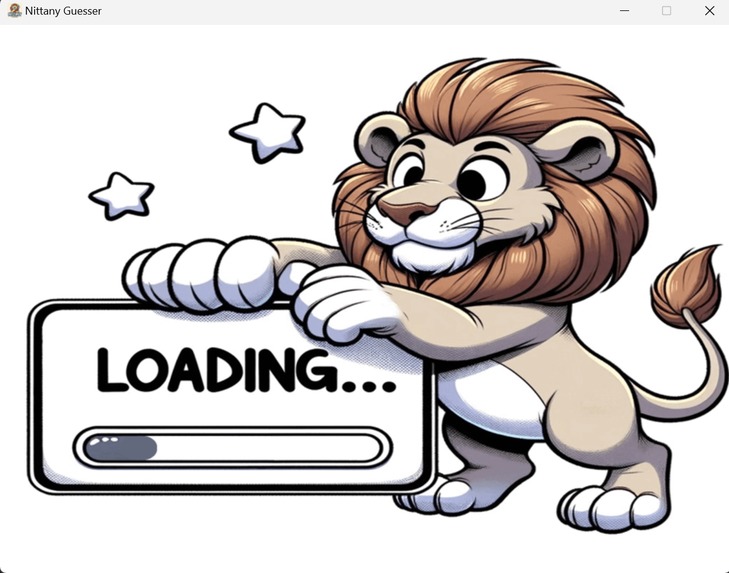
Loading Screen
-
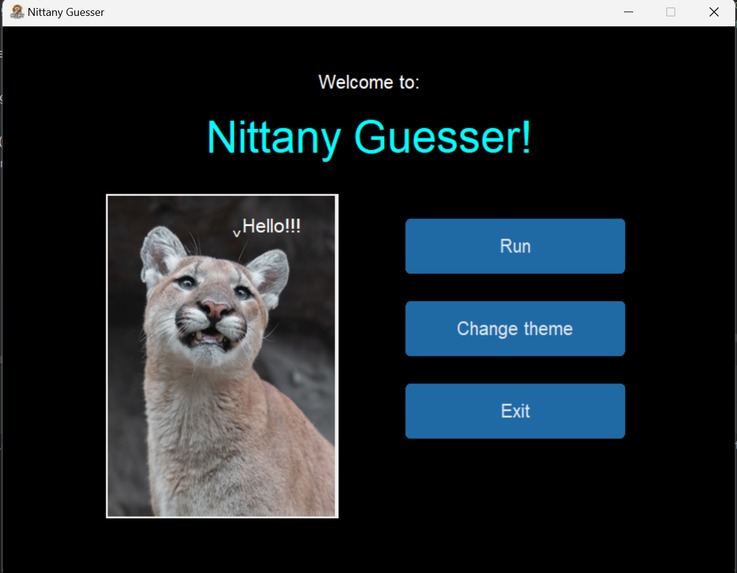
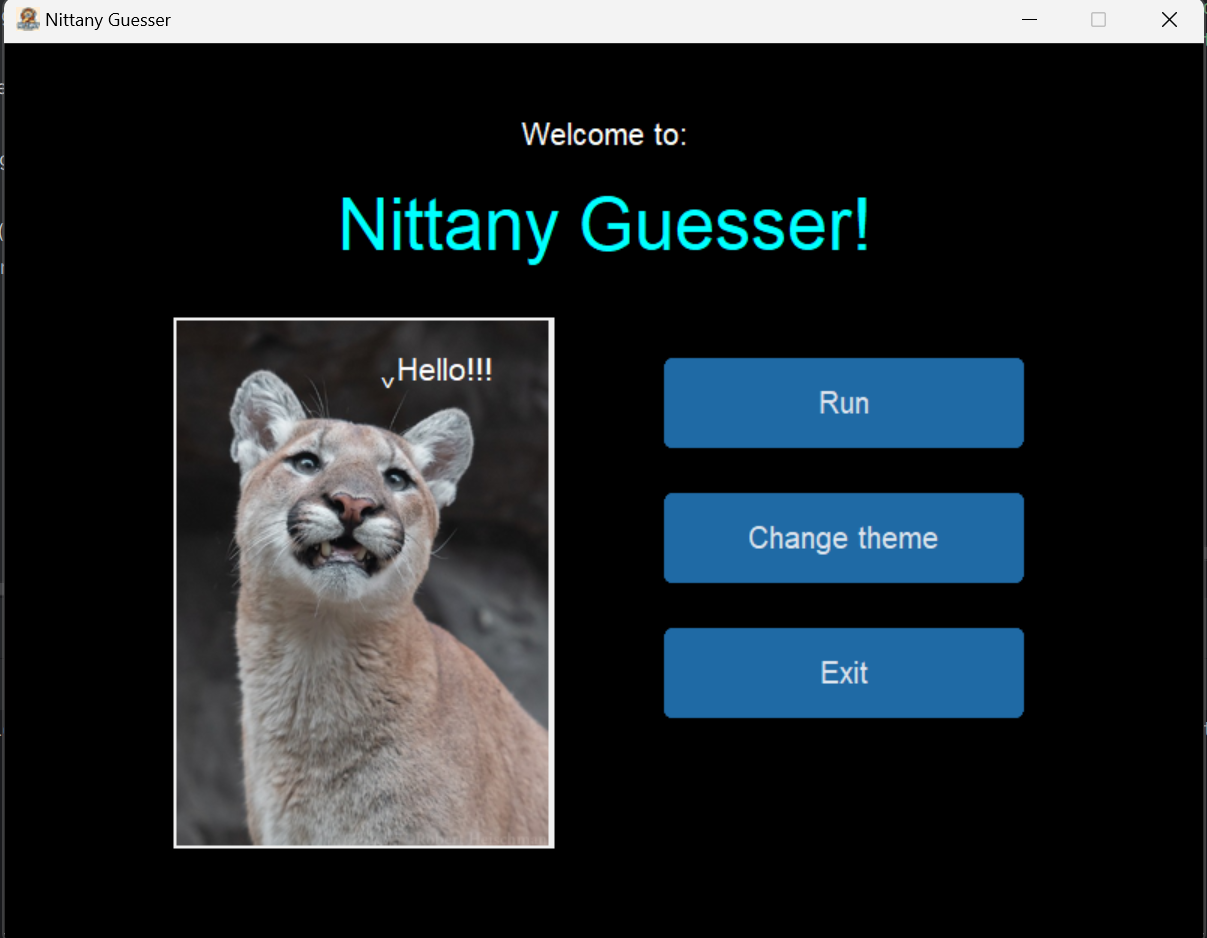
Main Screen
-
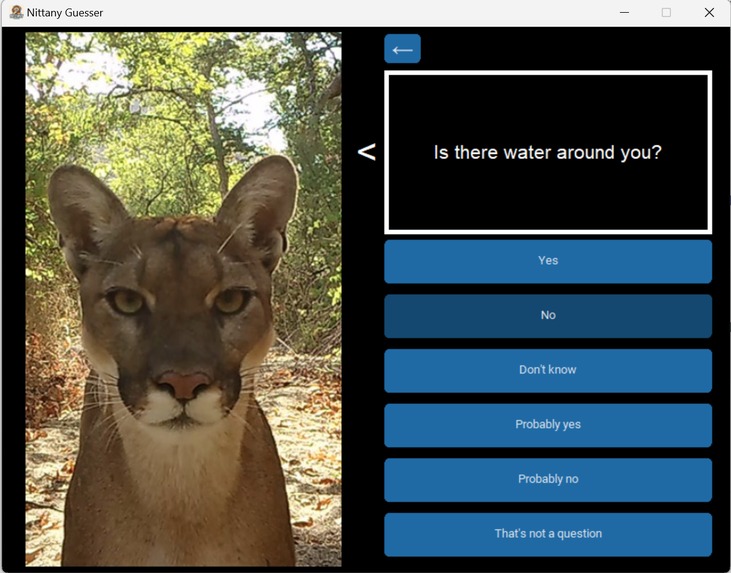
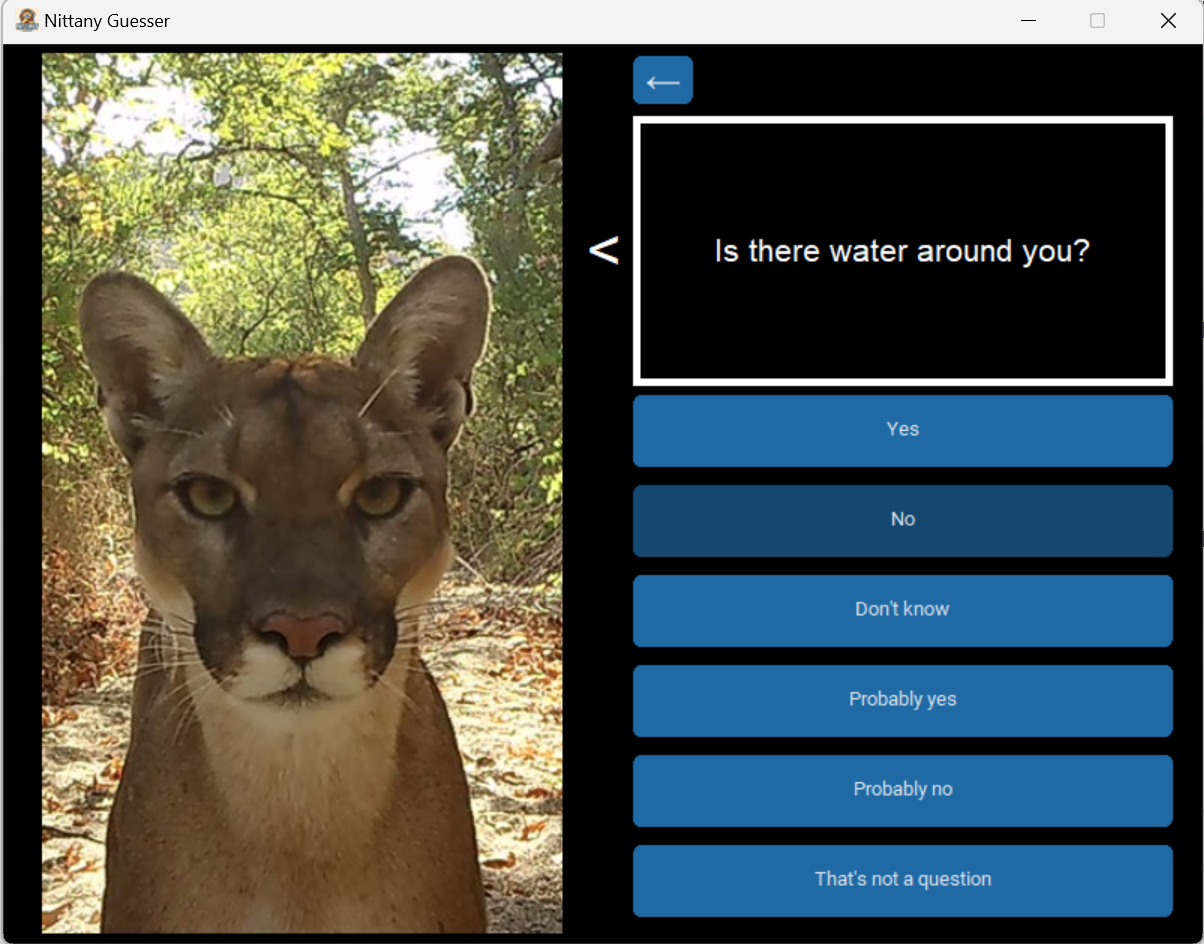
Actual Game
-

Final Result

Inspiration
While studying Data Structures and Algorithms, we noticed the power of certain algorithms like binary search trees and divide and conquer techniques. This sparked the idea of a different kind of guessing game where OpenAI wouldn’t just provide a text output but would visualize its guess. Thus, 'Nittany Guesser' was born.
What it does
'Nittany Guesser' employs binary search trees and divide-and-conquer methods. Through a series of questions, it determines the potential places you might be thinking of and then presents an AI-generated image based on its final guess.
How we built it
We chose Python as our programming language and integrated several packages to enhance functionality:
pip install tkinterpip install customtkinterpip install Pillowpip install openaipip install requestspip install configparser
Our main challenge was integrating and customizing the OpenAI API. By thoroughly reviewing OpenAI's documentation, we provided specific instructions, refining our application's output.
Challenges we ran into
Adapting the OpenAI's vast capabilities to our needs was challenging. We strived to create a precise prompt and direct the API to produce specific results. We also had to ensure that while focusing on the text, our user interface remained user-friendly and effective.
Accomplishments that we're proud of
We successfully integrated the OpenAI API and got it to interact with other tools in our toolkit. It was rewarding to see different APIs working together, producing a cohesive output.
What we learned
This project taught us the importance of efficient workflows, project task delegation, team networking, and effective documentation review.
What's next for Nittany Guesser
Our next step is to consider training our model using OpenAI's API. By doing so, we aim to improve the accuracy and specificity of the guesses, offering users an even more refined experience.

Log in or sign up for Devpost to join the conversation.