NGO-Guardian
Automated vulnerability detection for non-profits.
The Problem
Non-profits do the heavy lifting—managing refugee aid, running food banks, protecting vulnerable groups—but they don't have the budget for a $50k security audit. To get things done, volunteers often build tools fast using modern, easy-to-deploy frameworks.
The unintended consequence? They accidentally leave things like API keys, donor databases, or even shelter locations wide open on the internet.
The Solution
NGO-Guardian is a digital safety net. Instead of aggressive, hacker-style "red-teaming," we built a tool that safely scans non-profit infrastructure, flags exposed data, and hands them the exact code needed to fix it.
Core Features
- Context-Aware AI Scoring: We use Claude to look at what is exposed, not just how. An open weather API is low priority; an exposed list of refugee locations is a 10/10 emergency.
- Look, Don't Touch: Custom agents safely check for common misconfigurations (like public
.envfiles or open GraphQL playgrounds) without ever scraping or downloading the sensitive data. - Automated Fixes: We don't just hand over a scary report. The engine generates plain-English explanations and ready-to-deploy
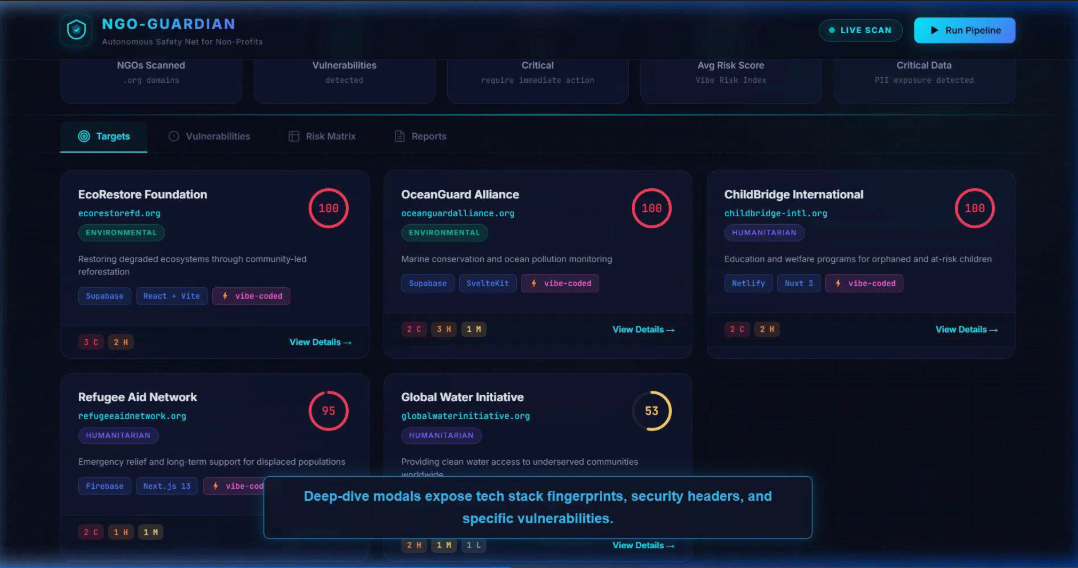
.patchfiles so a non-technical founder can secure their app in minutes. - The Dashboard: A sleek React + TypeScript frontend that maps out vulnerabilities and risk scores in real-time.
How We Built It
- Backend: Node.js/Express runs the custom scanning agents for non-invasive domain analysis.
- Brain: Claude Sonnet acts as the Data Risk Classifier to evaluate data sensitivity and write the remediation code.
- Frontend: A responsive Single Page Application built with React, TypeScript, and Vite, using custom state management to handle complex vulnerability data.
Challenges & Wins
The hardest part was building a scanner that accurately spots structural flaws—like broken access controls—without crossing the line into exploiting them. We're incredibly proud to have shipped a platform that flips the adversarial vibe of cybersecurity into an empathy-first tool for social good, complete with a highly responsive, dark-mode UI.
What's Next
Automating the outreach pipeline to draft polite, helpful emails to the affected non-profits, and building a network of volunteer devs to help them implement our fixes.
Built With
- anthropic
- claude
- express.js
- node.js
- react
- sonnet
- tailwind
- typescript
- vite


Log in or sign up for Devpost to join the conversation.