-
-
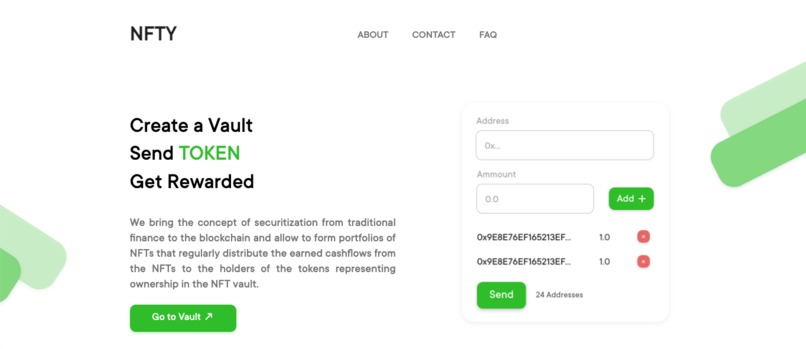
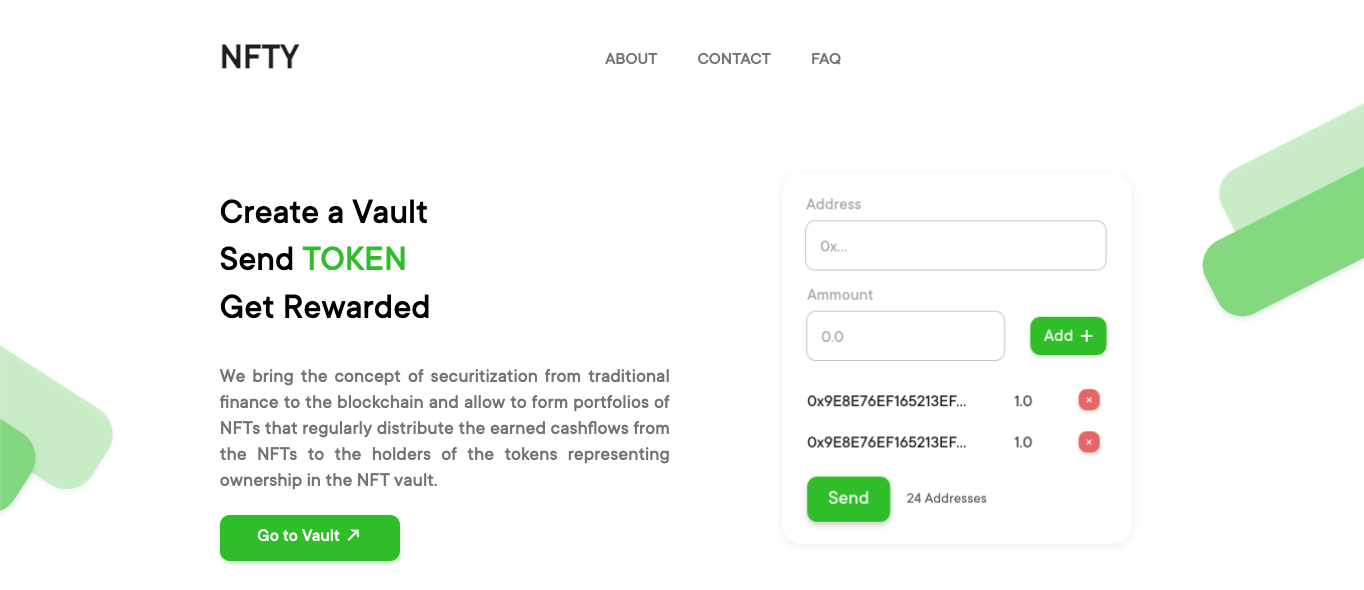
NFTY Website
-
NFTY Logo
-
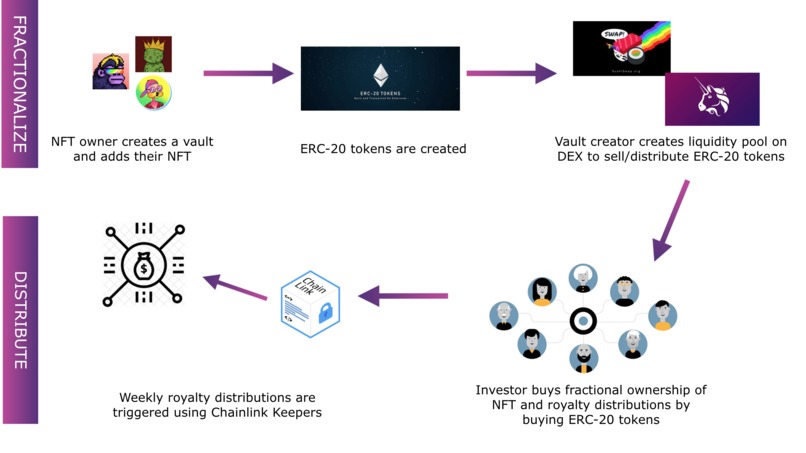
NFTY User Flow

Inspiration
Armin brought up the idea in our brainstorming and the whole group agreed this is a very interesting problem to work on. NFTs are really expensive when you look at the top collections so this limits the accessibility significantly. But not only that, while there are projects out there that fractionalize NFTs (https://fractional.art/) there is none for NFTs which are paying royalties. So especially the success of music NFTs and NFTs reflecting "consumable" art can't be shared with today's solutions.
What it does
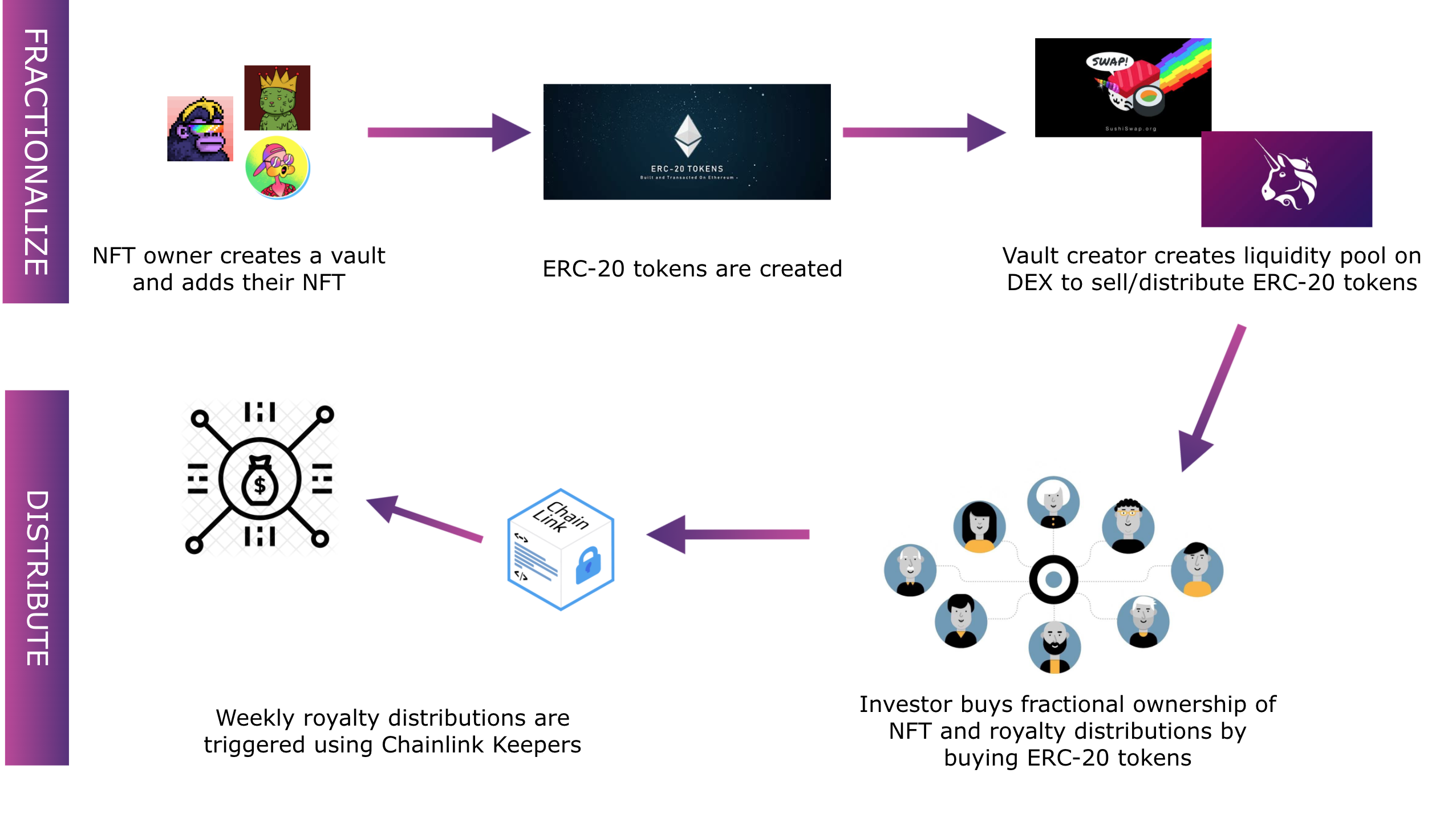
NFTY allows to fractionalize NFTs or pool NFTs together in one vault and then share ownership of that vault via ERC-20 tokens. Not only is the ownership shared, but also ALL PAYOUTS of the NFTs in the vault are shared among the owners, matching their ownership share.
User flow:
- NFT owner creates a vault and adds their NFT
- ERC-20 tokens are created to distribute ownership of the NFT
- Vault creator can create liquidity pool on DEX to sell/distribute ERC-20 tokens
- Anybody can buy ownership of NFT vault and stake in royalty distributions by buying ERC-20 tokens
- Weekly royalty distributions are triggered using Chainlink Keepers and Superfluid splitting royalties by vault ownership
How we built it
We are quite an inexperienced team in blockchain programming. For that reason, we used tools that made it simple for us to get started. We built the app using Truffle and the ganache client. The smart contracts are implemented in Solidity where we use libraries from OpenZeppelin as well as Chainlink for its Keepers. The simple frontend is made with React. For the deployment of the smart contracts, we use endpoints from Infura.
Challenges we ran into
- Finding a simple implementation of automatic dividend/interest distribution that does not require claiming/staking on the part of the recipient
- Feasibility of purely smart-contract based solution for auto-converting various received ERC-20 tokens in the vault to ETH/stablecoins via DEX aggregator such as ParaSwap/CowSwap
Accomplishments that we're proud of
We had a very slow weeks in the mid-phase of the hackathon due to team members being out sick, which really slowed us down and almost killed the project. We are really proud we were able to return to it, get pumped again, and cross the finish line with our work. It's a real team effort!
What we learned
Remote hackathons are hard. It's harder to keep the team together, there are more external factors that can disturb the flow (sickness, emergencies), all hindering the progress as envisioned at the beginning.
What's next for NFTY
There are many possibilities..
- The most clearly identified one is the automatic distribution via Superfluid, which would make the process much easier for users.
- Next would be monetization to keep NFTY running. There are several options we see, the most logical one is taking a small cut for all royalty payments (as that's the point users get the most value).
- Also, governance is a clear improvement to the current way vaults are working and would allow for more dynamic vault management (buy/sell NFTs to add/remove from the vault).


Log in or sign up for Devpost to join the conversation.