Inspiration
Selling a NFT is not as easy as buying a NFT. If we wanted to purchase a NFT, we can purchase a floor-priced one from Opensea or LooksRare instantaneously. However, selling a NFT would take a longer time to be matched with a buyer. We focused on the NFT seller's problem: incentivize liquidity providers and provide instant liquidity without settling for less. Fractionalizing NFTs into ERC-20 tokens, representing the floor price and trading over AMMs, allows users to obtain liquidity immediately, and the bidding / auction mechanism allows the users to capture the right price for their NFTs.
What it does
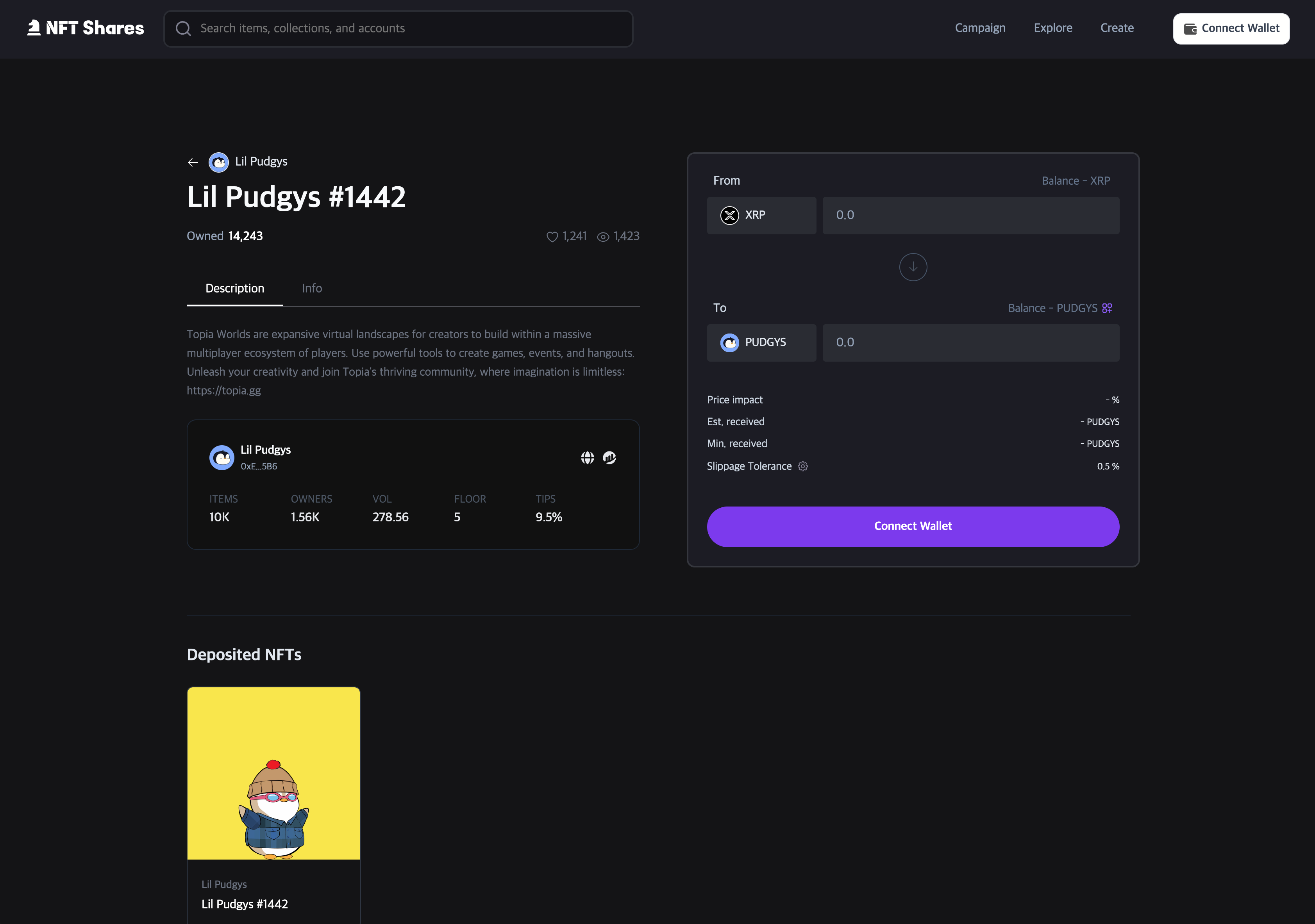
Let me walk through the user experience: a NFT owner, Bob, wants to sell a CryptoPunk immediately at the floor price. Bob deposits CryptoPunk into a vault and receive 1 rPUNK token. The rPUNK token trades at the floor price of CryptoPunk, so Bob can trade the whole or parts of the rPUNK token for liquidity in our DEX — a fork of Uniswap V2. To redeem back the NFT, Bob must purchase back the 1 rPUNK token from the DEX and bid the 1 rPUNK token (and some XRP) to retrieve the NFT. The bidding will be live for 48 hours. If the bid is successful, the NFT is retrieved back to Bob.
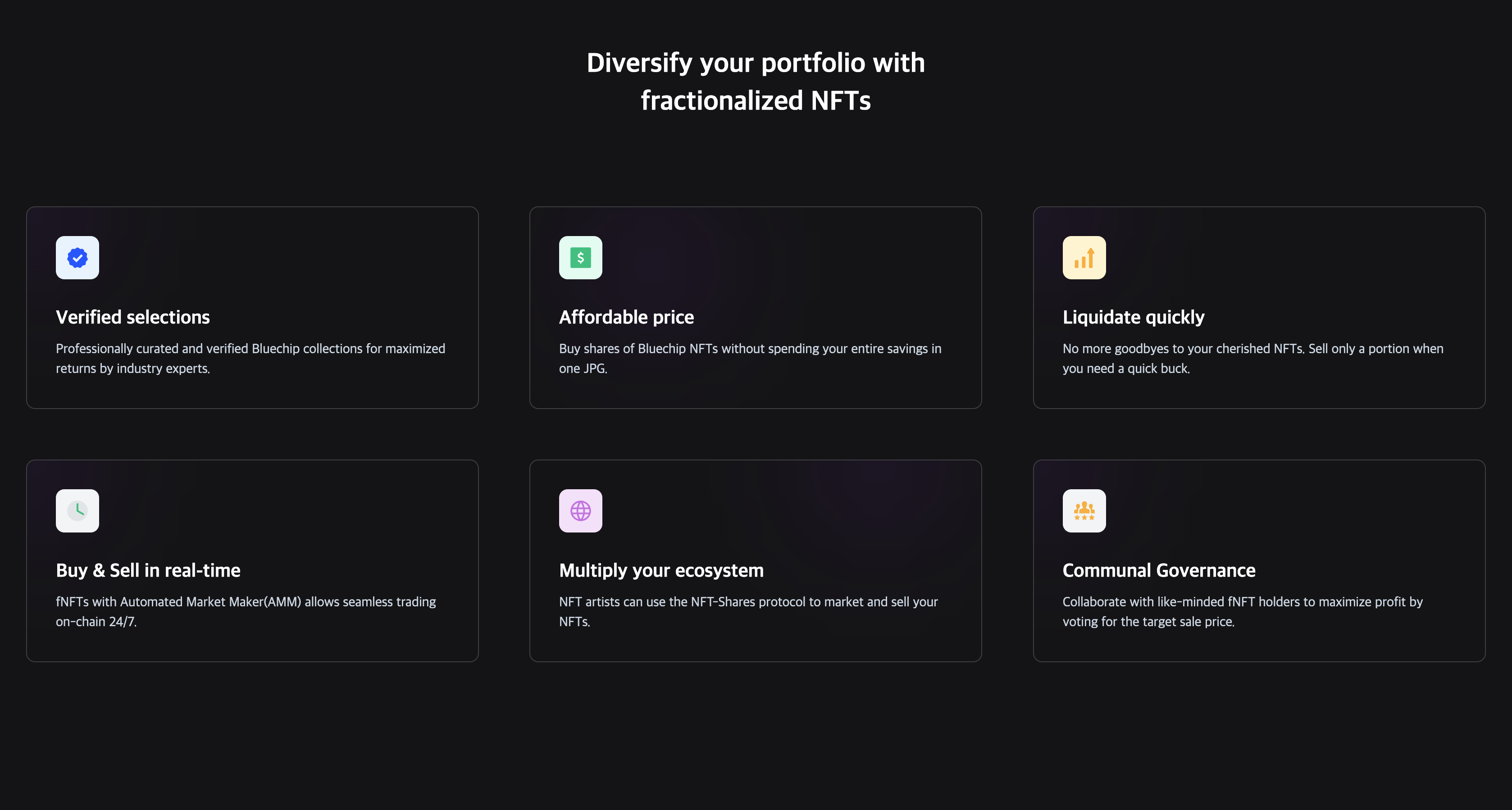
The liquidity providers are incentivized to provide liquidity with their NFTs, as they become productive assets, accruing trading fees. The liquidity providers receive a fee from Minting and Redeeming rPUNK token, as well as the trading fees (0.25%) accrued from the DEX and a percentage (1-2%) of the bid. We expect the APY for stakers to be higher than a traditional DEX because mint, redeem, and bidding are major revenue sources for the protocol, not offered by the traditional ones. NFT Shares has designed fNFT ownership to be as analogous as possible to fractional ownership of the underlying NFT. Thus, fNFT holders will govern the sale of the underlying fNFT as well as proportionally receive any profits from sale or external utility (e.g. airdrops received by the underlying NFT). We expect community governance to rise over each NFT collection.
How we built it
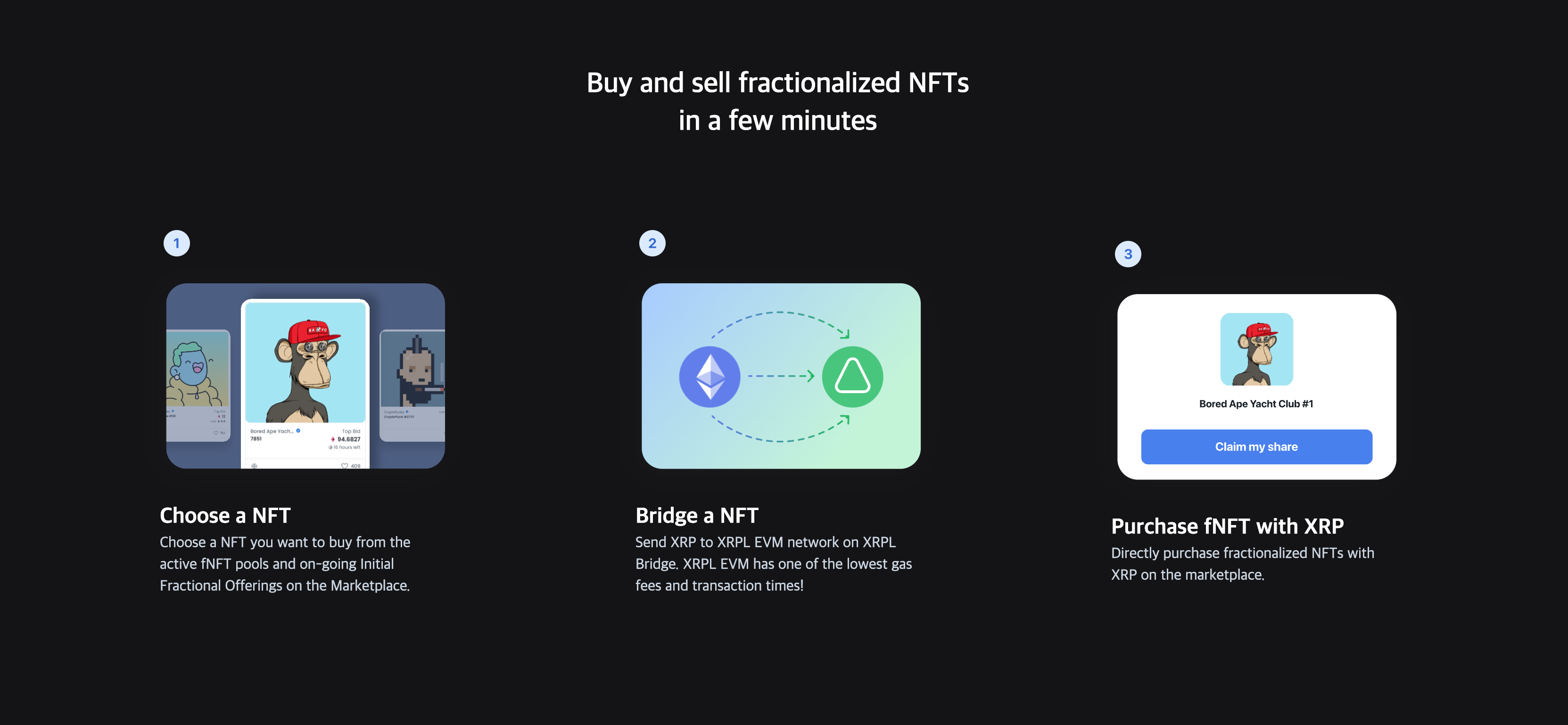
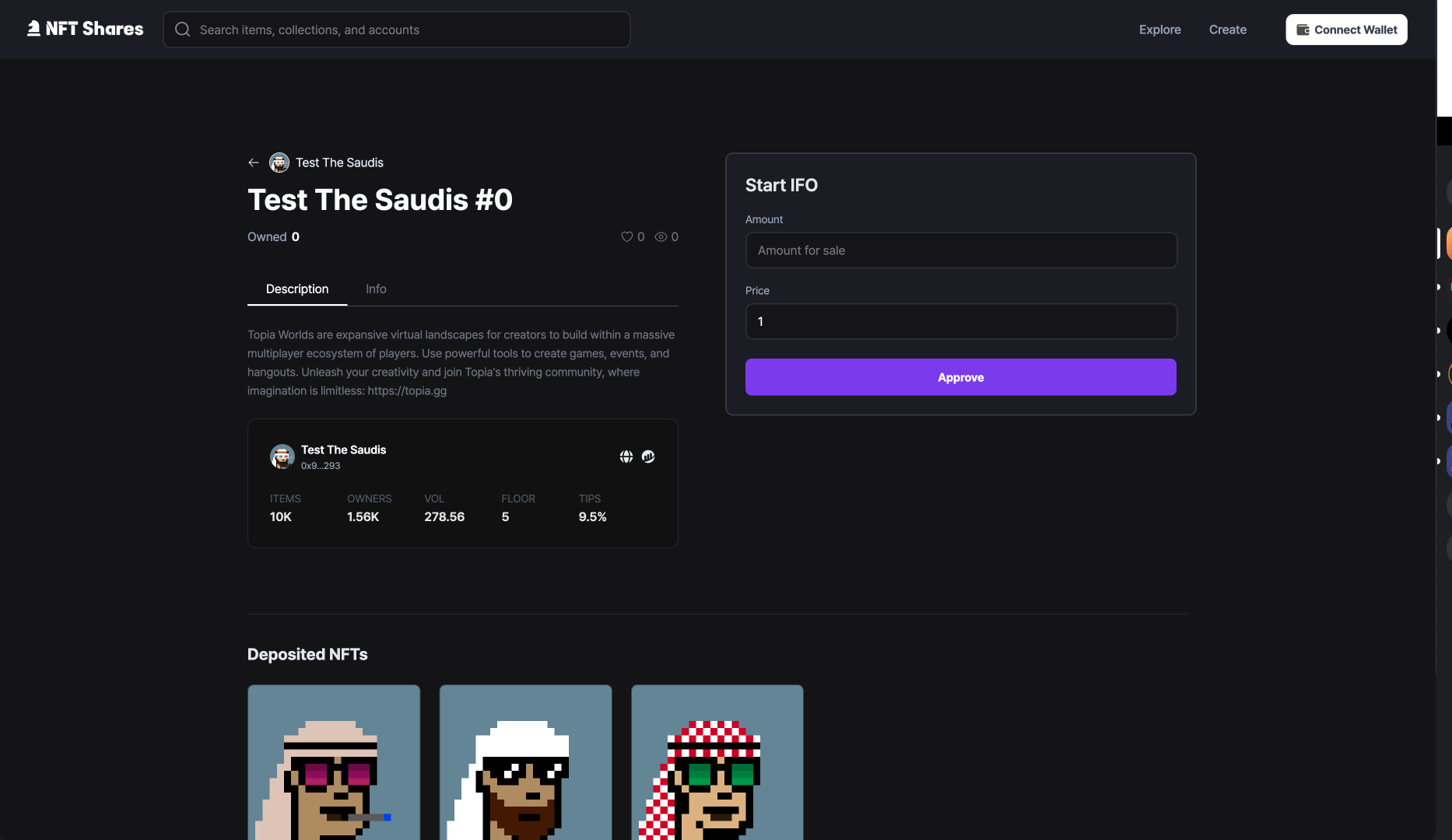
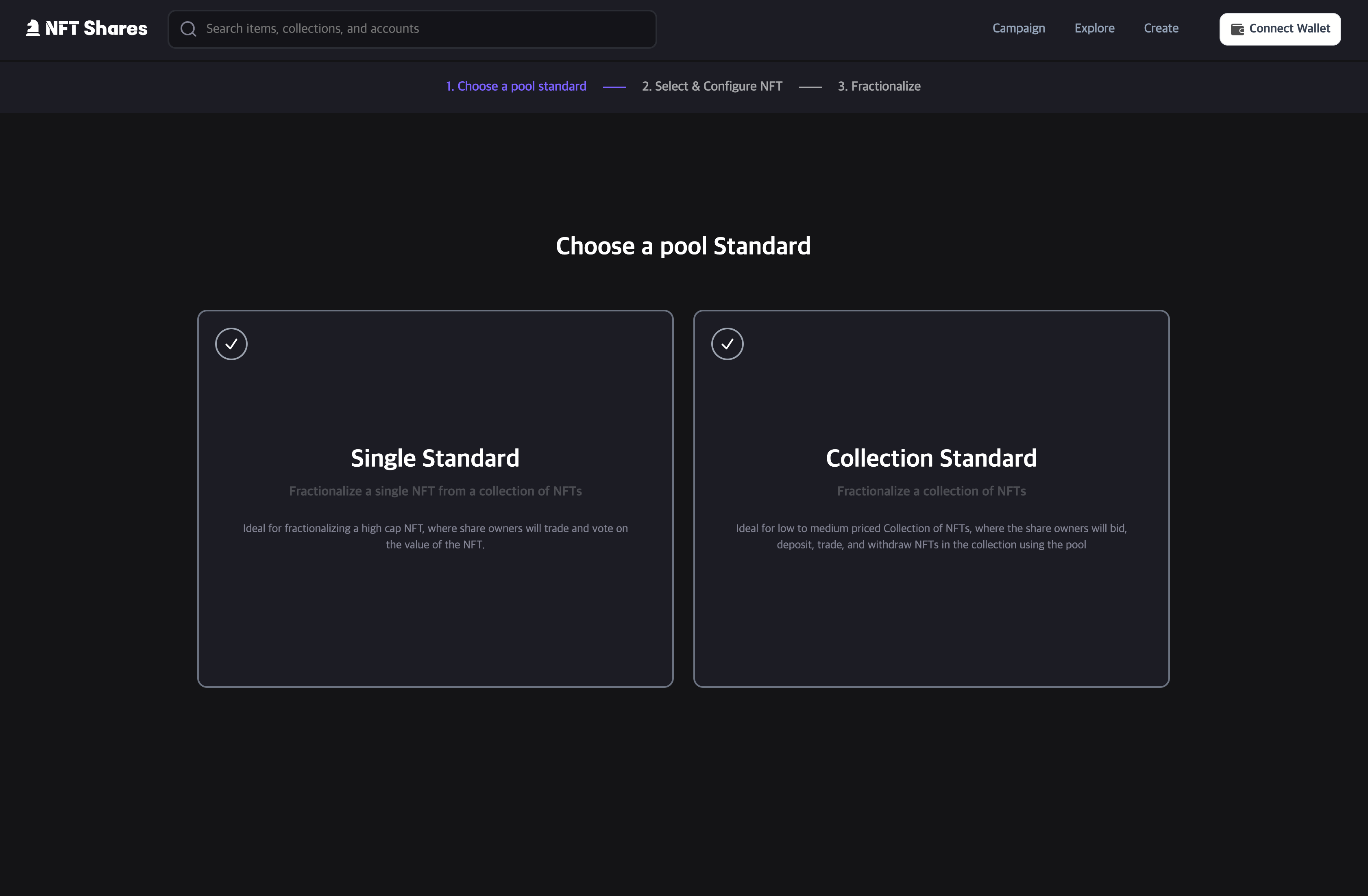
First, we will show a fractionalization of a NFT in the user’s wallet by creating a vault associated with the collection. Second, we’ll deposit and withdraw the NFTs in and out of the vault. Lastly, we’ll show how instant liquidity / auction bidding and liquidity providing work.
Challenges we ran into
Fetching NFT data is at an experimental stage for Mode Network. There’s no standardized and decentralized service to aggregate all NFT data. We planned to use Moralis’ API to fetch NFTs in an user’s wallet. Though it’s a centralized service, it’s much more reliable and reduced significant part of the development to focus on the actual product. However, Moralis did not support Mode Network. We then tried to use The Graph's hosted service to index user's NFTs, but it deprecated. We're still working on a secure and decentralized method to index the contracts and tokens. Luckily, TokenQL was our alternative option to use until we host our own graph indexer.
What's next for NFT Shares
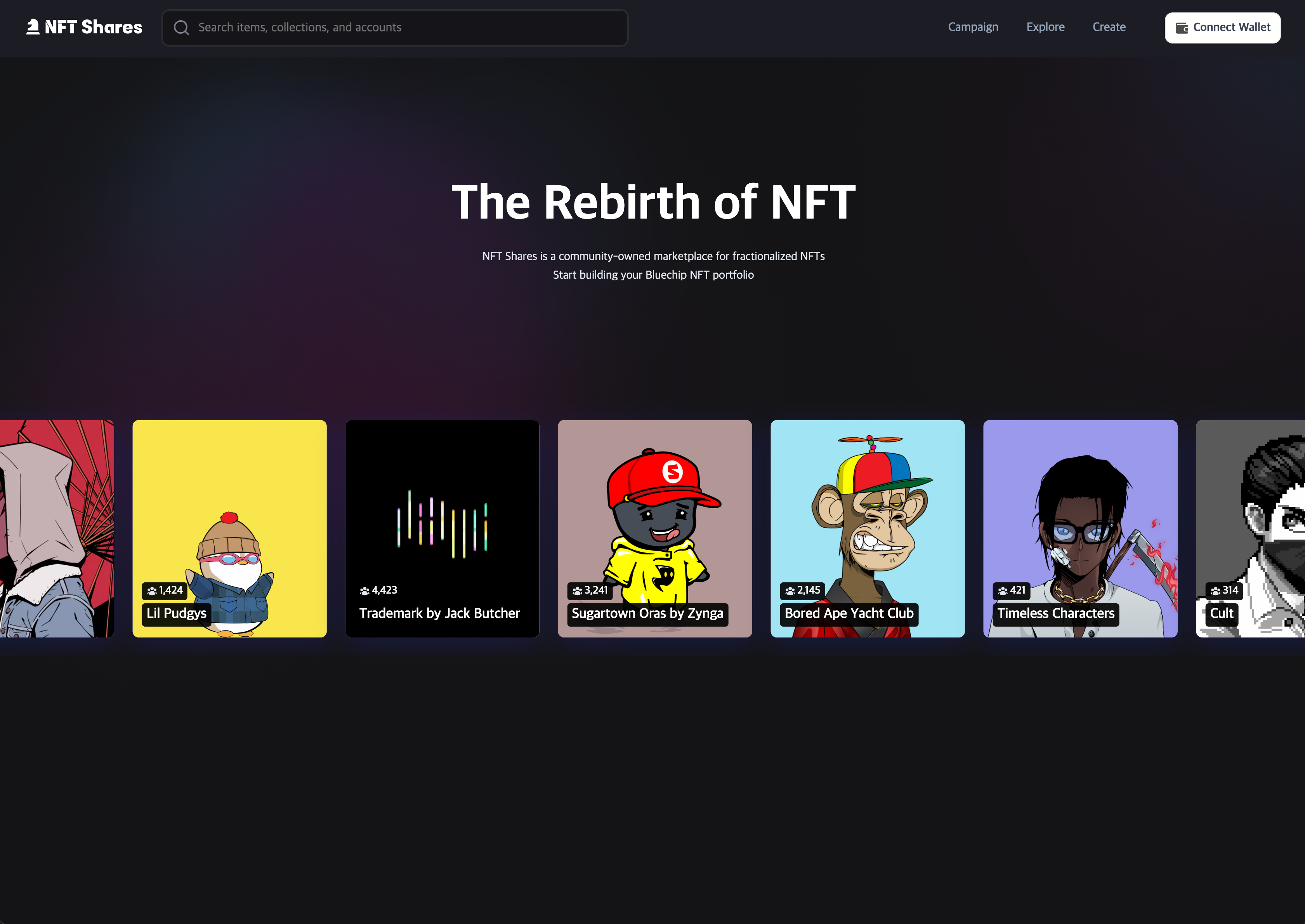
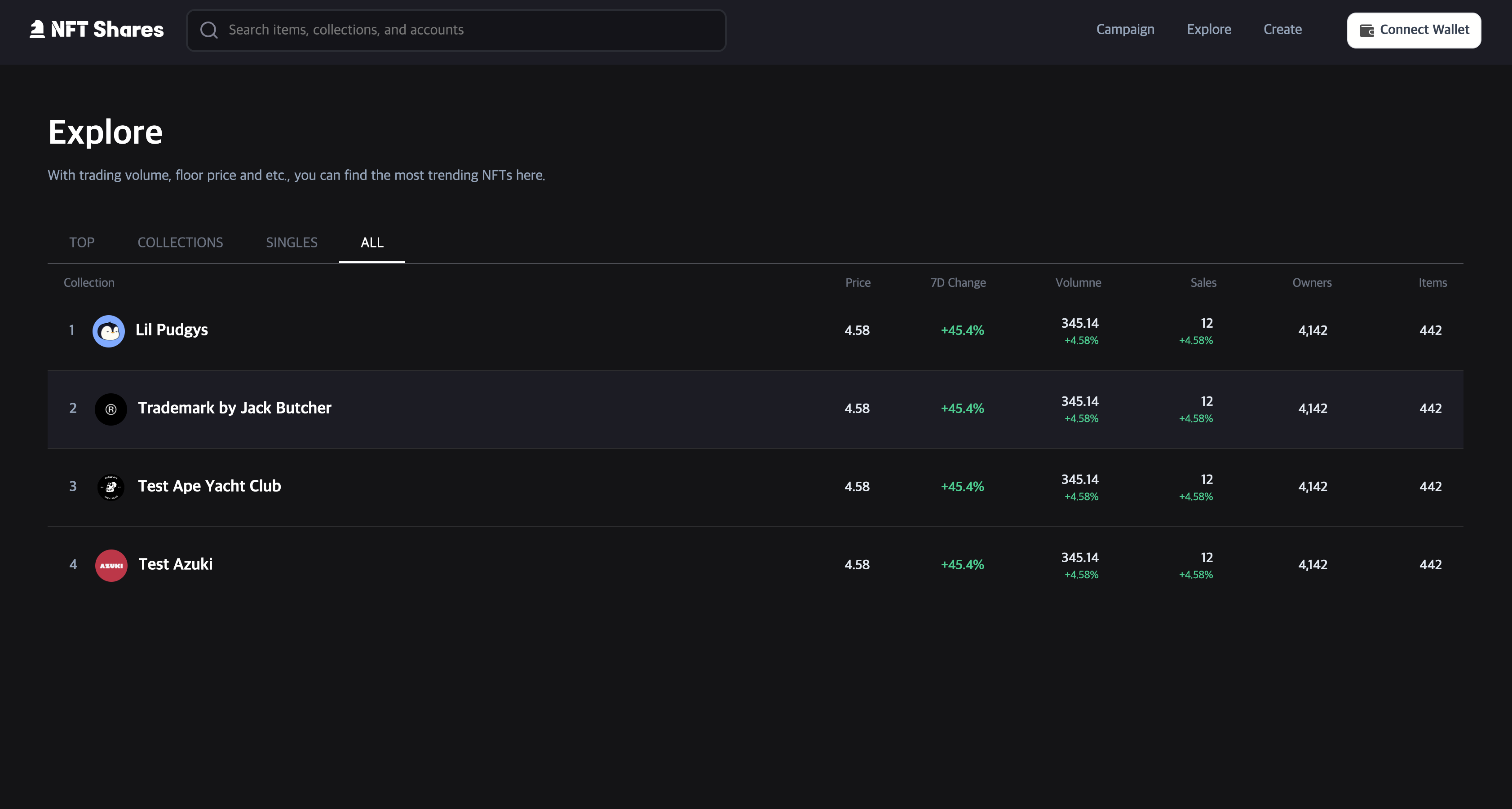
We have an exciting roadmap. We'll be working closely with NFT projects to provide NFTs on to the protocol and the community to acquire NFTs to fractionalize. NFT Shares Marketplace will be an open marketplace where users can buy or sell fractionalized NFT collections at their will. NFT collections are individually curated by the community (a possibility is through a zero-knowledge proofs (ZKPs) voting system where the information of the selected NFTs are not released to public until the voting has finished by $NFTS holders). After the selected NFT collections are bought by NFT Shares, smart contract will mint fractionalized NFT tokens which can be purchased through IFO (Initial fNFT Offering) with different types of assets such as XRP, or ETH, $NFTS-USDC LP tokens, and etc.
Additionally, we plan to utilize cross-chain solutions like LayerZero to bring NFTs from different chains to the Mode, thereby embracing NFTs distributed across various chains and ultimately contributing to increased transaction volume on the Mode. In conjunction with these efforts, we are also gearing up to launch a collateralized loan service using FNFT and LP liquidity, expanding the utility of our platform.

Log in or sign up for Devpost to join the conversation.